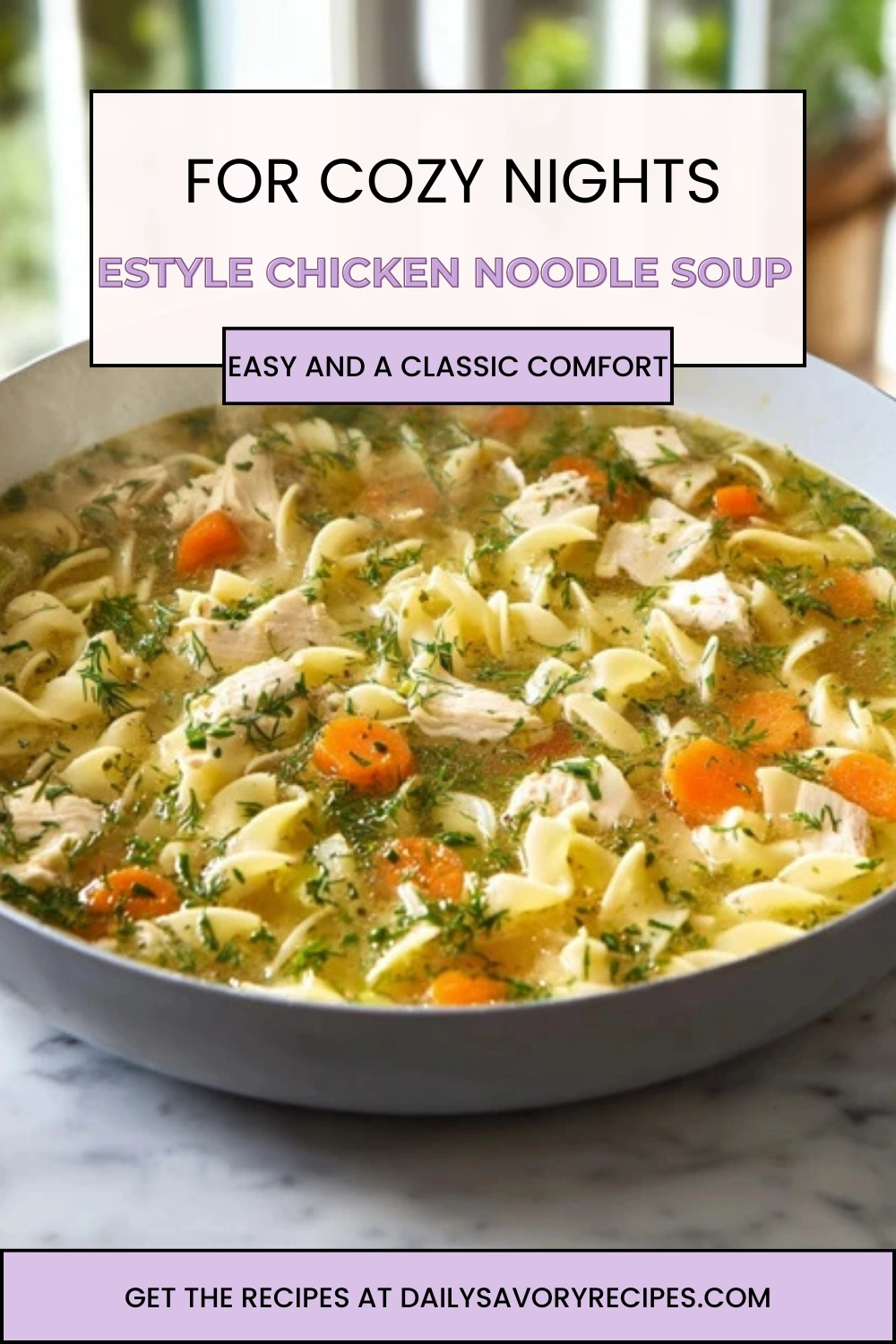

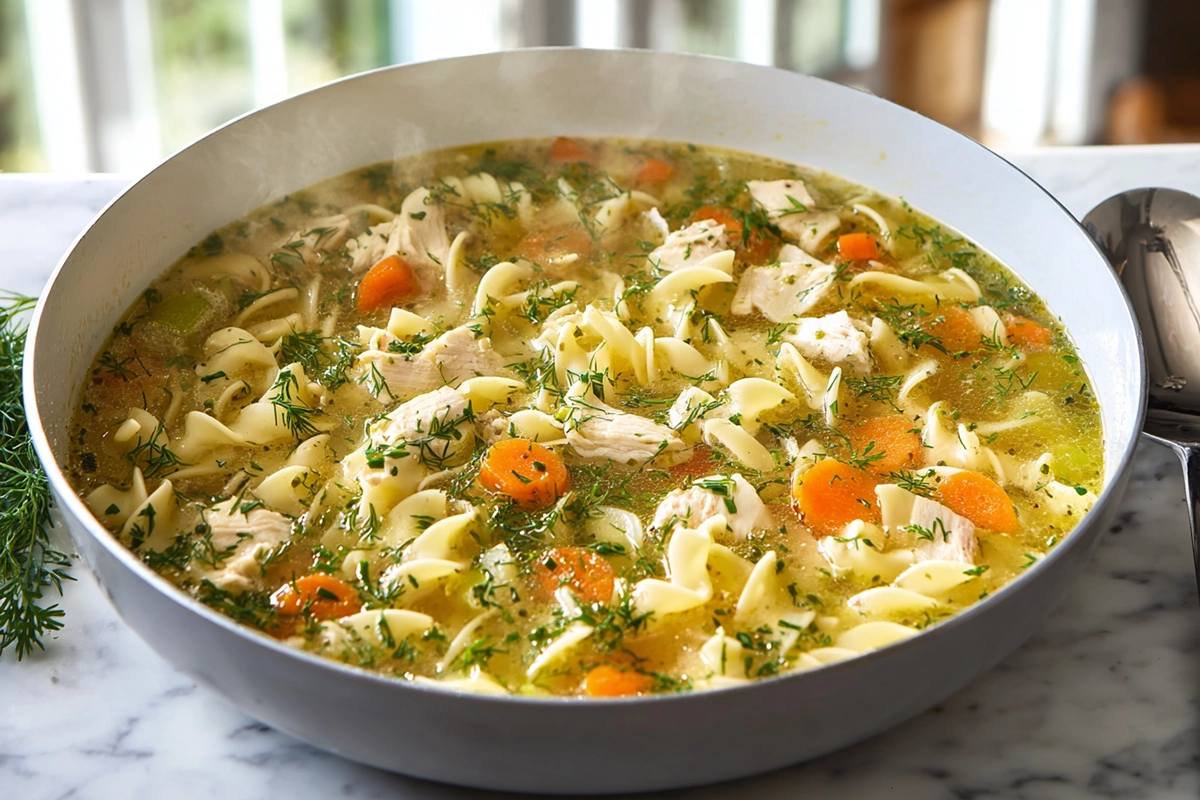
The Homestyle Chicken Noodle Soup I Trust

Homestyle Chicken Noodle Soup is the thing I make when the house is quiet, the weather’s miserable, or someone’s wrapped in a blanket claiming they’re “fine” but clearly not. You know the smell—the butter and vegetables softening, the steam hitting your face when you lift the lid, that clean chicken broth scent that somehow feels like a reset button. This is the soup that makes you slow down, whether you want to or not.
Here’s the problem with most chicken noodle soup recipes online: they’re either trying too hard or not trying at all. Some dump everything in at once and call it “rustic,” which usually means bland broth and overcooked noodles. Others lean on shortcuts that sound smart but leave you with soup that tastes thin or oddly flat. Chicken noodle soup looks simple, but it’s one of those recipes where small decisions make a huge difference.
So here’s my promise. This version is built to be dependable. No trendy twists, no mystery ingredients, no steps that only work if you own a $400 stockpot. Every choice—from the chicken to the herbs at the end—has a reason. I’ll tell you where you can cut corners, where you absolutely shouldn’t, and why this soup ends up tasting like something you’d actually crave again tomorrow.
Table of Contents
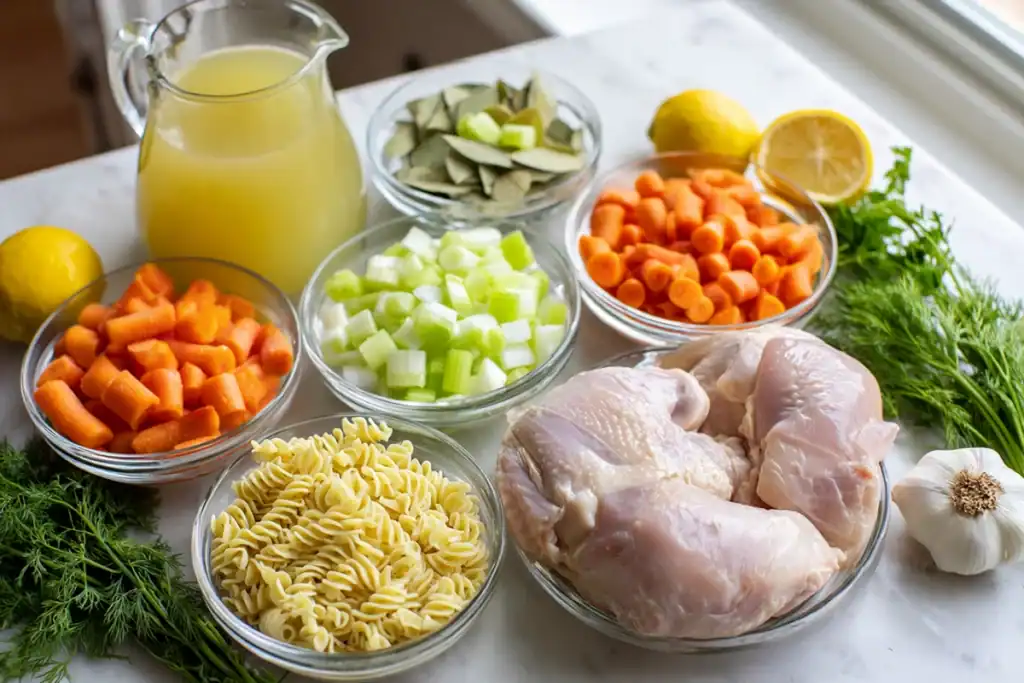
The No-Regret Ingredients
Unsalted Butter
Butter is the quiet backbone here. It gives the vegetables a round, savory base that oil alone just doesn’t. I use plain unsalted butter so I can control the salt later—this soup lives or dies on balance.
Onion
A basic yellow onion is exactly right. Nothing sweet, nothing fancy. Its job is to melt into the background and make the broth taste fuller without announcing itself.
Carrots
Fresh carrots matter more than people think. Limp, old carrots taste dull once simmered, and that dullness carries through the whole pot. Peel them, dice them evenly, and don’t overthink it.
Celery
Celery isn’t here for crunch—it’s here for depth. Those two ribs add a savory, slightly bitter note that keeps the soup from tasting one-note. Don’t skip it, even if you think you don’t like celery.
Garlic
Fresh garlic only. Jerked garlic turns weird and bitter once cooked in soup. This is a background flavor, not a punch-you-in-the-face one, so subtlety matters.
Chicken Stock
Use a stock you’d actually drink warm. Store-bought is fine, but avoid anything labeled “low sodium” that tastes like water. A solid, middle-of-the-road brand is better than an expensive one that’s trying too hard.
Bay Leaves
Two bay leaves add quiet complexity you’d miss if they weren’t there. They don’t scream flavor, but they round everything out. Just remember to fish them out later—no one wants to bite into one.
Bone-In, Skinless Chicken Breasts
This is non-negotiable. The bones give the broth body and real chicken flavor while the meat stays tender. Boneless chicken works, but you lose depth—and this soup is all about depth.
Wide Egg Noodles
Wide egg noodles hold up better and feel more comforting. Cheap is fine here—store brand is perfect. Just don’t use thin noodles unless you enjoy mush.
Fresh Parsley
Parsley adds freshness without stealing the spotlight. It keeps the soup from tasting heavy, especially if you’re going back for a second bowl.
Fresh Dill
Dill is what makes people pause mid-spoonful and say, “What is that?” In a good way. Fresh only—dried dill doesn’t belong here.
Lemon Juice
A small squeeze at the end wakes everything up. You don’t taste “lemon,” but you’ll notice if it’s missing. Bottled juice works in a pinch, but fresh is better if you have it.
How This Soup Builds Flavor Without Trying Too Hard
Let the Vegetables Do the Heavy Lifting
This soup starts quietly, and that’s on purpose. When the butter melts, and the onion, carrots, and celery hit the pot, you should hear a gentle sizzle—not a roar. Visually, you’re looking for the vegetables to soften and turn glossy, not brown. The smell at this stage is sweet and mellow, like a warm kitchen on a Sunday afternoon. If you touch a carrot with your spoon and it gives easily, you’re right where you want to be.
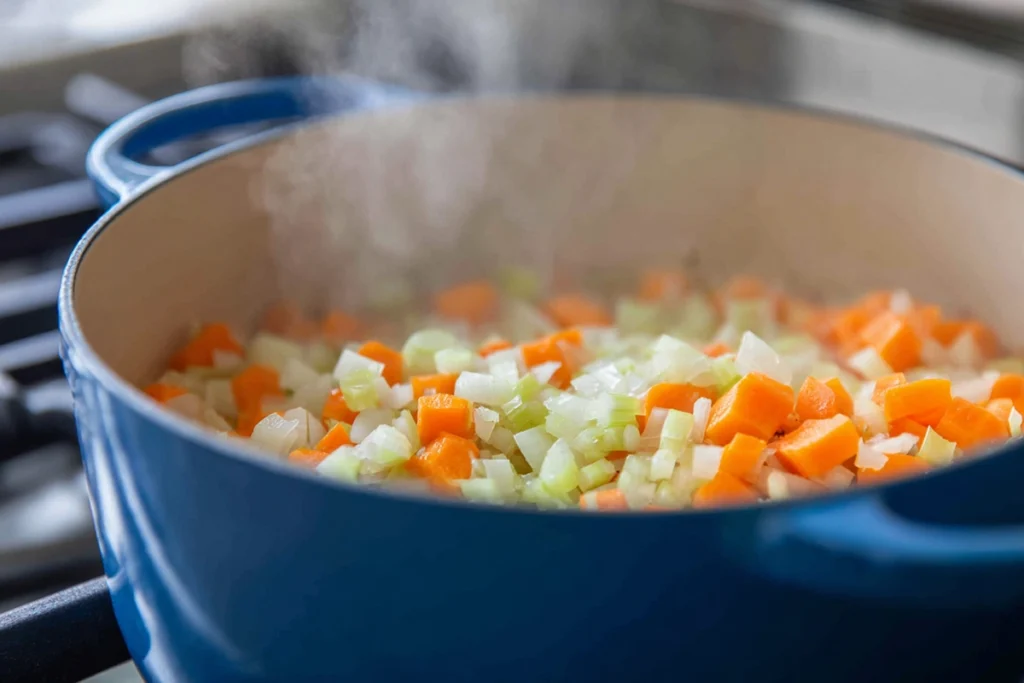
Garlic comes next, and this is where your nose matters more than the clock. Stir it in and keep things moving. You’re waiting for that brief whiff of toasted garlic—warm and savory—but the second it smells sharp or aggressive, you’ve gone too far. This part is fast, and restraint is the skill.
Build the Broth Gently, Not Aggressively
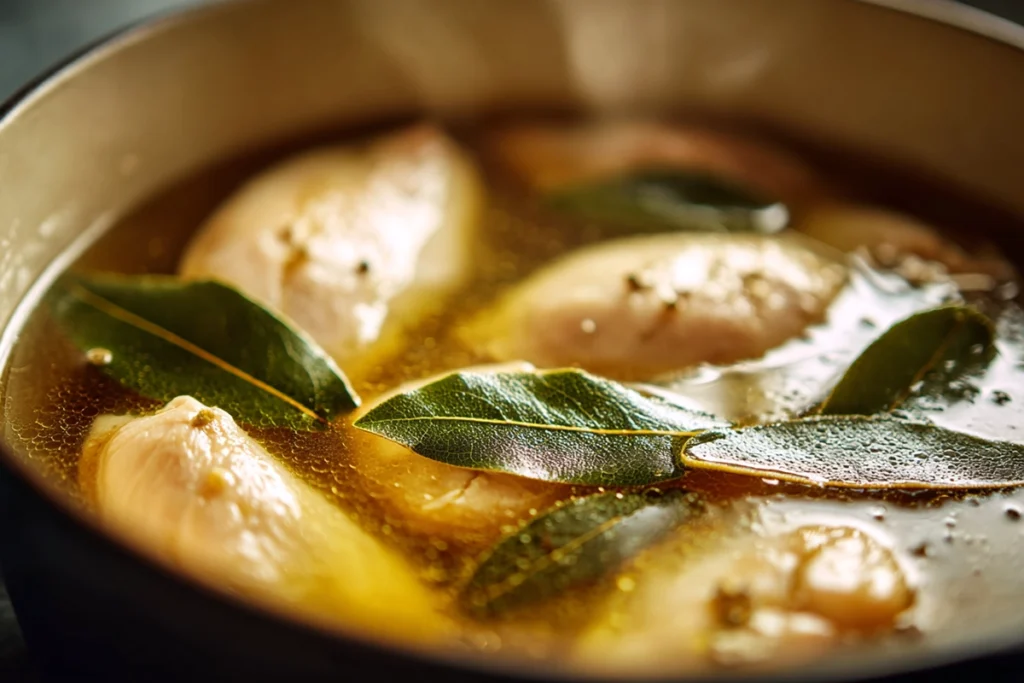
When the stock goes in, the pot should sound calm, not violent. You want small bubbles forming around the edges, not a rolling boil sloshing everything around. Drop in the bay leaves and chicken, and notice how the smell shifts from buttery vegetables to something deeper and more savory within a few minutes.
As it simmers, the chicken should look relaxed, not battered by the liquid. If you press it lightly with tongs, it should feel firm but forgiving, not rubbery. This is where the bones quietly do their job, enriching the broth while the meat cooks through slowly and evenly.
Finish With Restraint, Not Rush
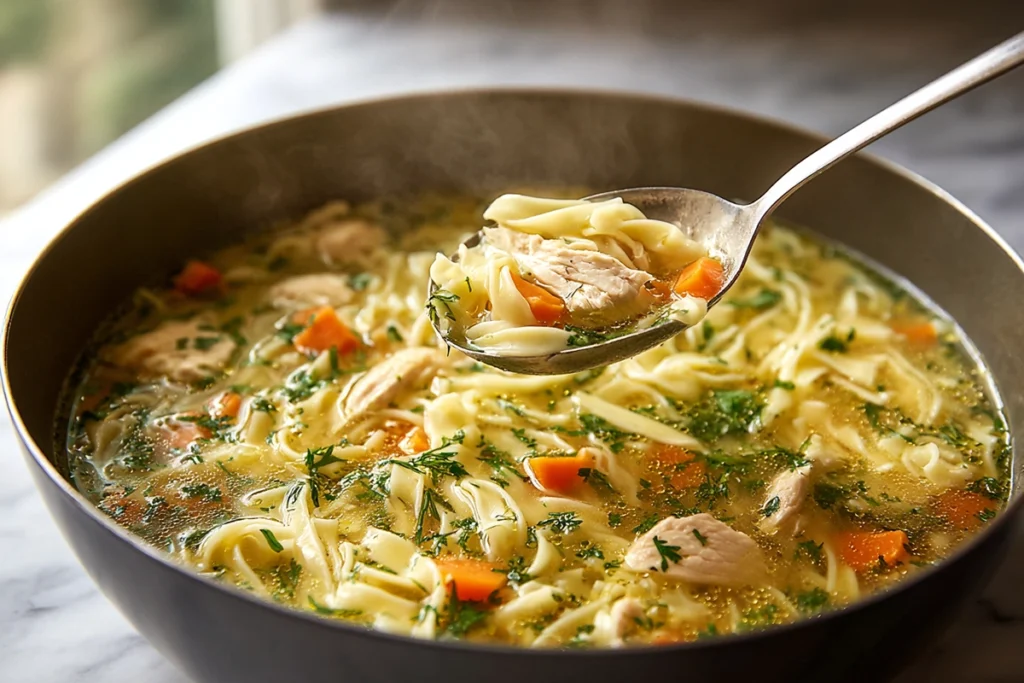
Once the chicken comes out, the broth should look slightly richer and smell unmistakably like chicken soup—not stock, not stew, but soup. After shredding the chicken, adding it back with the noodles should sound like a soft plop, not a splash. The noodles will swell and soften quickly; you’ll see them loosen and float as they cook.
The final touches happen off the heat. Fresh herbs should brighten the smell instantly, and the lemon juice should make the soup smell cleaner, almost lighter. Taste it. The broth should feel warm and full on your tongue, not heavy or sharp. If it makes you want another spoonful immediately, you’re done.
The Uh-Oh Moments (Where People Usually Mess This Up)
My Broth Tastes Flat
I’ve been there. Usually, this means the soup never really simmered—it just sat hot. Without that gentle bubbling, the chicken doesn’t give up enough flavor. Let it quietly work; you should see steady movement in the pot and smell the broth deepen as it cooks.
The Chicken Is Dry and Stringy
This happens when the pot boils too hard. I learned this the hard way with a lid rattling like it was late for work. Chicken likes calm heat. If it feels tight and fibrous when you shred it, next time lower the heat and trust the longer simmer.
The Noodles Turned to Mush
Egg noodles don’t need much time, and they don’t forgive overcooking. If the soup smells great but looks thick and starchy, the noodles have stayed in too long. They should look plump and tender but still hold their shape when you scoop them.
The Soup Tastes Heavy or Dull
This is almost always missing acid or herbs. Without that final hit of lemon and fresh greens, the soup can taste sleepy. When I skip it, the soup feels fine but forgettable. Add it, and suddenly everything wakes up.
That’s the difference between soup that’s just warm and soup you actually remember.
Make It Your Own (Without Ruining It)
Extra Cozy and Rich
On nights when the cold feels personal, I’ll add a small knob of butter right at the end and let it melt in slowly. You’ll see a faint sheen form on the surface, and the broth will feel silkier on your tongue without turning greasy. This isn’t everyday soup, but when you want comfort turned up a notch, it works.
Cold-Buster Mode
If someone’s fighting a head cold, I push the garlic and lemon just a little further. The smell becomes brighter and sharper, almost steamy in a way that clears your sinuses as you lean over the bowl. A few extra cracks of black pepper help too—noticeable, but not spicy.
Using Leftover or Rotisserie Chicken
I’ve done this more times than I can count. Shred the cooked chicken and add it near the end so it doesn’t dry out. The soup will still be good, but here’s the honest truth: you lose some depth because you’re missing the bones. If you go this route, use the best stock you can find.
Gluten-Free Without Sad Noodles
Gluten-free noodles work, but they behave differently. They soften fast and go mushy if you blink at them too long. I cook them separately until just tender, then add them to each bowl instead of the pot. The texture stays intact, and the soup doesn’t thicken into paste.
Serving & Storing Like a Real Person
I eat this soup hot, straight from the pot, with nothing more than a piece of buttered toast or a simple cracker on the side. No garnish gymnastics. Just a big bowl, a spoon, and a few quiet minutes. It’s even better the next day, when the broth has settled, and everything tastes more like itself.
For storage, keep the soup and noodles separate if you can. In the fridge, the broth stays great for up to four days, but the noodles will keep absorbing liquid and turn soft. If you’re freezing it, freeze the broth and chicken only. Let it cool completely first, then store it flat so it thaws evenly. Add fresh noodles when you reheat—it makes a huge difference.
Reheat gently on the stove until you see steam and small bubbles around the edges. If it smells rich and clean, you’re good. If it smells flat, a squeeze of lemon brings it right back.
This Homestyle Chicken Noodle Soup isn’t flashy, but it’s the kind you come back to when you need something that works. Warm, steady, and exactly what you hoped it would be.
Get inspired with more mouthwatering recipes! Follow me on Pinterest for new cooking ideas every week.
Frequently Asked Questions
Can I use chicken thighs instead of breasts?
Yes, and they work well. Thighs stay juicier and add a slightly richer flavor. Just know the broth will be a bit darker and heavier, which some people love, and others don’t. I still prefer bone-in breasts for a cleaner, classic soup taste.
Why does my soup taste bland even after salting?
That usually means it’s missing acid, not salt. A small squeeze of lemon at the end wakes everything up. If it still tastes flat, your stock might be weak—next time, use a better brand or simmer the chicken a little longer.
Can I freeze chicken noodle soup?
Yes, but freeze the soup without the noodles. If you freeze it with noodles, they turn soft and bloated when reheated. Freeze the broth and chicken, then add fresh noodles when you warm it up.
How do I keep the noodles from absorbing all the broth?
Don’t cook them in the soup if you plan on leftovers. Cook them separately and add them to each bowl. That way the broth stays brothy instead of turning into chicken-flavored paste overnight.
Is it okay to skip the lemon juice?
You can, but the soup will taste heavier and less bright. Lemon doesn’t make it sour—it just sharpens everything. If you skip it, you’ll probably feel like something’s missing, even if you can’t name it.
Can I make this in a slow cooker or Instant Pot?
Yes, but it’s not my favorite method. Slow cookers can dull the flavors, and pressure cookers make timing the noodles tricky. It works, but you’ll get better control and better texture on the stovetop.
How long will it last in the fridge?
Stored properly, the broth and chicken will last up to four days in the fridge. After that, the flavor fades and the herbs lose their freshness. If it smells flat instead of savory, it’s time to let it go.
PrintHomestyle Chicken Noodle Soup
Homestyle Chicken Noodle Soup made with bone-in chicken, egg noodles, and fresh herbs. Cozy, reliable, and perfect for cold days or sick days.
- Prep Time: 20 minutes
- Cook Time: 50 minutes
- Total Time: 1 hour 10 minutes
- Yield: 6 servings 1x
- Category: Dinner
- Method: Simmering
- Cuisine: American
- Diet: Vegetarian
Ingredients
- 2 tablespoons unsalted butter
- 1 onion
- 2 carrots
- 2 celery ribs
- 3 cloves garlic
- 8 cups chicken stock
- 2 bay leaves
- 2 1/2 pounds bone-in skinless chicken breasts
- 2 1/2 cups wide egg noodles
- 2 tablespoons fresh parsley
- 2 tablespoons fresh dill
- 1 tablespoon lemon juice
- Kosher salt
- Black pepper
Instructions
- Melt butter and cook onion, carrots, and celery until softened.
- Add garlic and cook briefly until fragrant.
- Add chicken stock, bay leaves, salt, and pepper.
- Add chicken and simmer gently until cooked through.
- Remove chicken, shred meat, and discard bones.
- Return chicken to pot and add noodles.
- Cook until noodles are tender.
- Remove from heat and stir in herbs and lemon juice.
- Adjust seasoning and serve hot.
Notes
- For best texture, store noodles separately if making ahead.
- Freeze soup without noodles and add fresh noodles when reheating.
Nutrition
- Serving Size: 1 bowl
- Calories: 420
- Sugar: 6
- Sodium: 820
- Fat: 18
- Saturated Fat: 8
- Unsaturated Fat: 9
- Trans Fat: 0
- Carbohydrates: 28
- Fiber: 3
- Protein: 38
- Cholesterol: 145