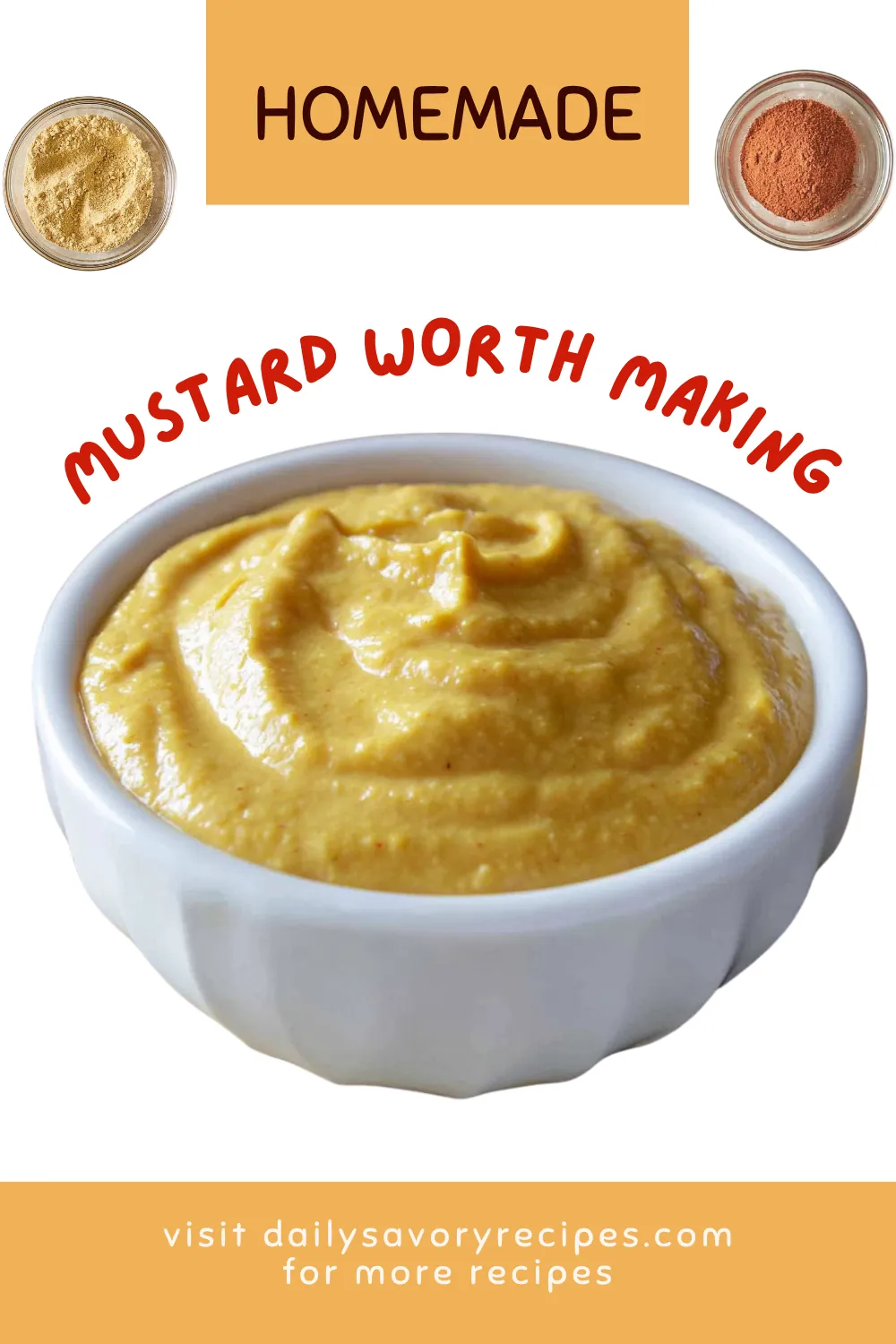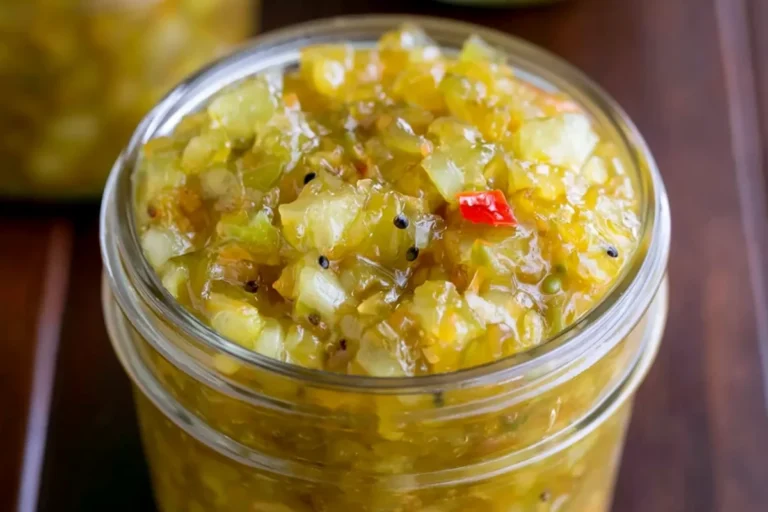


Homemade Mustard Recipe That Actually Works in Your Kitchen

A good mustard recipe should hit you with a clean, sharp bite—not just sour, not just spicy. This one does exactly that, and it’s built from pantry ingredients you probably already have.
What makes this version worth your time is the slow simmer. It gives you control over the texture and tames the harsh edge just enough. I’ll walk you through how to handle the heat, the fumes, and the timing so you end up with something you’ll actually use.
A Quick Look at This Mustard Recipe
This mustard recipe is straightforward but not instant. You’re working with dry mustard powder, water, and vinegar, and the transformation happens slowly over heat.
Expect about 30 to 45 minutes of active cooking before the mixture thickens into a paste. Then, another few minutes after adding vinegar to reach the final consistency. It won’t look like store-bought mustard right away—that’s normal. It firms up as it cools.
Flavor-wise, it starts aggressively. Sharp. Almost too much. Give it a few days in the fridge, and it settles into something balanced and usable.
Why This Homemade Mustard Recipe Stands Out
Most quick versions skip the cooking step. I don’t. That simmer changes everything.
Cooking the mixture allows the mustard to develop depth instead of just heat. You get a smoother texture and a flavor that doesn’t hit all at once. It spreads better, too.
Another thing. You control the salt, the acidity, and the garlic. That matters more than people think. A small change—like using garlic purée instead of powder—can shift the entire profile.
It’s not complicated, but it does require attention. Worth it.
Ingredients That Shape the Flavor
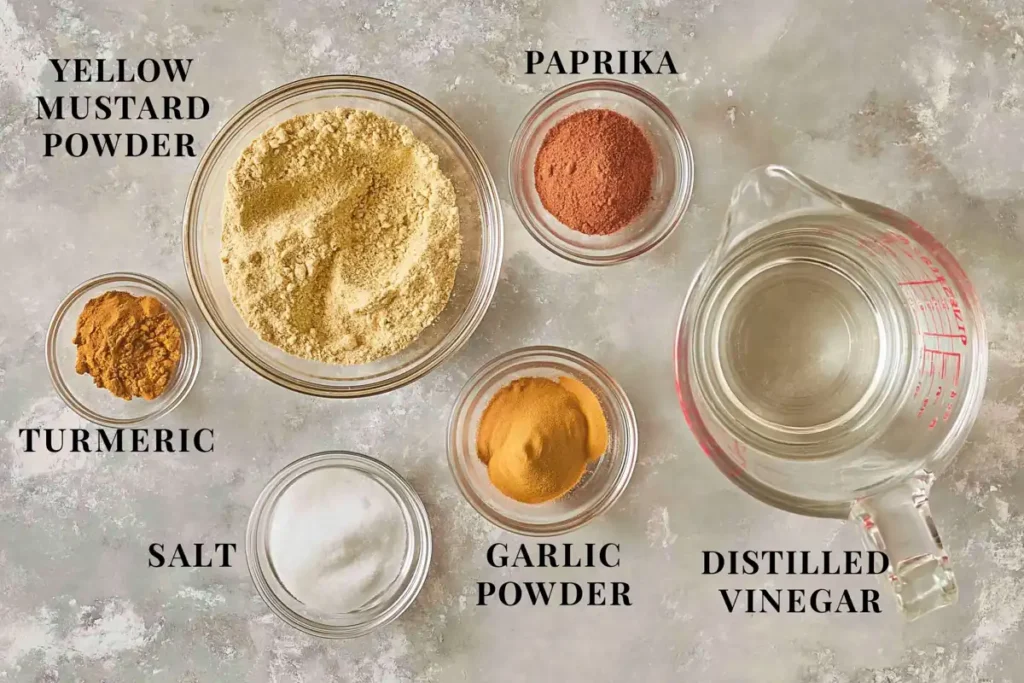
Start with yellow dry mustard powder. That’s your base. Different brands vary in strength, so if your first batch feels too strong, it’s not just you—it happens.
The water hydrates the powder and starts the reaction that creates that familiar bite. Keep it cold when you mix. It helps you get a smoother blend before the heat comes in.
Salt is subtle here, but important. Use coarse sea salt or kosher salt—they dissolve cleanly and don’t leave a harsh finish.
Now the supporting ingredients:
- Turmeric gives that classic yellow color and a mild earthy note
- Garlic purée adds depth; powder works, but it’s flatter
- Paprika brings a soft warmth, not heat
Then comes the white distilled vinegar. This is what sharpens the flavor and stabilizes the mustard. Add it later, not at the start. That timing matters.
How to Make This Mustard Recipe Step by Step
Start by whisking everything except the vinegar in a small nonreactive saucepan. Take your time here. You want a smooth mixture with no dry pockets. If you rush this step, you’ll fight lumps later.
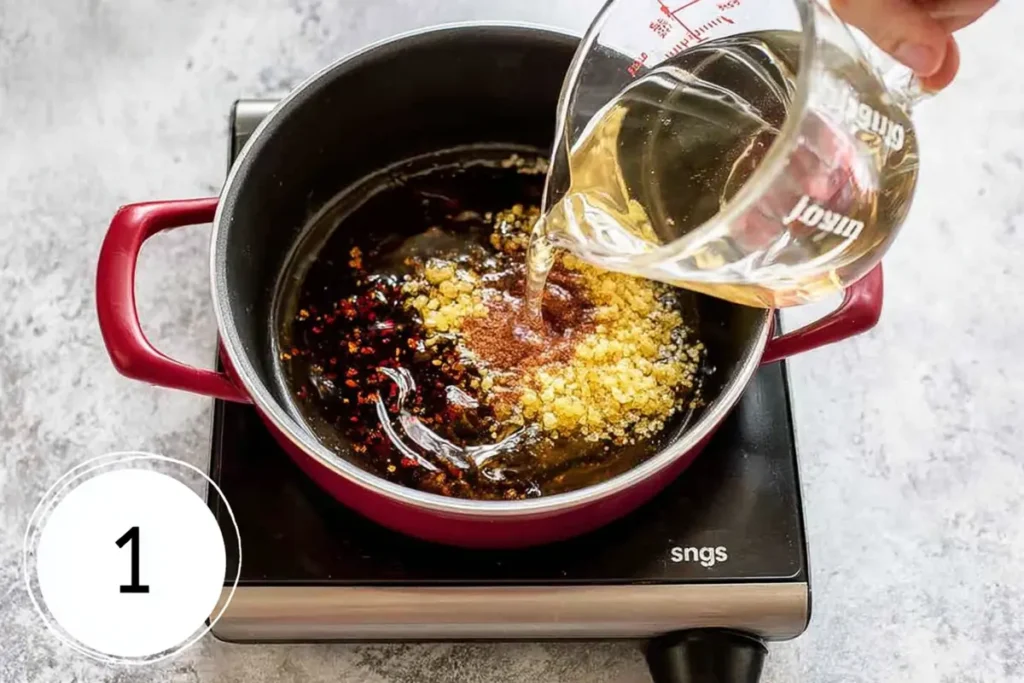
Set the pan over medium-low heat. Not high. Mustard burns easily, and once it does, there’s no fixing it.
As it heats, you’ll notice a strong aroma building. That’s normal. Keep the kitchen ventilated—open a window if you can. Stir every few minutes to keep the mixture from sticking.
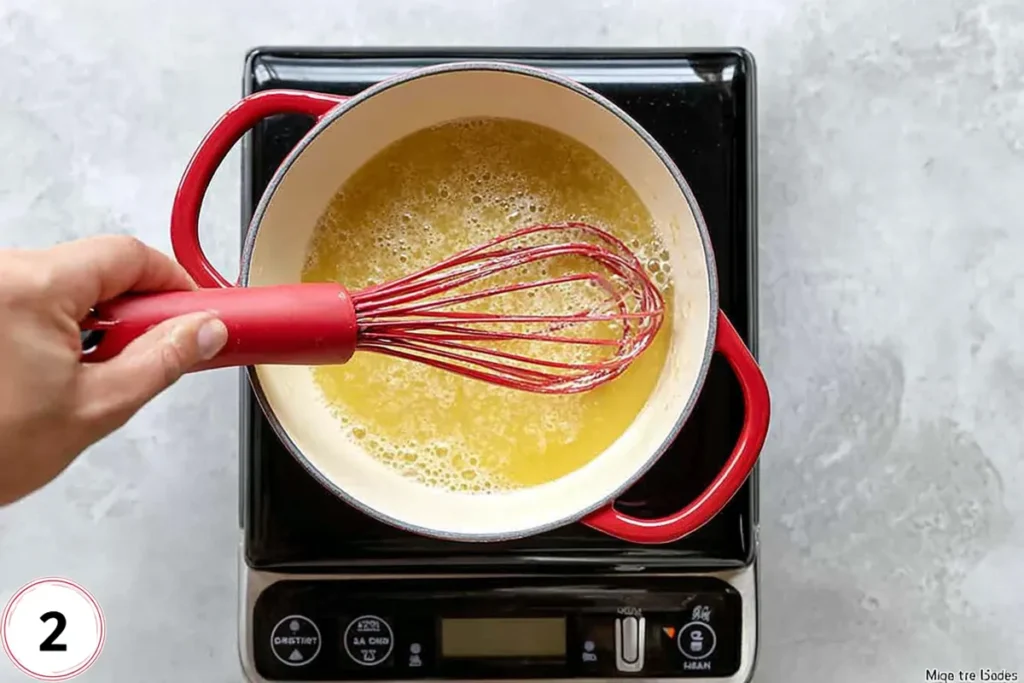
Now whisk in the vinegar. The texture loosens immediately. Keep cooking for a few more minutes until it reaches a consistency slightly thinner than store-bought mustard.
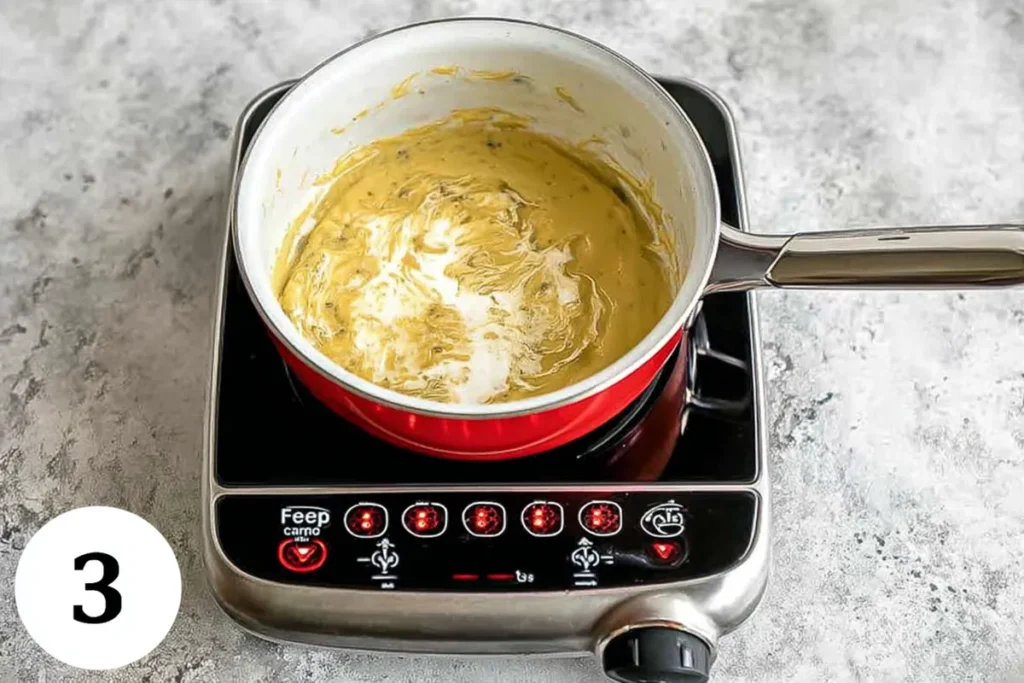
Remove it from the heat right away. Don’t let it sit on a hot burner—it keeps cooking and can tighten too much.
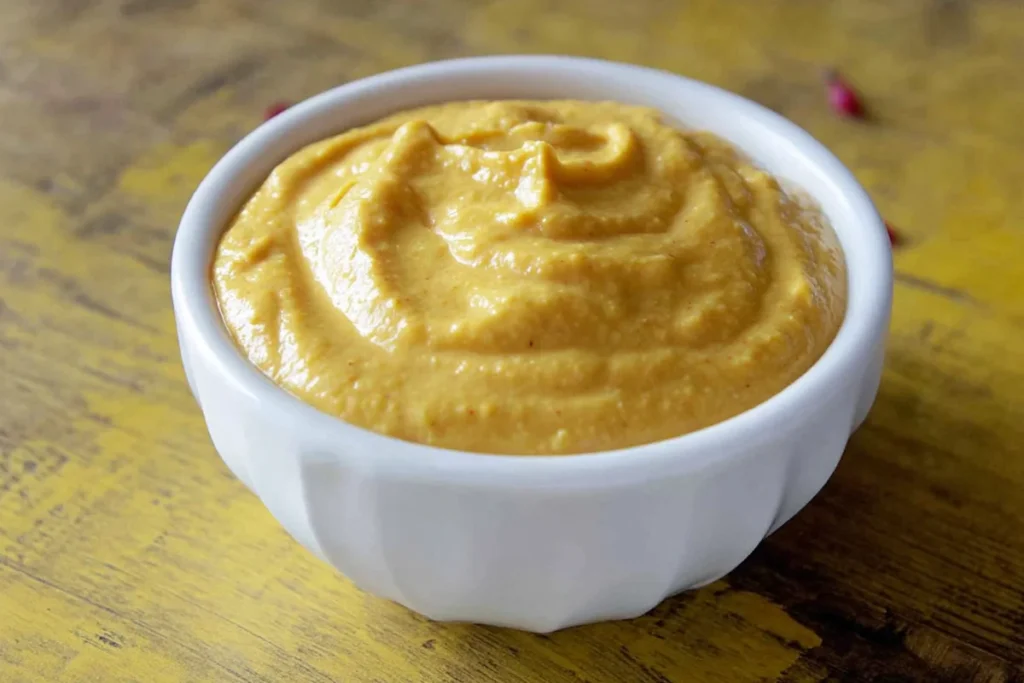
Let it cool for about 10 minutes, then transfer it to a container. It thickens further as it cools, so don’t overcook it trying to get it “perfect” in the pan.
Choosing the Right Cookware for Mustard
This is one of those details people skip. It shouldn’t be.
Use a nonreactive saucepan—stainless steel, glass-lined, or ceramic. Avoid aluminum or copper. The acidity from the mustard and vinegar can react with those metals, which affects both color and flavor.
If you’ve ever seen mustard turn slightly gray or taste metallic, that’s usually the reason.
It’s a small choice, but it protects the final result.
Pro Tips to Handle Flavor and Texture
The first thing you’ll notice after making this mustard recipe is how strong it smells. That’s part of the process.
Keep airflow moving while it cooks. Even a small fan or open window helps. It’s not dangerous, just intense.
If your mustard turns out too thick, you can loosen it with a teaspoon of water or vinegar after cooling. Stir it in slowly. It doesn’t take much.
Too sharp after a few days? Give it more time. Mustard mellows naturally in the fridge. I’ve had batches settle nicely after a week.
And one more thing—store it in an airtight container. It keeps for up to three months, and the flavor continues to develop.
Simple Ways to Customize Your Mustard Recipe
Once you’ve made this version once, you can start adjusting.
Swap the vinegar for apple cider vinegar if you want a softer acidity. It rounds out the edges a bit.
Add a small amount of honey—about a teaspoon at a time—if you prefer a slightly sweet finish. Don’t overdo it or you lose that clean mustard bite.
You can also experiment with spices. A pinch of cayenne adds heat, while a bit more paprika leans it toward warmth.
Keep changes small. Mustard reacts quickly to adjustments.
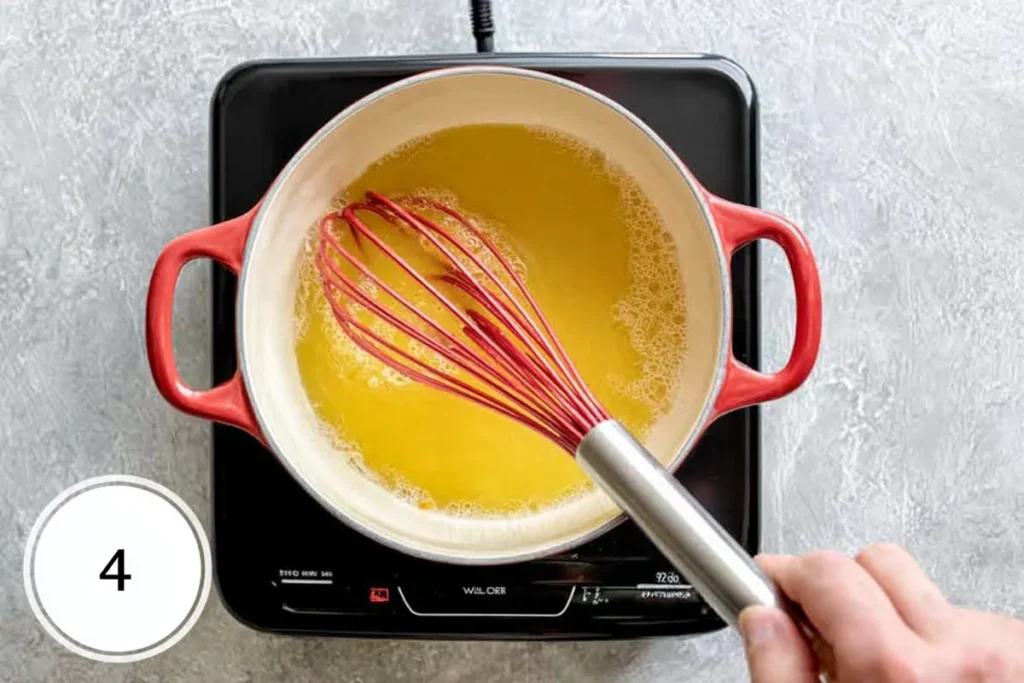
Your Homemade Mustard Questions, Answered
Why is my mustard bitter?
Usually it’s from cooking too hot or too long. Keep the heat low and steady. High heat can push the flavor in the wrong direction.
Can I store this mustard for long-term storage?
You can use proper hot-water bath canning methods, but for most kitchens, refrigeration is simpler and more reliable.
Why does it taste too strong at first?
Fresh mustard is always sharper. Time softens it. Give it a few days before judging the final flavor.
How do I know it’s done cooking?
Look at texture, not time. It should form a thick paste before vinegar, then loosen slightly after. If it coats the spoon and slowly drips off, you’re there.
A Staple Worth Keeping in Your Fridge
Once you’ve made this mustard recipe a couple of times, it becomes routine. The key is patience with the simmer and restraint with adjustments.
You end up with something that tastes as if it came from a good deli, not a squeeze bottle. And it holds well for weeks.
Every recipe I share is an invitation from my kitchen to yours. This one just happens to sit quietly in the fridge, ready whenever you need it.
PrintHomemade Mustard Recipe

This homemade mustard recipe delivers bold, sharp flavor using simple pantry ingredients and a slow simmer technique for better texture and balance.
- Prep Time: 1 hour 15 minutes
- Cook Time: 1 hour
- Total Time: 2 hours 15 minutes
- Yield: 48 servings 1x
- Category: Condiment
- Method: Stovetop
- Cuisine: American
Ingredients
- 1 cup cold water
- 3/4 cup yellow dry mustard powder
- 3/4 teaspoon coarse sea salt or kosher salt
- 1/2 teaspoon ground turmeric
- 1 teaspoon garlic purée or 1/8 teaspoon garlic powder
- 1/8 teaspoon paprika
- 1/2 cup white distilled vinegar
Instructions
- Whisk water, mustard powder, salt, turmeric, garlic, and paprika in a nonreactive saucepan until smooth
- Cook over medium-low heat, stirring often, until thickened into a paste (30–45 minutes)
- Keep the kitchen ventilated while cooking due to strong mustard fumes
- Whisk in vinegar and continue cooking until slightly thinner than store-bought mustard
- Remove from heat and let cool for 7–15 minutes
- Transfer to an airtight container and refrigerate up to 3 months
- Allow the mustard to mellow in flavor over several days before using
Notes
- Use a nonreactive saucepan to avoid metallic taste or discoloration
- Cook on low heat to prevent bitterness
- Mustard thickens further as it cools
- Flavor mellows over time in the fridge
- Adjust consistency with small amounts of water or vinegar if needed
Nutrition
- Serving Size: 1 tablespoon
- Calories: 15
- Sugar: 0
- Sodium: 60
- Fat: 1
- Saturated Fat: 0
- Unsaturated Fat: 1
- Trans Fat: 0
- Carbohydrates: 1
- Fiber: 0
- Protein: 1
- Cholesterol: 0