
Spring Veggie Board That Feels Fresh, Simple, and Ready to Serve

A Spring Veggie Board is one of those dishes that looks thoughtful but doesn’t ask much from you. Fresh vegetables, a few good dips, and a simple layout—that’s really it. The result is colorful, crisp, and easy to share.
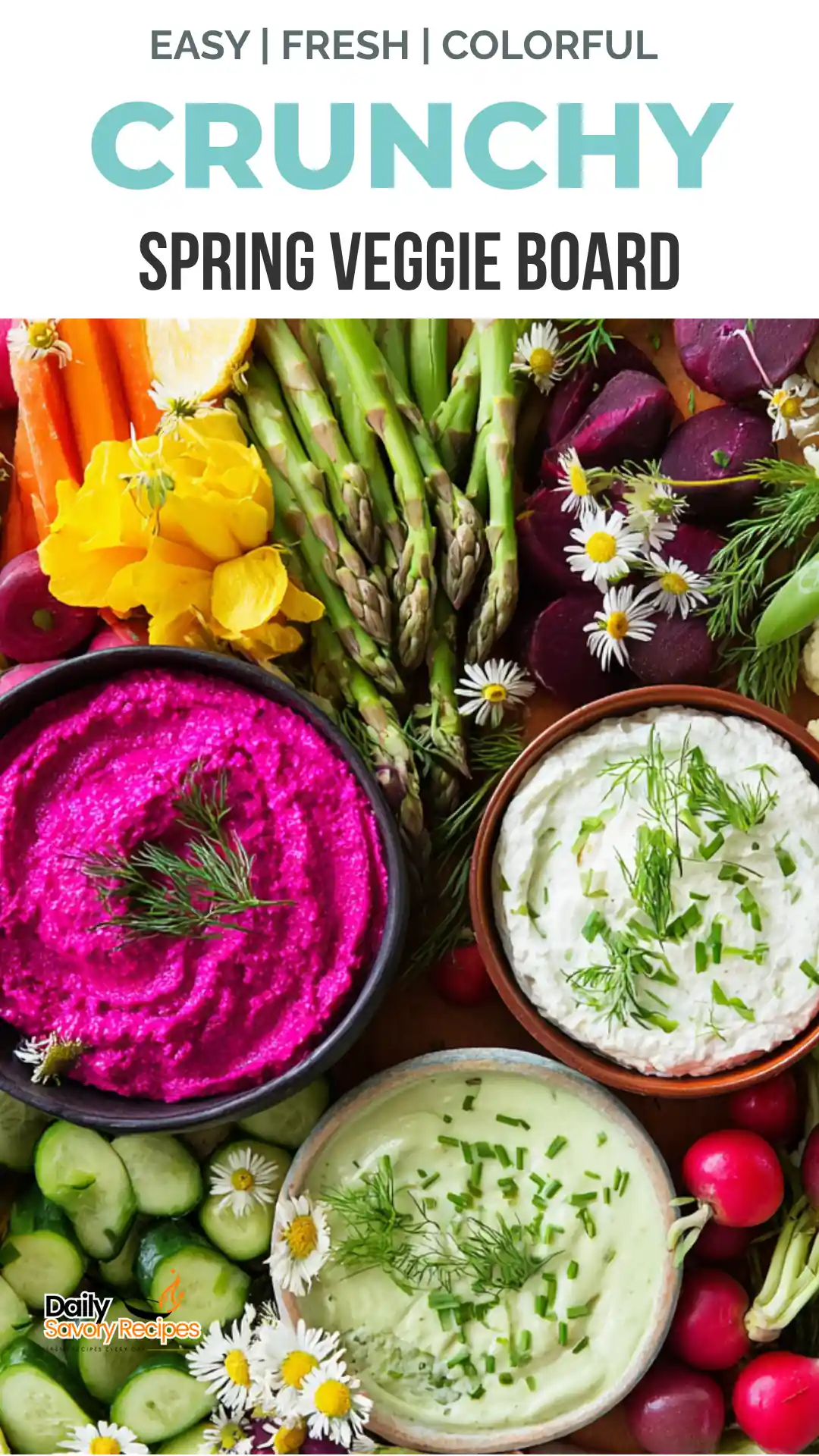
What makes this version worth trying is the way it’s arranged. Instead of piling everything on, you build it from the center out. It gives the board structure, and it actually makes serving easier.
I’ll walk you through how I set it up in my own kitchen, so you can recreate it without overthinking it.
What Makes a Spring Veggie Board Work
Start with what’s in season. Spring vegetables have a natural sweetness and snap that you don’t need to mask with heavy sauces or cooking.
Balance matters more than variety. You don’t need ten different vegetables—six or seven is plenty if they contrast well. Think crisp carrots next to tender asparagus, or juicy cucumbers against firm cauliflower.
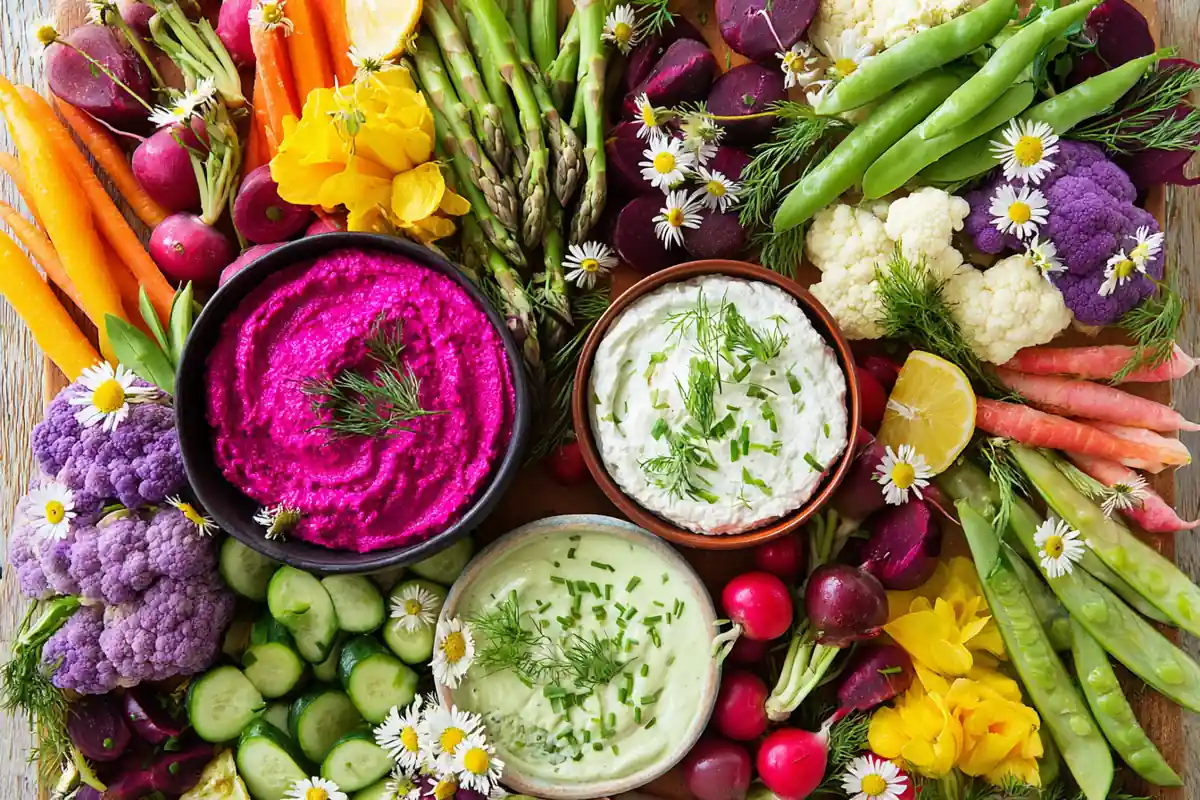
Color does a lot of the work for you. Orange carrots, green peas, pale cauliflower, bright radishes—it builds a board that looks full before you’ve even filled every space.
Keep it simple. This isn’t a composed salad. It’s meant to feel relaxed and easy to reach for.
Choosing the Right Vegetables for a Spring Veggie Board
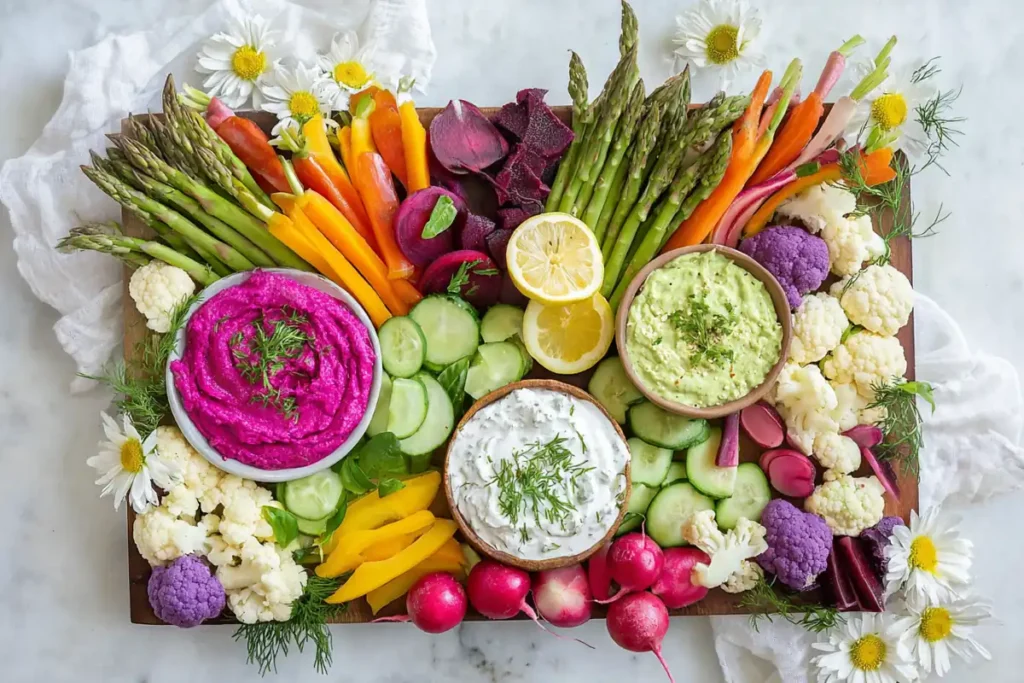
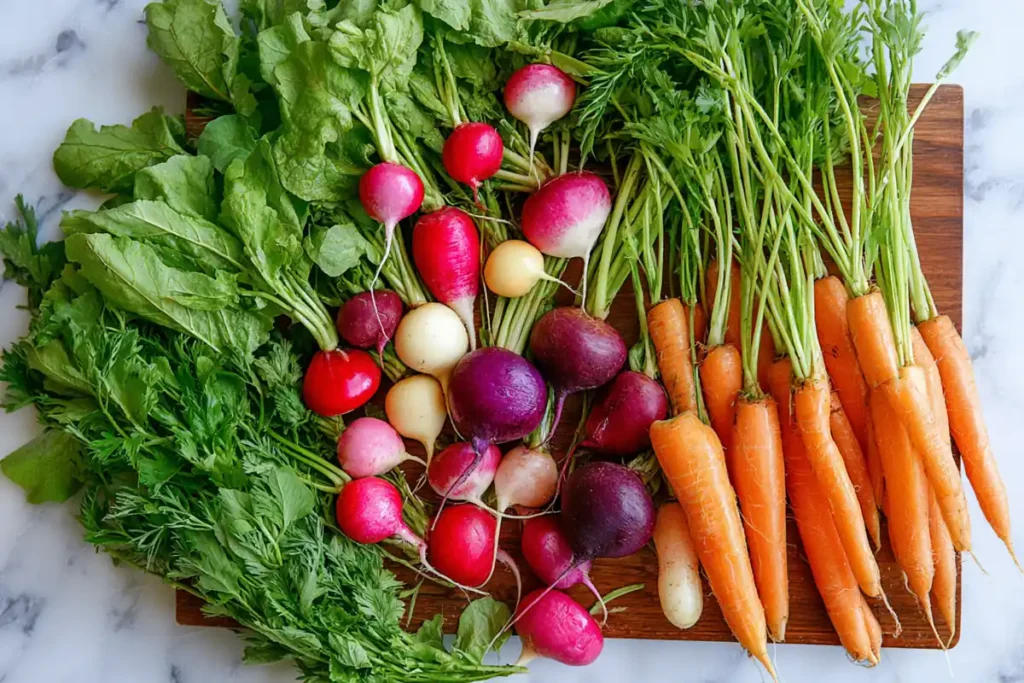
I like to build around a mix of textures. Carrots and cucumbers bring that clean crunch. Sugar snap peas add a bit of sweetness. Asparagus gives you something slightly more tender, especially if it’s very fresh.
Cut size matters more than people expect. If pieces are too large, they’re awkward to dip. Too small, and they get lost on the board. Aim for pieces about the length of your finger—that’s usually easy to grab and dip in one motion.
For visual contrast, I use a mix of colors. Orange and purple cauliflower works well here, along with Easter Egg and watermelon radishes. You don’t need both, but having at least one bold color makes the board feel intentional.
Leave everything raw and dry. If vegetables are wet, dips won’t cling properly. A quick pat with a towel fixes that.
Dips That Bring the Board Together
Three dips is a good number. It gives variety without crowding the board.
I usually go with hummus, a yogurt-based dip, and a goat cheese spread. Each one brings something different. Hummus is earthy and smooth. Yogurt adds brightness. Goat cheese has a bit more richness and tang.
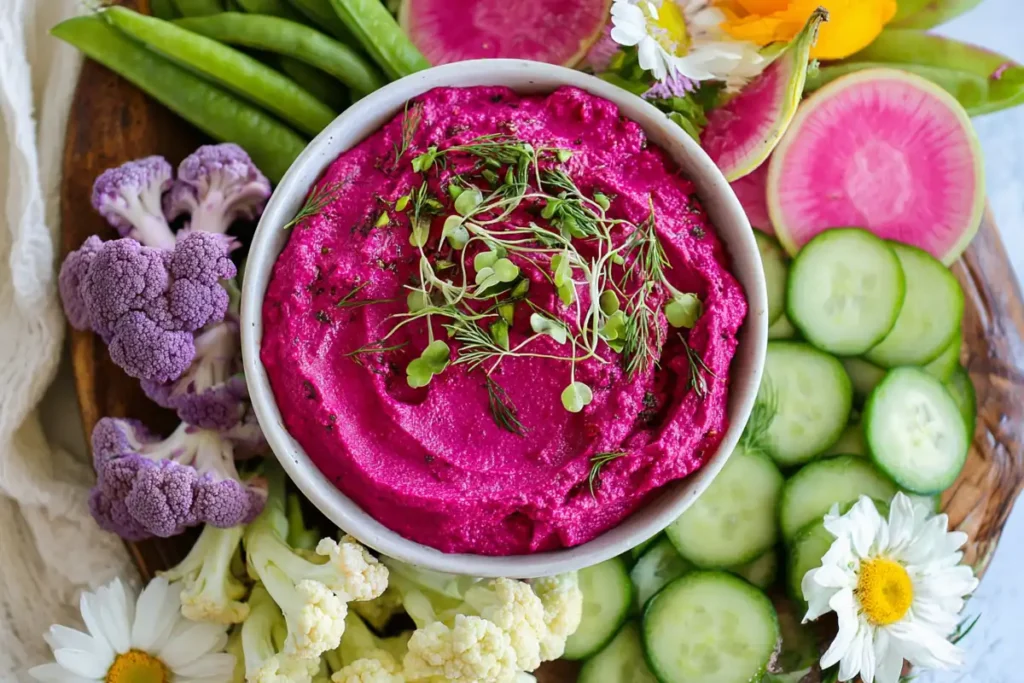
Placement is just as important as the dips themselves. Set them in small bowls and place them toward the center. That gives you a natural anchor point to build around.
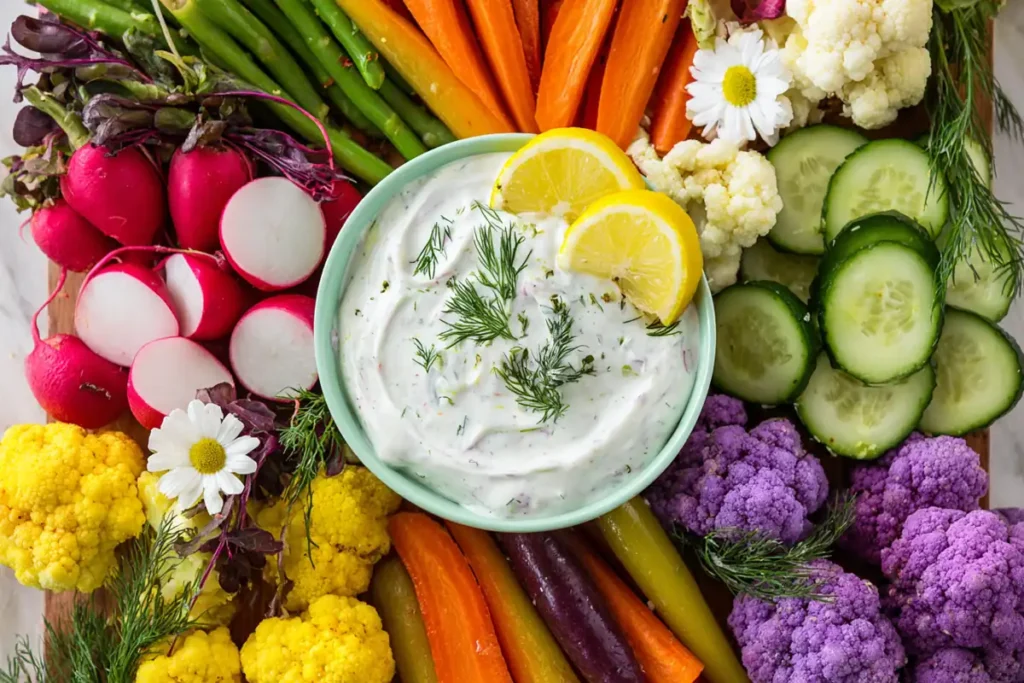
Don’t overfill the bowls. Leave a little space so dipping feels clean, not messy. It’s a small detail, but it makes a difference when people start serving themselves.
How to Assemble a Spring Veggie Board Step by Step
Start by placing your three dips into small bowls and setting them on a large board. Give them a bit of space between each one. You’re creating the center of the layout here.
Next, build outward. Arrange the carrots and asparagus so they fan out from the bowls. Think of it like spokes on a wheel. This creates natural sections without needing dividers.
Follow those lines with your sugar snap peas and cucumbers. Let them continue the pattern outward. At this stage, the board starts to look structured instead of scattered.
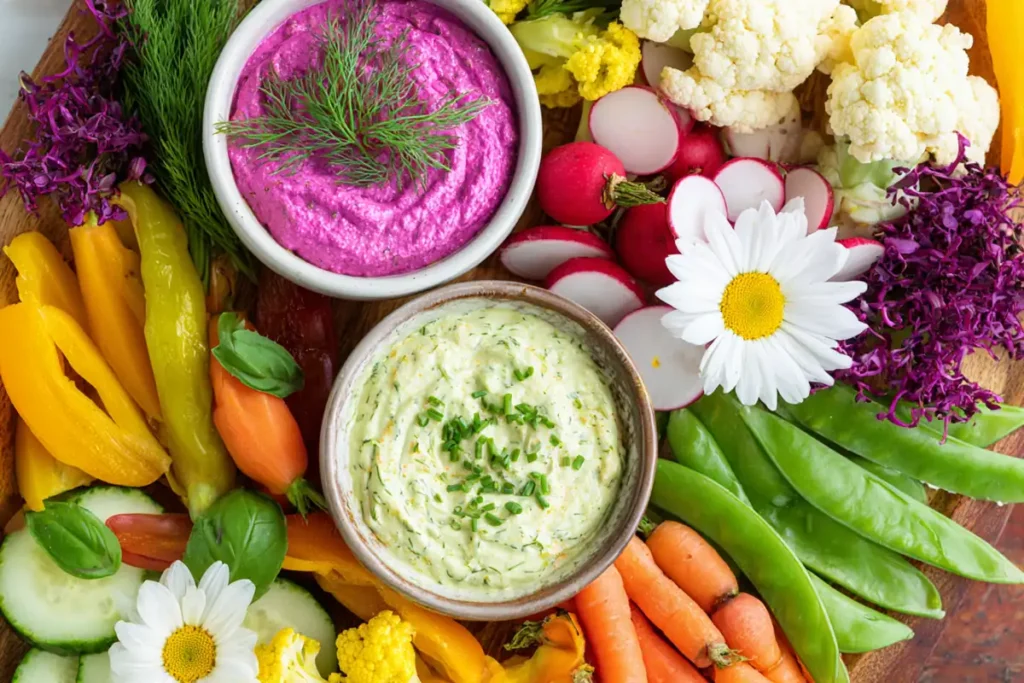
Now bring in the cauliflower florets. Tuck them around the dip bowls, filling the tighter spaces near the center. They act as a transition between dips and longer vegetables.
After that, place the radishes wherever you see gaps forming. This is where you adjust the balance. If one side looks heavy, spread things out a bit.
Finish with the details. Add your spring herbs—basil, dill, or microgreens—right in the center and lightly across the board. If you’re using edible flowers, place them sparingly around the edges.
It doesn’t need to be perfect. If it looks full and easy to reach, it’s ready.
Simple Ways to Customize Your Veggie Board
Swap vegetables based on what you find fresh. Green beans or baby zucchini can work in place of asparagus. If radishes aren’t your thing, sliced bell peppers give a similar color pop.
Herbs can shift the flavor slightly. Dill leans fresh and sharp, while basil feels softer. I use whatever I have on hand.
Edible flowers are optional, but they do add something visually. Even a few small ones can change the feel of the board.
Keep the structure the same. That’s what holds everything together, no matter what you swap in.
Frequently Asked Questions (FAQ)
How far in advance can I prepare a spring veggie board?
You can prep the vegetables a few hours ahead—wash, cut, and store them in the fridge. I usually wait to assemble the board until just before serving, so everything stays crisp and fresh.
How do I keep vegetables fresh and crisp?
Keep them chilled and dry. If you’ve washed them, dry thoroughly with a towel. Cold vegetables hold their texture better, especially cucumbers and snap peas.
What’s the best way to arrange the board visually?
Start from the center with dips, then build outward in sections. It’s easier than trying to fill the board randomly, and it naturally looks more balanced.
Can I make this board kid-friendly?
Yes—cut everything slightly smaller and keep dips mild. A simple yogurt dip or plain hummus usually works well. Familiar shapes help too.
A Simple Board Worth Repeating
This kind of board comes together quickly, but it still feels thoughtful when you set it on the table. Focus on fresh vegetables, give them a clear layout, and don’t crowd the board.
Once you’ve done it once, you won’t need to think much the next time. Every recipe I share is an invitation from my kitchen to yours.
PrintSpring Veggie Board

A fresh Spring Veggie Board with crisp vegetables and creamy dips. Easy to assemble in minutes—perfect for gatherings and light entertaining.
- Prep Time: 20 minutes
- Total Time: 20 minutes
- Yield: 4–6 servings 1x
- Category: Appetizer
- Method: No-cook
- Cuisine: American / Mediterranean
Ingredients
- Rainbow carrots
- Asparagus
- Sugar snap peas
- Cucumbers
- Orange and purple cauliflower
- Easter Egg radishes
- Watermelon radishes
- Fresh herbs (basil, dill, microgreens)
- Edible flowers (optional)
- Hummus
- Yogurt dip
- Goat cheese spread
Instructions
- Place dips into small bowls and set them on a large board
- Arrange carrots and asparagus fanning outward from the center
- Add sugar snap peas and cucumbers following the same pattern
- Fill in with cauliflower florets around the dips
- Place radishes into empty spaces for balance
- Finish with fresh herbs and edible flowers
- Serve immediately
Notes
- Use fresh, dry vegetables for best texture
- Keep dips slightly spaced for easy serving
- Cut vegetables into easy-to-dip sizes
- Assemble just before serving for freshness
Nutrition
- Serving Size: 1 serving
- Calories: 180
- Sugar: 6
- Sodium: 220
- Fat: 10
- Saturated Fat: 3
- Unsaturated Fat: 6
- Trans Fat: 0
- Carbohydrates: 18
- Fiber: 5
- Protein: 6
- Cholesterol: 10