
Artisan Charcuterie Board for a Beautiful No-Cook Party Appetizer

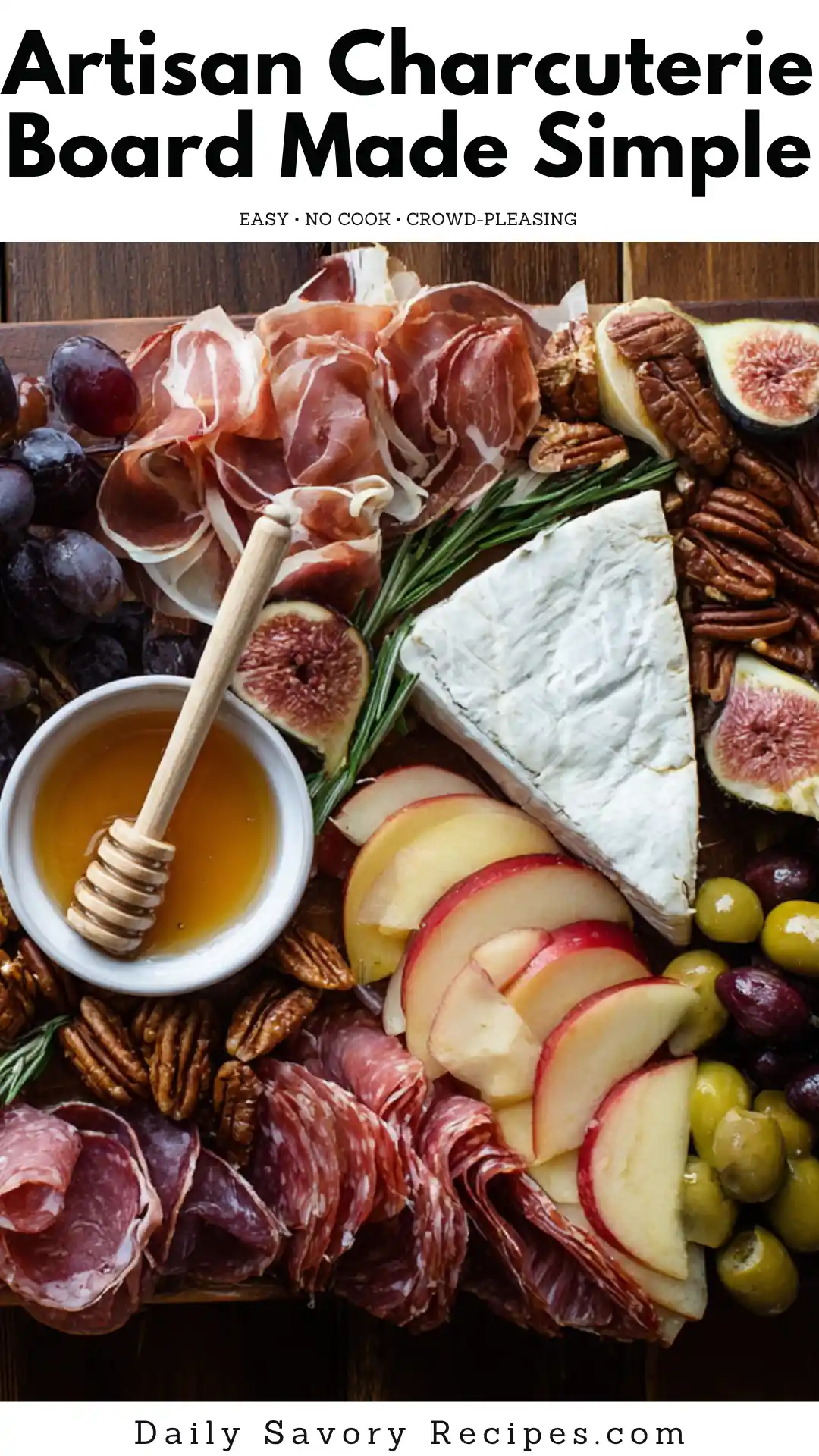
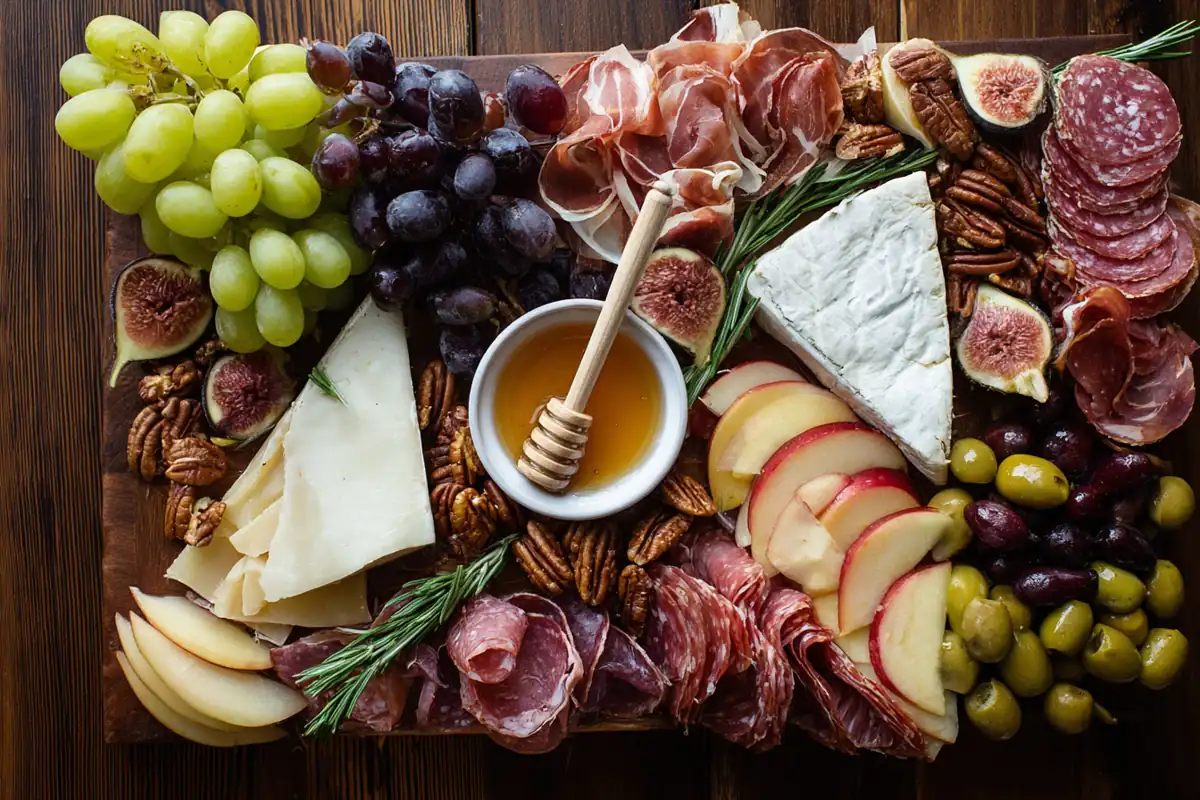
An artisan charcuterie board should feel generous before anyone takes the first bite. You want folded cured meats, creamy cheese, crisp crackers, glossy olives, fresh fruit, and a little sweetness from honey or fig jam all working together on one board.
This is one of my favorite no-cook appetizers because it gives you a polished result without turning on the stove. The trick is knowing where everything goes so the board looks abundant, not crowded.
Building an Artisan Charcuterie Board with Balance
A good board starts with the base. I prefer a large wooden board because it gives warmth to the presentation and enough room to separate stronger flavors from milder ones. For 10 people, choose a board that gives you space to arrange the cured meats, cheeses, crackers, fruit, nuts, olives, and pickles without stacking everything into one tight pile.
Place the largest items first. Cheese goes down early because it anchors the board. Leave space around each cheese so guests can slice or spread it without knocking into the olives or nuts nearby.
Then add the cured meats in small clusters. Fold salami or prosciutto into loose shapes rather than laying them flat. It adds height and makes the board easier to pick from. Not fussy. Just intentional.
Mixing Textures and Flavors Without Overcrowding the Board
The best boards have contrast. You need something creamy, something salty, something crisp, something sweet, and something briny. That mix keeps each bite interesting.
For this artisan charcuterie board, I like using 3–4 types of cured meats and 2–3 cheeses. That gives enough variety without making the board feel like a grocery display. Add 1 cup mixed nuts, 1 cup fresh fruits, 1/2 cup olives, and 1/2 cup pickles or gherkins to fill the spaces with color and texture.
Don’t place every ingredient in one large section. Scatter smaller items in controlled pockets. A little bowl of olives works well, but a few extra olives near the cheese can make the board feel more natural.
Crackers and breadsticks should have their own easy-access spot. If they sit under heavy cheese or wet fruit, they soften quickly. I usually place them along one edge so guests can grab them first, then build a bite.
Choosing Cheeses for an Artisan Charcuterie Board
Cheese gives the board its structure, so choose with purpose. You don’t need a dozen types. Two or three well-chosen cheeses are better than five that taste too similar.
Take the cheeses out of the refrigerator about 20–30 minutes before serving. Cold cheese tastes muted and can feel stiff. Slightly softened cheese gives better aroma and texture, especially for soft varieties.
Soft Cheeses for Creamy Contrast
A soft cheese like Brie or chèvre gives the board a creamy center. Place it where guests can reach it easily, and set crackers nearby. If you’re adding honey or fig jam, this is a good place for it.
I prefer drizzling a small amount over the cheese instead of covering the whole piece. Too much sweetness can hide the cheese. A thin drizzle or spoonful on the side is usually enough.
Semi-Soft and Firm Cheeses for Easy Slicing
Cheddar, Gouda, or Gruyère work well because they slice cleanly and pair with meats, nuts, and fruit. Cut a few starter slices before serving. It quietly tells guests they’re welcome to dig in.
Keep firm cheeses near cured meats. The salt from the meat and the richness of the cheese make a reliable bite, especially with a crisp cracker underneath.
Aged Hard Cheeses for Bold Flavor
Aged cheeses bring sharpness and salt. If you use something like Manchego or Parmigiano-Reggiano, break it into small chunks rather than neat slices. The rough edges look better and make it easier to pick up with toothpicks.
Use these cheeses in smaller amounts. Their flavor is stronger, so they work best as accents, not the whole focus.
Meats, Pairings, and Presentation Details
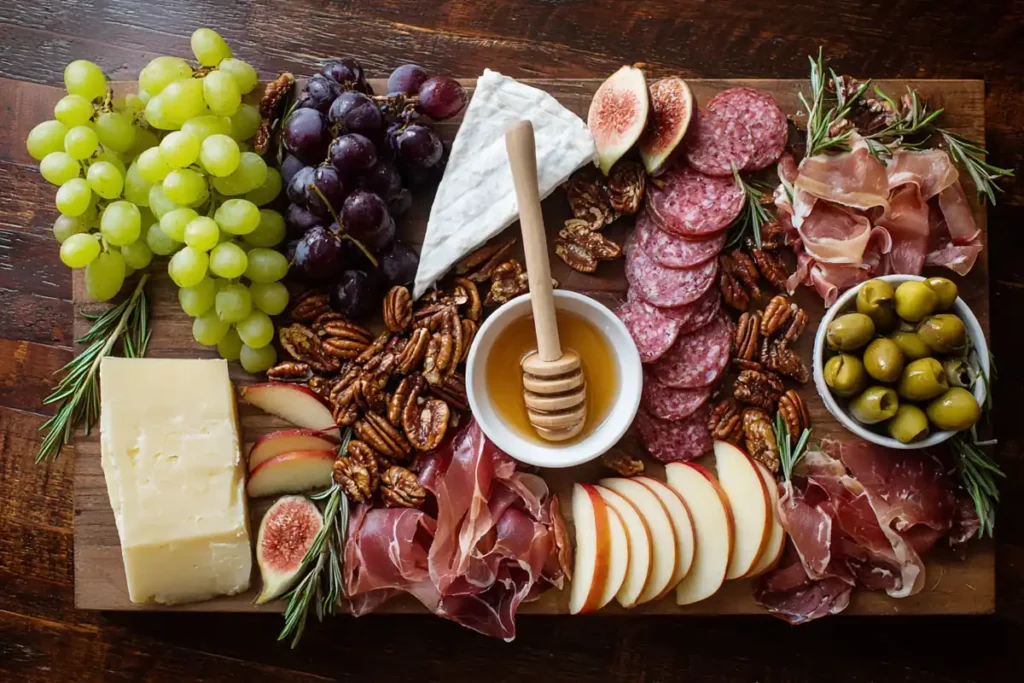
Cured meats bring movement to the board. Fold thin slices into halves or quarters, then tuck them in small groups between cheeses and crackers. For thicker meats, arrange them in loose stacks so they don’t look heavy.
The pairings finish the board. Fresh fruit adds color and freshness, nuts bring crunch, olives and pickles add a briny break, and honey or fig jam softens the salty edges. I like grapes, berries, sliced apples, or figs when they’re in season. Keep wet fruits away from crackers so nothing turns soggy.
Fresh herbs are the final touch, not the main event. A few sprigs of rosemary, thyme, or parsley can make the board look finished. Use them lightly. The board should still look like food people want to eat, not a centerpiece they’re afraid to disturb.
Scaling the Board for Parties
For a larger gathering, don’t make one oversized board unless you have a table where everyone can reach it. Two medium boards often work better than one giant one. Guests move around more easily, and the food stays neater.
Use the same structure on each board: cheese first, meats next, then fruits, nuts, olives, pickles, and crackers. For 10 people, the amounts in this recipe are comfortable for an appetizer spread. If the board is the main food, increase the meats, cheeses, and crackers by about half.
Height helps, too. Small bowls for olives, jam, or pickles give the board shape and stop wet ingredients from running into the dry ones. Worth the extra dish.
Why Homemade Beats Pre-Made Boards
A pre-made board can be convenient, but making your own gives you control. You choose the cheeses, adjust the saltiness, add fruit that actually looks fresh, and arrange everything close to serving time.
That last part matters. Crackers stay crisp. Fruit keeps its color. Cheeses sit at the right temperature instead of sweating under plastic. It’s a simple difference, but guests notice it.
I also like that a homemade board can fit the occasion. For a casual night, keep it rustic. For a holiday table, add more color with berries, figs, grapes, or herbs. Same method, different mood.
A Board Made for Gathering
An artisan charcuterie board works because it feels relaxed and thoughtful at the same time. You’re giving guests choices, texture, and color without making the appetizer complicated.
Start with the cheeses, fold the meats, keep the crackers dry, and use the smaller ingredients to fill the board naturally. Once it’s on the table with plates and toothpicks nearby, people know exactly what to do. Every recipe I share is an invitation from my kitchen to yours.
Please send the PDF of the article containing the images, and I’ll review the images carefully for the Midjourney image direction step.
PrintArtisan Charcuterie Board
A well-balanced artisan charcuterie board with cured meats, cheeses, fruits, nuts, olives, crackers, and honey. A simple no-cook appetizer perfect for gatherings and entertaining.
- Prep Time: 20 minutes
- Total Time: 20 minutes
- Yield: 10 servings 1x
- Category: Appetizer
- Method: No-cook
- Cuisine: American
Ingredients
- 3–4 types cured meats (salami, prosciutto, chorizo)
- 2–3 varieties cheese (brie, cheddar, gouda)
- 1 cup mixed nuts
- 1 cup fresh fruits (grapes, apples, figs)
- 1/2 cup olives
- 1/2 cup pickles or gherkins
- 2–3 types crackers or breadsticks
- Honey or fig jam
- Fresh herbs (rosemary, thyme)
Instructions
- Select a large wooden board or platter as your base
- Arrange the cured meats in small folded groups for visual appeal
- Place the cheeses around the board, leaving space for slicing
- Fill gaps with nuts, fruits, and olives to create color and texture
- Add crackers or breadsticks in an accessible section
- Drizzle honey or add fig jam near cheeses for sweetness
- Garnish lightly with fresh herbs
- Serve with small plates and toothpicks
Notes
- Use room temperature cheese for better flavor
- Keep crackers separate from moist ingredients
- Balance salty, sweet, creamy, and crunchy elements
- Do not overcrowd the board
Nutrition
- Serving Size: 1 serving
- Calories: 320
- Sugar: 8
- Sodium: 680
- Fat: 22
- Saturated Fat: 9
- Unsaturated Fat: 11
- Trans Fat: 0
- Carbohydrates: 18
- Fiber: 2
- Protein: 14
- Cholesterol: 35