
The Spaghetti Garlic Bread Bowls That Actually Work

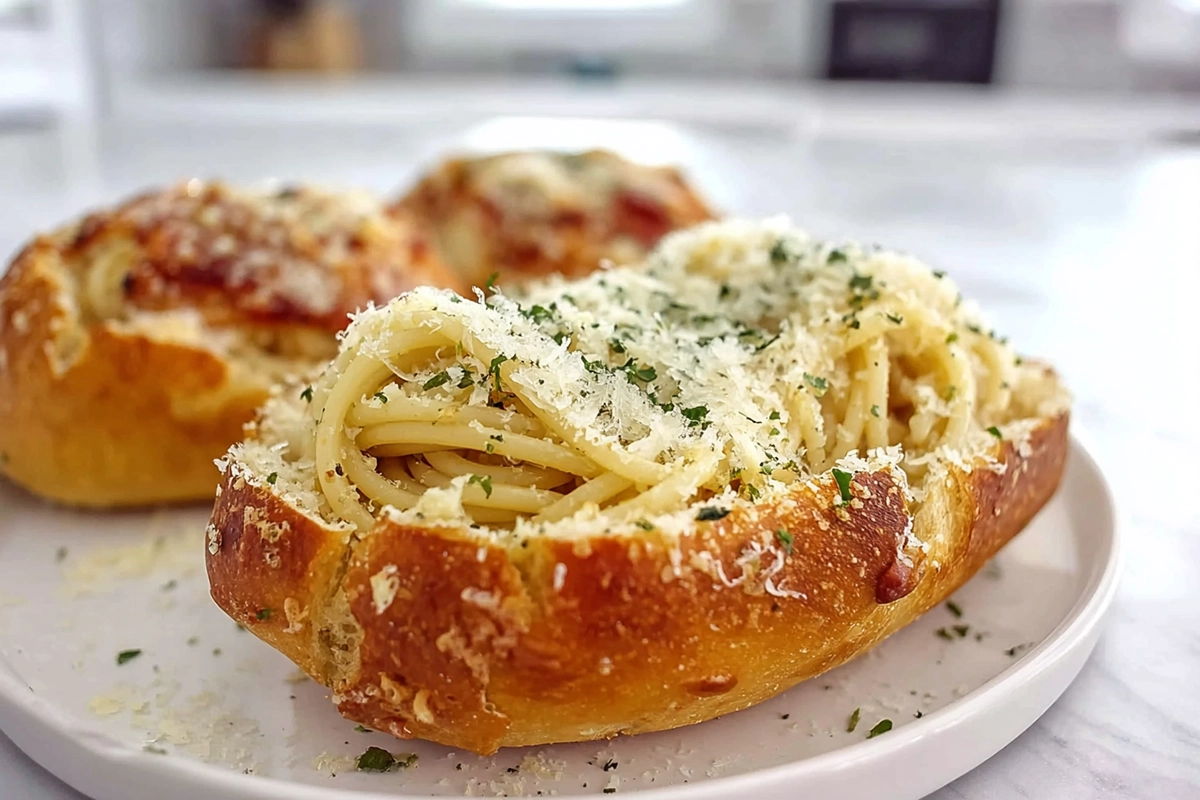
If you’ve ever smelled garlic butter hitting hot bread and immediately forgotten how tired you are, Spaghetti Garlic Bread Bowls are that moment turned into dinner. Crispy edges, soft buttery centers, stretchy cheese, and saucy spaghetti tucked inside like it belongs there — not dumped in as an afterthought. This is the kind of meal that makes a random Tuesday feel intentional, even if you’re cooking in sweatpants with one eye on the clock.
The problem is, a lot of versions of this idea fall apart fast. The bread goes soggy. The spaghetti dries out. The garlic burns. Or worse, the bowls look great for photos but collapse the second you try to eat them. I’ve tried the shortcuts, the viral versions, and the “just hollow it out and hope” approach. Most of them are fun ideas that don’t survive real life.
So here’s my promise: this version is built around why each ingredient is doing its job. The bread holds. The pasta stays saucy. The garlic tastes rich, not bitter. Nothing here is fancy, but nothing is accidental either. This is a busy weeknight dinner that respects your time and still delivers that holy-wow garlic bread smell before anyone asks what’s for dinner.
Table of Contents
The No-Regret Ingredients
Crusty White Rolls
These are the foundation, not a garnish. You want rolls with a thick crust and real structure — bakery-style if possible. Soft dinner rolls or sandwich buns collapse once the sauce hits, and no amount of cheese will save them.
Butter
This is not the place for substitutes. Real butter carries the garlic and parsley evenly and soaks into the bread without leaving it greasy. Salted butter is fine here; just season the sauce with a lighter hand later.
Fresh Garlic
Fresh garlic matters because it’s doing all the heavy lifting in the aroma department. Pre-minced garlic burns faster and tastes flat. Finely grating fresh cloves gives you maximum flavor with better control.
Spaghetti
Standard spaghetti is perfect. You don’t need expensive pasta because it’s getting coated, baked, and protected by sauce. What matters more than brand is cooking it just shy of done so it finishes perfectly in the bowl.
Ground Beef
Go for beef with some fat — around 80/20 if you can. Lean beef dries out fast in baked dishes. This sauce needs richness to balance the bread and cheese, and fat is part of that equation.
Tomato Passata
Passata gives you thickness without bitterness. Jarred pasta sauce is usually too sweet and too thin for this job. Passata plus stock lets you control both flavor and consistency.
Beef Stock
Stock adds depth and keeps the sauce loose enough to coat the spaghetti without pooling at the bottom of the bowls. Water works in a pinch, but you’ll taste the difference.
Red Wine
This is optional, but it adds backbone. The alcohol cooks off, leaving a deeper tomato flavor. If you skip it, replace it with more stock — not water.
Parmesan
Freshly grated Parmesan melts into the sauce and sharpens everything. The pre-grated stuff doesn’t melt right and tastes dusty once baked.
Mozzarella
Low-moisture shredded mozzarella melts evenly without flooding the bread. Fresh mozzarella releases too much water and is better saved for other dishes.
Fresh Basil and Oregano
Fresh basil brings brightness at the end, while dried oregano holds up during simmering. This combo gives balance instead of a one-note tomato sauce.

The Process (How This Comes Together Without Stress)
The Game Plan (So This Doesn’t Feel Like a Project)
This recipe works because the timing overlaps instead of stacking. The meat sauce goes on first and simmers quietly while you do everything else, and you’ll know it’s on track when the surface changes from watery red to slow, glossy bubbles that pop lazily instead of splattering. When you stir it, the spoon should drag just enough to leave a brief trail before the sauce closes back in, and the smell shifts from sharp tomato to something deeper and slightly sweet.

The pasta waits until the end on purpose. Spaghetti cooks fast, and you want it al dente with a little bite when you pinch it between your fingers. When it hits the sauce, you should hear a soft hiss as the moisture loosens everything up, not a loud boil. That sound tells you the sauce is thick enough to cling without drowning the noodles.
Building Bread Bowls That Don’t Leak
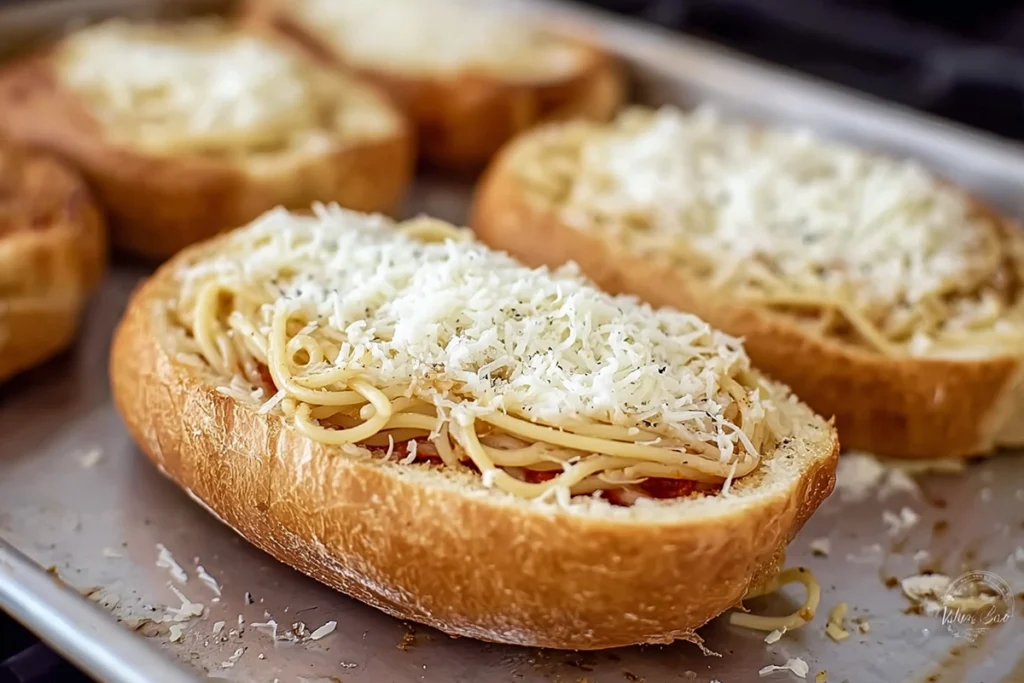
This is where structure matters. When you cut into the rolls, you’re removing the soft center but keeping a firm wall. Press the sides gently with your fingers — they should spring back, not collapse. If the bread feels flimsy or tears easily, it’s going to fail once the sauce goes in.
When the garlic butter hits the bread, you should smell it immediately — rich and savory, not sharp or bitter. Brush it generously inside and out until the surface looks glossy but not dripping. As it bakes, listen for a faint crackle and watch for the crust to turn a deep golden brown. That color is your waterproofing layer, and it’s what keeps the bottoms crisp instead of soggy.
The Uh-Oh Moments (Where People Usually Mess This Up)
My Bread Turned Soggy
I did this to myself the first time by under-baking the rolls. Pale bread absorbs sauce like a sponge. You want visible browning and a firm crust when you tap the bottom — it should sound hollow, not dull.
The Garlic Tastes Bitter
Garlic burns fast, especially when it’s finely grated. If you smell anything sharp or acrid instead of warm and nutty, it’s gone too far. Pull it back immediately — garlic should smell inviting, not aggressive.
The Spaghetti Dried Out in the Oven
This happens when the noodles go in naked. You should always finish with sauce on top, and you should be able to see moisture pooling slightly before the cheese goes on. Dry strands on the surface are a warning sign.
The Bowls Collapsed When Serving
That’s a bread issue, not a technique issue. If the roll feels soft when you squeeze it before baking, it won’t survive filling. I learned this the hard way with grocery store buns that looked sturdy but folded like paper once the heat hit them.
Make It Your Own (But Don’t Ruin It)
Spicy Garlic Butter Bowls
If you like heat, add chili flakes directly into the garlic butter, not the sauce. The butter carries spice evenly and perfumes the bread as it bakes. You’ll smell a warm, toasty heat before you taste it, which is exactly what you want — controlled spice instead of a blunt punch.
Italian Sausage Swap
This works beautifully if you use good-quality pork or beef Italian sausage and remove it from the casing. You’ll hear it sizzle louder than ground beef because of the extra fat, and that’s a good thing. Skip turkey sausage here — it dries out fast and leaves the sauce tasting flat unless you add extra fat back in.
Meat-Free, Still Hearty
Sautéed mushrooms and finely diced onions can replace the beef if you cook them until they release and reabsorb their moisture. Look for deep browning and a nutty smell before adding tomato. If the mushrooms still feel spongy when pressed, they’re not ready yet.
Extra-Cheesy Finish
If you want more cheese, layer in low-moisture mozzarella first, then finish with a light dusting of freshly grated Parmesan. Block cheese melts more smoothly and stretches better. Pre-shredded works in a pinch, but it won’t give you that pull when you lift your fork.
Serving & Storing (Real Life Rules)
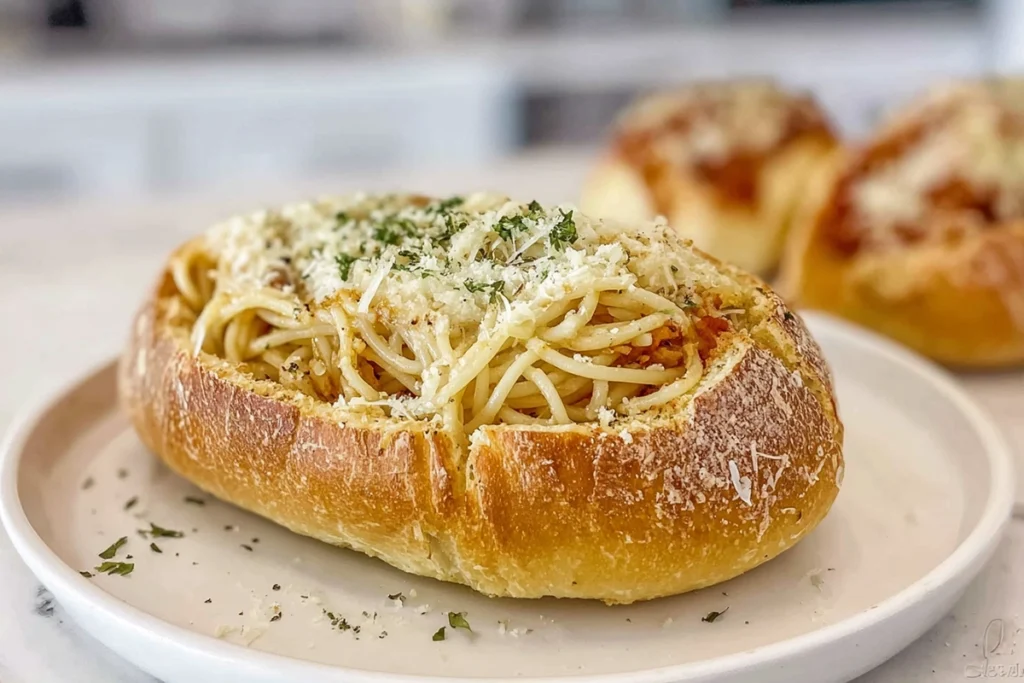
I eat these hot, usually standing at the counter, because waiting makes no sense when the cheese is still bubbling and the garlic bread is at peak crunch. A fork is helpful, but halfway through I usually switch to hands — once the bottom stays crisp, it can handle it.
If you have leftovers, don’t store them assembled. Bread dies in the fridge. Separate the sauce and pasta, keep them airtight, and reheat gently before rebuilding. For freezing, freeze the sauce and spaghetti together, but never the bread. Bread that’s been frozen and thawed loses its structure and won’t recover.
To reheat assembled bowls, the oven is best. If you’re in a hurry, an air fryer for a couple of minutes brings the crunch back without drying out the filling. Microwave only if you’ve accepted defeat.
Final Thoughts
When the kitchen smells like toasted garlic and butter, dinner feels solved — even on a chaotic weeknight. That’s why these Spaghetti Garlic Bread Bowls work: they’re indulgent, reliable, and built for real life, not just photos.
Get inspired with more mouthwatering recipes! Follow me on Pinterest for new cooking ideas every week.
Frequently Asked Questions
Can I make these ahead of time?
Yes, but don’t assemble them early. Make the sauce and cook the spaghetti ahead, store them together, and build the bowls right before baking. If you assemble too soon, the bread absorbs moisture and loses its structure.
What’s the best bread if I can’t find crusty rolls?
Look for bakery-style rolls with a thick crust and dense crumb. If the bread feels light or squishy when you squeeze it, it’s the wrong choice. Avoid sandwich rolls — they collapse once filled.
Can I skip the wine, and what changes if I do?
Yes, you can skip it. Replace it with more beef stock. The sauce will be slightly less deep and rich, but still good. Don’t replace wine with water — that thins flavor without adding anything back.
How do I stop the bottoms from going soggy?
You need two things: a properly baked crust and sauce on top of the pasta. Pale bread soaks liquid, and exposed noodles dry out. Golden bread plus a saucy finish keeps everything balanced.
Can I freeze leftovers?
You can freeze the spaghetti and sauce, but not the assembled bread bowls. Bread doesn’t recover well after freezing and thawing. Freeze the filling, then rebuild with fresh rolls when you’re ready.
Is there a cleaner way to serve this for kids?
Yes. Slice the bowls in half after baking and serve them cut-side up on a plate. It cools faster, holds together better, and reduces the “everything slides out” problem.
PrintSpaghetti Garlic Bread Bowls
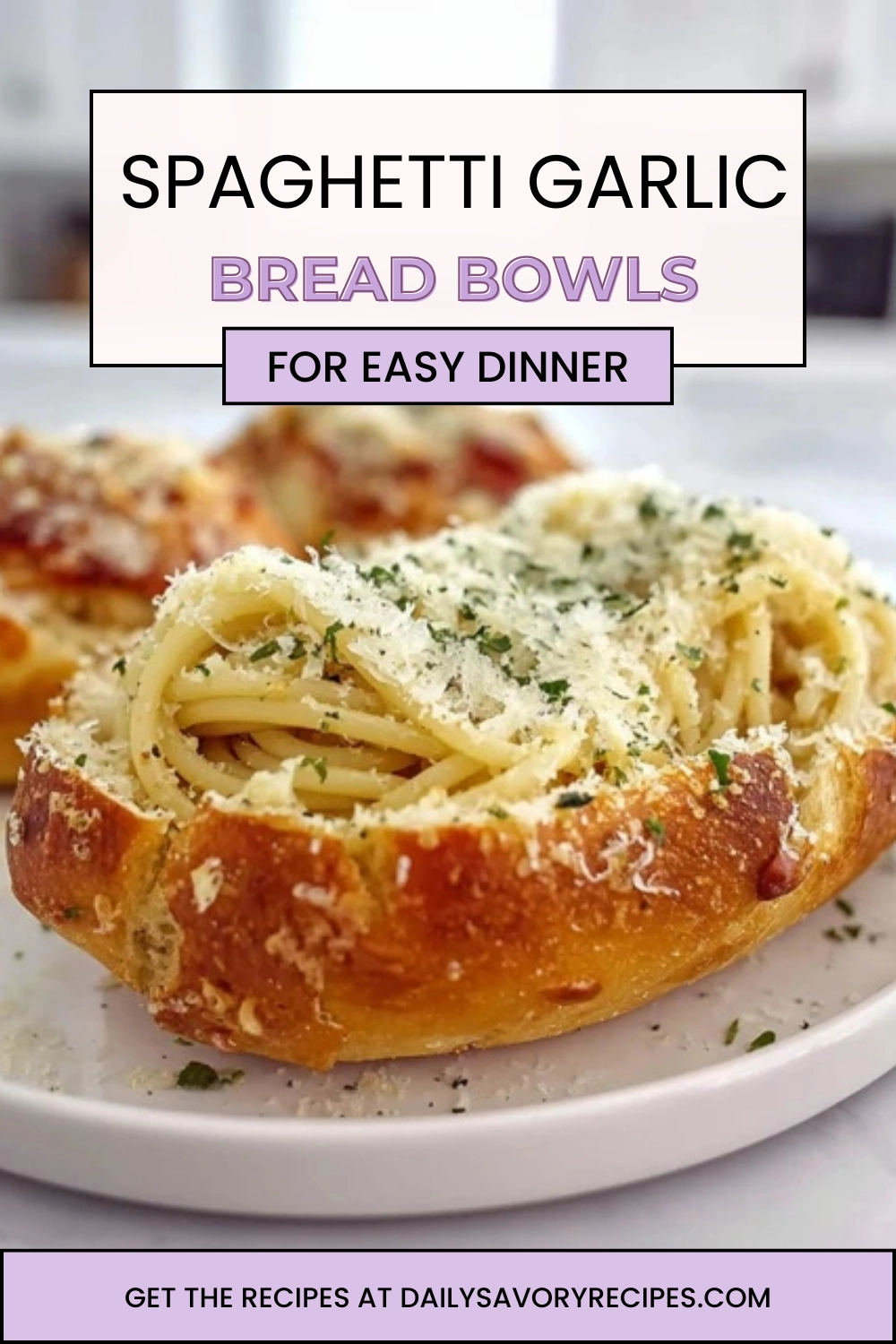
Spaghetti Garlic Bread Bowls combine crispy, buttery garlic bread with warm garlicky spaghetti for a fun and comforting dinner. This easy baked recipe turns two classic favorites into one satisfying meal that feels special without being complicated.
- Prep Time: 20 minutes
- Cook Time: 30 minutes
- Total Time: 50 minutes
- Yield: 4 servings 1x
- Category: Dinner
- Method: Baking
- Cuisine: American
- Diet: Vegetarian
Ingredients
- 1 pound spaghetti
- 4 quarts water
- 2 tablespoons kosher salt
- 1/4 cup olive oil
- 6 cloves garlic, minced
- 1/2 teaspoon red pepper flakes (optional)
- 1/4 cup fresh parsley, chopped
- 1/4 cup grated Parmesan cheese, plus more for serving
- Salt and black pepper, to taste
- 1 large Italian bread loaf
- 1 cup unsalted butter, softened
- 8 cloves garlic, minced
- 1/4 cup fresh parsley, chopped
- 1/4 cup grated Parmesan cheese
- 1/4 teaspoon garlic powder (optional)
Instructions
- Bring a large pot of water to a rolling boil and season generously with salt, then cook the spaghetti until al dente and reserve some pasta water before draining.
- Heat olive oil in a skillet, gently sauté the garlic until fragrant, then toss in the spaghetti with a splash of pasta water until lightly coated.
- Season the spaghetti with parsley, Parmesan, salt, and pepper, then remove from heat once glossy and evenly mixed.
- Slice the Italian bread lengthwise and hollow out the center slightly to create bowls.
- Mix softened butter with garlic, parsley, Parmesan, and garlic powder, then spread generously over the bread.
- Fill each bread half evenly with the spaghetti mixture.
- Bake at 375°F until the bread is golden and crisp and the spaghetti is heated through.
- Let rest briefly, then slice and serve warm.
Notes
- Use a sturdy Italian loaf so the bread holds its shape.
- Avoid overfilling to prevent soggy bottoms.
- Serve immediately for the best texture.
Nutrition
- Serving Size: 1 bowl
- Calories: 620
- Sugar: 4g
- Sodium: 980mg
- Fat: 34g
- Saturated Fat: 16g
- Unsaturated Fat: 16g
- Trans Fat: 0g
- Carbohydrates: 62g
- Fiber: 4g
- Protein: 18g
- Cholesterol: 65mg