
Chocolate Charcuterie Board: How to Build a Stunning Dessert Spread

A chocolate charcuterie board brings together everything people love about dessert into one centerpiece. It’s rich, varied, and doesn’t require a single minute at the stove. You get contrast—crunchy, creamy, soft—all on one board.
What makes this version work is the structure. It’s not just placing sweets randomly. You’ll learn how to build height, create flow, and make the board feel intentional without overthinking it.
I’ll walk you through how I build it in my own kitchen, step by step.
Why a Chocolate Charcuterie Board Works for Any Occasion
This kind of board solves a common problem: dessert that feels special but doesn’t slow you down. No baking. No precise timing. Just assembly.
It also lets people serve themselves. That matters more than you think, especially when you’ve got a group. Some will go straight for chocolate bars, others pick cookies, some hover around the filled donuts. It becomes interactive without needing explanation.
I’ve used this setup for everything from casual evenings to bigger gatherings. It adapts easily. Smaller board, fewer items. Larger group, expand outward. Same idea, just scaled.
And visually, it carries the table. You don’t need much else.
Choosing the Right Board and Setup
Start with the base. That decision shapes everything.
A round wooden board works well because it naturally guides the eye inward, but square or rectangular boards are just as practical. What matters more is size. For 3–4 people, a board around 10–12 inches across is enough. For a crowd, go bigger—14–18 inches gives you room to build layers.
Now add structure.
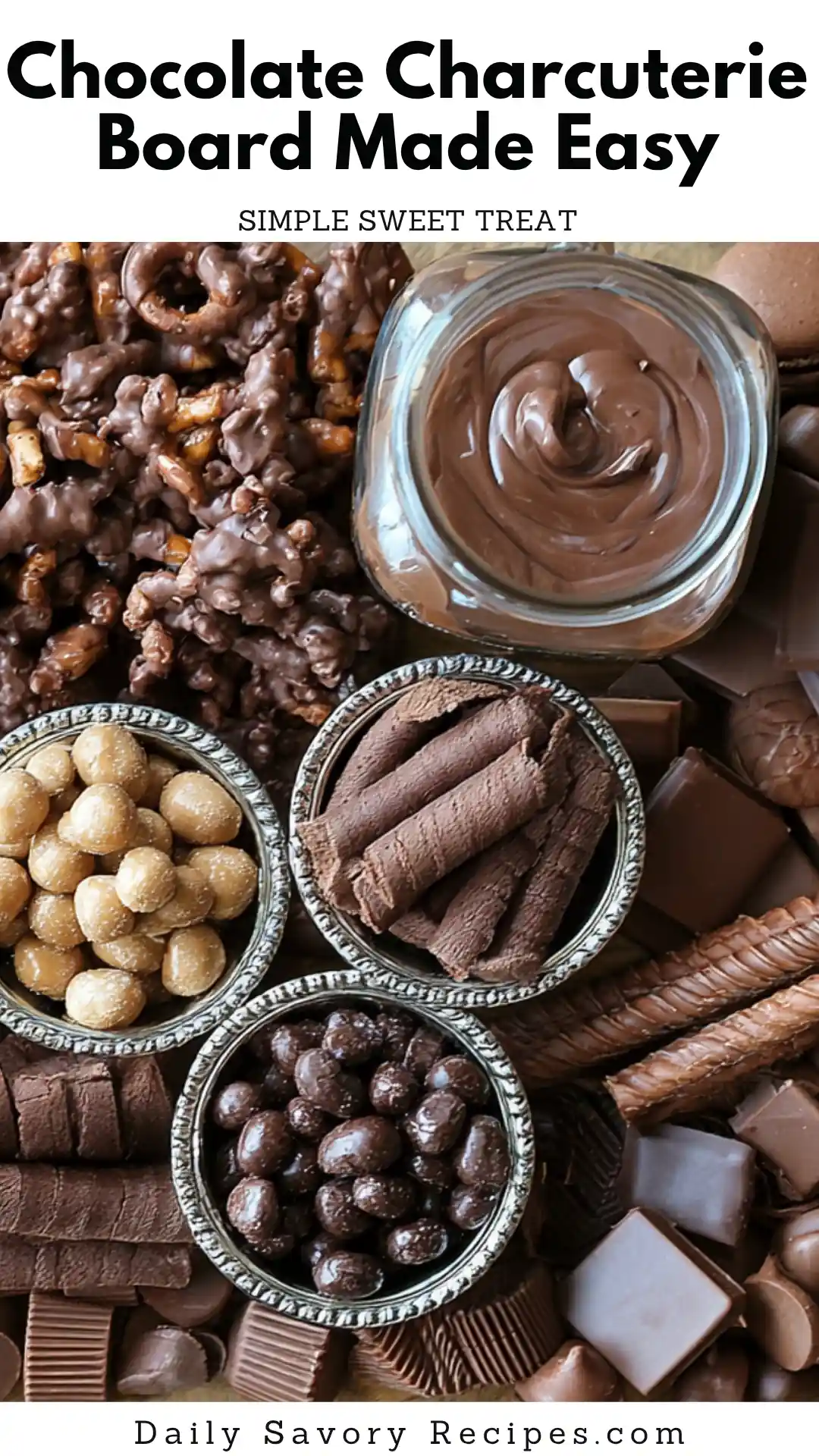
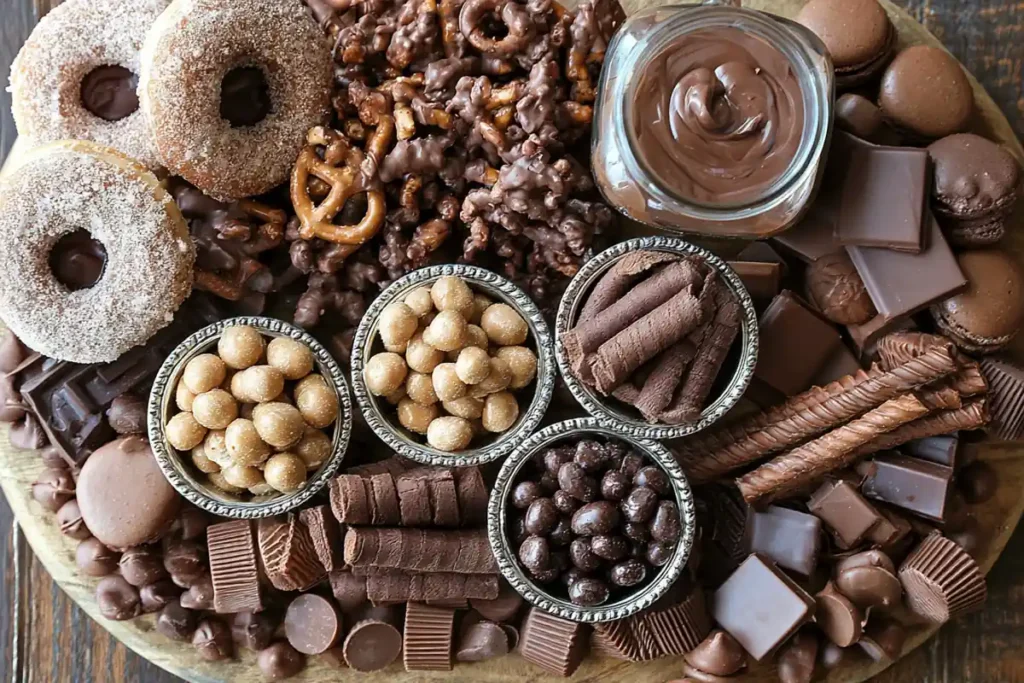
Small bowls, ramekins, even measuring cups. I often use three containers. Not for decoration, but to anchor the layout and hold smaller items like nuts or chocolate candies.
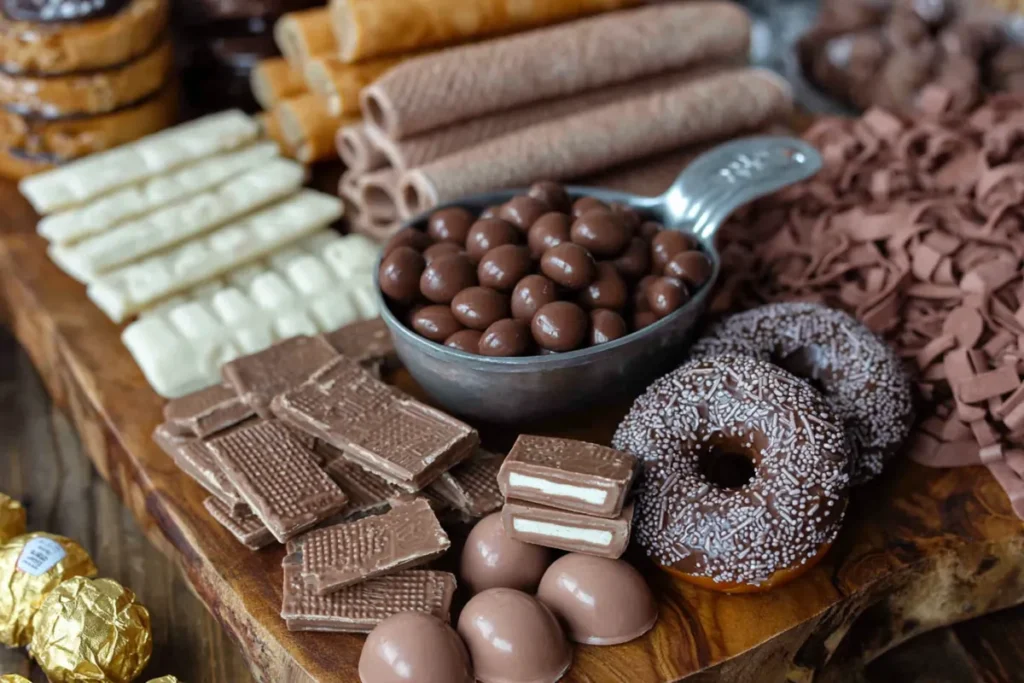
Place them first. Before anything else.
That gives you clear zones to build around instead of guessing where things should go later.
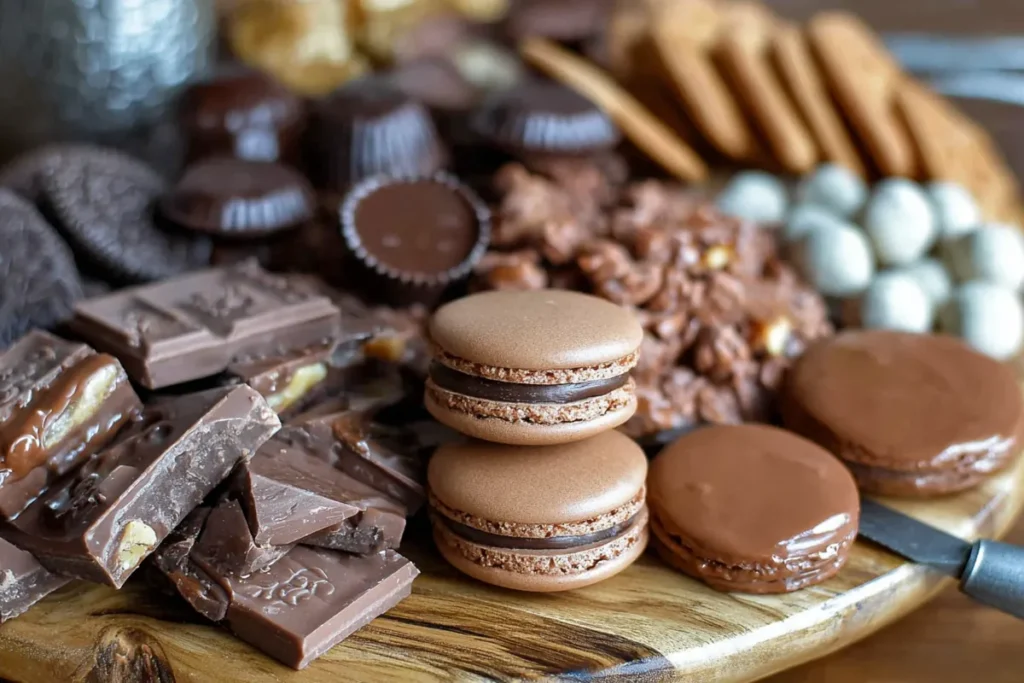
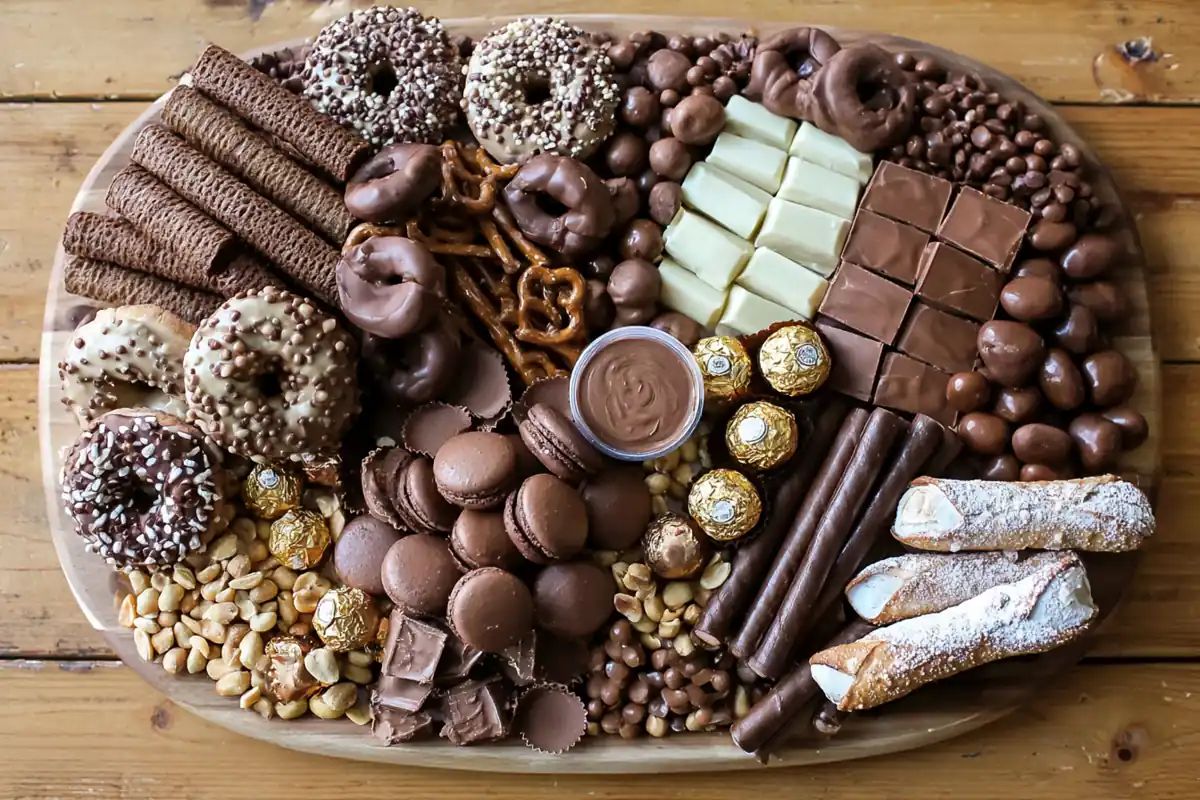
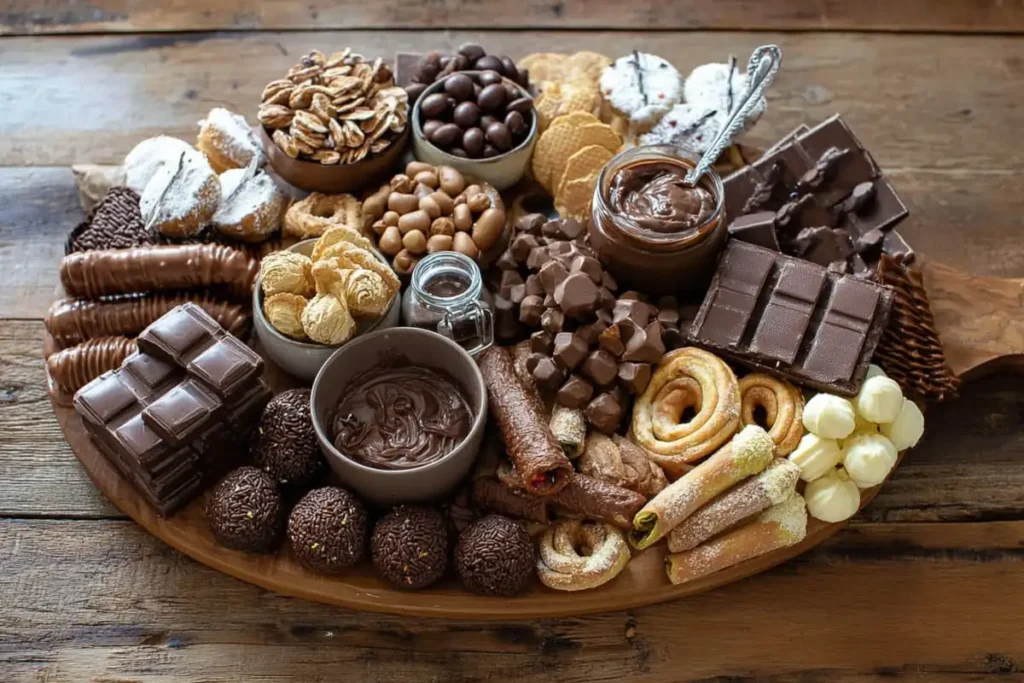
What to Include on Your Chocolate Charcuterie Board
This is where most people overcomplicate things. You don’t need dozens of items. You need contrast.
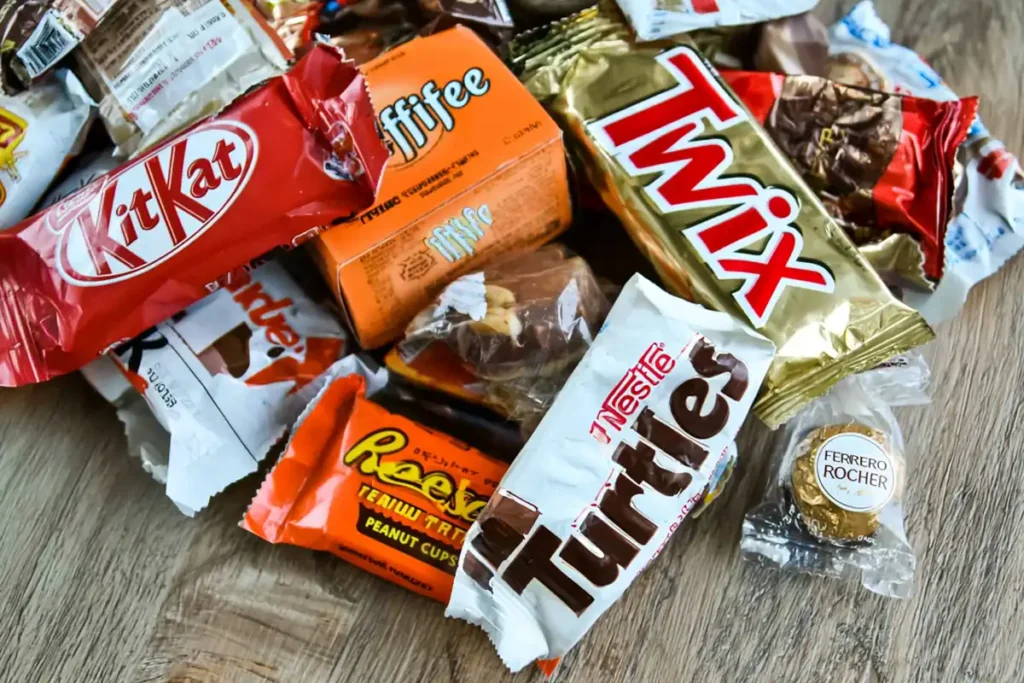
Start with a few categories:
- Chocolate base: bars, truffles, filled chocolates
- Cookies and baked goods: wafer cookies, chocolate cookies, pirouette rolls
- Soft sweets: mini donuts, filled pastries
- Crunch elements: chocolate-covered almonds, cappuccino almonds
Try to include at least one of each. That’s enough variety to keep it interesting.
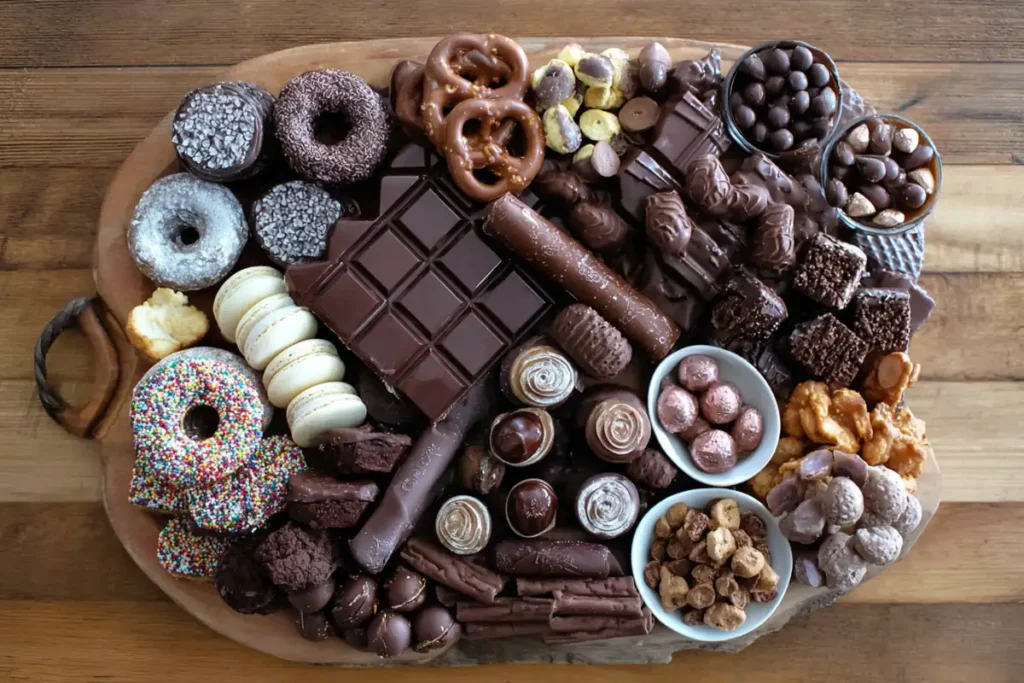
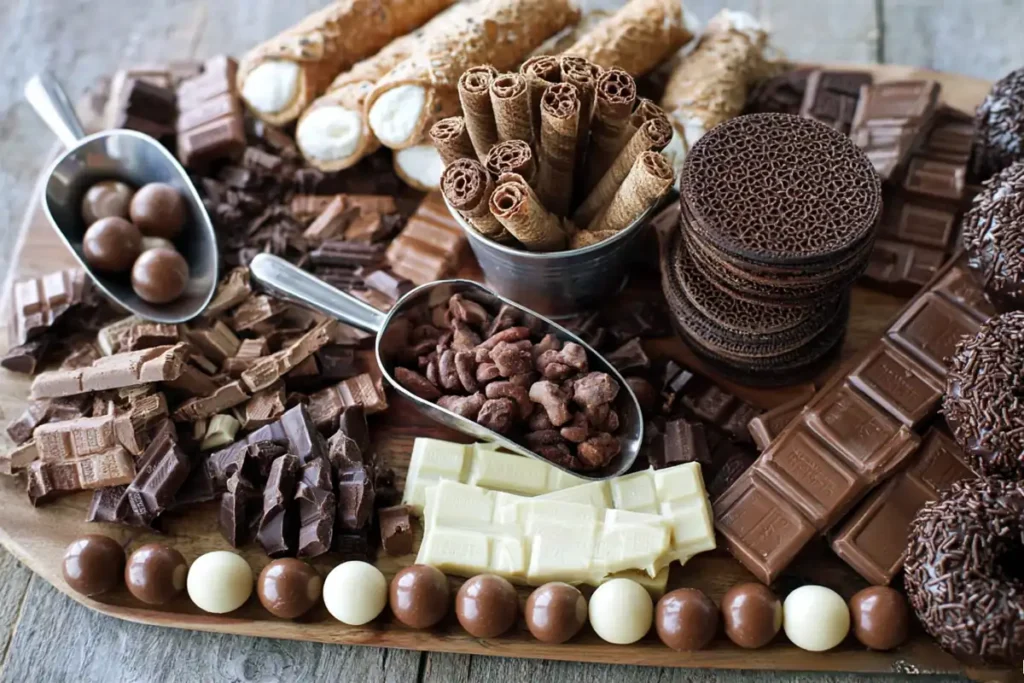
Mix different chocolate types too. If everything is milk chocolate, the board feels flat. Add some dark chocolate for depth and a bit of white chocolate for contrast. It changes how the board looks and tastes.
One more thing—keep sizes varied. Large chocolate bars next to small candies. That contrast makes the board feel fuller without adding more items.
Building the Board Step by Step
This is where everything comes together. And it’s simpler than it looks.
Start with your containers in place. Fill them or leave them ready, but get them positioned first. Once they’re set, you won’t need to shift things around later.
Next, build height in the center. Stand pirouette cookies upright inside one container. Stack wafer cookies nearby.
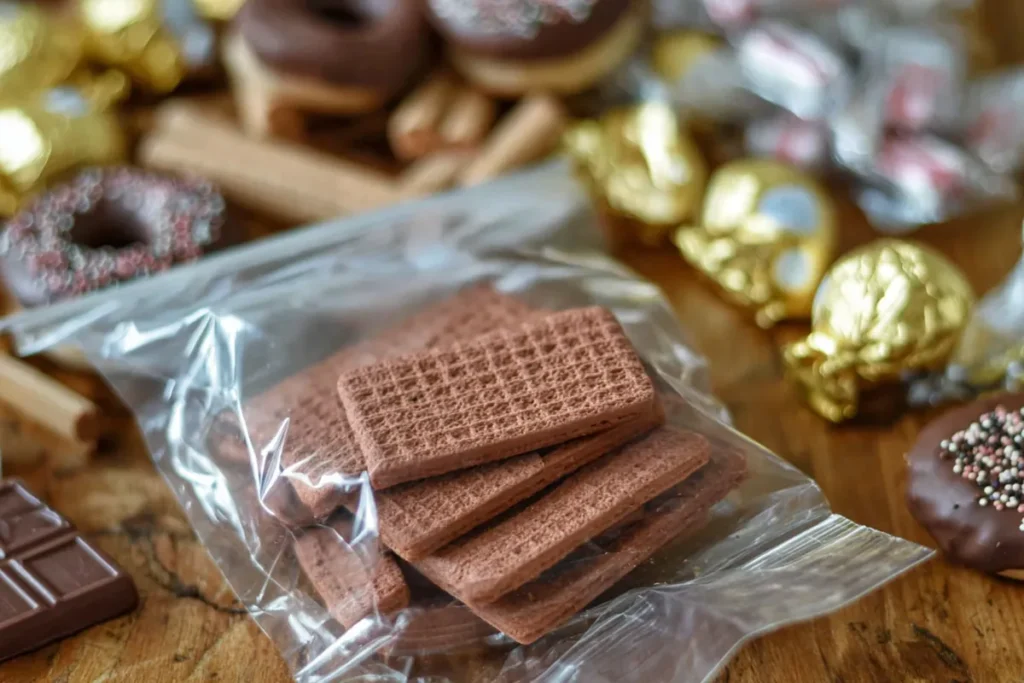
You’re not just filling space—you’re creating a focal point. Without height, the board looks flat.
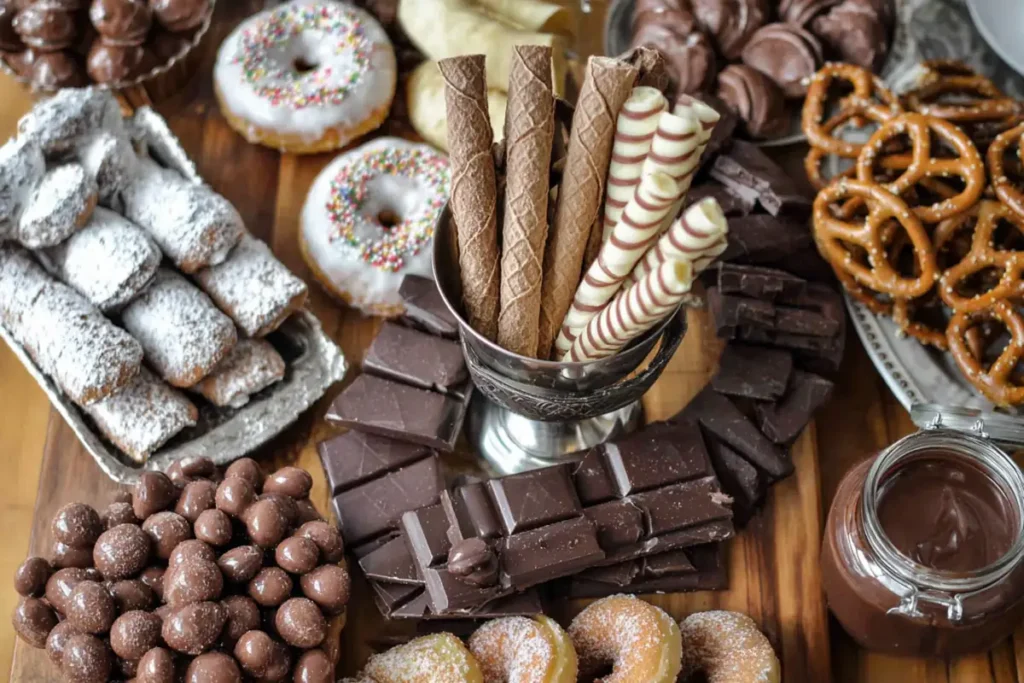
Then move outward. Place larger items first. Chocolate bars, donut clusters, cookie stacks. These define the structure.
Now begin filling gaps. Smaller items go in last. Almonds, chocolates, bite-sized pieces. Let them naturally settle into the spaces between larger pieces.
Work from the outside edge too. I usually build a loose border first, then move inward. It keeps the shape clean and avoids awkward empty spots near the edges.
Don’t rush it. Step back once or twice and adjust. Sometimes moving one item changes everything.
Design Tips That Make the Board Stand Out
A few small decisions can make the board look intentional instead of random.
Use odd numbers when grouping items. Three donuts instead of four. Five cookies instead of six. It sounds subtle, but it creates better visual balance.
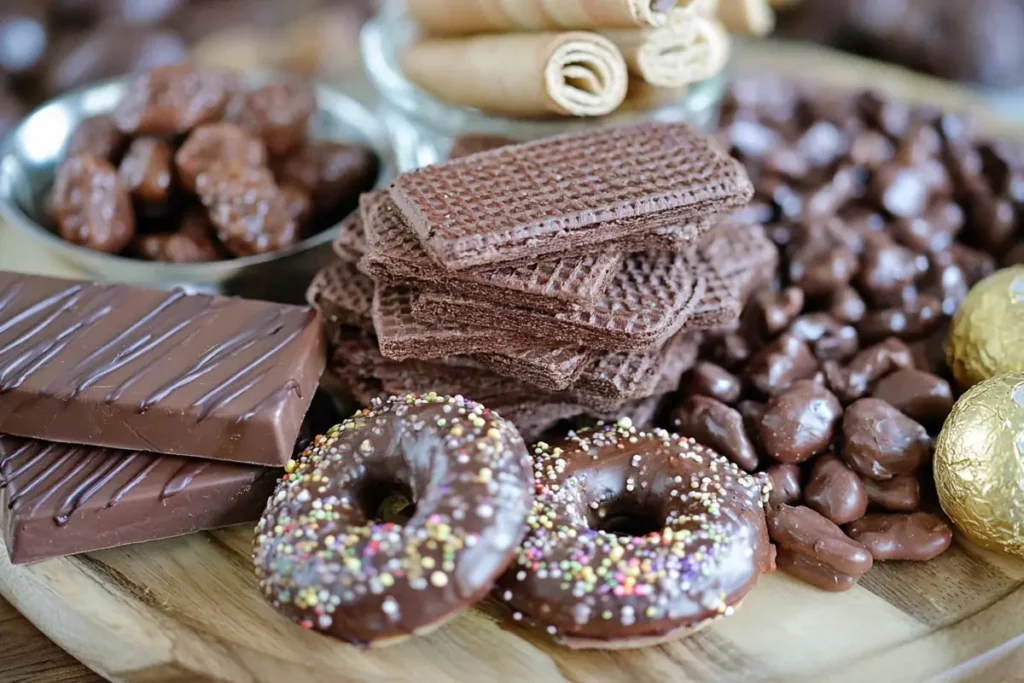
Try fanning certain items. Cookies placed slightly overlapping around a bowl instantly look more arranged. It’s a quick trick that works every time.
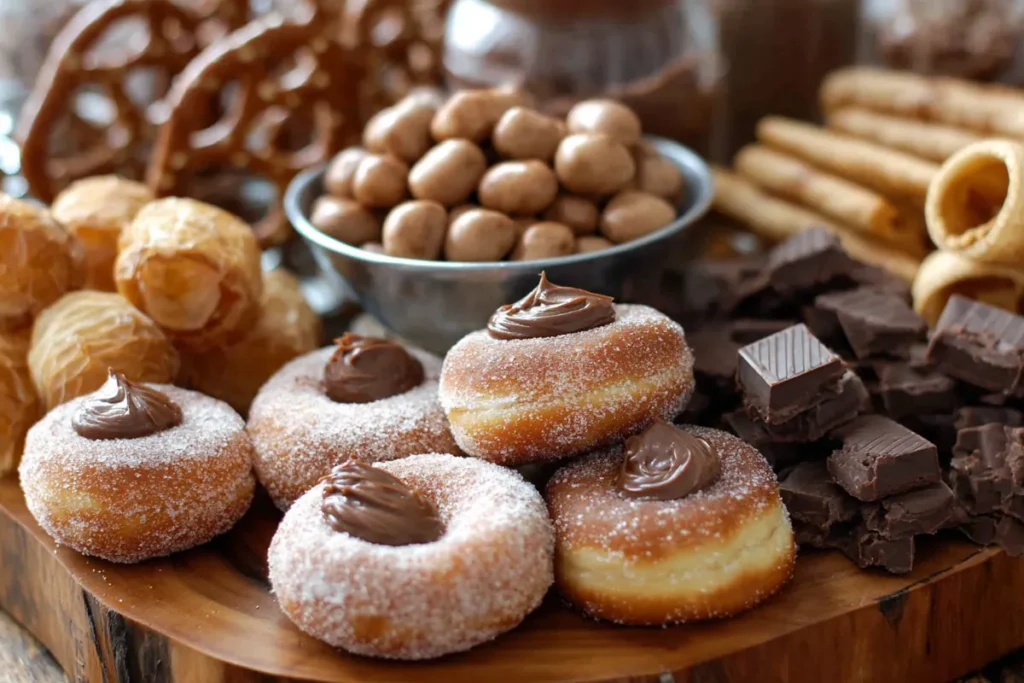
Pay attention to contrast. If you place dark chocolate next to more dark chocolate, it blends together. Break it up. Put lighter items beside darker ones. Mix textures too—something smooth next to something crumbly.
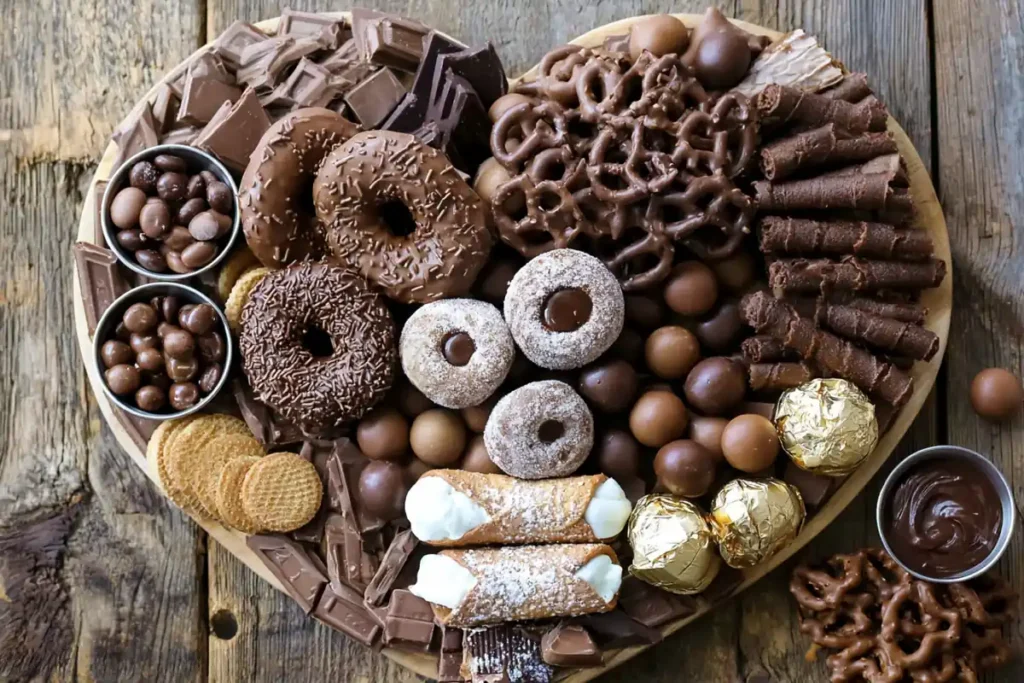
And avoid overfilling. It’s tempting to pack everything in, but a little breathing space actually makes the board look more generous.
Simple Pairings to Serve Alongside
You don’t need much here, but the right drink can round things out.
Coffee works well, especially something slightly bitter to balance the sweetness. A strong brew or espresso cuts through the richness.
If you’re serving this in the evening, a glass of dry red wine or even sparkling wine can work. Nothing too sweet—you already have enough of that on the board.
Keep it simple. The board is the focus.
Smart Tips for Planning and Assembling
Buy with a plan. It’s easy to overspend when everything looks good on the shelf.
Pick 6–8 items max and build around those. That’s usually enough to fill a medium board without waste.
You can also prep ahead. Most items hold well at room temperature for a few hours. If anything is delicate—like filled donuts—add those closer to serving time.
And don’t stress about perfection. Real boards aren’t symmetrical. They look better when they feel natural.
Frequently Asked Questions
Can I make a chocolate charcuterie board ahead of time?
Yes, you can assemble most of it a few hours in advance. Keep it covered in a cool room. Add softer items like donuts just before serving so they stay fresh.
How do I keep costs under control?
Focus on a smaller selection of quality items instead of buying everything. Bulk sections are useful for nuts and chocolates.
What can I do with leftovers?
Store them in airtight containers. Cookies and chocolates keep well, and you can reuse them for another board or simple desserts later.
A Board Worth Repeating
Once you’ve built a chocolate charcuterie board this way, it becomes second nature. You stop thinking about rules and start trusting the layout.
It’s one of those setups that looks impressive but stays practical. And that’s exactly how I like to cook—simple steps, solid results, and something worth sharing at the table.
Chocolate Charcuterie Board
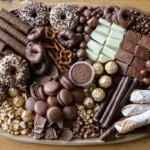
A chocolate charcuterie board is an easy no-bake dessert filled with chocolates, cookies, donuts, and sweet treats arranged beautifully for sharing.
- Prep Time: 20 minutes
- Total Time: 20 minutes
- Yield: 6 servings 1x
- Category: Dessert
- Method: No-cook
- Cuisine: American
Ingredients
- Assorted chocolate bars
- Chocolate truffles and filled chocolates
- Chocolate wafer cookies
- Pirouette rolled wafers
- Chocolate cookies
- Mini chocolate donuts
- Chocolate covered almonds
- Cappuccino almonds
- Chocolate candies
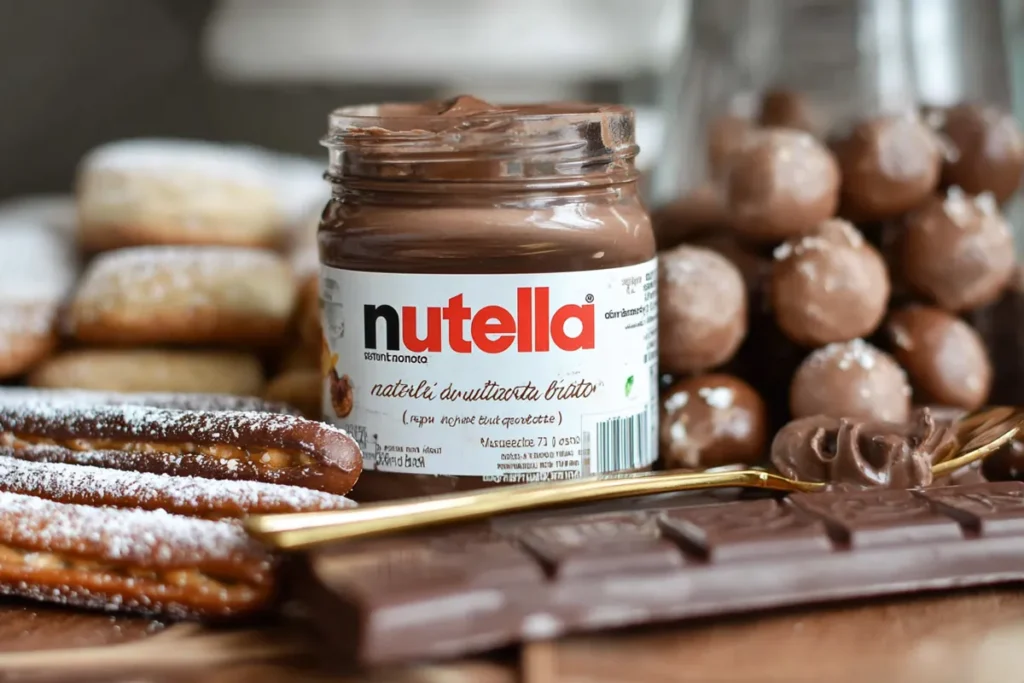
- Chocolate hazelnut spread
Instructions
- Choose a serving board based on your group size and place it on a flat surface
- Add small bowls or cups to the board to hold smaller items and create structure
- Stand rolled wafer cookies upright and stack cookies to create height in the center
- Place larger items like chocolate bars and donuts first to define the layout
- Fill gaps with smaller items like chocolates and almonds
- Arrange items in groups of three or five for visual balance
- Create a border around the board before filling the center
- Adjust placement for contrast in color, size, and texture before serving
Notes
- Use a mix of dark, milk, and white chocolate for better contrast
- Add soft items like donuts just before serving to keep them fresh
- Do not overcrowd the board to maintain a clean presentation
- Store leftovers in airtight containers for later use
Nutrition
- Serving Size: 1 serving
- Calories: 420
- Sugar: 35
- Sodium: 120
- Fat: 24
- Saturated Fat: 14
- Unsaturated Fat: 8
- Trans Fat: 0
- Carbohydrates: 48
- Fiber: 3
- Protein: 6
- Cholesterol: 25