


Smooth Sugar Cookie Icing That Sets Just Right

Sugar cookie icing should be simple, smooth, and reliable—and this sugar cookie icing does exactly that. It spreads easily, dries with a light sheen, and doesn’t require any complicated technique or special equipment.
What makes this version worth your time is how easy it is to control. A few drops of milk can take it from thick outlining icing to a smooth flood, and it holds its finish without becoming brittle.
I’ll walk you through how to get the consistency right and how to adjust it depending on how you plan to decorate.
Why This Sugar Cookie Icing Works So Well
This icing comes together in minutes, but the real advantage is how forgiving it is. You don’t need to worry about whipping egg whites or timing anything precisely. Stir, adjust, and you’re there.
The texture sits somewhere between a glaze and royal icing. It spreads cleanly, settles on its own, and forms a smooth surface after about 1–2 hours at room temperature. If your kitchen runs humid, give it a bit longer.
I like it for holiday cookies because it gives you control without slowing you down. You can outline, fill, or just drizzle. All from the same bowl.
Ingredients That Shape the Texture and Shine
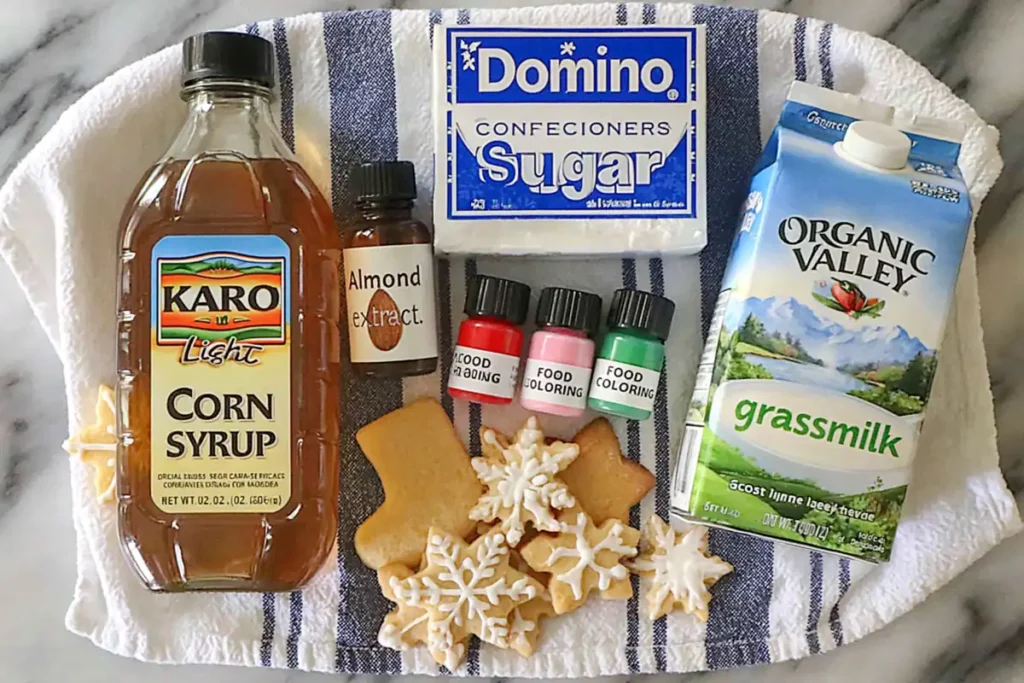
Start with powdered sugar. It gives structure and dissolves quickly, but only if it’s lump-free. That’s why I always sift it first—skipping that step usually leads to small clumps that don’t fully break down.
Corn syrup is what gives the icing its light gloss and keeps it from drying too hard. You can use honey instead, though it adds a subtle flavor and slightly warmer color.
Milk controls everything. Add it slowly—about 1 teaspoon at a time—and watch how the icing loosens. Too much at once, and you’ll spend time correcting it with more sugar.
For flavor, a small amount of extract goes a long way. Vanilla is the standard, but almond or peppermint can work well depending on the cookies.
Then comes food coloring. Add it gradually. Colors deepen as they sit, so what looks pale at first can become stronger after a few minutes.
How to Make Sugar Cookie Icing Step by Step
Start by sifting your powdered sugar into a bowl. It takes an extra minute, but it prevents the kind of lumps that are hard to fix later.
Add the corn syrup and your chosen extract, then begin mixing. At this stage, the mixture will look thick and slightly dull.
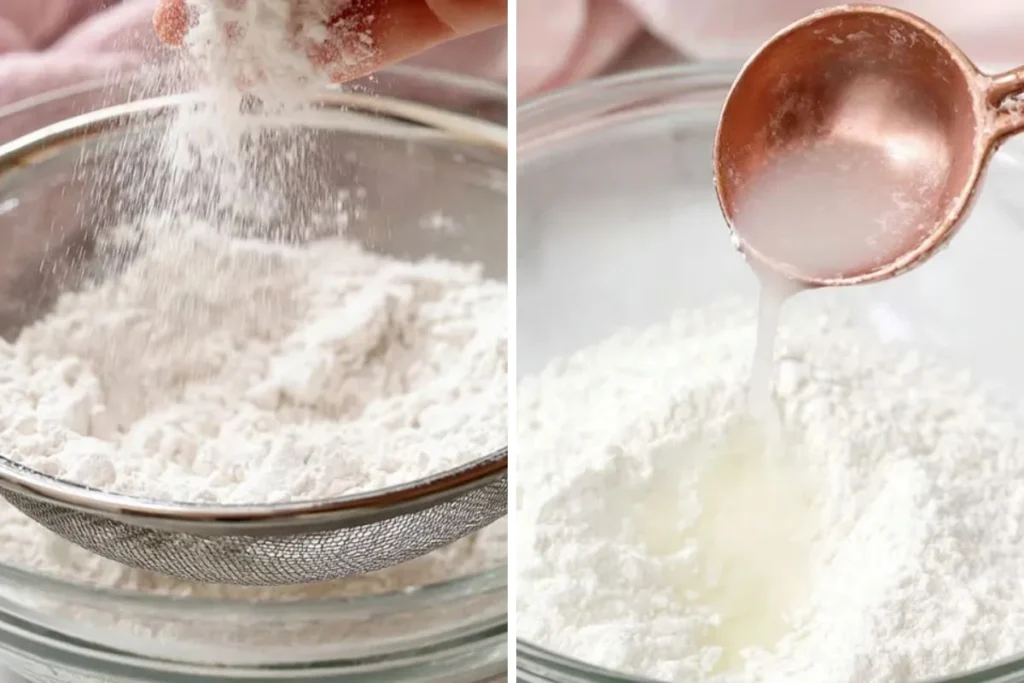
Now adjust with milk. Add 1 teaspoon at a time, stirring fully before adding more. You’re aiming for a consistency that flows slowly off a spoon and settles back into itself within about 10–15 seconds. That’s your baseline for flooding cookies.
If you need thicker icing for outlining, stop earlier. It should hold its shape briefly before relaxing.
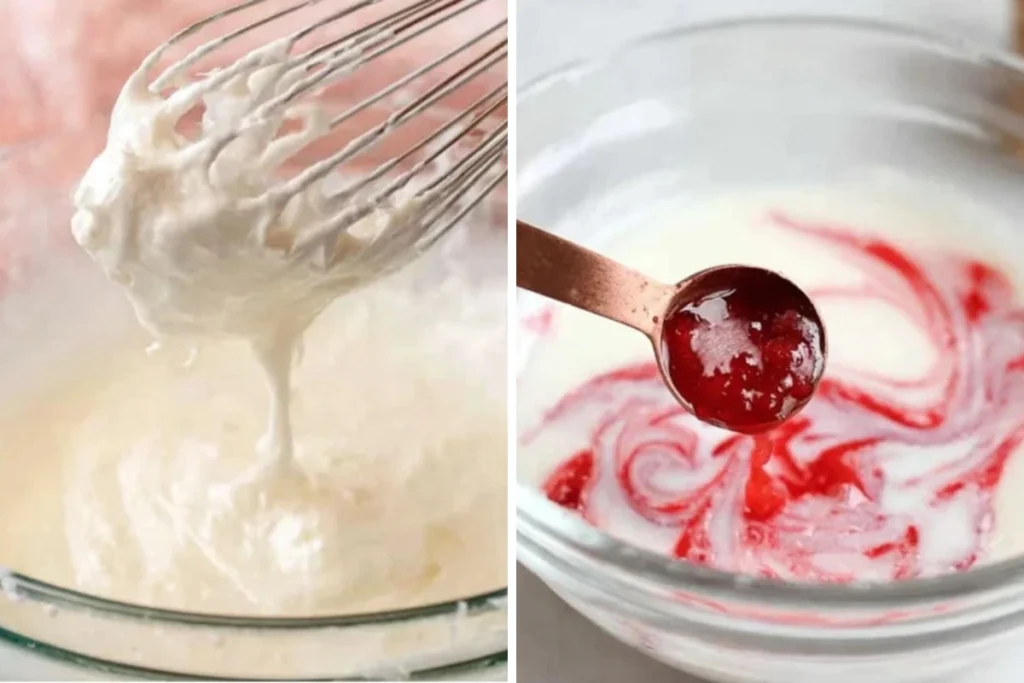
Once the texture is right, add food coloring in small amounts. Stir thoroughly each time—uneven mixing shows up quickly on cookies.

It’s not complicated, but you do have to pay attention. Small changes make a big difference here.
Watch the Process in Action
Reading about consistency helps, but seeing it makes things clearer. When the icing is ready, it should fall in a steady ribbon and smooth out without leaving ridges.
If it sits in peaks, it’s too thick. If it runs immediately and spreads too far, it’s too thin.
That visual check is something I rely on every time.
Practical Tips for Consistent Results
Let your cookies cool completely before icing. Even slight warmth will cause the icing to melt and lose structure. I usually wait at least 20–30 minutes after baking.
Use different consistencies depending on your goal. A thicker icing works for outlines, while a slightly thinner one fills the center. You can adjust both from the same base batch.
Drying time depends on thickness and humidity. Most cookies set in 1 to 2 hours, but for stacking or packaging, give them closer to 3–4 hours to be safe.

If the icing thickens while you’re working, add a few drops of milk and stir. It happens, especially if it sits out.
Frequently Asked Questions About Sugar Cookie Icing
This icing is often compared to royal icing, but they behave differently. Royal icing dries harder and is better for intricate piping. This one stays a bit softer and is easier to work with.
You can store leftover icing in the refrigerator for a few days. Keep it covered well—air exposure dries it out quickly. Before using again, stir and adjust with a little milk if needed.
Freezing works too, though I prefer making a fresh batch since it only takes a few minutes.

To test consistency, lift a spoon and let the icing fall back into the bowl. If the surface smooths out in about 10–15 seconds, you’re in the right range.
A Simple Finish That Makes Decorating Easier
Getting the consistency right matters more than anything else here. Once you see how the icing behaves—how it flows, settles, and sets—you stop guessing. That’s when decorating becomes faster and more controlled.
I still use this method for quick batches at home. It’s reliable, flexible, and doesn’t get in your way. Every recipe I share is an invitation from my kitchen to yours—and this one makes cookie decorating feel manageable, even on a busy day.
PrintSugar Cookie Icing

This sugar cookie icing is smooth, easy to adjust, and sets beautifully for decorating. Perfect for outlining and flooding holiday cookies.
- Prep Time: 10 minutes
- Total Time: 10 minutes
- Yield: 1 batch (about 72 cookies) 1x
- Category: Dessert
- Method: No-cook
- Cuisine: American
Ingredients
- 1–2 cups powdered sugar
- 1–4 tablespoons milk
- 2 teaspoons to 1 tablespoon light corn syrup or honey
- 1/4 to 1 teaspoon extract (vanilla, almond, peppermint, or coconut)
- Food coloring
Instructions
- Sift powdered sugar into a bowl to remove lumps
- Mix in corn syrup and extract until combined
- Add milk 1 teaspoon at a time while stirring until desired consistency
- Check texture by letting icing fall and settle within 10–15 seconds
- Divide and add food coloring gradually, mixing evenly
- Use thicker icing for outlining and thinner icing for flooding cookies
- Let icing set at room temperature for 1–2 hours before handling
Notes
- Sift sugar for a smoother icing texture
- Add milk slowly to avoid thinning too much
- Colors deepen over time so add gradually
- Let cookies cool completely before icing
- Adjust consistency depending on decorating needs
Nutrition
- Serving Size: 1 serving
- Calories: 120
- Sugar: 22
- Sodium: 5
- Fat: 0
- Saturated Fat: 0
- Unsaturated Fat: 0
- Trans Fat: 0
- Carbohydrates: 30
- Fiber: 0
- Protein: 0
- Cholesterol: 0






Thank you for your detailed instructions. Tried my first piping this year on Christmas cookies and it looked there was an earthquake while piping. Other holidays are coming and can’t wait to try again.
Thank you so much, Nancy! That’s such a relatable first piping experience—believe me, we’ve all had those “earthquake” moments 😄 The good news is it gets easier really fast with a bit of practice. I’m so glad you’re excited to try again for the upcoming holidays. You’ve got this, and I can’t wait to hear how your next batch turns out!