

Gingerbread Men Cookies That Hold Their Shape

The Smell That Means the Holidays Are Here
The moment ginger, cinnamon, and molasses warm up in the oven, the kitchen changes. It’s not just “cookies baking” — it’s that deep, spiced, buttery aroma that feels tied to December itself. These are the cookies that make people drift into the kitchen asking how long until they’re done, even if they weren’t planning to bake at all.
What I like about gingerbread men cookies is that they’re doing two jobs at once. They’re dessert, yes — softly spiced, lightly sweet, and satisfying on their own — but they’re also an activity. Rolling, cutting, decorating. This recipe is built so the cookies cooperate with you instead of fighting back. They stay soft without collapsing, firm enough to decorate without snapping, and flavorful without being harsh or bitter.
Most gingerbread problems come from imbalance: too much molasses, dough that’s too warm, spices that overwhelm instead of support. This version is tuned for consistency. The dough chills when it needs to, rolls cleanly, and bakes evenly so the edges stay sharp and the centers stay tender. You don’t need special equipment or bakery tricks — just the right ingredients used for the right reasons.
Before any mixing or rolling happens, it’s worth understanding what each ingredient is doing. Gingerbread is simple on paper, but the details matter. Here’s how to choose them so the cookies turn out the way you expect.
Table of Contents
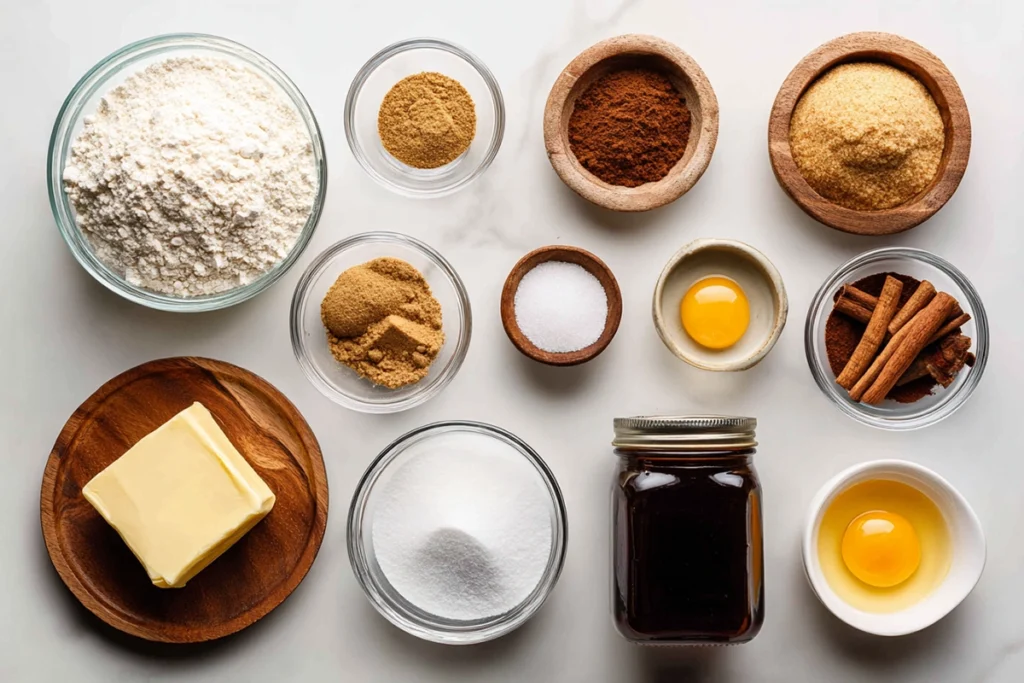
Ingredients That Make Gingerbread Work
Unsalted Butter
Butter provides structure and richness, but it also controls spread. Unsalted is important here so the salt level stays predictable — gingerbread can taste flat or overly sharp if the balance is off. Softened butter, not melted, gives you a dough that creams smoothly and holds air without turning greasy.
Brown Sugar
Brown sugar does more than sweeten. It adds moisture and depth, which is what keeps these cookies soft after baking. Light or dark brown sugar both work; dark will lean slightly more molasses-forward, which some people prefer for a deeper holiday flavor.
Unsulphured Molasses
This is the ingredient you shouldn’t swap casually. Unsulphured molasses gives warmth and color without bitterness. Avoid blackstrap molasses — it’s too intense and can make the cookies taste sharp instead of cozy. Brands like Grandma’s or Brer Rabbit are consistent and reliable.
Egg
The egg binds everything together and adds just enough structure so the cookies don’t crumble when handled. Use a large egg at room temperature so it incorporates evenly into the fat and sugar mixture.
All-Purpose Flour
Standard all-purpose flour is exactly what you want. Fancy flours don’t improve gingerbread here — consistency matters more than novelty. Measure carefully; too much flour leads to dry, tough cookies that lose their softness.
Gingerbread Spices
Ground ginger, cinnamon, cloves, and nutmeg work as a team. Ginger leads, cinnamon rounds things out, cloves add warmth, and nutmeg stays in the background. Store-brand spices are fine as long as they’re fresh — old spices flatten the flavor no matter how carefully you bake.
Baking Soda and Salt
Baking soda gives just enough lift without making the cookies cakey. Salt sharpens the sweetness and spices so the flavor doesn’t feel muddy. Both are small additions with a big impact on final texture and taste.
Powdered Sugar (For Icing)
Powdered sugar dissolves smoothly and gives structure to the icing. Sifting isn’t optional — lumps show up immediately when you start piping. This is one place where texture matters more than sweetness.
Milk and Corn Syrup (For Icing)
Milk adjusts consistency, while a small amount of corn syrup keeps the icing smooth and helps it set with a slight sheen. You don’t taste it, but you’ll notice the difference when the lines hold their shape instead of cracking.
From Chilled Dough to Clean Edges
Bringing the Dough Together
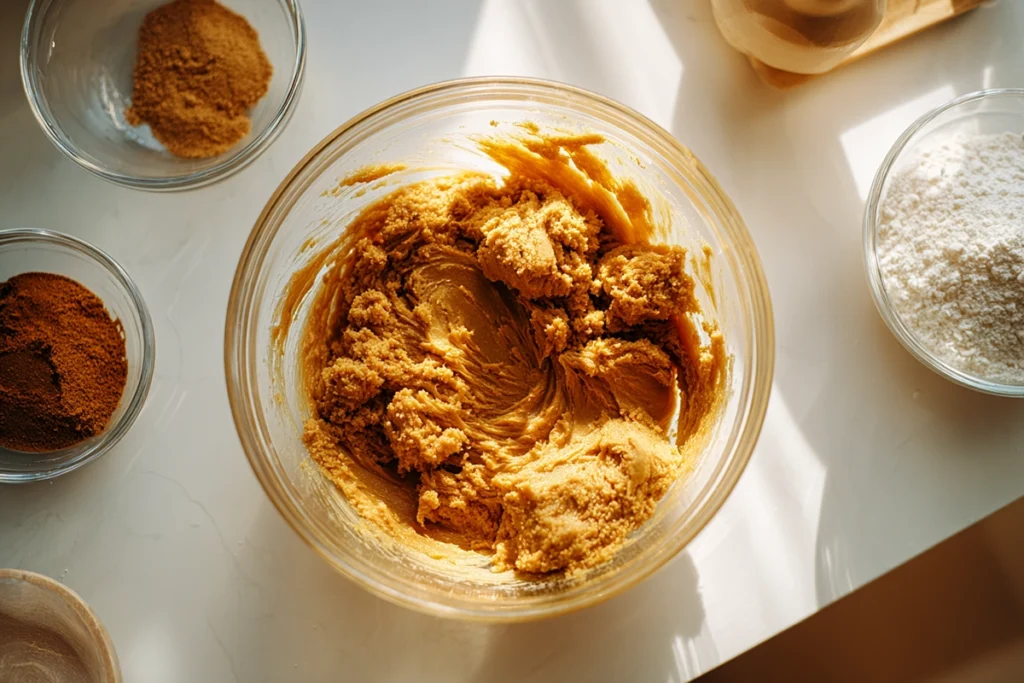
Once everything is mixed, the dough should look unified but soft — not glossy, not dry. When you press it lightly with your fingertip, it should feel tacky like a Post-it note, not wet like glue. You’ll smell the molasses and spices immediately, even before baking, which is a good sign the flavors are evenly distributed. If the dough pulls cleanly away from the bowl and sounds dull instead of slapping when the mixer runs, you’re right where you want to be.
This is not a dough you rush. Chilling is what turns a sticky mass into something cooperative. After resting in the fridge, the surface should feel cool and firm, and when you press it, it should dent slightly without cracking. That chill is what keeps your gingerbread men recognizable once they hit the heat.
Rolling Without the Fight
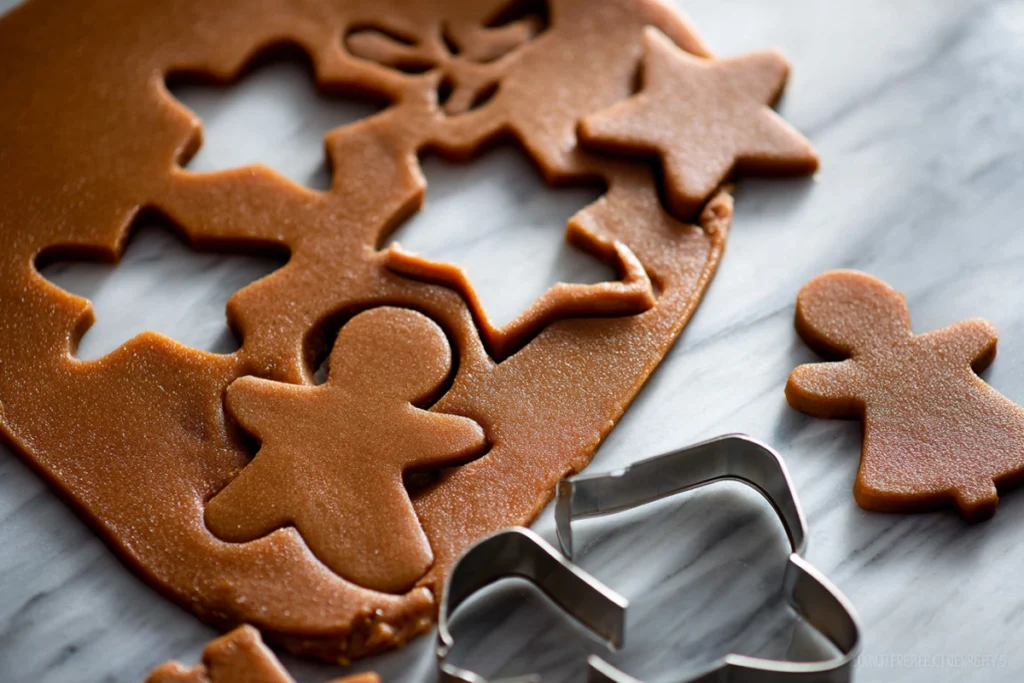
When the dough is ready to roll, pay attention to resistance. It should give way smoothly under the pin, with a faint drag against the counter rather than sticking outright. If you hear tearing or see jagged edges forming, the dough is too cold; let it sit until it smells more aromatic and softens just enough to relax.
Visually, you’re aiming for even thickness — about the depth of a pencil — so the cookies bake uniformly. When you lift a cut shape, it should hold together cleanly on the spatula without stretching. If the kitchen smells strongly of raw flour instead of spice at this stage, you’ve likely added too much flour to the surface.
Baking for Shape, Not Color
In the oven, gingerbread behaves quietly. You won’t hear loud sizzling, but you should smell warm ginger and butter within a few minutes. Watch the edges more than the centers — they should look set and slightly darker, while the tops remain matte, not glossy.
When touched lightly, the surface should feel dry but still yield slightly under pressure. If you wait for deep browning, you’ll lose softness. Pulling them at the right moment gives you cookies that stay tender once cooled and sturdy enough to decorate without snapping.
Where Gingerbread Men Cookies Usually Go Wrong
Dough That Spreads Instead of Holding Shape
If your gingerbread men cookies lose their definition, the dough was likely too warm. You’ll notice this when the cut edges blur before baking and the dough feels slick rather than cool to the touch. The fix isn’t more flour — it’s time. Re-chill until the dough smells fragrant but feels firm when lifted.
Cracking While Rolling
Cracks mean the dough is too cold or dry. You’ll hear a faint snapping sound as the pin rolls if this is happening. Letting the dough rest briefly at room temperature allows the fats to soften, bringing the dough back to a smooth, pliable feel without sacrificing structure.
Cookies That Bake Up Hard
Hard gingerbread usually comes from overbaking, not ingredient ratios. If the cookies smell toasted instead of warmly spiced, they’ve gone too far. Gingerbread firms up as it cools, so pulling them when they still feel slightly soft is what keeps the final texture right.
These small adjustments are what turn gingerbread from frustrating to reliable — and once you dial them in, the process becomes repeatable year after year.
Make Them Yours (Without Losing the Gingerbread)
Orange-Zest Gingerbread
If you want a subtle lift without changing the soul of the cookie, orange zest is the safest place to do it. Add finely grated zest from one orange directly into the dough with the sugar. You’ll smell it immediately — bright and citrusy — but it stays in the background once baked, sharpening the spice rather than competing with it. Avoid bottled orange flavoring; it tastes artificial and overwhelms the molasses.
Softer, Bakery-Style Gingerbread Men
For a slightly softer bite, roll the dough a touch thicker and pull the cookies from the oven while the centers still feel gently springy when pressed. You should smell warm butter and spice, not toasted sugar. This version is ideal if you like decorating and want cookies that stay tender for days instead of firming up overnight.
Cleaner Lines for Decorating
If decorating is the main event, chill the cut shapes briefly before baking. When you lift them, they should feel cool and stiff, and the edges should look sharp instead of relaxed. This extra pause helps gingerbread men cookies keep crisp outlines so icing lines sit cleanly instead of sliding off rounded edges.
Serving, Storing, and Keeping Them Soft
I usually eat these plain first — no icing, just warm spice and butter — before decorating the rest. Once iced, they’re best enjoyed at room temperature, where the flavors are balanced and the texture stays soft without becoming crumbly.

For storage, airtight at room temperature is the goal. The cookies should feel dry to the touch but not brittle when you break one. Don’t refrigerate them; cold air dries gingerbread fast and dulls the spice aroma. Properly sealed, they stay good for about a week, sometimes longer.
To freeze, do it before decorating. Stack the cooled cookies with parchment between layers, seal tightly, and freeze. When thawed at room temperature, they should smell fresh and feel soft again within an hour. Decorate only after they’ve fully thawed — icing and condensation don’t mix.
The Kind of Holiday Baking You Repeat
There’s a reason gingerbread baking sticks with us year after year. When the kitchen smells right and the cookies behave the way you expect, gingerbread men cookies stop being a project and start being a tradition — one you can repeat without guessing every December.
Get inspired with more mouthwatering recipes! Follow me on Pinterest for new cooking ideas every week.
Frequently Asked Questions
Why did my gingerbread men cookies spread even after chilling?
This usually means the dough warmed up too much during rolling. If the cut shapes look relaxed or shiny before baking, they’re already too soft. Chill the cut cookies until they feel cool and firm to the touch, then bake straight from the fridge.
Can I freeze gingerbread dough or baked cookies?
Yes. The dough freezes very well when wrapped tightly and can be thawed overnight in the fridge. Baked cookies also freeze well before decorating — once thawed, they should smell fresh and feel soft within about an hour.
How thick should gingerbread dough actually be?
About ¼ inch is the sweet spot. Thinner dough bakes crisp and loses softness, while thicker dough stays tender but needs careful timing. When rolled correctly, the dough should feel even under the pin and lift cleanly without stretching.
Why does my icing run instead of holding its shape?
The icing is too thin. When you drizzle it back into the bowl, it should hold its line for several seconds before melting back in. If it disappears immediately, add more powdered sugar; if it won’t move at all, add milk a teaspoon at a time.
Can I make gingerbread men cookies without a stand mixer?
Yes. A hand mixer works fine, and you can even mix by hand with a sturdy spoon. The key cue is texture — the dough should look cohesive and smell evenly spiced, not streaky or oily.
How long do gingerbread men cookies stay soft?
Stored airtight at room temperature, they stay soft for about a week. After that, they’re still edible but lose moisture. Avoid the refrigerator — it dries them out and dulls the spice flavor.
PrintGingerbread Men Cookies

Soft gingerbread men cookies that hold their shape, bake evenly, and decorate cleanly. A dependable holiday cookie recipe tested for real kitchens.
- Prep Time: 20 minutes
- Cook Time: 10 minutes
- Total Time: 3 hours 30 minutes
- Yield: 24 cookies 1x
- Category: Dessert
- Method: Baking
- Cuisine: American
- Diet: Vegan
Ingredients
- ½ cup unsalted butter
- ½ cup brown sugar
- ½ cup unsulphured molasses
- 1 large egg
- 2 teaspoons vanilla extract
- 2¾ cups all-purpose flour
- ¾ teaspoon baking soda
- ½ teaspoon salt
- 1½ teaspoons ground ginger
- 1½ teaspoons ground cinnamon
- ¼ teaspoon ground cloves
- ¼ teaspoon ground nutmeg
- 3 cups powdered sugar
- 2–4 tablespoons milk
- 2 tablespoons light corn syrup
- ½ teaspoon vanilla extract
Instructions
- Cream butter, brown sugar, and molasses until smooth.
- Mix in egg and vanilla until fully combined.
- Whisk dry ingredients together in a separate bowl.
- Add dry ingredients gradually to form a soft dough.
- Divide dough, wrap, and chill until firm.
- Roll dough evenly and cut into shapes.
- Bake until edges are set but centers remain soft.
- Cool completely before decorating with icing.
Notes
- Use unsulphured molasses, not blackstrap.
- Chill dough thoroughly to prevent spreading.
- Do not overbake; cookies firm up as they cool.
Nutrition
- Serving Size: 1 cookie
- Calories: 190
- Sugar: 26g
- Sodium: 95mg
- Fat: 5g
- Saturated Fat: 3g
- Unsaturated Fat: 2g
- Trans Fat: 0g
- Carbohydrates: 36g
- Fiber: 1g
- Protein: 2g
- Cholesterol: 18mg