
Peanut Butter and Jelly Cookies That Taste Like Childhood

The PB&J Cookie That Smells Like After-School Snacks
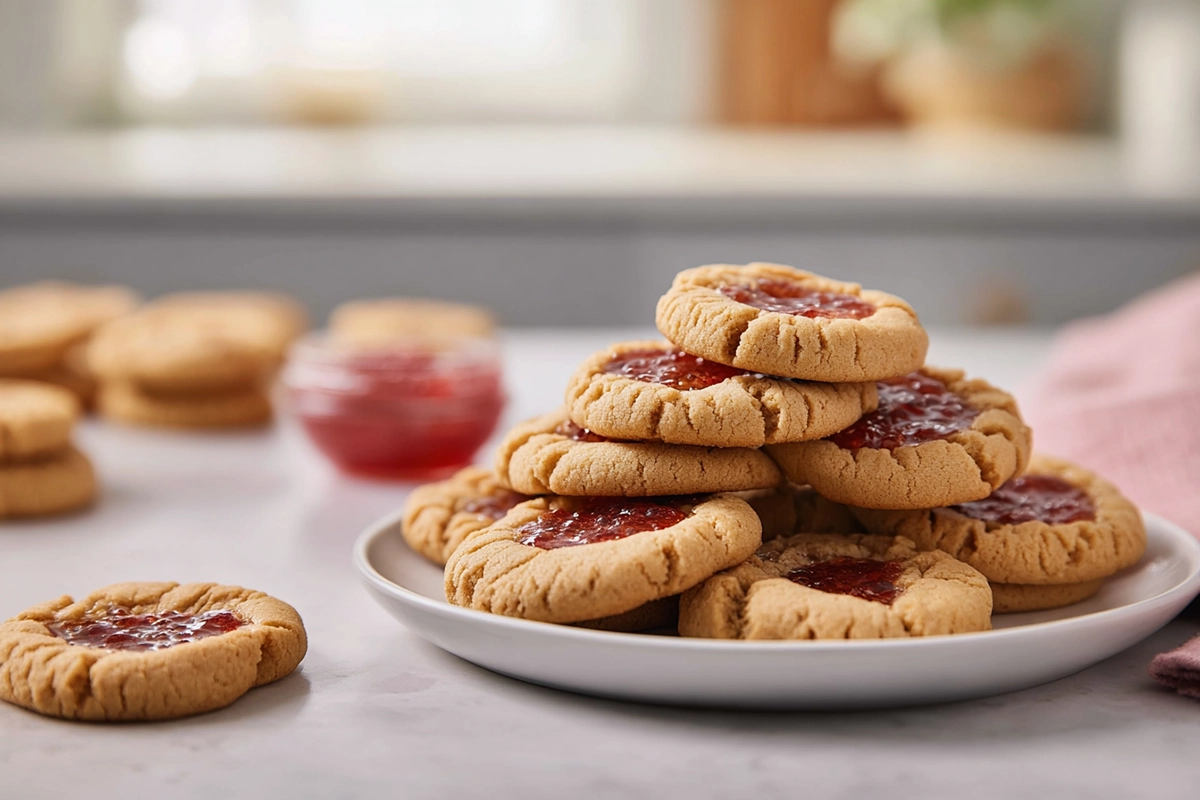
The first thing you notice with these cookies isn’t the look — it’s the smell. Warm peanut butter, melted sugar, and just a hint of jam bubbling where it meets the dough. It’s the same aroma that used to fill the kitchen when a PB&J sandwich got a little too close to the toaster, except deeper, richer, and unmistakably cookie-like. That smell alone tells you these aren’t crisp, dry cookies meant to be stacked neatly. These are soft, chewy, and meant to be eaten warm.
What makes peanut butter and jelly cookies work is that they don’t try to reinvent the sandwich — they respect it. The peanut butter is front and center, the sweetness is balanced instead of cloying, and the jam shows up in pockets rather than being mixed into oblivion. You get contrast in every bite: rich and nutty, then sweet and fruity, then back again.
I like this recipe because it turns nostalgia into something reliable. The dough is simple, forgiving, and doesn’t require a mixer. The structure is intentional — from how the fats are handled to how the jam is added — so you don’t end up with dry cookies or jam that disappears during baking.
This is the kind of cookie that feels playful but still behaves itself in a normal home kitchen. No tricks, no shortcuts — just familiar flavors, written and tested so you can repeat them and get the same result every time.
Table of Contents
Ingredients That Make the Difference
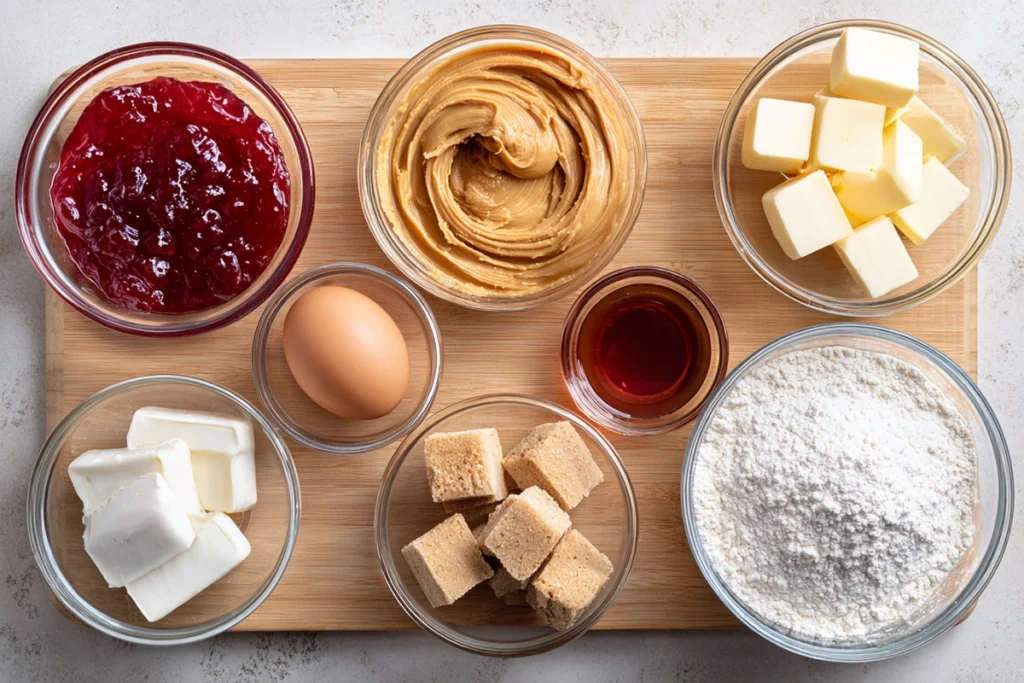
Unsalted Butter
Melted butter gives these cookies their chew instead of a cakey crumb. I stick with unsalted so the salt level stays controlled — peanut butter already brings its own salinity. Any standard grocery-store butter works fine here; no need for premium brands.
Creamy Peanut Butter
Well-stirred peanut butter is non-negotiable. If the oil isn’t fully mixed in, the dough turns greasy in spots and dry in others. Natural peanut butter gives the boldest flavor, but conventional brands like Jif or Skippy work reliably if that’s what you keep on hand.
Brown Sugar + Granulated Sugar
This combination matters. Brown sugar keeps the cookies soft and moist, while granulated sugar helps with structure and light crisping at the edges. Skipping one or swapping ratios changes the texture more than you might expect.
Bleached All-Purpose Flour
This is one ingredient I don’t casually substitute. Bleached flour absorbs liquid differently and keeps the dough tender instead of crumbly. Unbleached flour can work, but only with careful measuring and slight reduction — otherwise the cookies bake up dry.
Strawberry Jam or Jelly
Use a thick, chilled jam so it stays in pockets instead of melting into the dough. Store-brand jam is completely fine here; you’re after texture and sweetness, not gourmet preserves. Grape or raspberry also work if they’re similarly thick.
From Sandwich Idea to Soft-Center Cookie
Building the Dough Without Overworking It
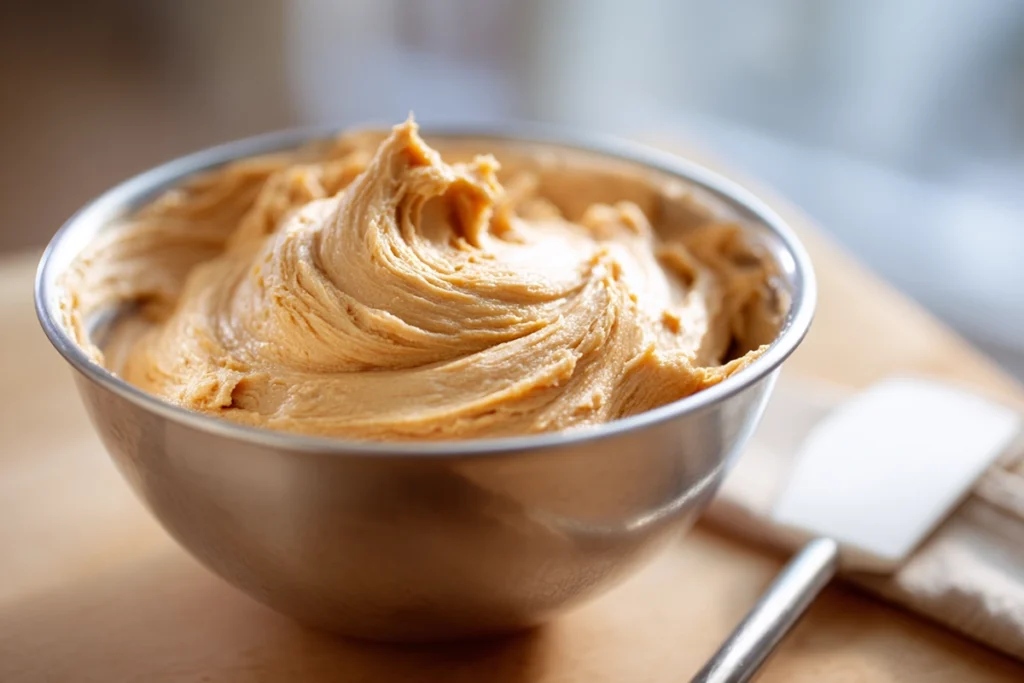
This dough comes together quietly, without a mixer, and that’s intentional. Once the sugars hit the warm butter and peanut butter, the mixture should look glossy and loose, almost like thick caramel. When you add the dry ingredients, stop as soon as the flour disappears — the dough should feel tacky, like a Post-it note pressed to your finger, not wet or elastic. If you squeeze a bit in your hand, it should hold its shape without sticking to your palm. The smell at this stage is subtle but nutty, not raw or floury.
Creating the Jam Pocket
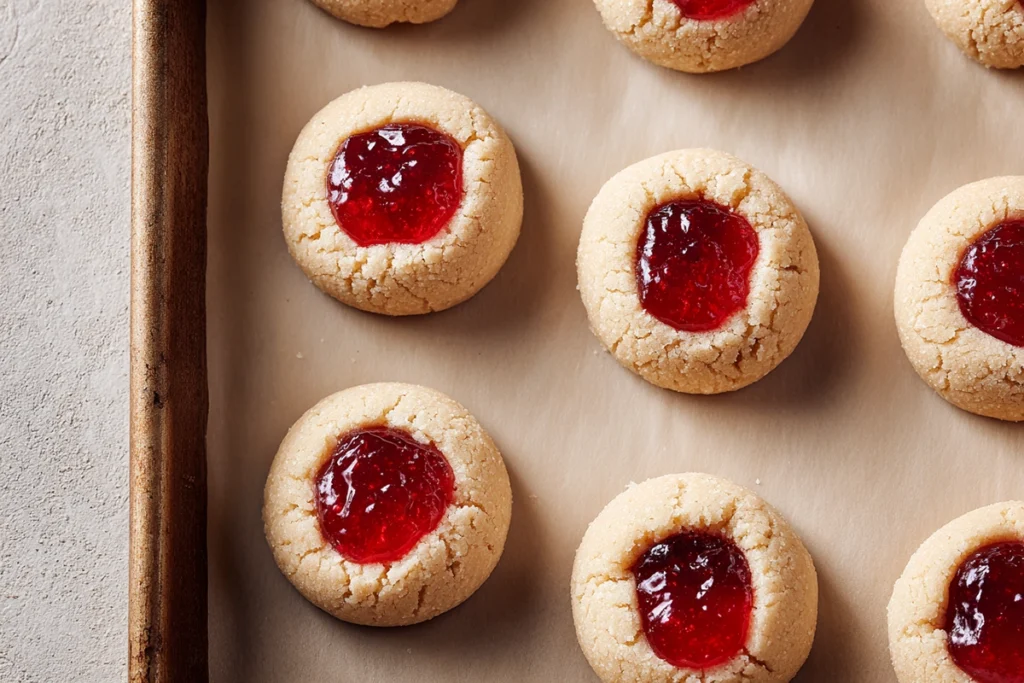
The visual cue here matters more than precision. Pressing a shallow well into each dough ball should feel gentle, like dimpling soft clay rather than poking a hole. The chilled jam should sit in the center without immediately spreading; if it starts to slide, the dough is too warm. As you fold the dough back around it, you’ll feel resistance but not tearing. Expect a little mess — you’ll smell fruit as soon as the jam is exposed, and that’s exactly what you want.
Baking for Soft Centers and Set Edges
As the cookies bake, listen for quiet sizzling where the jam meets the dough. That sound tells you the sugars are melting properly. Visually, the edges should look lightly golden and puffed, while the centers stay pale and soft. When you tap the edge, it should feel set but not firm, and the kitchen should smell like roasted peanuts with a faint berry note. Pulling them at this point keeps the centers chewy instead of dry.
Peanut Butter and Jelly Cookies: Where Things Go Wrong
When the Dough Turns Dry or Crumbly
If the dough looks sandy or cracks when rolled, the flour absorbed too much moisture. You’ll notice it immediately by touch — it won’t feel tacky, and it won’t smooth out between your palms. The smell often stays flat and flour-forward instead of nutty. This usually comes from unbleached flour or over-measuring, and once it happens, the cookies won’t soften much in the oven.
When the Jam Disappears or Leaks Everywhere
Jam that’s too warm or too thin melts before the cookie structure sets. You’ll see red streaks spreading across the baking sheet and hear aggressive bubbling instead of a gentle sizzle. The fix is simple but important: cold, thick jam and partial sealing. A little jam showing on top is good; a puddle underneath means it escaped too early.
When the Cookies Spread Too Much
Excess spread shows up fast — the dough relaxes outward before the edges can hold. The surface looks oily, and the cookies bake thin with weak centers. This usually traces back to poorly mixed peanut butter or butter that was still hot when the eggs were added. The dough should smell warm and nutty, not greasy, before it ever hits the oven.
Make It Yours Without Losing the PB&J Soul
Switching the Jam (What Works and What Doesn’t)
Strawberry is the most familiar, but it’s not the only option that behaves well in this dough. Grape and raspberry both work if they’re thick and chilled — you should be able to spoon them without dripping. Thin or overly glossy jams melt too fast and vanish into the cookie. Visually, the right jam stays domed in the center; by smell, it should give off a warm fruit note, not a candy-like sharpness.
Crunchy Peanut Butter (Only If You Like Texture)
Crunchy peanut butter changes the bite more than the flavor. The dough feels slightly rough when rolled, and you’ll hear a faint crackle from the peanut pieces as the cookies bake. The spread increases a touch, and the crumb becomes less uniform. I like this version for contrast, but if you want that classic soft-center cookie, creamy is more predictable.
Gluten-Free Flour (Manage Expectations)
A 1:1 gluten-free flour blend works, but the texture shifts. The dough feels firmer and less tacky, and the cookies bake up denser with less spread. The smell is still right, but the chew is tighter. If you go this route, slightly flatten the dough balls before baking to avoid thick centers that feel underdone.
How I Serve and Store These Cookies
I eat these slightly warm, when the edges are set and the centers are still soft enough to bend. The peanut butter flavor is rounder when warm, and the jam tastes brighter. Once fully cooled, they’re still good — just more mellow and tender.
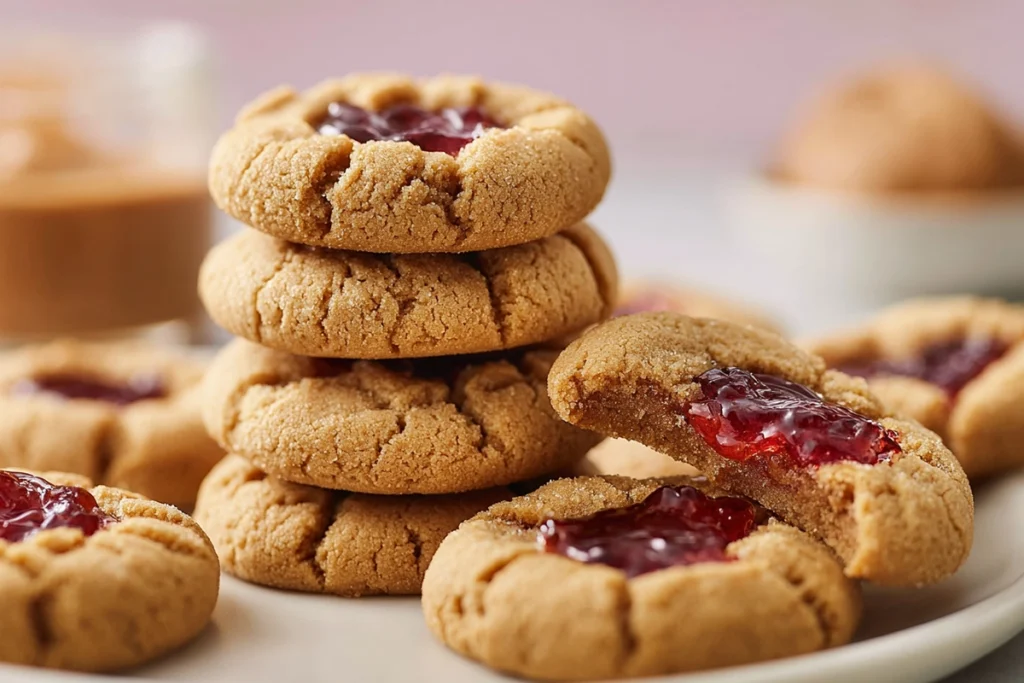
For storage, keep them in an airtight container at room temperature for up to two days. They actually soften overnight as the moisture from the jam migrates into the crumb. I don’t refrigerate them — the cold dulls the flavor and dries the texture.
For freezing, freeze the baked cookies in a single layer first, then transfer to a bag. To reheat, let them thaw for a few minutes, then warm in a 300°F oven until the centers feel soft again when pressed. The smell alone will tell you when they’re ready.
A Cookie That Brings It All Back
These cookies work because they honor what made the sandwich great in the first place — balance, comfort, and familiarity — without turning it into a novelty. When done right, peanut butter and jelly cookies smell like after-school afternoons and eat like something you’ll want to make again on purpose.
Get inspired with more mouthwatering recipes! Follow me on Pinterest for new cooking ideas every week.
Frequently Asked Questions
Why did my peanut butter and jelly cookies spread too much?
This usually happens when the butter is still hot when the eggs are added or when the peanut butter isn’t fully stirred. The dough should feel tacky but not greasy, and it should hold its shape when rolled. If it looks shiny or oily, let it rest for a few minutes before baking.
Can I use natural peanut butter instead of regular?
Yes, and it works very well — but only if it’s thoroughly mixed. Any separation between oil and solids will cause uneven spread and texture. Stir until completely smooth before measuring.
Why does this recipe call for bleached all-purpose flour?
Bleached flour absorbs liquid differently and keeps the dough tender instead of crumbly. Unbleached flour can make the cookies dry unless you slightly reduce the amount. The difference shows up in both texture and spread.
Can I freeze the dough with the jam inside?
You can, but it’s not ideal. The jam tends to leak as the dough thaws and bakes. For best results, freeze the baked cookies instead, then reheat gently to restore softness.
How do I keep the jam from sinking or disappearing?
Use thick jam and keep it cold. Press only a shallow well and partially seal the dough around the jam, leaving a little visible on top. Thin or warm jam melts too quickly and vanishes into the cookie.
Can I make these cookies smaller without changing the bake?
Yes, but watch them closely. Smaller cookies bake faster and can dry out quickly. Look for lightly golden edges and soft centers rather than relying on the full bake time.
PrintPeanut Butter and Jelly Cookies
Soft peanut butter and jelly cookies with rich peanut butter flavor and jam pockets. Easy, nostalgic cookies with dependable results every time.
- Prep Time: 25 minutes
- Cook Time: 14 minutes
- Total Time: 39 minutes
- Yield: 21 cookies 1x
Ingredients
- 1 stick unsalted butter
- 1 cup creamy peanut butter
- 1 cup light brown sugar
- 3/4 cup granulated sugar
- 2 3/4 cups all-purpose flour
- 3/4 teaspoon baking soda
- 1/2 teaspoon baking powder
- 1/2 teaspoon fine sea salt
- 2 large eggs
- 1 tablespoon milk
- 2 teaspoons vanilla extract
- 3/4 cup strawberry jam
Instructions
- Preheat the oven and line baking sheets.
- Melt butter and mix with peanut butter and sugars.
- Whisk in eggs, milk, and vanilla.
- Stir in dry ingredients until just combined.
- Form dough balls and create a shallow well.
- Add chilled jam and gently seal dough.
- Bake until edges are set and lightly golden.
- Cool briefly before transferring to a rack.
Notes
- Use well-stirred peanut butter.
- Chill jam before filling.
- Do not overbake; centers should stay soft.
Nutrition
- Serving Size: 1 cookie
- Calories: 260
- Sugar: 22
- Sodium: 180
- Fat: 14
- Saturated Fat: 6
- Unsaturated Fat: 7
- Trans Fat: 0
- Carbohydrates: 32
- Fiber: 2
- Protein: 6
- Cholesterol: 35