
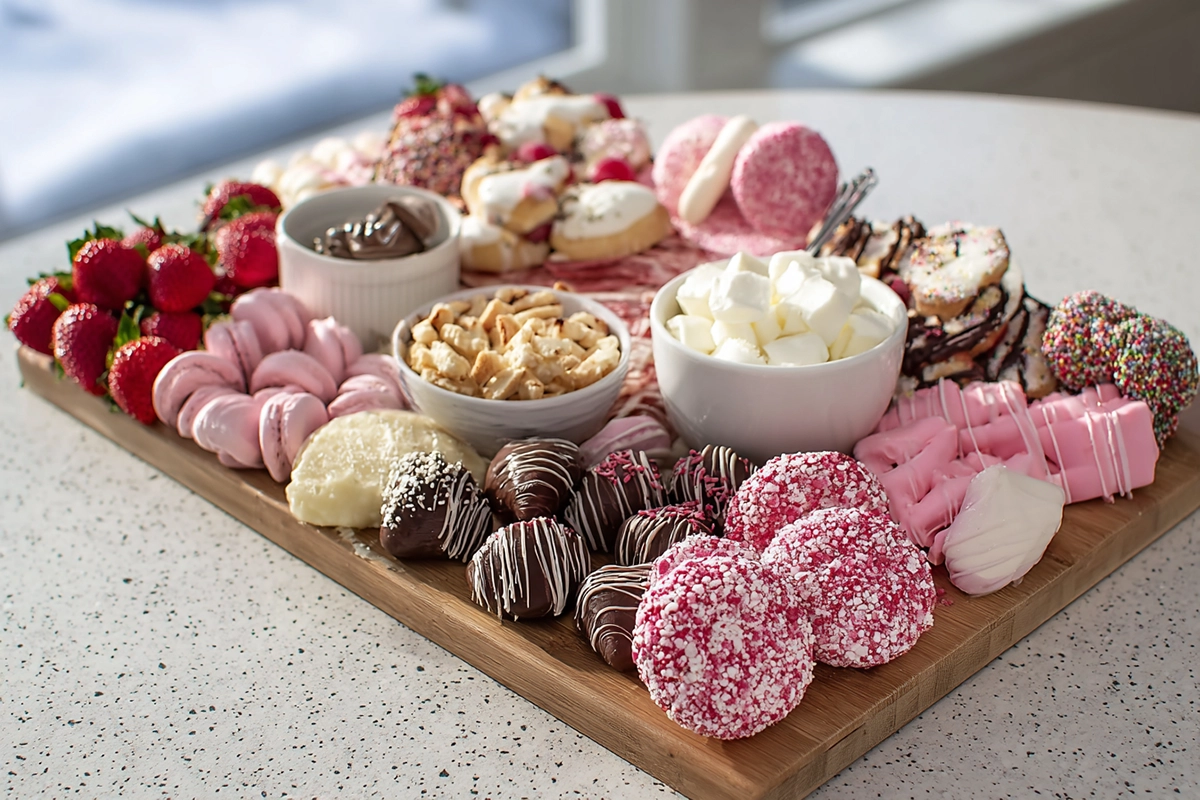
Valentine’s Dessert Board That Always Steals the Table

The first thing people notice isn’t the shape of the board — it’s the smell and texture combination hitting all at once. Chocolate snapping as it breaks, soft gummies pulling apart, fresh fruit giving off that clean, sweet aroma that cuts through the sugar. A good dessert board isn’t about piling on sweets; it’s about contrast. Crunch next to creamy. Chewy next to crisp. Sweet balanced by fresh. When it works, people keep reaching back without even realizing it.
A Valentine’s Dessert Board fits this kind of moment perfectly. There’s no baking window to miss, no timing stress, and no single dessert everyone has to agree on. It’s interactive by nature — people build their own bites, mix flavors, and linger longer at the table. For holidays especially, that matters. You’re not serving a dessert and clearing plates five minutes later; you’re setting out something that invites grazing, conversation, and repetition.
What makes this board reliable is that it’s built the same way I approach everyday cooking: clear categories, intentional choices, and repeatable results. You’re not guessing how much of one thing to add or hoping it looks good when you’re done. You’re choosing specific textures and flavors on purpose, arranging them with balance, and letting the board do the work. When you understand why each element is there, you can recreate it for Valentine’s Day — or any occasion — without starting from scratch.
Table of Contents
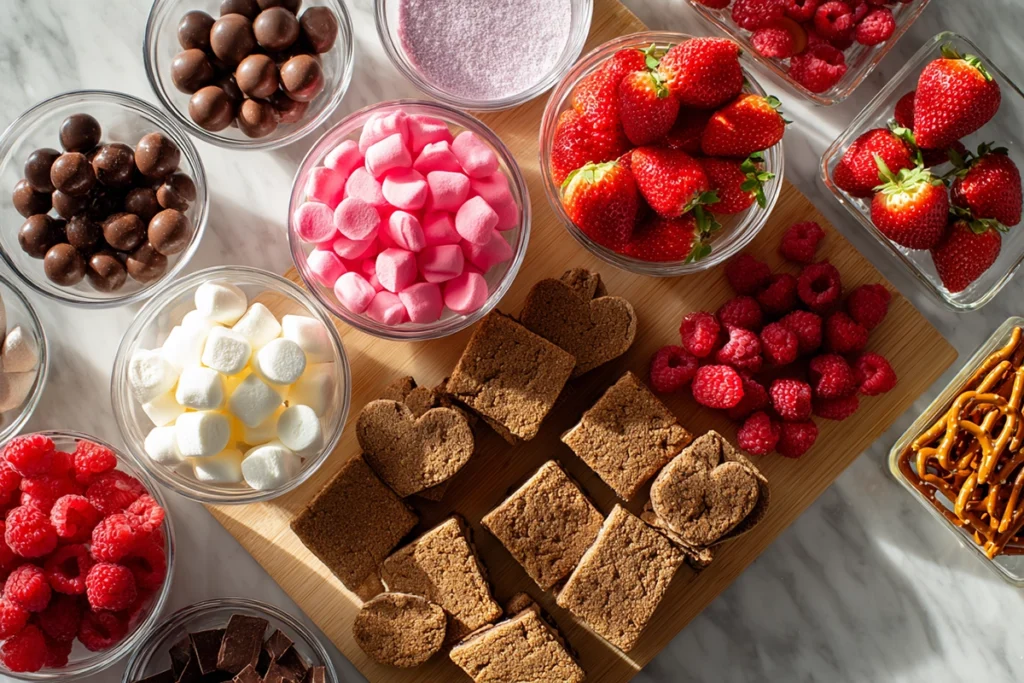
Ingredients That Make the Board Work
Candy (2–3 varieties)
Candy fills the small gaps and gives the board its playful, colorful energy. This is where chewy and fruity belong — conversation hearts, gummies, or classic M&M’s all work because they’re easy to grab and don’t overpower everything else. Store-brand candy is perfectly fine here; once it’s mixed into the board, texture matters more than branding.
Chocolate Candies (2–3 varieties)
This is not the place to cut corners completely. Chocolate provides richness and contrast, so quality affects the entire board. Truffles, chocolate hearts, or solid chocolate kisses give you snap and melt — something candy alone can’t do. Avoid waxy chocolate if you can; it dulls the experience fast.
Fresh Fruit (2 varieties)
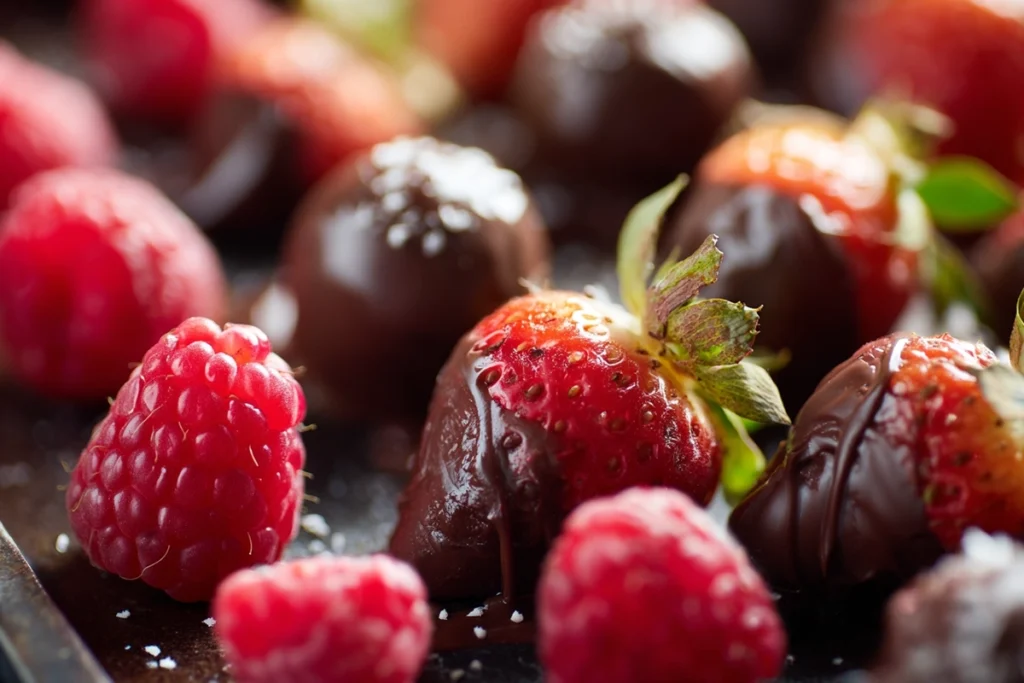
Fruit is what keeps the board from becoming one-note sweet. Berries, grapes, or sliced strawberries add freshness and moisture that reset the palate between bites of candy and chocolate. Choose fruits that hold up at room temperature and don’t leak juice quickly — that keeps the board clean and appetizing.
Cookies or Small Treats (2–3 varieties)
Cookies add structure and crunch. Shortbread, wafer cookies, or bite-sized biscuits work better than anything overly crumbly. This is another area where basic store-bought options are fine, as long as the texture is right. The goal is something sturdy enough to anchor softer sweets without stealing attention.
Assembling a Valentine’s Dessert Board That Feels Intentional
Start With the Anchor Pieces
I always begin by placing the bowls and the largest items first, because they quietly decide how the rest of the board will flow. Visually, you’re looking for clear open space around each bowl so the board doesn’t feel cramped. When you set them down, you should hear the soft clink of ceramic against wood — that sound tells you the board is stable and not overcrowded. If your hand has to hover and adjust more than once, it’s a sign you’re rushing the layout.
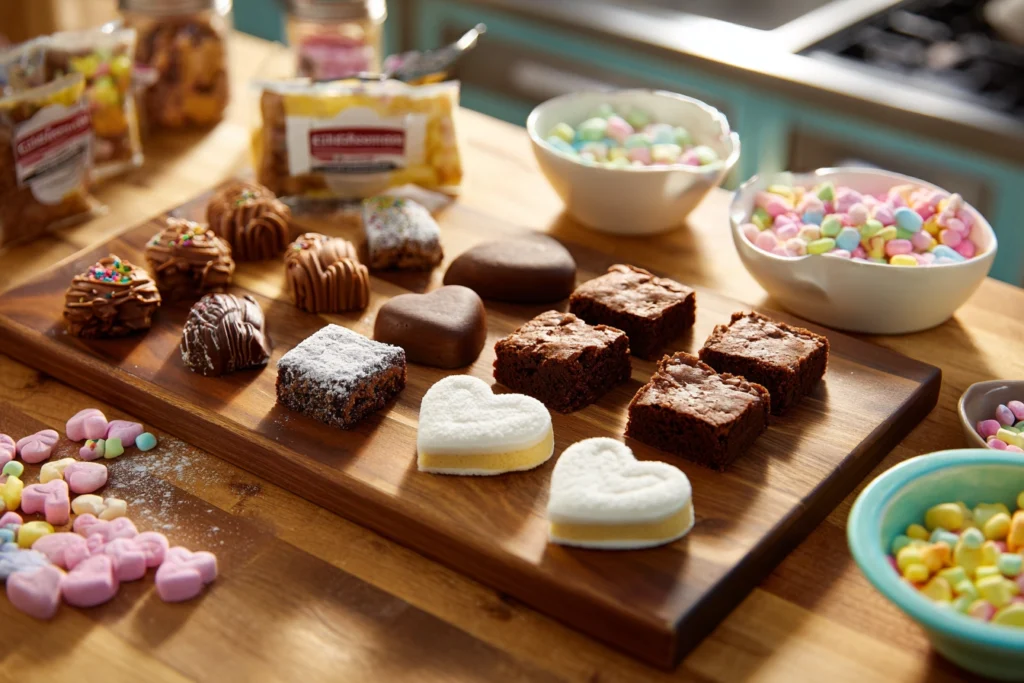
As you place larger items like cookie stacks or chocolate clusters, pay attention to touch. They should sit flat and feel secure, not wobble or slide when you nudge the board slightly. Smell matters here too — strong chocolate aromas should be spread out, not concentrated in one corner, so the board smells balanced instead of heavy.
Build Contrast, Not Symmetry
Once the anchors are in place, the goal shifts from filling space to creating contrast. Look for color breaks — reds next to browns, glossy candies beside matte cookies. Visually, you want your eye to move across the board instead of getting stuck in one area. If everything looks the same shade or texture in one spot, pause and adjust.
This is where touch and sound help again. When you add gummies or candy-coated chocolate, you’ll hear them lightly tap against the board or bowl. If they pile up with a dull thud, you’ve added too much in one place. Use your fingers to gently spread them so they feel loose and accessible, not packed down.
Fill the Gaps Last
The final pass is about restraint. The small spaces between items are there for a reason — they let the board breathe. Fill them slowly with leftover candy or fruit, watching for visual balance instead of total coverage. The fruit should look fresh and dry, not glossy with moisture, and when you move it, it should feel cool and firm, not slippery.
Take a second to lean in and smell the board as a whole. You should catch hints of chocolate, fruit, and sugar without one overpowering the rest. That’s usually the sign that you’re done — not when the board is full, but when it feels complete.
Where Valentine’s Dessert Boards Usually Go Wrong
When Everything Is Too Sweet
One of the most common problems I see with a Valentine’s Dessert Board is sugar overload. Visually, it often looks bright and exciting at first, but when you step back, everything has the same glossy finish. The smell gives it away too — a heavy, almost cloying sweetness that hits all at once. If your nose doesn’t get a break from chocolate and candy, the board won’t eat well.
The fix is usually simple: more fruit or something crisp. When you add it, listen for the softer sound of fruit being placed rather than the sharp rattle of candy. That contrast resets the board immediately.
Chocolate That Melts Too Fast
Chocolate is sensitive, and boards fail when it’s treated like candy. If the room is warm, you’ll feel it right away — chocolate that smudges under your fingers or leaves residue on the board. Visually, it starts to dull instead of shine, and the smell becomes flat rather than rich.
This isn’t about chilling everything; it’s about placement and timing. Keep chocolate slightly separated, and add the most delicate pieces last so they hold their shape longer.
A Board That Looks Busy Instead of Inviting
Overfilling is subtle but damaging. When every inch is packed, there’s no clear place for the eye — or the hand — to land. You’ll notice it when reaching feels awkward and items bump into each other with a cluttered, plastic-on-plastic sound instead of light taps.
If that happens, remove one item type entirely and redistribute. The board should feel easy to approach, not like a puzzle. When it’s right, people instinctively reach in without asking where to start.
Make It Your Own
Chocolate-Forward (For People Who Skip Candy)
If you’re building this board for serious chocolate lovers, shift the balance toward different cocoa percentages instead of more sugar. Use one milk chocolate for creaminess, one dark chocolate around 60–70% for bitterness, and a filled chocolate like truffles for texture. Visually, you’ll notice more muted browns instead of bright colors, and the smell becomes deeper and richer instead of sugary. The board eats slower this way — people break pieces, pause, and come back, which is usually a good sign.
Kid-Friendly Without Turning Chaotic
For kids, the goal is familiarity without overload. Stick to softer textures — gummies, mini cookies, and candy-coated chocolates — and skip anything brittle or intensely bitter. When you touch the items, they should feel pliable and forgiving, not sharp or crumbly. Keep fruit simple and sturdy, like grapes or strawberries, so there’s no dripping juice or sticky fingers halfway through the night.
Lighter, Fresh-Leaning Board
If you want the board to feel less heavy, let fruit lead and use sweets as accents. Fresh berries, apple slices, or citrus segments bring a clean smell and a cool, firm bite that breaks up the sugar. Visually, the board looks brighter and less dense, and when you run your hand across it, there’s more space between items. This version works especially well if dessert follows a rich meal.
Serving & Storing in Real Life
I serve this board at room temperature, set out just before people gather — not an hour earlier. When it’s right, the chocolate still snaps cleanly, the fruit feels cool to the touch, and nothing smells muted or stale. I let people graze naturally rather than portioning; the board is meant to be interactive, not managed.
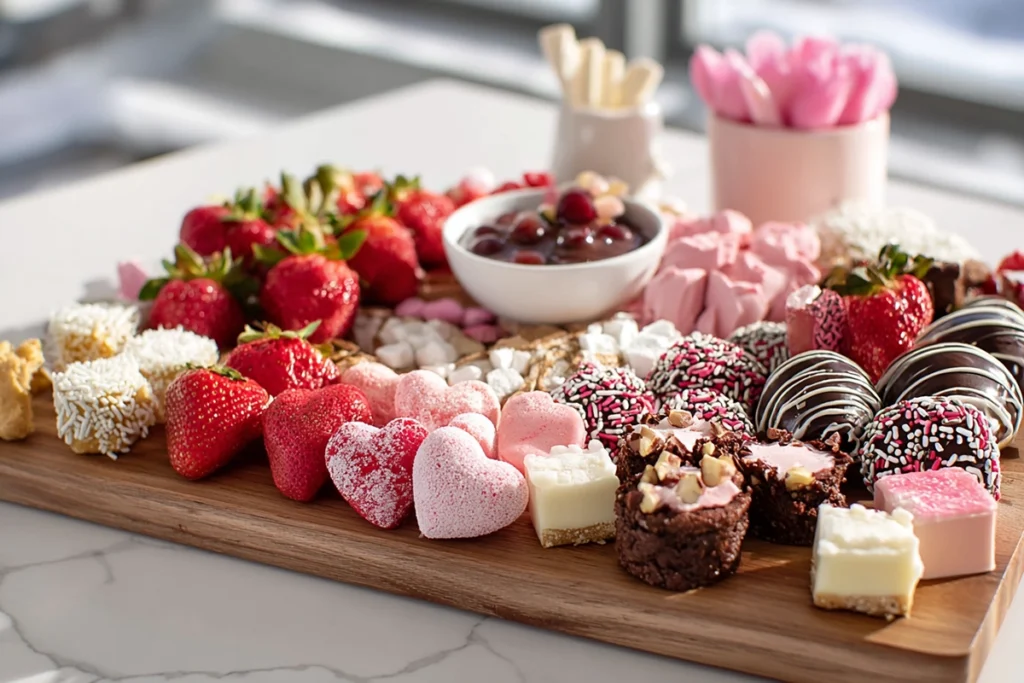
This isn’t something you store fully assembled. If you need to prep ahead, keep components separate. Candy and cookies can stay sealed at room temperature, chocolate should be kept cool and dry, and fruit should be washed, dried, and refrigerated until shortly before serving. Once assembled, the board is best enjoyed the same day. Refrigerating a finished board dulls flavor and texture fast — especially chocolate, which loses snap and aroma.
A good dessert board works for the same reason reliable recipes do: clear choices and repeatable results. When built with intention, a Valentine’s Dessert Board becomes less about decoration and more about how people actually eat — slowly, socially, and coming back for one more bite.
Get inspired with more mouthwatering recipes! Follow me on Pinterest for new cooking ideas every week.
Frequently Asked Questions
Can I make a Valentine’s Dessert Board the night before?
Yes, but only partially. Prep and store the components separately — candy and cookies at room temperature, chocolate in a cool spot, fruit washed and dried in the fridge. Assemble the board shortly before serving so textures stay crisp and chocolate keeps its snap.
How big should the board be for 6 people?
A medium board, roughly 12–14 inches, is ideal. You want enough surface area for spacing, not stacking. If items are touching too much, the board is too small and will feel crowded fast.
How do I keep chocolate from melting on the board?
Start with cool chocolate and add it last. Keep it away from warm lights or heat sources, and don’t place it directly against fruit that’s been sitting out. If chocolate feels soft when you touch it, the room is too warm.
What fruits work best for a dessert board?
Choose fruits that stay firm and dry at room temperature. Strawberries, grapes, blueberries, and apple slices hold up well. Avoid overly juicy fruits unless you plan to add them right before serving.
How much candy should I actually use?
Less than you think. Candy is a filler, not the main event. If it starts to pile up or rattle loudly when you add it, you’ve gone too far. The board should feel balanced, not sugary.
Can I do this without a fancy board or bowls?
Yes. A cutting board, sheet pan, or even a large plate works fine. For bowls, small cups or ramekins do the same job. Stability matters more than appearance.
PrintValentine’s Dessert Board
Build a Valentine’s Dessert Board with chocolate, fruit, and treats in just 15 minutes. A no-bake holiday platter that’s balanced, easy, and repeatable.
- Prep Time: 15 minutes
- Total Time: 15 minutes
- Yield: 6 servings 1x
- Category: Dessert
- Method: No Bake
- Cuisine: American
- Diet: Vegetarian
Ingredients
- 1 cup assorted candy
- 1 1/2 cups assorted chocolate candies
- 2 cups fresh fruit
- 2 cups assorted cookies or small treats
Instructions
- Place small bowls and large items on the board first.
- Arrange chocolates, cookies, and fruit with visual spacing.
- Fill remaining gaps with candy and smaller items.
- Adjust placement for balance and contrast before serving.
Notes
- Assemble shortly before serving for best texture.
- Store components separately if prepping ahead.
Nutrition
- Serving Size: 1 serving
- Calories: 450
- Sugar: 38 g
- Sodium: 180 mg
- Fat: 24 g
- Saturated Fat: 14 g
- Unsaturated Fat: 8 g
- Trans Fat: 0 g
- Carbohydrates: 52 g
- Fiber: 4 g
- Protein: 6 g
- Cholesterol: 25 mg