
Vegan Pumpkin Wild Rice Soup That Actually Fills You Up

That First Spoonful Tells You Everything
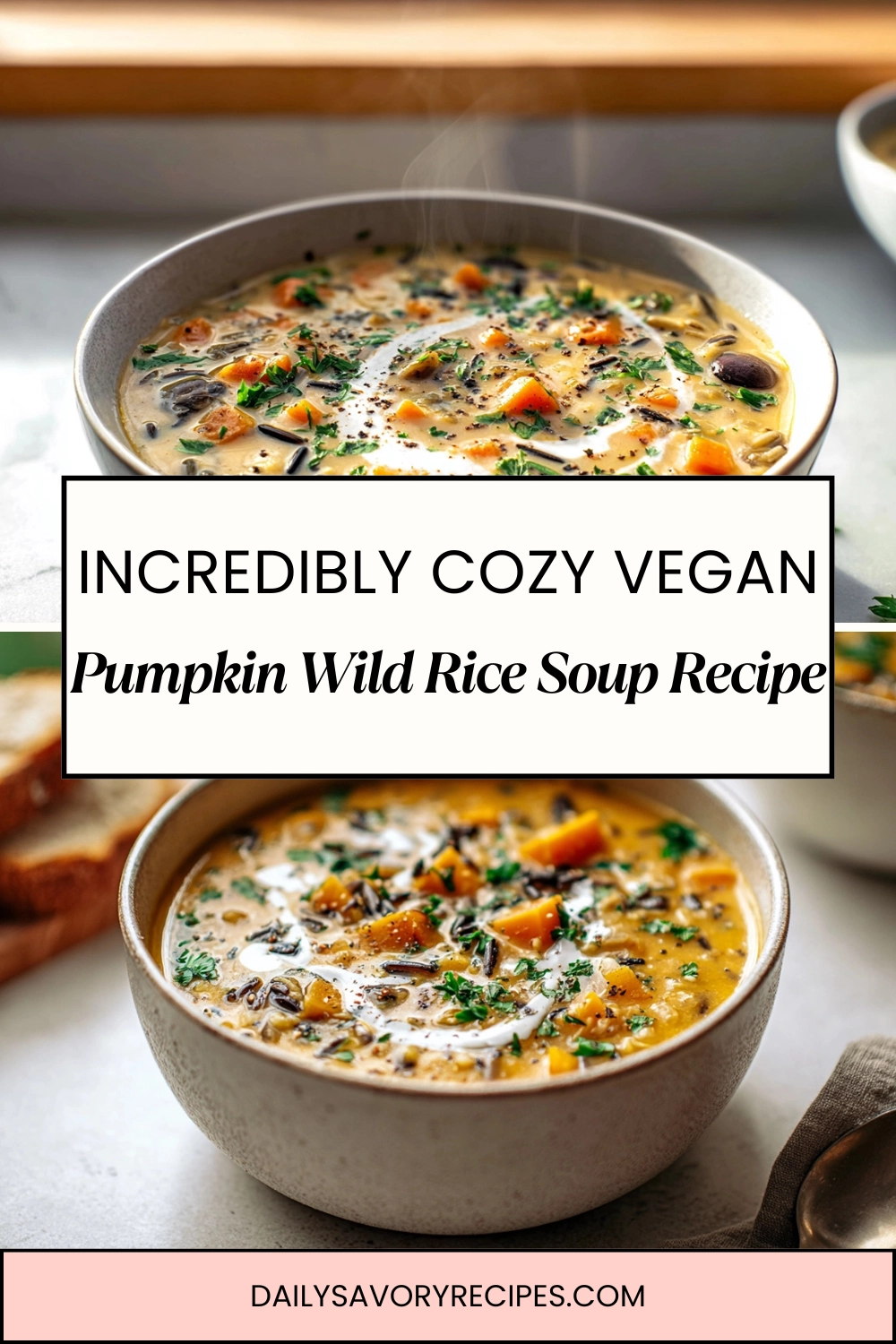
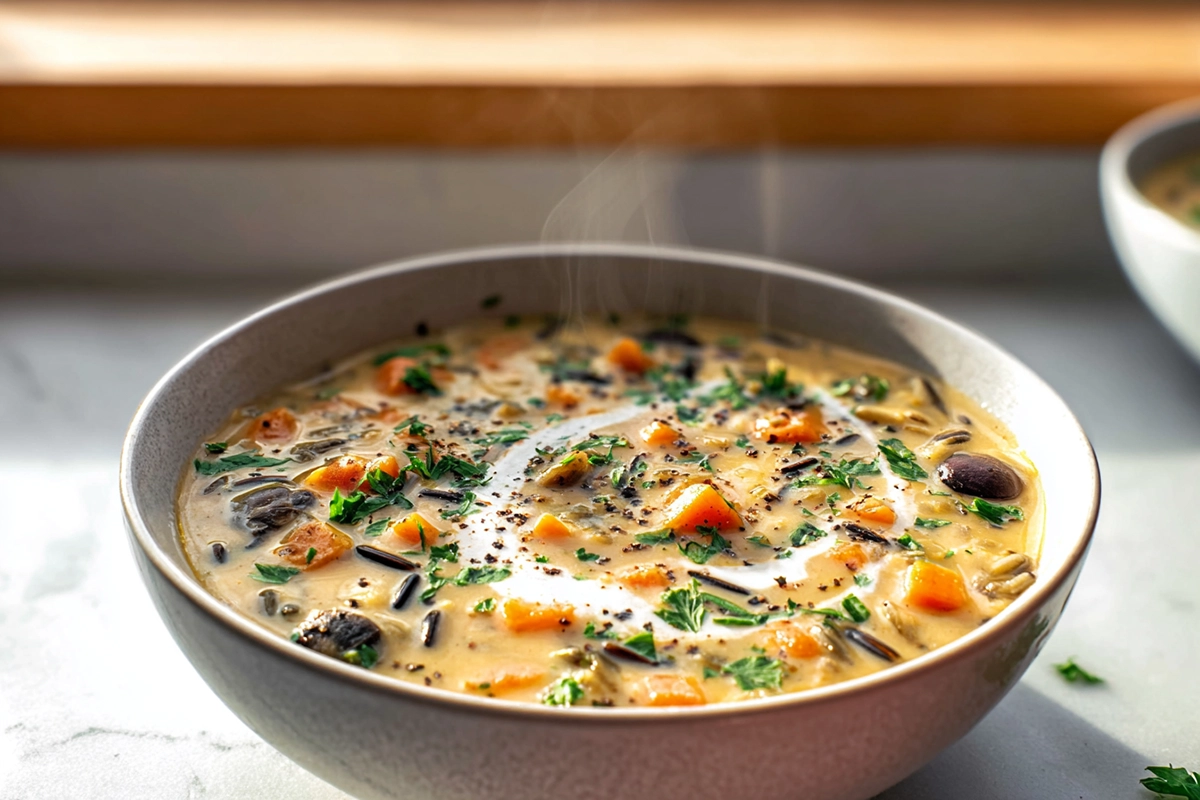
The first thing you notice isn’t the taste — it’s the smell. Warm pumpkin, gentle sage, and a savory vegetable base come together the moment the bowl hits the table. The texture follows right after: creamy without being heavy, with tender vegetables and chewy wild rice that makes every bite feel substantial. This is the kind of soup that slows you down, the one you eat sitting at the table instead of hovering over the stove.
Vegan Pumpkin Wild Rice Soup works because it’s built like a real dinner, not a thin starter pretending to be satisfying. The pumpkin brings natural body, the coconut milk adds richness without masking flavor, and the wild rice gives structure so the soup doesn’t collapse into mush. It’s comforting in the way fall food should be — warm, steady, and filling — without relying on dairy or complicated techniques.
What I like most about this soup is how predictable it is. Once you understand why each ingredient is here and how it behaves, the result stays consistent. You don’t need specialty tools, fancy garnishes, or last-minute adjustments. It’s a pot of soup you can trust, whether you’re cooking for yourself on a quiet night or making a big batch to reheat over the next few days.
This is plant-based cooking done the practical way: simple ingredients, clear purpose, and a finished bowl that actually feels like a meal.
Table of Contents
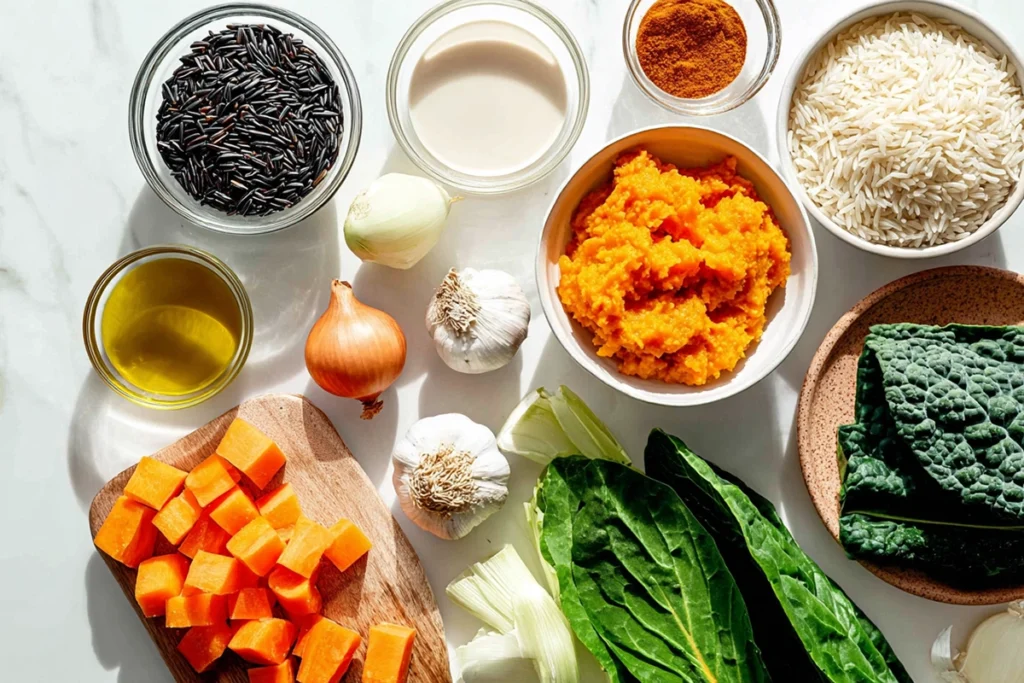
What Goes Into a Dependable Fall Soup
Wild Rice
Wild rice is the backbone of this soup, and it’s not something I recommend swapping. It holds its shape, adds chew, and keeps the soup hearty even after reheating. A true wild rice blend works best here; quick-cooking or white rice changes the texture and throws off the balance.
Pumpkin Purée
Canned pumpkin purée is perfectly fine — just make sure it’s pure pumpkin, not pie filling. It thickens the broth naturally and adds subtle sweetness without overpowering the savory base. This is one place where consistency matters more than freshness.
Coconut Milk
Full-fat coconut milk is what gives the soup its creamy finish. Light versions tend to break and feel thin. The flavor stays mild once mixed in, but the texture difference is noticeable and worth it.
Aromatic Vegetables
Onion, carrots, and celery form the foundation. Dicing them evenly helps everything cook at the same rate, which matters more than fancy knife work. These vegetables provide sweetness and depth that balance the pumpkin.
Mushrooms
Baby bella mushrooms add a savory, almost meaty note that keeps the soup from tasting flat. Pre-sliced mushrooms are fine here — this is a case where convenience doesn’t hurt the final result.
Chickpeas and Kale
Chickpeas add protein and staying power, while kale brings a slight bitterness that cuts through the richness. Remove the tough stems from the kale; they don’t soften enough and distract from the texture.
Herbs and Seasonings
Fresh sage and a bay leaf quietly shape the flavor without taking over. If fresh sage isn’t available, dried works — just use less. Salt and black pepper aren’t optional here; pumpkin needs proper seasoning to taste complete.
How This Vegan Pumpkin Wild Rice Soup Comes Together
Building the Flavor Base Without Rushing It
Everything starts in a heavy pot over steady medium heat. When the oil is ready, you should hear a soft sizzle as the onion, carrots, and celery hit the surface — not a loud crackle. As they cook, watch the color shift from raw and matte to slightly glossy, and pay attention to the smell changing from sharp onion to something sweeter and rounder. When you press a carrot piece between your fingers, it should feel tender at the edges but still hold its shape.

Adding the mushrooms is where patience pays off. At first, they’ll release moisture and sound almost like a gentle simmer instead of a fry. Keep going until that moisture cooks off and the pan sounds drier again. You’re looking for a deeper, savory aroma — earthy and almost meaty — before the garlic goes in. Once you smell toasted garlic, not raw bite, you’re right where you want to be.
Turning Pumpkin and Broth Into a Real Soup
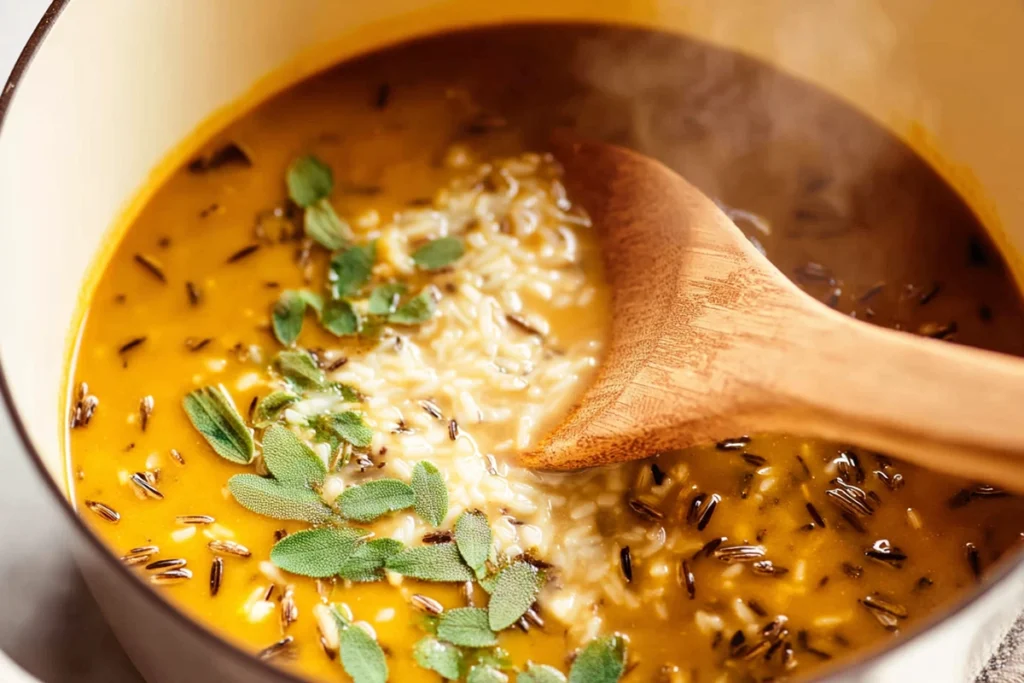
When the broth and pumpkin purée are added, the pot should calm down into a gentle bubbling instead of a rolling boil. Stir slowly and watch the liquid turn from thin to lightly opaque. This is where the soup starts to feel cohesive. Drop in the wild rice and herbs, then settle the heat so the surface barely trembles. You shouldn’t hear aggressive boiling — just the occasional quiet blup.
As it simmers, check the rice by feel as much as taste. Rub a grain between your fingers; it should be tender but springy, not split open or mushy. The smell at this stage is subtle but telling — warm pumpkin, soft herbs, and a clean vegetable base without bitterness.
Finishing for Creaminess and Balance
Once the rice is cooked, the pot comes off the heat. This pause matters. Stirring in coconut milk while the soup is no longer boiling keeps it smooth and prevents separation. The soup should look silky and cohesive, not oily on top. When you add chickpeas and kale, listen for the sound to quiet completely — that tells you the heat is gentle enough to soften the greens without dulling their color.
The kale should wilt just until tender, turning a deep green and losing its raw stiffness when pinched between your fingers. Taste here. The soup should feel creamy on the tongue, hearty from the rice, and balanced — not sweet, not flat. This is where salt and pepper finish the job, bringing everything into focus.
Where Vegan Pumpkin Wild Rice Soup Usually Goes Wrong
When the Soup Turns Gummy Instead of Hearty
This usually happens when the heat is too high during the rice simmer. Wild rice needs time, not force. If the soup boils hard, the grains burst and release starch, thickening the broth in a sticky way. You’ll notice the texture clinging to the spoon instead of flowing smoothly. Keeping the simmer gentle avoids this completely.
When the Flavor Feels Flat or Sweet
Pumpkin without enough seasoning can taste one-note. If the soup smells good but tastes dull, it’s almost always a salt issue, not a missing ingredient. Seasoning earlier helps, but final adjustment at the end is key. A properly seasoned bowl should smell warm and savory and leave a lingering, balanced finish, not a sugary aftertaste.
When the Soup Gets Too Thick Overnight
Wild rice continues to absorb liquid as it sits. If the soup looks spoon-standing thick the next day, that’s normal. When reheating, add broth a little at a time and stir until you hear the liquid loosen and the soup starts to move again. The texture should return to creamy, not pasty, with the rice still intact.
These small adjustments are what make this soup dependable — the kind you can cook once, understand, and repeat without guessing.
Make It Your Own
Smoky Fall Version
If you like deeper, almost campfire-style flavor, a small amount of smoked paprika changes the personality of this soup without overpowering it. Add it early with the garlic so the spice blooms in the oil. You’ll smell it immediately — warm and slightly smoky — and it plays especially well with the pumpkin and mushrooms. Go light here; too much and it covers the sage instead of supporting it.
Extra-Creamy Without Adding More Fat
For a thicker, almost chowder-like texture, blend about a third of the soup before adding the kale and chickpeas, then stir it back in. You’ll notice the color lightens slightly and the surface looks more velvety. This keeps the soup cohesive without making it heavy, and the wild rice still gives youa chew in every bite.
Protein-Forward Plant-Based Bowl
If you want this to lean more toward a high-protein dinner, add an extra half-can of chickpeas and lightly mash a few of them against the side of the pot before serving. You’ll feel the texture change — thicker, heartier — and the soup eats more like a stew. This works best if you plan to reheat it over several days.
Herb Shift for a Different Mood
Sage gives this soup its classic fall profile, but thyme works when you want something a little lighter and less aromatic. Use fresh if you can. You’ll notice the smell stays cleaner and greener, especially when the soup is hot, and it pairs nicely if you plan to top the bowl with toasted seeds or a drizzle of olive oil.
Serving & Storing (Real Life)
I usually serve this soup hot, straight from the pot, with nothing more than a slice of toasted bread on the side. It’s rich enough on its own, but a handful of toasted pumpkin seeds adds a welcome crunch and makes the bowl feel finished. If I’m eating it for lunch, I keep the portion generous — this is a soup that’s meant to replace a meal, not lead into one.
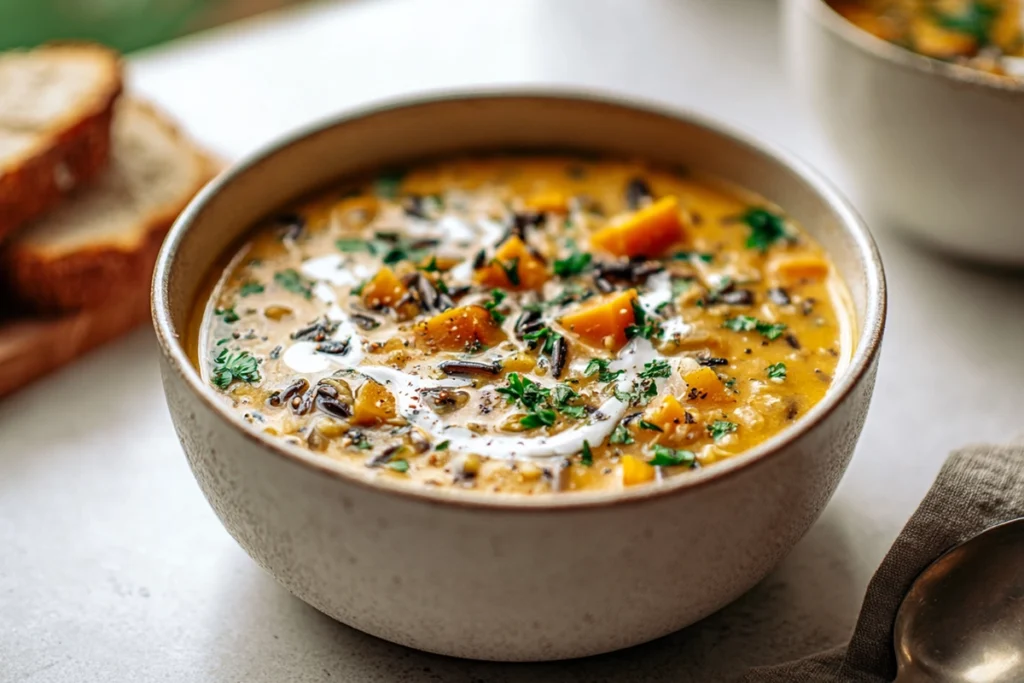
For storage, this soup holds up well in the fridge for up to four days. Expect it to thicken as it sits; that’s the wild rice doing its job. When reheating, add a splash of broth and warm it slowly over medium heat, stirring until you hear the liquid loosen again. Microwaving works too, but pause and stir halfway so the rice heats evenly.
Freezing is fine, but portion it first. The soup freezes solid, and thawing a whole pot takes patience. Freeze in individual containers, and thaw overnight in the fridge before reheating gently. The texture stays creamy, and the rice remains intact as long as you don’t rush the heat.
Closing Thoughts
This is the kind of soup that proves plant-based cooking can be comforting, filling, and dependable without extra effort. Once you make Vegan Pumpkin Wild Rice Soup this way, it becomes one of those fall meals you return to because it works — every time.
Get inspired with more mouthwatering recipes! Follow me on Pinterest for new cooking ideas every week.
Frequently Asked Questions
Can I use brown rice instead of wild rice?
You can, but the result will be different. Brown rice cooks faster and releases more starch, so the soup will be softer and thicker, almost stew-like. If you go this route, reduce the simmer time and expect less chew than true wild rice.
Is this soup really gluten-free?
Yes, as written, it is gluten-free. Wild rice is naturally gluten-free, but you should still check your vegetable broth label to make sure there’s no added wheat-based thickener.
Why does the soup get thicker after sitting?
Wild rice continues to absorb liquid as it rests. That’s normal. When reheating, add vegetable broth a little at a time and stir until the soup loosens and flows again.
Can I make this soup ahead of time?
Absolutely. In fact, the flavor improves after a day. Just plan to thin it slightly when reheating, since the rice will firm up overnight.
How do I make it creamier without adding dairy?
Blend a portion of the soup before adding the kale and chickpeas, then stir it back in. This thickens the base naturally without changing the flavor or adding more fat.
Can I make this in a slow cooker?
Yes, but it works best if you sauté the vegetables first. Add everything except the coconut milk, chickpeas, and kale, then cook on low until the rice is tender. Stir in the remaining ingredients at the end.
What’s the best way to reheat it without overcooking the rice?
Reheat gently over medium-low heat, stirring often. Once you hear the soup loosen and see it move easily, it’s ready. Boiling hard will break down the rice and thicken the soup too much.
PrintVegan Pumpkin Wild Rice Soup

Vegan Pumpkin Wild Rice Soup that’s creamy, hearty, and reliable. Made with coconut milk, chickpeas, and kale—perfect for an easy fall dinner.
- Prep Time: 15 minutes
- Cook Time: 45 minutes
- Total Time: 60 minutes
- Yield: 8 1x
- Category: Soup
- Method: Steaming
- Cuisine: American
- Diet: Vegan
Ingredients
- 1 tablespoon olive oil
- 2 large carrots
- 2 ribs celery
- 1 medium white onion
- 8 ounces baby bella mushrooms
- 4 cloves garlic
- 4 cups vegetable broth
- 1 cup pumpkin puree
- 1 cup uncooked wild rice
- 1 sprig fresh sage
- 1 bay leaf
- 1 (15-ounce) can full-fat coconut milk
- 1 (15-ounce) can chickpeas
- 2 large handfuls fresh kale
- Fine sea salt
- Black pepper
Instructions
- Heat olive oil and sauté onion, carrots, and celery until softened.
- Add mushrooms and garlic and cook until aromatic.
- Stir in broth, pumpkin puree, wild rice, sage, and bay leaf and bring to a simmer.
- Cover and simmer gently until wild rice is tender.
- Remove herbs and stir in coconut milk, chickpeas, and kale.
- Season with salt and pepper and serve warm.
Notes
- Use homemade vegetable broth for deeper flavor.
- Substitute dried sage if fresh is unavailable.
- Blend part of the soup for extra creaminess.
- Adjust thickness with additional broth when reheating.
Nutrition
- Serving Size: 1 bowl
- Calories: 420
- Sugar: 8g
- Sodium: 780mg
- Fat: 18g
- Saturated Fat: 12g
- Unsaturated Fat: 5g
- Trans Fat: 0g
- Carbohydrates: 52g
- Fiber: 9g
- Protein: 11g
- Cholesterol: 0mg