
Japanese Simmered Fish (Sakana no Nitsuke): A Simple, Flavorful Taste of Japan

If you’ve ever wanted to bring a little of Japan’s comforting home cooking into your kitchen, Japanese Simmered Fish is where you start. I still remember the first time I tasted it in a cozy Tokyo izakaya—sweet, savory, and gently perfumed with soy and ginger. The broth wrapped around the tender fish like a silk robe, and I thought, this is how simplicity can taste elegant. Whether you’re exploring traditional Japanese meals or just looking for a light, healthy dinner, this humble dish captures everything that makes Japanese cooking so special—balance, warmth, and care.
What Is Japanese Simmered Fish?
In Japan, this dish is known as Sakana no Nitsuke—literally “fish simmered in sauce.” It’s a centuries-old cooking method where fresh fish is gently simmered in a mixture of soy sauce, mirin, sake, sugar, and water. The result is tender, flavorful fish coated in a glossy, umami-rich glaze.
You’ll find this dish served everywhere in Japan—from home kitchens to small restaurants tucked behind train stations. It’s comfort food at its best: light yet satisfying, fragrant yet subtle. You might say it’s Japan’s answer to a slow-cooked Sunday stew—but done in 20 minutes.
What makes Japanese Simmered Fish stand out is the balance. The sauce isn’t meant to overpower the fish but to highlight its natural sweetness. Each element—salty soy, sweet mirin, and a touch of sake—melds together into harmony.
Key Ingredients and Why They Matter
Like most Japanese dishes, the magic lies in a few high-quality ingredients.
Core Ingredients
- 2 fillets of white fish (cod, flounder, snapper, or halibut work beautifully)
- ½ cup soy sauce
- ½ cup sake (or white wine if unavailable)
- ¼ cup mirin
- 2 tablespoons sugar
- 1 cup water or light dashi stock
- 1 knob fresh ginger, sliced thin

Optional Additions
- A few slices of daikon radish or burdock root for a touch of earthiness
- Green onions for garnish
- A drizzle of sesame oil for aroma
Each ingredient has its role. Soy sauce delivers depth and saltiness, while mirin and sugar bring sweetness and sheen. Sake removes fishy notes and rounds out the sauce. Ginger cuts through the richness, leaving a clean finish.
When combined, these simple components create something far more complex than the sum of their parts—exactly what Japanese home cooking is all about.
How to Cook Japanese Simmered Fish
Cooking Japanese Simmered Fish is less about perfection and more about patience. You’re not frying or roasting—you’re letting the flavors seep in slowly.
Step 1: Prepare the Fish
Pat your fillets dry and lightly score the skin with a sharp knife. This keeps them from curling and helps the sauce penetrate evenly. Some cooks pour boiling water over the fish first to remove excess oil and tighten the flesh—a step that’s worth the extra minute if you have time.
Step 2: Make the Simmering Broth
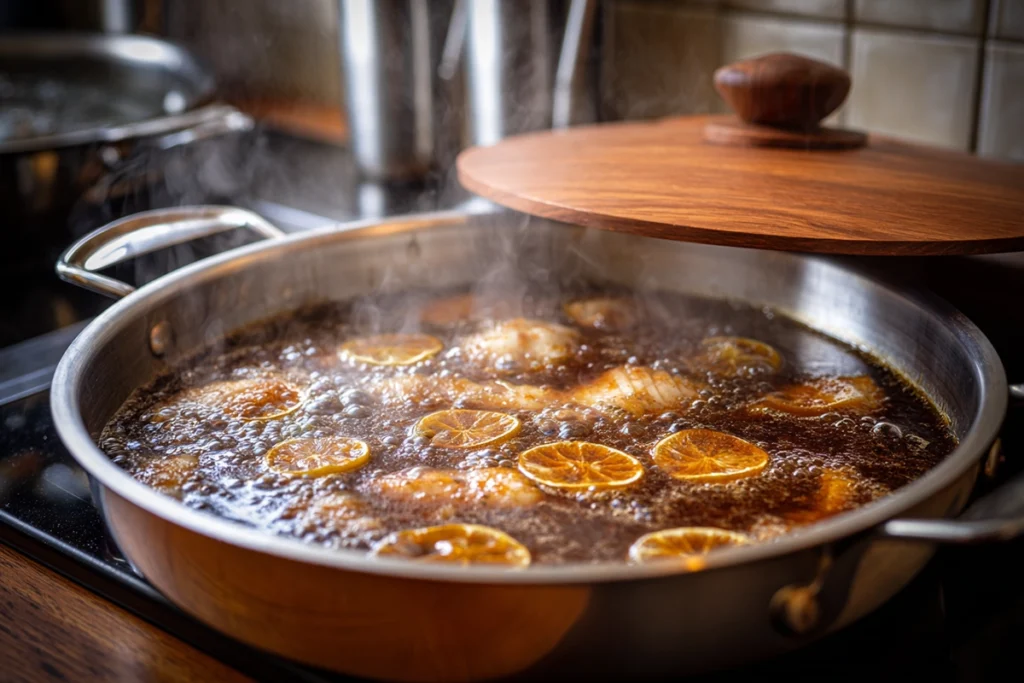
In a wide pan, combine soy sauce, sake, mirin, sugar, and water. Bring it to a gentle boil, stirring until the sugar dissolves. The aroma that rises from the pot at this point—sweet, salty, and warmly boozy—is pure comfort.
Step 3: Simmer Gently
Add the ginger slices and then slide the fish into the pan, skin-side up. Lower the heat so it barely bubbles. If you have a drop lid (otoshibuta), place it directly on the fish; it helps the sauce distribute evenly and keeps the fillets from breaking apart.
Let the fish simmer for about 8 to 10 minutes, occasionally spooning the sauce over the top. Don’t rush this step—the gentle simmer is what makes the texture silky.
Step 4: Finish and Serve
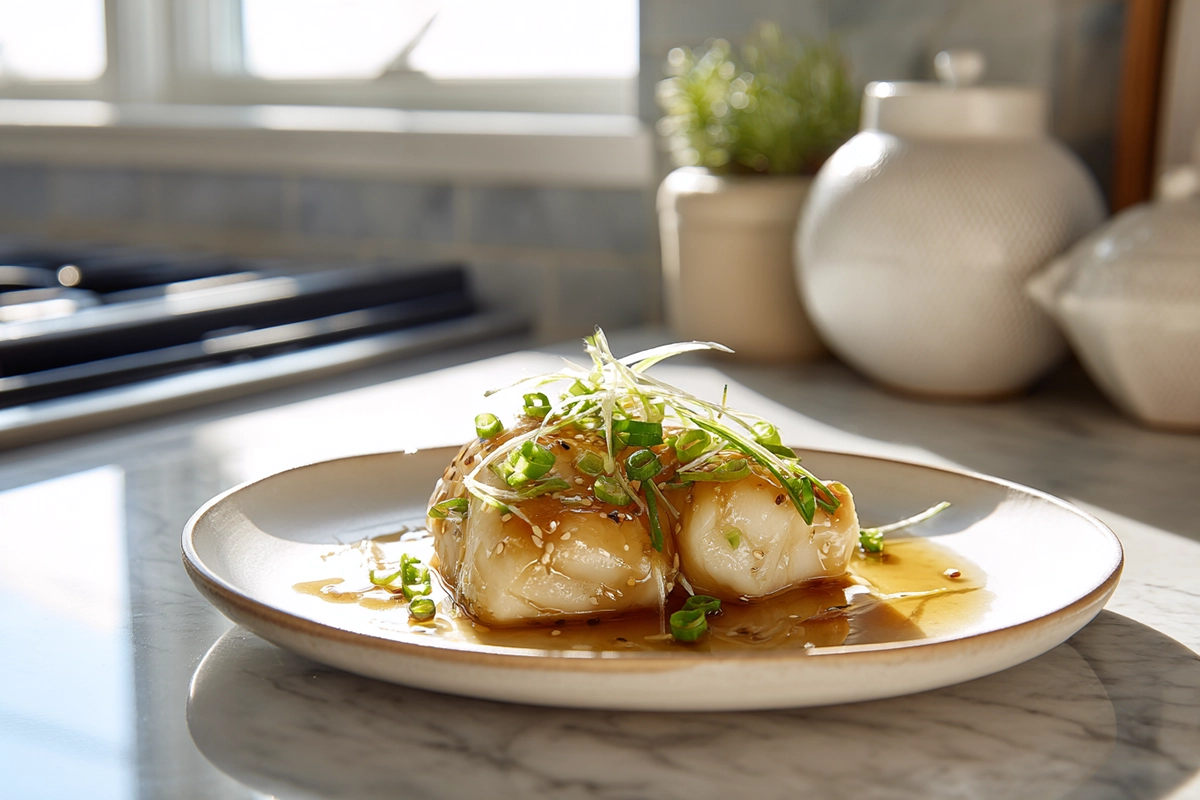
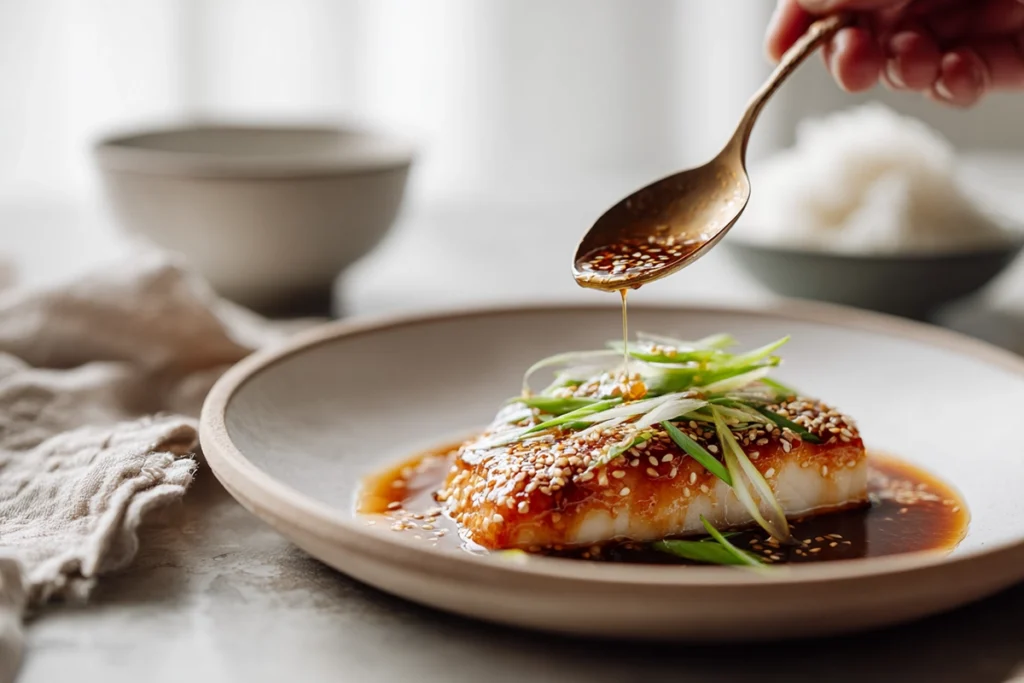
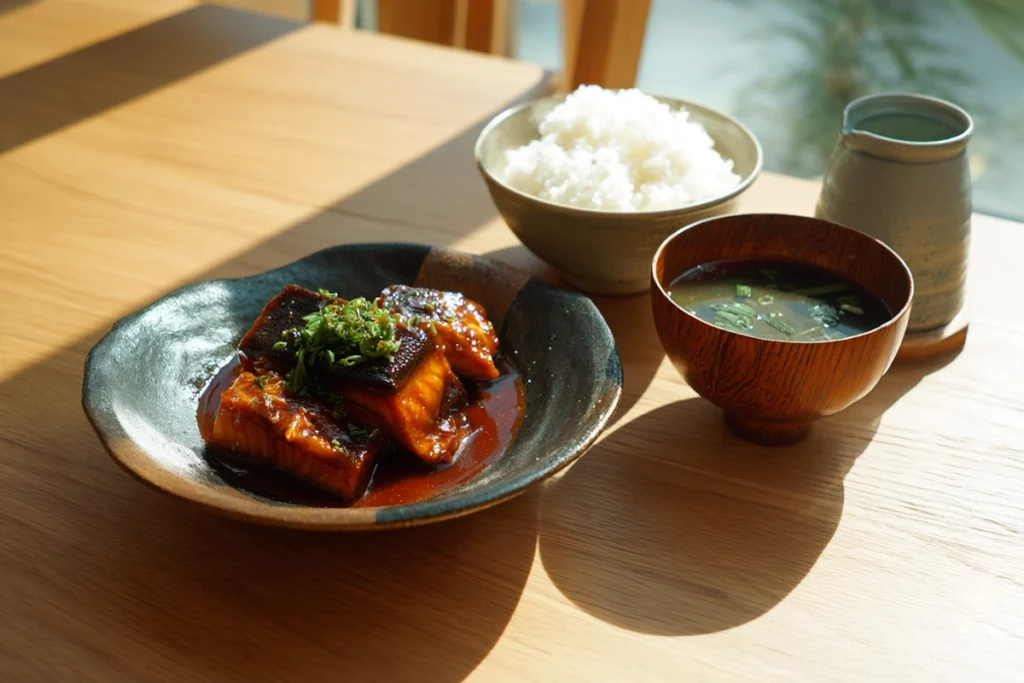
When the sauce has reduced to a glossy glaze, carefully transfer the fish to a plate and drizzle the sauce over it. Garnish with chopped scallions or a touch of grated ginger if you’d like. Serve it warm with a bowl of steamed rice and miso soup for the most satisfying, balanced meal.
Serving Suggestions and Pairings
This dish pairs beautifully with classic Japanese sides like miso soup, pickled cucumbers, or a small serving of spinach with sesame dressing. If you’re serving a crowd, try adding sautéed mushrooms or lightly steamed broccoli to the plate—the sauce doubles as a dressing.
You can also use the leftover simmering liquid as a glaze for tofu or roasted vegetables. It’s too flavorful to waste and makes an excellent seasoning for rice bowls.
As for beverages, green tea or a light white wine (like Sauvignon Blanc) complements the dish’s subtle umami notes.
Dietary Variations and Ingredient Substitutions
One of the best things about Japanese Simmered Fish is how adaptable it can be. Here’s how you can tailor it to your dietary needs:
Gluten-Free
Replace regular soy sauce with tamari or a certified gluten-free soy alternative. Everything else in the recipe stays the same.
Low-Calorie or Low-Sugar
Cut the sugar in half and replace mirin with a mixture of rice vinegar and a teaspoon of honey. The dish will taste lighter but still keep its balance of flavors.
Vegan or Plant-Based
Use firm tofu or thick slices of eggplant instead of fish. Swap the fish-based dashi for kombu and shiitake broth. The cooking method stays the same—gentle simmering until the sauce becomes syrupy.
Halal or Alcohol-Free
Omit the sake and mirin entirely. Replace them with water mixed with a tablespoon of brown sugar and a splash of rice vinegar. You’ll still get that sweet-savory character without the alcohol content.
These adaptations ensure that everyone can enjoy this comforting dish, regardless of dietary preferences.
Variations and Regional Styles
Across Japan, you’ll find different takes on nitsuke, each reflecting local ingredients and traditions.
- Saba no Nitsuke: Made with mackerel, this version has a bolder flavor and often includes ginger and miso.
- Karei no Nitsuke: A softer, milder version using flounder—delicate and perfect for beginners.
- Kinmedai Nitsuke: Made with golden-eye snapper, prized for its tender flesh and bright color.
- Saba no Misoni: A miso-simmered variant that leans richer and creamier.
If you prefer something modern, try adding a touch of yuzu zest for brightness or a pinch of chili flakes for subtle heat. The technique is traditional, but the flavors can evolve with your creativity.
Storage and Reheating Tips
Leftovers? Lucky you. Store the fish and sauce together in an airtight container for up to three days in the fridge. When reheating, warm it gently over low heat with a splash of water to keep the sauce from thickening too much.
Avoid microwaving at high power—it can make the fish rubbery. Instead, think slow and gentle, just like when you first made it. The flavors deepen overnight, making the second meal even more satisfying.
There’s a quiet joy in making Japanese Simmered Fish—a sense that you’re part of a long tradition that values care over speed, flavor over flash. It’s simple enough for a weeknight but elegant enough to serve to guests. Once you taste how the sauce clings to the tender fish, you’ll understand why it’s been cherished for generations. Whether you’re cooking for comfort or curiosity, this dish is your passport to the warmth of Japanese home cooking.
FAQ
What kind of fish is best for Japanese Simmered Fish?
You can use almost any mild white fish—cod, flounder, snapper, or halibut are all great choices. The key is choosing fish with firm flesh that holds together during simmering. Oily fish like mackerel also work well if you prefer a richer flavor.
Can I make Japanese Simmered Fish without sake or mirin?
Yes! If you’d rather not use alcohol, substitute sake with water or light broth, and replace mirin with a mix of rice vinegar and a teaspoon of sugar. You’ll still get that sweet-salty balance typical of Japanese Simmered Fish.
How do I stop the fish from breaking apart while simmering?
Keep the simmer gentle—never let it boil hard. Use a drop lid (otoshibuta) or parchment round to keep the fish submerged and stable in the sauce. Handle the fillets with a wide spatula when turning or serving.
Is Japanese Simmered Fish served hot or cold?
Traditionally, it’s served warm or at room temperature. The flavors actually deepen as the fish cools slightly, making it even better after it rests in the sauce for a few minutes.
Can I reuse the simmering sauce?
Absolutely. The leftover sauce is packed with umami. Spoon it over steamed vegetables, drizzle it on rice, or use it as a glaze for tofu. Just store it in the fridge for up to three days and reheat before using.
Print
Japanese Simmered Fish
- Prep Time: 10 minutes
- Cook Time: 15 minutes
- Total Time: 25 minutes
- Yield: 2 servings 1x
- Category: Dinner
- Method: Simmering
- Cuisine: Japanese
- Diet: Gluten Free
Description
A classic Japanese home-style dish, Japanese Simmered Fish (Sakana no Nitsuke) features tender white fish gently cooked in a sweet-savory soy, mirin, and sake broth. The result is a delicate, flavorful glaze that perfectly balances umami and sweetness, ideal for a comforting weeknight meal.
Ingredients
2 white fish fillets (cod, flounder, snapper, or halibut)
½ cup soy sauce
½ cup sake (or white wine)
¼ cup mirin
2 tablespoons sugar
1 cup water or light dashi stock
1 knob fresh ginger, thinly sliced
Green onions, finely chopped (for garnish)
Optional: sliced daikon radish or burdock root
Optional: drizzle of sesame oil
Instructions
-
Prepare the fish: Pat fish fillets dry and lightly score the skin to prevent curling. Optionally, pour boiling water over them briefly to firm the texture.
-
Make the simmering broth: In a shallow pan, combine soy sauce, sake, mirin, sugar, and water. Bring to a gentle boil, stirring until sugar dissolves.
-
Add the fish and aromatics: Place fish skin-side up in the simmering broth and add ginger slices. Lower the heat to maintain a gentle simmer.
-
Simmer carefully: Cook for 8–10 minutes, occasionally spooning sauce over the fish. Avoid boiling to preserve the delicate texture.
-
Finish and serve: When the sauce thickens slightly and glazes the fish, transfer fillets to a plate. Drizzle remaining sauce on top and garnish with chopped green onions.
Notes
-
For a stronger umami flavor, use dashi stock instead of water.
-
A drop lid (otoshibuta) helps the fish cook evenly and prevents it from breaking apart.
-
The leftover sauce can be reused as a glaze for vegetables or tofu.
-
This dish tastes even better after resting for 10 minutes, allowing flavors to deepen.