
Daigaku Imo (Japanese Candied Sweet Potatoes) at Home

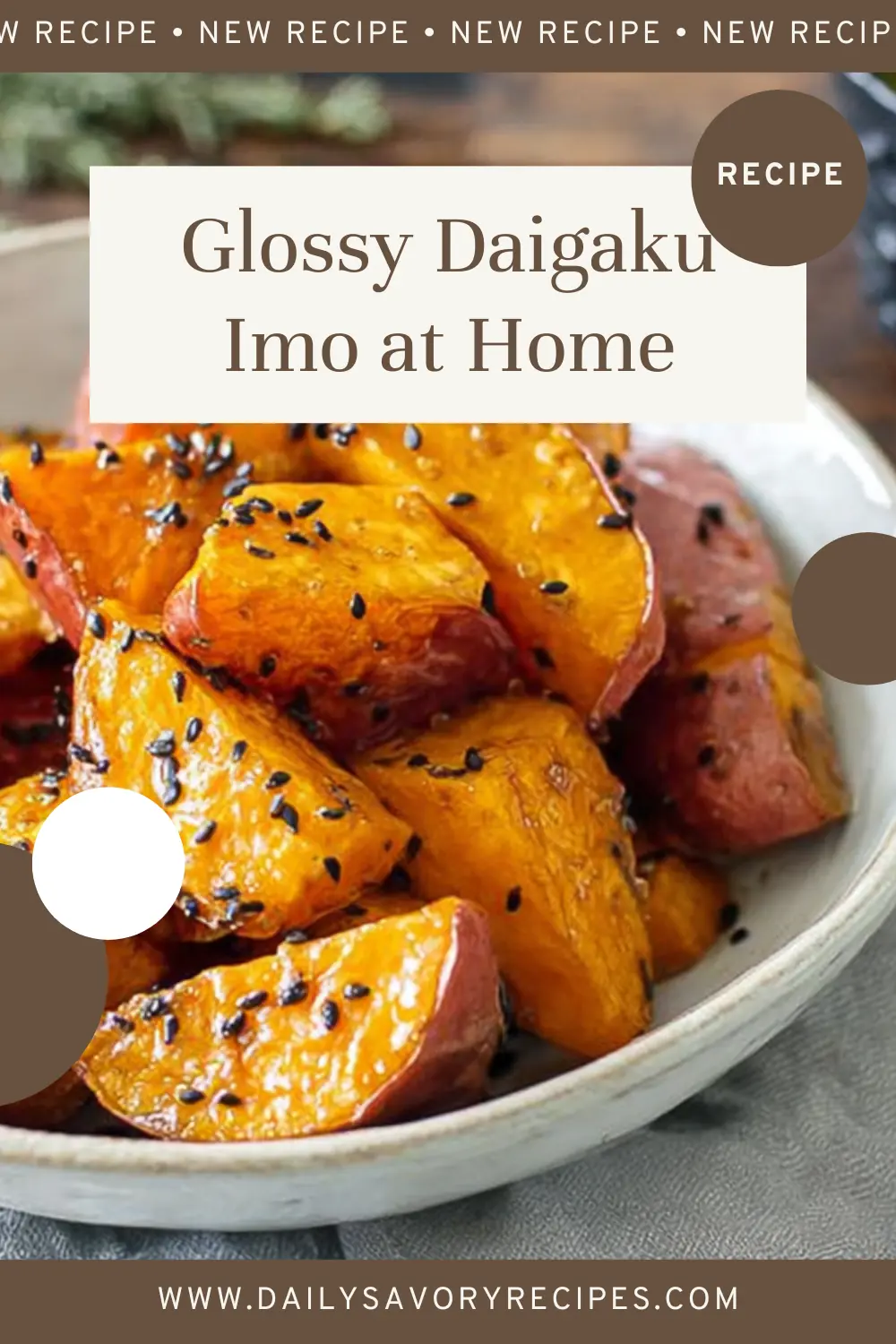
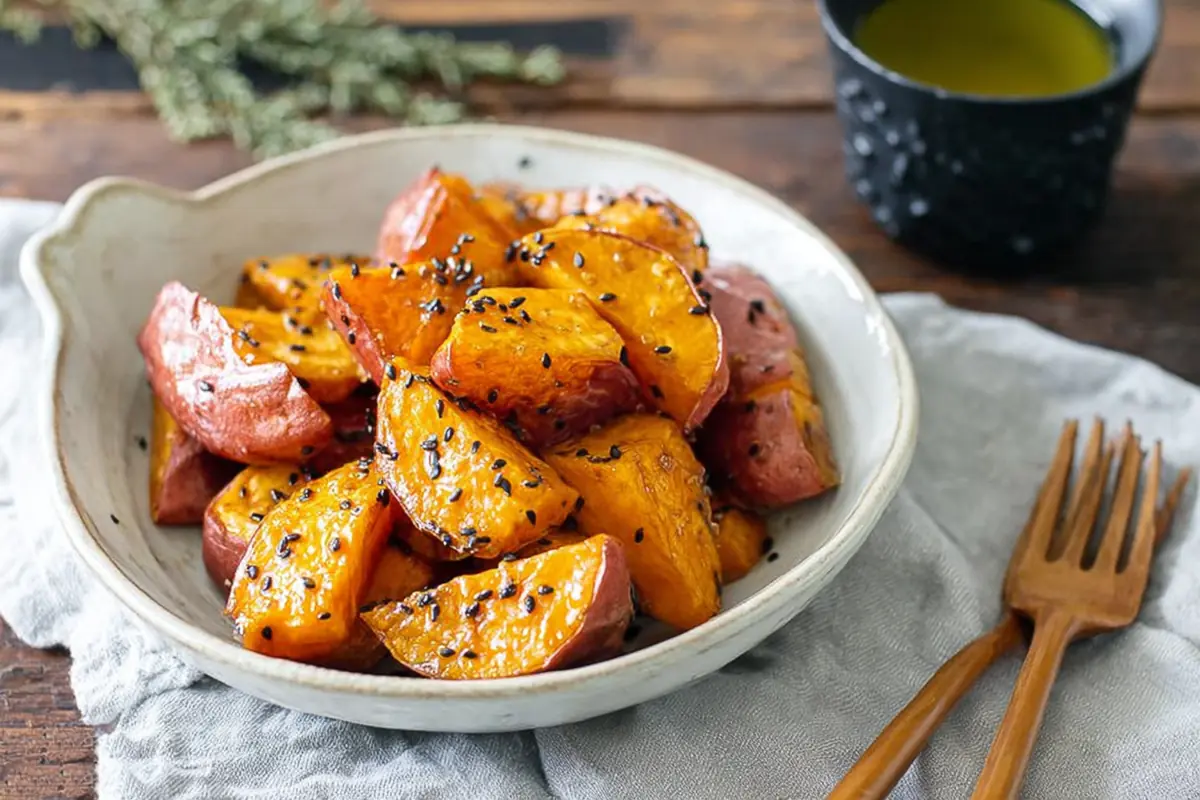
Daigaku Imo is one of those recipes that turns a few pantry ingredients into something that feels special. Japanese sweet potatoes develop a lightly crisp exterior, a tender center, and a glossy candy coating that hardens just enough to crack when you bite into it.
I’ve tested this recipe both ways—traditional frying and a lighter pan-cooked version—and each has its place. The fried version gives a cleaner crunch, while the shallow-fry method feels easier for an ordinary afternoon at home.
You’ll also learn how to judge the syrup by sight instead of guessing and how small details change the final texture.
Why Daigaku Imo Still Feels Like a Classic Japanese Snack
Daigaku Imo translates loosely to “university potato,” a name tied to its popularity among students in Tokyo in the early 1900s. Sweet potatoes were inexpensive, filling, and easy to prepare in small batches. The dish stayed around because it works.
Texture matters here more than sweetness. The potatoes stay in large, angled pieces with the skin on, which gives structure and contrast once coated. The outside becomes shiny and lightly crisp while the center stays dense and creamy.
I like serving it warm, though room temperature works too. It’s the kind of snack that quietly disappears from the plate.
Choosing Japanese Sweet Potatoes for the Best Daigaku Imo
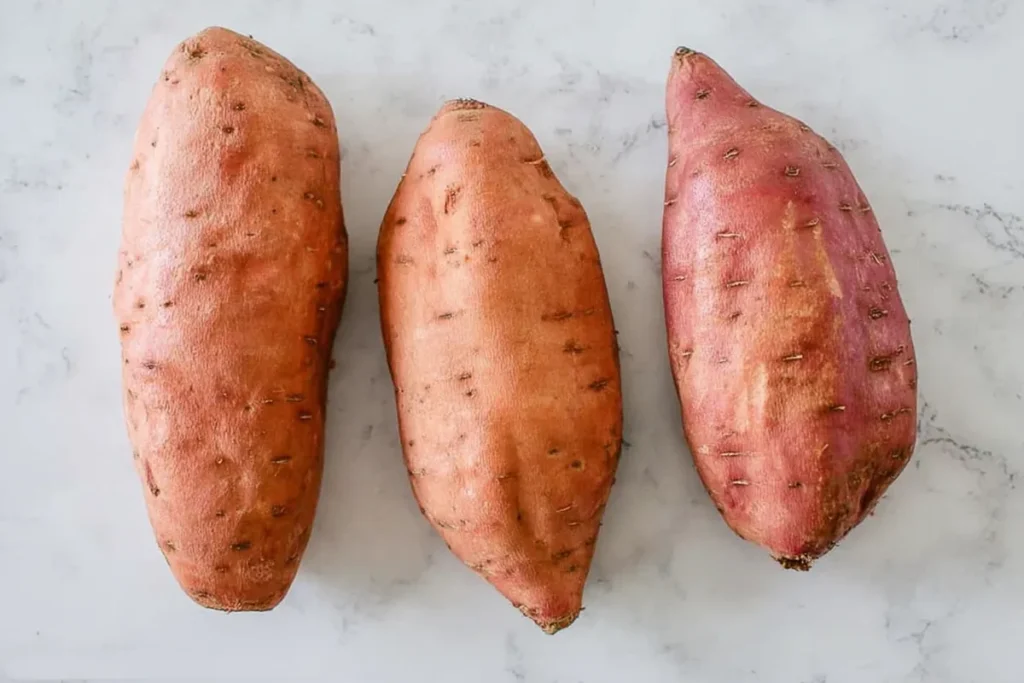
For this recipe, use Japanese sweet potatoes (Satsumaimo) rather than orange-fleshed varieties if possible. They’re firmer, less watery, and become naturally sweet during cooking without turning soft too quickly.
Leave the skin on. Beyond color, the skin helps the pieces hold shape during frying and gives a little chew against the candy coating.
Cutting matters more than people expect. The traditional rangiri technique—cutting diagonally while rotating the potato slightly after each cut—creates uneven surfaces that catch more syrup. You don’t need precision. Just aim for pieces that are similar in size so they finish cooking together.
What to Look for When Buying Satsumaimo
Choose potatoes that feel heavy for their size with smooth skin and few deep marks. Medium-sized ones tend to cook more evenly than oversized roots.
If you can’t find them at a regular grocery store, Japanese and Asian markets usually carry them seasonally.
How to Make Daigaku Imo with the Traditional Fried Method
Start by washing the sweet potatoes well and cutting them into rangiri pieces. Don’t peel them.
Before frying, soak the cut potatoes in water with 2 teaspoons kosher salt for 15 minutes. This step pulls surface starch away and helps prevent the coating from becoming cloudy later.
Heat neutral oil to 320°F (160°C). A thermometer helps here because frying too hot colors the outside before the inside softens. Fry in batches for about 10 minutes, turning occasionally. The potatoes should turn golden and a wooden skewer should slide through with gentle resistance—not collapse completely.
Drain briefly while preparing the syrup.
Combine 5 tablespoons sugar, 1½ tablespoons water, and 1 tablespoon mirin in a wide pan and heat over medium. Once bubbling steadily, stir in 1 teaspoon rice vinegar and 1 teaspoon soy sauce.
Keep stirring.
The syrup changes quickly near the end. You’re looking for the point where a spatula dragged across the pan leaves a visible line for a moment before closing again. Add the fried potatoes immediately and toss to coat.
Finish with toasted black sesame seeds while the coating is still soft. Wait too long and they won’t stick.
Candy Coating Techniques That Keep the Syrup Smooth
Sugar doesn’t need much encouragement to crystallize.
Keep the heat moderate and stir consistently once the syrup starts reducing. If the mixture thickens too far before adding the potatoes, the coating can harden unevenly and clump instead of glazing.
Watch the bubbles instead of the clock. Large, slow bubbles usually mean moisture has reduced enough.
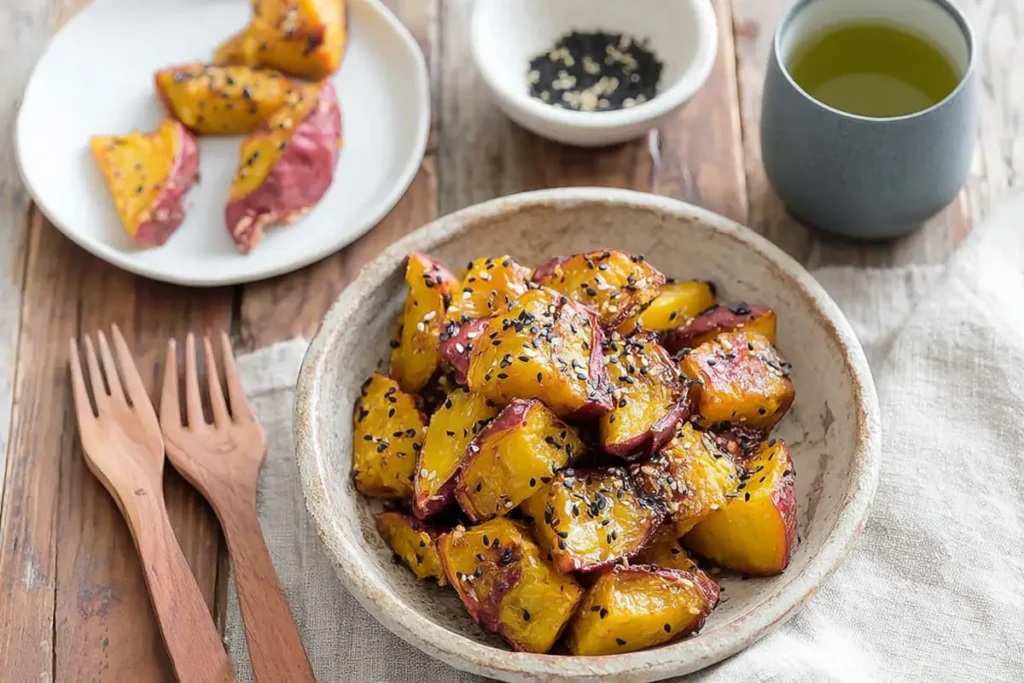
One more thing: don’t overcrowd the coated potatoes after tossing. Spread them slightly so the steam doesn’t soften the shell you just created.
A Steam-and-Shallow-Fry Version for Everyday Cooking
This version surprised me the first time I tested it. You still get the glossy coating and concentrated sweetness, but with less oil and one pan.
Start with dry sweet potatoes. Really dry. Any moisture left on the surface can thin the syrup before it has a chance to coat properly. Instead of frying first and glazing later, this method builds everything together from the beginning: sugar, neutral oil, soy sauce, and rice vinegar go into a cold pan before the potatoes.
There’s one detail I wouldn’t skip—wrap the lid with a kitchen cloth. Condensation dripping back into the pan can interrupt the coating and soften the finish.
Once you hear bubbling, reduce the heat and cook gently. Open and turn the potatoes every 2–3 minutes so each side colors evenly. Depending on size, expect about 8–10 minutes total. I actually prefer stopping just before completely soft. A little resistance in the center makes the contrast more interesting.
Scatter the sesame seeds over while hot and serve right away.
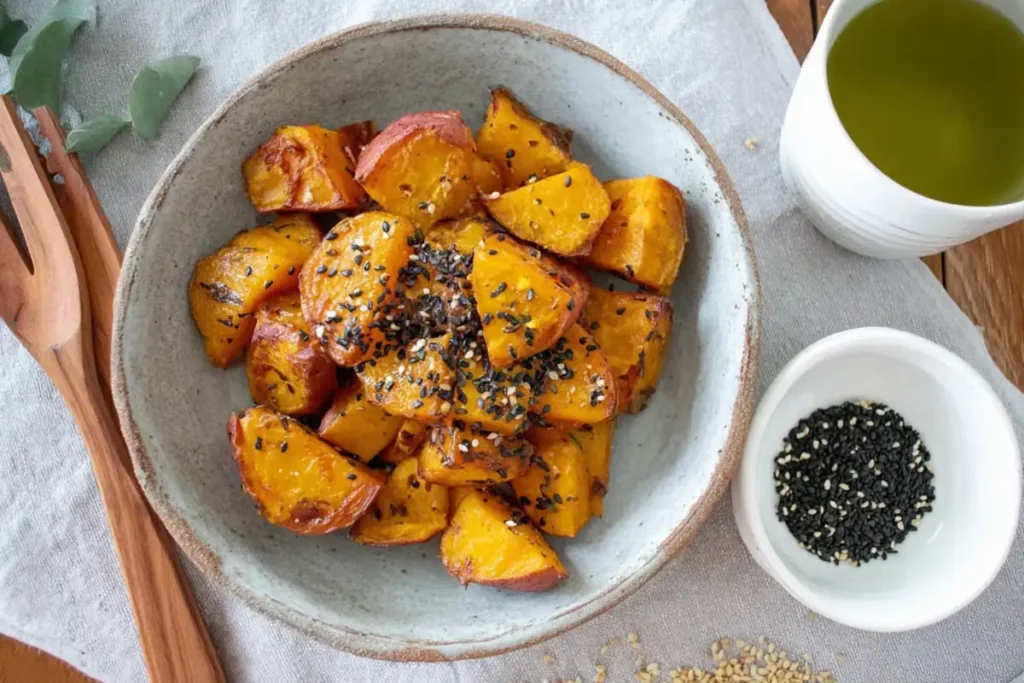
Worth Making Again When Sweet Potatoes Are in Season
Daigaku Imo doesn’t rely on complicated techniques. A few small decisions—how you cut the potatoes, when you stop the syrup, and which cooking method you choose—change the result more than extra ingredients ever will.
Try the fried version first if you want the classic finish, then make the pan version on a weekday. Every recipe I share is an invitation from my kitchen to yours.
PrintDaigaku Imo

Daigaku Imo is a classic Japanese candied sweet potato snack made with Satsumaimo, a glossy sugar coating, and toasted black sesame seeds. This recipe includes the traditional deep-fried method and a steam-and-shallow-fry version for easier everyday cooking.
- Prep Time: 15 minutes
- Cook Time: 20 minutes
- Total Time: 50 minutes
- Yield: 4 servings 1x
- Category: Snack
- Method: Deep-Frying or Shallow-Frying
- Cuisine: Japanese
Ingredients
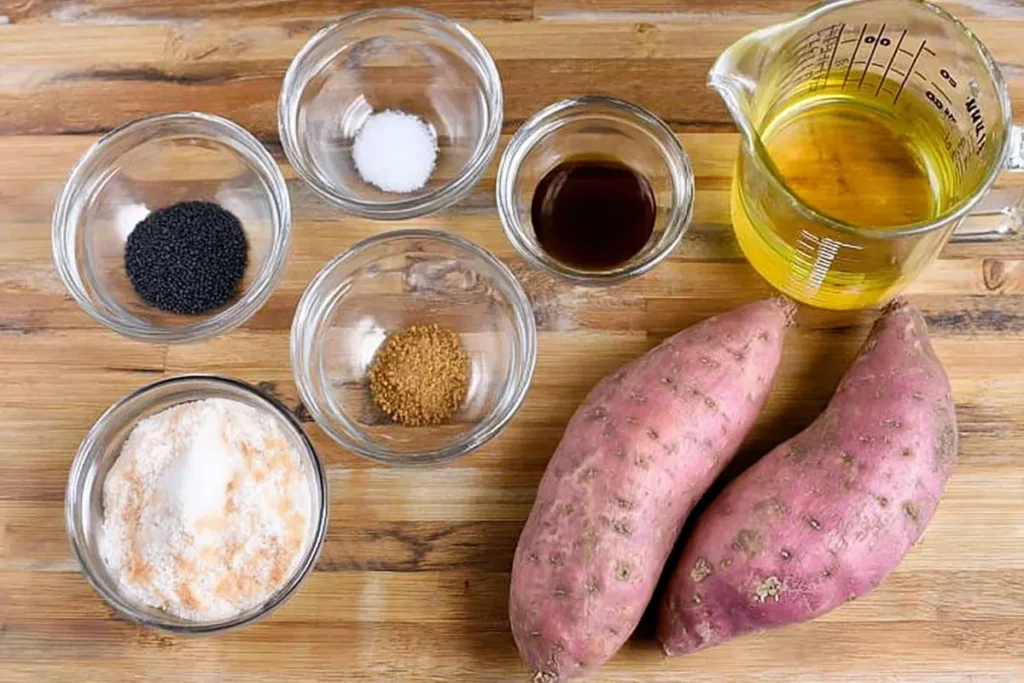
- 1.2 lbs Japanese sweet potatoes (Satsumaimo), scrubbed and left unpeeled
- 8 cups water
- 2 teaspoons Diamond Crystal kosher salt
- 2 cups neutral oil, for deep-frying
- 5 tablespoons sugar
- 1½ tablespoons water
- 1 tablespoon mirin
- 1 teaspoon unseasoned rice vinegar
- 1 teaspoon soy sauce
- 1 teaspoon toasted black sesame seeds
Instructions
- Wash the Japanese sweet potatoes well and cut them into rangiri-style angled pieces, rotating the potato slightly between cuts so the surfaces catch the syrup well.
- Place the cut sweet potatoes in 8 cups water with 2 teaspoons kosher salt and soak for 15 minutes to remove excess surface starch.
- Drain the sweet potatoes and dry them very well with a clean kitchen towel or paper towels.
- Heat the neutral oil in a medium pot to 320°F. Fry the sweet potatoes in batches without crowding the pot.
- Deep-fry for about 10 minutes, turning occasionally, until the pieces are golden and a wooden skewer slides through with gentle resistance.
- Transfer the fried sweet potatoes to a wire rack or paper towel-lined plate to drain.
- In a wide frying pan off the heat, combine the sugar, water, and mirin. Place over medium heat and bring to a steady bubble.
- Add the rice vinegar and soy sauce, then stir constantly until the syrup thickens enough that a spatula dragged across the pan leaves a visible line for a moment.
- Turn off the heat, add the fried sweet potatoes, and toss gently until each piece is coated in the glossy syrup.
- Sprinkle toasted black sesame seeds over the potatoes while the coating is still soft, then serve warm or at room temperature.
Notes
- For the steam-and-shallow-fry version, use about 11 oz Japanese sweet potato, 5 tablespoons sugar, 3 tablespoons neutral oil, ¼ teaspoon soy sauce, ¼ teaspoon rice vinegar, and 1 teaspoon toasted black sesame seeds.
- Add the sugar, oil, soy sauce, and vinegar to a cold frying pan, then add the fully dried sweet potato pieces.
- Wrap the pan lid with a kitchen cloth to prevent condensation from dripping back into the pan.
- Cook over medium heat until bubbling, then reduce to low or medium-low and turn the potatoes every 2–3 minutes.
- Cook for 8–10 minutes, or until a skewer slides through smoothly, then sprinkle with sesame seeds while hot.
- The fried version gives a crisper finish, while the steam-and-shallow-fry version uses less oil and works well for everyday cooking.
Nutrition
- Serving Size: 1 serving
- Calories: 287
- Sugar: 18
- Sodium: 690
- Fat: 14
- Saturated Fat: 1
- Unsaturated Fat: 13
- Trans Fat: 0
- Carbohydrates: 40
- Fiber: 4
- Protein: 2
- Cholesterol: 0