
Linzer Cookies That Are Worth the Effort

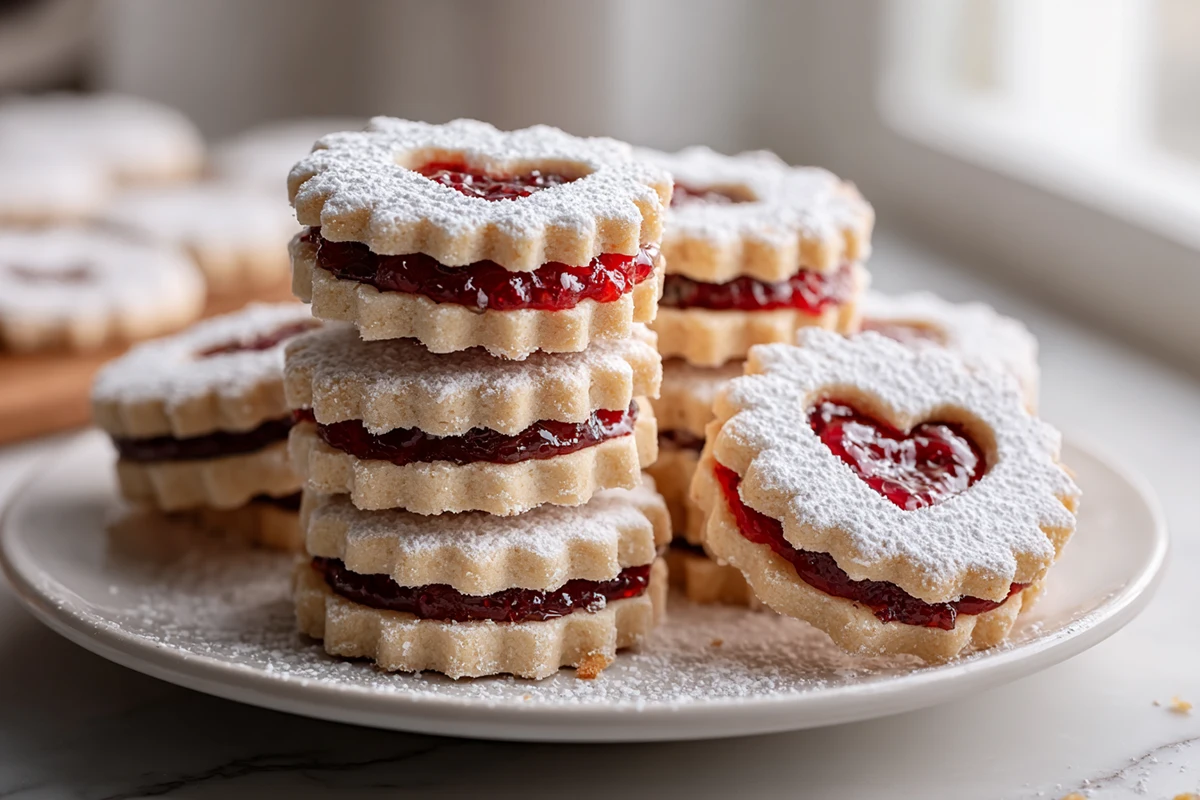
The thing about Linzer Cookies is that they announce themselves before you ever take a bite. You smell butter and lemon the second they come out of the oven, and once the powdered sugar goes on, suddenly everyone in the house is “just passing through” the kitchen. They look fancy, sure—but what hooks you is the contrast: tender, almost sandy cookies with a bright ribbon of jam in the middle. That texture is the whole point.
Most Linzer cookie recipes fail people in quiet ways. They promise “easy,” then give you dough that sticks to everything, spreads into blobs, or bakes up dry and crumbly. Others bury the reader in technique without explaining why any of it matters, so when something goes wrong, you’re left guessing. That’s usually how people end up deciding Linzer cookies are more trouble than they’re worth.
Here’s my promise: this version works because it respects what these cookies actually are. They’re not sugar cookies with holes punched out. They’re a delicate, nut-based dough that needs the right balance of fat, chill, and restraint. I’ll tell you where precision matters, where it doesn’t, and where you can absolutely save time without ruining anything. If you’re going to spend a couple of hours on a special-occasion cookie, it should feel intentional—not stressful.
Table of Contents
The No-Regret Ingredients
Unsalted Butter
Butter is the backbone here, so use one that tastes good on its own. I stick with a reliable grocery-store brand, softened properly—not melted—because temperature matters more than brand prestige. Margarine or butter substitutes will change the texture, and not in a good way.
Granulated Sugar
Plain white sugar is exactly what you want. It sweetens without adding moisture, which keeps the dough workable and the cookies crisp at the edges. Fancy sugars just complicate things here.
Lemon Zest or Cinnamon
Lemon zest gives these cookies their signature brightness and keeps the jam from tasting flat. Cinnamon works if you want a warmer, spiced profile, but pick one—using both muddies the flavor instead of improving it.
Egg Yolk
Just the yolk, and yes, Cold is fine. The yolk adds richness without extra liquid, which is key for a dough that needs to roll cleanly. Using a whole egg makes the cookies puff and lose definition.
Vanilla Extract
This is background flavor, not the star, but cheap vanilla can taste harsh once baked. A straightforward, real vanilla extract smooths everything out without calling attention to itself.
All-Purpose Flour
Regular all-purpose flour is the structural support. Measure it carefully—too much and the cookies turn tough, too little and they won’t hold together. No need for specialty flour here.
Almond Flour
This is non-negotiable. Almond flour is what gives Linzer cookies their tender, slightly crumbly texture. Swapping it out turns these into a completely different cookie, and not the kind people hover around.
Fine Sea Salt
A small amount, but it matters. Salt sharpens the butter and keeps the sweetness from getting dull, especially once the powdered sugar and jam come into play.
Raspberry Jam or Lemon Curd
Thickness matters more than brand. You want something spreadable but not runny, or it’ll ooze out the sides. Save the fancy jars for toast—these cookies don’t need them.
Confectioners’ Sugar
This is for finishing, not sweetening the dough. Sift it, don’t dump it, and you’ll get that classic snowy look instead of patchy clumps.

The Process: Why This Dough Behaves (If You Let It)
Why This Dough Starts Soft on Purpose
When you first bring this dough together, it’s going to feel softer than you expect. Not wet, not greasy—more like a cool stick of butter that’s just been sitting on the counter. When you press it with your finger, it should dent easily and hold the shape. That softness is intentional. Almond flour doesn’t absorb moisture the same way wheat flour does, so the dough needs time, not force, to firm up.
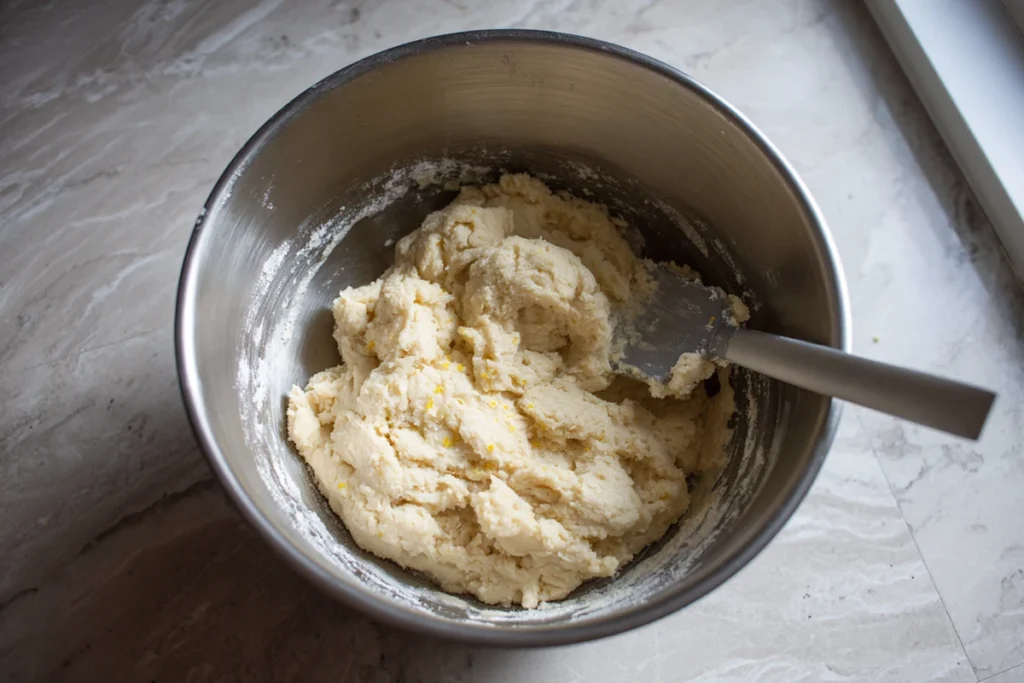
Once it’s mixed, the dough smells faintly of lemon and butter, and it should look uniform, not streaky or crumbly. If you listen closely while mixing, you’ll notice the sound change—from fluffy and airy to quieter and heavier. That’s your cue to stop. Overworking it here doesn’t make it smoother; it just makes it tough later.
Rolling Cold Dough Without Fighting It
After chilling, the dough should feel cold but pliable, like refrigerated cheese that’s been sitting out for five minutes. If it cracks immediately when you roll, it’s too cold. If it sticks to the counter and leaves smears, it’s too warm. The sweet spot is when it rolls smoothly with light pressure and lifts cleanly with a bench scraper.
As you roll, watch the surface. You want an even, matte finish—not glossy, not flour-caked. The smell stays subtle here, but the touch matters most. This is where patience pays off. If the dough starts to feel slack or stretchy, pause and chill it again. Fighting it just warms it further.
Cutting, Chilling, and Keeping Sharp Edges
When you cut the cookies, the edges should look crisp and defined, not ragged. If you hear a faint tap as the cutter hits the counter, that’s good—it means the dough is cold enough to behave. The cutouts should lift easily without stretching out of shape.
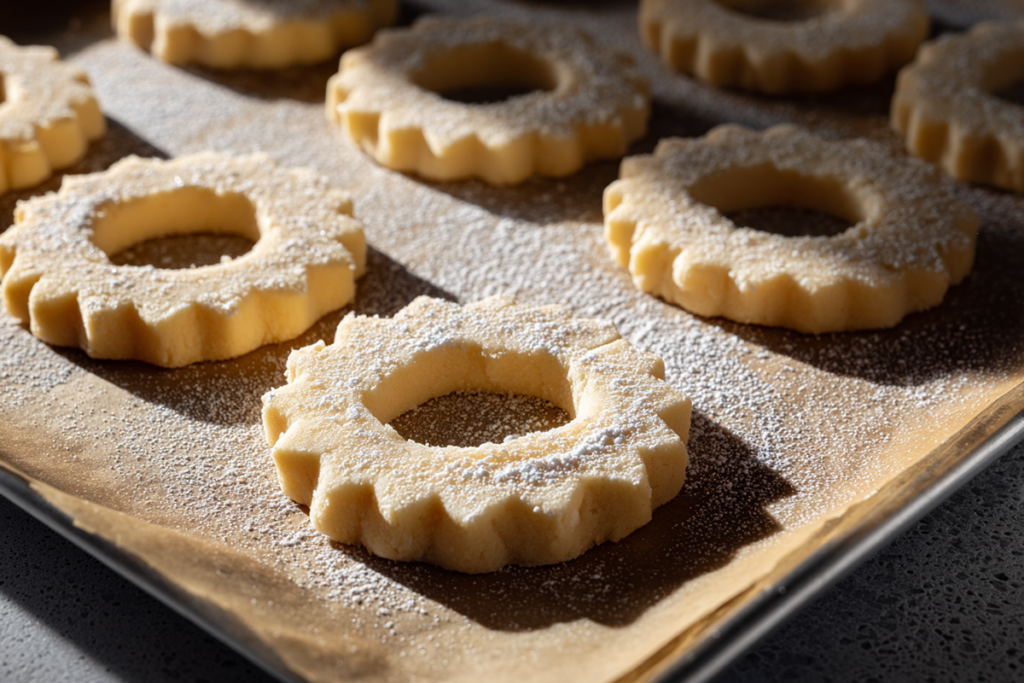
The second chill is what locks everything in. Once chilled, the cookies feel firm to the touch and slightly dry on the surface. When they bake, you’ll smell toasted almonds and butter before you see much color. The edges should just begin to turn golden, and the centers will still look pale—that’s exactly where you want to stop.
The Uh-Oh Moments (Where Things Usually Go Wrong)
Why Is My Dough Sticky and Impossible to Roll?
I made this mistake early on by adding more flour. That just dried out the cookies. Sticky dough usually means it’s too warm, not too wet. If it feels like glue instead of a Post-it note, slide it back into the fridge. Cold fixes what flour ruins.
Why Did My Cookies Spread and Lose Their Shape?
This one’s almost always skipped chilling. If the cookies go into the oven feeling soft or floppy, the butter melts before the structure sets. I once rushed a batch and watched the cutouts close up completely. Now I touch every tray before baking—if the dough doesn’t feel firm and cool, it’s not ready.
Why Are My Cookies Dry Instead of Tender?
Overbaking by even a minute does it. These cookies don’t announce they’re done with deep color. They smell nutty and look just barely golden at the edges. If you wait until they’re fully browned, they’ll crunch instead of melt.
Why Is the Jam Sliding Out the Sides?
This is a filling problem, not a cookie problem. If the jam is runny or warm, it won’t stay put. I learned to spoon it on when everything is completely cool and thick. The cookie should smell neutral and feel room-temperature before you assemble—warm cookies push filling right out.
Make It Your Own
Cinnamon-Almond Linzer Cookies
If you want a warmer, more wintery version, cinnamon works beautifully in place of lemon zest. Keep it restrained—about a teaspoon is plenty—because too much cinnamon overwhelms the almond flavor instead of supporting it. When baked, these smell like toasted nuts and spice, and they pair especially well with darker jams like black currant or cherry.
Lemon Curd–Filled Linzers
Lemon curd turns these into a brighter, sharper cookie that feels almost dessert-like instead of purely sweet. The key is thickness: use a curd that holds its shape on a spoon. The cookies themselves stay the same, but the filling adds moisture, so expect them to soften faster. That’s not a flaw—it’s just a different timeline.
Chocolate-Hazelnut Twist
This one surprised me. Swapping part of the almond flour for hazelnut flour and filling with a thick chocolate-hazelnut spread gives you a deeper, toastier cookie. The dough feels slightly more fragile when rolling, and the smell shifts from lemony butter to something closer to roasted nuts. Chill time matters even more here, but the payoff is worth it.
Gluten-Free (With Realistic Expectations)
A one-for-one gluten-free flour blend works, but the cookies come out denser and slightly more fragile. They don’t spread as much, which is good for shape, but the texture is less delicate. I recommend rolling them a touch thicker and baking just until set—don’t chase color.
Serving & Storing (Real Life)
I serve these at room temperature, usually with coffee or tea, and honestly, I reach for them more on the second day than the first. Once the jam settles into the cookie, the texture turns soft and cohesive instead of crumbly. That’s when they’re at their best.
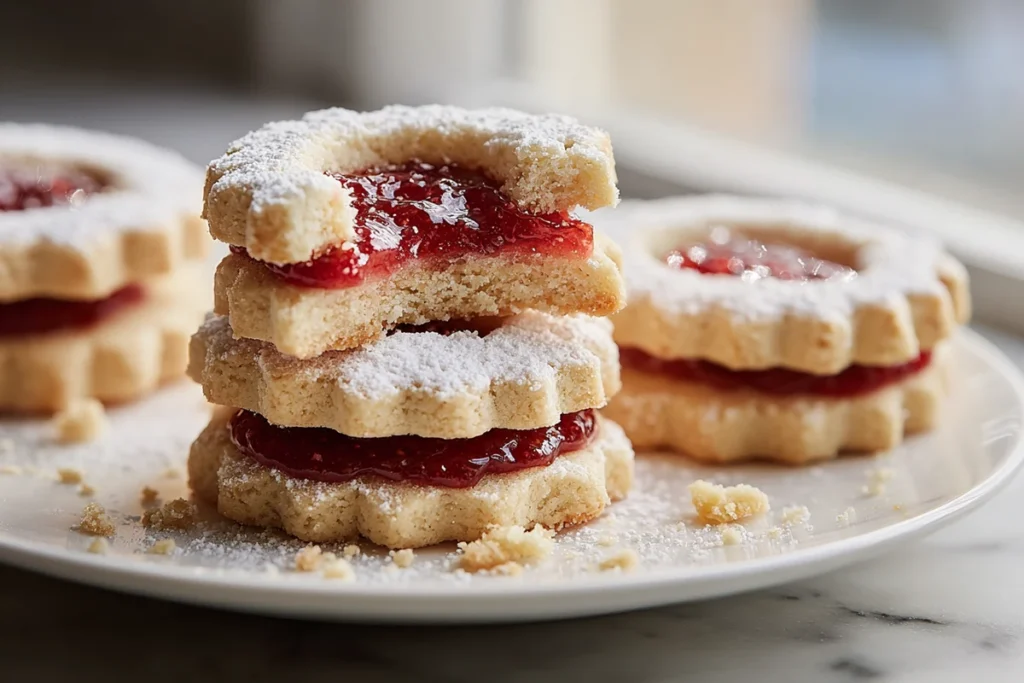
For storage, filled Linzer cookies with jam do fine at room temperature for a couple of days if they’re wrapped well. Lemon curd fillings need the fridge, but don’t leave them uncovered or they’ll dry out fast. If you’re freezing, freeze the cookies unfilled. Stack them with parchment between layers, seal them tightly, and fill after thawing. Trying to freeze them assembled usually ends in cracked cookies and smeared filling.
hese Linzer Cookies aren’t about shortcuts—they’re about knowing where care actually matters. When you get that balance right, the result feels festive, calm, and completely worth the time.
Get inspired with more mouthwatering recipes! Follow me on Pinterest for new cooking ideas every week.
Frequently Asked Questions
Can I make Linzer cookie dough ahead of time?
Yes. The dough can be made up to 3 days ahead and kept tightly wrapped in the refrigerator. When you’re ready to roll it, let it sit out for 5–10 minutes until it feels cold but workable. If it’s rock-hard, it will crack instead of roll.
Why did my Linzer cookies turn out hard instead of tender?
They were overbaked or overworked. These cookies don’t get deeply golden—if you wait for that, they dry out. Also, mixing the dough past “just combined” toughens it before it ever hits the oven.
Do I really need almond flour for Linzer cookies?
Yes. Almond flour is what gives Linzer cookies their classic tender, slightly sandy texture. Without it, you’re basically making sugar cookies with holes, and the result won’t taste or feel the same.
Can I freeze Linzer cookies after filling them?
You can, but I don’t recommend it. The filling tends to weep as it thaws, and the cookies soften unevenly. Freeze the cookies unfilled instead, then assemble them once they’re fully thawed.
Why is my jam leaking out the sides?
Either the jam is too thin or the cookies were warm when you assembled them. Use a thick jam or curd, and make sure the cookies feel completely cool and dry to the touch before filling.
Do I need special cookie cutters to make Linzer cookies?
No. A round cutter plus the end of a piping tip works just fine. The key is consistency—whatever you use, use the same tool for every top cookie so they bake evenly.
Print
Linzer Cookies
- Prep Time: 25 minutes
- Cook Time: 15 minutes
- Total Time: 2 hours 35 minutes
- Yield: 15 sandwich cookies 1x
- Category: Dessert
- Method: Baking
- Cuisine: American
- Diet: Vegetarian
Description
Classic Linzer cookies with almond flour, jam filling, and powdered sugar. A reliable, tender cookie recipe that holds its shape and tastes better the next day.
Ingredients
- 12 tablespoons unsalted butter
- 1/2 cup granulated sugar
- Zest of 1 lemon
- 1 large egg yolk
- 1 teaspoon vanilla extract
- 1 1/3 cups all-purpose flour
- 3/4 cup almond flour
- 1/4 teaspoon fine sea salt
- Raspberry jam
- Confectioners’ sugar
Instructions
- Cream butter, sugar, and lemon zest until light.
- Mix in egg yolk and vanilla.
- Stir in flours and salt until just combined.
- Chill dough until firm.
- Roll dough and cut cookie shapes.
- Chill cut cookies.
- Bake until edges are lightly golden.
- Cool completely and fill with jam.
Notes
- Use almond flour for classic texture.
- Chill dough whenever it becomes soft.
- Assemble cookies only after fully cooled.
Nutrition
- Serving Size: 1 sandwich cookie
- Calories: 280
- Sugar: 14
- Sodium: 90
- Fat: 18
- Saturated Fat: 9
- Unsaturated Fat: 7
- Trans Fat: 0
- Carbohydrates: 26
- Fiber: 2
- Protein: 4
- Cholesterol: 55