
Loaf Pan Basque Cheesecake for Brunch

Most Cheesecakes Try to Be Perfect. This One Doesn’t.
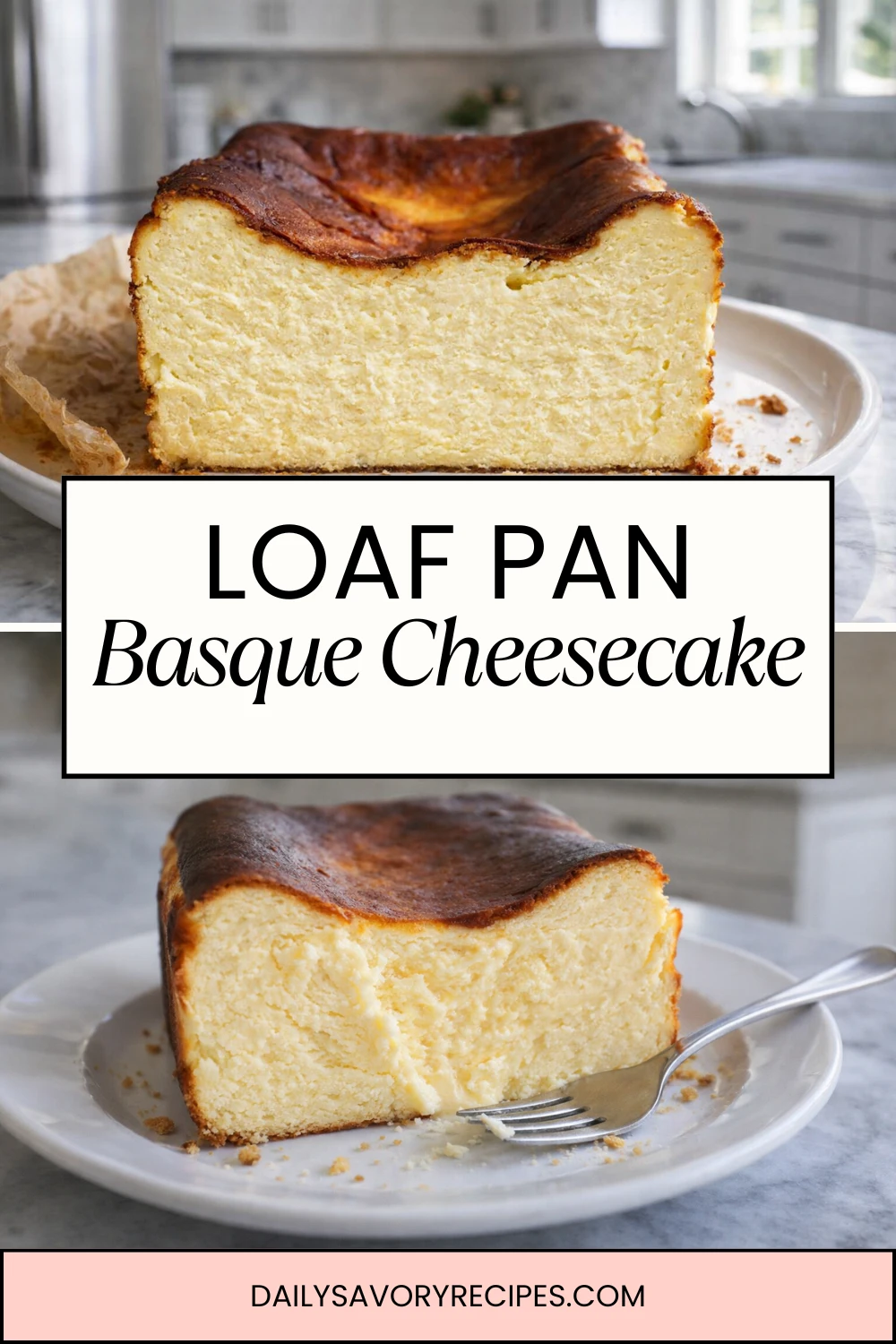
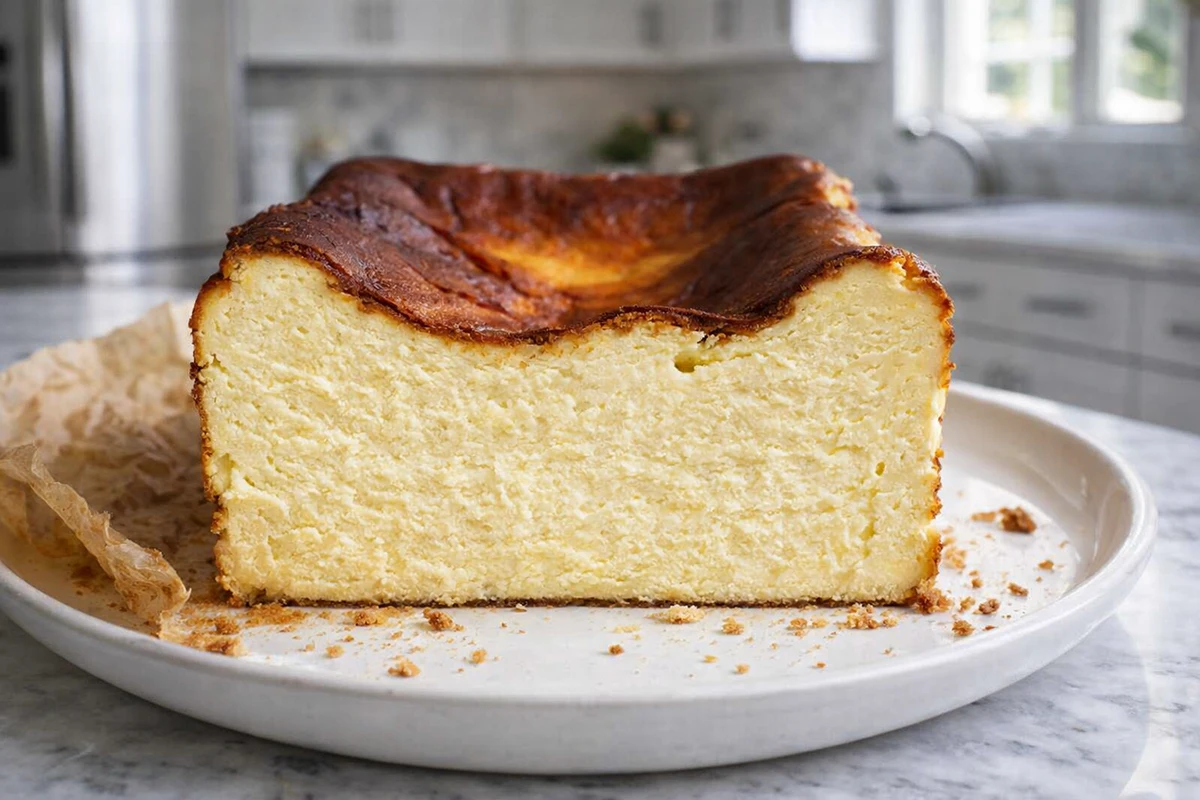
Traditional cheesecake aims for a smooth, pale top and careful, gentle baking. Loaf Pan Basque Cheesecake does the opposite. It bakes hot and fast. The top turns deeply browned — almost burnt-looking — and the center stays soft and custardy. It rises, cracks, settles, and doesn’t apologize for any of it. And that’s exactly the point.
The first time I made this in a loaf pan instead of a springform, it wasn’t about presentation. It was about practicality. I wanted something indulgent but low-effort for a lazy weekend brunch — something I could bake on Saturday afternoon, refrigerate overnight, and slice cold with coffee the next morning. The loaf pan format makes it approachable. Smaller footprint, simpler setup, and easier portion control. But the texture? Still rich. Still creamy. Still unmistakably Basque in character.
In this post, I’ll walk through why the ingredients matter more than they seem, what gives this cheesecake its signature texture, and how to make sure it turns out the same way every time — deeply caramelized on top and smooth in the center.
Built for a Slow Morning: Ingredients That Do the Heavy Lifting
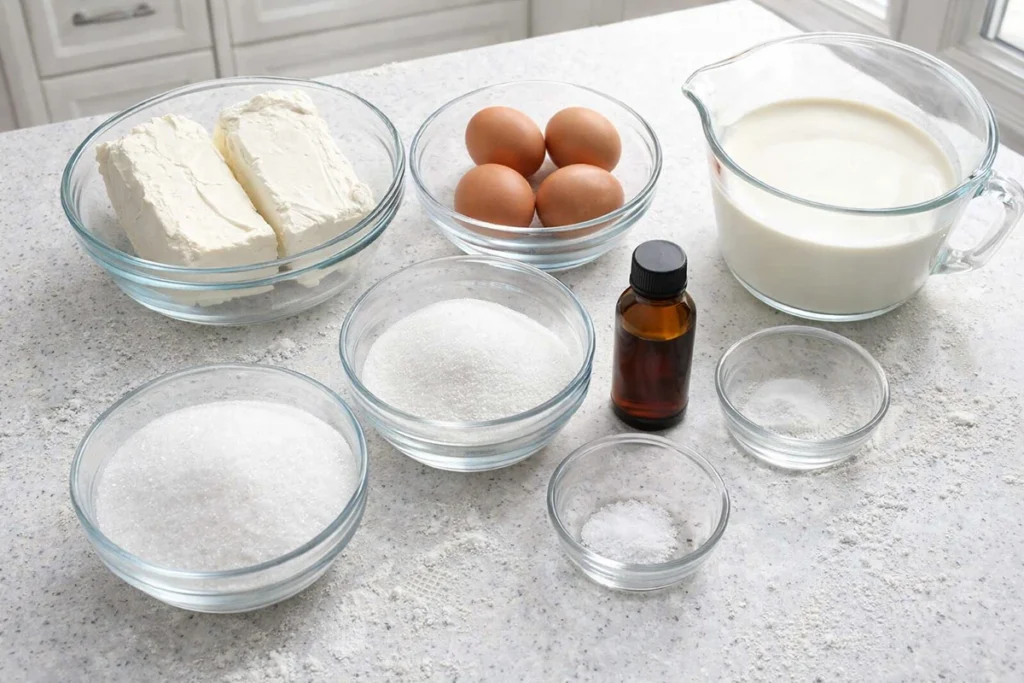
This is a short ingredient list, which means every component matters. There’s no crust, no topping, no layers to hide behind. The texture and flavor depend entirely on balance.
Full-Fat Cream Cheese
Use full-fat blocks — not whipped, not spreadable, and not reduced-fat. The fat content is what gives Basque cheesecake its dense, creamy body. Reduced-fat versions contain more water and stabilizers, which change how the batter sets at high heat. I stick with standard grocery-store brands here. Philadelphia is consistent, but any full-fat block cream cheese works as long as it’s softened properly before mixing.
Granulated Sugar
Regular white granulated sugar is exactly what you want. No need for superfine or specialty sugars. At 400°F, it caramelizes properly on the surface and keeps the interior clean and balanced. This is one place where the inexpensive option performs perfectly.
Eggs
Four large eggs provide structure and richness. Add them one at a time later during mixing (we’ll cover that in detail in the next section). Room temperature eggs blend more smoothly and reduce the risk of a slightly lumpy batter.
Heavy Cream
Heavy cream is essential. It softens the texture and prevents the center from turning dense after chilling. Half-and-half doesn’t have enough fat to produce the same silky result. If you want that custard-like middle, stick with full-fat heavy cream.
All-Purpose Flour
Just a small amount — enough to help the loaf pan version hold its shape without becoming cakey. The flour stabilizes the batter slightly so you get clean slices after chilling. Sift it in gradually to avoid clumps.
Salt and Optional Vanilla
A small amount of salt sharpens the flavor and keeps the sweetness from becoming flat. Vanilla is optional. If you already have real vanilla extract, use it. If not, this cheesecake stands on its own without it.
We’ll move into the method next — where temperature, mixing order, and timing make all the difference.
The Technique Behind Loaf Pan Basque Cheesecake
High Heat on Purpose (400°F)
This cheesecake is baked hot, and that’s intentional. When the oven is fully preheated to 400°F, you should feel a rush of steady heat when you open the door — not a mild warmth. That high temperature is what gives you the dark, caramelized top. About halfway through baking, you’ll start to see the surface puff slightly and turn a deep golden brown around the edges. By the end, the top should be a rich chestnut color, with darker patches that look almost burnt but smell sweet and toasty, not acrid.
If you don’t see that color developing, the oven may not actually be at the temperature. The smell is your cue here — it should shift from creamy and mild to something closer to caramel and browned sugar. That’s when you know the heat is doing its job.
Mixing Strategy
Start by beating the softened cream cheese and sugar together until completely smooth. At first, it will look thick and slightly grainy. After a few minutes, it should look glossy and feel silky if you rub a small amount between your fingers. No visible lumps at this stage — because once the eggs go in, those lumps won’t disappear.
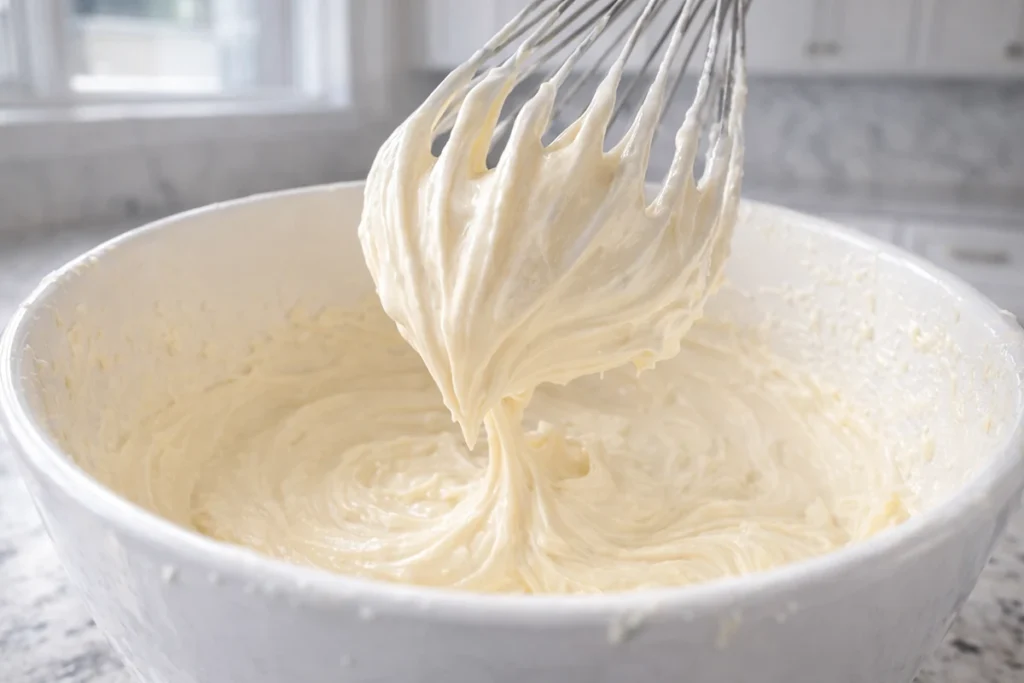
Add the eggs one at a time, mixing until each one is fully absorbed. The batter should look cohesive and slightly looser with each addition. When you pour in the heavy cream, switch to a gentler touch. You’re looking for a smooth, pourable batter that flows off the whisk in a thick ribbon. It shouldn’t look foamy or airy. Too much air means a higher rise in the oven and a higher chance of cracks and collapse.
Why It Should Jiggle When You Pull It Out
At around the 40-minute mark, start watching closely. The edges should be deeply browned and slightly puffed. The center will look lighter in color and noticeably softer. When you gently shake the loaf pan, the middle should wobble like thick custard — not slosh like liquid, but not feel firm either.
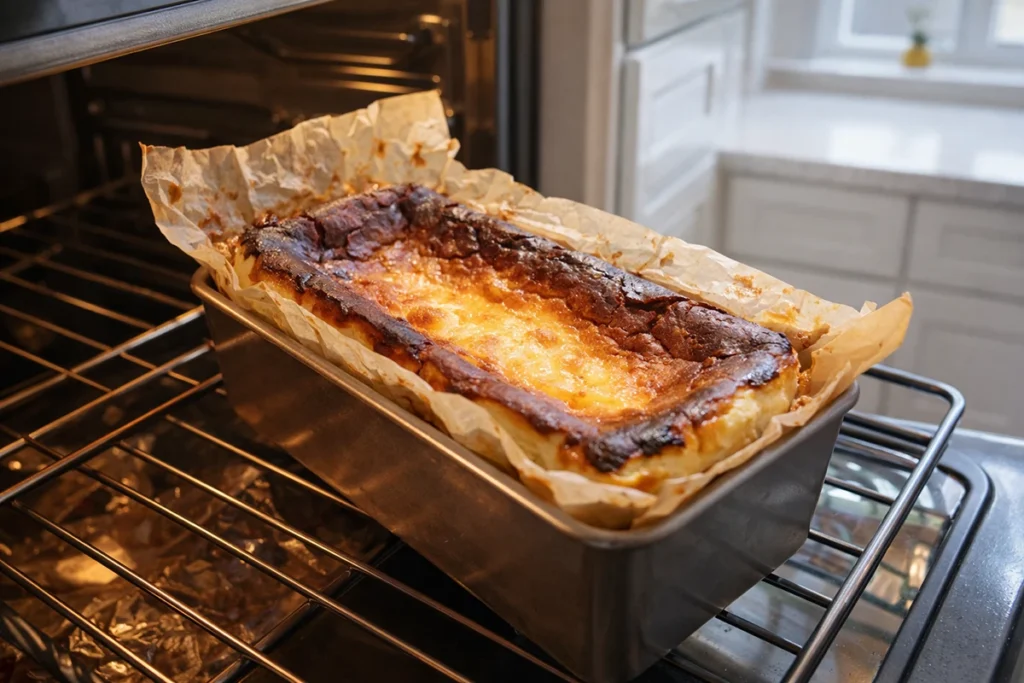
You might hear a faint bubbling sound around the edges when it first comes out of the oven. That’s normal. As it cools on the counter, the cheesecake will deflate slightly, and the surface may wrinkle. Don’t touch it at this stage. The structure is still setting internally, and the texture you’re aiming for depends on letting it cool undisturbed before refrigerating.
Before You Start: Read This
Pan Size Is Not Just a Detail
Not all 9×5 loaf pans are created equal. Some are deeper; some flare outward at the top. If your batter fills the pan nearly to the rim, you risk overflow once the cheesecake puffs. Visually, you want about half an inch of space from the top edge. If it’s closer than that, place the pan on a baking sheet. You’ll hear and see bubbling near the top during baking — that’s normal — but it shouldn’t spill over.
Parchment Paper Is Structural, Not Decorative
The parchment should extend at least two inches above the rim. When pressed into the corners, it should crease naturally and hold its shape against the buttered sides. If it springs back or shifts while you pour the batter, press it down again. Wax paper will look similar but smells faintly sweet when heated — and it will melt. Only parchment paper can handle this temperature without affecting the texture or flavor.
Don’t Mistake Color for Burning
A properly baked Loaf Pan Basque Cheesecake will look darker than most desserts. The top may have deep brown spots and uneven coloring. What matters is the smell. Burnt sugar smells sharp and bitter. Proper caramelization smells warm and slightly sweet. If the center still jiggles and the aroma is toasty, not harsh, you’re on track.
Cracks Are Part of the Design
As the cheesecake cools, you may see fissures form across the surface. They’ll soften and settle over time. The texture underneath should still feel smooth and dense when chilled. If you press lightly on the center after refrigeration, it should feel firm but creamy — not rubbery and not loose. This style is meant to look rustic. Perfection here is about texture, not appearance.
If You Want to Experiment
Add Citrus — But Keep It Subtle
A small amount of lemon or orange zest works well here, especially for a relaxed brunch spread. Add about one teaspoon of finely grated zest directly into the batter after the cream. You should smell it immediately when mixing — bright but not overpowering. Avoid adding juice; the extra liquid changes how the center sets and can make the texture slightly looser than intended.
Espresso Version for Coffee Lovers
For a deeper flavor that pairs well with strong coffee, dissolve one teaspoon of instant espresso powder into the heavy cream before mixing. You won’t see a dramatic color change in the batter, but you’ll smell a faint roasted note once it bakes. I’ve tested this twice — it adds depth without turning the cheesecake into a mocha dessert. Go heavier than that, and the bitterness starts competing with the caramelized top.
Gluten-Free Adjustment (With Realistic Expectations)
You can replace the all-purpose flour with a one-to-one gluten-free baking blend. The texture becomes slightly softer and more custard-like in the center after chilling. It still slices, but it won’t hold edges quite as cleanly. If you prefer that ultra-creamy interior, this is actually a worthwhile swap — just don’t expect identical structure.
From Counter to Table
For brunch, I serve this cold — straight from the refrigerator after at least four hours of chilling, preferably overnight. The texture should feel firm when sliced but creamy on the tongue, almost like thick custard that holds its shape. Use a long knife dipped in warm water and wiped dry between cuts. You’ll see clean, defined layers: dark top, pale center.
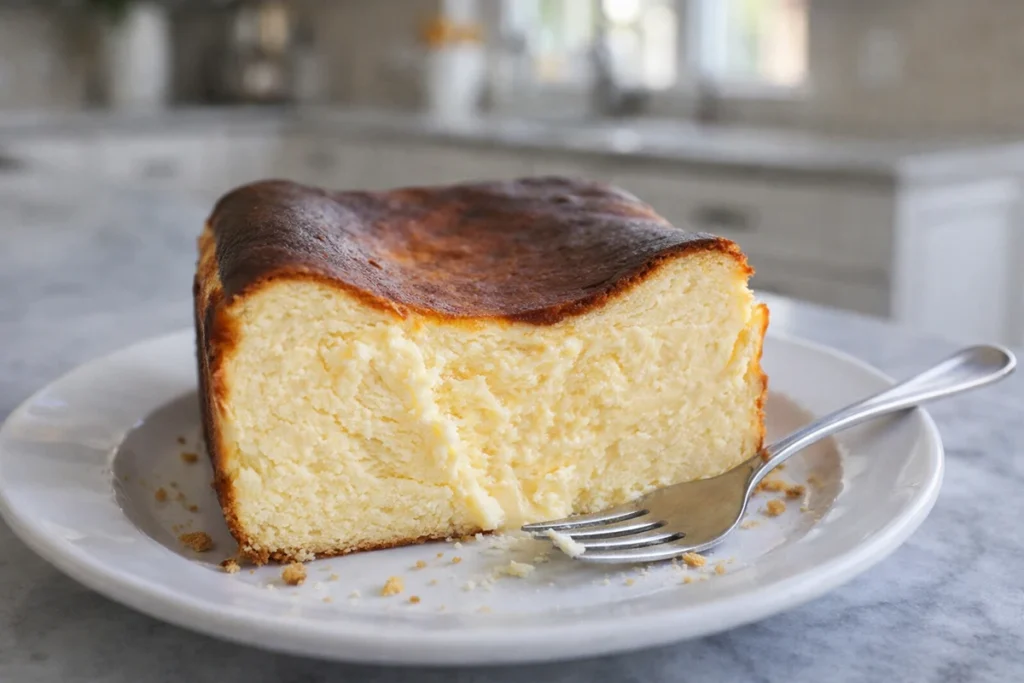
I don’t top this with anything baked in. Fresh berries on the side work better than on top, since added moisture can soften the caramelized surface. If you want contrast, a spoonful of lightly sweetened whipped cream or a few raspberries next to the slice keeps the focus on the cheesecake itself.
For storage, keep it tightly covered in the refrigerator for up to five days. The texture actually improves slightly on day two — the interior feels more cohesive and sliceable. If freezing, slice it first. Wrap individual slices tightly in plastic wrap, then place them in an airtight container. Thaw overnight in the refrigerator. The texture will be slightly denser after freezing, but still very good.
I don’t recommend reheating. This isn’t meant to be warm. The chilled, creamy center is what defines a proper Loaf Pan Basque Cheesecake.
A Cheesecake That Doesn’t Pretend to Be Polished
Not every dessert needs to be flawless on the surface to be consistent underneath. That’s what makes Loaf Pan Basque Cheesecake worth repeating — dark top, creamy center, and dependable results every time you follow the details.
Get inspired with more mouthwatering recipes! Follow me on Pinterest for new cooking ideas every week.
Frequently Asked Questions
Can I make Loaf Pan Basque Cheesecake ahead of time?
Yes — and you should. This cheesecake is better after at least 4 hours in the refrigerator, and ideally overnight. The center finishes setting as it chills, and the texture becomes smoother and easier to slice the next day.
Why is the top so dark? Did I overbake it?
A dark top is the goal. Basque-style cheesecake is baked at high heat to create deep caramelization. If it smells sweet and toasty — not bitter or burnt — and the center still jiggles slightly when it comes out, it’s done correctly.
Why is the center still jiggly when I remove it from the oven?
It should be. The middle should wobble like thick custard when gently shaken. If you bake it until completely firm in the oven, it will turn dense after chilling. The residual heat finishes the job as it cools.
Do I need a water bath for this recipe?
No. A water bath is used for traditional cheesecakes baked low and slow. Loaf Pan Basque Cheesecake is intentionally baked hot and without a water bath to create its signature caramelized top.
Can I use low-fat cream cheese?
I don’t recommend it. Low-fat versions contain more water and stabilizers, which affect the way the cheesecake sets. You’ll likely end up with a looser center and less rich texture. Full-fat blocks give consistent, repeatable results.
Can I freeze Loaf Pan Basque Cheesecake?
Yes, but slice it first. Wrap each slice tightly and freeze individually. If you freeze it whole, it’s difficult to thaw evenly. After thawing overnight in the refrigerator, the texture will be slightly denser but still creamy.
What if my batter doesn’t fit in the loaf pan?
Fill the pan, leaving about half an inch of space at the top. If you overfill, it can puff and spill during baking. If you have extra batter, bake it in a small ramekin and reduce the baking time slightly.
PrintLoaf Pan Basque Cheesecake
Loaf Pan Basque Cheesecake with a caramelized top and creamy center. Easy brunch dessert baked at high heat—no water bath required.
- Prep Time: 15 minutes
- Cook Time: 45 minutes
- Total Time: 1 hour
- Yield: 12 slices 1x
- Category: Dessert
- Method: Baking
- Cuisine: Spanish
- Diet: Vegetarian
Ingredients
- 1¾ lb full-fat cream cheese
- 1 cup granulated sugar
- 4 large eggs
- 1⅔ cups heavy cream
- 1 teaspoon vanilla extract
- ¼ teaspoon salt
- ¼ cup all-purpose flour
Instructions
- Preheat oven to 400°F and line a 9×5 loaf pan with parchment paper.
- Beat cream cheese and sugar until completely smooth.
- Add eggs one at a time, mixing fully after each.
- Whisk in heavy cream, vanilla extract, and salt.
- Sift in flour and mix gently until combined.
- Pour batter into prepared loaf pan.
- Bake 40–45 minutes until top is dark brown and center jiggles.
- Cool completely, then refrigerate at least 4 hours before slicing.
Notes
- Use full-fat cream cheese for proper texture.
- Do not overbake; the center should jiggle when removed.
- Let the cheesecake chill overnight for best slicing results.
- Slice before freezing for easier storage.
Nutrition
- Serving Size: 1 slice
- Calories: 420
- Sugar: 20g
- Sodium: 320mg
- Fat: 35g
- Saturated Fat: 21g
- Unsaturated Fat: 12g
- Trans Fat: 0.5g
- Carbohydrates: 22g
- Fiber: 0g
- Protein: 6g
- Cholesterol: 145mg