
Oreo Dirt Cake That’s Creamy, Cold, and Dependable

The Dirt Cake That Never Makes It to Day Two
The first thing you notice with a good dirt cake isn’t the look—it’s the spoon. It slides straight through chilled, creamy layers, hits soft Oreo crumbs, and comes back up coated in a mix that’s cold, sweet, and just dense enough to feel indulgent. There’s no baking aroma here, but there is that unmistakable smell of crushed Oreos and vanilla as soon as the pan comes out of the fridge. It’s the kind of dessert that quietly disappears while people “just grab a bite.”
What makes Oreo Dirt Cake work isn’t creativity or decoration—it’s balance. Too much crumb and it turns dry. Too much filling and it feels heavy. Get the ratios right, let the fridge do its job, and you end up with a dessert that holds together but still feels light. That’s why this recipe shows up at birthdays, potlucks, and family gatherings year after year. It’s playful on the surface, but the structure underneath matters more than most people think.
I treat no-bake desserts the same way I treat weeknight dinners: clear order, exact amounts, and realistic timing. This isn’t about reinventing dirt cake—it’s about making sure it comes out the same every time. Cold, creamy, easy to slice, and reliable enough that you don’t have to wonder if it’ll set before guests arrive.
Table of Contents
What Goes Into a Proper Oreo Dirt Cake (and Why It Works)
Oreos
Regular, classic Oreos are the right choice here. The cookie-to-cream ratio creates fine crumbs that soften evenly once chilled, giving you that “dirt” texture without turning soggy. I don’t recommend swapping in double-stuffed versions—they add too much fat and throw off the crumb structure.
Cream Cheese
Use full-fat, block-style cream cheese and let it soften properly. This is what gives the filling body and a slight tang that keeps the dessert from tasting flat. Low-fat or spreadable versions don’t whip the same way and can leave the filling loose.
Unsalted Butter
Softened butter helps smooth out the cream cheese and carries sweetness evenly through the filling. Unsalted is important—you want control over the flavor, not a faint salty edge showing up unexpectedly.
Powdered Sugar
Powdered sugar dissolves cleanly and keeps the filling silky. Granulated sugar won’t fully dissolve in a no-bake mixture and can leave a gritty texture once chilled.
Whipped Topping
This is one place where the inexpensive version works just fine. Store-brand whipped topping folds easily and holds its structure in the fridge, which is exactly what this dessert needs. Homemade whipped cream can work, but it’s less forgiving and softens faster.
Instant Vanilla or White Chocolate Pudding
Instant pudding is non-negotiable—it sets without heat and gives the filling stability. Vanilla keeps the flavor light, while white chocolate adds richness without overpowering the Oreos. Avoid cook-and-serve pudding; it won’t set the same way.
Milk
Cold milk activates the pudding properly and helps it thicken to the right consistency. Whole milk gives the best texture, but 2% works if that’s what you have.
Vanilla Extract
A small amount rounds out the sweetness and keeps the dessert from tasting one-note. This isn’t about strong vanilla flavor—it’s about balance.

How This Oreo Dirt Cake Comes Together (Without Losing the Texture)
Crushing the Cookies and Setting the Base
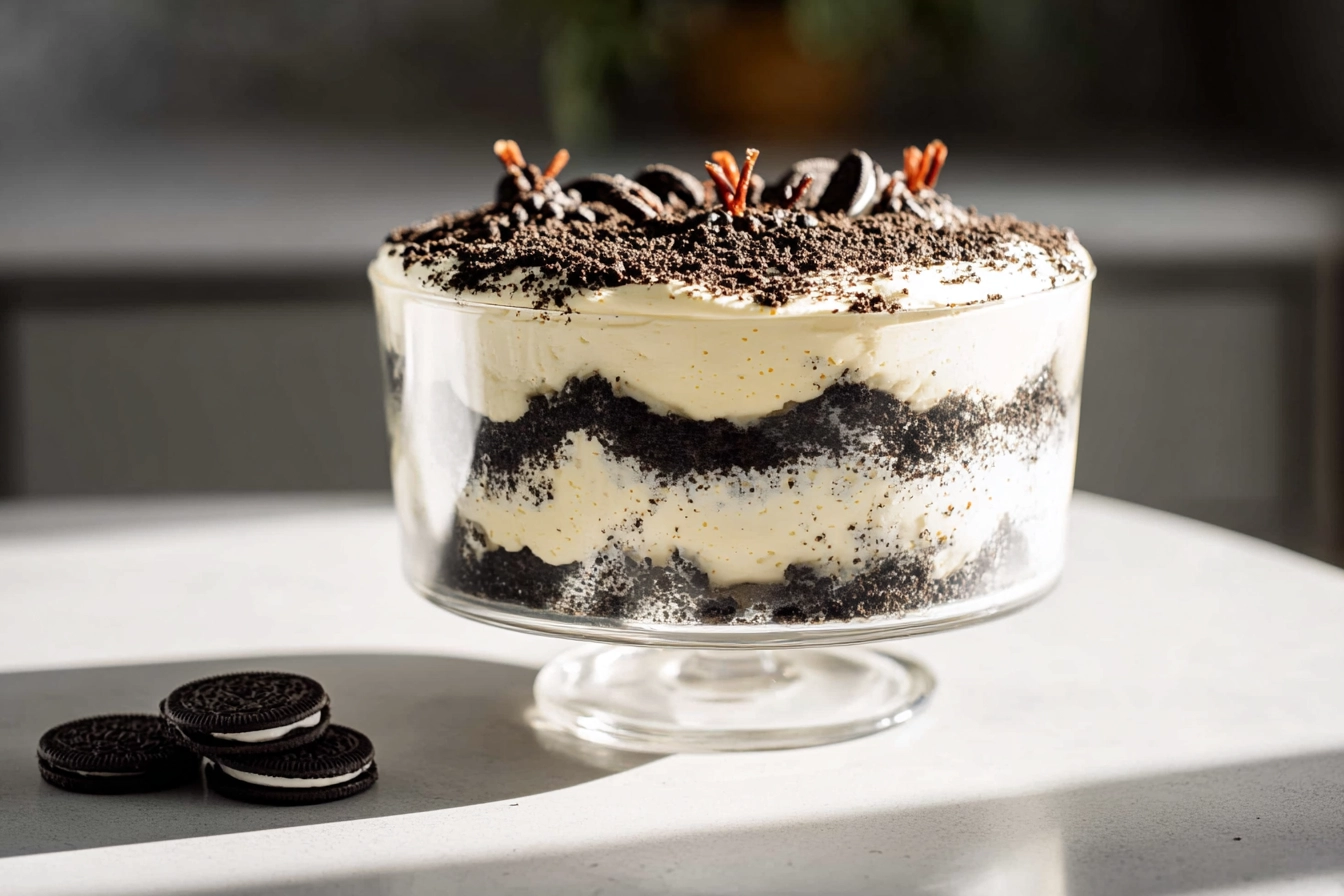
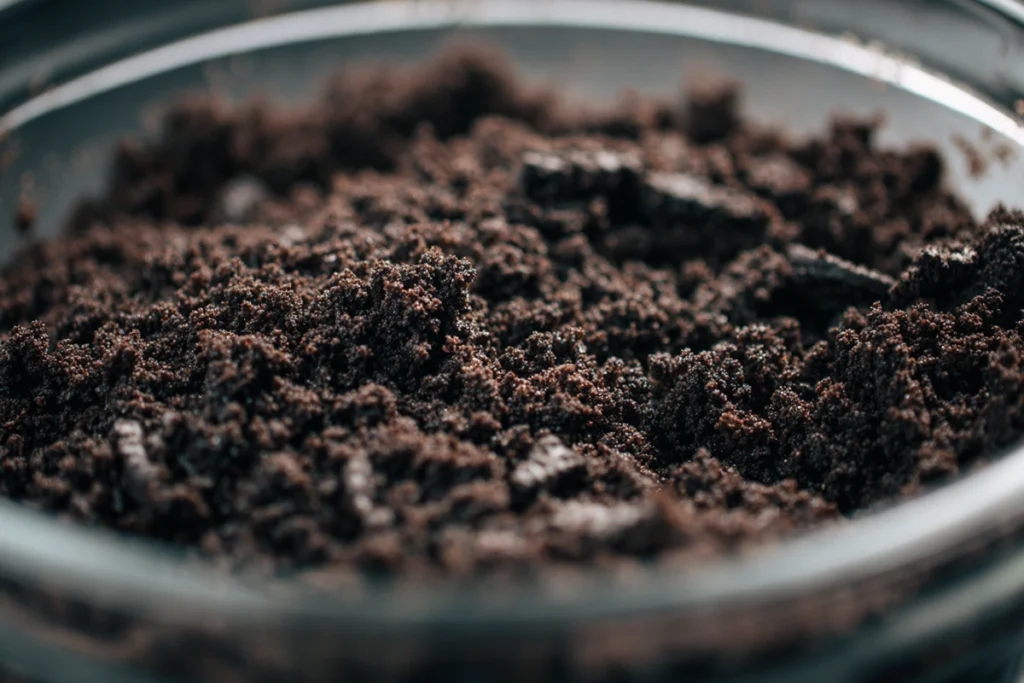
When you crush the Oreos, aim for fine, even crumbs—not dust, not chunks. Visually, it should look like dark sand with just a few tiny flecks of white showing. If you rub a pinch between your fingers, it should feel soft and slightly plush, not gritty. When you press the crumbs into the pan, use light pressure. You’re looking for a base that holds together when touched, not one that feels packed or stiff. You won’t hear much sound here, but if the crumbs crunch loudly under pressure, you’re pressing too hard.
Mixing the Creamy Layer Without Making It Heavy
When the cream cheese and butter are mixed correctly, the mixture should look smooth and pale, with no visible lumps. Touch it with a spatula—it should feel thick but spreadable, like softened frosting. As you fold in the whipped topping, move slowly and deliberately. You won’t hear anything, but visually the mixture should stay fluffy and slightly aerated, not glossy or deflated. If it starts to look wet or shiny, you’ve pushed too far.
Bringing the Pudding Into Balance
Once the pudding thickens, it should look like a soft custard and hold gentle ridges when stirred. When you fold it into the cream mixture, watch the color even out without streaks. The final filling should feel cool to the touch and hold its shape on a spoon for a second before slowly settling. The smell here should be light and sweet—vanilla-forward, not sharp or artificial. That’s how you know the proportions are right.
Layering and Letting Time Do the Work
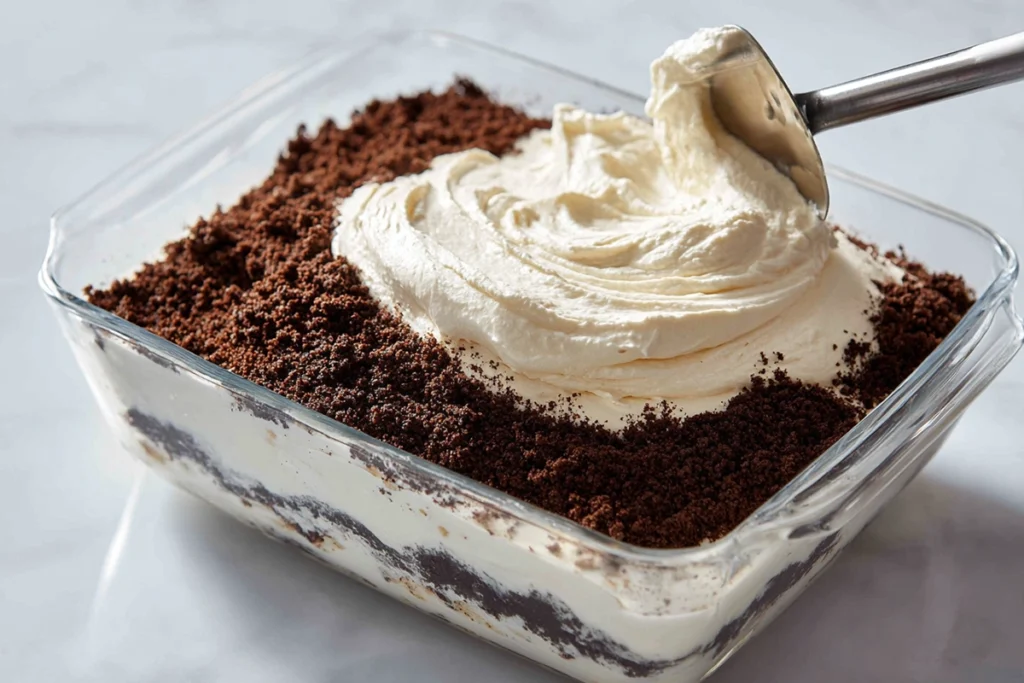
When the filling goes over the crumb base, spread it gently. You should see it glide, not drag. Sprinkling the remaining crumbs on top should sound soft and quiet, like sand falling—not clumpy or damp. Once it’s covered and chilled, the fridge does the rest. After a few hours, the surface should feel firm but not stiff when lightly pressed, and the scent of Oreos should be more rounded and mellow than it was at the start.
Where Oreo Dirt Cake Usually Goes Wrong (And How to Avoid It)
A Filling That Never Fully Sets
If the cake still feels loose after chilling, the pudding likely didn’t thicken enough before being folded in. You should never hear sloshing or see the filling flow like batter once it’s mixed. It needs to feel spoonable and structured before it ever hits the pan.
Dense, Heavy Texture Instead of Light and Creamy
This usually happens when the whipped topping is stirred too aggressively. If the mixture looks glossy and feels tight when spread, air has been knocked out. The filling should look matte and feel soft, almost mousse-like, not compact.
A Hard, Spoon-Fighting Bottom Layer
When the crumb base is pressed too firmly, it chills into a compact layer instead of softening. If it feels solid under your fingers before chilling, it will feel even harder later. Light pressure is enough—the fridge will finish the job.
Watery Edges After Sitting Overnight
Excess moisture usually comes from low-fat dairy or substitutions that don’t hold structure. If you see liquid pooling at the edges or hear a faint squish when slicing, the balance is off. Stick to full-fat cream cheese and instant pudding to keep everything stable and clean-cut.
Make It Your Own (Without Breaking What Works)
Chocolate “Real Dirt” Version
If you want a darker, more classic dirt cake look, swap the vanilla or white chocolate pudding for instant chocolate pudding. The texture stays the same, but the flavor shifts slightly richer and more cocoa-forward. Visually, the crumbs blend in more, so the top looks like real soil rather than layered dessert. This version works especially well if you’re adding gummy worms or candy bugs, since nothing visually distracts from the theme.
Individual Cups for Parties
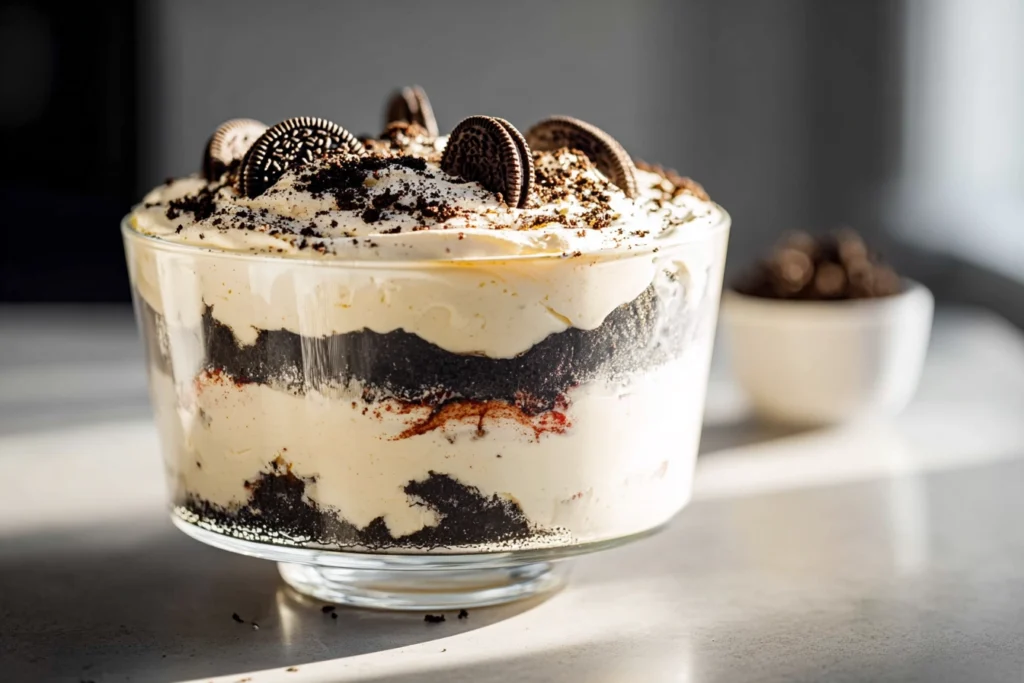
For portion control and cleaner serving, build this Oreo dirt cake in clear cups. Start with a thin layer of crumbs, add the filling, then finish with crumbs on top. You should hear the crumbs fall softly and see clean layers through the sides. The advantage here is texture—each spoonful stays balanced—and practical storage, since cups stack easily in the fridge without disturbing the top.
Homemade Whipped Cream (When You Really Want It)
You can replace whipped topping with homemade whipped cream, but it changes the timing. Use heavy cream whipped to medium peaks—it should hold shape but still feel soft when touched. The dessert will taste lighter and less sweet, but it won’t hold as long. Plan to serve it within 6–8 hours, or the structure will loosen and feel mousse-like rather than sliceable.
Gluten-Free Oreos
Gluten-free Oreos work surprisingly well here, but the crumbs are slightly drier. Crush them fine and press even more gently. You may notice the base softens a little faster, which isn’t a problem—it just means the texture leans more spoonable than sliceable after chilling.
How to Serve It and Keep It at Its Best
I serve this straight from the fridge, cold enough that the filling holds clean edges but soft enough that a spoon glides through without resistance. For neat squares, let it sit at room temperature for about 5 minutes before slicing—just until the surface loses its chill. If I’m scooping, I go straight in cold.
Cover the pan tightly and store it in the refrigerator for up to 3 days. After that, the crumb layers start to absorb too much moisture and lose contrast. I don’t recommend freezing this dessert—the whipped topping and pudding separate when thawed, and the texture never fully recovers.
If you’re making it ahead, assemble everything except the top crumb layer. Add those just before serving so they stay soft but defined instead of damp.
A Dessert That Disappears Quietly
This is the kind of dessert that doesn’t need a sales pitch—people recognize it, take a bite, and go back for more. When it’s done right, Oreo Dirt Cake delivers exactly what it promises: cold, creamy comfort with no surprises, just dependable results that hold up every time.
Get inspired with more mouthwatering recipes! Follow me on Pinterest for new cooking ideas every week.
Frequently Asked Questions
Can I make Oreo Dirt Cake the night before?
Yes. In fact, it’s better that way. Making it the night before gives the pudding time to fully set and lets the Oreo crumbs soften just enough. Cover it tightly and keep it refrigerated, then add the final crumb topping if you want the surface to look fresher.
Why is my dirt cake still runny after chilling?
This usually means the pudding wasn’t thick enough before being folded into the cream mixture. The pudding should look like soft custard and hold ridges when stirred. If it goes in too loosely, chilling alone won’t fix it.
Can I use homemade whipped cream instead of whipped topping?
Yes, but expect a softer result. Use heavy cream whipped to medium peaks—not stiff. The texture will be lighter, but the cake won’t hold as long. Plan to serve it within 6–8 hours for best structure.
Do I need a food processor to crush the Oreos?
No. A resealable bag and a rolling pin work just fine. The key is crushing them evenly. If you hear loud crunching or see big chunks, keep going—the crumbs should feel soft and sand-like between your fingers.
How long does Oreo Dirt Cake last in the fridge?
It’s best within 2–3 days. After that, the crumb layers absorb too much moisture, and the texture turns uniform. It’s still safe to eat, but you lose the contrast that makes it enjoyable.
Can I freeze Oreo Dirt Cake?
I don’t recommend it. Freezing causes the pudding and whipped topping to separate when thawed, leaving a watery, grainy texture. This dessert is designed to be chilled, not frozen.
Print
OREO Dirt Cake
- Prep Time: 10 minutes
- Cook Time: 3 hours
- Total Time: 3 hours 10 minutes
- Yield: 12 servings 1x
- Category: Dessert
- Method: No Bake
- Cuisine: American
Description
Creamy Oreo Dirt Cake with soft cookie layers and a dependable no-bake filling. Easy to prep, chills cleanly, and works every single time.
Ingredients
- 1 (14.3 oz) package Oreos
- 1 (8 oz) cream cheese
- 1/2 cup unsalted butter
- 1 cup powdered sugar
- 1 (16 oz) whipped topping
- 2 (3.4 oz) instant vanilla pudding mixes
- 3 cups milk
- 1 tsp vanilla extract
Instructions
- Crush Oreos into fine crumbs.
- Press two-thirds of crumbs into a baking dish.
- Beat cream cheese and butter until smooth.
- Mix in powdered sugar.
- Fold in whipped topping gently.
- Whisk pudding, milk, and vanilla until thick.
- Fold pudding into cream mixture.
- Spread filling over crumb base.
- Top with remaining crumbs.
- Refrigerate until fully set.
Notes
- Use regular Oreos for best texture.
- Instant pudding is required for proper setting.
- Chill at least 3 hours before serving.
Nutrition
- Serving Size: 1 slice
- Calories: 360
- Sugar: 24
- Sodium: 210
- Fat: 22
- Saturated Fat: 13
- Unsaturated Fat: 8
- Trans Fat: 0.5
- Carbohydrates: 38
- Fiber: 1
- Protein: 4
- Cholesterol: 55