
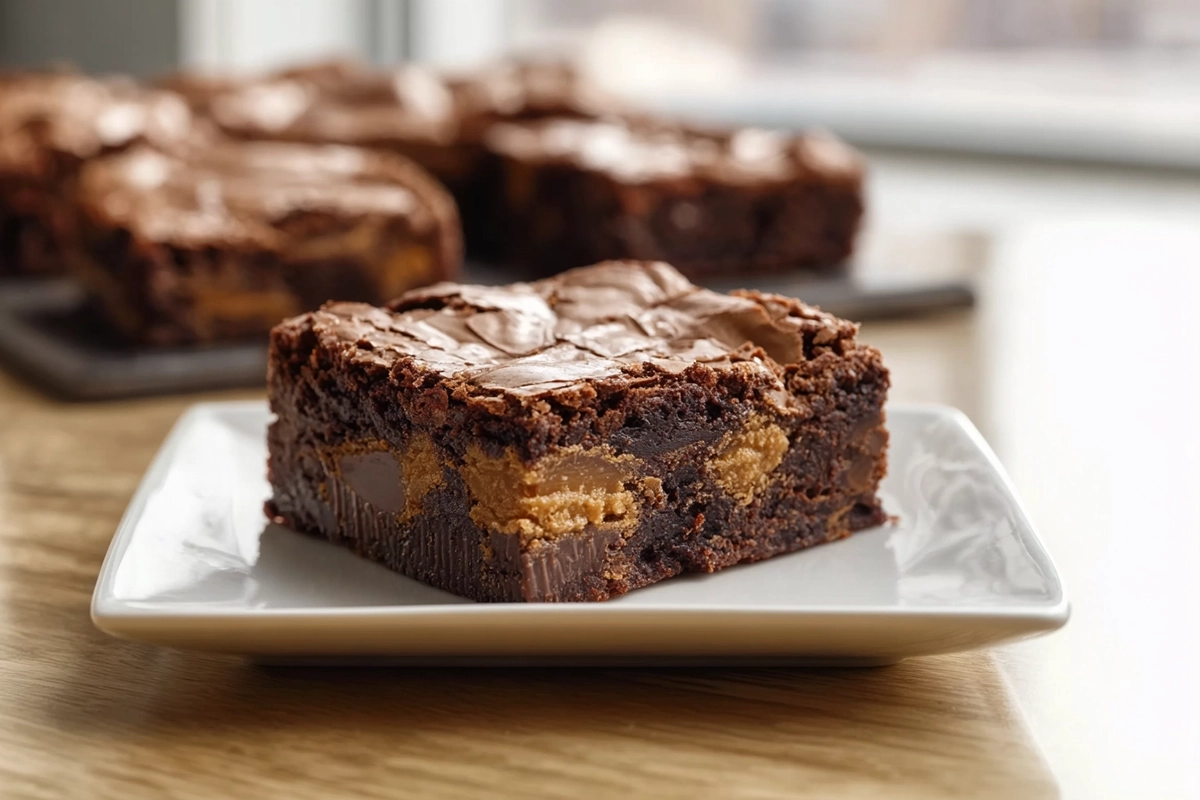
Peanut Butter Cup Cookie Brownies That Actually Work

The first thing you notice isn’t the look — it’s the smell. Warm chocolate, melted peanut butter, and that unmistakable bakery-style sweetness that fills the kitchen about halfway through baking. These are the kinds of desserts you don’t plan to eat slowly. The edges smell toasted and rich, the center smells soft and molten, and you already know they’re better warm than cooled. That’s the appeal here: controlled decadence without complicated technique.
I started testing Peanut Butter Cup Cookie Brownies because most “brookie” recipes promise three textures but usually deliver two. Either the brownie dominates and the cookie disappears, or the cookie bakes through while the center turns dry. The goal with this version was simple: distinct layers that finish at the same time. A cookie base that stays tender, a brownie top that sets without drying out, and a peanut butter cup that actually melts instead of vanishing into the batter.
This recipe leans on store-bought ingredients on purpose. Not because homemade wouldn’t work, but because consistency matters more than creativity here. When you’re stacking cookie dough, brownie batter, and a filled chocolate center in a muffin tin, predictability is what keeps the texture right. These are rich, warm, and meant to be eaten shortly after baking — ideally with a scoop of vanilla ice cream while the center is still soft. No guesswork, no overengineering, just a dessert that behaves the same way every time.
Table of Contents
What Goes Into a Three-Layer Dessert (And Why It Works)
The idea behind these Peanut Butter Cup Cookie Brownies is simple comfort with structure. You’re not just mixing things together and hoping for the best — each layer has a job. One layer gives stability, one brings moisture and richness, and one delivers that familiar chocolate-peanut butter payoff people come back for. This is the kind of dessert my mom would’ve loved because it leans on smart shortcuts, not fuss.
The goal here isn’t bakery perfection. It’s a brownie that stays soft, a cookie that doesn’t dry out, and a center that melts instead of disappearing. That only happens when the ingredients behave predictably in the oven, which is why some choices matter more than others.

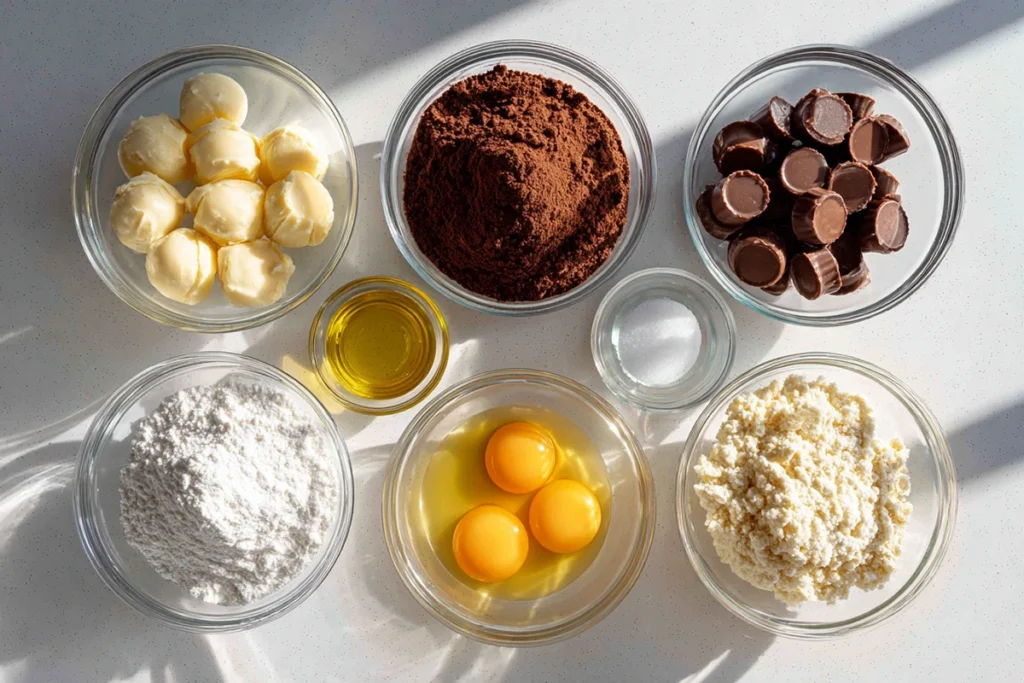
- Brownie mix: A standard boxed brownie mix works best because the fat and sugar ratios are already balanced. Homemade batters vary too much and can bake unevenly around the center.
- Egg and oil (from the mix instructions): These aren’t optional details. Skimping here dries out the brownie layer and throws off the timing.
- Refrigerated cookie dough: This gives you a tender but sturdy base. Homemade cookie dough tends to spread too much and lose its shape under the brownie batter.
- Reese’s Peanut Butter Cups: This is the heart of the recipe. The shape and melt rate are exactly right. Cheaper peanut butter cups melt too fast and leave the center flat.
- Vanilla ice cream (optional): Not a garnish — it’s balance. The cold creaminess cuts through the richness and makes the whole thing feel intentional.
The Concept Behind the Layers
This recipe works because each component is doing one clear job, the same way my mother used to build her pot pies without ever writing a thing down. The cookie dough goes on the bottom to create a soft barrier between the pan and the brownie. It keeps the edges tender and gives you something to bite into. The peanut butter cup sits in the middle so it’s protected from direct heat, which keeps it creamy instead of chalky. The brownie batter goes on last to seal everything in and bake evenly from the outside in.
If you’re thinking about substitutions, this is where restraint matters. Swapping the peanut butter cup for an Oreo works because the structure is similar, but replacing the cookie dough with cake batter doesn’t — it collapses under the weight. If you only have salted butter brownie mix, skip adding any extra salt later. Small choices like that are what keep these brownies feeling like a reliable family dessert instead of a gamble.
At the end of the day, Peanut Butter Cup Cookie Brownies succeed because they’re built the way comfort food should be: familiar ingredients, clear roles, and no surprises when they come out of the oven.
How These Peanut Butter Cup Cookie Brownies Come Together
Setting the Pan for Success
This recipe starts before any batter touches the pan. When the oven is fully preheated and the muffin tin is generously greased, you’re already controlling half the outcome. Visually, you want the tin to look slick and evenly coated — no dry patches. To the touch, the metal should feel cool but not tacky from excess spray. If you skip this or rush it, you’ll hear it later when the brownies resist release instead of lifting cleanly.
Building the Cookie Base
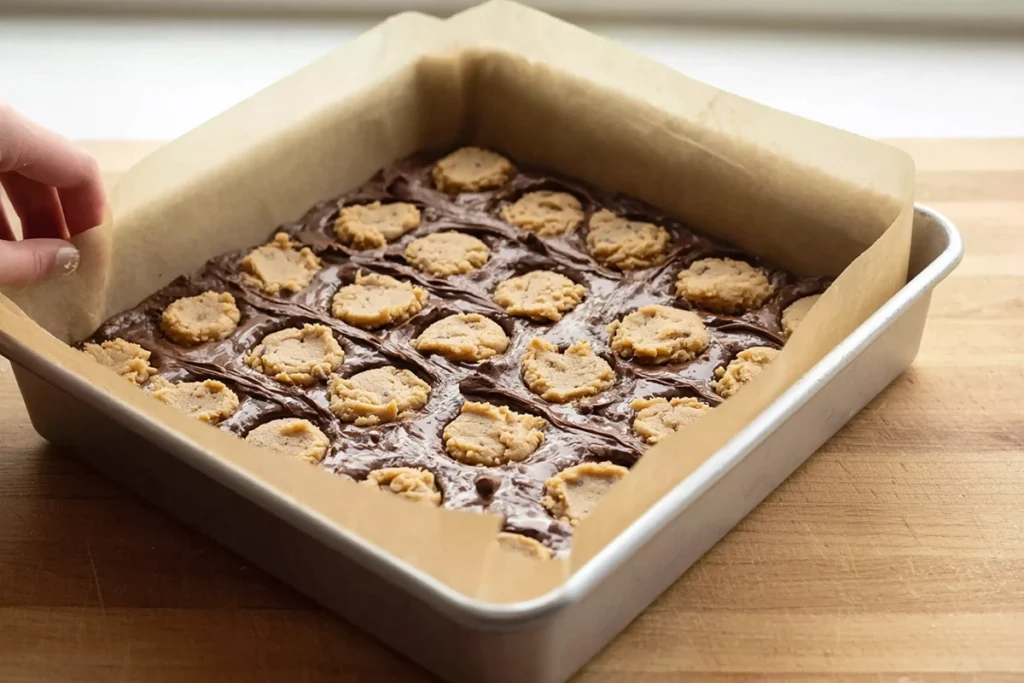
Pressing the cookie dough into the bottom of each well is where structure is created. The dough should feel firm but pliable in your fingers, similar to chilled Play-Doh. Visually, it should cover the bottom evenly without climbing the sides. If it feels greasy or starts sticking to your fingers, it’s too warm — pause for a minute. When baked correctly, this layer smells lightly toasted, not sugary or burnt.
Nestling the Peanut Butter Cup
Placing the peanut butter cup upside down isn’t cosmetic — it’s functional. You should feel it settle firmly into the cookie base with a gentle push, not sink or wobble. Visually, the cup should sit centered, with the cookie dough hugging its edges. At this stage, you’ll smell chocolate faintly as the warmth of the kitchen softens the cup, which is exactly what you want before sealing it in.
Sealing Everything with Brownie Batter
Pouring the brownie batter is about restraint. The batter should flow thickly, not splash or run, and you should hear a soft plop as it fills the space. Visually, stop when the wells are about 90% full — this gives the brownies room to rise without spilling. When the oven does its work, the smell shifts from raw chocolate to deep cocoa, and the tops will show slight cracking around the edges, not wet shine.
Where Peanut Butter Cup Cookie Brownies Go Wrong (And Why)
When the Center Turns Dry
This usually happens when the batter is overfilled or baked past the visual cues. If the tops look matte and firm all the way across instead of slightly soft in the center, they’ve gone too far. To the touch, the center should give just a little when pressed gently. Once you smell strong baked chocolate instead of warm cocoa, it’s time to check — not wait.
When the Cookie Feels Heavy
A dense cookie base is almost always a temperature issue. If the dough was too warm going in, it melts instead of baking into structure. You’ll notice this when the bottom feels greasy instead of tender and you smell butter more than baked sugar. Starting with cool dough keeps the base defined and prevents it from blending into the brownie layer.
When the Peanut Butter Cup Disappears
If the peanut butter flavor is muted or the center seems hollow, the cup melted too fast. This can happen if it’s pressed too deep or surrounded by overly warm batter. Visually, you should still see a slight dome under the brownie layer after baking. When reheated properly, you should smell peanut butter as soon as the center warms — if you don’t, the structure was lost during baking.
These small checkpoints are what keep this recipe repeatable. Once you recognize the sights, smells, and textures, these brownies stop being a gamble and start behaving the same way every time.
Make It Yours Without Breaking the Balance
Oreo-Stuffed Version (Crispier, Less Sweet)
Swapping the peanut butter cup for a single Oreo works well if you want a firmer center and a sharper chocolate bite. Use one standard Oreo, not double-stuffed. You’ll notice less melt but more crunch, and the brownie layer sets slightly faster because there’s less fat in the center. The smell leans more toward baked cocoa than candy, and the texture is closer to a classic brownie with a cookie surprise.
Soft Caramel Center (Richer, Stickier)
Two soft caramels pressed together create a molten center that stretches when warm instead of oozing. They should feel pliable but not sticky when you press them in. If they’re cold and hard, they won’t melt evenly and can scorch at the edges. Expect a deeper, buttery aroma during baking and a stickier bite once cooled — these are best eaten warm.
Gluten-Free, With Realistic Expectations
Using a gluten-free brownie mix works, but the result is denser and slightly fudgier. The tops won’t crack the same way, and the texture feels heavier to the touch. I recommend baking them on the lower end of the time range and reheating gently before serving to bring back some softness. These freeze well but need a longer warm-up.
How I Serve and Store These
I eat these warm, about 5–10 minutes after they come out of the oven, when the center is soft but the edges hold their shape. A scoop of plain vanilla ice cream is enough — anything more fights the richness instead of balancing it.
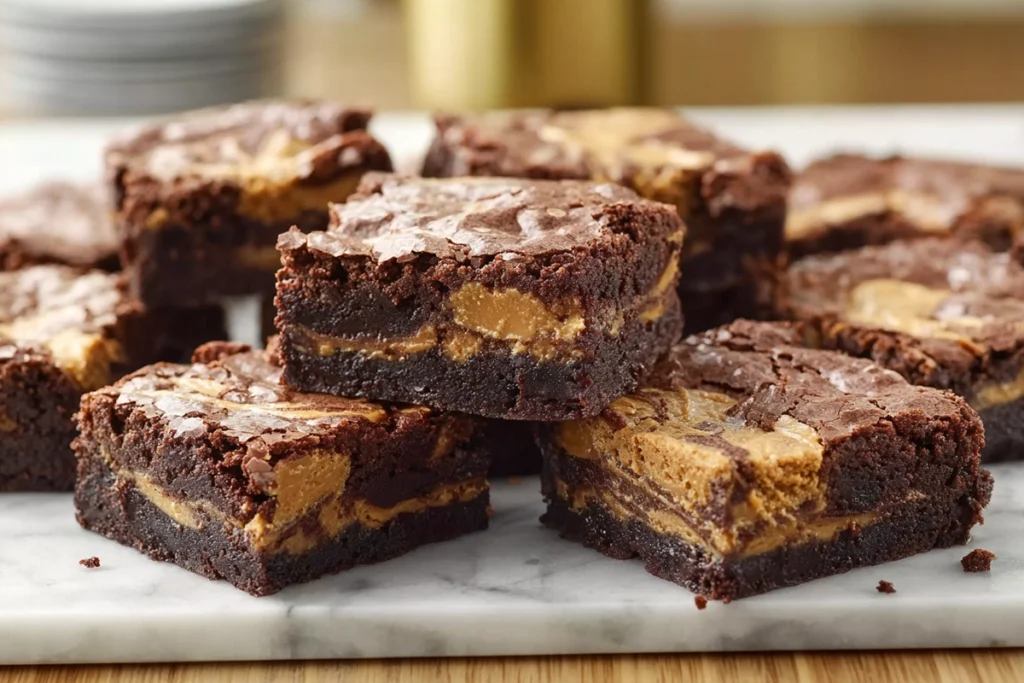
For storing, let them cool completely and keep them in an airtight container at room temperature for up to two days. I don’t refrigerate them; cold air tightens the crumb and dulls the chocolate flavor. If you want to freeze them, do it after they’ve fully cooled. Wrap each one individually, then freeze. Reheat straight from frozen in the microwave for about 30 seconds, or until the center smells warm and the top feels soft again.
If you’re reheating multiple, a low oven works better than the microwave. You’ll hear a faint sizzle from the edges when they’re ready — that’s when the texture is back where it should be.
When You Want Dessert Without Guesswork
These Peanut Butter Cup Cookie Brownies are about knowing exactly what you’re getting — warm chocolate, a defined cookie base, and a center that behaves the same way every time. When you pay attention to the small cues, this kind of indulgent dessert stops being a gamble and starts becoming reliable comfort.
Get inspired with more mouthwatering recipes! Follow me on Pinterest for new cooking ideas every week.
Frequently Asked Questions
Can I make these in a regular pan instead of a muffin tin?
Yes, but the texture will change. A muffin tin controls height and bake time, which keeps the center soft. In a regular pan, the layers spread thinner, the center firms up faster, and you lose that molten middle. If you go this route, expect more of a bar-style brookie.
Why did my brownie layer sink or crack?
That usually means the batter was overfilled or baked too long. When the top looks fully matte instead of slightly soft in the center, it’s already past the ideal point. Cracks are a sign the moisture escaped too quickly, often from excess heat or extra bake time.
Can I freeze these after baking?
Yes, and they freeze well. Let them cool completely, then wrap each one individually before freezing. Don’t freeze them warm or stacked together — moisture turns into ice and ruins the texture. Reheat straight from frozen.
Do I need to chill them before removing from the pan?
No, but you do need patience. Give them about 5 minutes after baking. They should feel set around the edges but still soft in the center. If you wait too long, the sugar tightens and they stick more, not less.
Can I use homemade brownie batter instead of a mix?
You can, but it’s harder to control. Homemade batter varies in moisture and fat, which affects how the center sets around the peanut butter cup. If you use homemade, aim for a thick, fudgy batter — not a cake-style one — and expect a little trial and error.
How do I keep the peanut butter cup from burning?
Make sure it’s fully covered by brownie batter and not touching the pan directly. If the cup is exposed or pressed too low, it overheats. You want it sealed in the middle so it melts gently instead of scorching.
Are these better the same day or the next day?
They’re best the same day, while the center is still soft and the cookie base hasn’t tightened. The next day they’re still good, but reheating is key. Warm them until you smell chocolate again — that’s when the texture comes back.
Print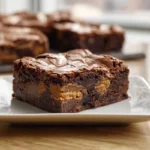
Peanut Butter Cup Cookie Brownies
- Prep Time: 15 minutes
- Cook Time: 20 minutes
- Total Time: 35 minutes
- Yield: 12 1x
- Category: Dessert
- Method: Baking
- Cuisine: American
- Diet: Vegan
Description
Peanut Butter Cup Cookie Brownies with a soft cookie base, rich brownie top, and melted center. Easy to bake, reliable, and best served warm.
Ingredients
- 1 (10 oz) brownie mix
- Egg (per brownie mix instructions)
- Vegetable oil (per brownie mix instructions)
- 16 oz refrigerated cookie dough
- 12 Reese’s Peanut Butter Cups
- Vanilla ice cream
Instructions
- Preheat oven and grease a standard muffin tin.
- Prepare brownie batter according to package directions.
- Press cookie dough evenly into muffin tin wells.
- Place one peanut butter cup centered on the cookie base.
- Cover with brownie batter, filling each well about 90%.
- Bake until edges are set and centers are slightly soft.
- Cool briefly, then remove and serve warm.
Notes
- Cool for 5 minutes before removing from the pan.
- Reheat leftovers for about 30 seconds in the microwave.
- Oreos or soft caramels can be used instead of peanut butter cups.
Nutrition
- Serving Size: 1 brownie
- Calories: 360
- Sugar: 32
- Sodium: 280
- Fat: 20
- Saturated Fat: 9
- Unsaturated Fat: 9
- Trans Fat: 0
- Carbohydrates: 42
- Fiber: 2
- Protein: 5
- Cholesterol: 35