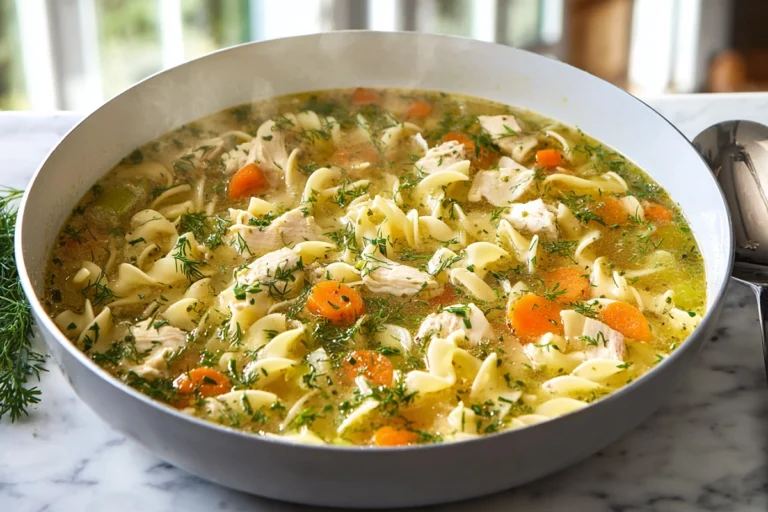

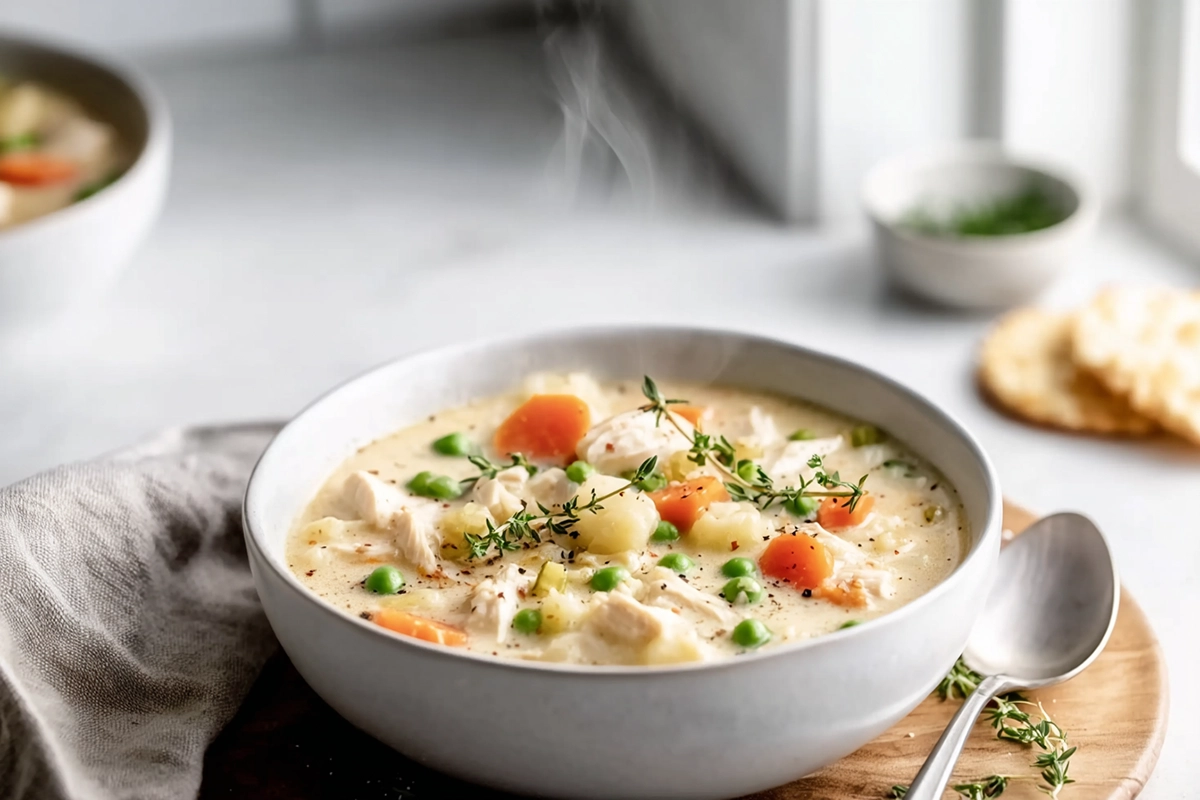
Healthy Chicken Pot Pie Soup(Light but Cozy)

There’s something unmistakable about the smell of chicken pot pie when it starts coming together. Soft onions warming in olive oil, thyme hitting the heat, vegetables simmering gently in broth. It’s familiar and comforting before you even take a bite. This soup leans into that exact feeling—but without the heaviness that usually follows a traditional pot pie.
What makes this version different is how the creaminess shows up. Instead of butter, flour, or cream, the body comes from vegetables, doing the work they’re already good at. Potatoes break down into softness. Cauliflower blends into the broth and disappears texturally, leaving behind a rich, smooth base. You still get that spoon-coating thickness, but the soup finishes clean, not heavy or greasy.
This Healthy Chicken Pot Pie Soup was built with repeatability in mind. It’s a weeknight-friendly recipe that doesn’t rely on shortcuts that compromise texture or flavor. Every ingredient has a job, and every choice—right down to the type of potato—affects the final result. The goal here isn’t to reinvent comfort food. It’s to make it dependable, lighter, and still satisfying enough to feel like dinner, not a compromise.
Table of Contents
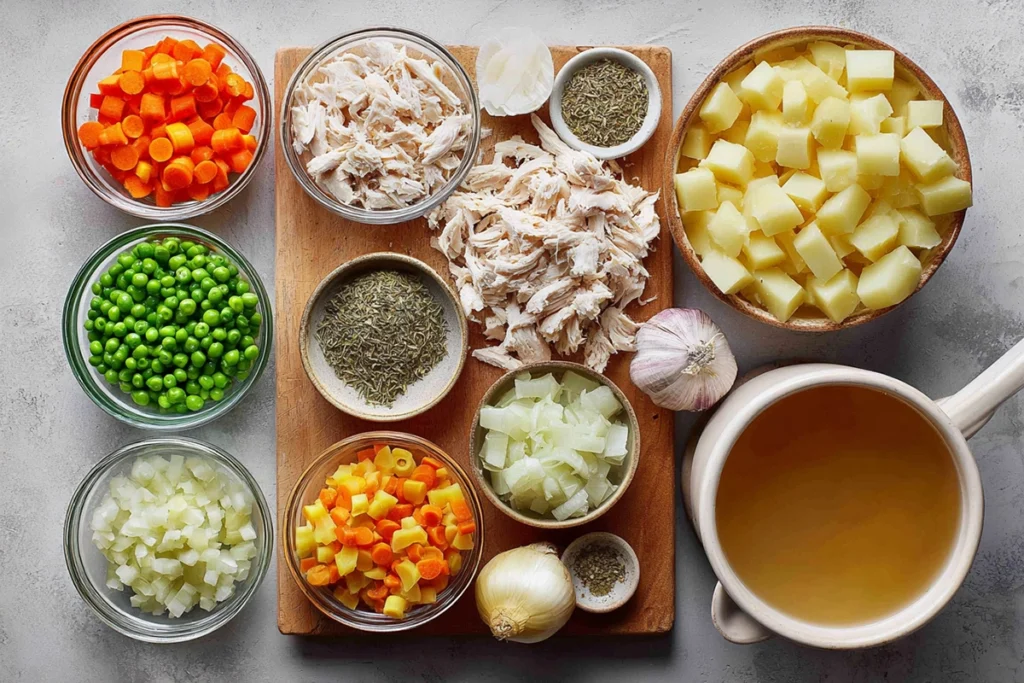
The Ingredients That Make This Soup Work
Chicken Breast
Boneless, skinless chicken breast keeps the soup lean and clean-tasting. Dicing it evenly matters more than people think—it ensures quick cooking without drying out. You can use thighs, but the flavor shifts richer and heavier, which changes the balance of the soup.
Yukon Gold Potatoes
This is not the place for russets. Yukon golds hold their shape while simmering and blend smoothly without turning grainy. Their natural creaminess is one of the reasons this soup works without dairy, so this is one ingredient I wouldn’t casually swap.
Cauliflower Florets
Finely chopped cauliflower disappears once blended, adding thickness without adding flavor. Fresh is ideal, but frozen works if thawed and drained well. This is the backbone of the “creamy without cream” texture.
Onion and Carrots
White onion builds a neutral, slightly sweet base, while carrots add body and subtle sweetness. No need for fancy cuts—consistent size matters more than appearance here.
Olive Oil
A basic, everyday olive oil is perfect. This isn’t about fruity notes; it’s about controlled heat and even sautéing. Save the expensive stuff for finishing.
Thyme
Dried thyme works well and stays consistent batch to batch. Fresh thyme is great if you have it, but dried is reliable and forgiving.
Milk (Almond, Cashew, or Dairy)
Unsweetened is non-negotiable. Almond or cashew milk keeps things light, while 2% or whole milk adds richness. Cheap store brands are completely fine here.
Low-Sodium Chicken Broth
Using low-sodium gives you control. Salt at the end always tastes cleaner than trying to fix an over-salted pot.
Frozen Peas
Frozen peas are ideal—no prep, no overcooking, and consistent sweetness. This is one ingredient where the inexpensive version is actually better than fresh.
Salt and Black Pepper
Season in layers, not all at once. Freshly ground pepper makes a noticeable difference in the final bowl.
That’s where we stop—for now. The steps are where this soup really earns its consistency, and we’ll walk through them carefully next.
How This Soup Gets Creamy Without Cream
Starting With Flavor, Not Thickness
Everything begins with heat and restraint. When the pot hits medium-high and the oil goes in, you should hear an immediate, confident sizzle—not a lazy shimmer. The diced chicken should turn opaque on the edges within seconds, picking up light golden spots where it contacts the pan. That faint savory smell is your cue that flavor is being built early, before any liquid dulls it. The chicken should feel firm when pressed with a spoon, not springy or rubbery, before it comes out of the pot to rest.
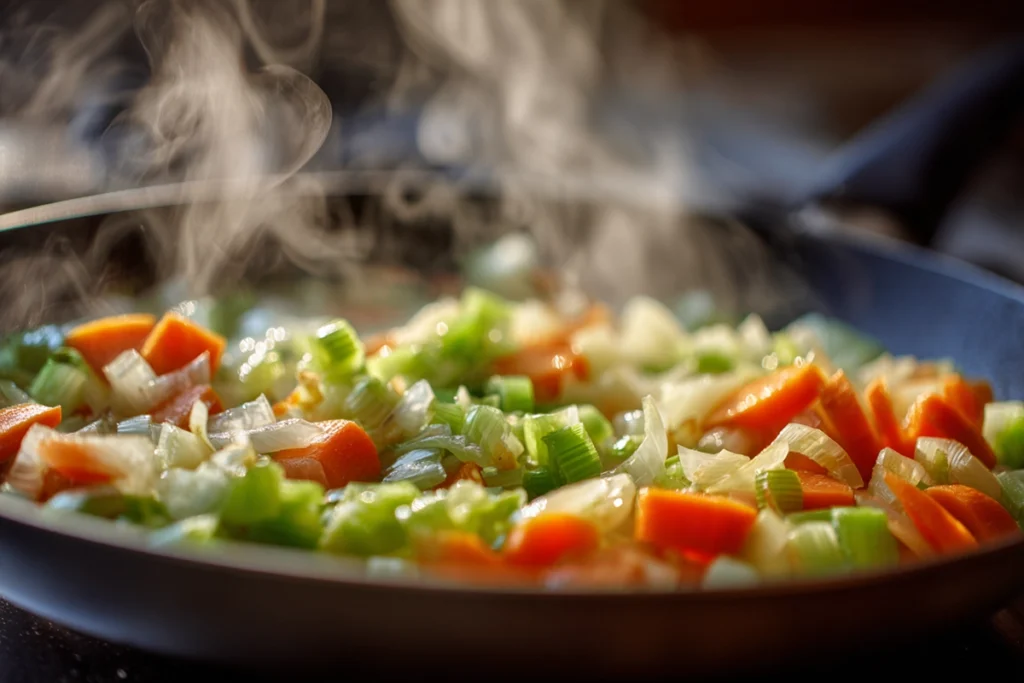
Once the vegetables go in, the sound changes. The sizzle softens into a steady hiss as onions release moisture. Watch for the onion to turn translucent rather than brown; the carrots should brighten slightly, and the potatoes should look glossy, not chalky. When the thyme warms, the kitchen should smell unmistakably “pot pie”—herbaceous and comforting, not sharp or grassy.
Letting the Vegetables Do the Heavy Lifting
After the broth and milk are added, the pot should settle into a gentle simmer, not a boil. You’re looking for small bubbles breaking the surface slowly. This is where patience matters. The potatoes should pierce easily with a fork, offering no resistance, while the cauliflower should feel soft enough to crush between your fingers. That texture is what allows the soup to thicken naturally later.
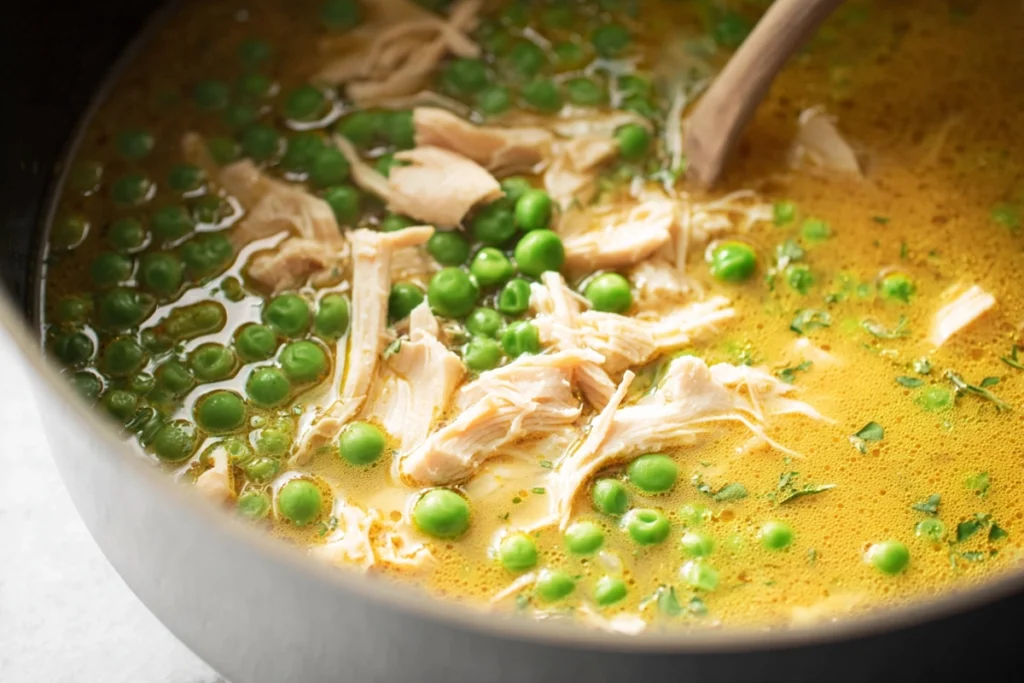
When part of the soup is blended, the visual change is immediate. The mixture turns pale and velvety, with a sheen that clings lightly to the spoon. When stirred back into the pot, the soup should look unified—no separation, no graininess. As it finishes simmering, listen for a quiet burble and watch how the surface thickens slightly. When peas go in, they should stay bright green and tender, not dull or mushy. The smell at this point should be rounded and savory, signaling the soup is ready to be tasted and adjusted.
Healthy Chicken Pot Pie Soup: Common Trouble Spots
When the Soup Stays Thin
If the soup looks watery even after blending, it’s usually a texture issue, not a measurement one. This happens when the potatoes weren’t fully tender before blending. Visually, the soup will look glossy but loose, and when you rub a drop between your fingers it won’t feel silky. The fix is simple: let it simmer longer. You should hear a soft bubbling and see the soup slowly tighten as steam escapes.
When the Flavor Feels Flat
A flat soup often smells fine but tastes dull on the tongue. This usually comes from under-seasoning early or using broth that’s too mild. The solution isn’t just more salt at the end. Warm the soup gently, stir well, and let it sit for a minute before tasting again. The aroma should lift slightly, and the flavor should feel fuller once the salt has time to dissolve and distribute.
When the Blended Portion Turns Grainy
Graininess shows up visually as a slightly speckled texture instead of smooth creaminess. You’ll feel it immediately on the spoon. This usually means the soup was blended before the vegetables were soft enough, or the blender wasn’t run long enough. Blending until the mixture looks glossy and uniform—and feels smooth when rubbed between fingers—prevents this entirely.
These are small moments, but they’re the difference between a soup that’s “healthy” and one that’s genuinely satisfying.
Make It Fit Your Kitchen
Turning It Vegetarian or Vegan (Without Losing Body)
This soup holds up surprisingly well without chicken, but only if you replace it with something that adds structure. Chickpeas work best here. They keep their shape during simmering and add just enough bite to balance the creamy base. Canned is fine—rinse them well so the soup doesn’t taste starchy. Use a good vegetable broth, and expect the final flavor to be slightly sweeter and less savory than the chicken version. It’s still comforting, just different.
Adding More Vegetables Without Diluting Flavor
If you want a heartier bowl, mushrooms are the safest addition. Baby bellas sautéed with the onion add depth and a faint earthiness that fits the pot pie profile. Corn also works, but only if you’re not aiming for paleo or Whole30-style eating. Add it near the end so it stays snappy; you should hear a soft simmer and see the kernels stay bright, not dull.
Making It Richer (On Purpose)
If you’re not chasing a lighter finish, whole milk or a splash of half-and-half will deepen the texture. Keep it restrained. You should feel the soup coat the spoon more heavily, but it shouldn’t leave a greasy film on your lips. Skip pre-shredded cheese if you’re tempted—this soup is meant to be smooth, not stringy.
Serving and Saving This Soup
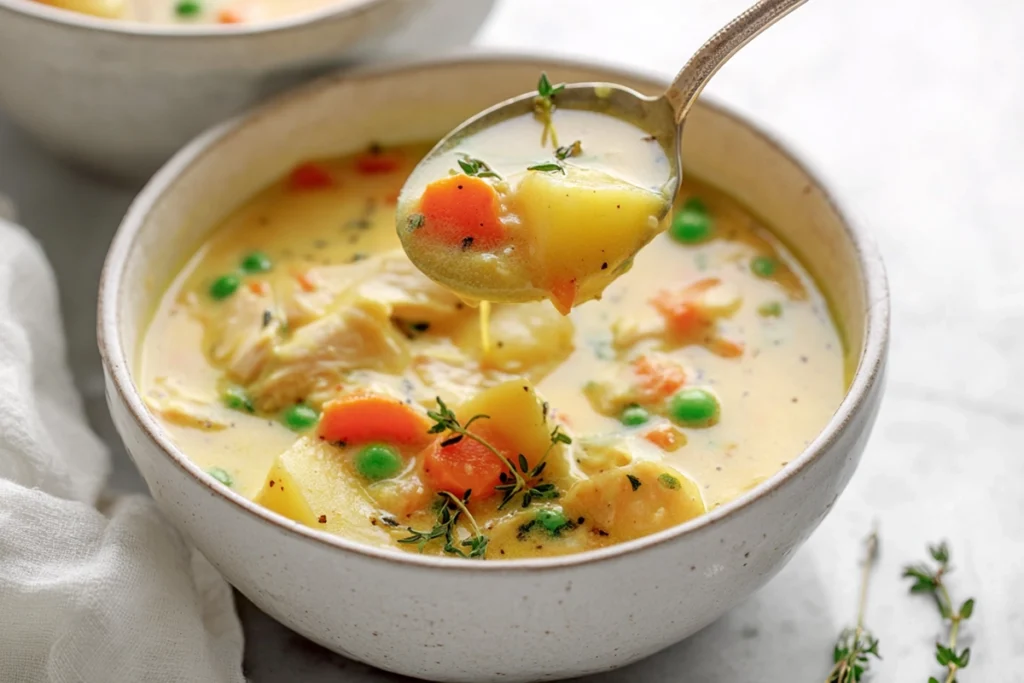
I usually eat this soup hot, in a wide bowl, with something simple on the side. Plain biscuits or seeded crackers work best because they soak without falling apart. When the soup is ready, it should steam gently and smell rounded and savory—if it smells sharp, it needs another minute or two.
For storage, this soup does well in the fridge for up to four days. It thickens as it sits, which is normal. When reheating, add a small splash of broth or milk and warm it slowly. You want to hear a quiet bubble, not a boil, or the texture can turn grainy.
This soup freezes well, but portion it first. Freeze it in individual containers so you’re not trying to thaw a solid block later. Thaw overnight in the fridge, then reheat gently. Stir often and watch for the soup to smooth out as it warms.
A Lighter Take on a Classic Comfort Bowl
This Healthy Chicken Pot Pie Soup keeps everything you love—the aroma, the creaminess, the comfort—without relying on heavy shortcuts. It’s the kind of recipe that proves small choices and careful timing make all the difference, especially when you want something cozy you can come back to again and again.
Get inspired with more mouthwatering recipes! Follow me on Pinterest for new cooking ideas every week.
Frequently Asked Questions
Can I make this soup ahead of time?
Yes. This soup is actually better after it rests for a few hours. The flavors settle and the texture thickens slightly. Just store it in the fridge and reheat gently with a splash of broth or milk to loosen it back up.
Does this soup freeze well?
Yes, it freezes very well. Portion it before freezing so you’re not trying to thaw a solid block later. When reheating, warm it slowly and stir often until the texture smooths back out.
Can I use rotisserie chicken instead of raw chicken?
You can, but add it at the very end. Rotisserie chicken is already cooked, so simmering it too long will dry it out and dull the flavor. The soup will still be good—just slightly less clean-tasting than when cooking the chicken fresh.
Why does my soup taste bland even after adding salt?
This usually happens when the soup hasn’t simmered long enough after seasoning. Let it cook gently for a few more minutes, then taste again. Salt needs time to dissolve and distribute before the flavor fully shows up.
Can I skip blending the soup?
You can, but it won’t be creamy. Blending part of the soup is what gives it that pot pie–style thickness without cream. If you skip this step, expect a brothy vegetable soup instead.
Is this soup filling enough for dinner?
Yes. Between the chicken, potatoes, and blended vegetables, it’s more substantial than it looks. Served with biscuits or crackers, it’s a complete, satisfying meal.
PrintHealthy Chicken Pot Pie Soup

Healthy Chicken Pot Pie Soup made creamy without cream. Cozy, nourishing comfort food with chicken and vegetables, ready in under 45 minutes.
- Prep Time: 15 minutes
- Cook Time: 30 minutes
- Total Time: 45 minutes
- Yield: 4 servings 1x
- Category: Soup
- Method: Baking
- Cuisine: American
- Diet: Gluten-Free
Ingredients
- 1 tablespoon olive oil
- 1 1/2 pounds boneless skinless chicken breast
- Salt
- Black pepper
- 1/2 tablespoon olive oil
- 1 white onion
- 2 large carrots
- 3 cups Yukon gold potatoes
- 3 cups cauliflower florets
- 1 teaspoon dried thyme
- 2 cups unsweetened milk
- 3 cups low sodium chicken broth
- 1/2 teaspoon salt
- 1 cup frozen peas
Instructions
- Heat oil in a large pot over medium-high heat.
- Cook diced chicken until just cooked through; remove and set aside.
- Sauté onion, carrots, potatoes, cauliflower, and thyme in the same pot.
- Add milk, broth, salt, and pepper; simmer until vegetables are fork tender.
- Blend part of the soup until smooth and return to the pot.
- Stir in chicken and peas and simmer until thickened.
Notes
- Store leftovers in the fridge up to 4 days.
- Freeze in individual portions for best results.
- Reheat gently with a splash of broth or milk.
Nutrition
- Serving Size: 1 bowl
- Calories: 360
- Sugar: 7
- Sodium: 680
- Fat: 11
- Saturated Fat: 2
- Unsaturated Fat: 8
- Trans Fat: 0
- Carbohydrates: 28
- Fiber: 5
- Protein: 32
- Cholesterol: 85