
Chicken Crescent Bake That Never Lets Me Down

The Weeknight Crescent Roll That Saves Dinner
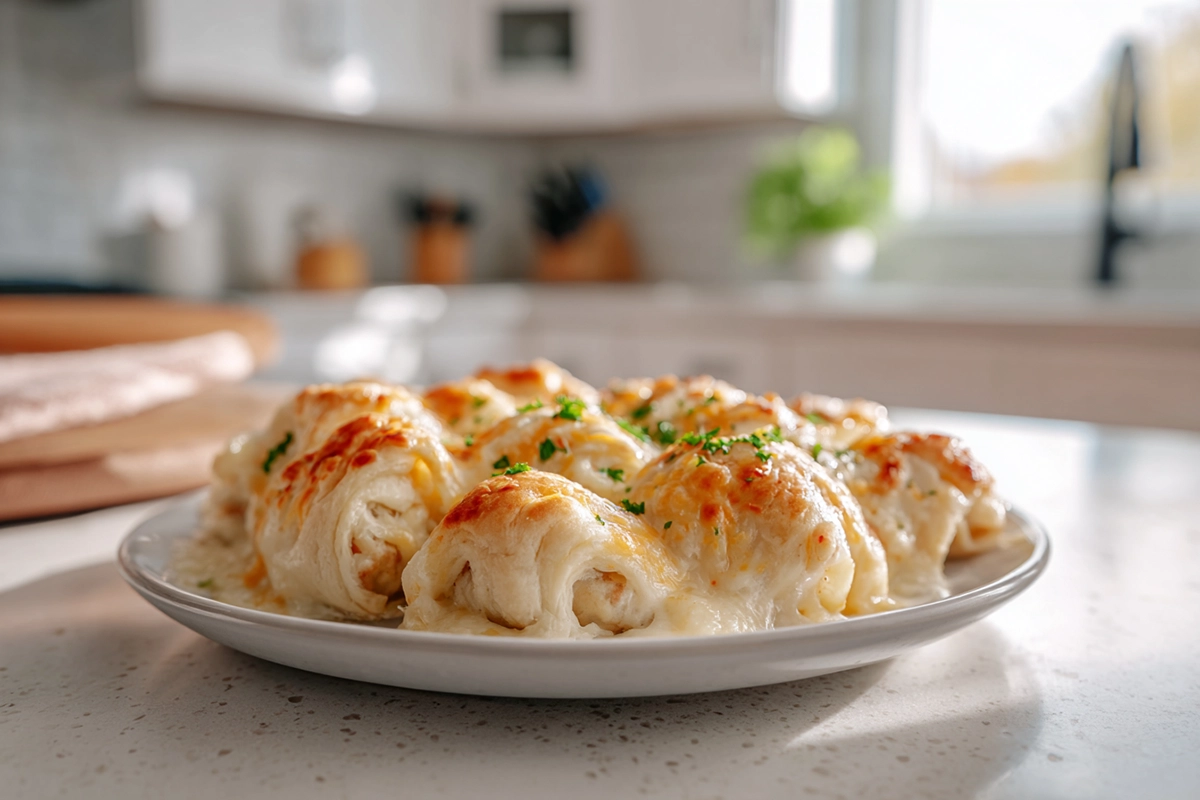
The smell that tells you this Chicken Crescent Bake is working hits about ten minutes before it’s done—warm butter, toasted dough, and that creamy, savory chicken filling that somehow feels like comfort food and a shortcut at the same time. This is the kind of dinner that pulls people into the kitchen without you saying a word, which is exactly what you want on a busy weeknight.
Most versions of this recipe fail in one of two ways. Either the crescents turn pale and soggy because they’re drowned in sauce, or the filling turns dense and gluey because everything gets overmixed and overheated. Some recipes act like all crescent bakes are foolproof. They’re not. Dough is delicate. Cream cheese can betray you. And canned soup—used wrong—can ruin texture fast.
Here’s my promise: this version works because it respects how each ingredient behaves in the oven. The filling stays creamy instead of stiff, the crescent tops actually brown, and the sauce supports the bake instead of smothering it. Nothing fancy, no chef tricks—just a method that understands why this dish is supposed to feel easy and satisfying.
Table of Contents
The No-Regret Ingredients
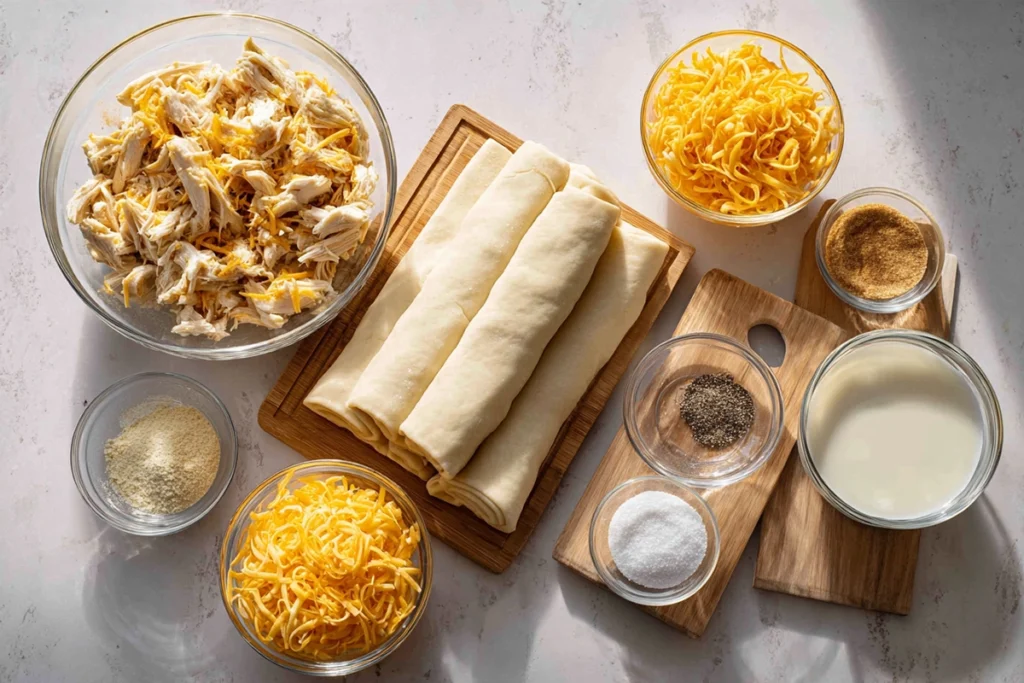
Crescent Rolls
Use regular, standard crescent rolls—nothing “buttery deluxe” or extra thick. The thinner layers seal better and brown faster, which matters when the filling is already cooked. I’ve tested the fancy ones; they look good on the package and disappoint in the oven.
Cooked Chicken
This is where leftovers shine. Rotisserie chicken works beautifully, but keep the pieces shredded—not chopped—so they stay tender. Dry, chunky chicken is the fastest way to make this casserole feel heavy.
Cream Cheese
Full-fat only, and truly softened. Low-fat versions break and turn grainy once baked, and cold cream cheese never blends smoothly. I take this one personally—texture starts here.
Mozzarella Cheese
Mozzarella gives you melt without grease. Pre-shredded is fine on a weeknight, but skip fresh mozzarella—it releases too much moisture and throws off the filling.
Parmesan or Romano
This is about salty sharpness, not melt. A small amount on top helps the crescents brown and adds flavor without weighing them down. The cheap green-can stuff is perfectly acceptable here.
Cream of Chicken Soup
Canned is the right call. Homemade sounds noble but changes the thickness and salt balance. This ingredient is doing structural work, not showing off.
Milk
Whole milk gives the sauce enough body without making it heavy. Anything thinner and the sauce runs; anything thicker and it risks coating the dough instead of pooling around it.
Seasonings
Instant minced onion, garlic powder, salt, and pepper keep things simple and even. Fresh onion adds moisture and sharpness you don’t want here—this is one place where pantry seasonings win.
The Process (How This Bake Actually Comes Together)
Sealing the Filling Without a Mess
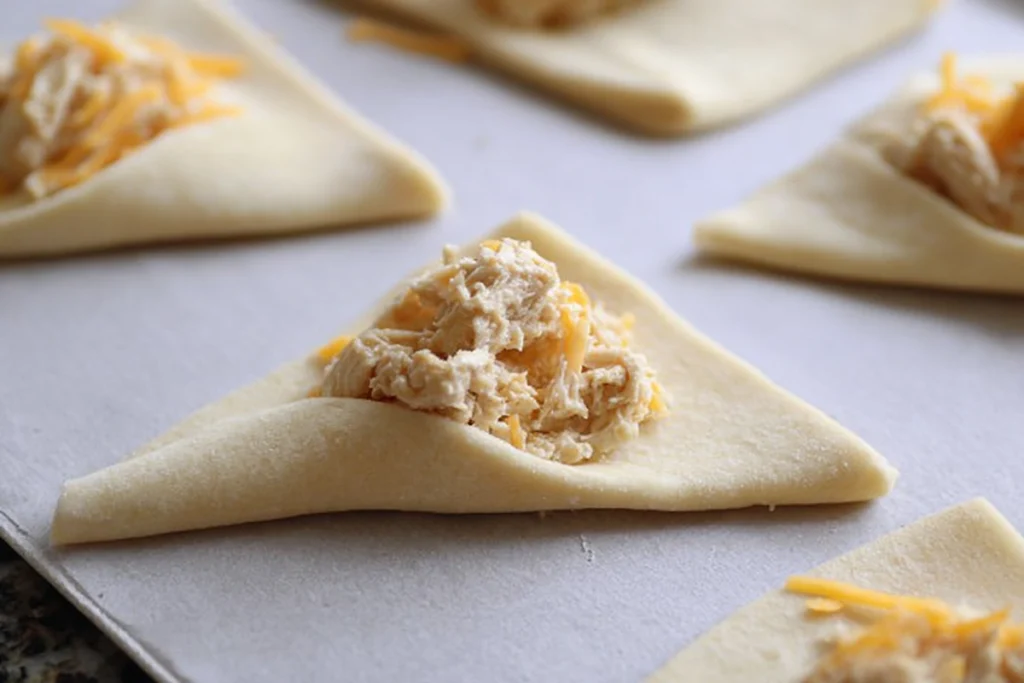
This bake lives or dies at the rolling stage. When you spoon the filling onto the wide end of the crescent, you’re aiming for control, not generosity. The dough should feel cool and slightly tacky in your hands—like a Post-it note that still sticks, not wet like glue. As you roll, look for the dough to stretch just enough to wrap without tearing. If you hear a faint crackle from the layers separating, that’s normal. If you see filling squeezing out the sides, stop and pinch it shut.
By the time each roll is sealed, it should look smooth and snug, not swollen. The surface should feel dry to the touch, not slick. That dryness is what lets the top brown later instead of steaming itself pale.
Sauce Placement Is the Whole Game
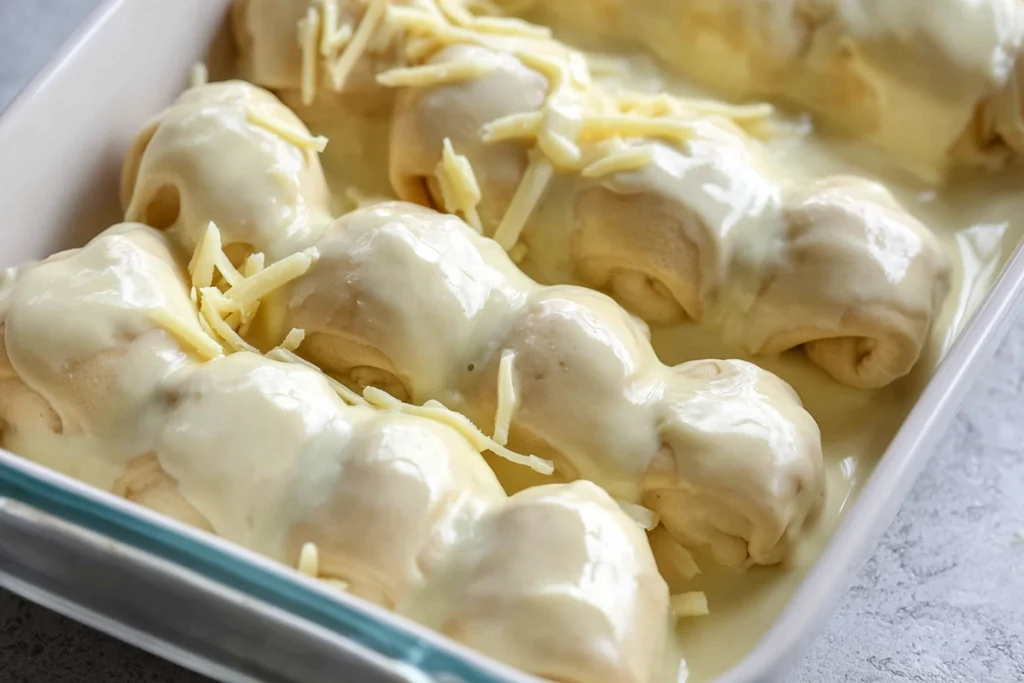
Once the rolls are in the dish, the sauce goes around them—not on top. Visually, you should still see bare dough all the way across the surface. If the rolls disappear under the sauce, you’ve already lost crispness. The sauce should sit quietly in the gaps, not slosh over when you nudge the pan.
As it bakes, you’ll hear a gentle bubbling sound from the sauce while the tops stay exposed. That’s what you want: steam rising from below, dry heat hitting the dough above. The smell shifts about halfway through—from raw dough to toasted butter—and that’s your cue that things are on track.
Knowing When It’s Actually Done
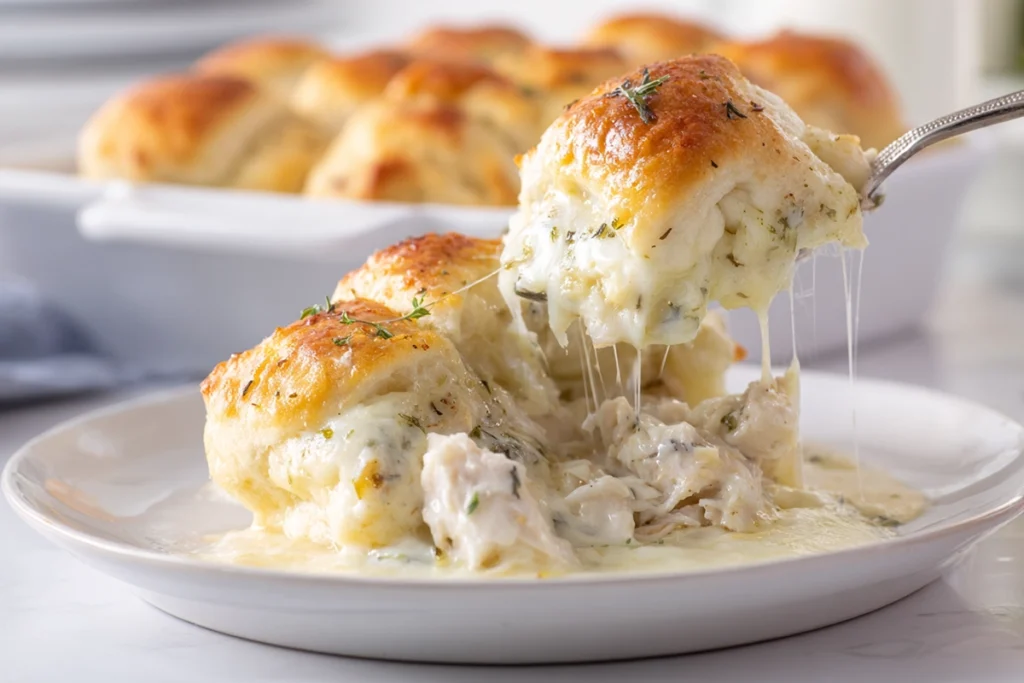
Don’t trust the clock alone. Look for deep golden peaks on the crescent tops, especially along the seams. Pale beige means underdone. Touch the top lightly—it should feel firm and lightly crisp, not soft or spongy. You’ll smell nutty cheese and toasted dough, not just hot dairy.
When you pull it from the oven, the sauce should be bubbling gently around the edges, not violently boiling. That quieter simmer tells you it’s thickened, not broken. Letting it rest calms everything down before serving.
The Uh-Oh Moments (Where People Usually Mess This Up)
Why Are My Crescents Pale and Soggy?
I did this once by pouring sauce right over the rolls because I thought “more coverage equals more flavor.” Wrong. What you end up with is steamed dough that never gets hot enough to brown. The fix is visual: if you can’t see dough before it goes in the oven, scrape the sauce off. My oven runs cool, so I also keep an oven thermometer inside—350°F on the dial isn’t always 350°F in reality.
Why Did My Filling Turn Stiff?
Cold cream cheese is the usual culprit. When it doesn’t blend smoothly, it sets into dense pockets once baked. The filling should feel soft and cohesive when you stir it—like thick frosting—not crumbly or tight. If it resists the spoon, it’s not ready yet.
Why Did Everything Leak Out?
Overfilling and lazy sealing. I learned this the hard way after scrubbing baked-on cheese from a pan. If the dough feels stretched thin or you see filling peeking through seams, pinch it closed before baking. You want sealed parcels, not stuffed pillows.
Why Is the Bottom Mushy?
Too much liquid or a pan that’s too small. If the rolls are crowded, they trap steam underneath and never get a chance to set. You should hear bubbling, not boiling, and see sauce pooling—not drowning. Give them space to breathe.
That’s the groundwork. Once you understand why this bake behaves the way it does, the actual steps feel easy—and repeatable.
Make It Your Own (Without Wrecking It)
Cheddar & Savory
If you want a sharper, more “dinner-table” flavor, swap half the mozzarella for block cheddar and grate it yourself. Pre-shredded cheddar carries starch that keeps it from melting smoothly inside the rolls, and you’ll feel that graininess once it cools. The smell shifts from mild dairy to something toastier and deeper, and the filling firms up slightly—in a good way—as it rests.
Pepper Jack With Restraint
Pepper jack works, but only if you respect it. Use it for no more than half the cheese, or the oil separates and the filling turns slick instead of creamy. You’ll smell the heat bloom about halfway through baking; that’s your sign you didn’t overdo it. I keep the Parmesan on top no matter what—pepper jack alone doesn’t brown well.
Chicken & Broccoli (The Dry Rule)
This one only succeeds if the broccoli is cooked and squeezed bone-dry. I mean press-it-in-a-towel dry. Any moisture trapped inside will steam the dough from the inside out. When done right, you get a soft, almost casserole-like interior with a surprisingly crisp shell, and it smells like a weeknight dinner that actually tried.
Gluten-Free Reality Check
Gluten-free crescent-style dough exists, but it behaves differently. It browns slower and firms up faster, so expect a denser bite. I brush the tops lightly with oil to help color develop and let them rest longer after baking so the structure sets instead of crumbling.
Serving & Storing (How This Fits Real Life)
I eat these warm, straight from the pan, usually with nothing more than a quick green salad and a little salt on top. They’re rich, so something crisp on the side balances it out. Let them sit for five minutes before serving—touch the top and wait until it’s firm but not scorching, or the filling will spill.
For leftovers, the fridge is fine for a day or two, but bread dries out fast in cold air. If you’re planning ahead, freeze them instead. Let them cool completely, then wrap each roll tightly. Don’t stack them bare—they’ll fuse together into one frozen regret.
Reheating matters. The microwave will warm them, but the crescent goes soft. The air fryer at moderate heat for a few minutes brings the crisp back—you’ll hear the outside crackle again and smell that buttery dough revive. The oven works too, just slower.
This Chicken Crescent Bake is the kind of dinner that earns repeat status because it smells right, looks right, and doesn’t fight you on a busy night. When the dough browns, the filling stays creamy, and the kitchen smells like comfort, you know you’ve got a keeper.
Get inspired with more mouthwatering recipes! Follow me on Pinterest for new cooking ideas every week.
Frequently Asked Questions
Can I use rotisserie chicken for Chicken Crescent Bake?
Yes—and it’s actually ideal. Rotisserie chicken is already seasoned and stays tender once baked. Just shred it, don’t chop it, so it blends into the filling instead of turning chunky and dry.
Can I assemble this ahead of time?
Yes, but with limits. You can assemble it up to 6 hours ahead, cover tightly, and refrigerate. Any longer and the dough starts absorbing moisture and loses its ability to brown properly.
Why didn’t my crescent tops brown?
Either the sauce touched the dough or your oven runs cooler than the dial says. The tops must stay exposed, and if your oven is unreliable, an oven thermometer is worth the drawer space.
Can I freeze Chicken Crescent Bake?
Yes, but freeze the rolls after baking and cooling, not before. Wrap them individually. Freezing raw crescent dough with filling inside leads to split seams and a gummy texture after baking.
Can I use crescent dough sheets instead of triangles?
You can, but you’ll need to cut and portion carefully. The benefit is fewer seams, but if you roll them too thick, the centers won’t bake through before the outside browns.
How do I keep the bottoms from getting soggy?
Use the correct pan size and don’t overcrowd. The sauce should pool, not flood. If the rolls are touching or swimming, steam gets trapped underneath and softens the bottoms.
PrintCheesy Chicken Crescent Bake
A creamy, comforting chicken dinner made with flaky crescent rolls, tender cooked chicken, and a rich cheese sauce baked until golden and bubbly.
- Prep Time: 10 minutes
- Cook Time: 30 minutes
- Total Time: 40 minutes
- Yield: 4 servings 1x
- Category: Dinner
- Method: Baking
- Cuisine: American
- Diet: Halal
Ingredients
- 2 cups cooked chicken, shredded or chopped
- 1 can (8-count) refrigerated crescent rolls
- 1 can (10.5 oz) cream of chicken soup
- 1/2 cup milk
- 1 cup shredded cheddar cheese, divided
- 1/2 teaspoon garlic powder
- 1/2 teaspoon onion powder
- 1/4 teaspoon black pepper
- Nonstick cooking spray
Instructions
- Preheat the oven to 375°F and lightly grease a 9×13-inch baking dish.
- Unroll the crescent dough and separate it into triangles.
- Place a small amount of chicken and a sprinkle of cheese at the wide end of each triangle.
- Roll each crescent up from the wide end and place seam-side down in the baking dish.
- In a bowl, whisk together the soup, milk, garlic powder, onion powder, and black pepper until smooth.
- Pour the sauce evenly over the crescent rolls.
- Sprinkle the remaining cheese over the top.
- Bake for 25–30 minutes until golden brown and bubbly.
- Let rest for 5 minutes before serving.
Notes
- Use rotisserie chicken for convenience and extra flavor.
- Do not overfill the crescents to prevent sogginess.
- Let the casserole rest briefly before serving so the sauce thickens.
Nutrition
- Serving Size: 1 serving
- Calories: 420
- Sugar: 4g
- Sodium: 780mg
- Fat: 24g
- Saturated Fat: 12g
- Unsaturated Fat: 10g
- Trans Fat: 0g
- Carbohydrates: 28g
- Fiber: 2g
- Protein: 22g
- Cholesterol: 75mg