
The Spring Blossom Cookies I Actually Trust

Spring Blossom Cookies should smell like butter and flowers the second you crack the oven door—not like vanilla sugar pretending to be fancy. If you’ve ever baked a batch that looked pretty but tasted flat, or worse, like potpourri, you already know the problem. These cookies are supposed to feel light, soft, and calm—like spring itself—but most recipes miss that balance entirely.
Here’s what usually goes wrong. A lot of spring cookie recipes lean too hard on extracts, skip chilling, or crank the oven too hot. You end up with cookies that spread too much, brown too fast, or taste aggressively floral in a way that feels artificial. Others focus so much on decoration that they forget texture—dry centers, crumbly edges, and zero payoff after the first bite.
This version is different, and not because it’s fancy. It works because it’s controlled. The fat is right, the sugar is boring on purpose, and the floral notes are treated like seasoning, not the main character. I’m not promising magic—I’m promising predictability. If you follow the ingredient choices here, you get cookies that stay soft, hold their shape, and taste intentional. No guessing. No regrets.
Table of Contents
The No-Regret Ingredients (Read This Before You Shop)
Unsalted Butter
This is non-negotiable. Real unsalted butter gives you flavor and structure, and it melts the way these cookies need it to. Skip margarine or spreads—they add water, wreck the crumb, and flatten the flavor. I stick with store-brand European-style butter if available, but standard butter still works fine.
Granulated Sugar
Plain white sugar is exactly what you want here. It sweetens without stealing attention and helps the cookies hold their shape. Fancy sugars add moisture and color you don’t want in a pale, spring-style cookie.
Eggs
Use large eggs at room temperature. Cold eggs fight the butter and mess with emulsification, which affects texture more than people realize. This isn’t a place to cut corners.
All-Purpose Flour
Standard all-purpose flour is ideal. Bread flour makes these too chewy, cake flour too fragile. Measure carefully—extra flour is the fastest way to dry cookies out.
Floral Extract (Orange Blossom, Rose, or Lavender)
This is where restraint matters. Use a quality extract and use less than you think. Cheap extracts taste sharp and fake; good ones taste soft and round. This ingredient is seasoning, not perfume.
Citrus Zest
Fresh lemon or orange zest gives lift and keeps the floral notes from tasting flat. Dried zest doesn’t cut it—fresh oils make a real difference here.
Fine Sea Salt
A small amount sharpens everything else. Without it, these cookies taste sweet but dull. Don’t skip it.

The Process: How These Cookies Stay Soft and Pretty
Building the Base Without Overworking It
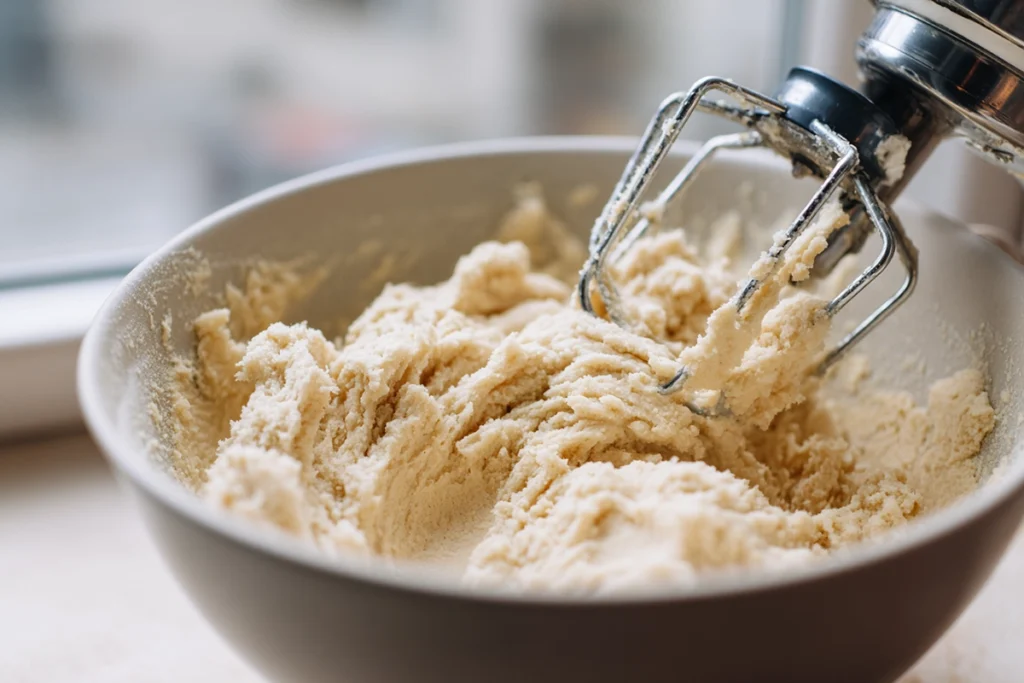
This starts with butter that’s soft but not greasy. When you mix it with the sugar, you’re looking for a pale, fluffy mass that looks almost whipped—lighter in color, slightly matte, and quiet in the bowl. If you hear sloshing or see shine, the butter’s too warm. Touch it with a finger: it should feel creamy and cool, not slick or oily.
Once the eggs go in, the mixture should tighten up and look smooth, almost satin-like. The smell here is subtle—mostly butter and sugar—but clean. If it smells eggy or broken, it’s usually because something was too cold or too rushed. Slow down. This stage sets the structure.
Adding the Dry Ingredients Without Killing the Texture
When the flour goes in, everything changes fast. The dough should come together softly and look uniform, not shaggy or dusty. You’re watching for a dough that holds its shape when pressed but still feels tender—think Play-Doh that’s been sitting out for a minute, not stiff modeling clay.
Touch matters here. If it sticks aggressively to your fingers like glue, you’ve gone too far or measured heavy. The smell should still be buttery with a hint of citrus, not raw flour. Stop mixing the moment it looks combined. Any more, and you’re baking toughness into something meant to be delicate.
Why Chilling Isn’t Optional Here
Once the dough is mixed, it needs rest. Chilled dough feels firmer, slightly cool, and easier to handle, but not rock hard. When you scoop it later, it should resist just a bit before yielding—like pressing a thumb into cold butter.
This rest does two things: it lets the flour hydrate fully, and it keeps the cookies from spreading into flat discs. When chilled properly, the dough smells more cohesive too—the floral notes calm down and blend instead of jumping out.
The Uh-Oh Moments (I’ve Made These Mistakes So You Don’t Have To)
Why Do My Cookies Taste Like Soap?
This is almost always too much floral extract. The smell is your warning sign—if the dough smells sharp or perfumey instead of gentle and sweet, you’ve crossed the line. Unfortunately, you can’t fully fix this once it happens. That’s why I always start small and let the dough rest before judging. Floral flavors intensify as they sit.
Why Did My Cookies Spread Too Much?
Warm dough and a warm kitchen are the usual culprits. If the dough feels soft and glossy in your hands, it’s not ready. Proper dough should feel cool and slightly firm, not squishy. I learned this the hard way during a spring bake when the room was warm—every tray turned into a pancake. Chill longer than you think you need.
Why Are They Pale and Dry at the Same Time?
This one’s sneaky. A cool oven dries cookies out before they set. My oven runs cool, and the first batch came out chalky-looking with no color. Get an oven thermometer. These cookies should look set with barely-there color and smell like butter and citrus, not toasted sugar.
Why Did Mine Turn Dense?
Overmixing after the flour goes in. The dough will tell you when to stop—visually smooth, soft to the touch, and quiet in the bowl. If you hear slapping or feel resistance when stirring, you’ve already gone too far. I’ve ruined batches thinking “just a few more turns” wouldn’t matter. It does.
Make It Your Own (But Don’t Ruin Them)
Lemon–Lavender Spring Cookies
This is the cleanest variation if you want something unmistakably “spring” without drifting into soap territory. Use fresh lemon zest and culinary-grade lavender, crushed between your fingers until you smell it bloom. If you can smell lavender across the room, you’ve already used too much. These bake up with a soft citrus aroma and a floral finish that feels calm, not loud.
Orange Blossom & Almond
This one feels elegant without being fussy. Orange blossom extract pairs naturally with almond, but it only works if you use real almond extract—not imitation. The dough should smell warm and slightly nutty, not sharp. I like this version for weddings or showers because it tastes familiar even if people can’t name the flavor.
Rose with Vanilla Sugar
If you want rose, commit—but gently. Swap part of the granulated sugar for vanilla sugar and use a very restrained amount of rose extract. The sugar rounds the flavor and keeps it from tasting old-fashioned or dusty. Texture stays the same, but the aroma is softer and more dessert-like.
Gluten-Free (Real Talk)
A good 1:1 gluten-free flour works, but expect a denser cookie with less spread. The dough will feel slightly grainy to the touch and less elastic. I recommend a longer chill and baking them just until set—don’t chase color. They won’t be identical, but they’ll still be good.
Serving & Storing (How This Works in Real Life)
I like these slightly warm, once the centers have set but the edges are still tender. The aroma is strongest about ten minutes after baking, and that’s when they feel most “spring-like.” For special occasions, I serve them plain—no icing—so the flavor stays clean.
For storage, keep them in an airtight container at room temperature. The fridge dries them out fast; cookies don’t belong there. They hold well for three days and actually get a little softer on day two.
If you’re freezing, freeze the dough balls, not the baked cookies. Once frozen solid, transfer them to a bag and bake straight from frozen, adding a minute or two. You’ll thank yourself later when you need a fresh batch without the mess.
Final Thought
Spring Blossom Cookies are about restraint, not decoration—soft texture, gentle aroma, and flavors that feel intentional. When done right, Spring Blossom Cookies don’t just look like spring, they smell and taste like it too.
Get inspired with more mouthwatering recipes! Follow me on Pinterest for new cooking ideas every week.
Frequently Asked Questions
Can I make these Spring Blossom Cookies ahead of time for an event?
Yes—and you should. The dough actually benefits from resting. You can make it up to 48 hours ahead and keep it tightly wrapped in the fridge. If you need more time, freeze the dough balls and bake straight from frozen. Fresh-baked always beats baking days ahead.
Why did my cookies spread too much in the oven?
Nine times out of ten, the dough was too warm. If the dough feels soft and squishy instead of cool and slightly firm, it’s not ready. Chill longer than you think you need to, especially if your kitchen is warm. Warm dough equals flat cookies.
Can I use fresh flowers instead of floral extract?
I don’t recommend it. Fresh flowers are unpredictable and often bitter once baked. Extracts are controlled and consistent. If you insist on using flowers, they should be culinary-grade, finely ground, and used sparingly—but expect uneven results.
How do I keep the floral flavor subtle and not overpowering?
Use less than the bottle suggests and let the dough rest before judging. Floral flavors intensify as they sit. If the raw dough smells sharp or perfume-like, you’ve already gone too far. These cookies should smell soft and inviting, not aggressive.
Can I freeze the dough instead of the baked cookies?
Yes, and it’s the better option. Freeze the dough scooped into portions, then store in a freezer bag. Bake directly from frozen with a slightly longer bake time. Freezing baked cookies dulls the aroma, which matters a lot here.
Why are my cookies dry even though I followed the recipe?
Most likely overbaking or too much flour. These cookies should look pale and just set when they come out. If you wait for browning, they’re already drying out. Also make sure you’re spooning and leveling flour, not packing it in.
Print
Spring Blossom Cookies
- Prep Time: 10 minutes
- Cook Time: 7 minutes
- Total Time: 17 minutes
- Yield: 24 cookies 1x
- Category: Dessert
- Method: Baking
- Cuisine: American
- Diet: Vegetarian
Description
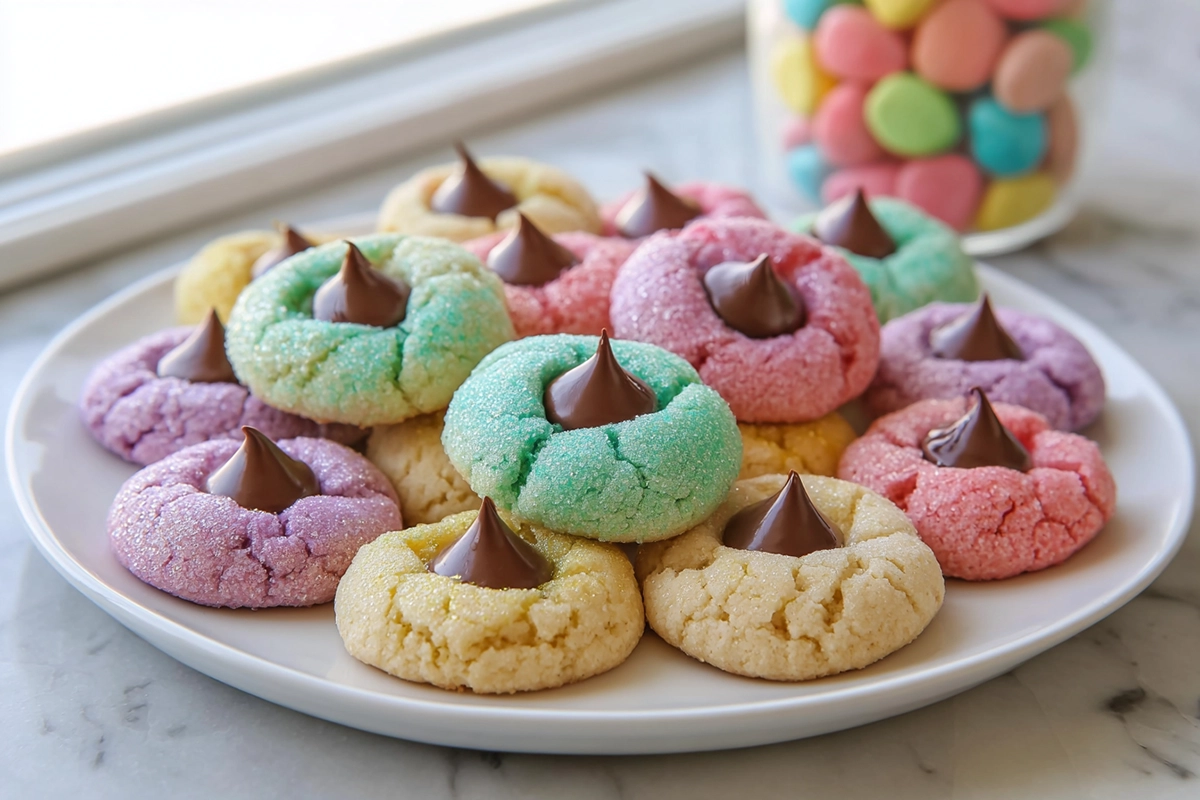
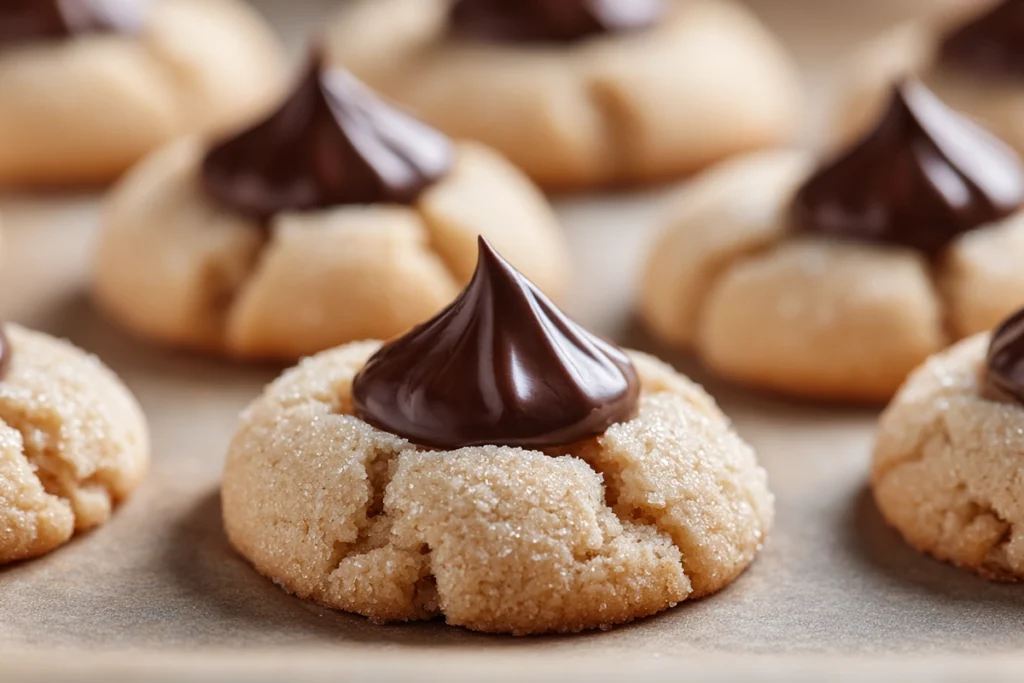
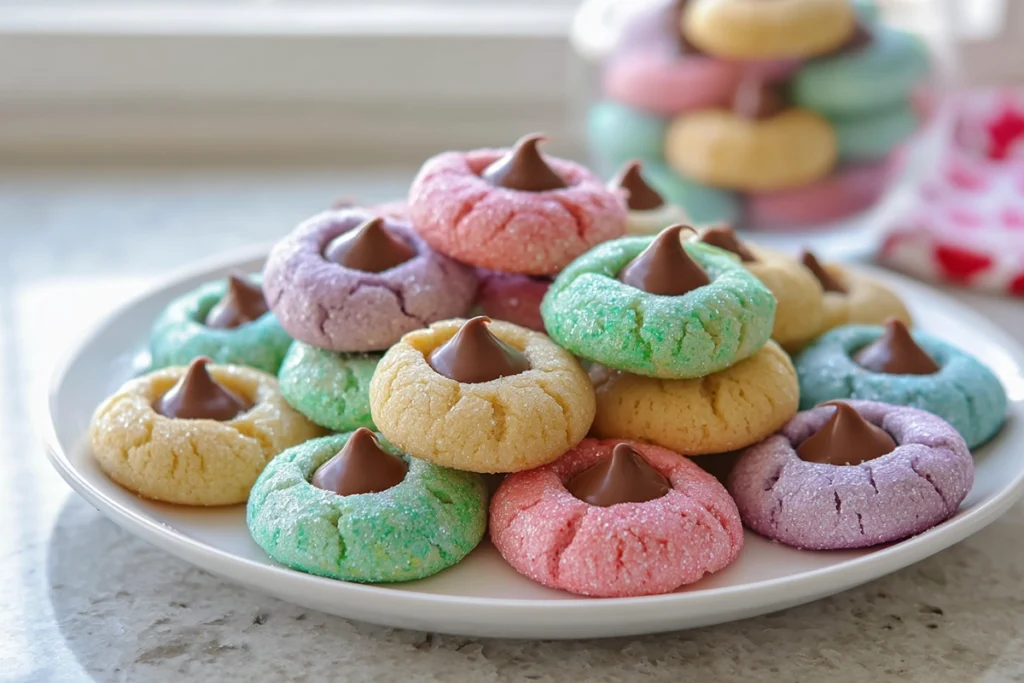
Soft and cheerful Spring Blossom Cookies made with a classic sugar cookie dough, rolled in pastel sanding sugar, and finished with a chocolate kiss. These cookies are quick to make, kid-friendly, and perfect for spring baking, Easter gatherings, or everyday treats.
Ingredients
- 1 cup granulated sugar
- 3/4 cup salted butter, softened
- 1 large egg
- 1 teaspoon vanilla extract
- 2 1/4 cups all-purpose flour
- 1 teaspoon baking soda
- Bright colored sanding sugar
- 24 Hershey’s Kisses, unwrapped
Instructions
- Preheat the oven to 375°F and line a baking sheet with parchment paper.
- Unwrap the chocolate kisses and set them aside so they are ready after baking.
- Beat the sugar and softened butter together until light and creamy.
- Add the egg and vanilla extract and mix until fully combined.
- In a separate bowl, whisk together the flour and baking soda.
- Gradually add the dry ingredients to the wet mixture and mix until a soft dough forms.
- Roll the dough into 1-inch balls, then roll each ball in sanding sugar.
- Place the dough balls on the prepared baking sheet with space between them.
- Bake for about 7 minutes until the edges are set but the centers are soft.
- Remove from the oven and immediately press a chocolate kiss into the center of each cookie.
- Let the cookies cool completely so the chocolate sets before serving.
Notes
- Do not overbake these cookies or they will lose their soft texture.
- If your kitchen is warm, chilling the dough for 15 minutes can help prevent spreading.
- You can use seasonal or flavored chocolate kisses for variation.
Nutrition
- Serving Size: 1 cookie
- Calories: 150
- Sugar: 12g
- Sodium: 95mg
- Fat: 7g
- Saturated Fat: 4g
- Unsaturated Fat: 2g
- Trans Fat: 0g
- Carbohydrates: 20g
- Fiber: 0g
- Protein: 2g
- Cholesterol: 25mg