
Healthy Sesame Chicken That Works Every Time

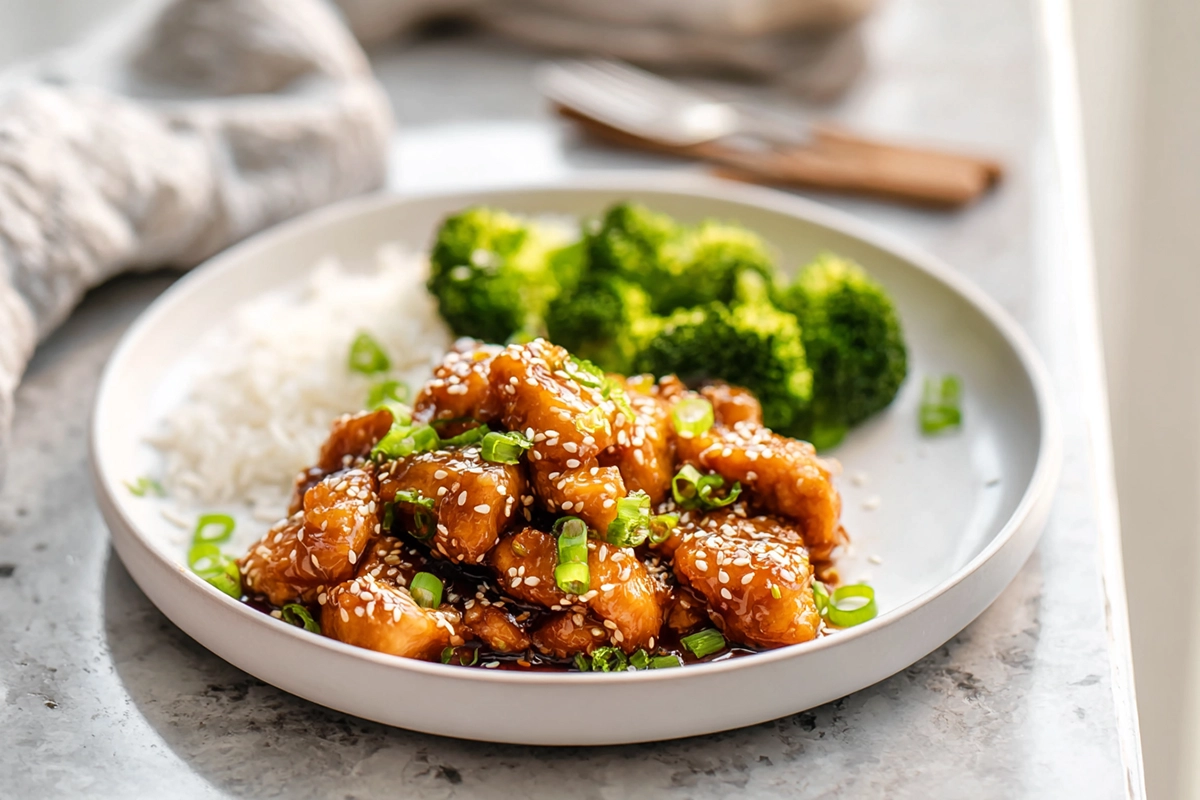
There’s a very specific moment when this dish comes together. The pan is hot, the sesame oil is fragrant without being smoky, and the chicken starts to sizzle instead of steaming. When the sauce goes in, it tightens just enough to coat each piece, glossy and aromatic, without turning heavy or sticky. That smell — warm sesame, garlic, and ginger — is what tells you this is going to be good before you even taste it.
What makes Healthy Sesame Chicken worth cooking at home isn’t just that it’s fast. It’s that it behaves predictably. This is the kind of recipe you can make after a long day without second-guessing the heat level or wondering if the sauce will break. Everything here is designed for a normal kitchen, a single pan, and realistic timing. No deep frying, no long marinades, and no guessing when to add what.
I’ve tested this style of sesame chicken enough times to know where it usually goes wrong: too much heat too early, sauce added before the chicken is ready, or ingredients that sound interchangeable but really aren’t. This version fixes those problems. It’s built to be repeatable, whether you’re cooking once or meal-prepping for the week. If you pay attention to the ingredients and why they’re used, the cooking part becomes straightforward — and that’s exactly the point.
Table of Contents
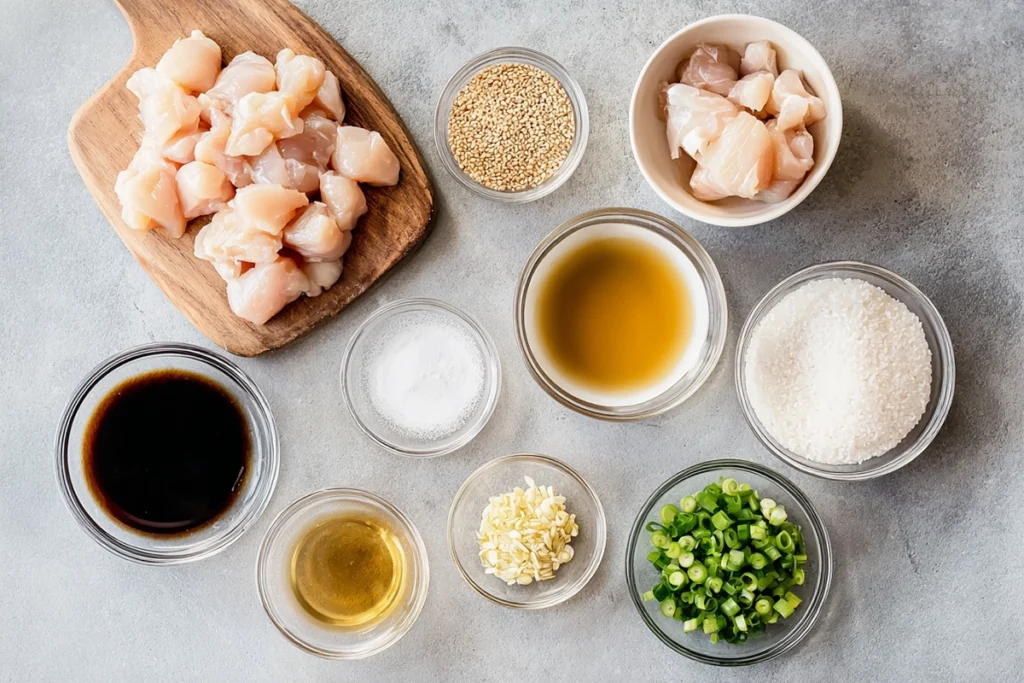
Ingredients That Make This Work
Chicken Thighs (or Chicken Breast)
Chicken thighs are my first choice here because they stay juicy under high heat and give you a little margin for error. Chicken breast works too if you want it leaner, but it needs closer attention — it cooks faster and dries out if pushed. Either way, cut the pieces evenly so they finish at the same time.
Toasted Sesame Oil
This is not just a cooking fat; it’s a flavor ingredient. Toasted sesame oil brings that nutty, unmistakable aroma that defines the dish. Regular vegetable oil won’t give you the same result, so if you only splurge on one thing, make it this.
Low-Sodium Soy Sauce
Use low-sodium here, even if you’re tempted not to. The sauce reduces slightly in the pan, and regular soy sauce can tip the whole dish into overly salty territory. Brand doesn’t matter much — consistency does.
Cornstarch
Cornstarch does two jobs at once: it helps the chicken brown properly and gives the sauce its light, glossy thickness. Store-brand cornstarch works perfectly fine. What matters is mixing it with cold water so it dissolves cleanly.
Honey
Honey adds balance, not sweetness for its own sake. It softens the saltiness of the soy sauce and rounds out the ginger and garlic. You don’t need a specialty honey — a basic squeeze bottle is ideal here.
Garlic, Ginger, and Sesame Seeds
Minced garlic and ground ginger build the base flavor quickly without long cooking. Sesame seeds are optional but recommended; they add texture and reinforce the sesame flavor without overpowering anything.
That’s everything you need — nothing extra, nothing wasted. The ingredients do the heavy lifting here, which is why choosing them thoughtfully makes the rest of the recipe work.
How This Healthy Sesame Chicken Comes Together in One Pan
Getting the Chicken Ready for the Pan
This dish moves fast once the pan is hot, so the chicken needs to be ready before you turn on the stove. After cutting it into even pieces, the coating should feel slightly dry to the touch, not pasty or wet. When you run your fingers through the bowl, the chicken shouldn’t clump together — each piece should stay separate. That dry surface is what lets the chicken sizzle instead of steam.
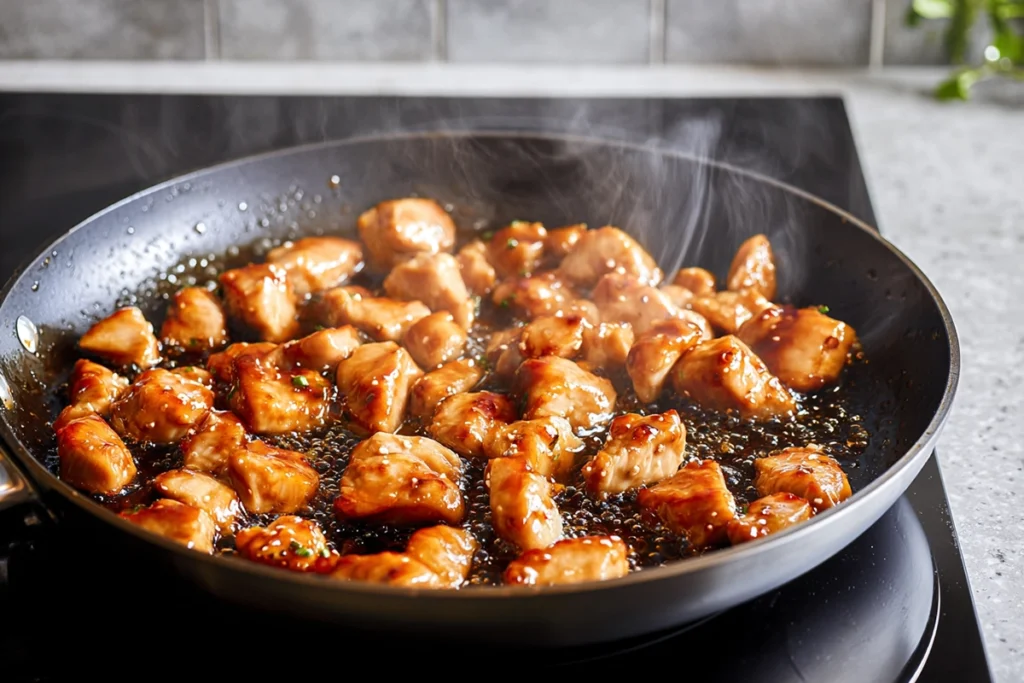
When the sesame oil hits the pan, listen for an immediate, confident sizzle. If it’s quiet, the pan isn’t hot enough yet. You’re looking for that first wave of aroma — nutty and warm, but not sharp or burnt. As the chicken cooks, the surface will turn opaque and then develop golden edges. Resist the urge to move it too soon. When it’s ready, it will release easily from the pan with a gentle nudge.
Building the Sauce Without Losing Control
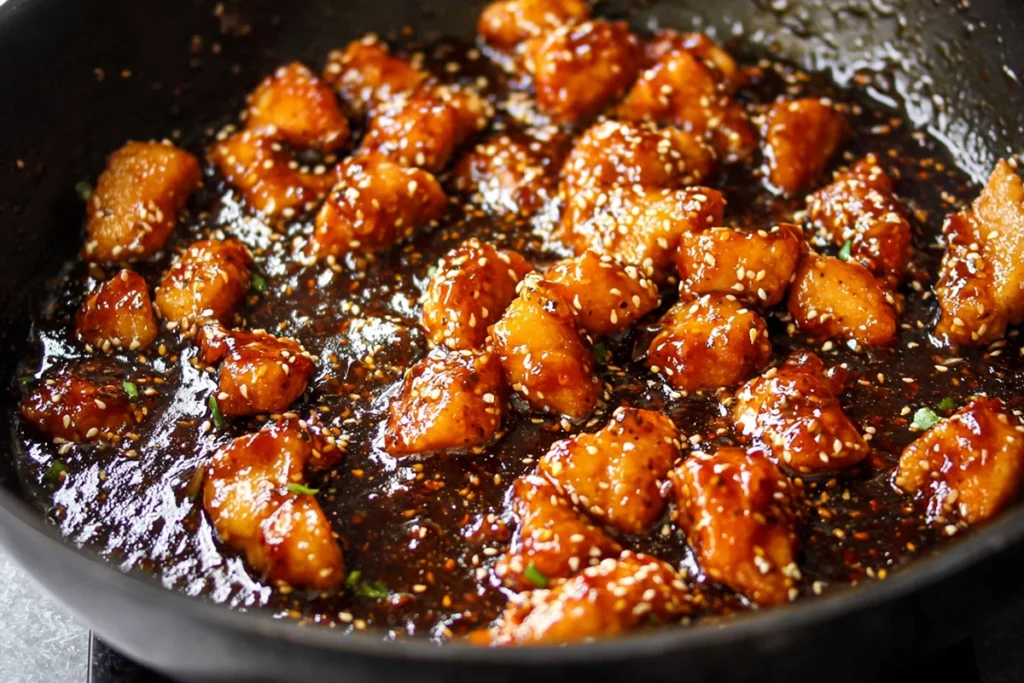
The sauce should already be mixed and smooth before it goes anywhere near heat. When it hits the pan, you’ll hear the sizzle soften and see small bubbles form almost immediately. That’s your cue to lower the heat. The smell should shift quickly — toasted sesame gives way to garlic and ginger, sweetened by honey, without any harshness.
As it simmers, watch the sauce cling to the chicken instead of pooling at the bottom. It should look glossy and fluid, not thick and dull. When you drag a spoon through the pan, the sauce should briefly expose the surface before flowing back in. That’s the point where everything is coated and ready, not overcooked.
Where Healthy Sesame Chicken Usually Goes Wrong
Sauce Thickening Too Fast
This is the most common issue. If the heat is too high when the sauce goes in, it tightens almost instantly and turns sticky instead of silky. You’ll notice it by sight first — the shine disappears and the sauce starts clumping around the chicken. The fix is immediate: lower the heat and add a small splash of water. You should hear a gentle hiss, not a loud sputter, and see the sauce loosen back up within seconds.
Chicken Browning Before It’s Cooked Through
If the pan is screaming hot from the start, the outside can brown while the inside stays underdone. You’ll feel it when you press a piece with tongs — it should feel firm but springy, not soft in the center. If it’s browning too fast, reduce the heat slightly and give it time. The smell should stay savory and nutty, never sharp or burnt.
Using the Wrong Oil
Using a neutral oil instead of toasted sesame oil changes the entire character of the dish. You’ll notice it right away in the aroma — flat instead of warm and nutty. If you ever smell garlic without that sesame note underneath, the flavor will feel incomplete. This recipe relies on that oil for identity, not just lubrication, and skipping it is one shortcut that actually costs you the result.
Make It Your Own
Swap Thighs for Chicken Breast
If you want this learner, chicken breast works — but it behaves differently. Cut it slightly larger than you think you should, because it tightens as it cooks. You’ll notice by touch that breast meat firms up faster than thighs, so pull the pan off the heat a little earlier. The flavor stays clean and light, but you lose some forgiveness if you overcook it.
Turn Up the Heat (Without Killing Balance)
If you like a real kick, add heat through hot sauce, not extra ginger. Ginger amplifies aroma, but too much turns sharp. A teaspoon more hot sauce deepens the spice while keeping the sauce glossy. You’ll smell the difference immediately — warm heat instead of nose-tingling spice.
Go Lower Sugar Without Going Flat
You can reduce the honey slightly if you’re watching sugar, but don’t remove it completely. Without it, the sauce smells one-dimensional and tastes salty instead of rounded. When reduced properly, the sauce should still look shiny and feel lightly sticky on the spoon, not dry.
Add Vegetables the Right Way
Broccoli or snap peas work well, but they need a quick head start. If they go in raw with the sauce, they release water and thin everything out. You’ll hear a hiss instead of a sizzle, which is your warning sign. Lightly steam or sauté them first so they stay crisp and don’t dilute the sauce.
Serving & Storing (Real Life)
I usually serve this warm over plain rice or cauliflower rice, nothing fancy. The sauce is bold enough that it doesn’t need competition. When I’m meal-prepping, I portion it with something neutral — rice, quinoa, or steamed vegetables — so the sesame flavor stays front and center instead of getting lost.
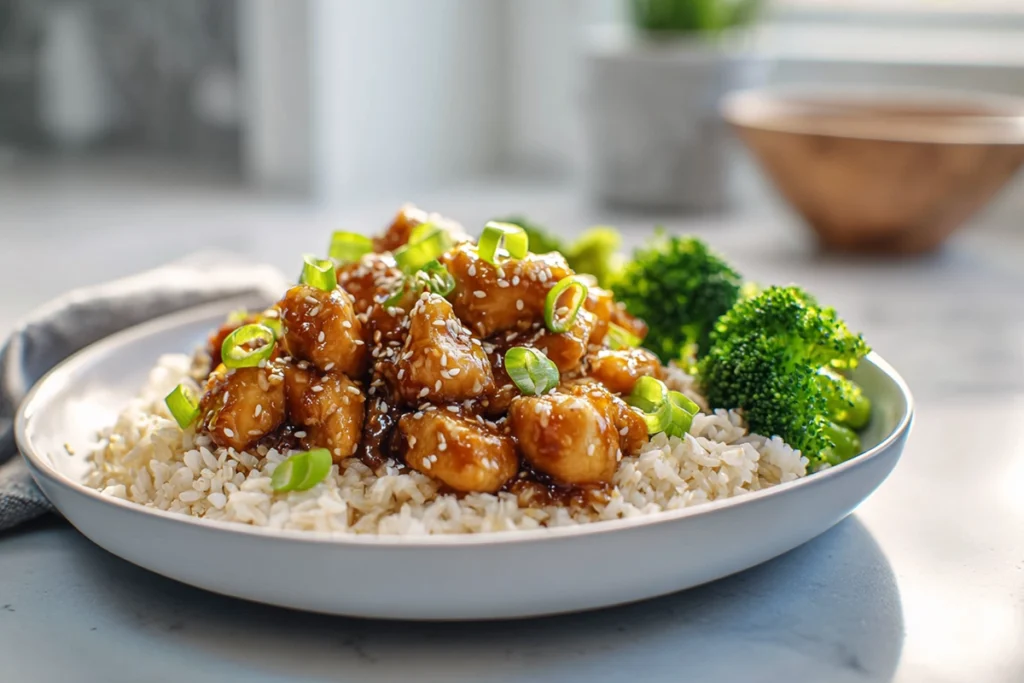
For storage, this keeps well in the fridge for up to four days. Let it cool completely before sealing it; trapping steam softens the texture and dulls the flavor. Freezing is possible, but slice or portion it first — reheating one solid frozen block never ends well.
To reheat, use a skillet or air fryer if you can. You should hear a light sizzle as it warms, not a wet steam. A microwave works in a pinch, but cover loosely and stop early so the chicken stays springy instead of rubbery.
In the end, this Healthy Sesame Chicken delivers the same thing every time: that toasted sesame aroma, glossy sauce, and chicken that stays tender. When the method and ingredients line up, dinner stops feeling like guesswork — and that’s the whole point.
Get inspired with more mouthwatering recipes! Follow me on Pinterest for new cooking ideas every week.
Frequently Asked Questions
Can I make this without sesame oil?
You can, but it won’t taste like sesame chicken. Toasted sesame oil is doing flavor work here, not just cooking. Without it, the dish loses that nutty aroma that defines it. If you must substitute, use a neutral oil to cook and finish with a small drizzle of sesame oil off heat, but expect a milder result.
Is this good for meal prep?
Yes. This recipe was tested with meal prep in mind. It keeps well in the fridge for up to four days, and the sauce stays glossy instead of breaking. Let it cool completely before sealing the container so condensation doesn’t water it down.
Can I use chicken breast instead of thighs?
Yes, and it works well if you’re careful. Chicken breast cooks faster and firms up sooner, so cut the pieces slightly larger and pull them off the heat earlier. If you wait for the same visual cues as thighs, the breast meat will be dry.
How do I keep the sauce from getting gummy?
Lower the heat as soon as the sauce goes into the pan. If it thickens too quickly and turns dull instead of shiny, add a tablespoon or two of water and stir gently. The sauce should loosen within seconds and coat the chicken smoothly.
Is this actually healthier than takeout sesame chicken?
Yes, mostly because it isn’t deep-fried and the sugar is controlled. This version uses a small amount of oil, measured honey, and low-sodium soy sauce. You get the same flavor profile without the heavy breading or excess sugar found in takeout.
Can I freeze Healthy Sesame Chicken?
Yes, but portion it first. Freeze it in individual servings so you’re not fighting a solid frozen block later. Thaw overnight in the fridge and reheat gently in a pan or air fryer. The texture holds up better than reheating from fully frozen.
PrintHealthy Sesame Chicken
Healthy Sesame Chicken made in one pan with tender chicken and a glossy sesame sauce. Ready in about 20 minutes and perfect for meal prep or weeknights.
- Prep Time: 6 minutes
- Cook Time: 12 minutes
- Total Time: 18 minutes
- Yield: 5 servings 1x
- Category: Dinner
- Method: No Bake
- Cuisine: American
- Diet: Gluten-Free
Ingredients
- 2 pounds chicken thighs
- 5 tablespoons low-sodium soy sauce
- 2 tablespoons honey
- 2 teaspoons minced garlic
- 1 1/2 teaspoons ground ginger
- 1 tablespoon sesame seeds
- 3 tablespoons cornstarch
- 2 tablespoons water
- 2 tablespoons toasted sesame oil
- Salt
- Black pepper
Instructions
- Cut chicken into even pieces and coat with cornstarch, salt, and pepper.
- Heat sesame oil in a pan over medium heat until fragrant.
- Add chicken and cook until golden and cooked through.
- Mix sauce ingredients until smooth.
- Lower heat, add sauce to pan, and simmer until thickened and glossy.
Notes
- Use low-sodium soy sauce to control saltiness.
- Lower heat before adding sauce to prevent it from thickening too fast.
- Chicken breast can be used but cooks faster than thighs.
Nutrition
- Serving Size: 1 plate
- Calories: 333
- Sugar: 7
- Sodium: 640
- Fat: 15
- Saturated Fat: 3
- Unsaturated Fat: 11
- Trans Fat: 0
- Carbohydrates: 12
- Fiber: 0.2
- Protein: 37
- Cholesterol: 140