
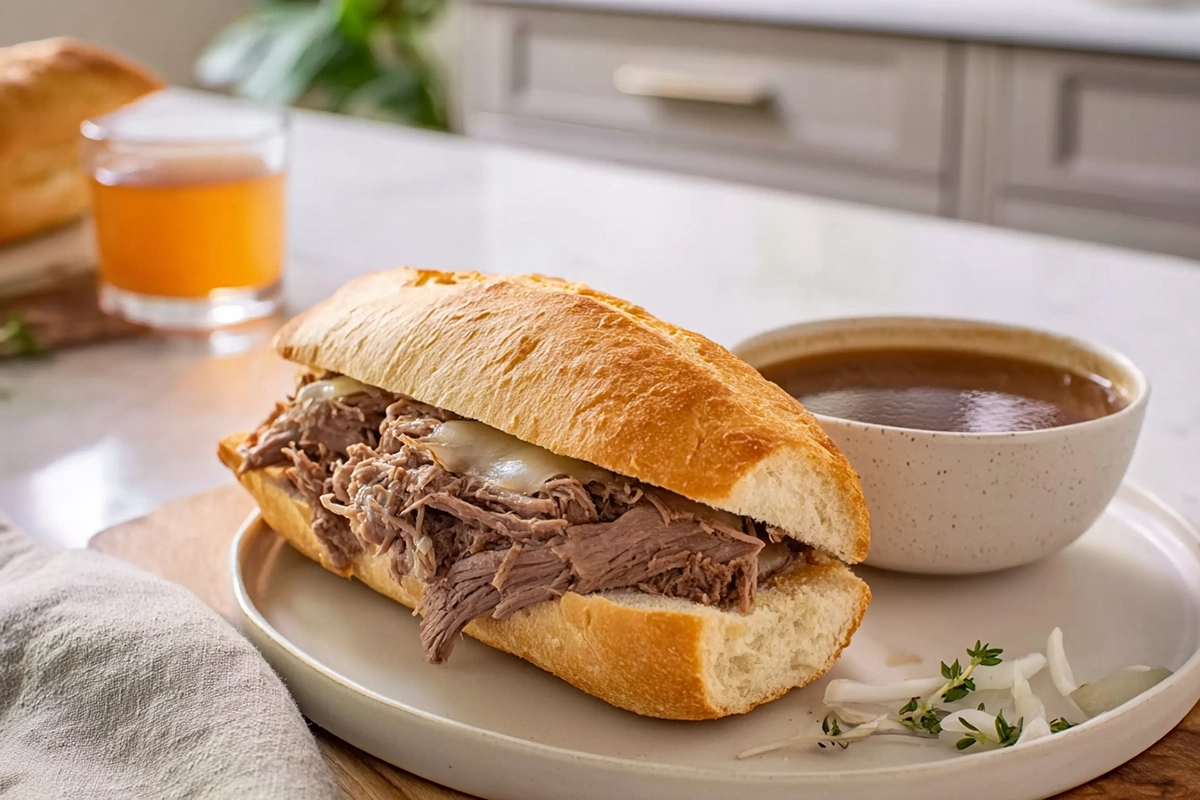
Slow Cooker French Dip Sandwiches That Stay Juicy

The first thing you notice when this finishes cooking isn’t the beef — it’s the smell. Warm onions, garlic, and beef broth blend together into something that feels deep and savory without being heavy. When you lift the lid, the roast looks relaxed, not tight or dry, sitting in a broth that’s dark, glossy, and quietly doing its job. That’s the point where you already know the sandwiches are going to dip well.
What makes Slow Cooker French Dip tricky isn’t flavor — it’s texture. Too often, the beef ends up dry, the au jus tastes flat or overly salty, or the bread collapses the moment it hits the broth. This version is built to avoid all of that. The beef cooks gently, the onions melt into the liquid instead of floating on top, and the broth stays clean and balanced so you actually want to dip the sandwich instead of just brushing it on.
This recipe is designed around one goal: an easy, juicy sandwich that works in a normal kitchen. No shortcuts that compromise tenderness, no ingredients that fight each other, and no steps that exist just to look impressive. Slow Cooker French Dip should feel reliable — something you can make for a weeknight dinner or a crowd and know exactly how it’s going to turn out every time.
Table of Contents
Ingredients That Actually Matter
Beef Roast (Eye of Round or Rump)
This recipe relies on a lean, uniform cut of beef that slices cleanly and absorbs flavor without falling apart. Eye of round or rump roast holds its structure during long cooking and stays tender when sliced against the grain. Chuck roast works differently — it shreds instead of slices — so for a classic French dip texture, this cut really matters.
Low-Sodium Beef Broth
This is one ingredient you shouldn’t substitute lightly. Regular beef broth can push the au jus into salty territory once the liquid reduces and concentrates. Low-sodium broth lets the Worcestershire, soy sauce, and herbs build flavor without overwhelming the beef.
Onions
Thinly sliced onions soften slowly and dissolve into the broth, adding sweetness and depth instead of a sharp onion bite. Red or yellow both work here — use what you have. There’s no need to splurge; this is a place where standard grocery-store onions are perfectly fine.
Garlic
Seven cloves give you background warmth; ten give you noticeable garlic flavor without turning harsh. Fresh garlic matters more than brand here — skip pre-minced jars if you can, since they tend to taste flat after long cooking.
Worcestershire Sauce
This adds savory depth and a slight tang that makes the au jus taste “finished.” It works with the beef rather than competing with it, which is why it’s worth using a recognizable brand with balanced flavor.
Soy Sauce
Used sparingly, soy sauce reinforces umami without making the broth taste Asian or salty. It supports the beef flavor rather than standing out on its own.
Dried Herbs (Thyme, Italian Seasoning, Onion Flakes, Bay Leaves)
Dried herbs are the right choice here because they hold up over long cook times. Fresh herbs fade too quickly in the slow cooker, while dried ones infuse steadily without turning bitter.
Butter
Butter is used early for searing and softening the onions. It adds richness that carries through the broth, giving the au jus body without making it greasy.
Hoagie Rolls
Choose rolls with a slightly firm crust and soft interior. Too soft and they collapse when dipped; too crusty and they don’t absorb the au jus properly.
Cheese (Provolone, Mozzarella, or Gruyère)
Provolone melts clean and classic. Mozzarella is mild and stretchy. Gruyère adds depth if you want a slightly richer sandwich. Pre-sliced is fine here — this isn’t the place to overthink cheese.

How This Slow Cooker French Dip Comes Together
Searing for Flavor, Not for Show
This recipe starts before the slow cooker ever turns on. When the beef hits the hot pan, it should sizzle immediately — that sound tells you the surface is drying and browning instead of steaming. Look for a deep brown crust forming, not pale gray patches. The meat should feel firm when you flip it, releasing easily from the pan once it’s ready. If it sticks, give it another minute — that’s flavor still developing.
The onions go into the same pan while it’s still hot, picking up the browned bits left behind. As they soften, you’ll smell a sweet, savory aroma instead of a sharp onion bite. Visually, they should turn glossy and slightly golden, not dark or crisp. This step matters because those softened onions melt into the broth later instead of floating as raw slices.
Building the Broth That Becomes Au Jus
Once everything moves into the slow cooker, this is where restraint matters. The liquid won’t completely cover the roast, and that’s intentional. You’re looking for gentle steam and slow bubbling over time, not aggressive boiling. When you lift the lid later, the broth should look darker and clearer, not cloudy or greasy.
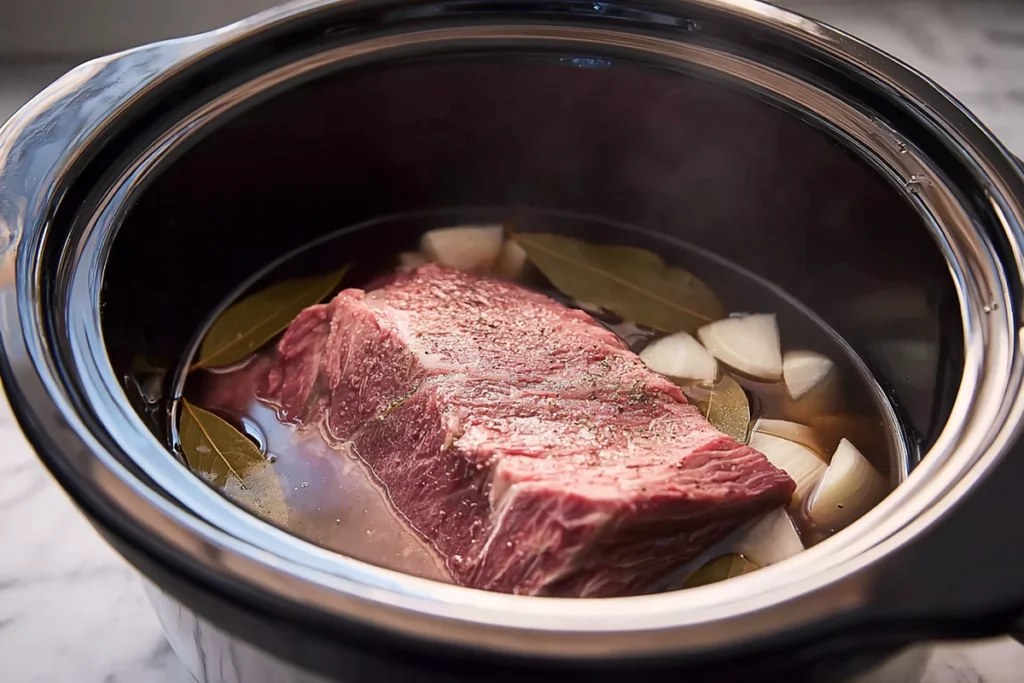
About halfway through cooking, flipping the roast once helps the top portion absorb moisture. You’ll know the beef is ready when it feels relaxed under tongs and starts to separate naturally at the edges. The smell at this stage is deep and savory, with garlic and herbs noticeable but not overpowering.
Slicing, Soaking, and Stopping at the Right Time
After cooking, the beef needs a short rest before slicing. When you cut into it, look for clean slices and visible grain lines — that’s your cue to cut against them. The meat should feel tender but still structured, not crumbly.
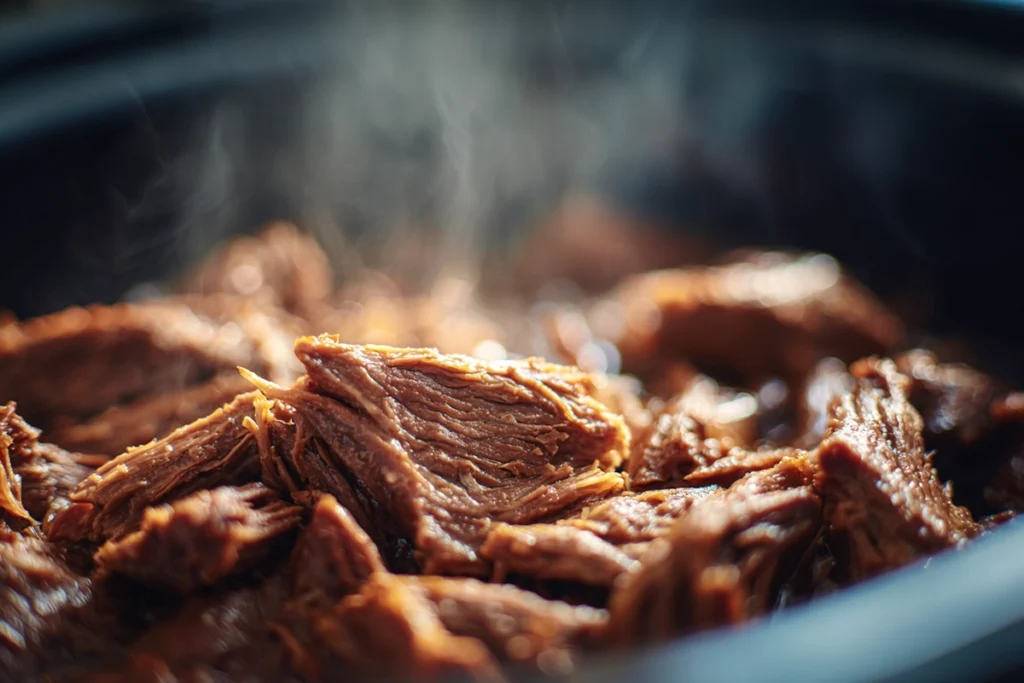
Adding the sliced beef back into the hot broth with the slow cooker off is a quiet but important moment. You’re looking for the meat to soak up flavor without continuing to cook. The slices should darken slightly as they absorb liquid, and the smell should intensify briefly, then settle. That’s when you stop.
Finishing the Sandwich Without Losing the Juices
When the sandwiches go into the oven, listen for a soft crackle from the bread edges as they warm. The cheese should melt smoothly, not bubble aggressively. Visually, you want glossy, softened cheese and bread that feels lightly crisp on the outside but still compresses when pressed.
Straining the broth at the end should give you a clear, rich au jus with no grit. It should smell clean and beef-forward. If you dip a spoon in, the liquid should coat it lightly — not watery, not thick — exactly what you want for dipping.
Where Slow Cooker French Dip Usually Goes Wrong
Skipping the Sear
If the beef goes straight into the slow cooker, the final flavor often tastes flat. You’ll notice it in the smell first — muted, almost boiled instead of roasted. The broth ends up tasting thin because it’s missing those browned compounds that only develop under high heat.
Over-Salting the Broth Early
This usually shows up at the end, not the beginning. The au jus smells fine but tastes sharp or heavy on the tongue. That’s why low-sodium broth matters and why seasoning aggressively up front backfires once the liquid reduces.
Cutting the Beef the Wrong Way
Slicing with the grain makes the meat feel dry even when it’s not. You’ll feel resistance when chewing, and the slices won’t drape over the bread naturally. Cutting against the grain gives you tender pieces that bend and soak without shredding.
Storing the Beef in the Au Jus
It seems logical, but this is where texture falls apart. Overnight, the beef absorbs too much liquid and turns soft and fragile. The next day, it smells fine but falls apart when reheated. Storing the beef and au jus separately keeps the texture intact and lets you control how much moisture goes back in.
Make It Your Own
Provolone-Forward and Classic
If you want the cleanest, most traditional version, stick with sliced provolone and let it melt slowly in the oven. Use full slices, not torn pieces — they melt evenly and form a soft blanket over the beef. You’ll notice the smell shift from toasted bread to mild dairy sweetness right when it’s ready, and the cheese should look glossy, not blistered.
Gruyère for a Richer Finish
Gruyère changes the personality of the sandwich. It melts more smoothly than cheddar and adds a nutty depth that shows up more in the aroma than the taste at first bite. Shred it yourself from a block; pre-shredded gruyère doesn’t melt cleanly and can turn grainy. This version works especially well if you like dipping slowly and letting the broth cool slightly between bites.
Garlic-Heavy, Onion-Driven
If you’re someone who always wants “a little more garlic,” this is where to do it. Add the extra cloves early and let them cook fully in the broth — raw garlic flavor disappears with long heat, leaving sweetness behind. You’ll smell it in the steam when you lift the lid, but it won’t dominate the au jus.
No-Cheese, Extra-Dip
Skipping cheese sounds wrong until you try it. Without cheese, the beef and broth come through louder, and the sandwich absorbs the au jus faster. Toast the rolls slightly longer so they hold their shape, and serve with a deeper bowl of broth. It’s messy, but in a good way.
Serving & Storing in Real Life
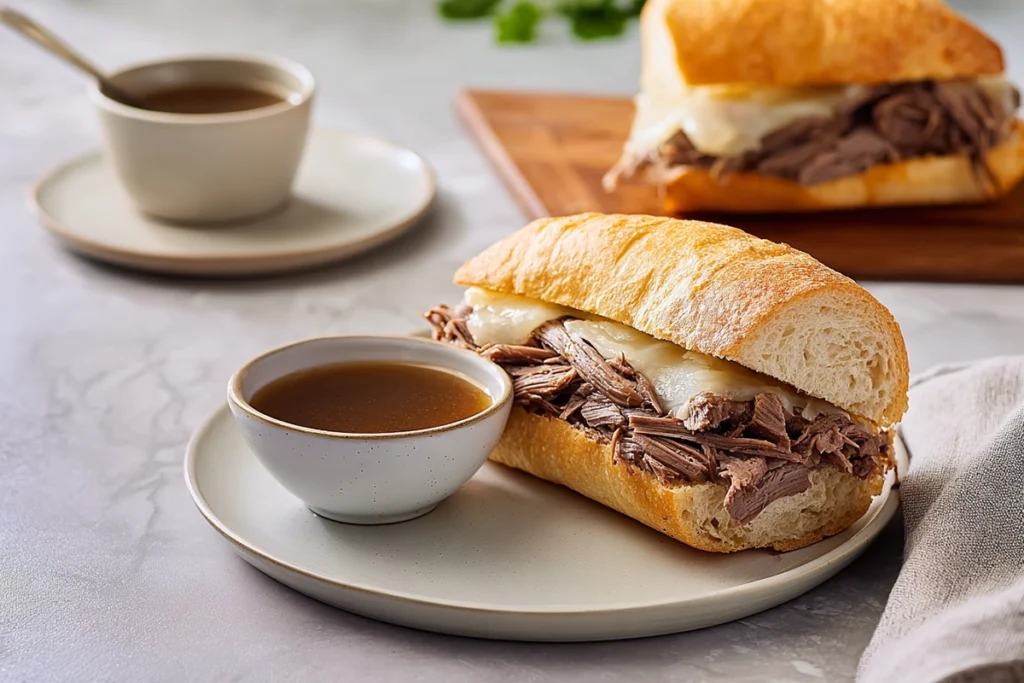
I serve these hot, straight from the oven, with the au jus warm but not boiling. When the broth is too hot, it dulls the flavor; when it’s just warm, you taste the beef more clearly. I eat them one half at a time, dipping the cut side first so the bread softens gradually instead of collapsing all at once.
For leftovers, keep the beef and au jus in separate airtight containers. In the fridge, they’ll hold for three to four days without losing texture. Bread should never be stored assembled — once it absorbs moisture, it’s done.
For freezing, freeze the sliced beef and the au jus separately. Lay the beef flat in freezer bags so it thaws evenly, and freeze the broth in small containers so you only reheat what you need. When reheating, warm the beef gently in a covered skillet with a spoonful of au jus. Use the oven or air fryer to re-toast fresh rolls — the bread always deserves a second chance.
Slow Cooker French Dip works because it’s patient and not complicated. When the beef is tender, the broth is balanced, and the bread is treated with a little respect, the whole thing comes together exactly the way it should — rich, juicy, and worth dipping until the bowl is empty.
Get inspired with more mouthwatering recipes! Follow me on Pinterest for new cooking ideas every week.
Frequently Asked Questions
Can I skip searing the beef?
You can, but the flavor won’t be the same. Skipping the sear means the beef goes into the slow cooker pale and wet, and the final au jus tastes flatter. That quick sizzle in the pan builds depth you can’t recreate later.
Is cooking on high ever a good idea for Slow Cooker French Dip?
Technically, practically no. Cooking on high heat tightens the beef fibers faster, which makes the meat less tender. Low and slow gives you slices that stay juicy and flexible instead of firm and dry.
Can I use a chuck roast instead?
You can, but expect a different result. Chuck breaks down and shreds, which is great for pulled beef but not ideal for classic French dip sandwiches. If you want clean slices that soak up au jus without falling apart, stick with eye of round or rump roast.
Why is my au jus cloudy?
Cloudy au jus usually comes from boiling instead of gentle cooking, or from skipping the straining step. Slow, steady heat keeps the broth clear, and straining removes onion and herb particles that dull the flavor and texture.
How do I keep the bread from getting soggy?
Toast the rolls lightly before adding the meat, and dip only the cut edge, not the whole sandwich. The bread should feel crisp outside and soft inside — once it’s fully soaked, it collapses fast.
Can I make this ahead for a crowd?
Yes, and it works well that way. Cook the beef and au jus a day ahead, store them separately, and reheat gently before serving. Assemble and toast the sandwiches right before eating so the bread stays intact.
What’s the best way to reheat leftovers without drying the beef?
Warm the sliced beef in a covered skillet with a spoonful of au jus over low heat. The meat should feel soft and steamy, not sizzling. Re-toast fresh rolls separately — reheating assembled sandwiches never ends well.
Print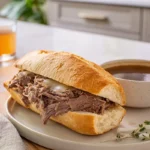
Slow Cooker French Dip
- Prep Time: 20 minutes
- Cook Time: 8 hours 10 minutes
- Total Time: 8 hours 30 minutes
- Yield: 6–8 servings 1x
- Category: Main Dish
- Method: Slow Cooker
- Cuisine: American
Description
Slow Cooker French Dip sandwiches made with tender beef slow-cooked with onions, garlic, and herbs, served on toasted hoagie rolls with melted cheese and rich au jus for dipping. A dependable, juicy sandwich designed for real home kitchens.
Ingredients
- 3–3½ pounds beef eye of round or rump roast
- Salt, to taste
- Black pepper, to taste
- 2 tablespoons butter
- 2 medium onions, thinly sliced
- 7–10 cloves garlic, minced
- 3 cups low-sodium beef broth
- 2 tablespoons Worcestershire sauce
- 2 tablespoons soy sauce
- ½ teaspoon dried thyme
- 1 tablespoon dried onion flakes
- 1 tablespoon salt-free Italian seasoning
- 2 bay leaves
- 6–8 hoagie rolls
- Provolone, mozzarella, or Gruyère cheese (sliced or shredded)
Instructions
-
Season the beef generously with salt and pepper on all sides.
-
Heat 1 tablespoon of butter in a skillet over medium-high heat and sear the beef on all sides until deeply browned.
-
Transfer the beef to the slow cooker.
-
Add remaining butter to the skillet and cook the onions until softened and lightly golden.
-
Add onions, garlic, broth, Worcestershire sauce, soy sauce, herbs, and bay leaves to the slow cooker.
-
Cover and cook on low for 6–8 hours, flipping the beef once halfway through.
-
Remove beef, rest briefly, then slice against the grain.
-
Return sliced beef to the hot broth with the slow cooker turned off to soak briefly.
-
Toast hoagie rolls, add beef and cheese, and bake until cheese melts.
-
Strain the cooking liquid and serve as au jus for dipping.
Notes
Do not substitute regular beef broth for low-sodium; it will oversalt the au jus.
Slice the beef against the grain to prevent toughness.
Store beef and au jus separately to preserve texture.
Freeze beef and au jus separately for best results.
Nutrition
- Serving Size: 1 sandwich
- Calories: 620 kcal
- Sugar: 4 g
- Sodium: 980 mg
- Fat: 32 g
- Saturated Fat: 14 g
- Unsaturated Fat: 16 g
- Trans Fat: 0.5 g
- Carbohydrates: 36 g
- Fiber: 2 g
- Protein: 45 g
- Cholesterol: 135 mg