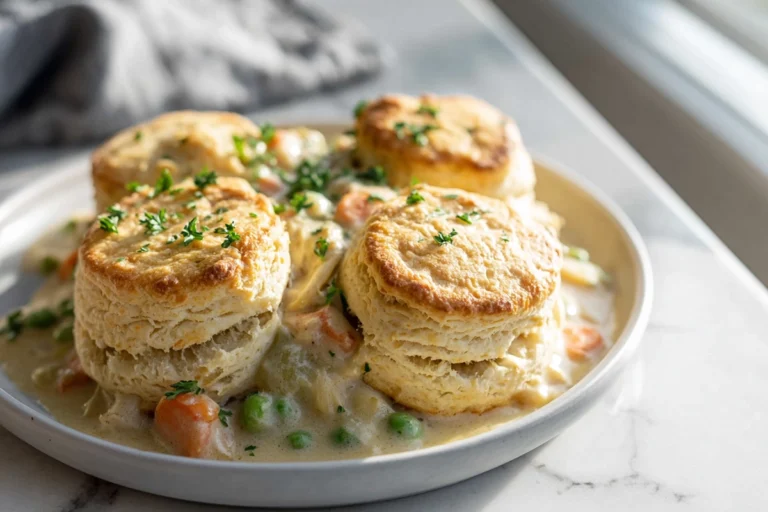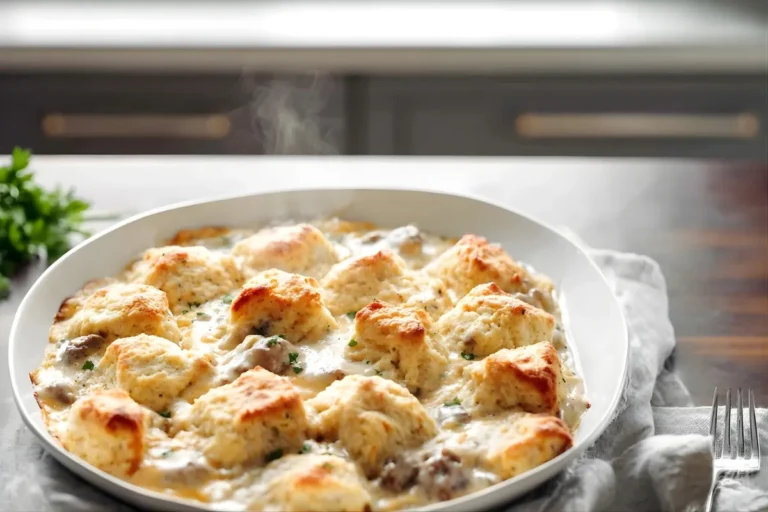

Chicken Pot Pie Casserole With Golden Biscuits

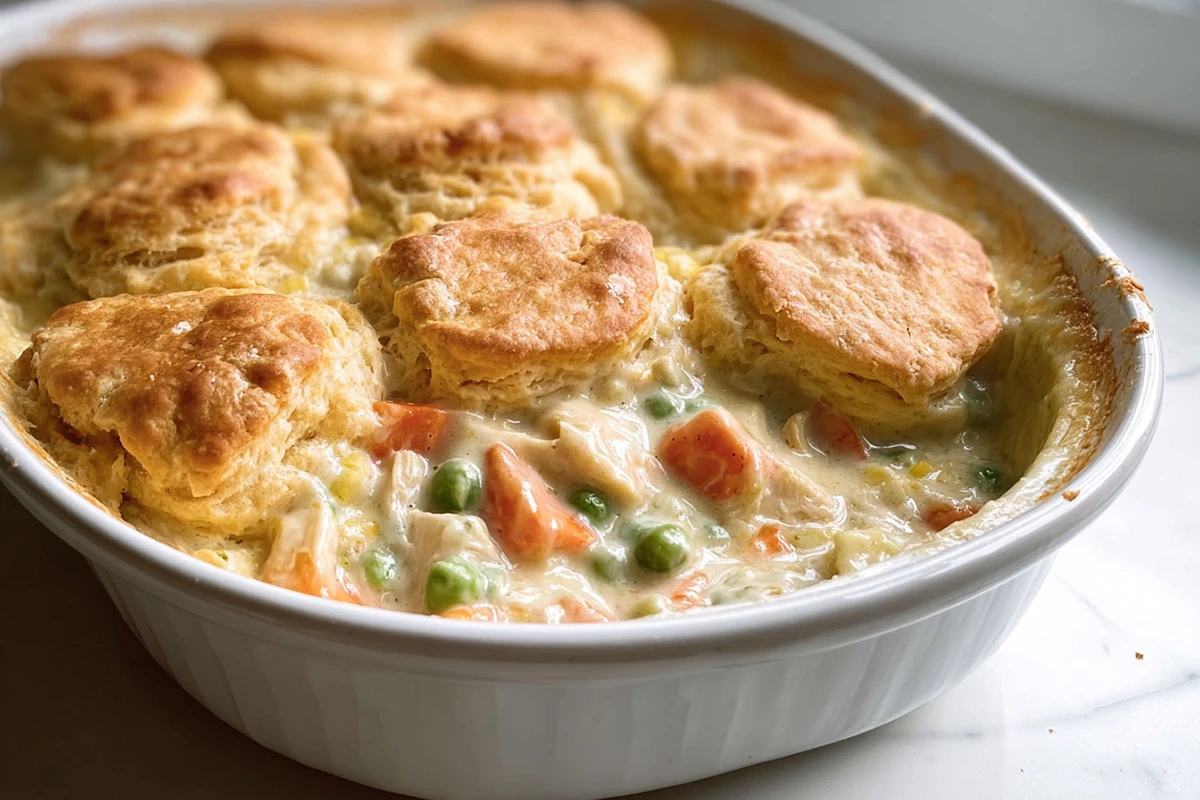
That First Spoonful: Creamy, Savory, and Biscuit-Topped Comfort
The first thing you notice with this casserole isn’t the look — it’s the smell. Butter melting into onions and thyme, that familiar savory note that tells you something steady and comforting is happening in the oven. When it bakes, the filling bubbles gently underneath while the biscuits rise and turn golden on top, soaking up just enough steam to stay tender inside.
This Chicken Pot Pie Casserole is built for nights when you want real comfort food without juggling too many moving parts. It has the same flavors people love in a classic pot pie, but the casserole format makes it more forgiving and easier to repeat. Everything finishes together, and you don’t need to worry about rolling dough or sealing edges. The goal here is balance — creamy but not heavy, rich but not greasy, and structured enough that each scoop holds together.
What I like most about this recipe is that it rewards paying attention to small details. The vegetables are cut a certain size for a reason. The sauce is thickened before it ever goes into the oven. The biscuits sit on top instead of being mixed in, which keeps their texture right. Those choices are what make this recipe consistent instead of hit-or-miss.
This is the kind of dish I rely on when I want something familiar that works exactly the way I expect it to — no surprises, no shortcuts that backfire later.
Ingredients That Actually Matter Here
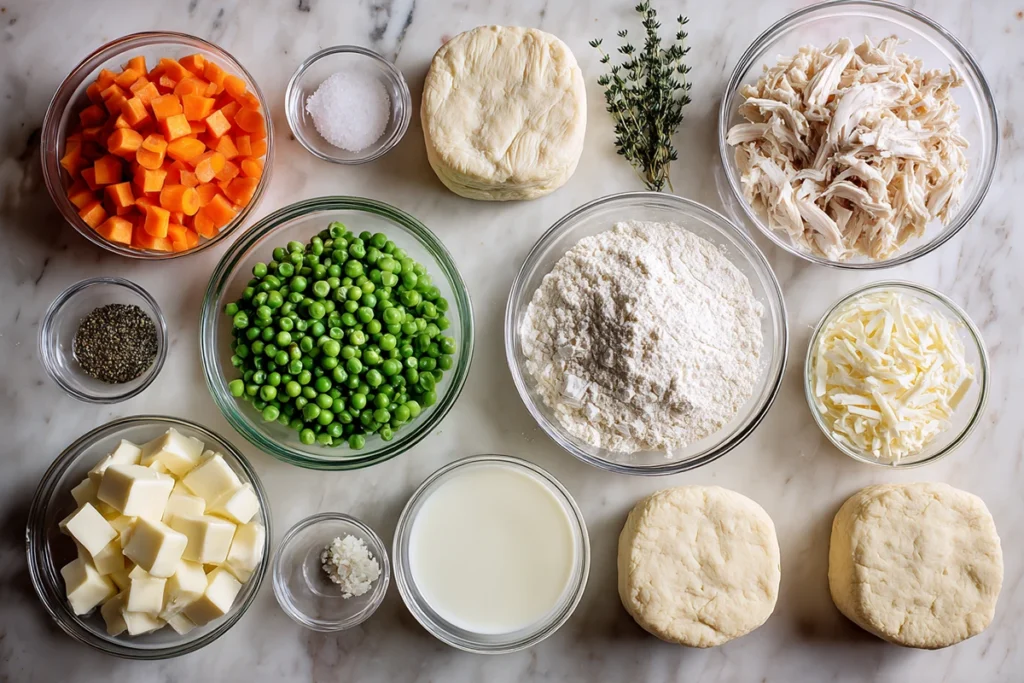
Yellow Onion, Carrots, and Celery
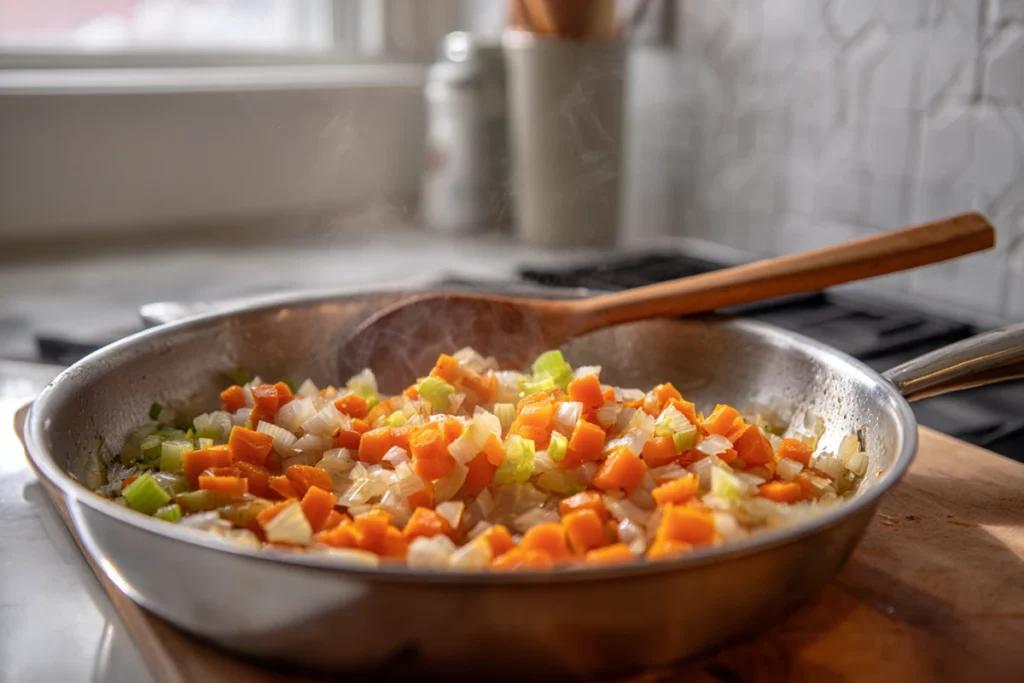
This trio is the backbone of the filling. Onion brings sweetness as it cooks, while carrots and celery add texture and a subtle savory depth that keeps the sauce from tasting flat. Cut them evenly — uneven pieces cook at different rates and can throw off the final texture.
Fresh Thyme (or Dried, If Needed)
Fresh thyme adds a clean, slightly earthy aroma that makes the filling smell like a classic pot pie instead of a generic cream sauce. If you don’t have fresh, dried thyme works fine here — just use less. This isn’t the place to overdo herbs.
Unsalted Butter
Butter is doing real work in this recipe, not just adding richness. It carries flavor from the vegetables and helps form the roux that thickens the sauce. I stick with unsalted so I can control seasoning later without guessing.
All-Purpose Flour
This is what gives the filling structure. Flour thickens the sauce before baking, which prevents the casserole from turning soupy in the oven. Skipping or reducing it too much usually leads to a loose filling that won’t hold under the biscuits.
Chicken Broth and Milk
Low-sodium broth matters here — regular broth can push the salt level too far once everything reduces. Milk softens the sauce and keeps it creamy without making it heavy. Whole or 2% both work; I avoid skim because it thins the texture too much.
Cooked Boneless Chicken
This is a good place to use rotisserie chicken or leftovers. What matters most is that the chicken is fully cooked and cut into bite-sized pieces so it heats evenly. Overly large chunks can stay cold in the center.
Frozen Peas
Frozen peas are one of the few ingredients where the inexpensive option is perfectly fine. They hold their shape, add sweetness, and don’t need to be thawed — which actually helps prevent them from turning mushy.
Refrigerated Biscuit Dough
This is the one ingredient I don’t recommend substituting. Jumbo or grand-style biscuits bake up soft inside with a golden top and act like a built-in crust. Crescent dough or puff pastry won’t give the same texture or structure.
Kosher Salt and Black Pepper
Simple seasoning, but it matters. Kosher salt is easier to control throughout the cooking process, and freshly ground pepper adds just enough bite to balance the creamy sauce.
How This Chicken Pot Pie Casserole Comes Together
Building the Flavor Base First
Everything starts on the stovetop, and this is where the casserole earns its depth. When the butter hits the pan, you should hear a steady, confident sizzle — not a violent crackle and not silence. As the onion, carrots, and celery cook, look for light browning around the edges and a soft, glossy appearance. When you press a carrot slice with a spoon, it should give slightly instead of snapping. The smell should shift from raw vegetables to something sweet and savory, almost like a classic soup base coming together.
Thickening Before the Oven Does the Work
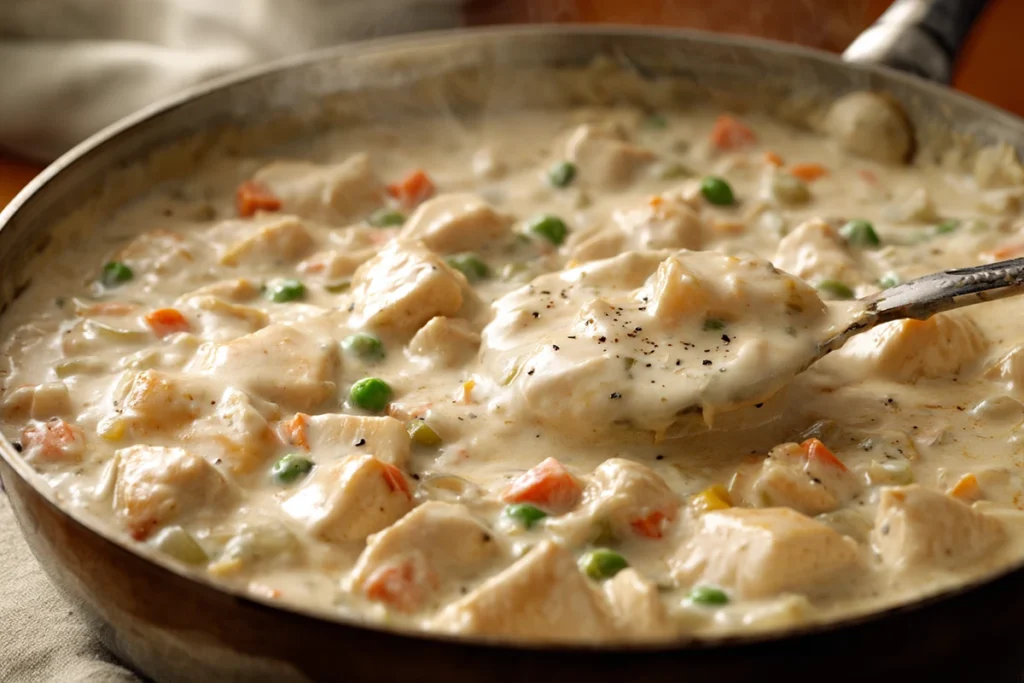
Once the flour goes in, the mixture should look dry for a moment, then smooth out as it coats the vegetables. Stirring here matters. You’re listening for a faint hiss as the flour cooks and watching for any chalky patches to disappear. When the broth and milk are added, the sound changes to a gentle bubbling, and within a few minutes, the sauce should cling to the back of a spoon. Run your finger through it — the line should hold instead of filling in immediately.
Folding in the Chicken and Peas
This is where everything should already taste right before baking. When the chicken goes in, it should feel warm but not steaming if it was at room temperature. The peas stay bright green, not dull or gray, which tells you they haven’t overcooked. Stir gently — you want the filling thick and cohesive, not broken or watery. The smell at this stage should be rich and savory, with thyme coming through clearly but not aggressively.
Biscuit Topping and Oven Finish
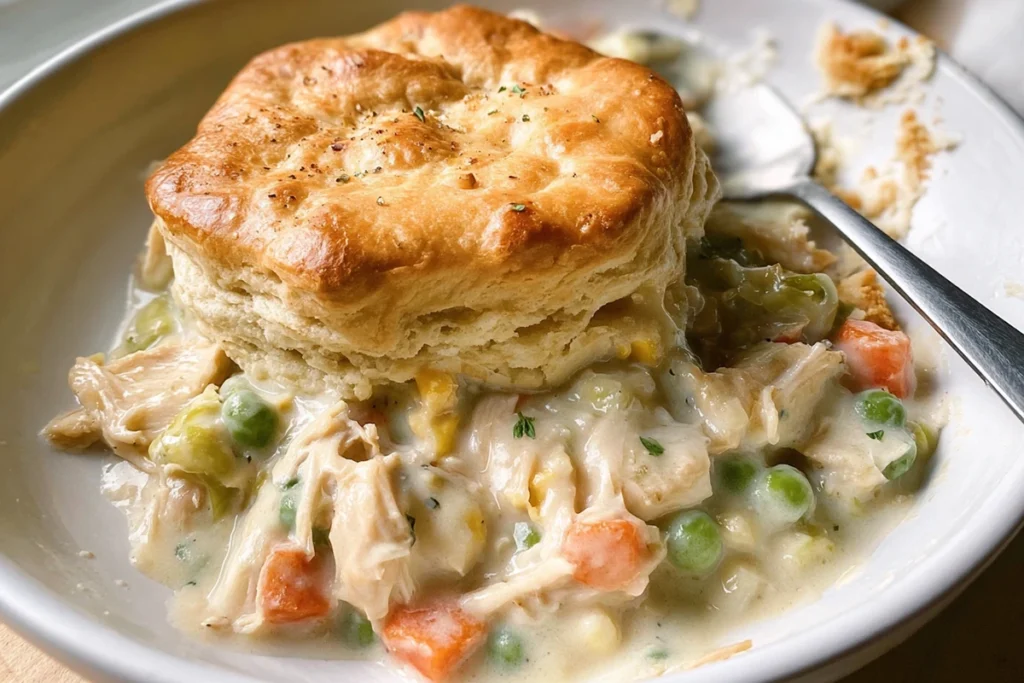
Once transferred to the baking dish, the filling should settle evenly without sloshing. When you place the biscuits on top, they should feel cold and firm to the touch — that’s what helps them rise properly. In the oven, listen for a steady bubble underneath and watch the biscuits turn golden on top while staying pale at the sides. When brushed with melted butter at the end, they should feel soft when pressed lightly, not hard or dry.
Where Chicken Pot Pie Casserole Usually Goes Wrong
When the Filling Turns Soupy
This usually happens because the sauce wasn’t thick enough before baking. If the filling looks loose in the skillet, it will only get thinner in the oven. Visually, the sauce should already coat the vegetables, and when you drag a spoon through it, the sound should be slow and heavy, not watery. If it smells rich but looks thin, give it another minute on the heat.
Biscuits Browning Too Fast
If the tops are getting dark while the center is still bubbling weakly, the oven heat is doing more work than the filling. You’ll hear aggressive sizzling around the edges but not much from the center. Covering loosely with foil lets the biscuits finish cooking through steam instead of direct heat, keeping the texture soft instead of dry.
Bland Results Despite Plenty of Ingredients
This isn’t about adding more salt at the end — it’s about seasoning early. When the vegetables sauté, they should smell savory and seasoned, not neutral. If that base is flat, the whole casserole will be too. Taste before baking. If the filling tastes good from the skillet, it will taste good after the oven does its job.
Gummy or Doughy Biscuit Centers
This happens when biscuits are pressed down into the filling or are overcrowded. They need space and exposure to heat. The tops should feel dry and set before baking finishes, and when you tap one lightly, it should sound hollow instead of dull.
These are small things, but they’re the difference between a casserole that just looks right and one that actually tastes the way it should.
Make It Your Own
Mushroom and Thyme Boost
If you want a deeper, more savory version, add finely chopped mushrooms to the pan with the onions and carrots. Cremini or baby bella mushrooms work best because they release moisture slowly and concentrate flavor instead of flooding the sauce. You’ll hear a soft hiss as they cook down and smell a richer, almost meaty aroma once their moisture evaporates. This variation keeps the filling balanced without making it heavy.
Cheddar Biscuit Finish
For a richer top, brush the biscuits lightly with butter and sprinkle freshly grated sharp cheddar over them during the last 10 minutes of baking. Use a block of cheese and grate it yourself — pre-shredded cheddar doesn’t melt cleanly and tends to sit on the surface. The biscuits should smell toasted and cheesy, and when pressed, the tops should feel soft with a lightly crisp edge.
Turkey Instead of Chicken
Leftover roast turkey works just as well here, especially after the holidays. Cut it into slightly smaller pieces than chicken since turkey firms up more when reheated. When folded into the sauce, it should warm gently without tightening or drying out. The smell stays familiar, but the flavor leans a little deeper and more savory.
Lighter Dairy Swap
If you prefer a lighter filling, you can replace half the milk with unsweetened evaporated milk. The sauce will still thicken, but it sets a little firmer once baked. You’ll notice the spoon drags more heavily through the sauce, and the final casserole holds its shape slightly better when scooped.
Serving & Storing in Real Life
I like to serve this casserole hot from the oven, letting it rest just long enough that the bubbling calms down. That short rest helps the filling settle so each scoop stays intact. I usually eat it as-is, but a simple green salad on the side helps cut through the richness without competing with it.
For leftovers, let the casserole cool completely before covering it. Store it in the fridge for up to three days. Reheat in the oven if you can — the biscuits soften in the microwave and lose their texture. If you’re in a hurry, an air fryer set to medium heat for a few minutes brings back some of the biscuit crispness.
Freezing works best if you portion it first. Slice the casserole into servings, wrap tightly, and freeze. Don’t freeze the entire dish whole — it reheats unevenly and stays cold in the center. Thaw overnight in the fridge, then reheat covered until hot through, uncovering at the end to refresh the biscuits.
Final Thoughts
This Chicken Pot Pie Casserole is the kind of recipe I come back to because it behaves the same way every time. When the smell of butter and thyme fills the kitchen and the biscuits come out golden on top, it’s a reminder that comfort food doesn’t need to be complicated to be reliable.
Get inspired with more mouthwatering recipes! Follow me on Pinterest for new cooking ideas every week.
Frequently Asked Questions
Can I make Chicken Pot Pie Casserole ahead of time?
Yes. You can prepare the filling up to one day in advance and store it covered in the refrigerator. Add the biscuits right before baking so they rise properly and don’t absorb moisture from the filling.
Why is my filling runny after baking?
This usually means the sauce wasn’t thick enough before it went into the oven. The filling should already coat the back of a spoon on the stovetop. Baking does not thicken a loose sauce — it only heats it.
Should I cut the biscuits or leave them whole?
Leave jumbo or grand-style biscuits whole. Cutting them exposes too much surface area and can lead to dry edges or gummy centers. Whole biscuits trap steam better and bake more evenly on top of the filling.
Can I use leftover turkey instead of chicken?
Yes, leftover turkey works very well. Cut it into small, even pieces so it reheats gently without drying out. Turkey firms up faster than chicken, so avoid overbaking once it’s added.
Can I freeze Chicken Pot Pie Casserole?
Yes, but slice it into portions before freezing. Freezing the entire casserole makes it difficult to reheat evenly. Wrap portions tightly, thaw overnight in the fridge, and reheat covered until hot.
What’s the best way to reheat leftovers?
The oven is best for keeping the biscuits soft inside and lightly crisp on top. Cover loosely with foil and reheat until warmed through, then uncover for the last few minutes. An air fryer also works well for single portions.
Chicken Pot Pie Casserole
Ingredients
Method
- Preheat the oven to 375°F.
- Sauté onion, carrots, celery, and thyme in butter until softened.
- Stir in flour and garlic and cook briefly.
- Add broth and milk and simmer until thickened.
- Fold in chicken and peas and season.
- Transfer filling to a baking dish and top with biscuits.
- Bake until biscuits are golden and filling is bubbling.
- Brush biscuits with melted butter before serving.
Notes
- Use low-sodium broth to control seasoning.
- Do not thin the sauce before baking.
- Add biscuits just before baking for best texture.