
Easy Weeknight Mongolian Beef That Actually Works

The Sauce That Clings to Every Bite
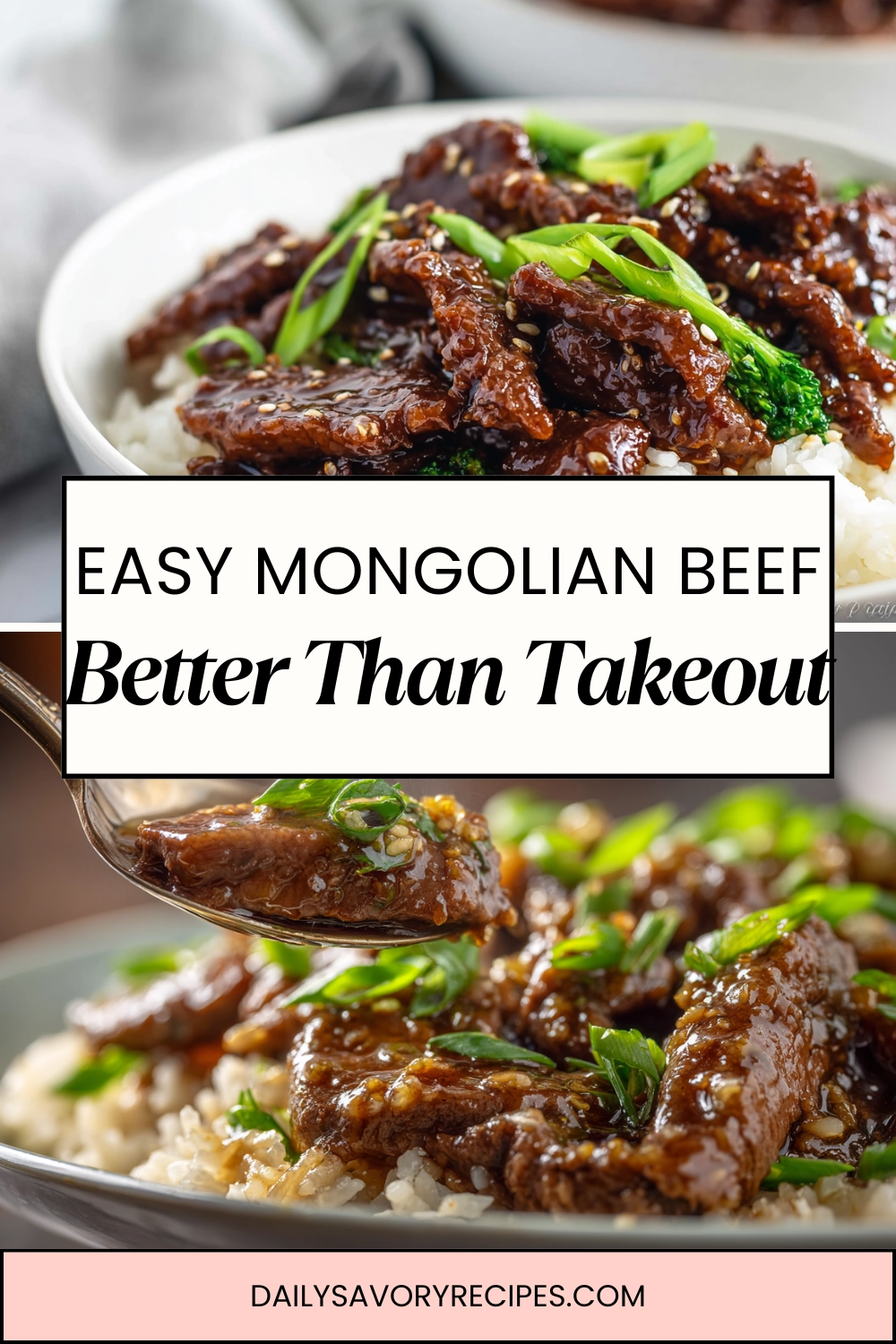
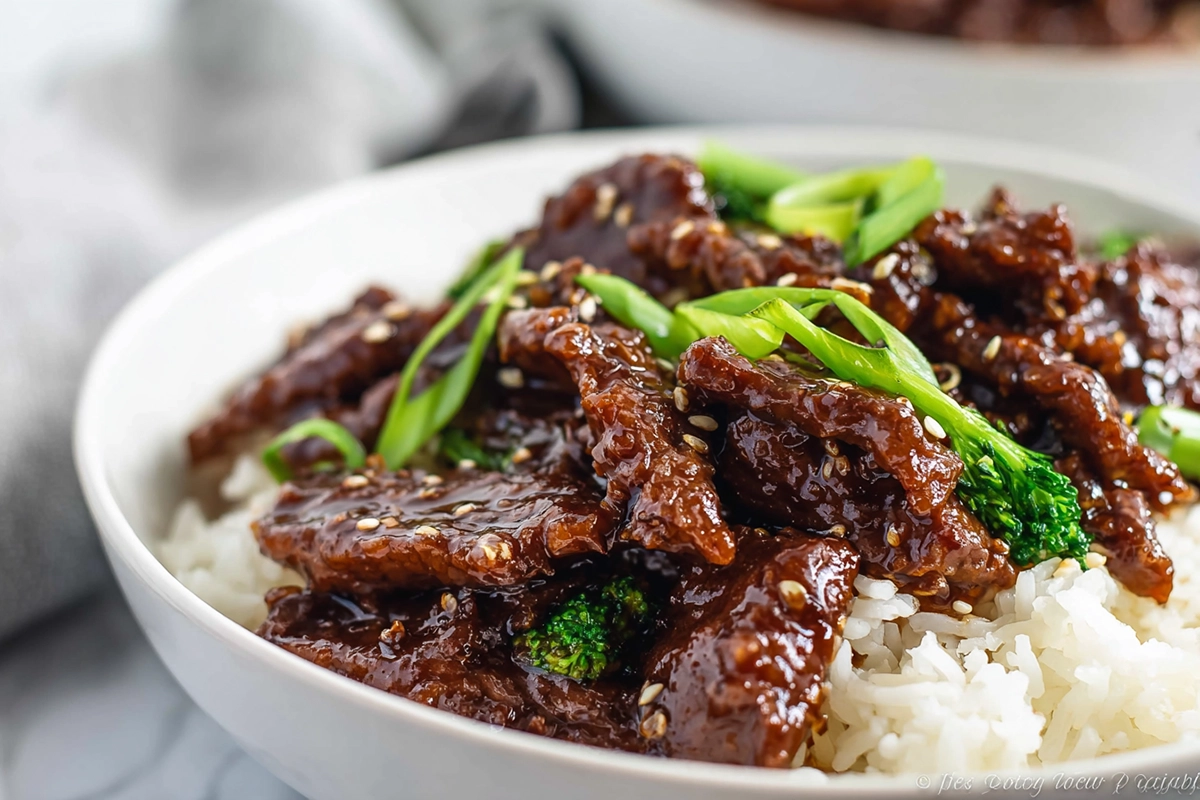
The first thing you notice with Mongolian Beef isn’t the beef — it’s the smell. Garlic and ginger hit warm oil and turn fragrant almost instantly, and within minutes, the sauce goes glossy, dark, and slightly sticky. Not thick like syrup, not thin like broth — just enough to coat every slice of beef without pooling at the bottom of the pan. That texture is the whole point of the dish.
This is the kind of recipe people reach for on a weeknight because it sounds fast — but the difference between great Mongolian beef and a disappointing one usually comes down to small choices. Beef sliced too thick, a pan that isn’t hot enough, or a sauce that gets rushed will give you something edible, but not something you’re excited to repeat. I built this version to avoid those problems.
What I like about this recipe is that it respects time without cutting corners. You prep once, cook quickly, and everything finishes together. The sauce is made before the beef goes anywhere near the pan, the beef cooks in short bursts instead of steaming, and the final result tastes balanced — sweet, savory, and clean, not overly salty or cloying. This is the version I rely on when I want something dependable at the end of a long day.
Table of Contents
Ingredients That Make This Work
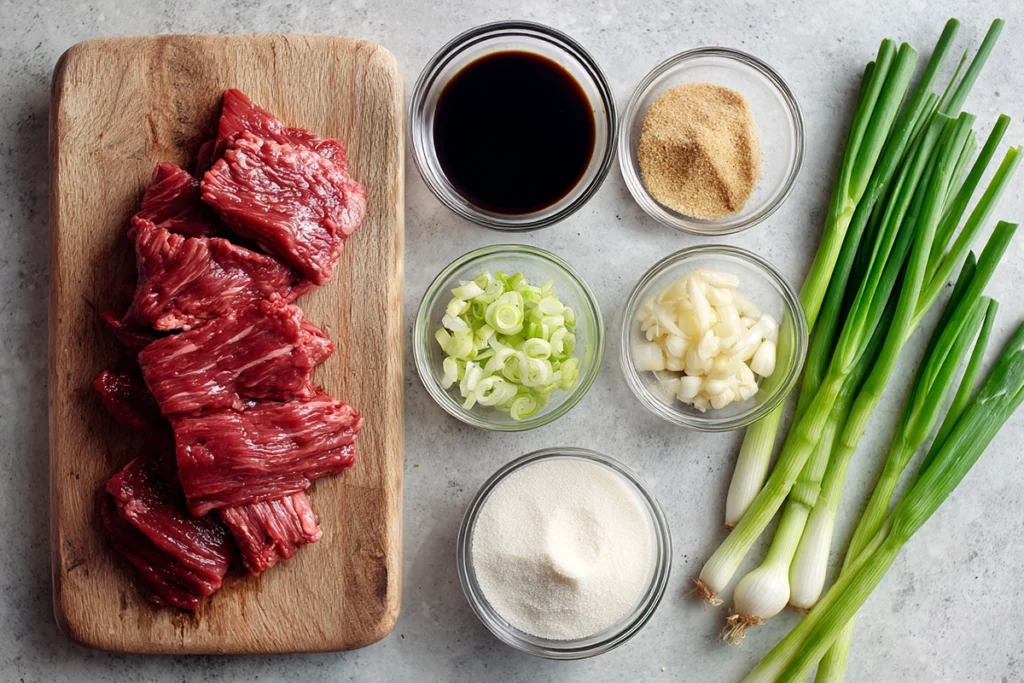
Flank Steak
Flank steak is my go-to here because it stays tender when sliced thin and cooked quickly. The key is cutting it against the grain — that single detail matters more than the cut itself. Skirt steak can work in a pinch, but avoid thicker cuts unless you’re prepared to slice them very thin.
Cornstarch
Cornstarch isn’t just for thickening the sauce later — it’s what gives the beef that light coating that helps the sauce cling instead of sliding off. Shake off the excess; too much will make the exterior gummy. Generic store-brand cornstarch works perfectly fine here.
Low-Sodium Soy Sauce
This is one ingredient I don’t recommend substituting. Regular soy sauce pushes the dish too salty before the sugar has a chance to balance it. Low-sodium soy sauce gives you control, and you can always adjust at the end if needed.
Brown Sugar
Brown sugar provides sweetness and depth, which plain white sugar can’t quite match. Light or dark both work, though dark brown sugar adds a slightly richer note. No need for specialty brands — standard packed brown sugar is exactly right.
Fresh Garlic
Fresh garlic is non-negotiable here. Jarred garlic tends to taste dull and slightly bitter once heated. Four cloves might sound like a lot, but they mellow quickly in the sauce and form the backbone of the flavor.
Fresh Ginger
A small amount goes a long way. Fresh ginger adds brightness and warmth that powder can’t replicate. If you keep ginger in the freezer, this is a perfect place to use it — it grates easily and holds its flavor well.
Vegetable Oil
Use a neutral oil with a high smoke point. Vegetable, canola, or peanut oil all work. Olive oil isn’t ideal here; it doesn’t handle the heat as cleanly and can muddy the flavor.
Green Onions
These finish the dish. They add freshness and cut through the richness of the sauce. Slice them thin and add them at the very end so they stay crisp and aromatic, not wilted.
How This Comes Together on a Busy Weeknight
Getting the Sauce Ready Before the Heat
This recipe works best when the sauce is finished before the beef ever hits the pan. When the ginger and garlic go into warm oil, listen for a gentle sizzle — not a loud crackle. You’re looking for aroma, not browning. The smell should turn warm and slightly sweet within seconds; if it smells sharp or burnt, the heat is too high.
As the soy sauce, water, and brown sugar come together, watch the surface closely. You’ll see small bubbles forming and the liquid turning glossy as it reduces. When you drag a spoon through it, the sauce should briefly hold the line before slowly filling back in. That’s your cue to pull it off the heat. It should smell balanced — savory first, sweetness second — not aggressively salty.
Browning the Beef Without Steaming It
When the beef hits the hot pan, it should sizzle immediately. That sound tells you the pan is doing its job. The slices should spread easily and feel light from the cornstarch coating, not wet or sticky. Visually, you’re aiming for quick color on the edges rather than cooking them through.
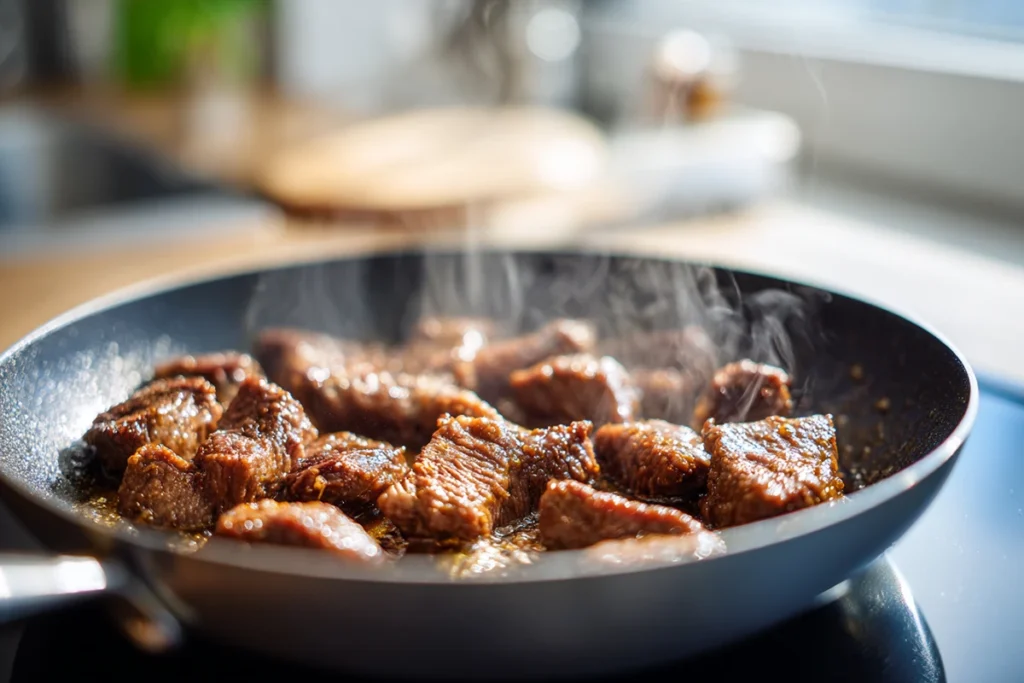
As the beef cooks, the surface should turn lightly golden in spots while the inside stays soft to the touch. If the pan goes quiet or moisture starts pooling, stop and give it more space. The smell here is clean and meaty — not boiled. This step is about texture, not doneness.
Bringing Everything Back Together
Once the beef and sauce reunite, the change is immediate. The sauce should start bubbling within seconds, thickening as it coats the beef. Watch how it clings — you want a shiny glaze, not a heavy layer. Stir gently; the beef should feel tender when pressed with a spoon, not springy.
When the green onions go in, the smell shifts again — fresh and slightly sharp. That’s the signal to stop. Overheating at this stage dulls the flavor and tightens the beef, so once everything looks evenly coated and glossy, you’re done.

Where Mongolian Beef Usually Goes Wrong
When the Pan Isn’t Hot Enough
If the beef doesn’t sizzle the moment it hits the pan, it will release moisture instead of browning. You’ll see pale slices sitting in liquid, and the sound will be more of a hiss than a sizzle. The texture ends up soft and uneven, and the smell lacks that quick, roasted note. Give the pan time to heat fully — it should feel hot when you hover your hand above it.
When the Sauce Is Over-Reduced
It’s tempting to let the sauce boil hard, but that’s where it turns sticky in the wrong way. Visually, it goes from glossy to thick and sluggish, and the smell shifts from savory-sweet to sharply salty. If this happens, a small splash of water while it’s still warm can loosen it back up. The sauce should flow, not clump.
When the Beef Is Cut the Wrong Way
This mistake shows up after the first bite. If the beef was sliced with the grain, it will feel firm and chewy no matter how careful you were with the heat. Against the grain, the slices pull apart easily with a fork and feel tender to the bite. This isn’t something you can fix later — it’s decided on the cutting board.
These are small details, but they’re exactly what make this Mongolian beef reliable instead of hit-or-miss.
Make It Your Own
Adding Heat Without Overpowering the Sauce
If you like heat, red pepper flakes work best when added directly to the sauce while it’s warming, not at the end. You’ll smell a light toasty note as they bloom, and the heat stays even instead of sharp. Start small — once the sauce is bubbling, the spice intensifies quickly. Chili oil can work too, but use it sparingly and drizzle it in after cooking so it doesn’t dominate the garlic and ginger.
Turning It Into a Veg-Forward Bowl
Steamed broccoli or thin-sliced red bell peppers fit naturally here, but timing matters. Broccoli should be barely tender before it goes in; it should feel firm when pressed, not soft. Bell peppers should be added at the very end so they stay crisp and sweet. If the vegetables release too much moisture, you’ll hear the sauce stop bubbling — that’s your cue to turn the heat up briefly and bring it back together.
Swapping the Beef (When You Need To)
Chicken thighs are the only substitute I recommend without reworking the recipe. Slice them thin and expect a softer texture; they won’t brown as aggressively as beef, and the sound in the pan will be quieter. Pork works as well if it’s sliced very thin, but it cooks faster, so watch closely — the surface should look opaque and lightly golden, not tight or dry.
Serving & Storing in Real Life
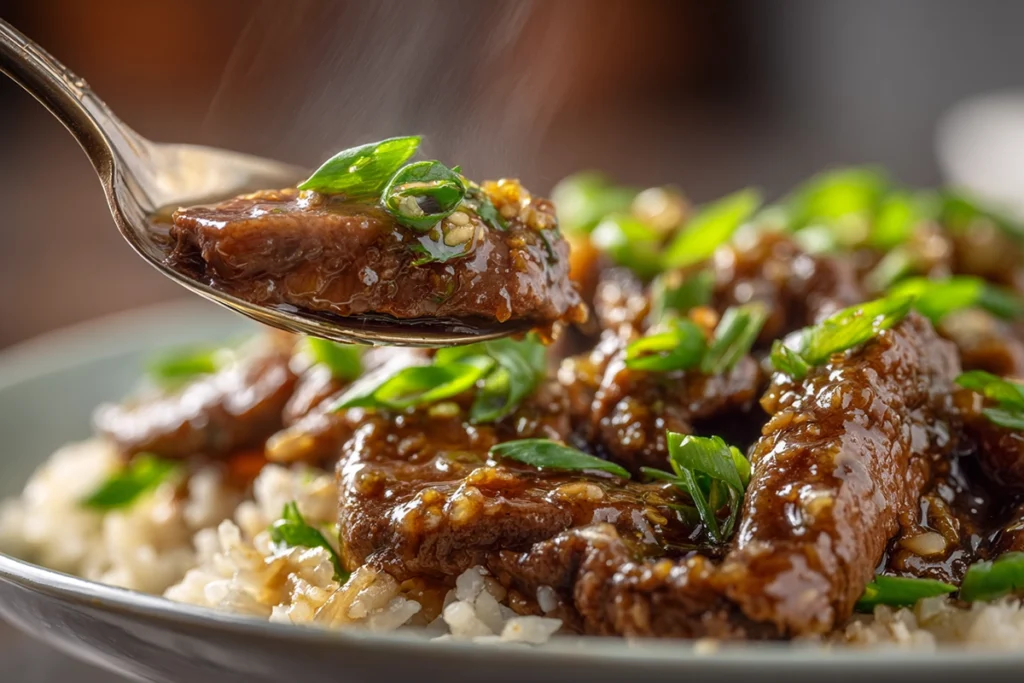
I serve this Mongolian beef hot, right off the stove, over plain white rice. The rice matters — you want something neutral that absorbs the sauce instead of competing with it. Jasmine rice is my usual choice because it stays fluffy and lightly fragrant without getting sticky.
Leftovers keep well in the fridge for up to three days, but the texture changes slightly. Store the beef and rice separately if you can; the sauce firms up as it cools and loosens again when reheated. Reheat gently in a skillet over medium-low heat with a small splash of water. You’ll hear the sauce start to loosen before it bubbles — that’s when it’s ready. I don’t recommend freezing this; the sauce separates, and the beef loses its tenderness when thawed.
Closing Thought
This dish works because it respects timing, heat, and restraint — the same small details that make weeknight cooking reliable instead of frustrating. When those details line up, Mongolian Beef stops being takeout-style and becomes something you can make confidently, any night of the week.
Get inspired with more mouthwatering recipes! Follow me on Pinterest for new cooking ideas every week.
Frequently Asked Questions
Can I use a different cut of beef for Mongolian Beef?
Yes, but it needs to be a cut that stays tender when cooked quickly. Flank steak is the most reliable. Skirt steak also works if sliced thin against the grain. Avoid thick or slow-cooking cuts like chuck — they’ll turn chewy before the sauce is ready.
Why is my Mongolian Beef chewy?
Chewy beef almost always comes from slicing with the grain or cooking it too long. The slices should be thin and cut against the grain, and they only need brief browning. If the beef feels firm or springy in the pan, it’s already gone too far.
Can I make Mongolian Beef ahead of time?
You can prep the components ahead — slice the beef and make the sauce — but it’s best cooked just before serving. Cooking it fully ahead and reheating will tighten the beef and dull the sauce’s texture.
Is Mongolian Beef supposed to be spicy?
No. Traditional Mongolian beef is sweet and savory, not spicy. Heat is optional and should be subtle. If you add spice, it should complement the sauce, not overpower the garlic and ginger.
How do I thin the sauce if it gets too thick?
Add a small splash of water while the sauce is warm and stir gently. You should see it loosen and turn glossy again. Don’t add soy sauce — that increases salt without fixing the texture.
Can I freeze Mongolian Beef?
I don’t recommend freezing it. The sauce separates when thawed, and the beef loses its tenderness. This is one of those recipes that’s better enjoyed fresh or refrigerated for the short term.
What rice works best with Mongolian Beef?
Plain white rice works best because it absorbs the sauce without competing with it. Jasmine rice is ideal — fluffy, lightly fragrant, and not sticky.
PrintMongolian Beef
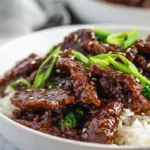
Make Mongolian Beef at home with tender beef, a glossy sweet and savory sauce, and simple steps. A reliable weeknight recipe ready in 40 minutes.
- Prep Time: 20 minutes
- Cook Time: 20 minutes
- Total Time: 40 minutes
- Yield: 4 servings 1x
- Category: Dinner, Main Dish
- Method: Baking
- Cuisine: American
- Diet: Gluten-Free
Ingredients
- 1 lb flank steak
- 1/3 cup cornstarch
- 2 teaspoons vegetable oil
- 2 tablespoons vegetable oil
- 1/2 teaspoon fresh ginger
- 4 cloves garlic
- 1/2 cup low-sodium soy sauce
- 1/4 cup water
- 1/2 cup brown sugar
- 2 green onions
Instructions
- Slice beef thinly against the grain and coat with cornstarch.
- Simmer soy sauce, water, brown sugar, garlic, and ginger until glossy.
- Brown beef in batches in hot oil until lightly golden.
- Combine beef with sauce and cook until coated and bubbling.
- Stir in green onions and remove from heat.
Notes
- Use low-sodium soy sauce to control salt.
- Cook beef in batches to avoid steaming.
- Slice beef against the grain for tenderness.
Nutrition
- Serving Size: 1 bowl
- Calories: 520
- Sugar: 18
- Sodium: 980
- Fat: 22
- Saturated Fat: 7
- Unsaturated Fat: 13
- Trans Fat: 0
- Carbohydrates: 42
- Fiber: 2
- Protein: 36
- Cholesterol: 95