
Homemade Dunkaroos with Crisp Graham Cookies and Sprinkle Frosting

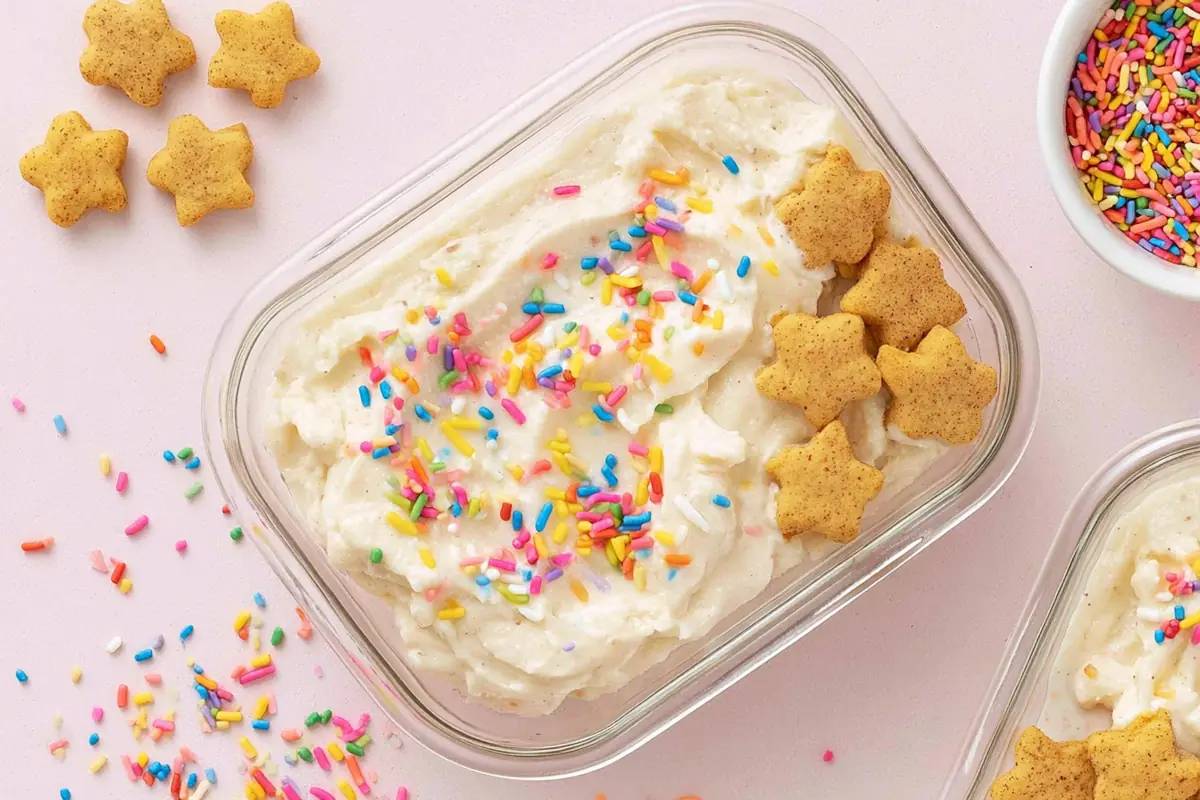
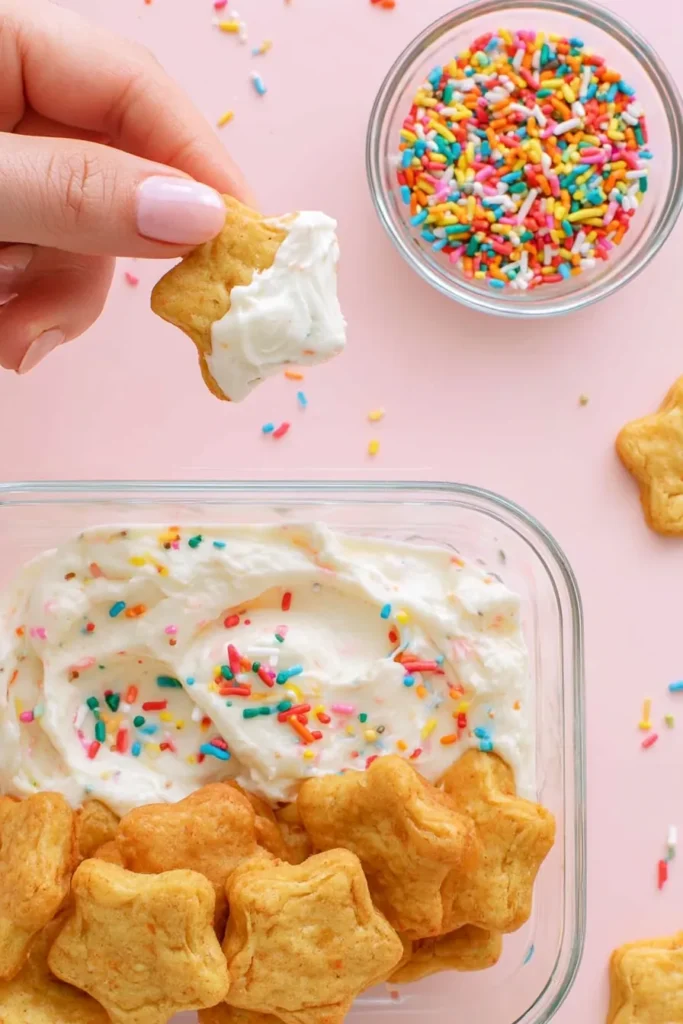
Homemade Dunkaroos bring together crisp cinnamon-graham cookies and soft vanilla frosting loaded with rainbow sprinkles. The cookies have enough structure to scoop up the frosting without snapping, while their lightly buttery flavor keeps the dip from tasting overly sweet.
This version uses crushed graham crackers in the dough rather than making a plain sugar cookie. That extra step gives the cookies the familiar toasted flavor and dry, crisp finish that make them good for dipping.
Homemade Dunkaroos Bring Back the Lunchbox Crunch
The original appeal of this snack was simple: small cookies, a tub of frosting, and permission to dip generously. My homemade version keeps that same idea while giving the cookies a fresher texture and a more noticeable cinnamon-graham flavor.
These aren’t meant to be thick or chewy. Roll the dough to about ¼ inch, then bake the small shapes for 8–10 minutes. Once cooled, the cookies should feel dry at the center and break with a clean snap. The frosting provides the softer contrast—smooth, sweet, and dotted with sprinkles. Serve the two separately so every cookie stays crisp until it reaches the bowl.
Pantry Ingredients for Cookies and Rainbow Frosting
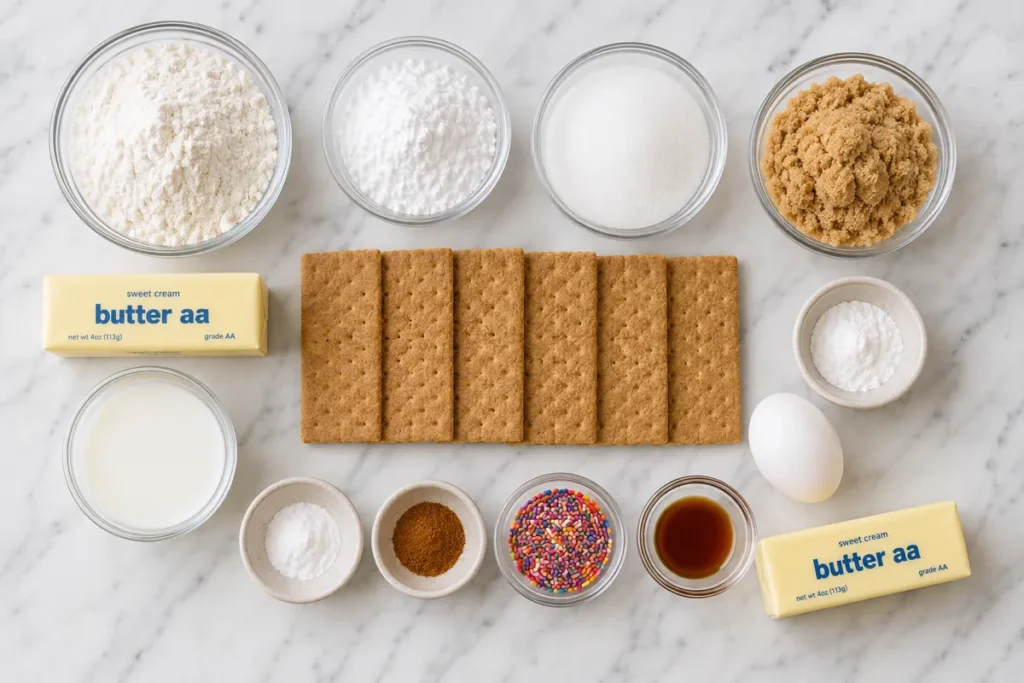
The cookie dough starts with salted butter, brown sugar, and granulated sugar. Brown sugar adds a little moisture and a mild caramel note, while granulated sugar helps the edges become crisp. One egg binds the dough, and vanilla rounds out the flavor.
Graham crackers are processed into a fine flour and combined with all-purpose flour. The two flours work together: graham crumbs bring toasted flavor, while wheat flour gives the miniature cookies enough strength for dipping. Baking powder, baking soda, and 1 teaspoon ground cinnamon complete the dry mixture.
Use unsalted butter for the frosting. Powdered sugar supplies the structure, whole milk loosens it, and vanilla keeps the flavor familiar. I prefer adding the rainbow sprinkles after the frosting is smooth; extended mixing can cause some sprinkles to bleed and tint the entire bowl.
Building a Smooth Homemade Dunkaroos Dough
Start with butter that is soft enough to dent when pressed but not shiny or partly melted. In a medium bowl, beat the salted butter with the brown and granulated sugars on medium speed. After a couple of minutes, the mixture should look smoother and slightly lighter, with no obvious streaks of butter along the bowl.
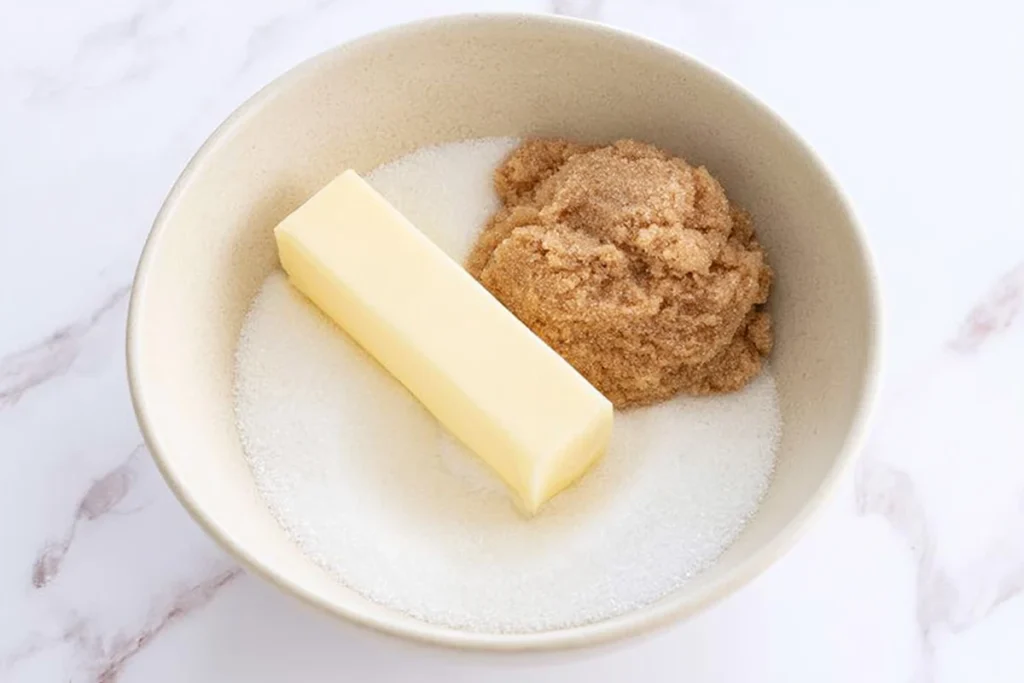
Add the egg and 1 teaspoon vanilla extract, then mix only until the egg disappears into the butter mixture. Scrape the bottom and sides of the bowl once. Dense streaks often hide there, especially when using a hand mixer.
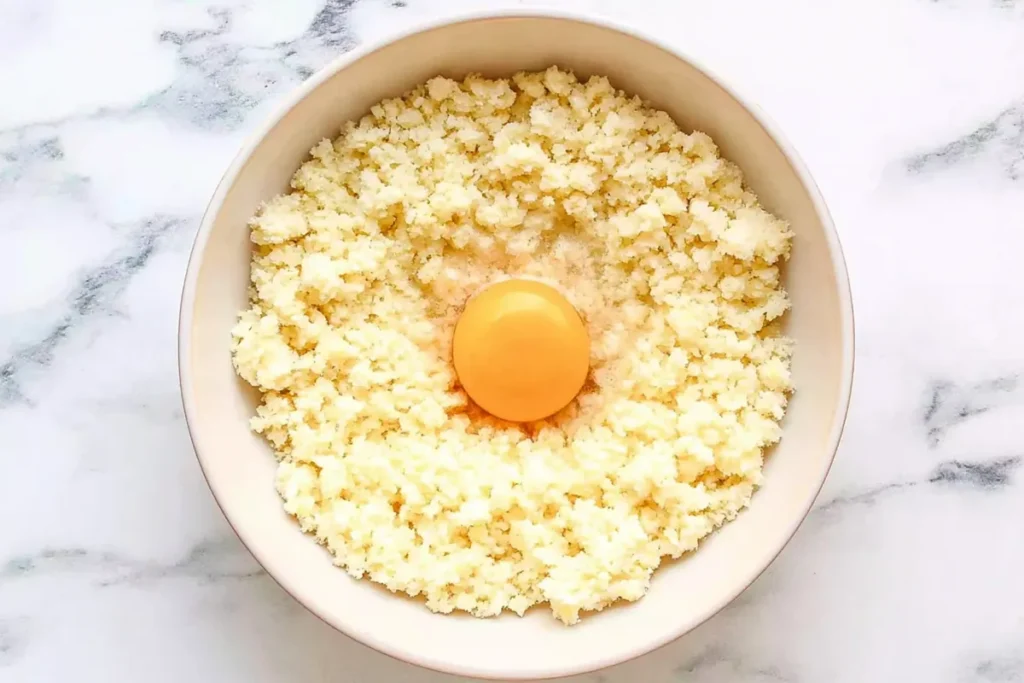
Process the graham crackers until they resemble fine sand. A few larger pieces may remain, so pass the crumbs through a fine-mesh strainer before measuring or mixing them with the all-purpose flour.
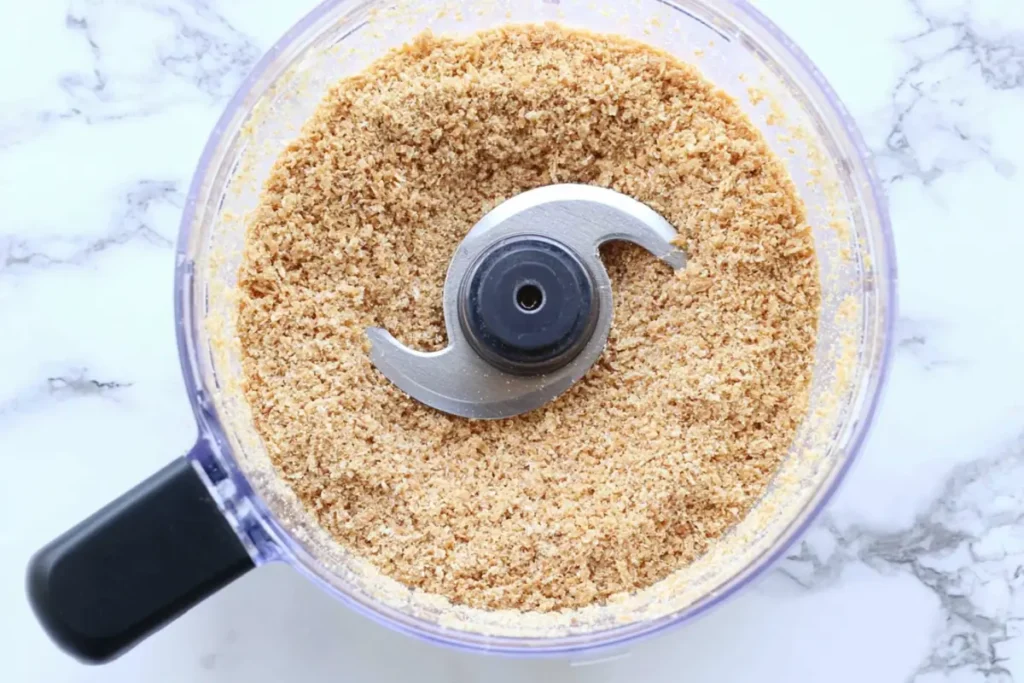
Coarse crumbs can drag through the dough and make clean miniature shapes harder to cut.
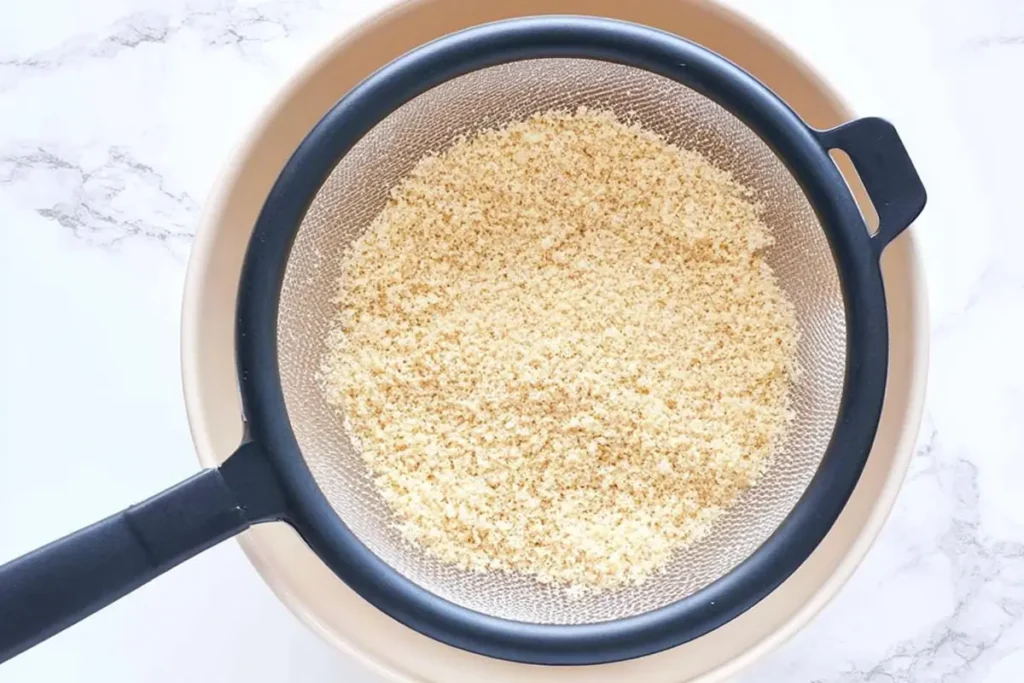
Whisk the graham flour with the all-purpose flour, baking powder, baking soda, and cinnamon. Add this mixture gradually to the creamed butter rather than pouring it in all at once. Stop mixing when a cohesive dough forms and no dry pockets remain. It may look slightly firmer than standard sugar-cookie dough. That’s useful here.
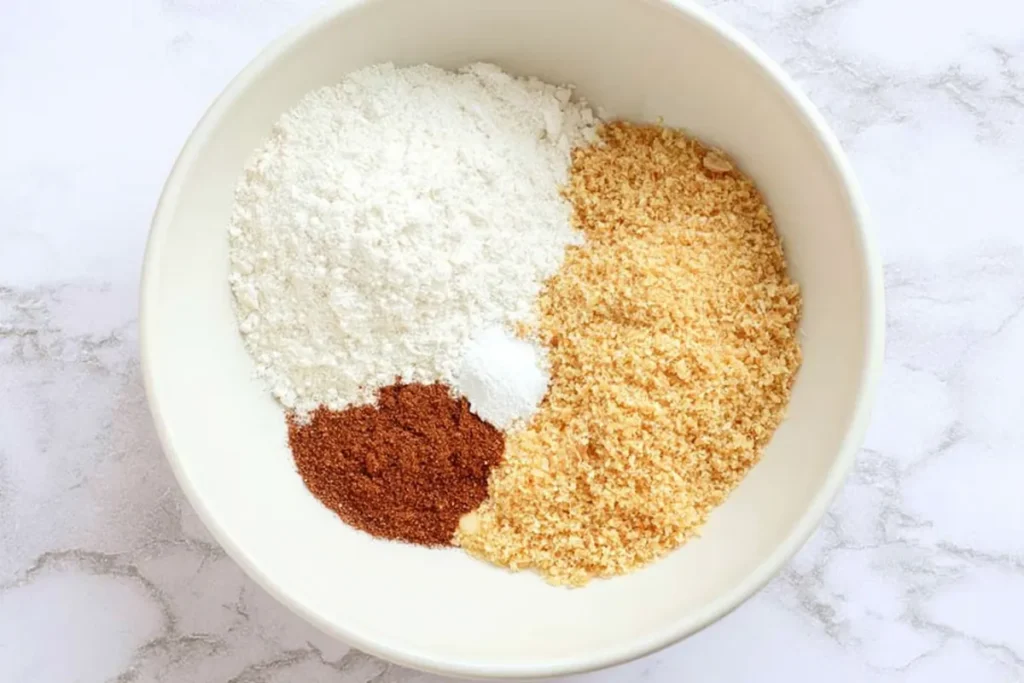
A soft, sticky dough can spread in the oven and blur the small shapes.
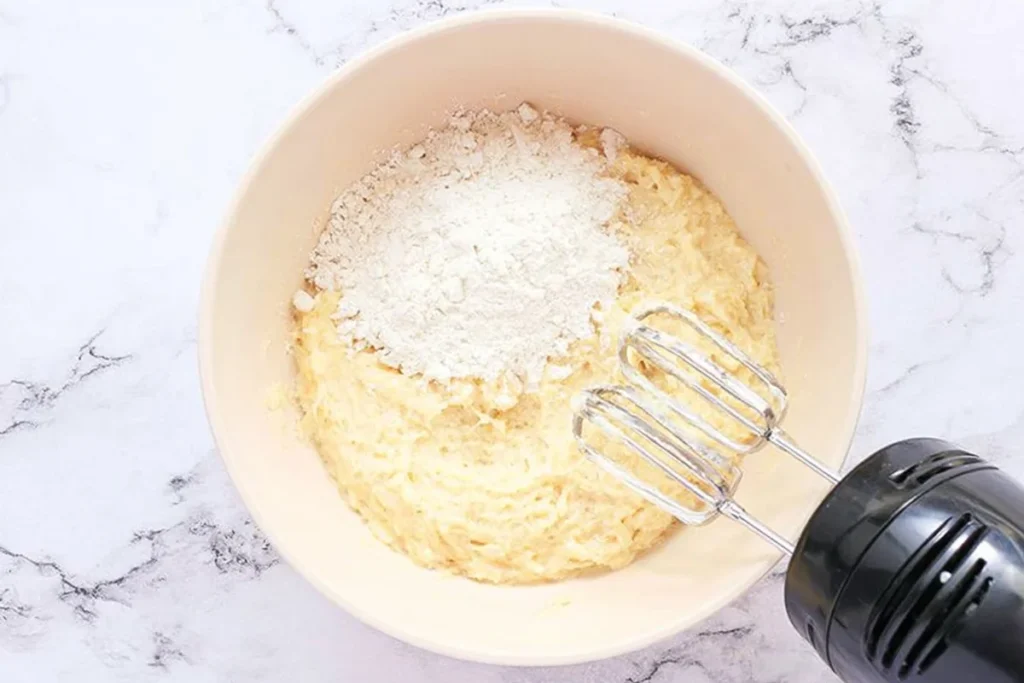
Rolling and Cutting the Mini Cookies
Place the dough on a sheet of parchment and cover it with a second sheet before rolling. This keeps the rolling pin clean and avoids adding extra flour, which can make the finished cookies dusty or tough. Roll from the center outward until the dough is approximately ¼ inch thick across the entire sheet.
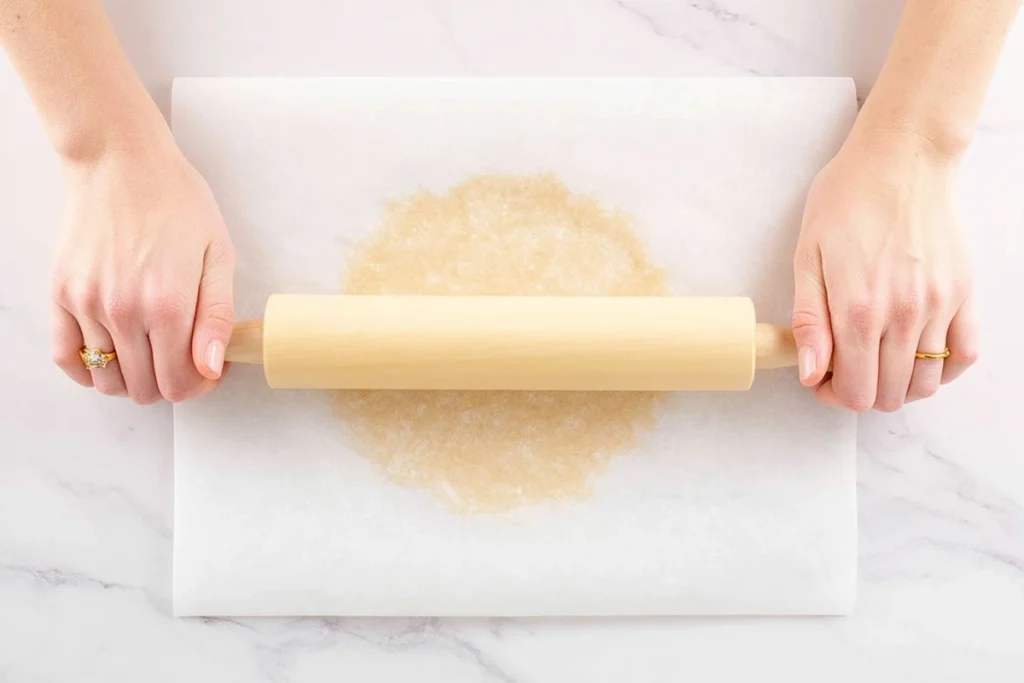
Thickness matters more than the exact shape. Thin spots can brown before the rest of the tray is ready, while thicker cookies may stay soft in the center. Run your fingertips lightly over the covered dough to find uneven areas before cutting.
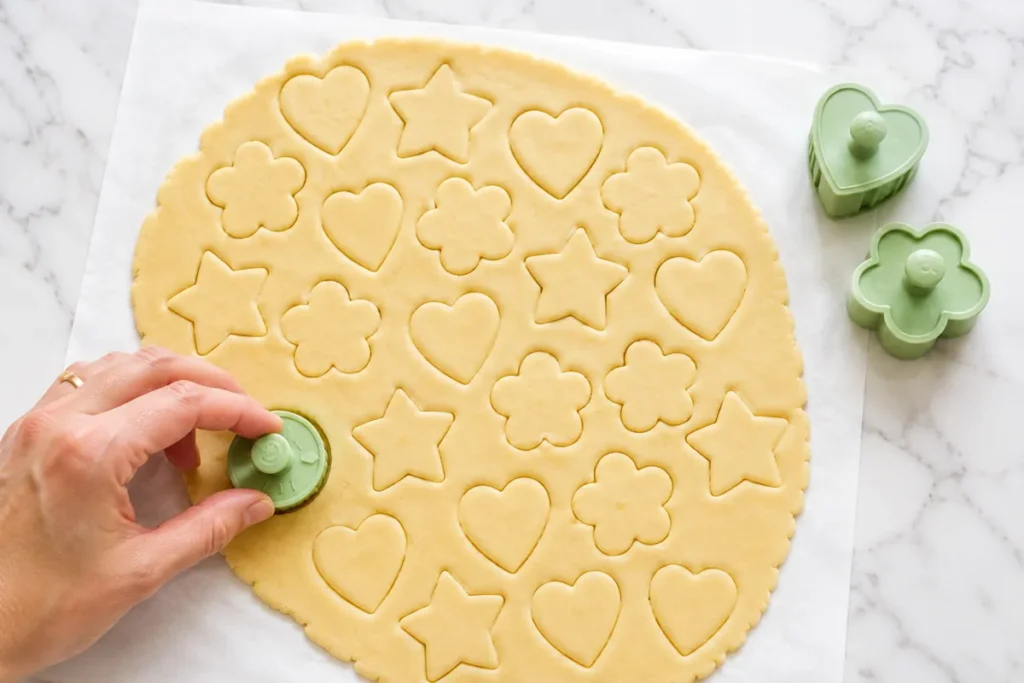
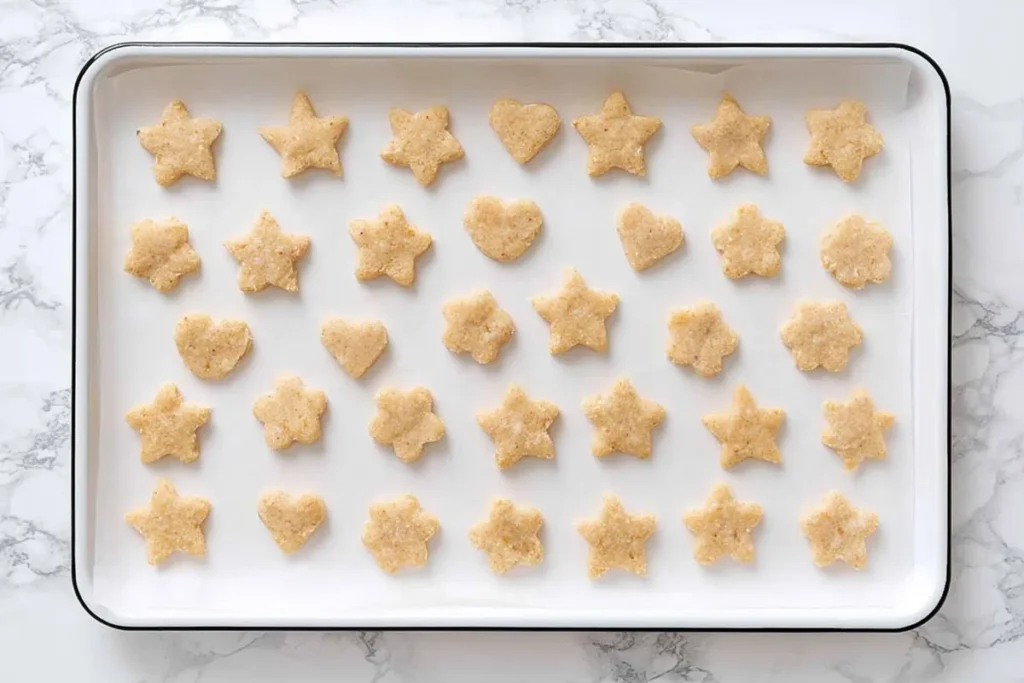
Use the smallest cookie cutters you have. Children’s baking cutters, canapé cutters, or clean miniature fondant cutters all work well. Cut the shapes closely together, gather the scraps, and reroll them between the parchment sheets. Keep each batch similar in size so the cookies finish baking at roughly the same time. Transfer them to a parchment-lined baking sheet with a little space between each piece.
Baking for a Crisp, Dippable Texture
Arrange the cut cookies on a parchment-lined baking sheet and bake at 350°F for 8–10 minutes. Because the shapes are small, they can move from pale to overbaked quickly. Start checking at the 8-minute mark.
Look for lightly colored edges and dry-looking centers. The tops shouldn’t appear glossy or soft. They may still feel slightly delicate when they first come out of the oven, so leave them on the baking sheet for a few minutes before moving them to a wire rack.
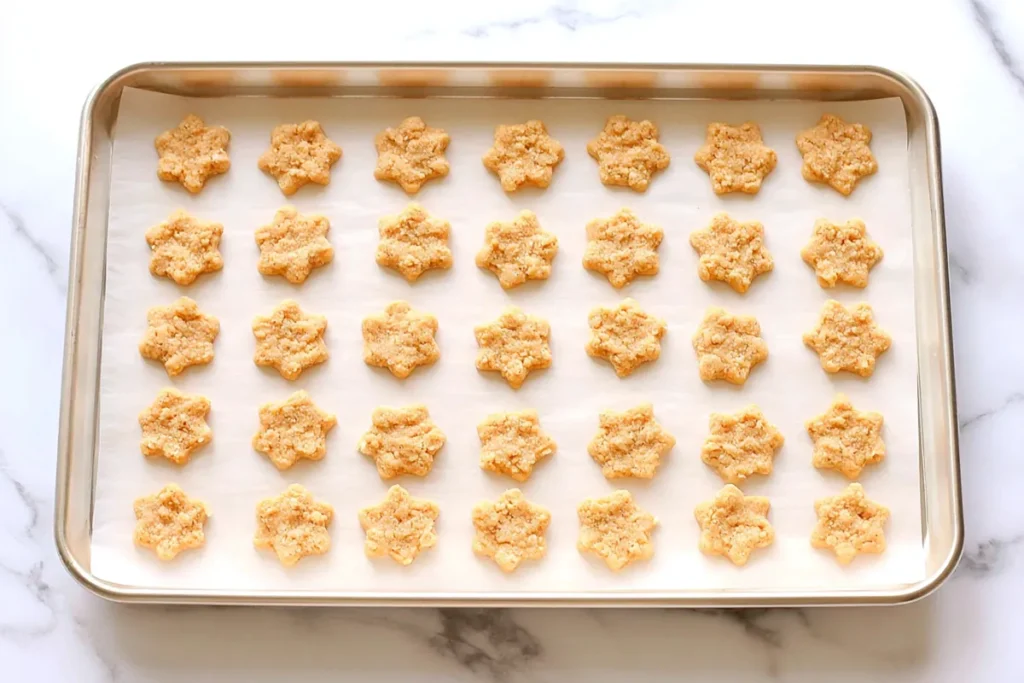
The final crispness develops as the cookies cool. Don’t wait for deep browning in the oven; that usually gives the cinnamon and graham flavors a burnt edge rather than a clean toasted finish.
Whipping the Vanilla Rainbow Frosting
Place the room-temperature unsalted butter, powdered sugar, 1 teaspoon vanilla extract, and whole milk in a medium bowl. Mix on low speed first so the powdered sugar stays in the bowl, then increase to medium once the ingredients begin to combine.
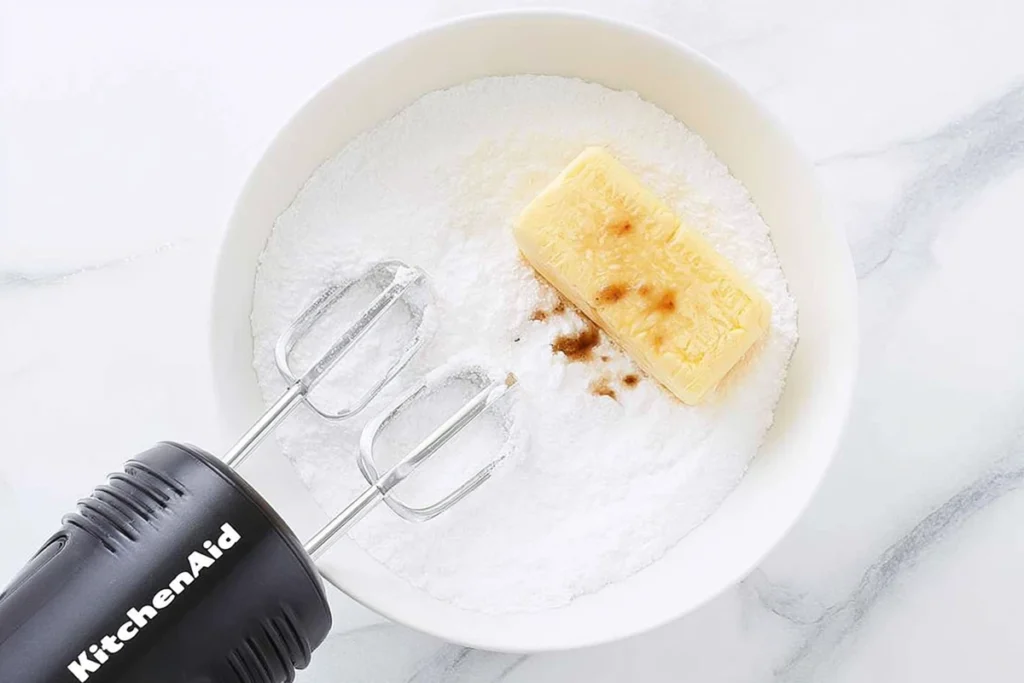
The frosting should become smooth, pale, and soft enough to scoop with a miniature cookie. If it feels too stiff, add milk a teaspoon at a time. A small amount makes a noticeable difference. If it becomes loose, mix in a little more powdered sugar until it holds gentle ridges.
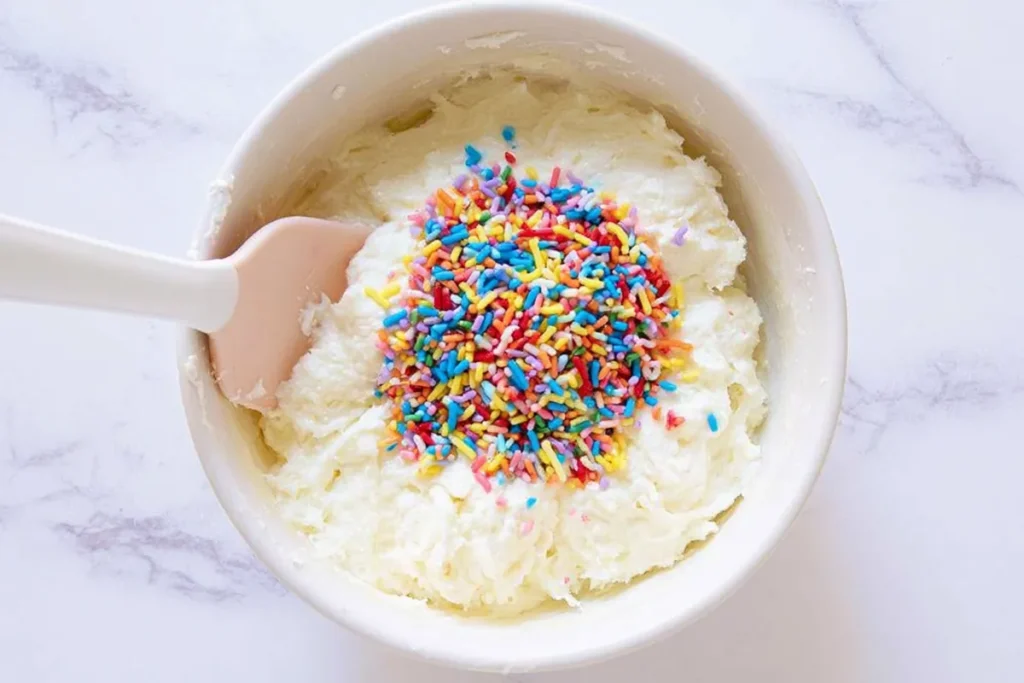
Fold in the rainbow sprinkles last with a spatula. Mixing them aggressively with the hand mixer can break them apart and streak the frosting. I prefer a thick sprinkle mix here because it gives each dip a little color without changing the vanilla flavor.
Practical Adjustments for Better Homemade Dunkaroos
A few details make these cookies easier to handle. Grind the graham crackers as finely as possible, then sift them. Larger crumbs can weaken the edges of tiny cutouts and cause the shapes to crack during transfer.
Keep the dough close to ¼ inch thick from edge to edge. If your smallest cutters produce very tiny cookies, begin checking the tray a minute early. Larger shapes may need the full 10 minutes.
Let the cookies cool completely before testing the texture. A warm cookie can seem soft even when it has baked correctly. For a thicker frosting, add powdered sugar one tablespoon at a time. For a looser dip, use milk by the teaspoon. Small adjustments work better than pouring in a large amount at once.
Keeping the Cookies Crisp and the Frosting Dippable
Store the fully cooled cookies in an airtight container at room temperature. Any trapped warmth creates condensation, and that moisture can soften the crisp texture. A sheet of parchment between layers helps protect the smaller shapes from breaking.
Keep the frosting in a separate covered container in the refrigerator. Before serving, let it stand at room temperature until the butter softens, then stir it until smooth again. Depending on your kitchen temperature, this usually takes 20–30 minutes.
Don’t store the cookies pressed into the frosting or in the same container. The moisture from the buttercream gradually transfers into the cookies, leaving them soft instead of snappy.

A Retro Treat Ready for Your Kitchen
These Homemade Dunkaroos are built around one useful contrast: crisp little cookies and soft vanilla frosting. Keep the dough evenly rolled, watch the tray closely near the end of baking, and let the cookies cool fully before serving.
The shapes don’t need to look factory-made. That’s part of the charm. Every recipe I share is an invitation from my kitchen to yours, and this one is meant to be dipped, shared, and enjoyed without much fuss.
Frequently Asked Questions
Can I crush the graham crackers without a food processor?
Yes. Place the graham crackers in a sturdy zip-top bag and crush them with a rolling pin until very fine. Sift the crumbs afterward and return any coarse pieces to the bag for another pass.
Why did my miniature cookies spread?
The butter may have been too warm, or the dough may have been rolled unevenly. Use softened butter that still holds its shape, mix only until the dough comes together, and keep the dough close to 1/4 inch thick.
How can I make the cookies crispier?
Roll the dough evenly, bake until the centers look dry, and let the cookies cool completely on a wire rack. They become firmer as they lose heat, so judge the texture only after cooling.
Can the frosting be prepared ahead of time?
Yes. Refrigerate it in a covered container, then leave it at room temperature for 20 to 30 minutes before serving. Stir until smooth and add a teaspoon of milk if it still feels too firm.
What can I use instead of miniature cookie cutters?
Use small fondant cutters, the wide end of a piping tip, or cut the rolled dough into tiny squares with a knife or pizza wheel. Keep the pieces similar in size so they bake evenly.
Homemade Dunkaroos
Ingredients
Equipment
Method
- Gather all of the ingredients and preheat the oven to 350°F. Line a baking sheet with parchment paper.
- Add the room-temperature salted butter, brown sugar, and granulated sugar to a medium mixing bowl and cream with a hand mixer on medium speed until smooth and slightly lighter in color.
- Add the egg and 1 teaspoon vanilla extract, then mix on medium speed until fully incorporated. Scrape the bottom and sides of the bowl as needed.
- Place the graham crackers in a food processor and pulse until they resemble fine sand.
- Sift the processed graham crackers through a fine-mesh strainer into a medium mixing bowl, returning any coarse pieces to the food processor if necessary.
- Whisk the graham cracker flour, all-purpose flour, baking powder, baking soda, and cinnamon together until evenly combined.
- Add the dry mixture gradually to the creamed butter mixture, mixing only until a cohesive dough forms and no dry flour remains.
- Place the dough on a sheet of parchment paper, cover it with a second sheet, and roll it evenly to about 1/4 inch thick.
- Cut the dough into small shapes with miniature cookie cutters. Gather and reroll the scraps until all of the dough has been used.
- Arrange the cookies on the prepared baking sheet with a little space between each piece.
- Bake for 8 to 10 minutes, checking at the 8-minute mark, until the centers look dry and the edges are lightly golden.
- Let the cookies rest on the baking sheet for a few minutes, then transfer them to a wire rack to cool completely and become crisp.
- For the frosting, combine the room-temperature unsalted butter, powdered sugar, remaining 1 teaspoon vanilla extract, and whole milk in a medium mixing bowl.
- Mix the frosting on low speed until the powdered sugar begins to incorporate, then increase to medium speed and beat until smooth and creamy.
- Adjust the frosting with milk by the teaspoon if it is too thick or with additional powdered sugar if it is too loose.
- Fold in the rainbow sprinkles with a spatula, then serve the frosting with the cooled miniature cookies.
Notes
- Use butter that is soft enough to indent when pressed but not melted or shiny.
- Process and sift the graham crackers finely so coarse crumbs do not weaken the miniature shapes.
- Roll the dough to an even 1/4-inch thickness so the cookies bake at the same rate.
- The cookies become firmer and crispier as they cool, so avoid baking them until deeply browned.
- Store the cooled cookies in an airtight container at room temperature and refrigerate the frosting separately.
- Let chilled frosting soften at room temperature for 20 to 30 minutes before stirring and serving.