
Chicken Pasta Primavera That Actually Works on Weeknights

Chicken Pasta Primavera That Smells Like Dinner’s Already Done
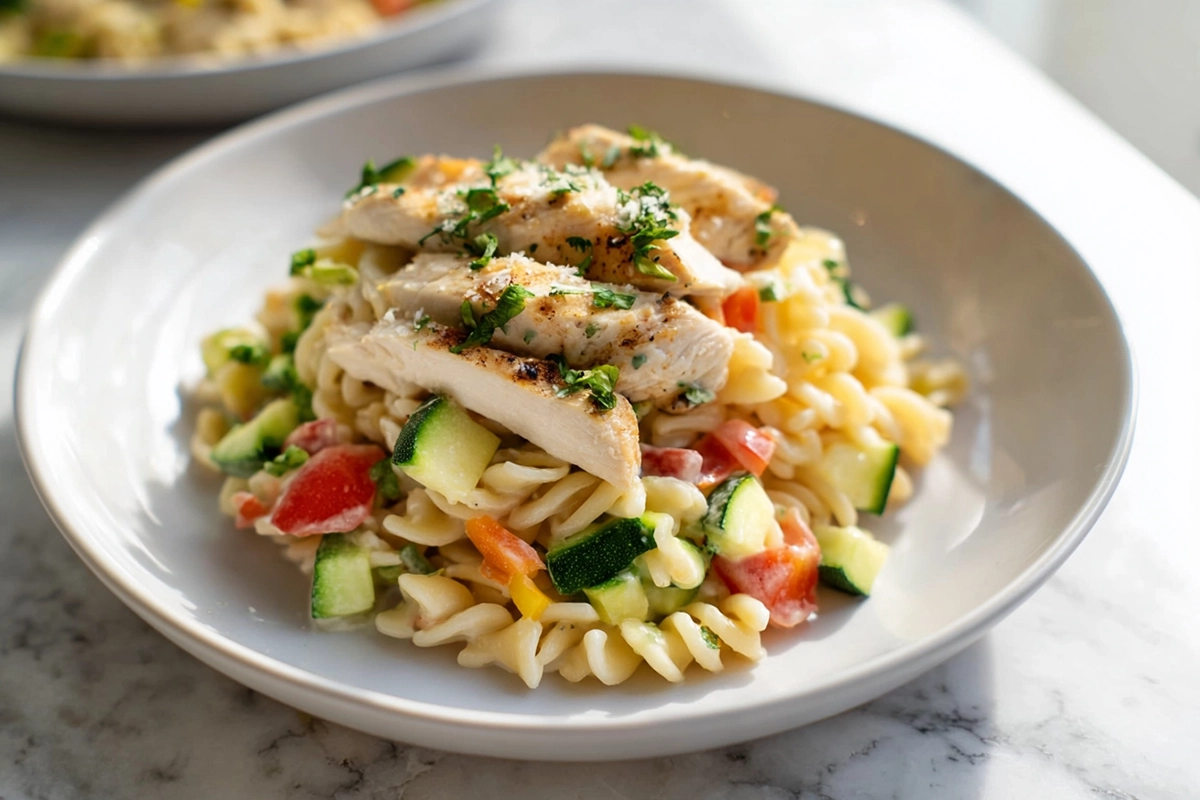
The first thing you notice with Chicken Pasta Primavera isn’t the pasta — it’s the smell. Butter warming in the pan, garlic blooming just enough to turn fragrant, and cream hitting heat without boiling. That aroma tells you this is going to be a proper dinner, not something rushed together and forgotten five minutes later. The vegetables stay bright, the chicken stays juicy, and the sauce clings instead of sliding to the bottom of the bowl.
This is the kind of meal I lean on when I want something fresh but still comforting. It comes together quickly, but only because the order makes sense. The chicken cooks evenly, the vegetables don’t overstay their welcome, and the sauce is built at a temperature where it stays smooth. Nothing fancy, nothing fragile — just a process that works the same way every time.
What I like most about this Chicken Pasta Primavera is that it respects real kitchens and real schedules. You’re not juggling six pans or guessing when something is “probably done.” Each part has a purpose, and the timing lines up so everything finishes together. That’s how weeknight recipes earn a spot on repeat.
Table of Contents
Ingredients That Make This Recipe Consistent
Chicken Breasts
Boneless, skinless chicken breasts work best here because they cook quickly and slice cleanly over the pasta. Pounding them to an even thickness matters more than the cut itself — it’s the difference between juicy meat and dry edges. Thighs can be used, but they’ll change the texture and timing slightly.
Pasta
Any standard dry pasta works, and this is a case where the inexpensive store brand is perfectly fine. What matters is cooking it just to al dente so it can finish gently in the sauce without turning soft. Bowties, penne, or rotini all hold the cream well.
Heavy Cream
This is one ingredient I don’t recommend substituting. Heavy cream gives the sauce stability so it doesn’t split when heated. Half-and-half or milk can work in theory, but they’re far less forgiving and often lead to a thin or broken sauce.
Parmesan Cheese
Freshly grated Parmesan melts smoothly and adds depth without making the sauce gritty. Pre-grated cheese can work in a pinch, but it doesn’t melt as cleanly and can dull the flavor.
Fresh Vegetables
Grape tomatoes, zucchini, and peas give you sweetness, color, and texture without long cook times. These vegetables are chosen because they hold their shape and don’t release too much water into the sauce.
Garlic, Butter, and Olive Oil
This trio builds the base flavor. Olive oil handles the chicken, butter rounds out the sauce, and garlic adds aroma without overpowering the vegetables when cooked briefly.

How This Chicken Pasta Primavera Comes Together Smoothly
Setting Up the Chicken for Even Cooking
This dish starts by making the chicken predictable. When the breasts are an even thickness, they hit the pan and cook at the same rate from edge to center. You’re looking for an immediate sizzle when the chicken touches the oil — that sound tells you the pan is hot enough. Visually, the surface should turn lightly golden before you think about flipping, and to the touch, the chicken should release easily instead of sticking. When it smells lightly savory and cooked through rather than steamy or raw, you’re in the right zone.
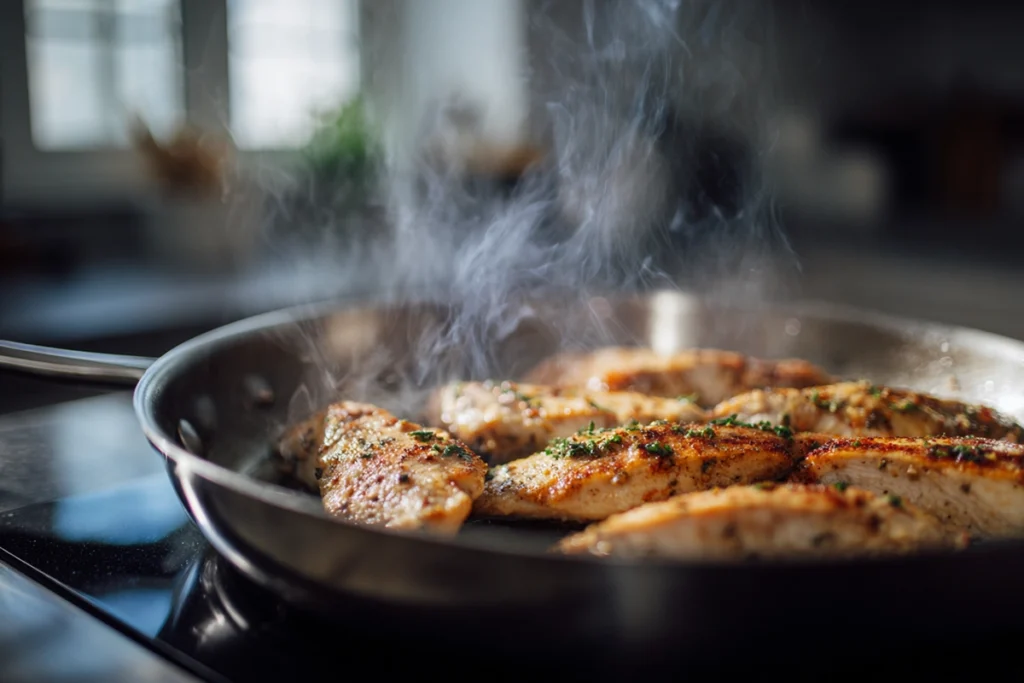
Once cooked, the chicken rests off the heat. This matters. As it sits, the juices redistribute, and you’ll feel the surface firm slightly without tightening. That short rest keeps the slices juicy when they’re added back later.
Building Flavor Without Overcooking the Vegetables
The vegetables go into the same skillet while it’s still warm, not screaming hot. You want a gentle sizzle, not aggressive popping. Garlic should smell fragrant within seconds — as soon as you notice that toasted aroma, it’s time to move forward. Visually, the tomatoes soften and gloss over, while the zucchini turns brighter green but still holds its shape. If the vegetables start slumping or releasing water, the heat is too high.
This stage is about touch and smell more than time. The vegetables should feel tender when pressed with a spoon but not mushy. When they smell fresh and slightly sweet, they’re ready for the sauce.
Bringing the Sauce Together Gently
The sauce is where restraint matters. Once the broth hits the pan, it should quietly bubble rather than boil. When the cream is added, the surface should look smooth and unified, not separated or oily. Stir slowly and listen — you want a soft simmer, not a hiss. As the parmesan melts, the sauce thickens slightly and coats the spoon in a thin, even layer.
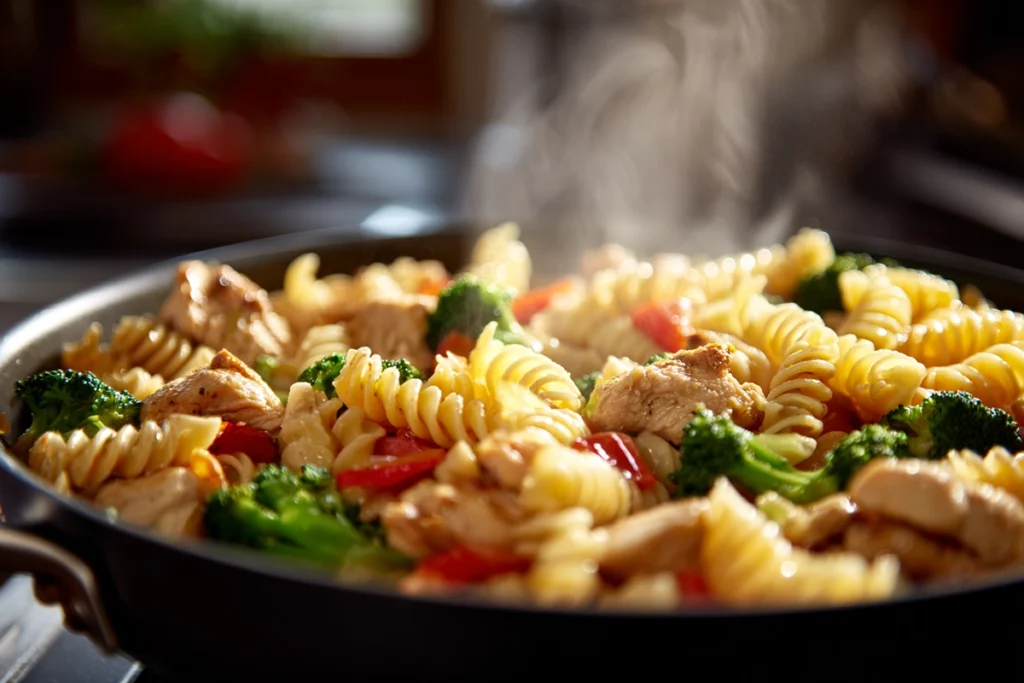
When the pasta and peas go in, the pan should smell creamy and savory, not sharp or scorched. The pasta should feel springy when stirred, and the sauce should cling without pooling. That’s the cue to stop the heat and bring the chicken back in.
Where Chicken Pasta Primavera Usually Goes Wrong
The Sauce Turns Thin or Grainy
This almost always comes from too much heat. If the sauce smells overly dairy-heavy or looks speckled instead of glossy, it’s likely been pushed too hard. Cream wants gentle warmth. Keeping the heat moderate and stirring slowly lets the cheese melt smoothly and the sauce stay cohesive.
Vegetables Lose Their Texture
If the zucchini looks dull or the tomatoes collapse completely, they’ve been in the pan too long. Primavera should look fresh. You should still see defined edges and bright color. The smell should be lightly sweet and vegetal, not stewed.
Dry Chicken on the Final Plate
Dry chicken usually means it stayed in the pan too long or wasn’t rested before slicing. When you cut into it, the inside should look moist and opaque, not fibrous. Resting the chicken and adding it back at the end keeps the texture tender and prevents overcooking.
These small adjustments are what make this Chicken Pasta Primavera reliable instead of hit-or-miss — and why it works just as well on a busy Tuesday as it does when you’re cooking with more time.
Make It Your Own
Swap Chicken Breasts for Thighs (More Forgiving, Richer Flavor)
If you prefer a little insurance against overcooking, boneless chicken thighs work well here. They stay juicy even if the timing drifts by a minute or two. You’ll notice a slightly deeper aroma as they cook, and the texture stays softer when sliced. Keep the heat moderate and expect them to take just a bit longer to firm up in the pan.
Go Vegetable-Forward Without Losing Balance
This recipe handles mushrooms or asparagus well if you treat them properly. Sauté mushrooms separately until their moisture cooks off and they smell nutty, then fold them in with the sauce. For asparagus, slice it thin and add it with the zucchini so it stays crisp and bright rather than stringy.
Lighter Cream Version (With Realistic Expectations)
You can replace half of the heavy cream with additional broth if you want something lighter. The sauce will look thinner and coat the pasta less aggressively, but it will still taste good if the parmesan is freshly grated. Keep the heat even lower here — reduced fat means less margin for error.
Lemon-Finished Primavera
A small squeeze of lemon at the very end wakes the whole dish up. Add it off the heat when the sauce smells rich and creamy. You’re aiming for a fresh lift, not acidity — the aroma should smell clean and bright, not sharp.
Serving & Storing in Real Life
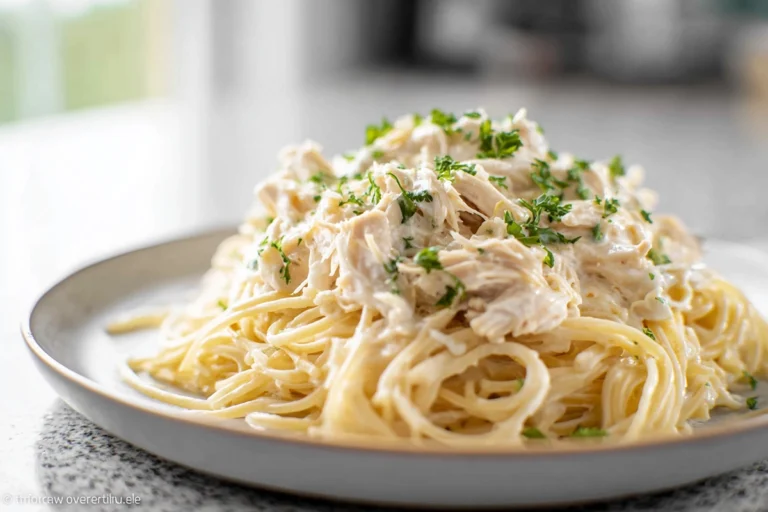
I serve this straight from the skillet while the sauce is still glossy and the pasta has some spring. A little extra parmesan on top and maybe fresh parsley if it’s around, but nothing more than that. It’s filling on its own, and I usually eat it from a wide bowl so the sauce doesn’t pool underneath.
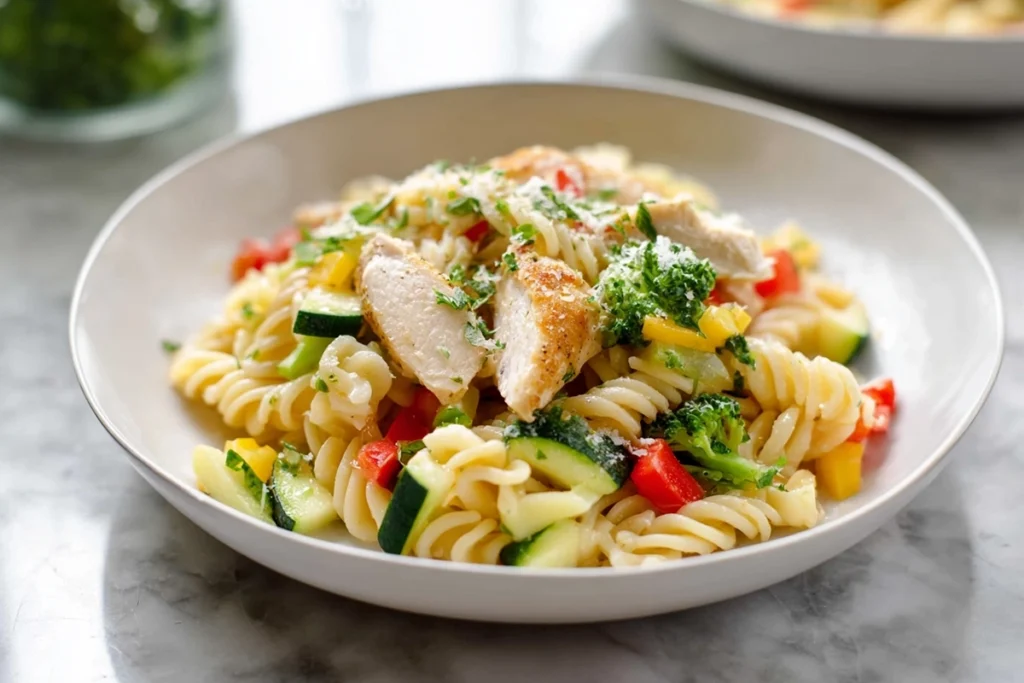
For leftovers, store it in an airtight container in the fridge for up to three days. The sauce will thicken as it cools — that’s normal. When reheating, add a splash of cream or broth and warm it gently over low heat. You’ll hear a soft simmer when it’s ready; stop there to keep the sauce smooth.
I don’t recommend freezing this one. Cream-based sauces lose their texture once thawed, and the vegetables turn soft in a way you can’t fix later.
Closing
This Chicken Pasta Primavera works because every part finishes together — creamy sauce, tender chicken, and vegetables that still taste fresh. When dinner smells this good while it’s cooking, you already know it’s going to be a repeat.
Get inspired with more mouthwatering recipes! Follow me on Pinterest for new cooking ideas every week.
Frequently Asked Questions
Can I use a different pasta shape?
Yes. Short pasta shapes like penne, rotini, or bowties work best because they catch the sauce and vegetables evenly. Long noodles tend to slide past the vegetables, which makes the dish feel less balanced.
Why does my sauce turn out thin?
This usually happens when the heat is too high after adding the cream. Cream needs gentle heat to thicken properly. If it boils, it stays loose and can even separate instead of coating the pasta.
Can I make this without heavy cream?
You can, but the texture will change. Replacing part of the cream with broth makes the sauce lighter and less clingy. It will still taste good, but it won’t have the same smooth, rich finish.
How do I keep the chicken from drying out?
Pound the chicken to an even thickness and pull it from the pan as soon as it’s cooked through. Let it rest before slicing. If you cook it longer “just to be safe,” it will dry out.
Can I prep anything ahead of time?
Yes. You can slice the vegetables, grate the parmesan, and season the chicken earlier in the day. Keep everything refrigerated and cook it fresh so the textures stay right.
Is Chicken Pasta Primavera freezer-friendly?
No. Cream-based sauces don’t freeze well, and the vegetables lose their texture when thawed. This recipe is best eaten fresh or within a few days from the fridge.
What vegetables can I use if I don’t have zucchini or peas?
Asparagus (thinly sliced) or mushrooms work well. Mushrooms should be sautéed until their moisture cooks off, or they’ll water down the sauce.
Print
Chicken Pasta Primavera
- Prep Time: 10 minutes
- Cook Time: 20 minutes
- Total Time: 30 minutes
- Yield: 4 servings 1x
- Category: Dinner
- Method: Stovetop
- Cuisine: American
- Diet: Halal
Description
Creamy Chicken Pasta Primavera made with tender chicken, fresh vegetables, and parmesan. A dependable 30-minute weeknight dinner that works every time.
Ingredients
- 2 boneless skinless chicken breasts
- 1 tsp dried oregano
- 1 tsp salt
- 1/2 tsp garlic powder
- 1/2 tsp black pepper
- 2 Tbsp olive oil
- 8 oz dry pasta
- 2 Tbsp butter
- 2 cloves garlic
- 1 cup grape tomatoes
- 1 zucchini
- 1/2 cup chicken broth
- 1/2 cup parmesan cheese
- 1 cup heavy cream
- 1/2 cup frozen peas
Instructions
- Pound chicken to even thickness and season.
- Cook chicken in olive oil until golden and cooked through.
- Boil pasta until al dente and drain.
- Sauté butter and garlic in the same skillet.
- Add tomatoes and zucchini and cook briefly.
- Stir in broth, cream, and parmesan to form sauce.
- Add pasta and peas and warm through.
- Slice chicken and serve over pasta.
Notes
- Use heavy cream for best texture.
- Cook vegetables briefly to keep them crisp.
- Do not boil the sauce after adding cream.
Nutrition
- Serving Size: 1 bowl
- Calories: 620
- Sugar: 6g
- Sodium: 780mg
- Fat: 32g
- Saturated Fat: 16g
- Unsaturated Fat: 14g
- Trans Fat: 0g
- Carbohydrates: 52g
- Fiber: 5g
- Protein: 36g
- Cholesterol: 145mg