
The Broccoli Potato Cheese Soup That Works

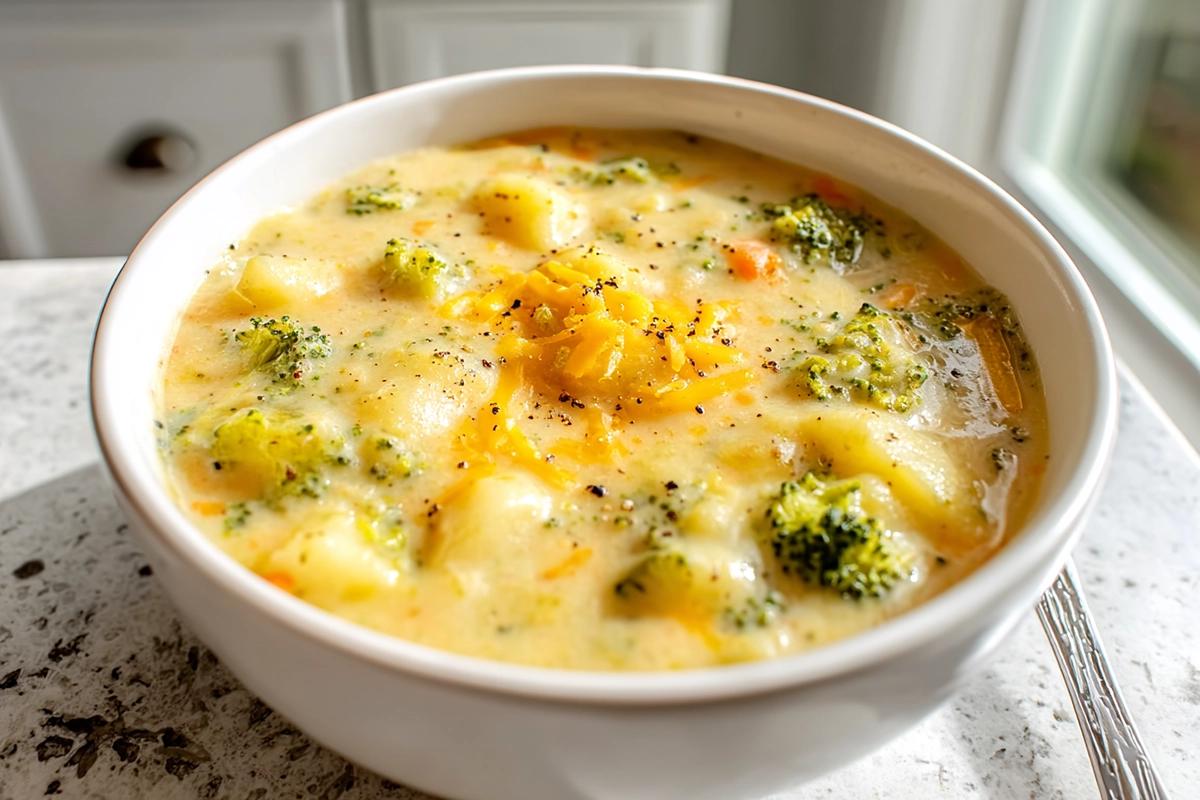
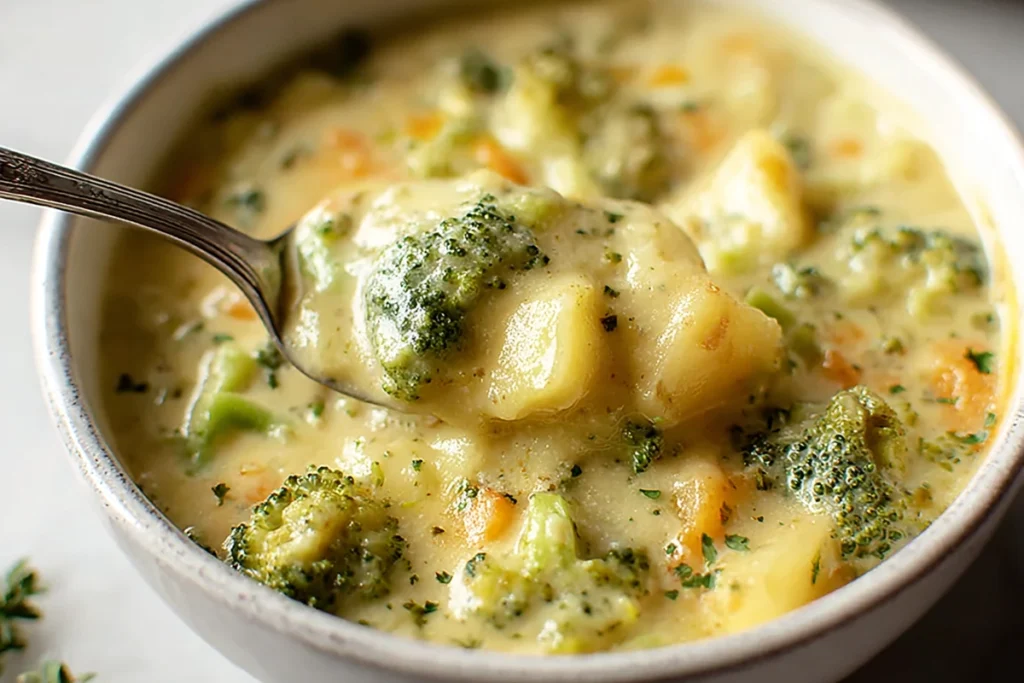
Broccoli Potato Cheese Soup is one of those things that sounds simple until you actually make it. What you want is thick but not gluey, creamy but not heavy, cheesy without tasting like melted cafeteria slices. When it’s right, the steam smells faintly sweet from the broccoli, the spoon drags just a little through the bowl, and the cheese pulls in soft threads instead of clumps. That first bite should make you slow down, not reach for the salt shaker.
Most versions miss the mark in predictable ways. Some rely on heavy cream and end up greasy. Others go all-in on cheese and break into grainy sadness the second they cool down. And then there are the “healthy” ones that somehow taste like hot broccoli water with regrets. None of that is necessary, and none of it belongs in a soup that’s supposed to be comfort food you can knock out on a weeknight.
Here’s my promise: this version works because it respects order, restraint, and ingredients that actually pull their weight. We’re building flavor early, thickening on purpose (not by accident), and using cheese as a texture tool—not a crutch. It’s one pot, under 30 minutes, and forgiving enough to survive real life. If you’ve ever had broccoli cheese soup fail on you before, this is the one that behaves.
The No-Regret Ingredients
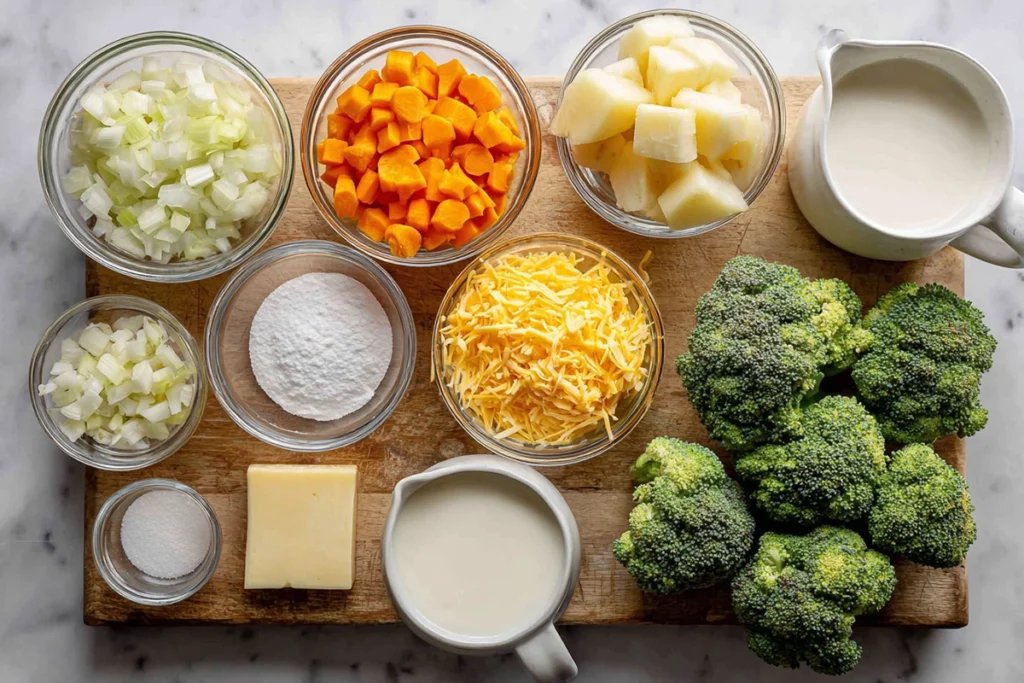
Onion, Carrot, and Celery
This is your flavor base, whether you notice it or not. I don’t care if you chop them by hand or blitz them fine—what matters is that they melt into the soup instead of standing out. Pre-cut is fine here; save your knife skills for another day.
Garlic
Two cloves are enough. Burnt garlic will ruin the whole pot, so fresh matters more than fancy. Skip the jarred stuff—it tastes sharp and stale once it cooks.
Butter
Butter gives the soup its rounded, savory backbone. You don’t need a premium brand, but don’t swap oil here unless you absolutely have to—it changes the mouthfeel.
Flour
This is what gives the soup body without turning it into paste. All-purpose works, whole wheat is fine, and gluten-free blends behave surprisingly well here if you whisk them in patiently.
Chicken or Vegetable Broth
Low-sodium only. Full-salt broth makes it almost impossible to fix the seasoning later. This soup needs room to breathe.
Milk
Regular milk keeps things creamy without heaviness. Skim works, but you’ll lose a little richness. I don’t recommend cream—it overpowers everything else.
Potatoes
Plain potatoes are perfect. Dice them small, so they cook fast and thicken the soup naturally. No fancy varieties required.
Broccoli
Fresh broccoli florets, chopped small. Frozen works in a pinch, but fresh gives you better texture and less water.
Sharp Cheddar Cheese
This is non-negotiable. Sharp cheddar brings real flavor, so you don’t need tons of it. Pre-shredded is fine, but shred it yourself if you want smoother melting.
American or Mild Cheddar Slices
This is the quiet hero. One or two slices help stabilize the cheese and keep the soup silky. It won’t taste like American cheese—I promise.
Parmesan Cheese
A small amount adds depth and saltiness. Use real Parm, not the green can. It disappears into the soup in the best way.
Salt and Black Pepper
Season lightly at first. Cheese adds salt later, and overshooting early is how soups get aggressive.
How to Build Creaminess Without Heavy Cream
Softening the Base Without Browning It
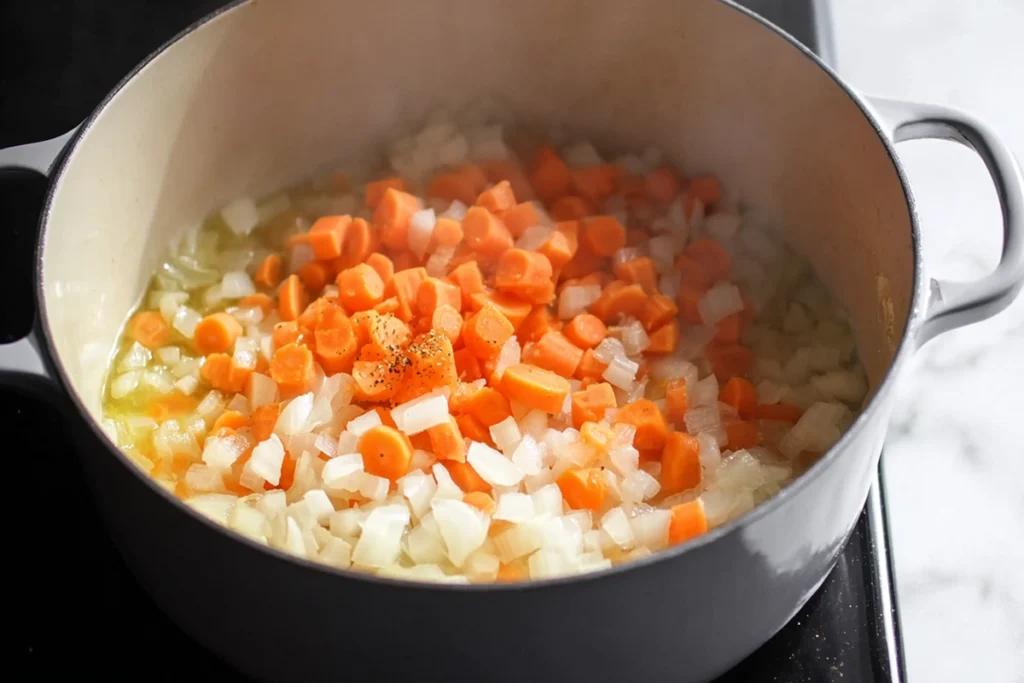
Everything starts with the onion, carrot, celery, garlic, and butter getting friendly in the pot. You’re not looking for color here—look for the vegetables to turn glossy and slump down, almost like they’ve given up. You should hear a gentle hiss, not a hard sizzle, and the smell should be sweet and mellow, not sharp. If anything starts browning, the heat’s too high, and the soup will taste cooked instead of cozy.
Thickening on Purpose, Not by Accident
Once the vegetables are soft, the flour goes in, and you stir until the pot looks pasty and smooth, like wet sand clinging to the spoon. This stage smells faintly nutty when it’s right and raw when it’s not—give it a few seconds to cook. When you add the broth and milk, the mixture should loosen gradually, not clump. Watch for the liquid to turn slightly opaque and feel thicker as you stir; that’s your base doing its job.
Letting the Potatoes Do the Heavy Lifting
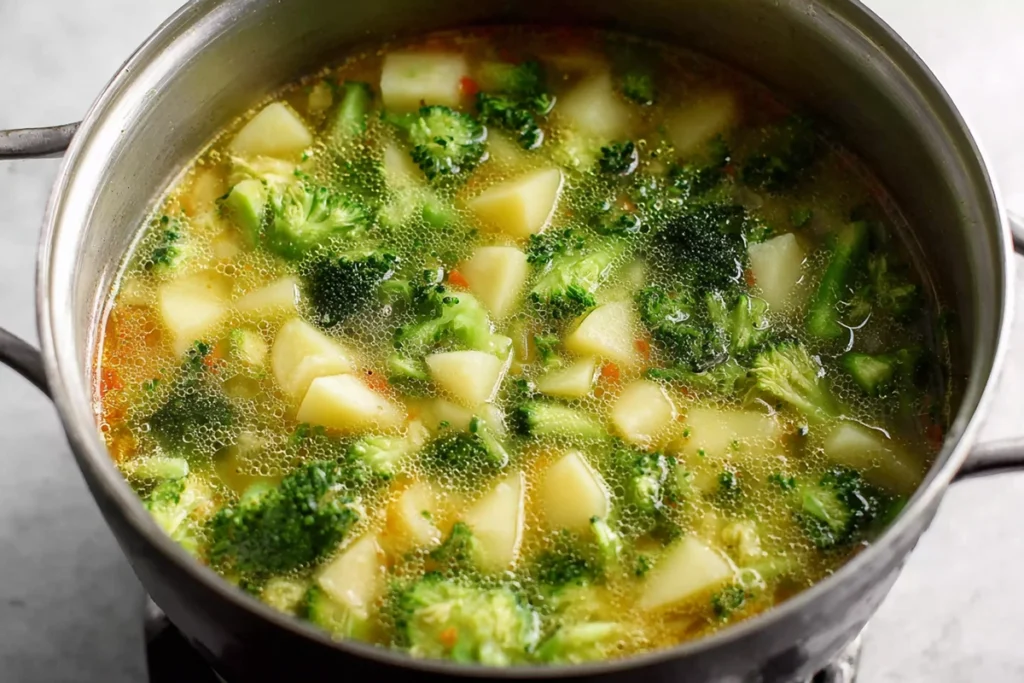
When the potatoes go in, you’re switching from building flavor to building body. As the soup heats up, you’ll see small bubbles breaking the surface and hear a steady simmer—not a rolling boil. The smell stays mild and starchy, and when you pinch a potato cube between your fingers, it should crush easily without resistance. That softness is what gives the soup its natural thickness later.
Broccoli and Cheese—Last and Slow
Broccoli goes in once the potatoes are tender, and it cooks fast. The green should brighten, not turn army dull, and the smell should be fresh and vegetal. Cheese comes off the heat—always. As you stir, listen for silence instead of bubbling and watch the cheese melt into the soup instead of breaking apart. A quick blend at the end should feel controlled, not aggressive; you’re aiming for a thicker body with visible texture, not a smooth purée.
The Uh-Oh Moments (Where This Soup Goes Sideways)
Why Is My Soup Grainy?
I’ve done this by rushing. If the soup is bubbling or even steaming hard when the cheese goes in, it will seize and turn gritty. Kill the heat, wait until the surface calms, then stir slowly. You should feel the soup thicken smoothly under the spoon, not turn sandy.
Why Are My Potatoes Still Hard?
This almost always comes down to size. If the potato pieces look chunky in the pot, they won’t cook evenly in 30 minutes. When they’re right, you can smell a soft, starchy sweetness and mash one easily with the back of a spoon. If they resist, keep simmering—don’t crank the heat and scorch the bottom.
Why Does My Soup Taste Flat?
Flat soup usually means the base didn’t cook long enough. If the vegetables went in and out too fast, the soup smells muted and tastes thin, no matter how much cheese you add. Slow down at the beginning until the kitchen smells gently sweet and savory—that’s flavor insurance.
Why Is My Soup Too Thin?
This looks scary, but it fixes itself most of the time. Before adding more flour or cheese, blend a small portion of the soup. You should see the texture tighten immediately and feel more resistance when you stir. If it still pours like milk, then—and only then—do you adjust.
That’s the heart of it. Once you understand why each stage behaves the way it does, this soup stops being fussy and starts being reliable.
Make It Your Own (Without Regretting It)
Extra-Cheesy, But Controlled
If you want this soup cheesier, don’t just dump in more cheddar and hope for the best. Add an extra half cup of block sharp cheddar, shredded by hand, and melt it off the heat. Pre-shredded cheese has anti-caking powder that you can feel on your fingers, and it’s the same stuff that keeps it from melting smoothly in the pot. More cheese works—but only if you respect how it melts.
Vegetarian That Still Feels Complete
Swap the chicken broth for a good-quality vegetable broth, not the watery kind. The soup should still smell savory and round, not thin and sweet. I also recommend leaning a little harder on the Parmesan here—it adds that “something” people miss when there’s no meat-based broth underneath.
Gluten-Free, With One Adjustment
A one-for-one gluten-free flour blend works, but the texture ends up slightly softer and less glossy. You’ll notice it when you stir—the soup feels a bit looser at first. Blend a slightly larger portion at the end to compensate, and don’t panic if it takes a minute to come together.
Protein Boost Without Ruining the Soup
If you need this to eat like a full meal, diced rotisserie chicken works well. Add it at the very end, when the soup is already thick and hot, so it warms through without overcooking. You should smell the chicken gently warming, not simmering—once it starts bubbling again, you’ve gone too far.
Serving & Storing (Real Life)
I eat this soup in a wide bowl, so it cools just enough to show off its thickness. A piece of crusty bread or a simple grilled cheese is perfect, but honestly, it holds its own. The next day is even better—the flavor settles, the texture tightens, and it reheats like it was meant to.
Store leftovers in an airtight container in the fridge for up to four days. When reheating, use the stovetop over low heat and stir gently. You should hear a quiet steam, not a boil. Add a splash of milk if it looks too thick, and stop once it’s hot—boiling again risks breaking the cheese.
Freezing works, with one rule: let the soup cool completely first. Freeze in portion-sized containers so you’re not thawing more than you need. Thaw overnight in the fridge, then reheat slowly. It won’t be quite as silky as day one, but it’ll still be worth eating.
One Last Thing
This soup is about comfort without shortcuts that come back to bite you. When Broccoli Potato Cheese Soup is done right, it’s thick, dependable, and exactly the kind of meal you make again because it didn’t let you down the first time.
Get inspired with more mouthwatering recipes! Follow me on Pinterest for new cooking ideas every week.
Frequently Asked Questions
Can I use frozen broccoli instead of fresh?
Yes, but expect a softer texture. Frozen broccoli releases more water, so the soup won’t smell as fresh, and the bite will be less defined. If you use it, add it straight from frozen and don’t overcook it—once it turns dull green, it’s done.
Why did my cheese soup turn gritty?
The soup was too hot when the cheese went in. Cheese should melt quietly, not boil. If you hear bubbling or see steam rolling, take the pot off the heat, wait a minute, then stir the cheese in slowly.
Can I make this gluten-free without ruining it?
Yes. Use a one-to-one gluten-free flour blend. The soup will feel slightly looser at first, so blend a bit more at the end to tighten the texture. Flavor-wise, it holds up just fine.
What’s the best milk to use for this soup?
Regular milk works best. Skim milk is fine, but thinner, and cream makes the soup heavy and masks the broccoli. You want creamy, not rich-for-the-sake-of-rich.
Can I make the soup thicker without adding more cheese?
Yes. Blend a small portion of the soup—mostly potatoes—then stir it back in. You’ll feel the spoon drag more through the pot almost immediately, which is exactly what you want.
Is this soup kid-friendly or too broccoli-forward?
It’s very kid-friendly. The broccoli is chopped small and softened, so it blends into the cheese and potatoes instead of standing out. If your kids hate visible green bits, blend a little more.
Broccoli Potato Cheese Soup
Ingredients
Method
- Melt the butter in a large pot over medium heat. Add the diced onion and cook until softened and translucent.
- Add the carrots, salt, and pepper. Cook for several minutes until the carrots begin to soften.
- Stir in the garlic and cook briefly until fragrant.
- Pour in the chicken stock and add the potatoes. Bring to a gentle simmer, cover, and cook until the potatoes are fork-tender.
- Add the broccoli and continue simmering until the broccoli is tender but still bright green.
- Whisk the cornstarch and milk together until smooth, then stir into the soup to thicken.
- Lower the heat and gradually stir in the shredded cheddar cheese until fully melted and smooth.
- Taste and adjust seasoning as needed, then serve warm.
Notes
- Store leftovers in an airtight container in the refrigerator for up to 3 days.
- The soup will thicken as it cools; add a splash of milk or broth when reheating.
- Reheat gently over low heat to maintain a smooth texture.