
The Chicken and Stuffing Casserole That Finally Works

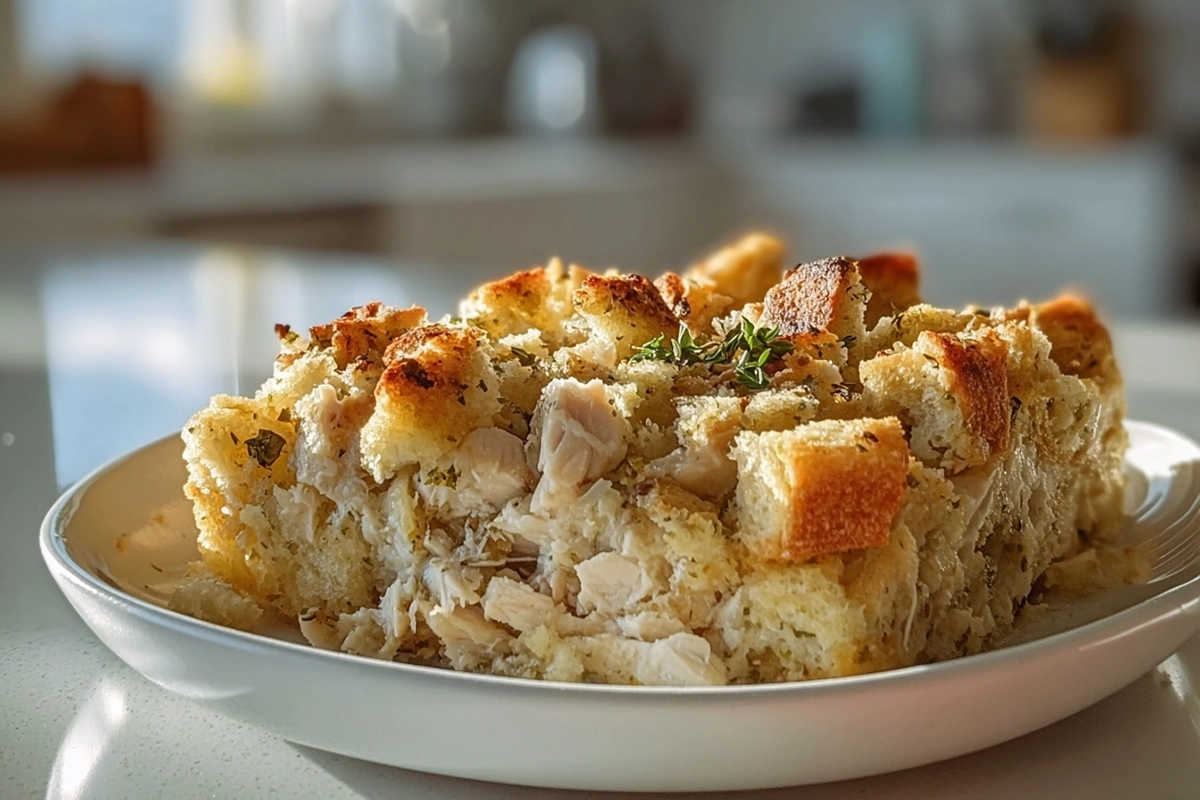
There’s a reason Chicken and Stuffing Casserole keeps showing up in search results year after year—it hits that exact spot between comfort food and low-effort dinner. The smell alone sells it: buttery stuffing soaking up chicken broth, creamy gravy bubbling underneath, and that unmistakable “this is going to be good” aroma filling the kitchen. This is the kind of dinner that feels like you tried harder than you actually did, which is honestly my favorite kind.
Now, here’s the problem with most versions of this recipe. They either turn out dry on top, soupy on the bottom, or somehow manage both at the same time. Some call for pre-cooked stuffing that turns gummy. Others drown everything in soup and hope for the best. And almost none of them explain why things go wrong—so you’re left guessing if it was your oven, your pan, or just bad luck.
This version is different, and I don’t say that lightly. I’ve made this casserole more times than I can count, mostly because it’s reliable. The method respects how stuffing absorbs liquid, how chicken cooks evenly, and how gravy forms naturally without shortcuts that backfire later. My promise here is simple: if you understand why each ingredient is doing its job, you’ll never end up with dry stuffing or bland chicken again. No tricks. Just logic that works on a random Tuesday night.
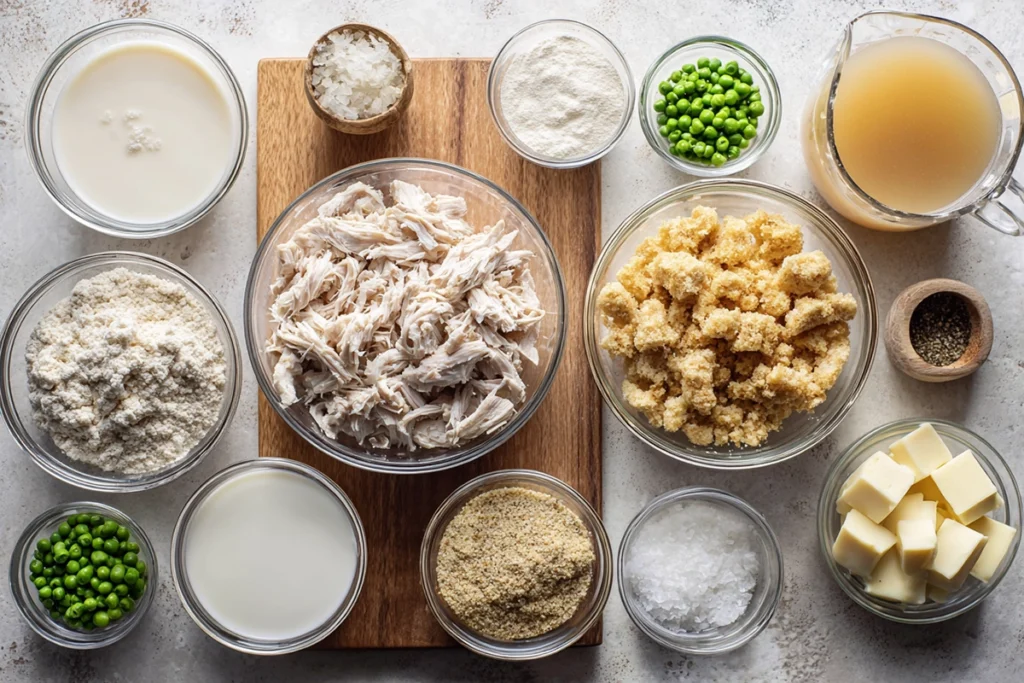
No-Regret Ingredients (Why These Matter)
Chicken Tenderloins
Tenderloins are my first choice because they cook evenly and stay juicy without babysitting. You can use breasts or thighs, but tenderloins hit the sweet spot for texture and timing in this casserole. Cut them evenly and you’re already halfway to success.
Cream of Chicken Soup
This is the backbone of the gravy, not just a filler. Store-brand is perfectly fine here—what matters is consistency, not brand loyalty. Skip low-fat versions; they break easier and leave the sauce thin.
Cream of Celery Soup
This adds depth without screaming “celery.” It balances the richness of the chicken soup and keeps the casserole from tasting flat. If you skip it, the dish loses that savory, old-school casserole flavor that makes it work.
Milk
A small amount goes a long way here. Milk loosens the soups just enough to coat the chicken evenly without turning everything watery. Whole or 2% works best—anything thinner doesn’t bring much to the table.
Stove Top Chicken Stuffing Mix
Do not get creative here. This stuffing is engineered to absorb liquid and puff just right, and that’s exactly what we want. Fancy bakery stuffing sounds nice, but it won’t behave the same way in the oven.
Chicken Broth
This controls the gravy—more broth means saucier results. Use regular or low-sodium depending on your salt tolerance, but make sure the stuffing is fully moistened. Dry spots on top are the fastest way to ruin this dish.
Salt, Black Pepper, and Parsley
The salt and pepper season the chicken directly, which matters more than people think. Parsley is optional, but it adds a little freshness that keeps the casserole from feeling too heavy. It’s small, but noticeable.
The Process (Why This One Actually Works)
Building the Layers Without Overthinking It
This casserole works because of order, not effort. When the chicken goes into the dish first, you want it spread out in a single, even layer—no big piles. Visually, it should look boring at this stage, just pale chicken filling the pan edge to edge. When you season it, use your hands and actually touch the chicken; it should feel lightly coated, not wet or slippery. That early seasoning matters more than people think, because once the gravy forms, it’s too late to fix bland meat.
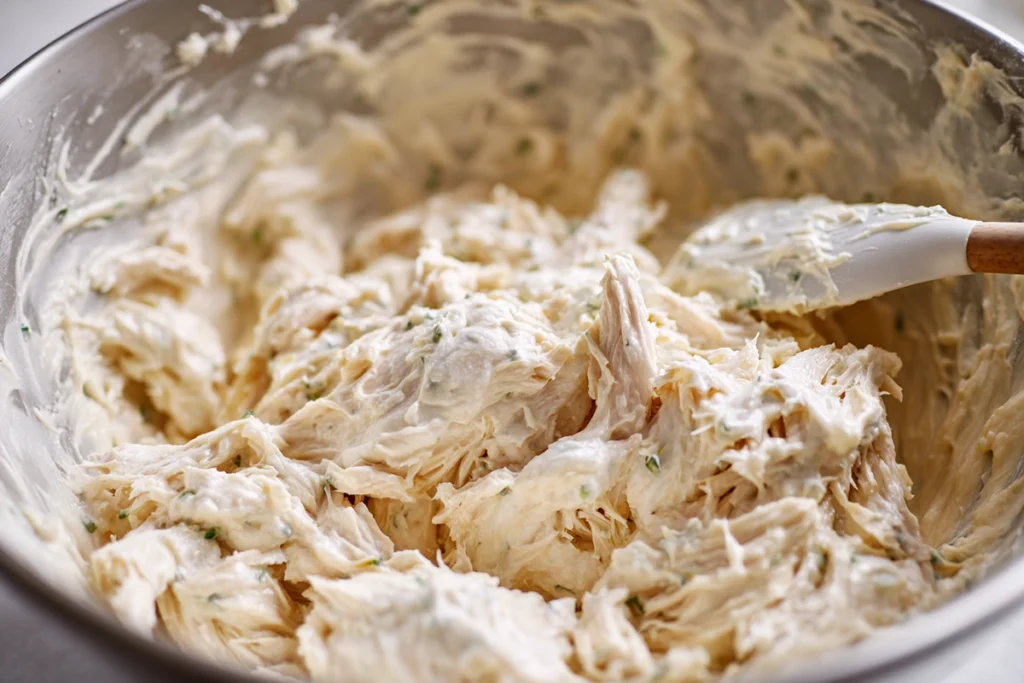
When the soup mixture goes on, you’re looking for coverage, not depth. As you smooth it out, it should move slowly like thick paint, not pour like milk. If it smells rich and savory before it even hits the oven, you’re on the right track. This layer protects the chicken while it cooks, which is why it stays juicy instead of stringy.
Why the Stuffing Goes on Dry
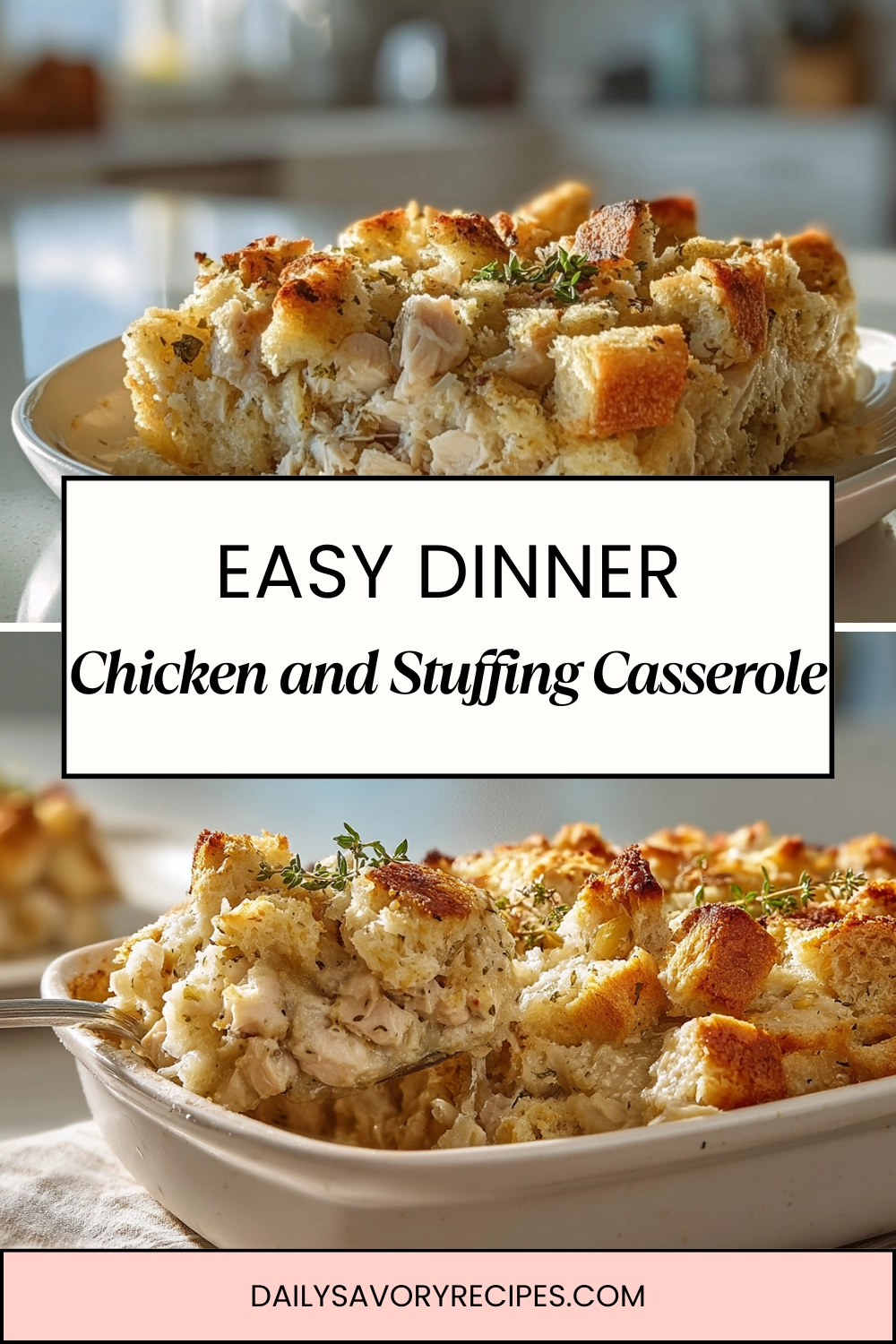
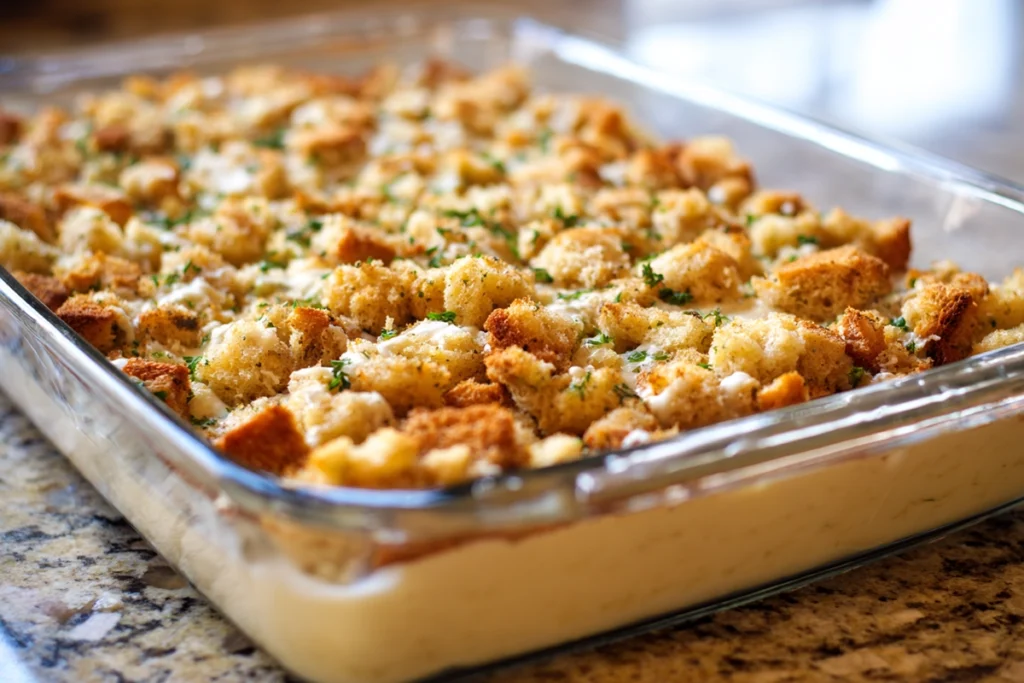
This is where most recipes quietly fail you. Sprinkling the stuffing mix on dry looks wrong at first, but visually you want a loose, uneven blanket—not packed down. When you run your fingers over the top, it should feel airy, almost like cereal in a bowl. That space is what lets steam rise through it instead of turning it into paste.
Once the broth goes on, listen closely. You should hear a soft soaking sound, not splashing. The stuffing should darken evenly as it absorbs liquid, and when you press lightly with a spoon, it should feel damp but not submerged. If you smell that classic herby stuffing aroma before it even bakes, that’s the sign everything’s hydrated properly.
Covered First, Then Finish It Properly
Covering the dish at the start is about control. Inside the oven, you want gentle bubbling around the edges—not violent boiling. Peek through the oven window: the top should look swollen and soft, not browned yet. When you remove the foil near the end, the sound changes—you’ll hear a faint sizzle as moisture evaporates and the top starts to toast.
The smell at this stage is your final cue. You’re looking for that toasted, buttery stuffing smell, not raw bread and not burnt herbs. The top should look lightly golden with a few darker peaks, and when you tap it gently with a spoon, it should feel set but springy, not crunchy like croutons.
The Uh-Oh Moments (I’ve Made These Mistakes)
“Why Is My Stuffing Crunchy?”
This one’s almost always about uneven broth. The first time I made this, I poured the liquid too fast and missed the corners. The middle steamed beautifully, but the edges stayed dry and hard. Take your time pouring, and actually look for color change across the whole surface—the stuffing should darken evenly before it goes into the oven.
“Why Is There So Much Liquid at the Bottom?”
This usually happens when the casserole stays covered too long or the oven runs cool. My oven does exactly that, and my first version tasted great but looked like soup. Uncovering at the end isn’t optional—it’s what tightens the gravy. You should see bubbling thicken slightly and hear less sloshing before you pull it out.
“My Chicken Is Cooked, But It’s Kind of Bland”
Seasoning only the sauce doesn’t cut it. I learned this the boring way. The chicken needs salt and pepper before anything else touches it. When you smell the casserole while it’s baking, it should smell savory all the way through, not just like stuffing on top.
“The Top Browned Too Fast”
That’s either a high rack or a hot oven. If the top starts smelling toasted before the gravy is bubbling, it’s too close to the heat. I now keep this casserole in the middle of the oven, always. You want color at the end, not halfway through.
Make It Your Own (Without Breaking It)
Chicken Thigh Upgrade
If you want deeper flavor, boneless skinless chicken thighs are the move. They release a little more fat as they cook, which means richer gravy and extra moisture under the stuffing. Just expect a slightly softer bottom layer and give it the full uncovered finish so things don’t stay too loose.
Vegetable Add-In That Actually Works
Frozen mixed vegetables work best here, not fresh. Fresh veggies dump water and throw off the gravy, but frozen peas, carrots, and corn stay controlled. Scatter them directly over the chicken before the soup mixture goes on—you’ll smell a slightly sweeter, more savory aroma as it bakes, and the color contrast is worth it.
Herb-Forward Thanksgiving Vibes
If you want this to lean more holiday-style, add poultry seasoning or dried sage to the soup mixture, not the stuffing. A half teaspoon is enough. You’ll smell it bloom as soon as the casserole heats up, but it won’t overpower the chicken or turn bitter on top.
Lower-Sodium Without Killing Flavor
This casserole can get salty fast, so if that’s an issue, use low-sodium soups and broth together, not just one or the other. The texture stays the same, but the flavor becomes cleaner instead of flat. I still season the chicken normally—the gravy balances it out.
Serving & Storing (How This Fits Real Life)
I always serve this straight from the pan, scooping deep enough to catch that gravy at the bottom and spooning it right over the stuffing. It doesn’t need much on the side—a simple green salad or steamed green beans are enough. The casserole itself is rich, warm, and filling, so keep the extras light.
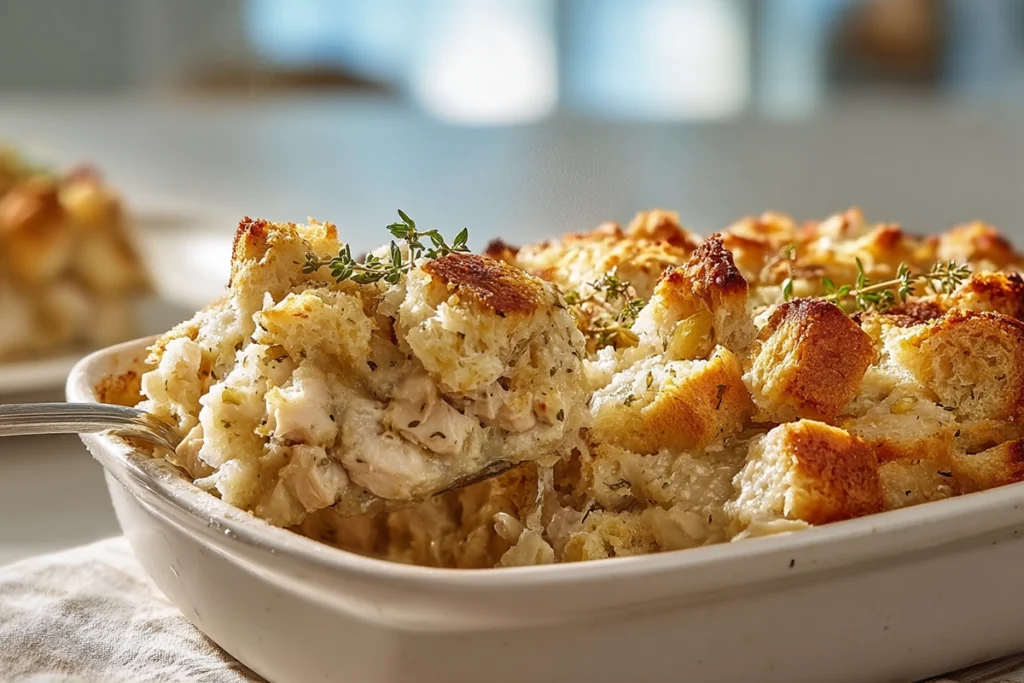
Leftovers are actually better the next day once the stuffing settles and the flavors tighten up. Store it covered in the fridge for up to three days. For freezing, portion it first—don’t freeze the whole pan unless you enjoy hacking at a frozen brick later. Wrap portions tightly; the texture holds up surprisingly well.
To reheat, the oven is best if you want the top to stay soft but structured. Cover it loosely so it doesn’t dry out. The microwave works fine too—just stir the gravy back over the top so it doesn’t heat unevenly.
This Chicken and Stuffing Casserole is comfort food that smells like you planned ahead, even when you didn’t. It’s warm, reliable, and exactly the kind of dinner you make when you want zero surprises—just a full table and empty plates.
Get inspired with more mouthwatering recipes! Follow me on Pinterest for new cooking ideas every week.
Frequently Asked Questions
Can I use chicken breasts instead of tenderloins?
Yes, but cut them evenly and don’t rush the bake. Chicken breasts are thicker and drier by nature, so uneven pieces cook at different speeds. Tenderloins are more forgiving, which is why I prefer them, but breasts will work if you pay attention.
Do I really need both cream of chicken and cream of celery soup?
Yes, if you want the flavor balance to work. Cream of chicken alone tastes flat and heavy. Cream of celery adds depth without making the dish taste like celery, and together they create a gravy that actually tastes seasoned.
Why is my stuffing still crunchy after baking?
That means it didn’t absorb enough broth. Either the liquid didn’t reach all areas, or the oven ran hot and evaporated moisture too fast. Before baking, the stuffing should look evenly darkened and feel damp when pressed lightly.
Can I prep this casserole ahead of time?
You can prep everything except the broth and stuffing. Assemble the chicken and soup layers, cover, and refrigerate. Add the dry stuffing and broth right before baking so the top doesn’t turn mushy.
How do I make it less salty without changing the recipe?
Use low-sodium soups and low-sodium broth together. Don’t skip seasoning the chicken—it balances out once everything bakes. Cutting salt only in one place usually makes the dish taste bland instead of balanced.
Can I cook the stuffing first if my family likes it softer?
Yes, but only prepare it according to the package directions and skip the extra broth entirely. The result will be more like a soft bread topping than a layered casserole, but it still tastes good.
Chicken and Stuffing Casserole
Ingredients
Method
- Preheat oven and grease baking dish.
- Spread seasoned chicken evenly in dish.
- Whisk soups with milk and spread over chicken.
- Sprinkle stuffing mix evenly on top.
- Pour broth over stuffing until moistened.
- Cover and bake until chicken is cooked.
- Uncover briefly to lightly brown the top.
Notes
- Use low-sodium soups and broth if sensitive to salt.
- Do not skip moistening the stuffing fully.
- Leftovers keep well refrigerated or frozen.