
Lemon Chicken Orzo Soup That Actually Feels Comforting

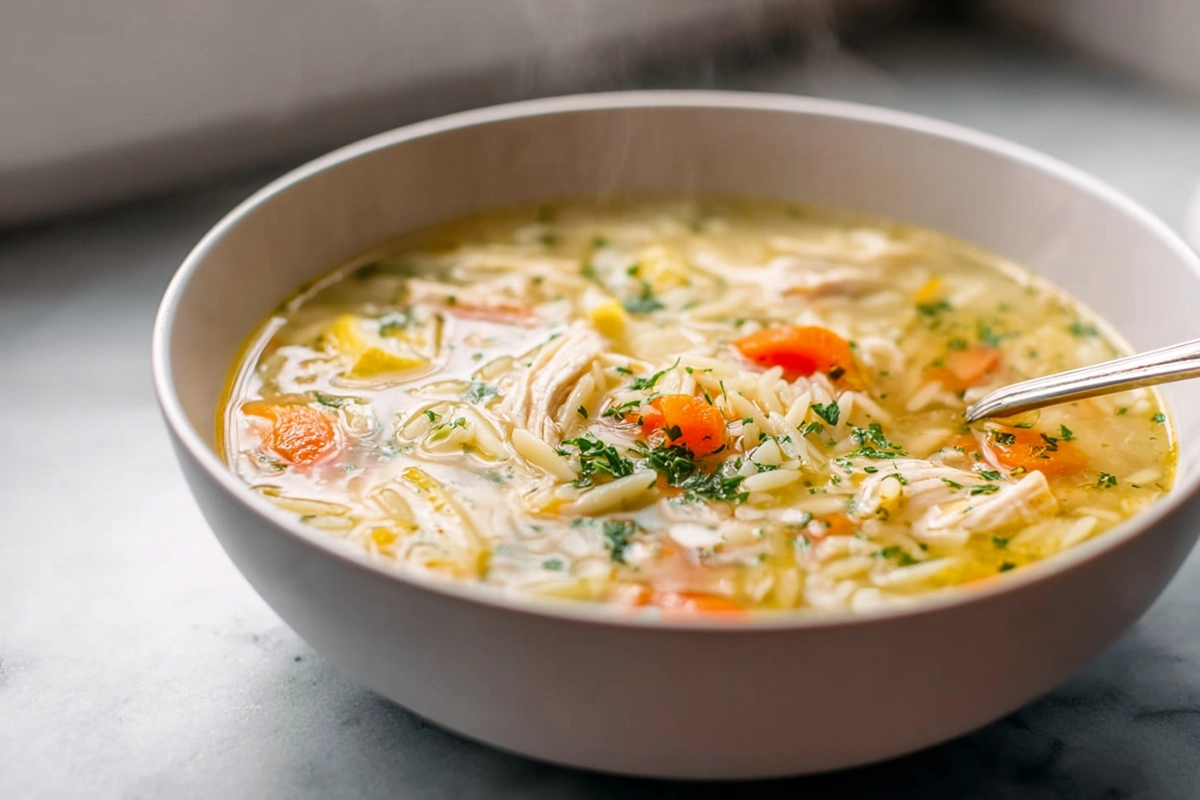
When this soup is working the way it should, you smell it before you taste it. The broth is gently steaming, the lemon is present but not sharp, and the orzo has softened just enough to give the pot a comforting weight without turning it starchy or heavy. It’s the kind of soup that feels calm — nothing aggressive, nothing rushed — just steady heat and familiar ingredients doing what they’re supposed to do.
What makes Lemon Chicken Orzo Soup so satisfying isn’t complexity. It’s a balance. You get warmth from the broth, softness from the vegetables, protein from the chicken, and that clean citrus finish that keeps each spoonful from feeling flat. This is a soup that works just as well when you’re under the weather as it does on a normal weeknight when you want something reliable and filling but not rich or greasy.
I like this recipe because it respects timing. The chicken is cooked gently so it stays tender. The orzo is added late enough that it keeps its shape. And the lemon is handled carefully so it brightens the soup instead of overpowering it. When those details are right, the result is a bowl that feels light, cozy, and repeatable — exactly what an easy comfort soup should be.
Table of Contents
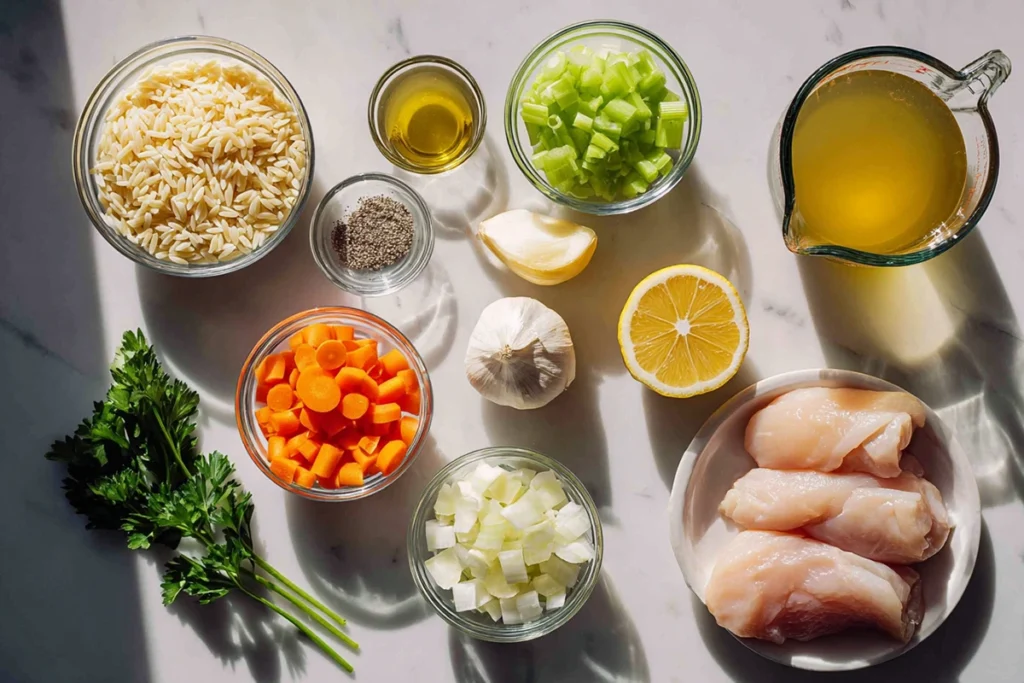
Ingredients That Make This Soup Work
Chicken Breasts
Boneless, skinless chicken breasts keep the soup light and clean-tasting. They cook directly in the broth, which adds flavor without drying them out. You can use thighs if you prefer, but breasts are more predictable here and easier to portion evenly.
Orzo
Orzo is not optional if you want this texture. Its size and starch release give the soup body without turning it into a stew. Other pasta shapes or rice change how the broth behaves and usually end up either too thick or uneven.
Chicken Broth
A low-sodium boxed broth works perfectly well. This soup builds flavor in the pot, so there’s no need for expensive stock. Using low-sodium gives you control at the end, especially once the orzo starts absorbing liquid.
Carrots, Celery, and Onion
These form the base of the soup and should be chopped fairly small so they soften evenly. Larger pieces throw off the texture and make the broth feel chunky instead of smooth and comforting.
Garlic
Fresh garlic matters here. Jarred garlic tends to taste dull once simmered, and this soup relies on clean, simple flavors. Three cloves is enough to support the broth without dominating it.
Lemon Juice
Fresh lemon juice is essential. Bottled lemon tastes flat and harsh once heated. Add it gradually — this soup should taste bright, not sour.
Butter and Olive Oil
The combination gives you both flavor and control. Butter adds richness, while olive oil keeps it from feeling heavy. Together, they help the vegetables soften without browning too quickly.
Italian Seasoning, Salt, and Pepper
Italian seasoning adds background flavor without turning this into a herb soup. Keep it light. Salt and pepper should be adjusted at the end, once the orzo has finished cooking.
Fresh Parsley
Parsley adds freshness right before serving. It’s not decorative — it lifts the soup and ties the lemon into the rest of the flavors.
How This Lemon Chicken Orzo Soup Comes Together
Building the Base Without Rushing It
Everything starts in the pot with gentle heat. As the butter and olive oil warm up, you want to see the vegetables turn glossy before they brown. Listen for a soft sizzle, not a sharp crackle — that tells you the heat is right. The carrots and celery should soften under your spoon and release a lightly sweet smell, while the onions go translucent instead of golden. If they start to color too quickly, the soup will taste heavier than it should.
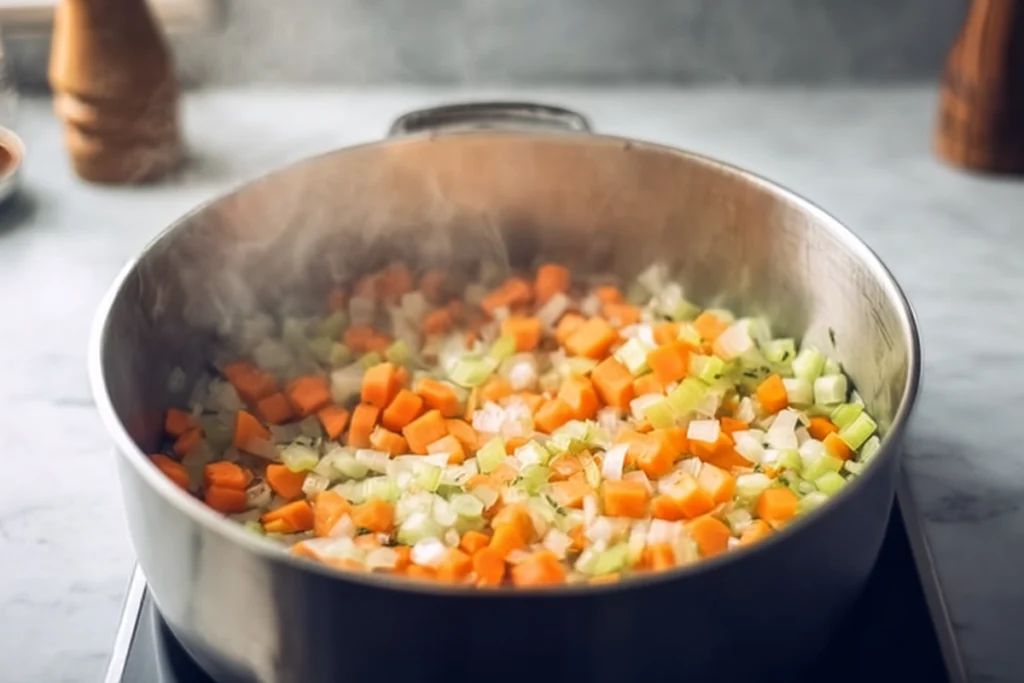
When the garlic goes in, the timing matters. You’re watching and smelling closely here. The moment you smell that toasted, savory garlic aroma — usually within seconds — it’s time to move on. Letting it sit too long turns it bitter, and bitterness lingers in a broth-based soup.
Turning Broth Into Something Cozy
Once the flour is stirred in, the texture in the pot changes fast. It should look slightly pasty and cling to the vegetables instead of floating. As the broth is added, watch it loosen into a smooth liquid without lumps. Stirring steadily matters — you’ll hear the liquid quiet down as it evens out, and the surface should look silky rather than cloudy.
When the chicken goes in, the soup should come to a gentle boil, then immediately settle into a low simmer. You’re looking for small bubbles breaking the surface, not rolling waves. The smell at this stage should be clean and savory, not aggressive. That’s how the chicken cooks through while staying tender instead of tightening up.
When the Orzo Goes In
Orzo changes the behavior of the soup quickly. As soon as it hits the pot, you’ll feel resistance when stirring — a sign it’s starting to release starch. Keep the heat steady and stir often. You should hear a soft scraping sound as the spoon hits the bottom, which tells you it’s time to move things around so nothing sticks.
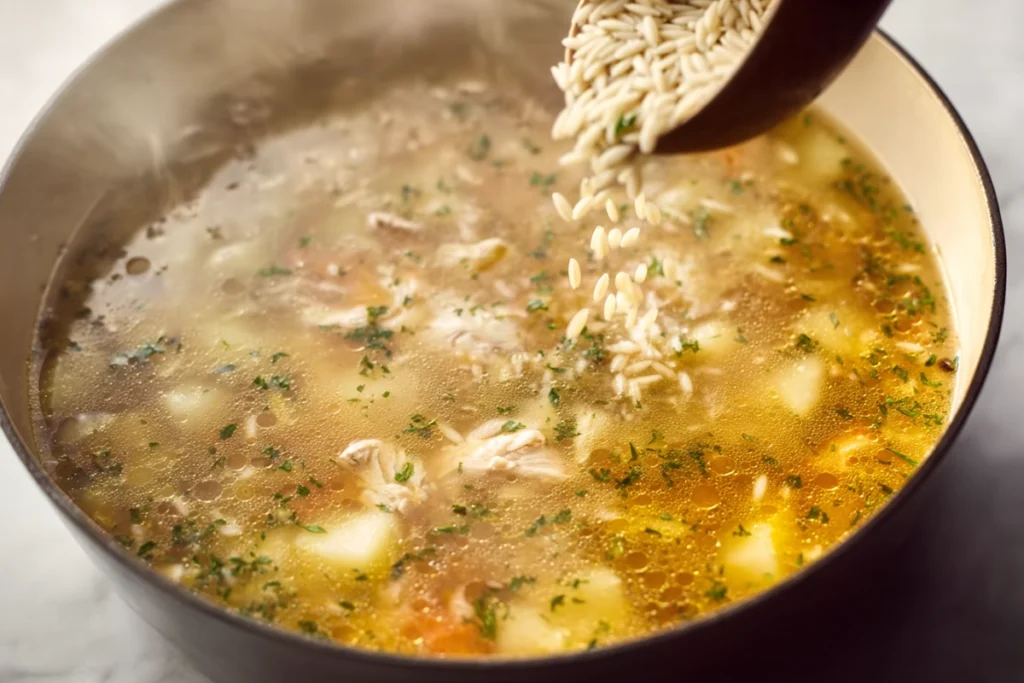
Visually, the soup will thicken slightly and look more opaque. That’s exactly what you want. The orzo should feel tender when pressed between your fingers, not mushy and not chalky in the center.
Finishing With Lemon — Not Letting It Take Over
The lemon comes last for a reason. Once the chicken is cut and returned to the pot, the heat should be low. When the lemon juice goes in, smell the steam — it should smell bright and fresh, not sharp. Taste as you go. The goal is lift, not sourness. Parsley finishes things off with a fresh, green note that you can smell immediately as it hits the hot broth.
Common Trouble Spots With Lemon Chicken Orzo Soup
When the Orzo Drinks All the Broth
This soup thickens as it sits — that’s normal. Orzo keeps absorbing liquid even after the heat is off. If the soup looks perfect on the stove but stiff in the bowl later, nothing went wrong. You’ll notice the texture tightening and the sound changing when you stir, becoming quieter and heavier. A splash of warm broth brings it right back without diluting flavor.
Overcooked Chicken That Feels Stringy
Chicken breasts go from tender to dry fast. If the chicken feels firm and springs back aggressively when pressed, it stayed in too long. Pulling it out as soon as it’s cooked and letting it rest before cutting keeps the texture soft. When done right, it should slice easily and feel moist between your fingers.
Lemon That Overpowers the Soup
Too much lemon is the fastest way to throw this soup off balance. If the steam smells sharp or the first sip makes your mouth pucker, you’ve gone too far. The fix is simple: add more broth and let the soup simmer briefly. Lemon should brighten the broth, not announce itself before anything else.
Make It Fit Your Kitchen
Using Chicken Thighs Instead of Breasts
If you prefer a richer, more forgiving soup, boneless chicken thighs work well here. They stay tender even if the simmer runs a few minutes long, and the broth ends up slightly fuller in flavor. Expect a deeper aroma as they cook — more savory than clean — and plan to skim a little extra fat from the surface if you want to keep the soup light.
Adding Greens Without Losing Balance
A small handful of baby spinach or finely chopped kale can be stirred in at the very end. You’ll see the leaves wilt almost instantly and feel them soften under the spoon. Keep the amount modest. Too much greenery shifts the soup from cozy comfort soup to vegetable-forward, and it competes with the lemon instead of supporting it.
Making It Gluten-Free (With Real Trade-Offs)
Orzo is the challenge here. Gluten-free orzo-style pasta can work, but it releases starch faster and breaks more easily. Cook it separately until just tender, then add it to the soup at the end. The texture will be slightly looser and less silky, but you’ll avoid a cloudy, gummy broth.
Dialing the Lemon Up or Down
Some people want a brighter, almost Greek-style lemon note. If that’s you, add lemon zest along with the juice. You’ll smell the citrus oils immediately, and the flavor will linger longer on the palate. If you prefer subtlety, stick to juice only and add it gradually until the soup tastes clean, not sharp.
How I Serve and Store This Soup
I eat this soup hot, in a wide bowl, with nothing more than good bread on the side. The orzo already gives it enough body that it doesn’t need crackers or extra starch. When it’s fresh, the broth should feel light on the spoon but still coat your mouth slightly — that’s the sweet spot.
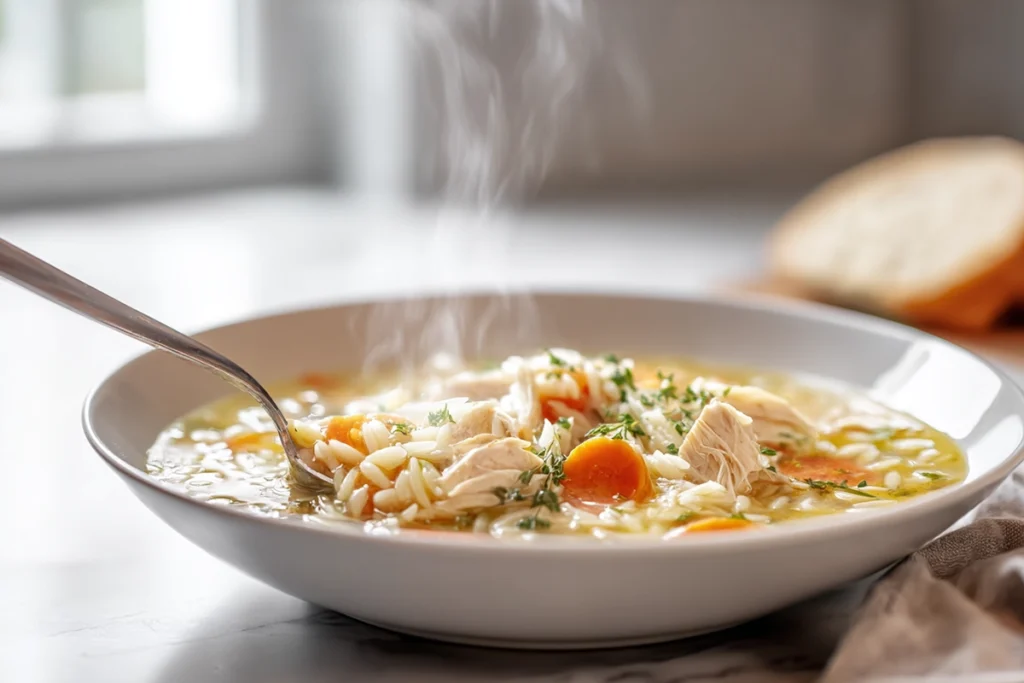
For storage, this soup keeps well in the refrigerator for up to three days, but expect it to thicken. The orzo continues absorbing liquid, and you’ll hear the difference when you stir it — slower, heavier, quieter. Add warm chicken broth when reheating, not water, and bring it back gently over medium-low heat.
Freezing is possible, but not ideal. If you do freeze it, freeze the soup without the orzo and add freshly cooked orzo when reheating. Frozen orzo tends to split and turn grainy, which changes the texture more than the flavor.
A Soup Worth Repeating
This is the kind of recipe that earns its place in rotation — not because it’s flashy, but because it works every time when you respect the timing. When done right, Lemon Chicken Orzo Soup delivers exactly what you want: warmth, balance, and a bowl that feels just as good on the second night as the first.
Get inspired with more mouthwatering recipes! Follow me on Pinterest for new cooking ideas every week.
Frequently Asked Questions
Can I use chicken thighs instead of breasts?
Yes. Boneless, skinless thighs are more forgiving and stay tender even if the simmer runs a little long. The broth will taste slightly richer, and you may see a thin layer of fat on top—just skim it if you want the soup to stay “light and cozy.”
Why does the orzo soak up so much broth?
Because orzo keeps absorbing liquid even after the heat is off. This soup will thicken as it sits, especially overnight. When reheating, add warm chicken broth a splash at a time until it loosens back into a brothy soup.
Can I make lemon chicken orzo soup ahead of time?
Yes, but for the best texture, keep the orzo separate. Make the soup base and chicken, cool it, and refrigerate. Cook the orzo fresh (or warm it separately) and add it right before serving so it doesn’t turn soft and swell in the fridge.
How do I keep the chicken from drying out?
Keep the simmer gentle—small bubbles, not a rolling boil. Pull the chicken as soon as it’s cooked through, let it rest for a few minutes, then cut it and return it to the pot. If you keep boiling it while you finish everything else, it will tighten up and turn stringy.
Can I freeze lemon chicken orzo soup?
Yes, but freeze it without the orzo. Orzo doesn’t freeze well—it can split and turn grainy when reheated. Freeze the soup base and chicken, then cook fresh orzo on the day you reheat and add it at the end.
How lemony should this soup be?
Bright, not sour. You should smell lemon in the steam, but it shouldn’t bite your tongue on the first sip. Add lemon juice at the end, taste, then adjust in small amounts until it tastes clean and lifted.
PrintLemon Chicken Orzo Soup

Lemon Chicken Orzo Soup made with tender chicken, soft orzo, and bright lemon flavor. A light, comforting soup that’s easy and dependable.
- Prep Time: 10 minutes
- Cook Time: 40 minutes
- Total Time: 50 minutes
- Yield: 6 servings 1x
- Category: Soup
- Method: Stovetop
- Cuisine: American
Ingredients
- 2 sticks celery, finely chopped
- 2 medium carrots, finely chopped
- 1/2 medium onion, chopped
- 1 tablespoon butter
- 1 tablespoon olive oil
- 3 cloves garlic, minced
- 2 tablespoons flour
- 6 cups chicken broth
- 1/4 teaspoon Italian seasoning
- 1.5 pounds chicken breasts
- 1 cup uncooked orzo
- 1 tablespoon lemon juice
- 1 tablespoon fresh parsley
- Salt
- Black pepper
Instructions
- Sauté celery, carrots, and onion in butter and olive oil until softened.
- Add garlic and flour and cook briefly.
- Stir in chicken broth and Italian seasoning until smooth.
- Add chicken and simmer gently until cooked through.
- Stir in orzo and cook until tender, stirring often.
- Remove chicken, chop, and return to the pot.
- Finish with lemon juice, parsley, salt, and pepper.
Notes
- Use low-sodium chicken broth to control salt.
- Add extra broth when reheating as orzo thickens.
- Chicken thighs can be used instead of breasts.
Nutrition
- Serving Size: 1 bowl
- Calories: 360
- Sugar: 4
- Sodium: 780
- Fat: 10
- Saturated Fat: 3
- Unsaturated Fat: 6
- Trans Fat: 0
- Carbohydrates: 34
- Fiber: 3
- Protein: 30
- Cholesterol: 85