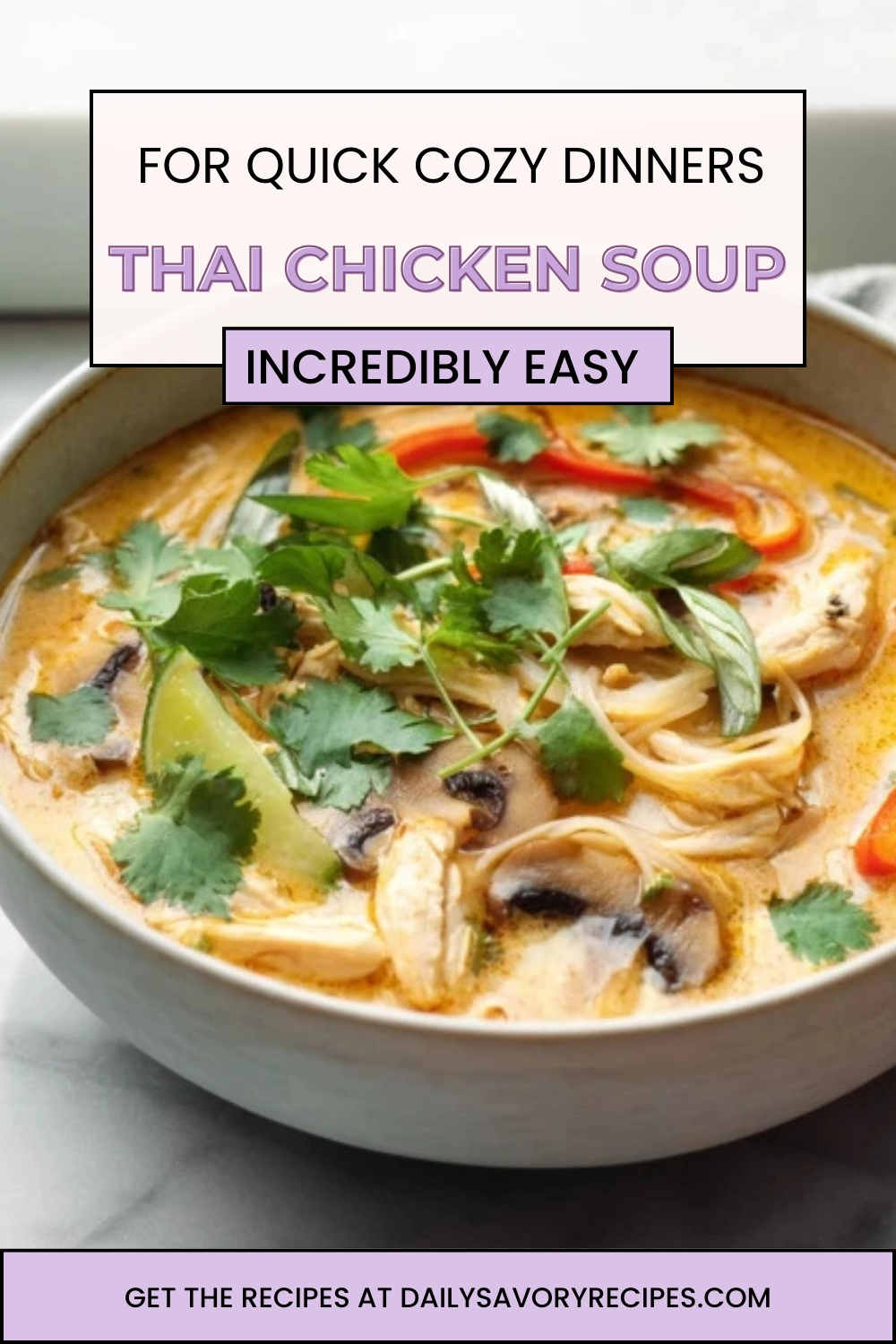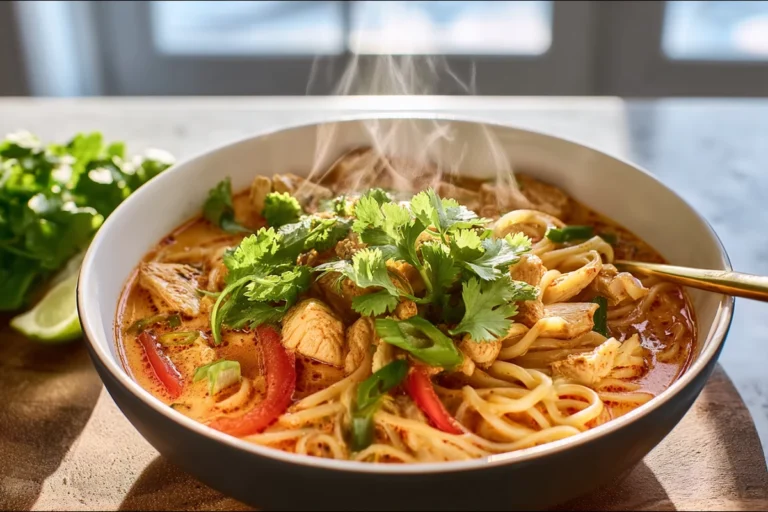

Easy Thai Chicken Soup That Tastes Bigger Than 30 Minutes

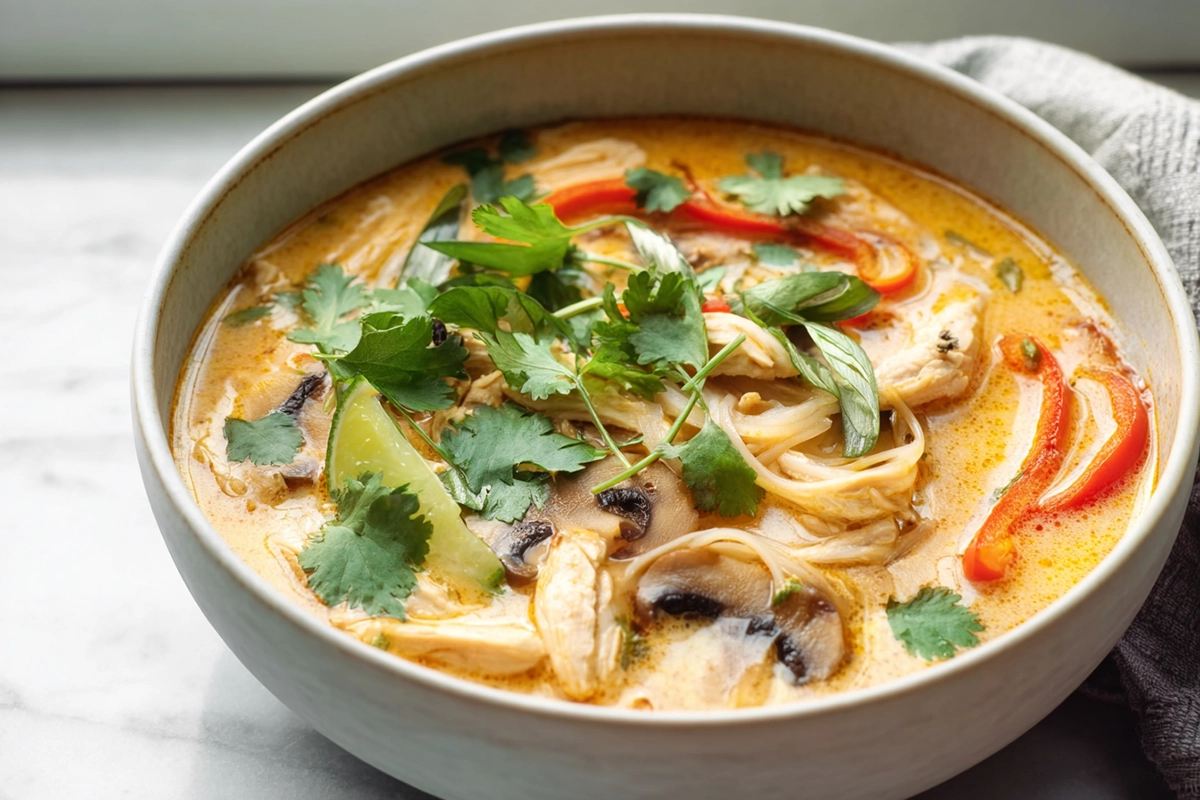
The first thing you notice with this soup isn’t the chicken or even the vegetables — it’s the smell. Green curry paste warming in oil releases that sharp, herbal aroma, and when coconut milk hits the pot, the broth turns softly fragrant and rich before it ever simmers. That moment is what makes this bowl feel like comfort food instead of just another quick soup.
This Easy Thai Chicken Soup was built for nights when you want something deeply flavorful but don’t want a long prep list or a sink full of dishes. The broth is creamy without being heavy, the chicken stays tender instead of stringy, and the vegetables keep their texture instead of disappearing into the pot. It’s the kind of soup that feels complete after one bowl but still light enough to go back for seconds.
What makes this recipe work consistently isn’t complexity — it’s restraint. Every ingredient has a clear job. The curry paste brings depth, the coconut milk provides body, the lime keeps the finish bright, and the zucchini noodles add volume without weighing the soup down. Nothing is here “just because.” When you respect that balance, the soup delivers the same result every time: warm, aromatic, and satisfying without feeling overdone.
Ingredients That Actually Matter
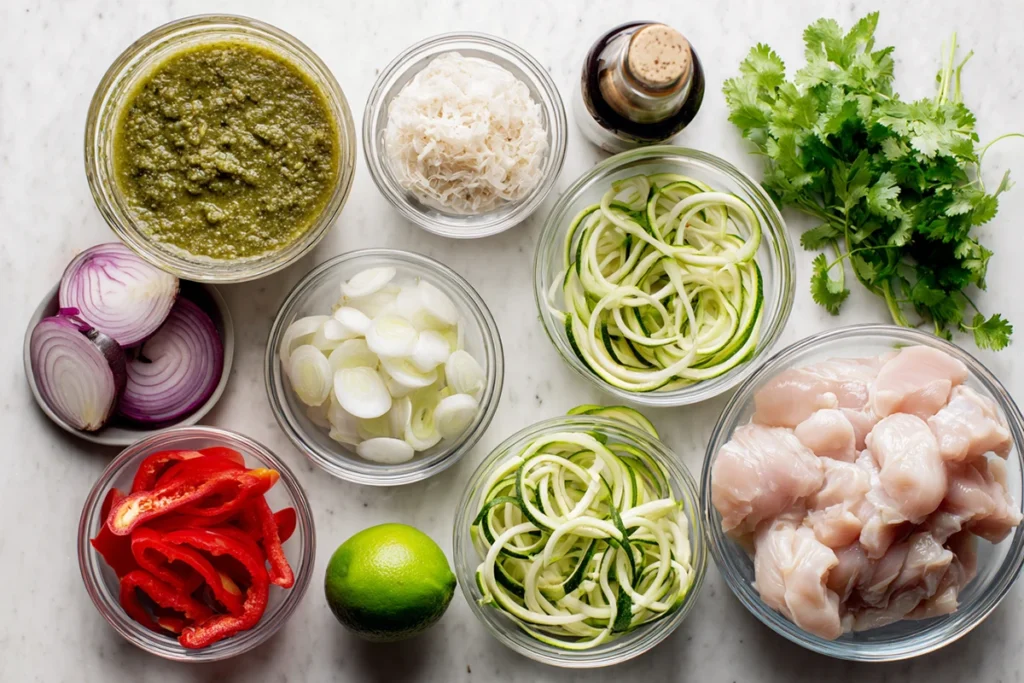
Green Curry Paste
This is the backbone of the soup. Green curry paste carries heat, aromatics, and depth in one ingredient, and it’s not something I recommend substituting lightly. Brands vary a lot — look for one with visible herbs and chilies rather than a smooth, dull paste. A good curry paste saves you from layering multiple spices later.
Full-Fat Coconut Milk
Full-fat coconut milk is essential for texture. Light versions thin the broth and mute the curry flavor, leaving the soup tasting flat. Shake the can well before opening, and avoid brands with lots of stabilizers — the ingredient list should be short and simple.
Chicken (Breasts or Thighs)
Both work, but they behave differently. Chicken breasts stay lean and clean-tasting if sliced thin against the grain, while thighs add a bit more richness and forgiveness if you simmer a minute too long. Either way, thin slicing matters more than the cut itself.
Chicken Bone Broth
Bone broth adds body without heaviness. You don’t need an expensive brand — a basic low-sodium carton works well — but salt control matters here. This soup builds flavor quickly, so it’s better to adjust seasoning at the end than start too salty.
Fish Sauce
This is where depth comes from. Fish sauce doesn’t make the soup taste fishy — it rounds out the broth and replaces the salt you might otherwise add. A clean brand like Red Boat gives better balance, but even standard grocery-store versions work if used carefully.
Zucchini Noodles
Zoodles turn this into a true comfort bowl without starch overload. Medium zucchini hold their shape best, and spiralizing them fresh makes a noticeable difference in texture. They’re added for structure, not flavor, so freshness matters more than seasoning here.
Fresh Lime and Cilantro
These finish the soup. Lime cuts through the richness, and cilantro adds a fresh, green note that wakes everything up. Skip either, and the soup loses contrast — it’ll still be good, but not as complete.
This ingredient list is short on purpose. Each one earns its place, and together they create a soup that tastes far more involved than it actually is.
How This Easy Thai Chicken Soup Comes Together (And Why Order Matters)
Waking Up the Aromatics
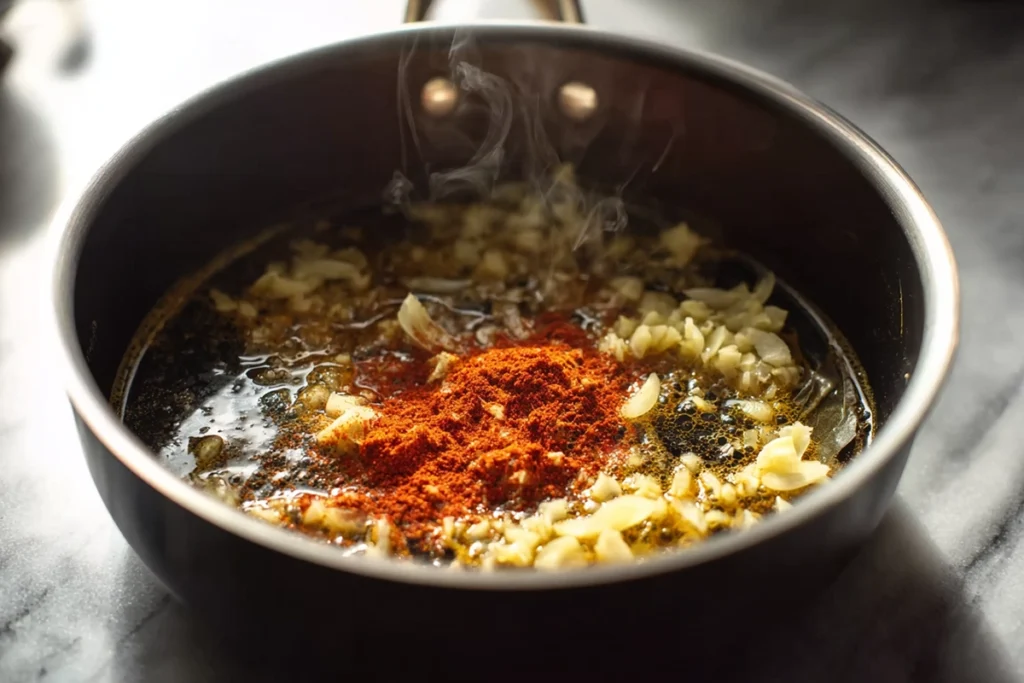
The moment the oil hits the pan, you’re setting the tone for the entire soup. You want medium heat — not rushed, not timid. When the onion goes in, listen for a soft, steady sizzle, not a sharp crackle. Visually, you’re looking for the onion to turn slightly glossy and translucent, not browned. When the curry paste and garlic hit the oil, the smell changes fast — sharp, herbal, and fragrant. That’s your cue to keep things moving. If you smell bitterness or see dark streaks forming, the heat is too high and you’ve gone past the sweet spot.
Building the Coconut Broth
Once the broth and coconut milk are added, the soup should look uniform and pale, not streaky or separated. Stir until the liquid feels smooth when you drag a spoon through it — you should feel a little resistance from the coconut milk, not watery looseness. As it warms, you’ll notice small bubbles forming around the edges, not a rolling boil. That gentle movement is important. The smell at this stage should be rounded and mellow, with the curry softened by the coconut, not sharp or aggressive.

Cooking the Chicken Gently
When the chicken goes in, the soup should be steaming but calm. You’ll see the slices turn opaque from the edges inward within a minute or two. Stir slowly — the chicken should feel tender when nudged with a spoon, not firm or springy. If you hear aggressive bubbling or see the broth churning, lower the heat. Overcooking here tightens the meat quickly, especially with chicken breast, and the texture never quite recovers.
Finishing With Freshness
Zucchini noodles don’t belong in the pot — they belong in the bowl. When you ladle the hot soup over them, you’ll see them soften just enough, turning flexible without losing shape. They should feel tender but still slightly crisp between your fingers if you pinch one. Finish with lime at the table, not earlier. You’ll smell the citrus immediately when it hits the broth — that bright note is what keeps the soup from feeling heavy.
Where Easy Thai Chicken Soup Can Go Wrong (And How to Catch It Early)
When the Broth Breaks or Looks Grainy
If the soup looks oily or separated, the heat was too high after the coconut milk went in. You’ll usually notice it by sight first — small pools of fat floating instead of a smooth surface. The smell can flatten too, losing that creamy warmth. Lower the heat immediately and stir gently; keeping the soup at a steady simmer prevents this problem from starting.
Overcooked Chicken That Turns Stringy
Chicken that’s tough or dry is almost always a timing issue. You’ll feel it when stirring — the pieces resist the spoon instead of yielding easily. This happens when the soup boils instead of simmers. The fix isn’t more liquid or longer cooking; it’s gentler heat and thinner slices from the start.
Mushy Zucchini Noodles
If the zoodles lose shape or release water, they sat in hot liquid too long. You’ll see it when the broth turns diluted and cloudy, and the noodles feel limp instead of springy. Keeping them separate until serving isn’t optional here — it’s what preserves both texture and flavor.
These are small details, but they’re the difference between a soup that’s just fine and one you’ll want to make the same way every time.
Make It Work for Your Kitchen
Swap the Protein (Without Breaking the Broth)
This soup is flexible, but timing matters. Shrimp works well if you add it at the very end — you’ll see it curl and turn pink within a minute, and it should feel springy, not firm, when pressed with a spoon. Rotisserie chicken also works, but only if it’s stirred in after the broth is fully built and off a hard simmer. If the soup is boiling, the pre-cooked meat tightens and tastes dry almost immediately.
Adjust the Heat the Right Way
If you want more heat, increase the green curry paste slightly rather than piling on extra jalapeño. Curry paste deepens the flavor while adding heat; raw chili just makes it sharp. You’ll smell the difference as it cooks — richer and more aromatic instead of biting and one-dimensional. For a milder version, don’t skip the paste entirely; reduce it and let the coconut milk do more of the work.
Make It Heartier (When You Actually Want It To Be)
This soup stays clean and light as written, but you can make it more filling intentionally. Adding jasmine rice works best if it’s cooked separately and added to the bowl, not the pot. If you simmer rice directly in the soup, the broth thickens and dulls, and you lose that silky coconut texture that makes the recipe work.
How I Serve It — And How I Keep It From Falling Apart Later
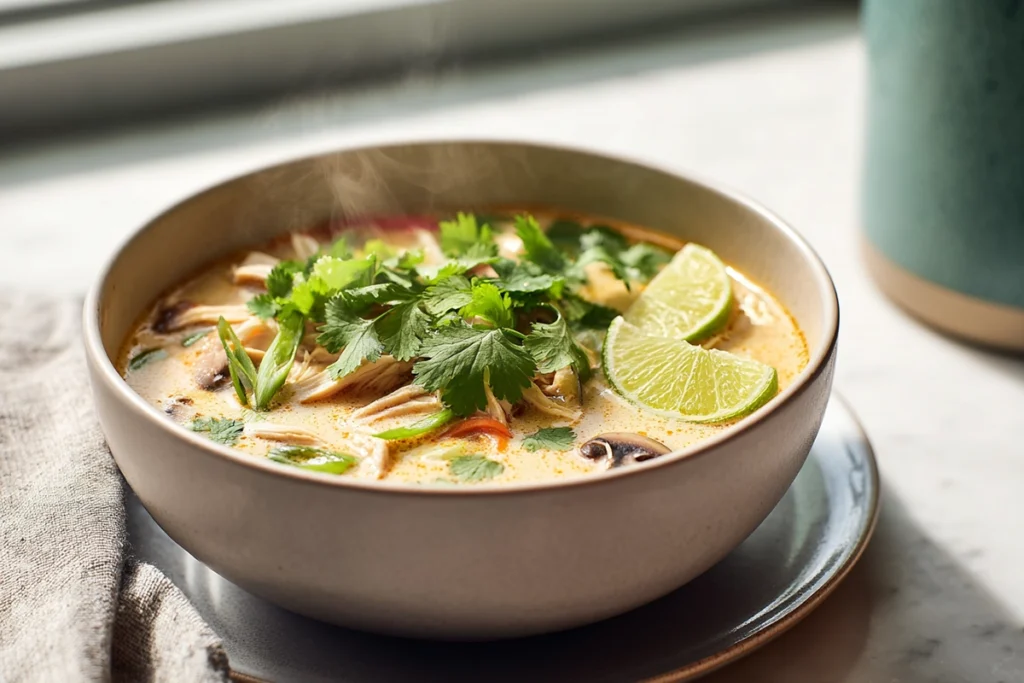
I serve this soup hot, right after ladling it over fresh zucchini noodles, with lime squeezed at the table. The smell of citrus hitting the steam tells you immediately it’s ready. I don’t garnish heavily — just cilantro and lime — because the broth already carries enough flavor on its own.
For storage, the soup and zucchini noodles should always be kept separate. Stored together, the noodles release water and thin the broth within hours. The soup itself keeps well in the fridge for up to five days in a sealed container. When reheating, use gentle heat and stir slowly — you want steam and small bubbles, not a boil, or the coconut milk can separate.
Freezing works for the soup base only. Freeze it without the zucchini noodles and fresh herbs. Thaw overnight in the fridge and reheat gently; once it smells creamy and cohesive again, add fresh noodles and finish as usual.
A Bowl That Delivers Every Time
This Easy Thai Chicken Soup works because it respects timing, balance, and restraint — the same things that make home cooking repeatable instead of frustrating. When the broth smells warm and coconut-rich and the chicken stays tender, you know you’ve hit the sweet spot.
Get inspired with more mouthwatering recipes! Follow me on Pinterest for new cooking ideas every week.
Frequently Asked Questions
Can I make Easy Thai Chicken Soup ahead without the coconut milk separating?
Yes. The key is keeping the broth at a gentle simmer, not a boil. After the coconut milk goes in, you want small bubbles around the edges and steady steam—if the surface is churning, the heat is too high and separation becomes more likely. Cool the soup, store it covered, and reheat slowly over medium-low heat while stirring until the broth looks smooth again.
Is this soup spicy or just aromatic?
It’s both, but the heat level depends mainly on the curry paste and jalapeño. Most green curry pastes bring noticeable heat plus a lot of aroma, so start with the amount listed if you like a mild-to-medium spice level. If you’re sensitive to heat, reduce the curry paste slightly and keep the jalapeño small—or remove the seeds—so the soup stays fragrant without becoming sharp.
Can I freeze this soup?
Yes, but freeze the soup base only. Do not freeze it with zucchini noodles, cilantro, or lime—those get watery and dull after thawing. Let the soup cool completely, freeze in airtight containers, and thaw overnight in the fridge. Reheat gently (no boiling) until the broth looks cohesive, then add fresh zoodles and finish with lime.
What can I use instead of fish sauce without losing depth?
The best substitute is soy sauce or tamari plus a small squeeze of lime at the end to bring back brightness. Soy sauce gives salt and some savoriness, but it won’t fully replace the rounded depth of fish sauce, so start with less and taste as you go. If you have it, a small spoon of miso whisked into the warm broth can also help, but don’t boil it.
Why does my broth taste thin even with coconut milk?
Usually it’s because the coconut milk is light, watered down, or the soup was boiled hard. Full-fat coconut milk gives the broth body, and gentle heat keeps it smooth. If the soup looks pale and watery, check your coconut milk label and avoid “lite.” Also make sure you whisk the coconut milk and broth together until the broth looks uniform before simmering.
Can I use leftover cooked chicken instead of raw?
Yes, and it’s a good shortcut. Build the broth first, keep it at a gentle simmer, then stir in shredded or thin-sliced cooked chicken just long enough to warm through. If you boil the soup after adding cooked chicken, it tightens and turns dry quickly—especially breast meat.
How do I keep zucchini noodles from turning mushy?
Add them to the bowl, not the pot. Ladle the hot soup over the zoodles and let the heat soften them for a minute or two—they should bend easily but still have a little bite. For leftovers, store zoodles separately and only add what you’re eating right now.
Easy Thai Chicken Soup
Ingredients
Method
- Heat oil in a saucepan and sauté onion until translucent.
- Stir in jalapeño, curry paste, and garlic until fragrant.
- Add broth and coconut milk and stir until smooth.
- Bring to a gentle simmer and add chicken, red pepper, and fish sauce.
- Simmer until chicken is just cooked through.
- Ladle soup over zucchini noodles and finish with cilantro and lime.
Notes
- Store soup and zucchini noodles separately.
- Reheat gently to avoid coconut milk separating.
- Freeze soup base only, without zucchini or herbs.