
Vegetable Orzo Soup for a Cozy 30-Minute Dinner

The Hook
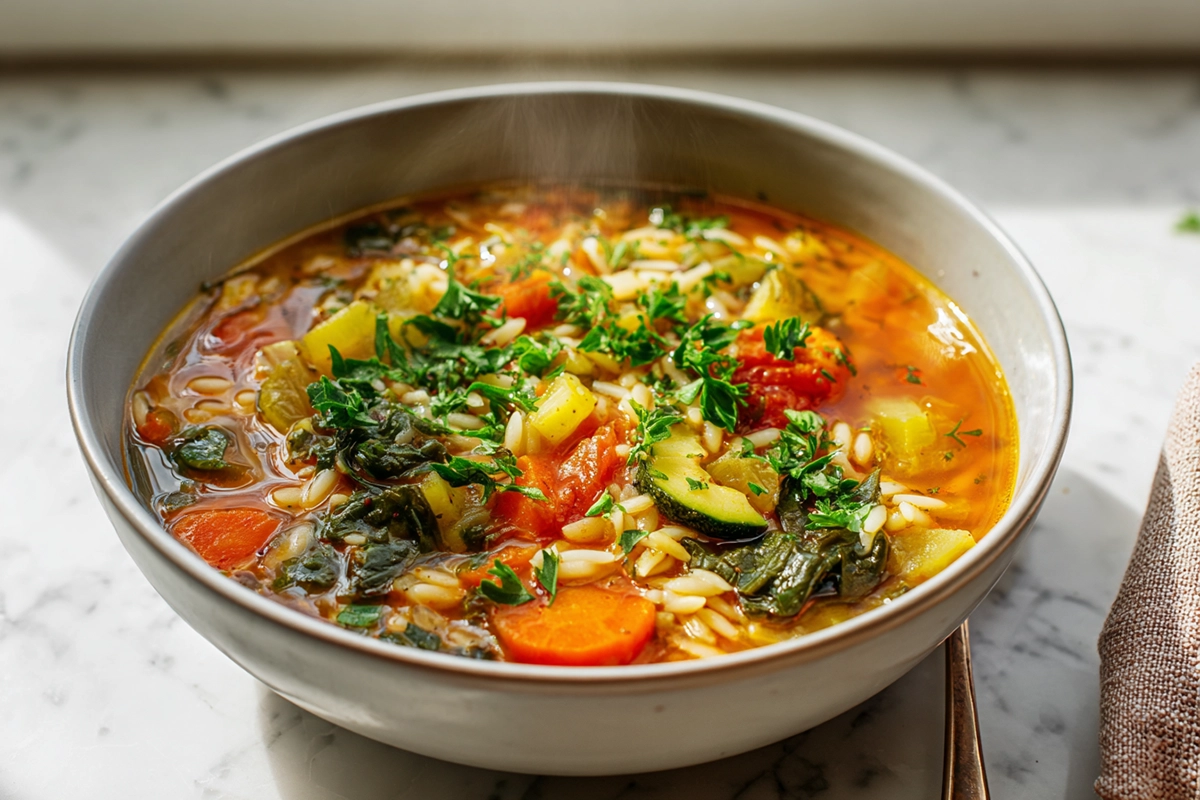
There’s a specific moment with this soup that always tells me it’s going to be good: the smell of garlic hitting warm broth, followed by that soft, starchy steam that comes off the pot once the orzo starts to swell. It’s comforting without being heavy, and it smells like something that’s been simmering all afternoon — even though it hasn’t.
This Vegetable Orzo Soup is the kind of meal I lean on when I want something warm and filling, but I don’t want to babysit the stove or commit to a long cook time. It’s built for real evenings — when you want dinner on the table in about half an hour, and you want it to actually feel complete. The vegetables give it sweetness and texture, the broth stays light, and the orzo ties everything together into something that feels intentional, not improvised.
What makes this soup work isn’t creativity — it’s structure. The order ingredients go in, how small certain vegetables are cut, and when the pasta is added all matter more than people think. This isn’t a “throw everything in and hope” kind of soup. It’s simple, but it’s deliberate. When done right, you get tender vegetables, properly cooked orzo, and a broth that stays balanced instead of turning thick and starchy. That’s what makes this a repeatable, dependable 30-minute comfort meal.
Ingredients (Why Each One Matters)
Yellow Onion
This is the backbone of the soup. A small yellow onion gives sweetness without overpowering the broth, and it softens predictably in a short cook time. Red onion tends to be too sharp here, and sweet onion can push the soup too far in one direction.
Carrot
Carrot adds subtle sweetness and a bit of texture that holds up during simmering. I dice it small so it cooks evenly with the onion. Baby carrots work in a pinch, but whole carrots give better flavor and texture.
Garlic
Four to five cloves might sound like a lot, but this soup relies on garlic for depth. Fresh garlic matters here — jarred garlic flattens the flavor and loses that warm aroma that makes the soup feel comforting.
Gold Potato
Gold potatoes hold their shape while still turning tender, which is exactly what you want in a short-simmer soup. This is one ingredient I wouldn’t substitute lightly — russets break down too fast and change the texture.
Frozen Peas & Corn
Frozen is perfect here. They’re consistent, affordable, and added late enough that they stay bright and sweet. Fresh versions are fine in season, but frozen honestly works better most of the year.
Vegetable Broth
Use a broth you’d actually drink on its own. Low-sodium is best so you can control seasoning later. Water technically works, but you’ll lose depth unless you compensate elsewhere.
Fire-Roasted Tomatoes
This is the non-negotiable ingredient. Fire-roasted tomatoes add a subtle smokiness that regular diced tomatoes don’t. It’s a small detail that makes the soup taste finished instead of flat.
Orzo Pasta
Orzo gives body without heaviness, but it needs attention. Standard orzo works best; gluten-free versions are fine, but they cook differently and need closer timing.
Italian Seasoning
A simple blend keeps things balanced. No need to overthink it — this is about support, not dominating the soup.
Apple Cider Vinegar & Fresh Parsley (Stir-Ins)
These go in at the end for brightness. The vinegar sharpens the broth just enough, and fresh parsley lifts everything without turning it herbal or grassy.
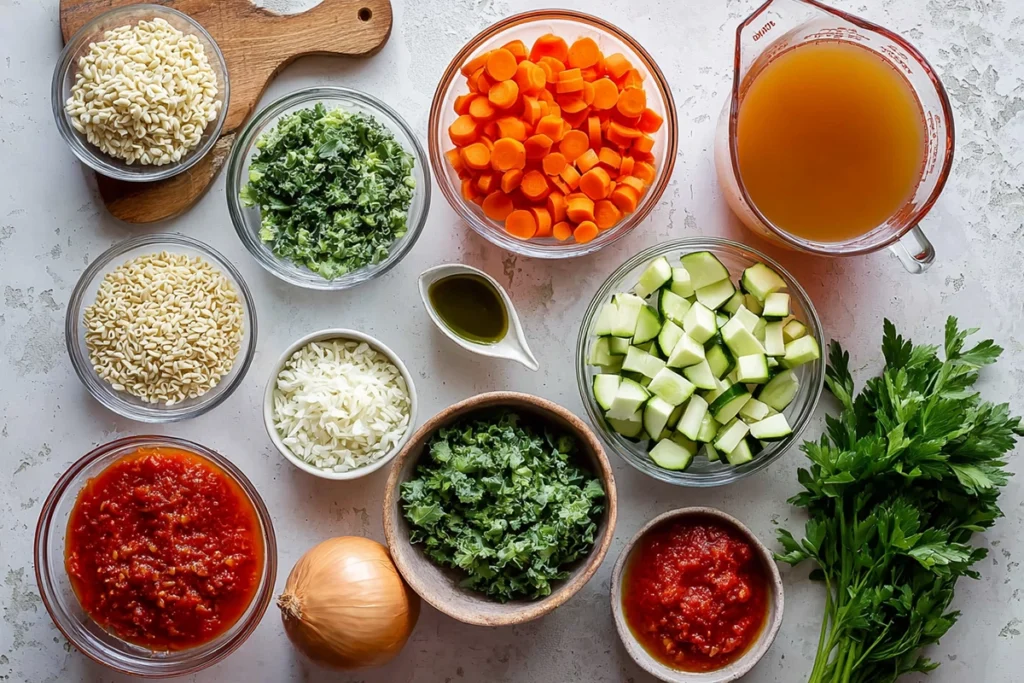
How This Vegetable Orzo Soup Comes Together in 30 Minutes
Building the Base Without Rushing It
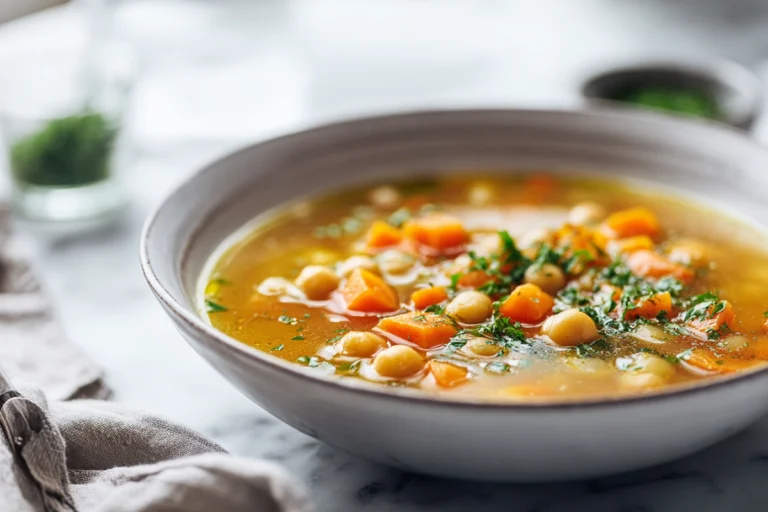
The first few minutes set the tone for the entire pot. When the onion and carrot hit the heat, you should hear a gentle sizzle — not aggressive frying. Visually, you’re looking for the onion to turn translucent and slightly glossy, not browned. If you run your spoon through the pot, the vegetables should feel softened but still hold their shape, not mushy.
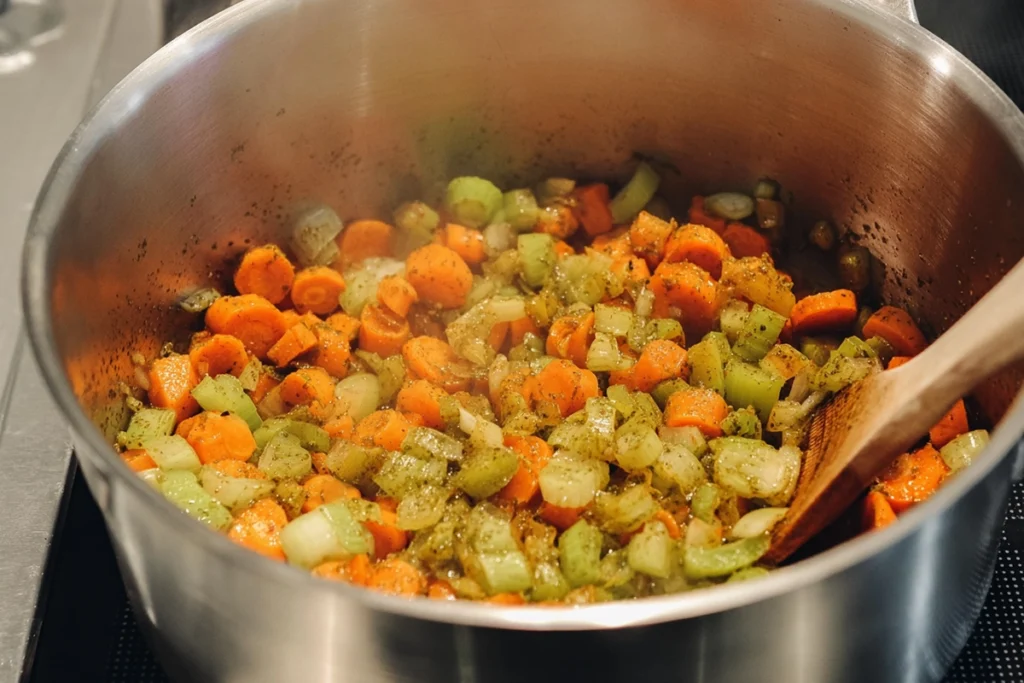
Smell matters here. Once the onion smells sweet instead of sharp, that’s your signal. When the garlic goes in, it only needs a short moment. The second you smell toasted garlic — warm and slightly nutty — you stop pushing the heat. Any longer and it turns bitter, which shows up clearly in a simple soup like this.
Letting the Vegetables and Broth Do the Work
After the aromatics, everything else builds in layers. When the potatoes and seasoning go in, the pot should look dry but glossy, with steam rising steadily. The vegetables should feel firm when pressed with a spoon — this step is about coating, not cooking through.
Once the broth and tomatoes are added, listen for the sound to change. You want a light boil, not rolling chaos. The surface should bubble lazily, and the smell should shift from raw tomato to something rounder and more savory. This short simmer gives the vegetables a head start so the orzo doesn’t end up carrying the whole texture of the soup.
Adding Orzo Without Losing Control
When the orzo goes in, everything slows down. The sound becomes quieter, more like a low simmer than a boil. Visually, you’ll notice the broth turn slightly cloudy — that’s normal. What matters is movement. Stirring should feel smooth, not resistant, and you shouldn’t hear or feel orzo scraping the bottom of the pot.
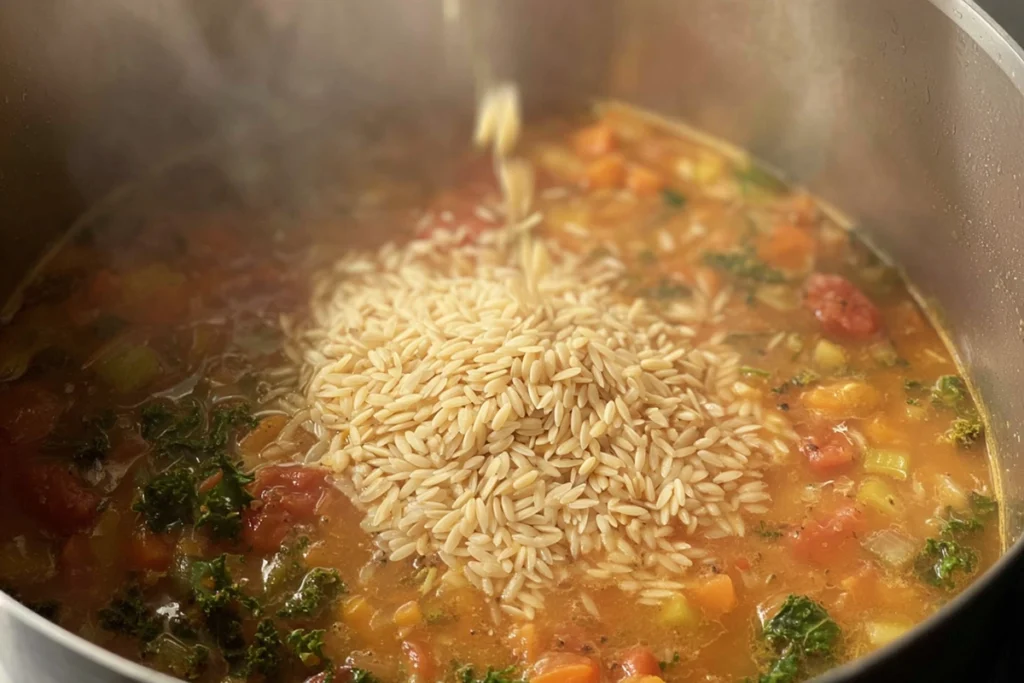
As the orzo cooks, the soup thickens subtly. When you bite a piece, it should feel tender with just a faint firmness in the center. That’s your stopping point. If the soup already looks thick at this stage, it will only continue to tighten as it rests.
Where Vegetable Orzo Soup Commonly Goes Wrong
Overcooking the Orzo Until the Soup Turns Heavy
This is the most common issue with Vegetable Orzo Soup. Orzo keeps absorbing liquid even after the heat is off. If you wait until it feels fully soft in the pot, the soup will thicken into something closer to risotto as it sits. The fix is stopping early — when the orzo is just tender and the broth still looks loose.
Letting the Pot Sit Without Adjusting
If the soup rests for even ten minutes, you’ll notice the surface tighten and the spoon drag slightly when you stir. That’s normal. What causes trouble is serving it as-is without loosening it. A splash of hot broth restores the original texture instantly, but only if you expect it and adjust.
Turning the Heat Up to “Speed Things Along”
Cranking the heat feels tempting when you’re in a hurry, but you’ll hear the difference immediately — a harsh boil instead of a gentle simmer. The potatoes cook unevenly, the orzo releases too much starch too fast, and the broth loses balance. This soup rewards steady heat more than speed.
These small moments don’t look dramatic, but they decide whether the soup feels light and comforting or thick and sloppy. That’s why paying attention here matters more than adding extra ingredients.
Make It Your Own
Add Beans Without Turning It Into Stew
If you want this soup to eat more like a full meal, white beans or chickpeas work best. I’ve had the most consistent results with canned cannellini beans, drained and rinsed well. Add them with the broth, not at the end — you want them to warm through and lightly absorb flavor without breaking down. Chickpeas stay firmer, which is nice if you like a bit of chew, but they make the soup feel heartier and slightly thicker.
Leafy Greens That Actually Behave
Spinach, baby kale, or chopped Swiss chard all work here, but timing matters. These go in after the heat is off, when the soup is still steaming. You should see the greens wilt within seconds just from the residual heat. If they’re added too early, they turn dull and stringy, and they’ll muddy the clean flavor of the broth.
Gluten-Free Without Losing Structure
Gluten-free orzo made from cassava or corn can work, but it absorbs liquid faster than standard orzo. Expect the soup to thicken more quickly, and stop cooking sooner than you think. If you prefer rice or quinoa instead, cook them separately and stir them into individual bowls. Cooking them directly in the soup changes the texture too much and makes leftovers unpredictable.
A Richer Finish Without Cream
For a slightly richer mouthfeel, a drizzle of good olive oil at the end does more than you’d expect. I’ve tested this side by side with cream, and the oil keeps the soup light while rounding out the acidity from the tomatoes. If you add cheese, finely grated Parmesan works — but only at the table, adding it to the pot dulls the broth and turns it grainy.
Serving & Storing (What Actually Works)
I eat this soup hot, right after it rests for a minute or two. At that point, the broth is still loose, the vegetables are tender, and the orzo hasn’t taken over the pot. A crack of black pepper and a pinch of salt at the table usually brings everything into balance. If I want something alongside it, it’s a piece of toast or crusty bread — nothing fancy, just something to drag through the broth.
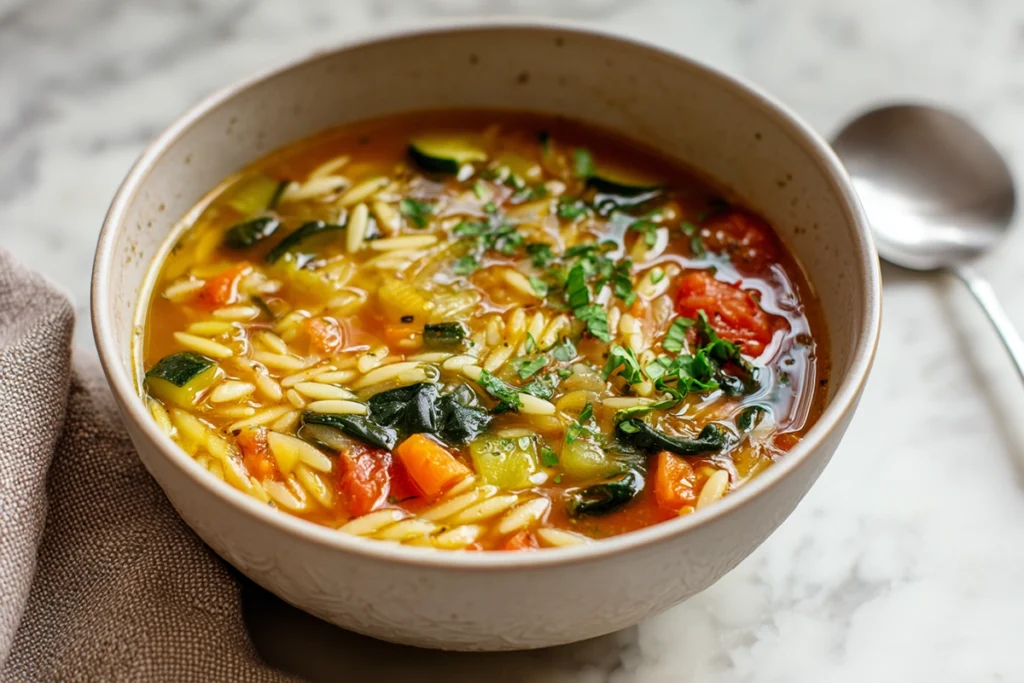
For storing, this soup keeps well in the fridge for up to four days, but it will thicken every time you open the container. That’s expected. Add broth or hot water when reheating and stir gently until it loosens. You’ll feel it when the spoon moves easily again.
Freezing is possible, but only if you accept that the texture will change. If I plan to freeze it, I stop the orzo even earlier and freeze in portioned containers. Thaw overnight, reheat slowly, and add broth to bring it back. It won’t be exactly the same, but it’s still very good.
Closing
This Vegetable Orzo Soup works because it pays attention to the small things — heat, timing, and knowing when to stop. When those details line up, you get a warm, balanced bowl that smells like comfort and cooks fast enough to fit real life.
Get inspired with more mouthwatering recipes! Follow me on Pinterest for new cooking ideas every week.
Frequently Asked Questions
Can I make Vegetable Orzo Soup ahead of time?
Yes, but plan for thickening. Orzo keeps absorbing liquid as it sits, so the soup will tighten up in the fridge. If you’re making it ahead, slightly undercook the orzo and add extra broth when reheating to bring it back to a soup-like consistency.
Why did my soup get so thick overnight?
This is normal. Orzo acts like a sponge once it’s cooked. Overnight, it pulls in more broth and turns a loose soup into something closer to stew. The fix is simple: add hot broth or water and stir until the spoon moves easily again.
Can I freeze Vegetable Orzo Soup?
Yes, but expect a texture change. Freeze it with the orzo slightly undercooked and in individual portions. Thaw overnight in the fridge, then reheat gently with added broth. The vegetables hold up fine; the orzo will be softer.
What vegetables work best in orzo soup?
Vegetables that cook quickly and evenly work best: carrots, peas, corn, zucchini, and celery. Leafy greens like spinach or kale should be added at the end so they wilt from heat instead of turning dull and stringy.
Can I use water instead of vegetable broth?
You can, but the soup will taste flat unless you compensate. If you use water, increase seasoning slightly and don’t skip the fire-roasted tomatoes or vinegar at the end — those become essential for flavor.
How do I keep the orzo from sticking to the pot?
Stir more often than you think, especially during the first few minutes after adding the orzo. You should feel the bottom of the pot stay smooth when stirring. If you hear scraping or feel resistance, it needs another stir.
Vegetable Orzo Soup
Ingredients
Method
- Sauté onion and carrot until soft and translucent.
- Add garlic, potato, peas, corn, and seasoning; cook briefly.
- Pour in broth and tomatoes; bring to a gentle boil.
- Reduce heat and simmer to soften vegetables.
- Add orzo and cook until just tender, stirring often.
- Remove from heat and stir in vinegar and parsley.
Notes
- Orzo continues absorbing liquid as it sits; stop cooking early.
- Add extra broth when reheating to loosen the soup.
- For freezing, undercook the orzo slightly.