
Zuppa Toscana Soup That Finally Works at Home

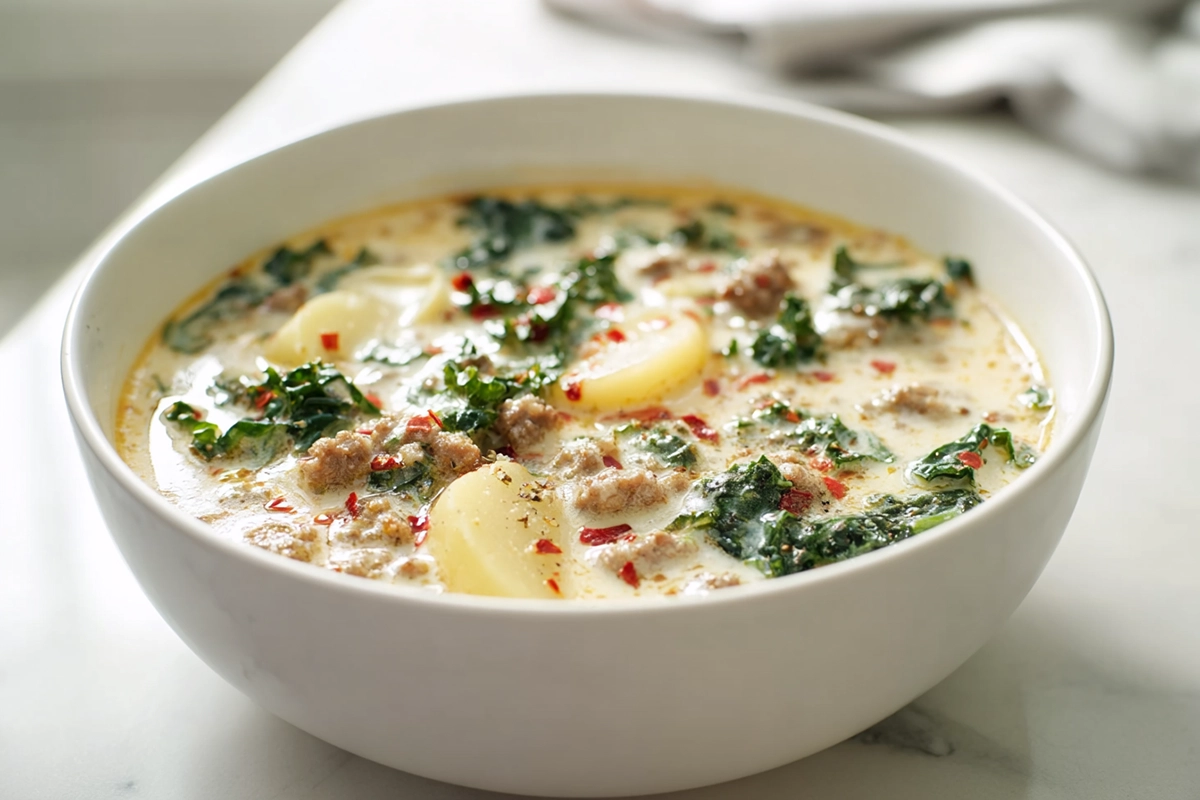
There’s a reason Zuppa Toscana Soup has such a grip on people. The smell alone—spicy sausage sizzling, garlic hitting warm fat, potatoes softening in a creamy broth—pulls you into the kitchen whether you’re hungry or not. It’s rich without being heavy, filling without knocking you out, and somehow both cozy and a little indulgent at the same time. That’s the magic everyone’s chasing when they Google this soup.
The problem is, a lot of homemade versions miss the mark. Some are greasy because the sausage never gets handled correctly. Others taste flat because everything goes into the pot at once and nothing gets a chance to build flavor. And then there are the creamy disasters—the soups that look fine until the dairy curdles and you’re left wondering what you did wrong even though you followed the recipe exactly.
Here’s my promise to you: this version works because it respects the order of things and the ingredients themselves. Nothing fancy, nothing chef-y, and no steps that exist just to sound impressive. This is a weeknight soup made with intention—where the sausage does the seasoning, the potatoes thicken the broth naturally, and the cream is treated gently so it stays smooth. I’ve made this enough times to know where people get tripped up, and I’ll call those moments out before they ruin your pot. If you’ve been burned by Zuppa Toscana before, this is the one that fixes it.
The No-Regret Ingredients
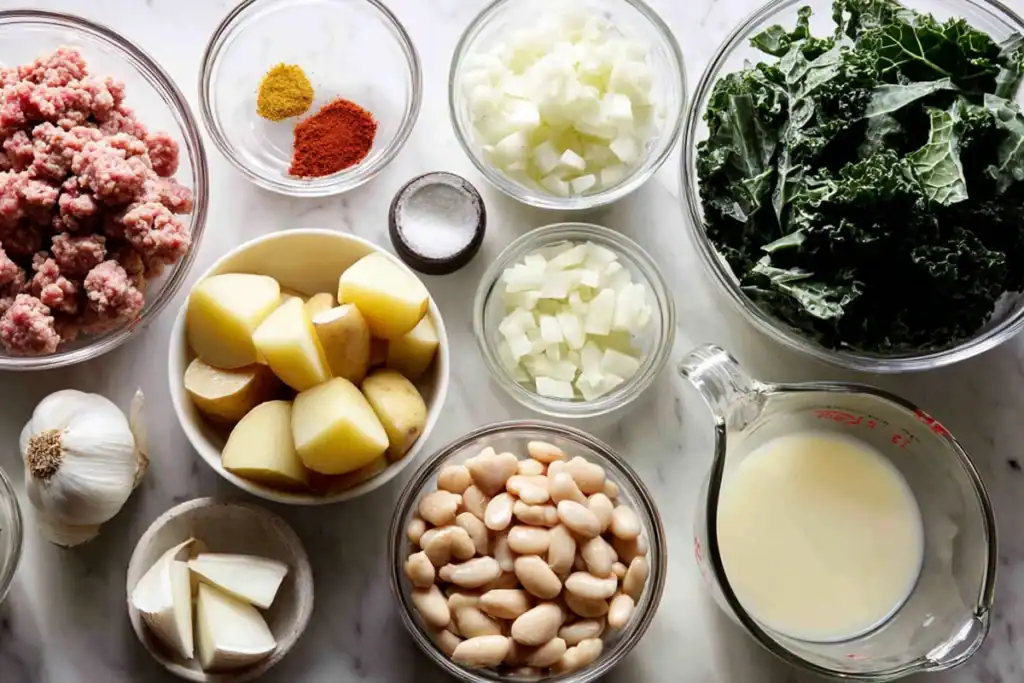
Italian Sausage
This soup lives or dies by the sausage. Use loose Italian sausage—hot or mild both work—but it needs to have real fat and real seasoning. This is not the place for ultra-lean sausage; that fat is what flavors the entire pot from the very first step.
Yellow Onion
A basic yellow onion is exactly what you want here. It softens into the background and picks up the sausage flavor instead of competing with it. Fancy onions don’t improve this soup, so save your money.
Garlic
Fresh garlic matters more than people like to admit. Jarred garlic can taste harsh and dull once cooked in fat, and this soup doesn’t have enough ingredients to hide that. Two cloves is enough—as long as they’re real.
White Beans
Great Northern beans add body without turning the soup into bean stew. They quietly thicken the broth and make the soup more filling without shouting for attention. If you’re skeptical about beans in Zuppa Toscana, this is where most people change their minds.
Smoked Paprika
This is a small ingredient with an outsized role. Smoked paprika adds a subtle depth that mimics the restaurant-style flavor people can’t quite identify. Regular paprika won’t do the same job here.
Chicken Broth
Use a broth you’d actually drink on its own. I lean toward Better Than Bouillon because it’s consistent and forgiving, but any well-seasoned broth works. Weak broth equals weak soup—there’s no fixing that later.
Red Potatoes
Red potatoes hold their shape and soften just enough without falling apart. Russets break down too fast and turn the soup starchy in a bad way. Slice these thin and evenly, and they’ll do half the thickening for you.
Kale
Kale gives the soup structure and balance. It stands up to the heat and the cream without disappearing. Spinach wilts too fast and turns muddy, so this is one substitution I don’t recommend.
Half and Half
This is non-negotiable for texture. Half and half gives you creaminess without heaviness, but only if it’s at room temperature. Cold dairy is the fastest way to ruin a pot of good soup.
Red Pepper Flakes & Black Pepper
These are finishers, not the main event. A pinch of red pepper flakes wakes everything up, and freshly cracked black pepper adds warmth at the end. Go light—you can always add more.
The Process That Keeps It Creamy (Not Greasy or Flat)
Building the Flavor Base Without Rushing It
This soup starts before any liquid goes in, and that’s where most versions quietly fail. When the sausage hits the pot, you should hear an immediate, confident sizzle—not a sad hiss. Look for small bubbles forming around the meat as the fat renders, and use your spoon to break it up until the pieces are bite-sized, not chunky. The smell at this stage should be rich and savory, almost like pizza shop air, not burnt or sharp.
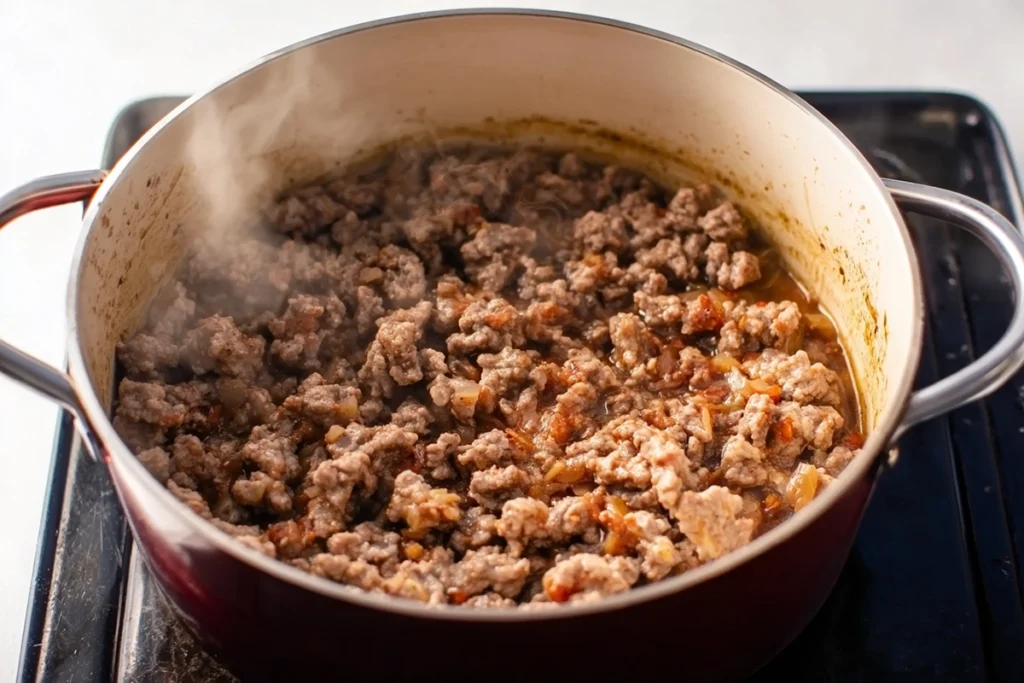
Once the onions and garlic join the party, everything slows down just a touch. The onions should turn glossy and slightly translucent, and when you run your spoon across the bottom of the pot, those browned bits should loosen easily. If you smell sweetness from the onions and just a hint of garlic—stop. That’s the window. Go past it and you’re flirting with bitterness.
Letting the Broth and Potatoes Do the Heavy Lifting
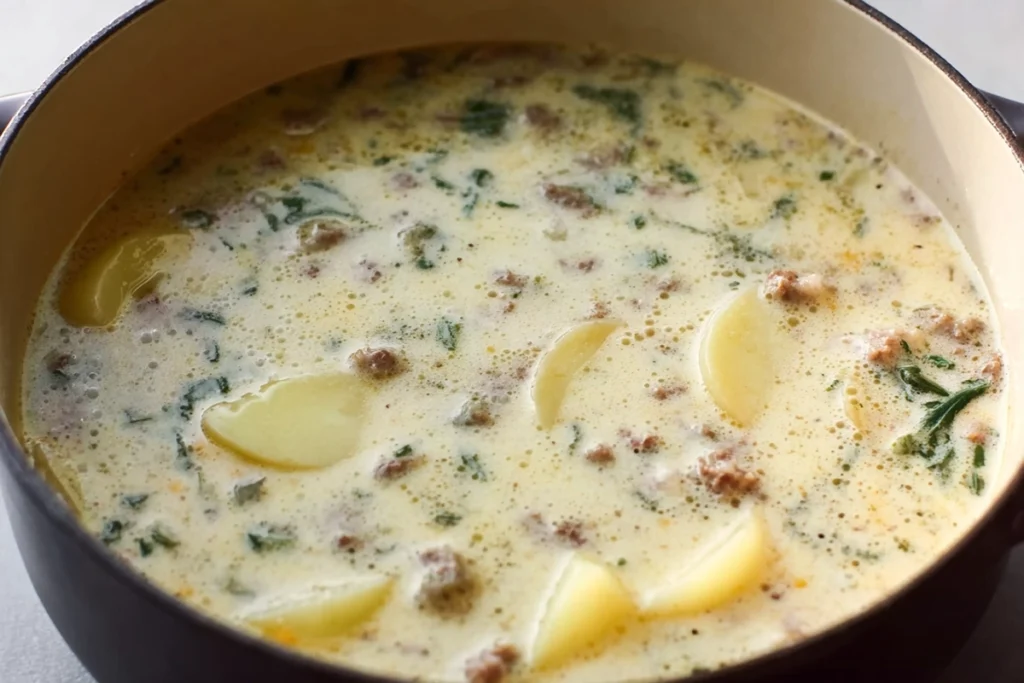
When the broth goes in, the pot should sound calmer, like a gentle simmer instead of a boil. You’re looking for lazy bubbles breaking the surface, not rolling chaos. Visually, the liquid should look slightly cloudy already—that’s the starch starting to work in your favor.
The potatoes are sliced thin on purpose. Drop them in and give the pot a slow stir. They should feel firm when they go in and tender when pressed with a spoon later, not mushy or crumbly. As they cook, the broth thickens naturally, and the soup starts to smell rounded and comforting instead of sharp. This is the point where patience pays off.
Adding Greens and Cream Without Breaking the Soup
Kale always looks like too much at first. That’s normal. It should pile high, almost comically so, before wilting down. As it softens, the color deepens into a darker green, and the leaves should feel tender but still structured when you stir.
The cream comes last, and it needs to be treated gently. When it’s added properly, the soup turns silky and pale without separating. You should smell warmth and richness—not milkiness. Keep the heat low enough that the surface barely moves. If you see aggressive bubbles, you’re pushing your luck.
The “Uh-Oh” Moments (Where People Usually Mess This Up)
My Soup Turned Grainy
This almost always comes from boiling after the dairy goes in. I learned this the hard way when I got distracted and let the pot rage for “just a minute.” Cream doesn’t forgive that. If the surface looks like it’s churning or you hear loud bubbling, pull it back immediately.
It Tastes Flat Even Though I Used Sausage
That usually means the sausage never got a chance to brown properly. If it goes straight from pink to gray, you’ve skipped the flavor foundation. The smell should be deep and savory before anything else enters the pot. No browning, no backbone.
My Potatoes Fell Apart
This happens when the slices are too thin or the soup cooks too aggressively. You want tender potatoes that hold their shape, not soup-thickening rubble. If they’re disintegrating, your heat is too high or your timing ran long.
The Soup Feels Greasy
Greasy soup usually isn’t about too much fat—it’s about imbalance. Either the broth was weak, or the cream went in before the potatoes had a chance to do their job. When the starch doesn’t thicken the broth, the fat has nowhere to hide, and you feel it on your tongue immediately.
Make It Your Own (Without Ruining It)
Hot Sausage, Extra Heat
If you like Zuppa Toscana with a little attitude, hot Italian sausage is the easiest and cleanest way to get there. It adds heat that feels baked in, not sprinkled on. I don’t recommend cranking up the red pepper flakes instead—the heat ends up sharp rather than rounded, and you lose the balance that makes this soup addictive.
Mild Sausage, Cream-Forward
Using mild Italian sausage shifts the spotlight to the broth and potatoes. The soup tastes softer, richer, and more comforting—almost stew-like. This is the version I make when I’m feeding kids or anyone who says they “don’t like spicy food” but always goes back for seconds.
No Beans, Heavier Body
If beans aren’t your thing, you can leave them out—but don’t pretend nothing changes. Without beans, the soup loses some body, so I compensate with slightly more potatoes sliced thin. The texture stays satisfying, but it eats more like a classic sausage-and-potato soup than the restaurant-style version.
Milk and Cream Swap (When Half and Half Isn’t Available)
If you don’t have half and half, an equal mix of whole milk and heavy cream works—but only if both are at room temperature. Straight milk makes the soup thinner and less luxurious, while straight cream pushes it into heavy territory. This balance keeps the soup spoonable, not cloying.
Serving & Storing (Real Life)
I serve this in wide bowls so it cools just enough to eat comfortably, with cracked black pepper on top and nothing else. If I’m feeling ambitious, a slice of crusty bread goes on the side—but honestly, the soup stands on its own.
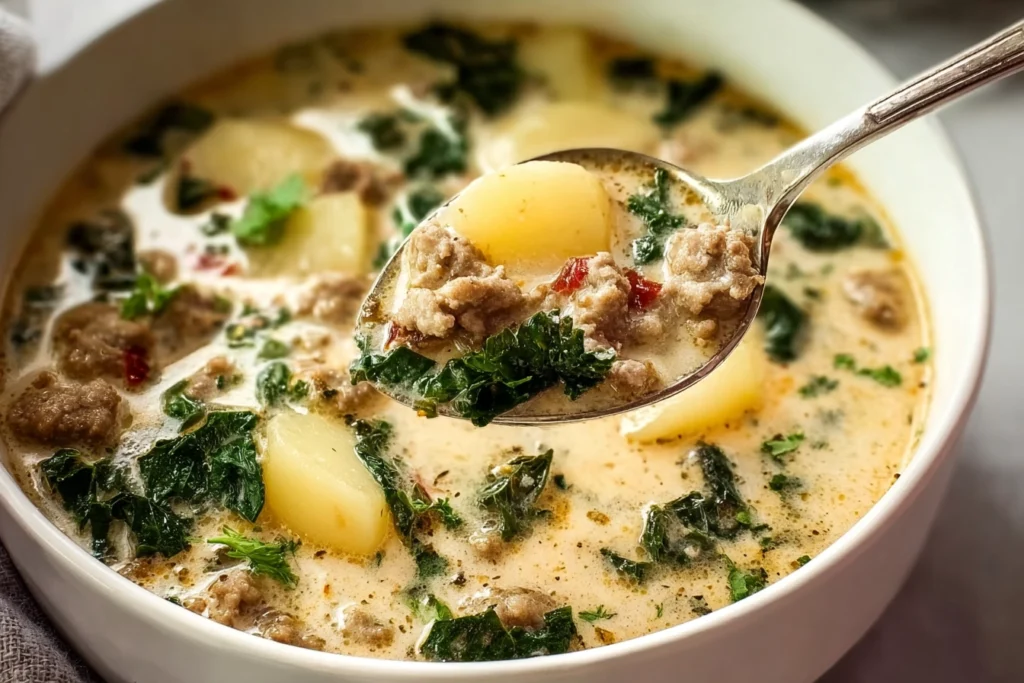
This is one of those soups that gets better overnight. The potatoes soak up flavor, the broth tightens slightly, and everything tastes more intentional the next day. Store it in the fridge for up to four days and reheat gently on the stove—low heat, slow stir, no boiling.
Freezing is possible, but not perfect. The dairy can separate slightly when thawed. If you plan to freeze it, do so knowing the texture will be a bit looser. Reheat slowly and stir patiently—it comes back together more than you’d expect.
At the end of the day, this Zuppa Toscana Soup is about comfort you can trust. It smells like the restaurant version, eats better at home, and—most importantly—doesn’t leave you wondering what went wrong.
Get inspired with more mouthwatering recipes! Follow me on Pinterest for new cooking ideas every week.
Frequently Asked Questions
Can I make Zuppa Toscana Soup ahead of time?
Yes—and it’s actually better that way. The potatoes absorb more flavor overnight, and the broth tightens up slightly. Just reheat it gently and don’t let it boil once it’s warmed through.
Why did my soup curdle?
This happens when the soup boils after the dairy goes in. Half and half needs low, steady heat. If you see aggressive bubbling or hear loud simmering, the heat is too high.
Can I use spinach instead of kale?
You can, but expect a different result. Spinach wilts almost instantly and turns soft fast, so the soup loses structure. If you use it, add it right at the end and stir just until it collapses.
Is this soup freezer-friendly?
Sort of. You can freeze it, but the texture won’t be exactly the same when thawed. The dairy may separate slightly—reheat slowly and stir patiently to bring it back together.
What’s the closest sausage to Olive Garden’s?
Loose mild Italian sausage is the closest match. It gives you that familiar flavor without overpowering heat. Hot sausage tastes great too, but it shifts the soup in a spicier direction.
Can I make this in a slow cooker?
Yes, but brown the sausage and onions first. Dump-and-go slow cooker versions taste flat because they skip that flavor foundation. Finish with the dairy at the end, just like on the stovetop.
Zuppa Toscana Soup
Ingredients
Method
- Brown the Italian sausage in a large pot.
- Add onion and garlic and cook until softened.
- Stir in beans, smoked paprika, broth, and water and bring to a simmer.
- Add sliced potatoes and kale and cook until potatoes are tender.
- Temper half and half and stir into the soup gently.
- Season with red pepper flakes and black pepper.
Notes
- Use loose Italian sausage, not links.
- Keep heat low after adding dairy to prevent curdling.
- Soup tastes better the next day.