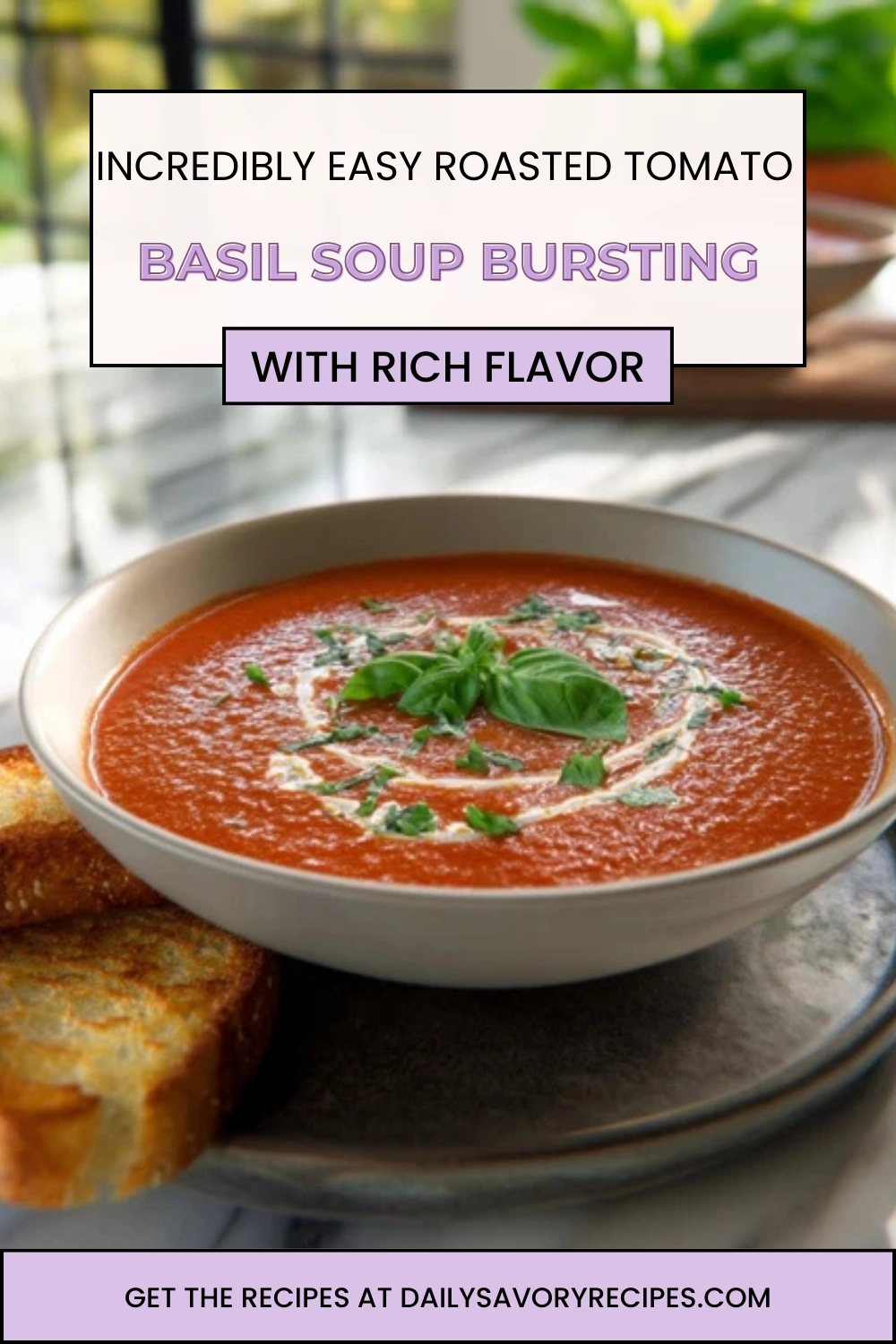

Roasted Tomato Basil Soup That Tastes Like It Should

The smell is the first thing you notice. Tomatoes roasting hot enough to caramelize, garlic turning soft and sweet, onions browning at the edges. That deep, almost jammy aroma fills the kitchen long before anything hits a pot. This is the moment when you know this soup is going to be different from the flat, acidic tomato soups that rely on canned shortcuts. It smells round, savory, and warm—like something that took care instead of shortcuts.
What makes Roasted Tomato Basil Soup work isn’t complexity. It’s restraint and timing. Roasting concentrates flavor instead of diluting it. Basil is treated gently so it stays fresh and aromatic rather than bitter. And the broth is there to support the tomatoes, not drown them. The result is a soup that’s smooth, balanced, and comforting, but still bright enough to feel intentional—not heavy or sleepy.
This is the kind of recipe I come back to because it behaves the same way every time. When tomatoes are roasted properly, the soup doesn’t need sugar. When garlic is handled carefully, there’s no sharp bite. When basil goes in at the right moment, it smells like summer even in the middle of winter. This soup isn’t about showing off—it’s about doing a simple thing the right way and getting dependable results you can trust.
Table of Contents
The Ingredients That Do the Real Work
Fresh Tomatoes
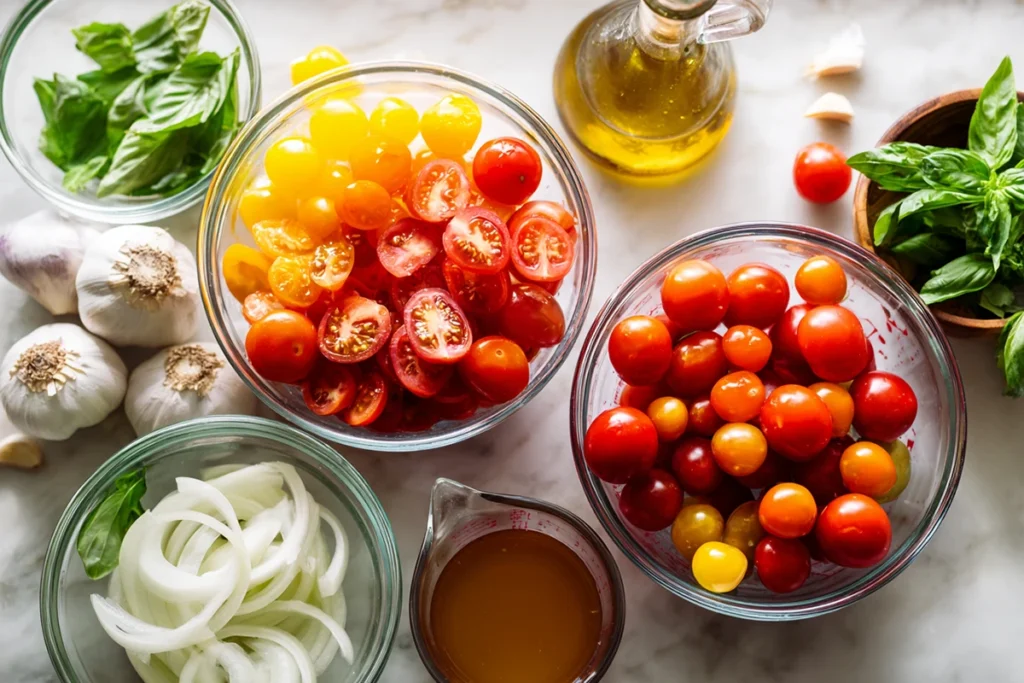
Roma tomatoes bring body and structure, while grape or cherry tomatoes add sweetness and acidity once roasted. Using both creates a soup that’s thick without being pasty. This is not a place for canned tomatoes—they won’t develop the same depth in the oven.
Olive Oil
Regular, everyday olive oil works perfectly here. Roasting does most of the flavor-building, so there’s no need to waste expensive finishing oil. What matters is coating the vegetables evenly so they brown instead of steaming.
Garlic
Whole peeled cloves roast gently and turn mellow instead of sharp. Minced garlic burns too fast in the oven and can make the soup bitter. Leaving the cloves whole gives you control.
Yellow Onions
Sliced thick enough to brown but not dry out, onions add sweetness that balances the acidity of the tomatoes. White onions work in a pinch, but yellow onions roast more evenly.
Fresh Basil
This is non-negotiable. Fresh basil provides aroma and brightness that dried basil simply cannot replace. Most of it goes in before blending, with the rest saved for finishing.
Vegetable Broth
Low-sodium broth lets you control seasoning and keeps the tomato flavor front and center. Water works, but broth adds just enough depth to round everything out.
How This Roasted Tomato Basil Soup Comes Together
Roasting for Flavor, Not Speed
Everything starts in the oven, and this is where most tomato soups quietly fail. You’re not just softening vegetables—you’re concentrating them. As the tomatoes roast, look for the cut sides to slump and wrinkle, with small golden-brown spots forming at the edges. You should hear a faint sizzle as moisture cooks off, not a wet hiss that signals steaming. The smell shifts from raw tomato to something deeper and slightly sweet. When you can smell roasted garlic but it hasn’t gone sharp, it’s time to pull it—garlic turns bitter fast if ignored.
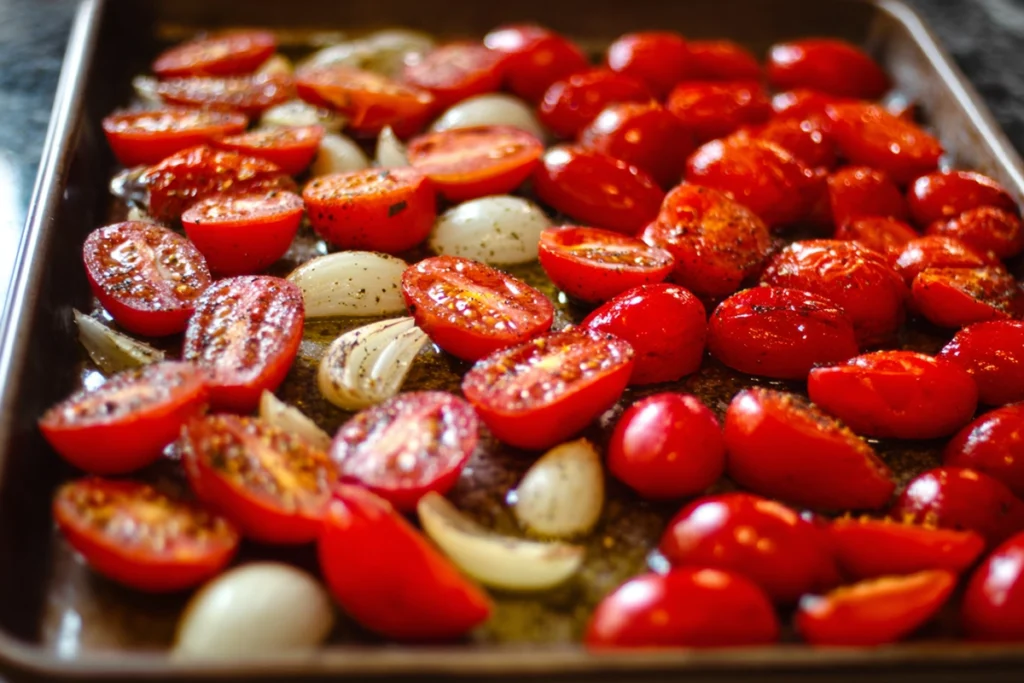
The onions take longer, and that’s intentional. Visually, you want browned edges and translucent centers, not dried-out slices. If you touch one with a fork, it should feel tender but still hold its shape. This staggered roasting matters because each ingredient reaches its best point at a different time, and forcing them to finish together flattens the flavor.
Bringing It Together on the Stove
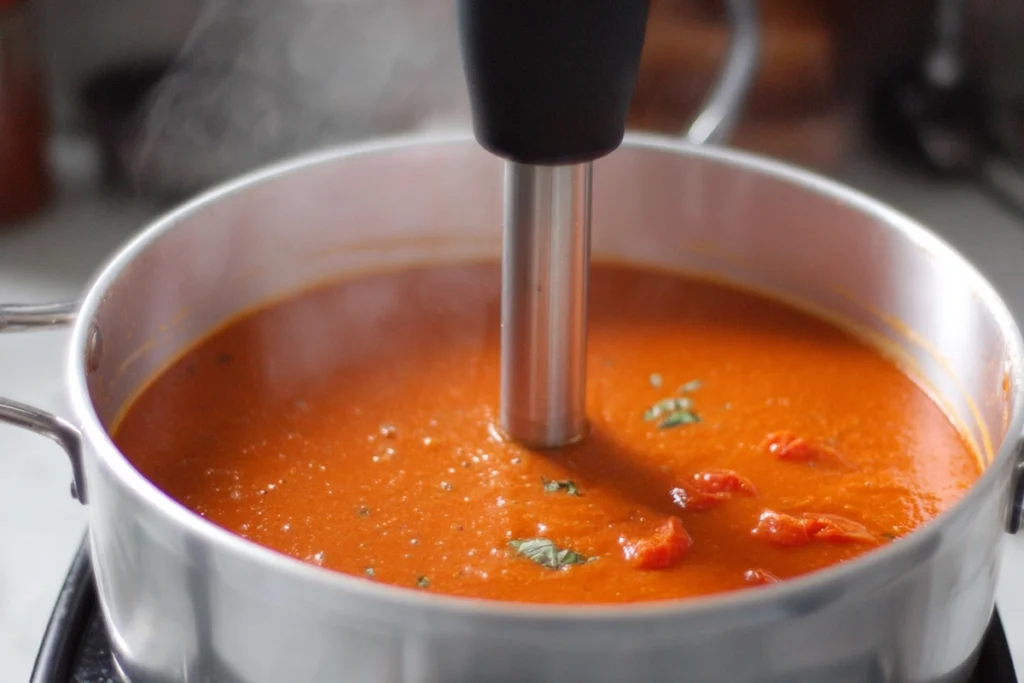
Once everything hits the pot, the mood changes. This isn’t aggressive cooking—it’s a controlled merge. When the broth goes in, the sound softens from sizzling to a gentle bubble. That’s what you want. The tomatoes should look collapsed and jammy, not floating like chunks in water. As it simmers, the aroma becomes rounder and more unified, losing that sharp roasted edge and turning savory.
Basil goes in with intention. Most of it melts into the soup during the simmer, and you’ll smell its sweetness bloom without turning grassy. When blending, watch the surface: it should roll smoothly without splashing, and the texture should feel velvety when rubbed between two fingers. If it looks thin, it probably needs more time—not more ingredients.
Where Roasted Tomato Basil Soup Usually Goes Wrong
Burnt Garlic That Takes Over
If the soup tastes harsh or bitter, garlic is usually the culprit. Visually, burnt garlic looks deeply browned and smells sharp, almost acrid. The fix is prevention—pull it as soon as it turns pale gold and smells sweet. If it’s already gone too far, don’t force it into the pot. One burnt clove can dominate the entire batch.
Watery Soup with Flat Flavor
This happens when tomatoes aren’t roasted long enough. If they come out looking plump and juicy instead of collapsed and lightly blistered, too much water will be released later. You’ll notice it immediately when the soup sounds thin as it simmers and smells diluted. The solution is patience in the oven, not thickening tricks later.
Basil Losing Its Freshness
Basil can turn dark and dull if it’s overcooked or blended too aggressively. If the soup smells more herbal than fresh, that’s a sign it went in too early or stayed on high heat too long. Holding some basil back for the end keeps the final bowl smelling bright and intentional, not tired.
Make It Fit Your Kitchen
A Creamier Finish Without Losing Tomato Flavor
If you want a creamier bowl, heavy cream works—but only in moderation. I’ve tested anywhere from ½ cup to 1 cup, and the sweet spot is usually closer to ½ cup. You’re looking for a softer mouthfeel, not a dairy-forward soup. Add it off the heat and watch the color change from brick red to a muted coral. If it turns pale quickly, you’ve gone too far and flattened the tomato flavor.
A Cheesy Boost That Stays Balanced
Parmesan is the only cheese I recommend adding directly. Use finely grated Parmigiano-Reggiano or a domestic equivalent you grate yourself. Pre-shredded cheese tends to clump and dull the soup’s texture. Stirring it in while the soup is hot but not boiling lets it melt smoothly, adding savory depth without making the soup stringy or heavy.
Turning It Into a Meal
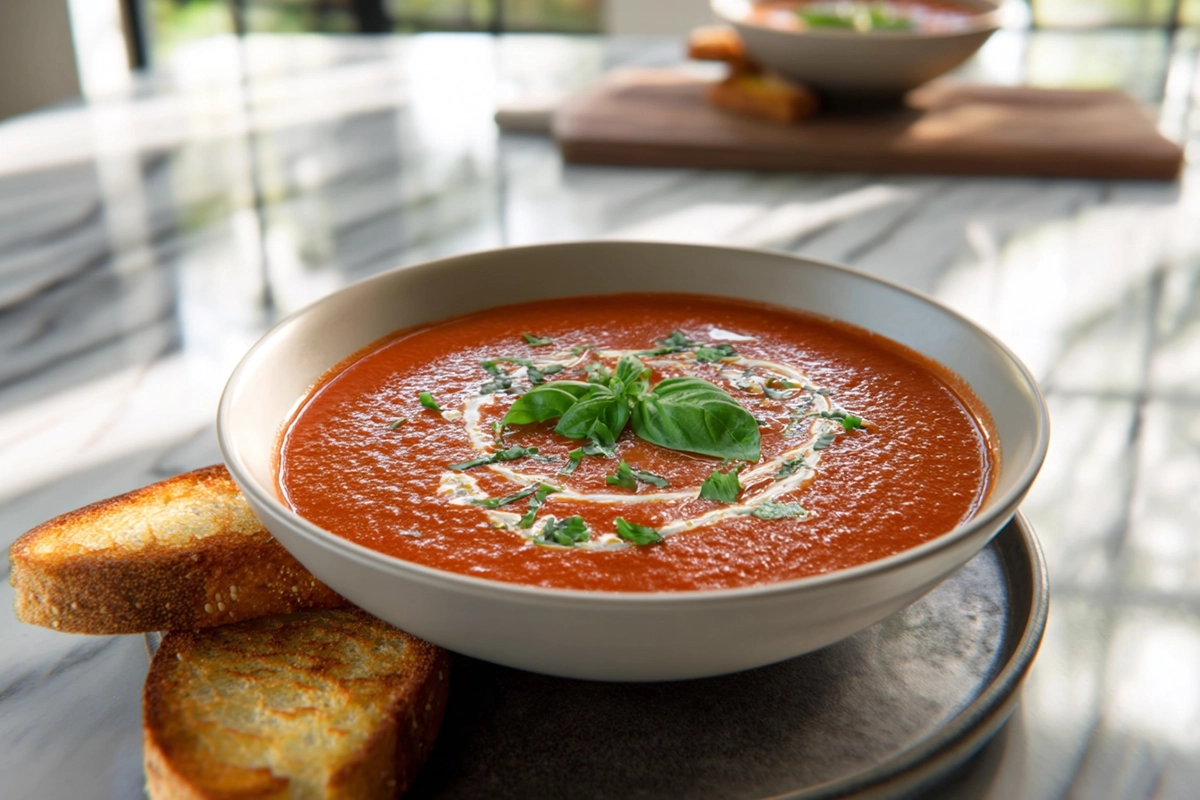
If you want something more filling without changing the soup itself, grilled cheese croutons are the move. I cut them slightly larger than typical croutons so they stay crisp on the outside but soften just enough in the soup. Sourdough works best here—the tang holds up against the sweetness of the tomatoes.
How I Serve It—and What Happens After
I serve this soup hot, not screaming, with a little chopped basil on top and grilled cheese on the side. When it’s too hot, you miss the aroma; when it cools just slightly, the basil and roasted tomatoes come through more clearly. This is one of those soups that tastes better halfway through the bowl than in the first spoonful.
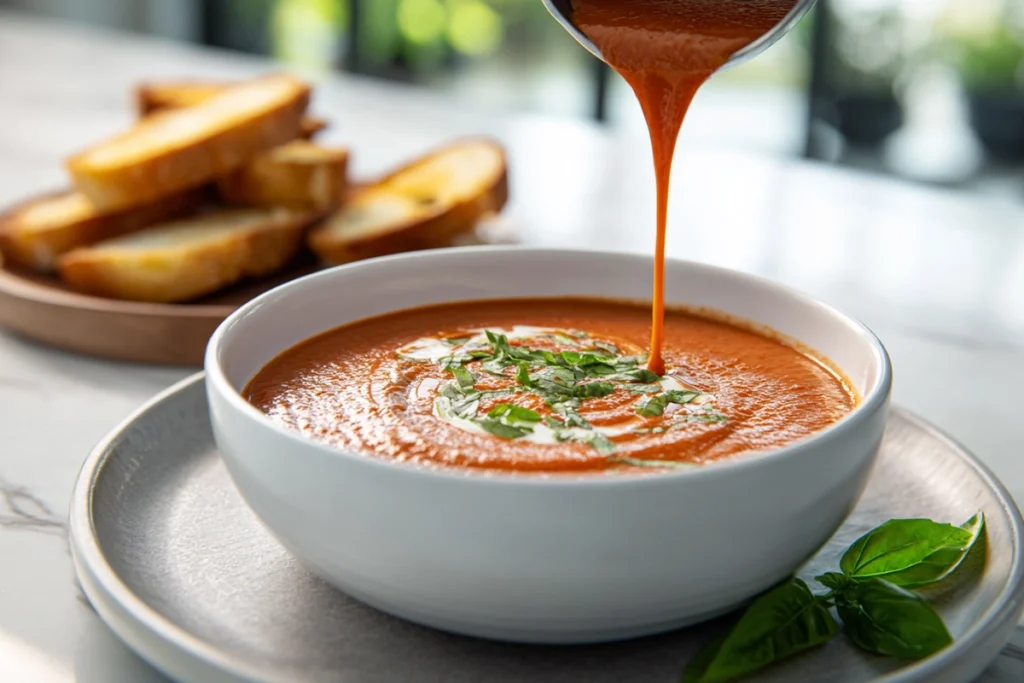
For storage, let the soup cool completely before refrigerating. It keeps well for about four days, and the flavor actually deepens overnight. If you’re freezing it, do it before adding cream. Freeze in portion-sized containers so you can reheat only what you need. Thaw overnight in the fridge, then reheat gently on the stove—listen for a quiet simmer, not a boil, and stir until the texture looks smooth again.
A Soup Worth Repeating
This is the kind of Roasted Tomato Basil Soup that rewards doing things carefully once and then repeating them the same way every time. When the roasting is right, and the balance holds, it delivers that deep, cozy comfort that keeps you coming back—no guesswork required.
Get inspired with more mouthwatering recipes! Follow me on Pinterest for new cooking ideas every week.
Frequently Asked Questions
Can I use canned tomatoes instead of fresh?
You can, but the flavor won’t be the same. Fresh tomatoes roast and caramelize in a way canned tomatoes can’t replicate. If you must use canned, choose whole peeled tomatoes, drain them well, and roast them anyway—but expect a softer, less vibrant result.
Do I need to peel the tomatoes before roasting?
No. Once the tomatoes are roasted and blended, the skins disappear into the soup. Peeling is optional and purely a texture preference. If you’re sensitive to skin, you can pull them off after roasting—they’ll slip off easily.
Why are the onions roasted separately from the tomatoes?
Onions and tomatoes finish roasting at different speeds. Tomatoes need longer to concentrate and brown, while onions burn if pushed that far. Separating them ensures sweetness from the onions and depth from the tomatoes without bitterness.
Can I make this soup creamy without adding cream?
Yes. A longer simmer and thorough blending create a naturally smooth texture. You can also add a small amount of grated Parmesan, which thickens the soup slightly while keeping the tomato flavor intact.
Is it better to blend the soup hot or let it cool first?
Blend it hot, but carefully. Hot soup blends more smoothly and faster. If using a countertop blender, work in small batches, don’t fill it more than halfway, and vent the lid so steam can escape.
How do I keep the soup from tasting flat?
Flat flavor usually means under-seasoning or under-roasted tomatoes. Salt brings out the sweetness, and proper roasting builds depth. If it still tastes dull, a small pinch of salt or a bit more basil usually fixes it.
PrintRoasted Tomato Basil Soup
Roasted Tomato Basil Soup made with fresh tomatoes, garlic, and basil. A simple oven-roasted method for rich flavor and dependable results.
- Prep Time: 10 minutes
- Cook Time: 1 hour 5 minutes
- Total Time: 1 hour 15 minutes
- Yield: 6 1x
- Category: Soup
- Method: Stovetop
- Cuisine: American
- Diet: Vegetarian
Ingredients
- 2 1/4 lbs Roma tomatoes
- 1 1/4 lbs cherry tomatoes
- 4 1/2 Tbsp olive oil
- 8 cloves garlic
- 2 small yellow onions
- 1 1/2 cups fresh basil
- 5 cups vegetable broth
- Salt
- Black pepper
Instructions
- Preheat oven and roast tomatoes, onions, and garlic until caramelized.
- Transfer roasted vegetables to a pot with vegetable broth and basil.
- Bring to a boil, then reduce heat and simmer.
- Blend soup until smooth and velvety.
- Season to taste and serve warm.
Notes
- Use fresh tomatoes for best flavor.
- Remove garlic early if it browns too quickly.
- Add cream if a richer texture is desired.
- Freeze soup before adding dairy.
Nutrition
- Serving Size: 1 bowl
- Calories: 170
- Sugar: 9
- Sodium: 650
- Fat: 11
- Saturated Fat: 1
- Unsaturated Fat: 9
- Trans Fat: 0
- Carbohydrates: 17
- Fiber: 3
- Protein: 3
- Cholesterol: 0