
Hobo Casserole That Actually Delivers Comfort

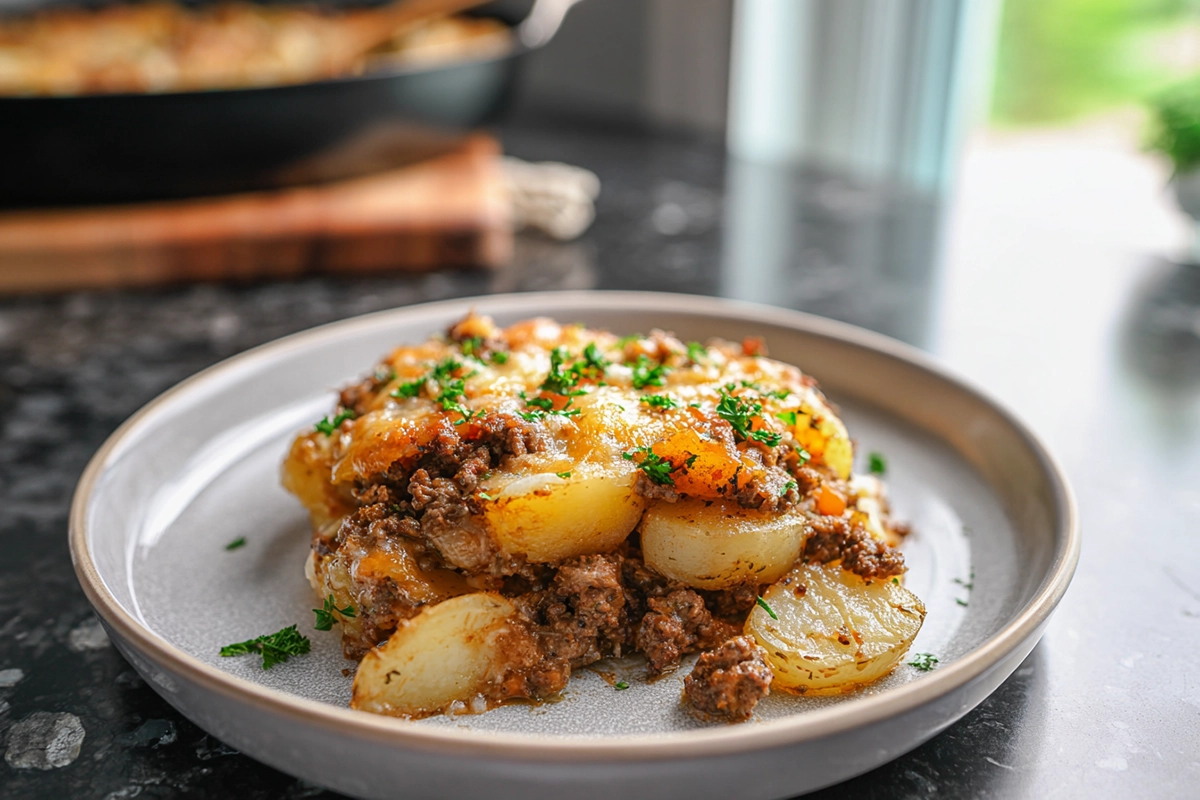
When this Hobo Casserole is in the oven, you can tell pretty quickly how it’s going to turn out. The smell of browned beef and onion hits first, followed by that familiar sharp-cheddar aroma as it starts to melt into everything underneath. It’s not fancy, but it’s comforting in a very real way—the kind of dinner that feels warm before you even take a bite.
This is the kind of meal I think of as an “ultimate comfort dinner” for normal nights. You’re not trying to impress anyone. You just want something filling, savory, and dependable—something that doesn’t leave you guessing whether the potatoes will be done or the filling will be thin. Hobo Casserole works when the ingredients are doing their jobs and the structure makes sense.
What makes this version reliable is that it’s built for balance. The beef brings richness, the potatoes add substance, and the sauce holds everything together instead of pooling at the bottom. Nothing here is complicated, but every component matters. Small details—like the type of potato or how the dairy is added—are what separate a comforting casserole from one that’s greasy or uneven.
This isn’t a “throw it together and hope” recipe. It’s a straightforward, repeatable dinner meant to come out the same way every time, using ingredients you can actually find and afford.
Table of Contents
Ingredients (And Why Each One Matters)
Lean Ground Beef
Lean ground beef keeps the casserole rich without becoming greasy. If you use higher-fat beef, you must drain it well or the final texture will be loose and oily. I stick with 85–90% lean for consistent results.
Yellow Onion & Garlic
Yellow onion holds up to cooking and adds sweetness without overpowering the dish. Fresh garlic is worth using here—it gives depth you won’t get from powder alone, even though powders still play a supporting role later.
All-Purpose Flour
This is the quiet ingredient that makes everything work. The flour thickens the broth just enough to create a cohesive sauce so the casserole slices instead of slumping.
Beef Broth
Regular boxed beef broth is fine—no need for anything fancy. What matters is adding it after the flour so it thickens properly instead of turning watery.
Russet Potatoes
Russets are non-negotiable. Their starch content allows them to soften evenly and absorb flavor without turning waxy or firm like red or gold potatoes often do.
Cheddar Cheese
Sharp or medium cheddar melts smoothly and brings the right level of bite. Store-brand cheese works perfectly here; shredding it yourself helps it melt more evenly.
Sour Cream
Sour cream adds creaminess and a slight tang that balances the beef and cheese. Full-fat works best—it’s more stable and less likely to break during baking.
Carrots & Seasonings
Carrots add a mild sweetness and texture contrast. The combination of onion powder, garlic powder, Worcestershire, salt, and pepper rounds everything out without overpowering the base flavors.

How This Hobo Casserole Comes Together (And Why the Order Matters)
Building Flavor Before It Goes in the Oven
This casserole starts on the stovetop, and this part sets the tone for everything that follows. When the ground beef and onion hit the pan, you should hear a steady sizzle—not a violent crackle, not a quiet sweat. Look for the beef to turn evenly brown with no gray pockets, and pay attention to the smell: once the onion softens and smells slightly sweet instead of sharp, you’re in the right zone. If you touch a piece of beef with a spoon, it should feel firm but not dry.
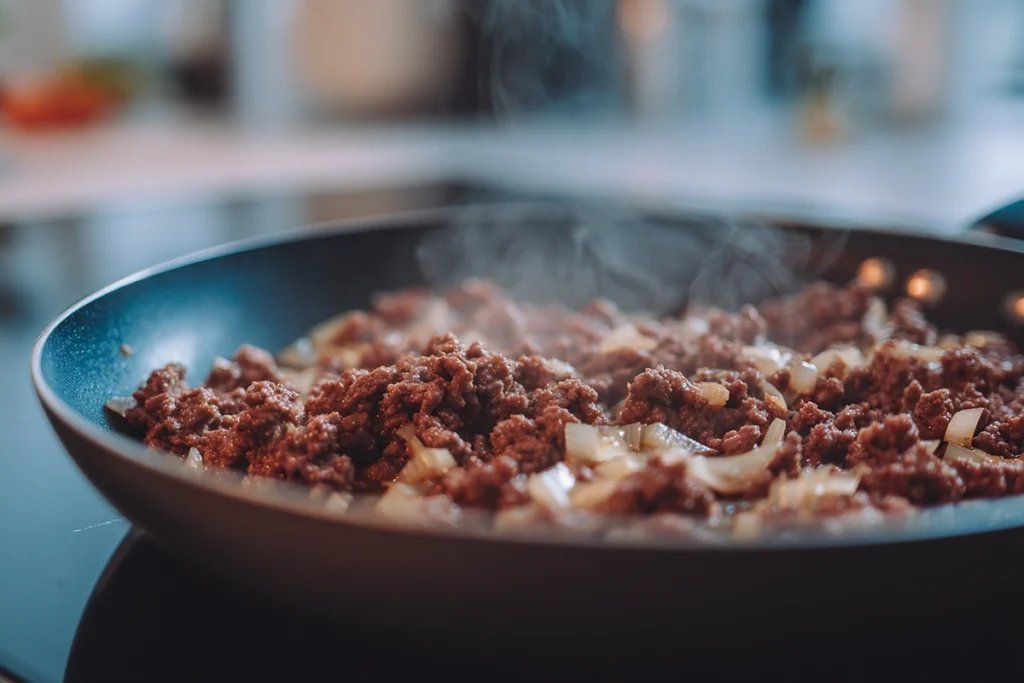
The flour goes in next, and this is where people rush. Stir it in until you no longer see dry patches and the mixture looks slightly pasty. You’ll smell a faint, toasted aroma after about a minute—subtle, not nutty. That smell tells you the flour is cooked enough to thicken later without tasting raw.
Turning the Pan Into a Sauce, Not a Soup
When the broth goes in, the sound changes immediately. Instead of sizzling, you’ll hear a gentle bubbling as the liquid loosens everything up. Watch the texture closely—the sauce should tighten slightly as you stir, coating the beef instead of pooling around it. Run a spoon through the pan; it should leave a brief trail that fills back in slowly.
This is when the seasonings matter. As soon as the Worcestershire and powders bloom in the heat, you’ll smell something deeper and more savory. That’s your cue to move forward. Once the cheese and sour cream are added, the mixture should look creamy and cohesive, not stringy or oily. If you pinch a bit between your fingers, it should feel thick and smooth, not greasy.
Why the Potatoes and Carrots Go in Raw
The vegetables finish cooking in the oven, not on the stove. When you stir in the diced potatoes and carrots, listen for the sound to dull—no sizzling, just a soft scrape as everything combines. Visually, you want the vegetables evenly coated so they don’t dry out while baking.
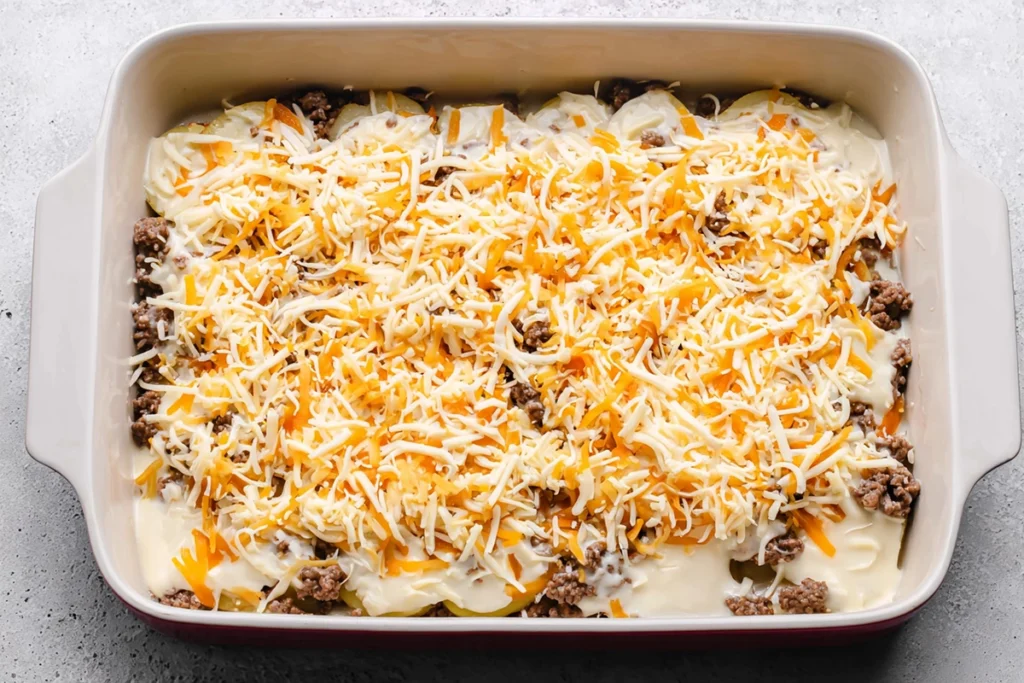
After transferring everything to the baking dish, the top layer of cheese does more than add flavor. As it melts, it seals in steam. You’ll know it’s working when the foil traps moisture and the casserole smells rich and savory rather than dry or toasted. That trapped steam is what softens the potatoes evenly.
Where Hobo Casserole Usually Goes Wrong
Undercooked Potatoes in an Otherwise Done Casserole
This is the most common issue, and you’ll see it right away when you cut into the dish. The top looks perfect, but the fork meets resistance. That usually means the potatoes were cut too large or not fully coated in the sauce. Potatoes should feel tender when pierced, with no squeak or crunch. If you hear a faint scraping sound when the fork goes in, they need more time.
A Greasy or Loose Filling
If the casserole looks shiny on top or feels slick when scooped, too much fat is the culprit. You’ll notice it when the sauce separates slightly instead of staying creamy. This happens when high-fat beef isn’t drained or when the flour doesn’t get enough time to cook. The finished texture should feel spoonable and cohesive, not soupy or oily.
Cheese That Breaks Instead of Melts
When cheese overheats too quickly, it can turn grainy. You’ll see small oil pools and feel a slightly gritty texture on the tongue. This usually comes from adding cheese before the sauce has thickened or baking uncovered too early. Melted cheese should look smooth and stretch gently when pulled, not separate or weep.
These are small issues, but they’re the difference between a casserole that’s just edible and one you actually want to make again.
Make It Your Own
Cheddar Blend With a Little Bite
If you want more depth without changing the structure, replace one cup of the cheddar with sharp white cheddar or Colby Jack. Block cheese matters here—pre-shredded versions don’t melt the same and can leave the filling slightly grainy. You’ll smell the difference when it bakes: sharper, more savory, but still balanced.
Beef and Mushroom Combination
I’ve tested this with finely chopped cremini mushrooms mixed into the beef as it browns. The mushrooms should be diced small enough that they soften and release moisture quickly—you’ll hear a brief hiss as the water cooks off. This keeps the casserole hearty while stretching the beef without changing the final texture.
Smoked Paprika Finish
Adding smoked paprika to the seasoning mix gives a subtle campfire note that fits the spirit of this dish. It should smell warm and earthy, not sharp. If you taste it raw and it’s bitter, you’ve added too much—this is background flavor, not the lead.
Gluten-Free Adjustment That Actually Works
If you need this gluten-free, use a one-for-one gluten-free flour blend. The sauce will be slightly thicker and set faster, so keep an eye on it. When baked, it should feel firm but still creamy when scooped—if it looks dry, a tablespoon of extra broth fixes it.
Serving & Storing This the Way Real Life Requires
I like this served hot after a short rest, when the cheese has settled, and the potatoes hold together. You’ll hear a faint crackle as the spoon breaks through the top layer—that’s when it’s ready. A simple green salad or steamed green beans on the side keeps the plate from feeling too heavy.
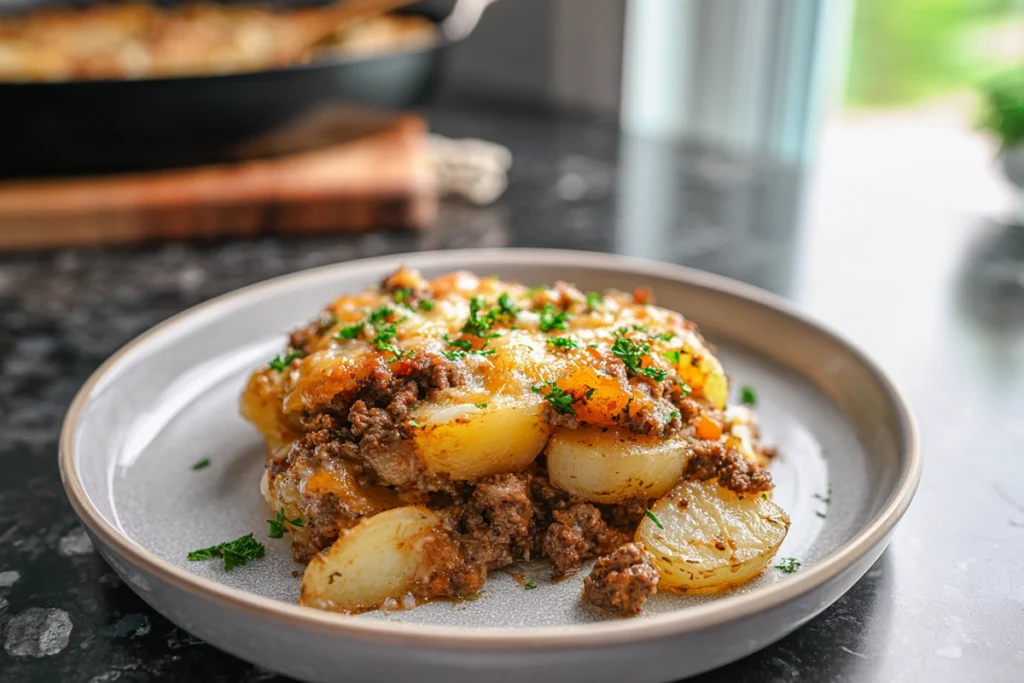
For storing, let the casserole cool completely before covering. In the fridge, it keeps well for up to three days, but avoid storing it uncovered—the top will dry out and turn rubbery. If you’re freezing it, portion it first. Trying to cut into a fully frozen casserole later is a losing battle.
To reheat, the oven is best for larger portions. Cover loosely so the top doesn’t scorch, and heat until the center feels hot when pressed with the back of a spoon. For single servings, the microwave works, but pause halfway and stir so the potatoes reheat evenly instead of staying cold in the middle.
This Hobo Casserole is exactly the kind of dinner that proves comfort food doesn’t have to be complicated to be dependable. When the ingredients are right, and the timing makes sense, it comes out the same way every time—and that’s what keeps it in regular rotation.
Get inspired with more mouthwatering recipes! Follow me on Pinterest for new cooking ideas every week.
Frequently Asked Questions
Can I make Hobo Casserole ahead of time?
Yes. You can assemble the casserole completely, cover it tightly, and refrigerate it for up to 24 hours before baking. When baking from cold, expect to add about 10 minutes to the covered baking time so the center heats through properly.
Do I need to parboil the potatoes first?
No, as long as they’re diced small and evenly. One-inch pieces are the sweet spot. Larger chunks are the main reason people end up with undercooked potatoes even when the rest of the casserole looks done.
Can I use frozen vegetables instead of fresh?
You can, but thaw them completely and pat them dry first. Frozen vegetables release water as they cook, which can thin the sauce and make the casserole loose if they go in straight from the freezer.
Why is my Hobo Casserole watery?
This usually happens when the beef isn’t drained well or the flour isn’t cooked long enough before adding broth. The sauce should thicken slightly on the stovetop—if it looks like soup going into the oven, it will stay that way.
Can I freeze Hobo Casserole after baking?
Yes, and it freezes best in individual portions. Let it cool completely, slice it, and wrap portions tightly. Freezing it whole makes reheating uneven and much harder.
What size baking dish works best for this recipe?
A standard 9×13-inch dish gives the most even cooking. A smaller or deeper dish can slow down potato cooking, while a larger dish spreads everything too thin and dries it out.
Print
Hobo Casserole
- Prep Time: 10 minutes
- Cook Time: 40 minutes
- Total Time: 50 minutes
- Yield: 6 servings 1x
- Category: Dinner
- Method: Baking
- Cuisine: American
Description
This Hobo Casserole is a hearty comfort dinner with ground beef, potatoes, and melted cheddar—easy to prep, filling, and dependable every time.
Ingredients
- 1 pound lean ground beef
- 1/2 cup diced yellow onion
- 2 garlic cloves
- 2 tablespoons all-purpose flour
- 1 cup beef broth
- 1 tablespoon dried minced onion flakes
- 1 teaspoon onion powder
- 1 teaspoon garlic powder
- 1 teaspoon Worcestershire sauce
- 1/2 teaspoon salt
- 1/4 teaspoon black pepper
- 3 cups shredded cheddar cheese
- 1 cup sour cream
- 3 cups diced russet potatoes
- 1 cup diced carrots
- 1 tablespoon dried parsley
Instructions
- Brown ground beef with onion and garlic in a skillet.
- Stir in flour and cook briefly.
- Add broth and seasonings and cook until slightly thickened.
- Mix in sour cream and part of the cheese.
- Transfer mixture to a baking dish and stir in potatoes and carrots.
- Top with remaining cheese, cover, and bake until vegetables are tender.
Notes
- Drain excess fat if using higher-fat ground beef.
- Dice potatoes evenly to ensure they cook through.
- Check doneness by fork tenderness, not just baking time.
Nutrition
- Serving Size: 1 serving
- Calories: 500
- Sugar: 4
- Sodium: 800
- Fat: 31
- Saturated Fat: 14
- Unsaturated Fat: 15
- Trans Fat: 1
- Carbohydrates: 24
- Fiber: 2
- Protein: 33
- Cholesterol: 110