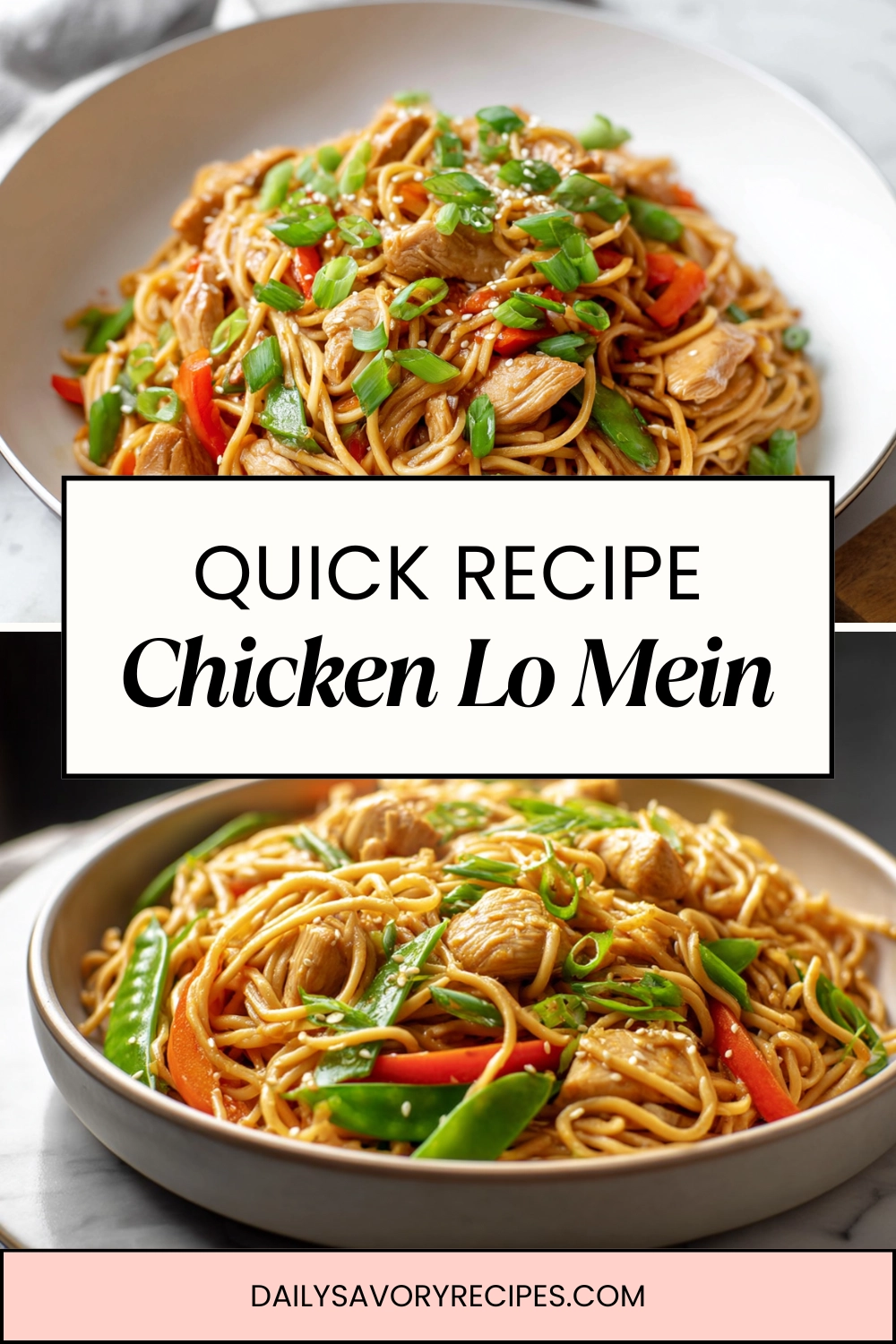

Chicken Lo Mein That Tastes Better Than Takeout

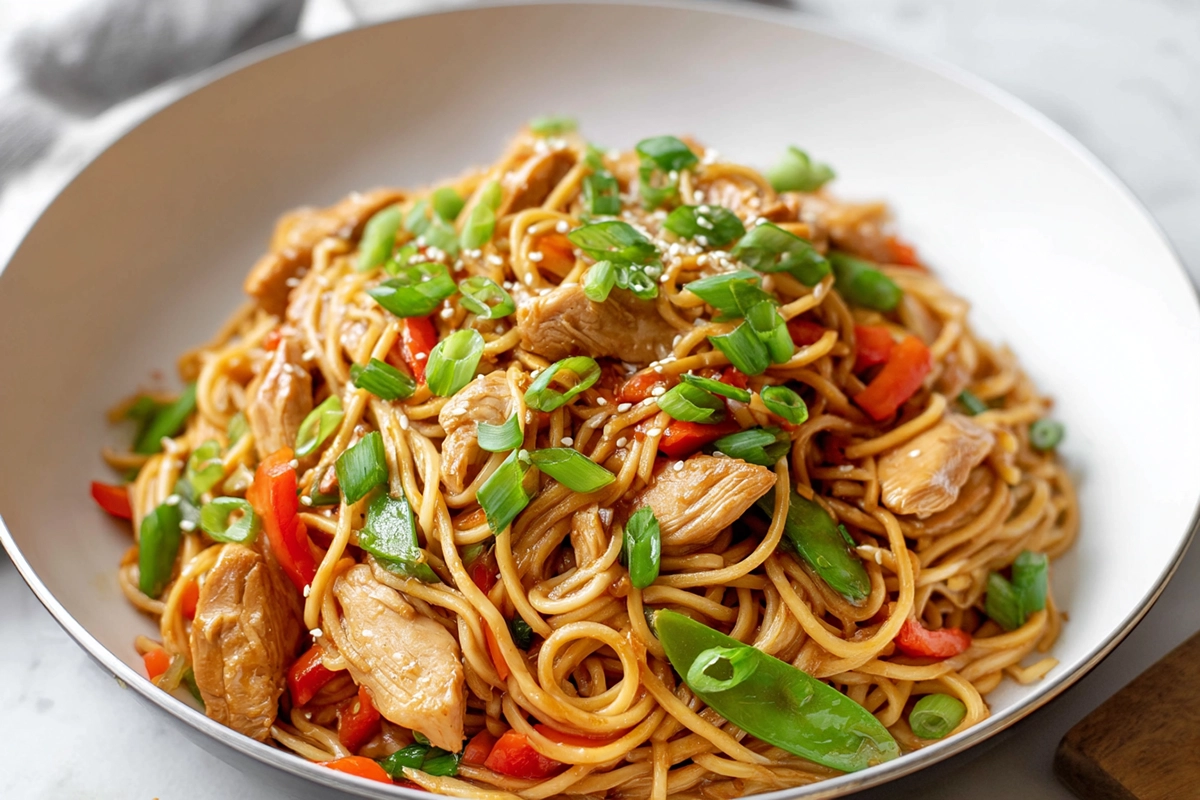
There’s a very specific moment when Chicken Lo Mein is done right. The noodles are glossy but not greasy, still springy when you bite into them. The chicken is tender, not chewy. And the smell—warm soy, a hint of sesame, fresh vegetables hitting hot oil—fills the kitchen in a way that instantly feels familiar. That’s the version people crave from restaurants, but rarely get consistently.
What surprised me when I started testing this recipe at home was how little it actually takes to get there. The flavor isn’t coming from anything complicated. It comes from using the right type of noodles, understanding what each soy sauce is doing, and not rushing the sequence. When lo mein goes wrong, it’s usually because the noodles absorb too much oil, the sauce tastes flat, or everything gets overcooked in an attempt to “fix” it.
This recipe is built around control. Clear ingredient roles, realistic prep time, and a process that works in a normal home kitchen—not a restaurant wok station. Once you understand why each ingredient is here and what job it’s doing, Chicken Lo Mein becomes one of those meals you can repeat confidently on a busy night and still be proud of the result.
Table of Contents
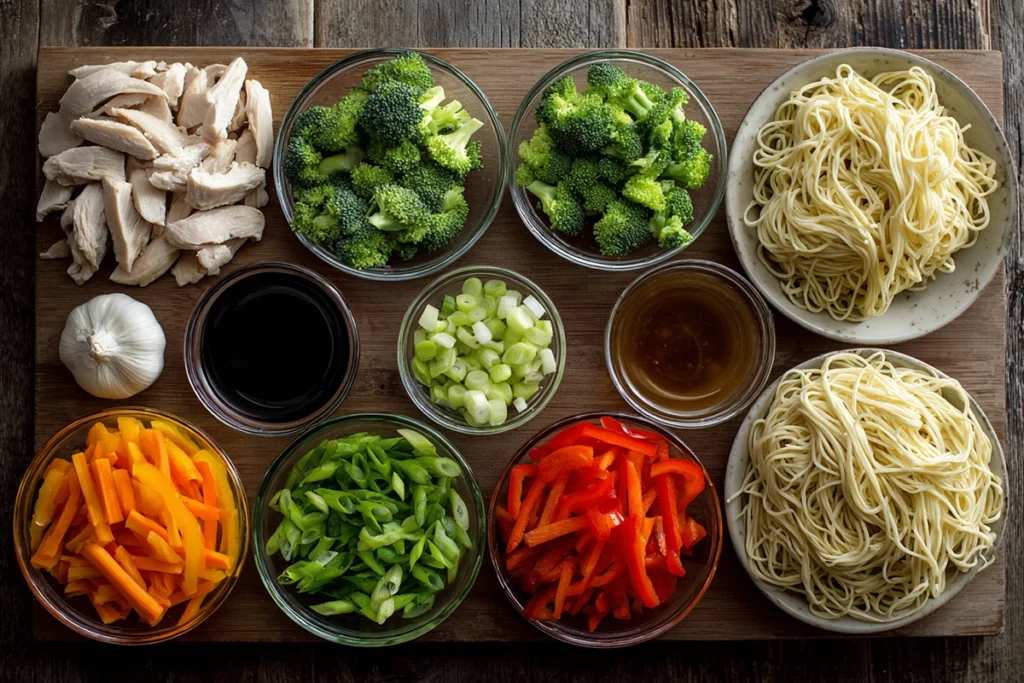
Ingredients That Make This Work
Fresh Lo Mein Egg Noodles
These noodles are the backbone of the dish. Fresh lo mein has a soft chew and elasticity that dried noodles can’t fully replicate, and it holds sauce without turning mushy. If you substitute spaghetti in a pinch, the flavor can still be good—but the texture will never be quite right.
Chicken Thighs (or Breast)
I prefer boneless skinless chicken thighs here because they stay tender under high heat and forgive slight overcooking. Chicken breast works, but it needs careful slicing and timing to avoid drying out. Thin, even strips matter more than the cut itself.
Cornstarch + Water
This small mixture isn’t just for coating—it protects the chicken during searing and helps the sauce cling later. Skip it, and you’ll notice drier meat and thinner sauce. It’s a quiet ingredient, but it makes a visible difference.
Light Soy Sauce
This provides salt and umami without overpowering the dish. Most standard grocery-store soy sauces fall into this category, and the affordable brands work perfectly well here. You don’t need anything fancy—just consistency.
Dark Soy Sauce (Do Not Skip)
Dark soy sauce is about color and depth, not salt. It’s what gives lo mein that restaurant-style mahogany sheen. Leaving it out won’t ruin the dish, but it will look and taste noticeably flatter.
Oyster Sauce
Used in small quantity, oyster sauce adds roundness and savory backbone. It doesn’t make the dish taste like seafood—it just fills in the gaps. This is not a great place for substitutes; hoisin or soy alone won’t do the same job.
Sesame Oil
A little goes a long way. Sesame oil isn’t for cooking here—it’s for aroma and finish. Too much can overpower everything, so restraint matters.
Garlic
Fresh garlic is worth it. Powdered garlic doesn’t bloom the same way in hot oil and won’t give you that initial aroma that defines good lo mein.
Cabbage
Cabbage brings structure and slight sweetness. It holds up under heat and releases just enough moisture to help the noodles loosen without turning watery. Napa cabbage works too, but standard green cabbage is perfectly fine.
Carrots
Julienned carrots add sweetness and contrast without dominating. Pre-shredded carrots are acceptable here—they save time and behave predictably.
Shaoxing Wine (or Dry Sherry)
This ingredient adds aroma and balance when deglazing the pan. Dry sherry is a reliable substitute and widely available. If you skip it entirely, the dish will still work, but it loses some depth.
Bean Sprouts
These go in at the very end for freshness and crunch. They’re optional, but they add a contrast that keeps the dish from feeling heavy.
Scallions
Scallions provide a mild onion bite and freshness. Use both the white and green parts—each plays a different role in flavor and presentation.
How Chicken Lo Mein Comes Together in a Home Kitchen
Getting the Noodles Ready Without Ruining Them
Everything starts with understanding what kind of lo mein noodles you’re working with. If they’re raw, they should be boiled just until flexible—not fully soft. When you lift them from the water, they should bend easily but still feel slightly firm between your fingers, not limp. If they’re pre-cooked, letting them come to room temperature matters more than people think. Cold noodles hit a hot pan and seize up, while room-temp noodles separate more easily and loosen as soon as they touch oil. Visually, you want strands that stay distinct instead of clumping into a single mass.
Building Flavor Before the Heat
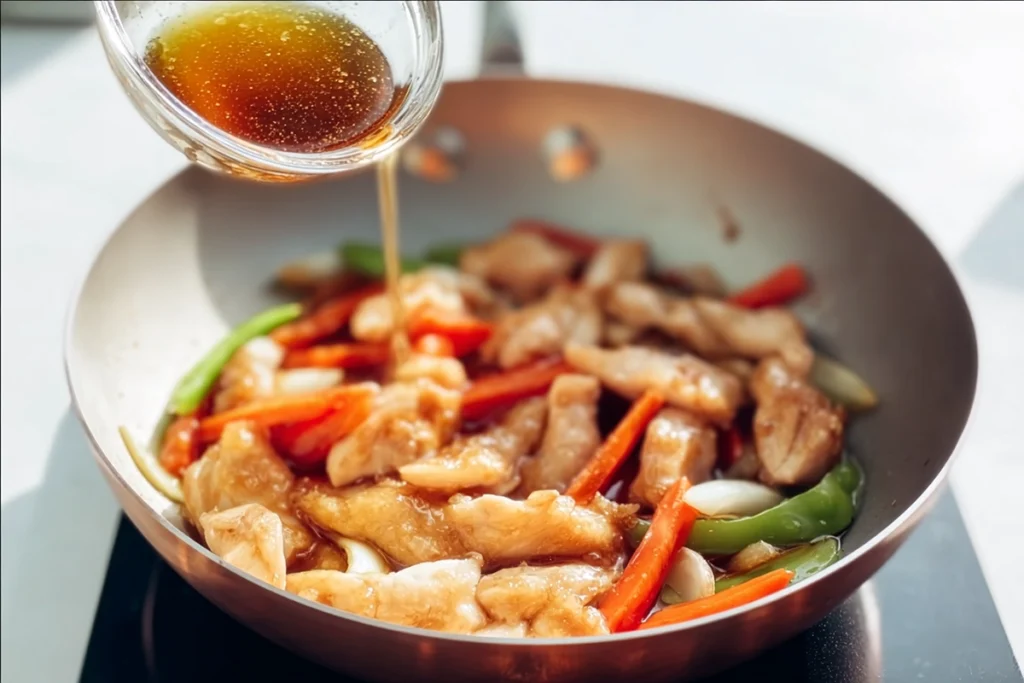
The chicken and the sauce are prepared before anything touches the wok, and this is where consistency starts. The chicken should feel lightly coated and silky, not pasty or wet, and you’ll notice it smells faintly savory from the oyster sauce. The sauce itself should look dark and glossy when stirred, with the sugar fully dissolved—run a spoon through it and check that nothing settles at the bottom. This step prevents scrambling later when the pan is already hot and loud.
High Heat, Fast Sear
When the oil hits the wok, it should shimmer immediately and release a sharp, clean heat smell. As the chicken goes in, listen for an aggressive sizzle—that sound tells you the pan is hot enough to brown instead of steam. The surface of the chicken should turn opaque quickly with light golden edges. Touch it with a spatula and it should release cleanly from the pan; if it sticks, it’s not ready yet.
Vegetables and Aroma, Not Color
Garlic goes in briefly, and this is where your nose matters more than the clock. The moment you smell toasted garlic—warm, nutty, not sharp—you’re ready for the vegetables. The cabbage and carrots should hiss as they hit the pan and begin to soften while staying crisp. You’re not looking for browning here; visually, they should brighten, and when you pinch a cabbage strand, it should bend but still resist slightly.
Bringing It All Together
Once the noodles and chicken return to the wok, everything happens fast. Pour the sauce over the noodles and lift from the bottom, not stirring aggressively but folding. You should hear a steady sizzle and see steam rise as the sauce coats the noodles. Covering the wok briefly lets the noodles relax; when you uncover, they should look glossy and loose, not dry. If you rub a strand between your fingers, it should feel slippery, not oily. The final additions—bean sprouts and scallions—should still smell fresh and look vibrant, signaling it’s time to stop.
Where Chicken Lo Mein Usually Goes Wrong
Noodles That Clump or Tear
If your noodles break or stick together, the problem usually started before the pan was hot. Overcooked noodles feel mushy between your fingers and won’t survive stir-frying. Undercooked noodles feel stiff and resist separating. The sweet spot is flexible but resilient—when tossed, they should slide apart with minimal force.
Dry or Bland Chicken Lo Mein
When lo mein tastes flat, it’s rarely about missing sauce—it’s about timing. Adding sauce too early or cooking it too long dulls the flavor and dries everything out. If the noodles look matte instead of glossy, they need moisture. A small splash of water or stock should hiss on contact and immediately loosen the noodles, restoring shine without diluting flavor.
Greasy, Heavy Results
Too much oil or low heat creates oily lo mein that sits heavily. You’ll notice this when the noodles look shiny but feel slick rather than saucy. High heat and restraint matter here. The sound should always be a sizzle, never a quiet simmer. If it goes quiet, the pan is overcrowded or underheated—and that’s when oil starts pooling instead of coating.
Burnt Garlic, Bitter Finish
Garlic burns fast, and burnt garlic smells sharp and acrid almost instantly. If that smell hits your nose, it’s already too late. Garlic in lo mein should smell warm and slightly sweet. The moment you smell it, vegetables go in—no hesitation. That single decision often separates clean flavor from bitterness.
These are small moments, but they’re the moments that decide whether Chicken Lo Mein tastes like something you’ll make again—or something you’ll quietly avoid next time.
Make It Your Own
Shrimp Lo Mein (Same Method, Different Timing)
Shrimp works well here, but only if you respect how fast it cooks. Use raw, peeled shrimp and keep them dry to the touch before they hit the pan. When they go into hot oil, you should hear an immediate, sharp sizzle and see the edges curl within seconds. The moment they turn opaque and feel firm but springy when pressed with a spatula, they’re done—pull them out and treat them exactly like the chicken in the rest of the process. Overcook them, and you’ll smell sweetness turn slightly sulfurous, which is your cue that you’ve gone too far.
Mushroom-Forward Lo Mein (No Meat, Still Savory)
If you want a meatless version that doesn’t feel like a compromise, use a mix of shiitake and cremini mushrooms, sliced thick. When they hit the pan, they should release moisture first, then begin to brown as that moisture cooks off. You’re listening for the sizzle to return and watching for deep golden edges. The smell should shift from damp and earthy to nutty and savory—that’s when they’re ready to carry the dish. Skip delicate mushrooms; they collapse and disappear.
Extra-Veggie Lo Mein That Still Feels Balanced
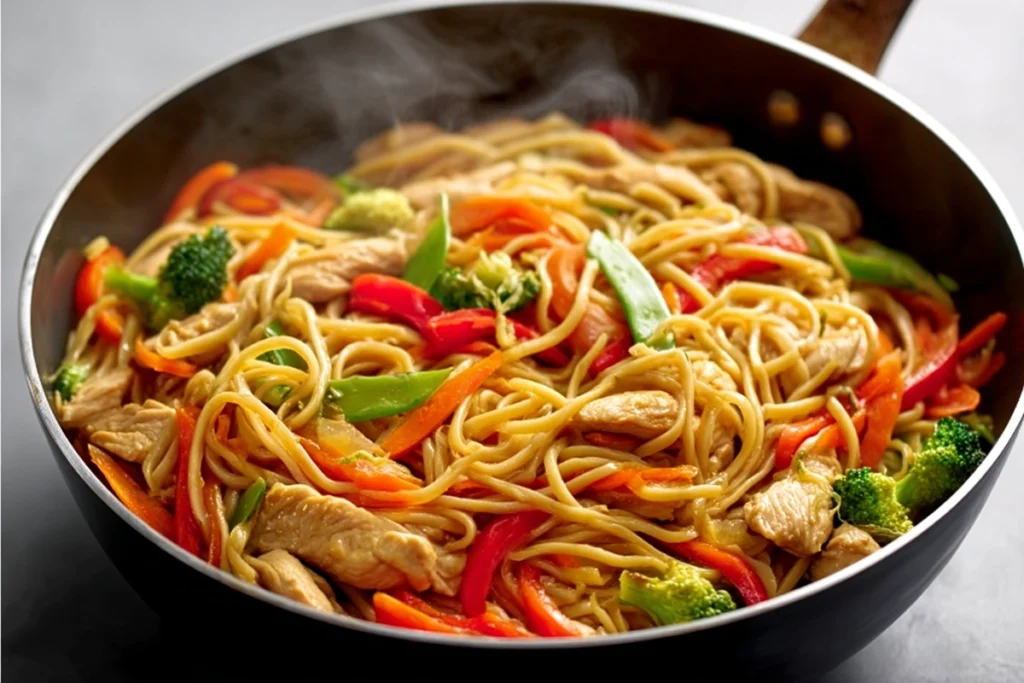
Adding more vegetables works best when they’re chosen for structure, not just color. Snow peas or bok choy stems add crunch without watering down the sauce. You should hear them snap slightly as you cut them, and in the pan, they should stay bright and crisp-tender. Soft vegetables like zucchini tend to weep too much moisture and mute the flavor, so I avoid them here.
Lighter Sauce, Same Flavor
If you want a lighter finish, reduce the oil slightly and pull back on the dark soy by about a teaspoon. The noodles will look a shade lighter but should still be glossy, not dull. The smell will be cleaner and more soy-forward, and the mouthfeel less heavy without losing the character of lo mein.
Serving & Storing This in Real Life
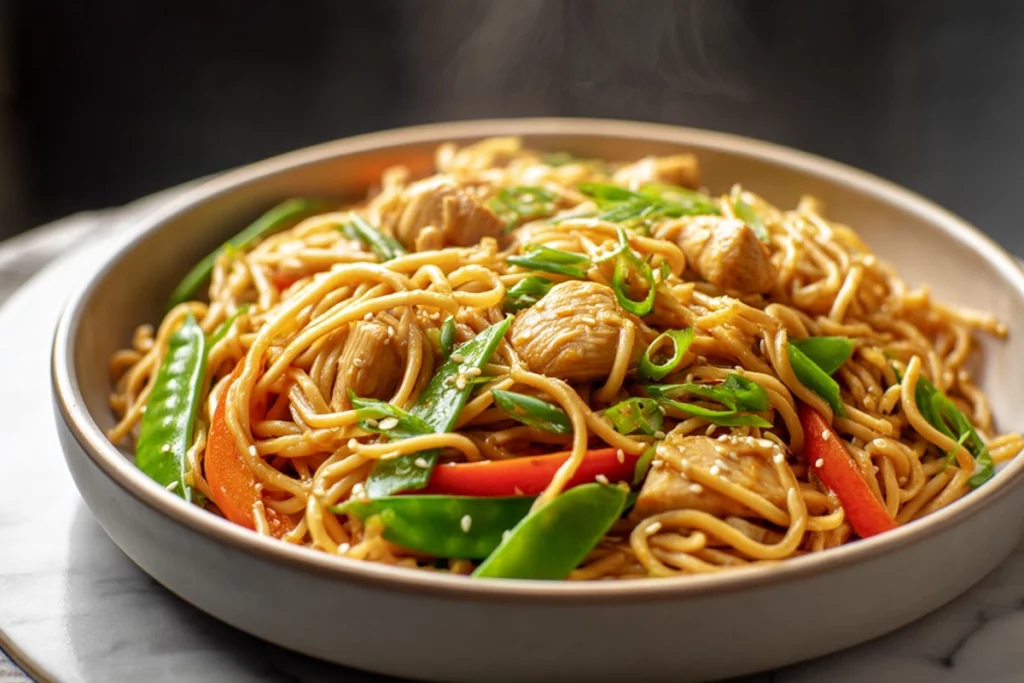
I serve this Chicken Lo Mein straight from the wok while the noodles are still loose and steaming. You should see visible shine on the noodles and smell sesame and garlic as you plate it—that’s when it’s at its best. I usually eat it on its own, but a simple side like sliced cucumbers or a light broth balances the richness without competing.
For leftovers, let the lo mein cool completely before storing it. Warm noodles trap steam, and that condensation turns them gummy. Store in an airtight container in the fridge for up to two days. I don’t recommend freezing it—the noodles lose their texture and break when reheated.
To reheat, use a hot skillet, not the microwave. Add a splash of water or stock and cover briefly. You should hear a gentle sizzle and see steam rise as the noodles loosen. Once they’re glossy again and smell fresh, uncover and toss lightly to finish.
Closing
When Chicken Lo Mein is done right, it’s not about copying takeout—it’s about understanding why those textures and flavors work in the first place. Once you dial in those small details, this becomes the kind of meal you make on autopilot, confident it’ll taste just as good every time.
Get inspired with more mouthwatering recipes! Follow me on Pinterest for new cooking ideas every week.
Frequently Asked Questions
Can I use spaghetti or linguine instead of lo mein noodles?
Yes, you can, but expect a different texture. Spaghetti and linguine don’t have the same elasticity as lo mein noodles, so they absorb sauce faster and soften more quickly. If you use them, cook just to al dente, rinse briefly to stop cooking, and toss gently to avoid breakage.
Why do my lo mein noodles stick together?
This usually happens when the noodles are either too cold or overcooked. Cold noodles seize when they hit hot oil, and overcooked noodles release excess starch that makes them clump. The noodles should be flexible, slightly firm, and at room temperature before stir-frying.
Is chicken thigh really better than chicken breast?
For this recipe, yes. Chicken thighs stay juicy under high heat and are more forgiving if cooked a little longer. Chicken breast works, but it must be sliced thinly and cooked just until opaque or it will turn dry and chewy.
What’s the difference between light and dark soy sauce in Chicken Lo Mein?
Light soy sauce provides salt and umami, while dark soy sauce adds color and depth. Dark soy is not just “stronger” soy—it’s less salty and more about appearance. Skipping it won’t ruin the dish, but the noodles will look pale and taste flatter.
Can I make Chicken Lo Mein ahead of time?
You can prep the components ahead—slice the chicken, mix the sauce, and prep the vegetables—but the final stir-fry should be done just before serving. Fully cooked lo mein loses its texture if it sits too long.
How do I keep Chicken Lo Mein from tasting oily?
Use high heat and don’t overcrowd the pan. If the pan isn’t hot enough, the noodles absorb oil instead of getting coated by the sauce. You should hear steady sizzling the entire time—if it goes quiet, the heat is too low. When Chicken Lo Mein is done right, it’s not about copying takeout—it’s about understanding why those textures and flavors work in the first place. Once you dial in those small details, this becomes the kind of meal you make on autopilot, confident it’ll taste just as good every time.
PrintChicken Lo Mein
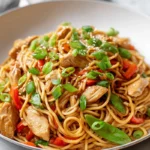
This Chicken Lo Mein is easy to make at home with glossy noodles, tender chicken, and real takeout flavor—ready in 30 minutes with simple ingredients.
- Prep Time: 20 minutes
- Cook Time: 10 minutes
- Total Time: 30 minutes
- Yield: 6 servings 1x
- Category: Dinner
- Method: Stir Fry
- Cuisine: Chinese
- Diet: Vegetarian
Ingredients
- 1 pound fresh lo mein egg noodles
- 8 ounces boneless skinless chicken thighs
- 2 teaspoons cornstarch
- 2 teaspoons water
- 2 teaspoons oil
- 1 teaspoon oyster sauce
- 2 tablespoons hot water
- 1/8 teaspoon salt
- 1/8 teaspoon sugar
- 1 tablespoon light soy sauce
- 4 teaspoons dark soy sauce
- 1 teaspoon sesame oil
- 1/8 teaspoon white pepper
- 1 clove garlic
- 4 cups shredded cabbage
- 2 medium carrots
- 1 tablespoon shaoxing wine
- 2 cups mung bean sprouts
- 2 scallions
Instructions
- Prepare lo mein noodles according to package instructions and set aside.
- Toss chicken with cornstarch, water, oil, and oyster sauce.
- Mix hot water, soy sauces, sesame oil, salt, sugar, and white pepper to make the sauce.
- Sear chicken in hot oil until just cooked and remove from pan.
- Stir-fry garlic, cabbage, and carrots briefly over high heat.
- Return noodles and chicken to the pan and pour sauce over top.
- Toss gently, cover briefly, then stir-fry until noodles are glossy and heated through.
- Add bean sprouts and scallions, toss once more, and serve.
Notes
- Best served immediately for optimal noodle texture.
- Reheat leftovers in a skillet with a splash of water.
Nutrition
- Serving Size: 1 bowl
- Calories: 306
- Sugar: 4 g
- Sodium: 500 mg
- Fat: 5 g
- Saturated Fat: 1 g
- Unsaturated Fat: 3 g
- Trans Fat: 0 g
- Carbohydrates: 42 g
- Fiber: 3 g
- Protein: 13 g
- Cholesterol: 58 mg