
Biscuit Chicken Pot Pie That Actually Bakes Evenly

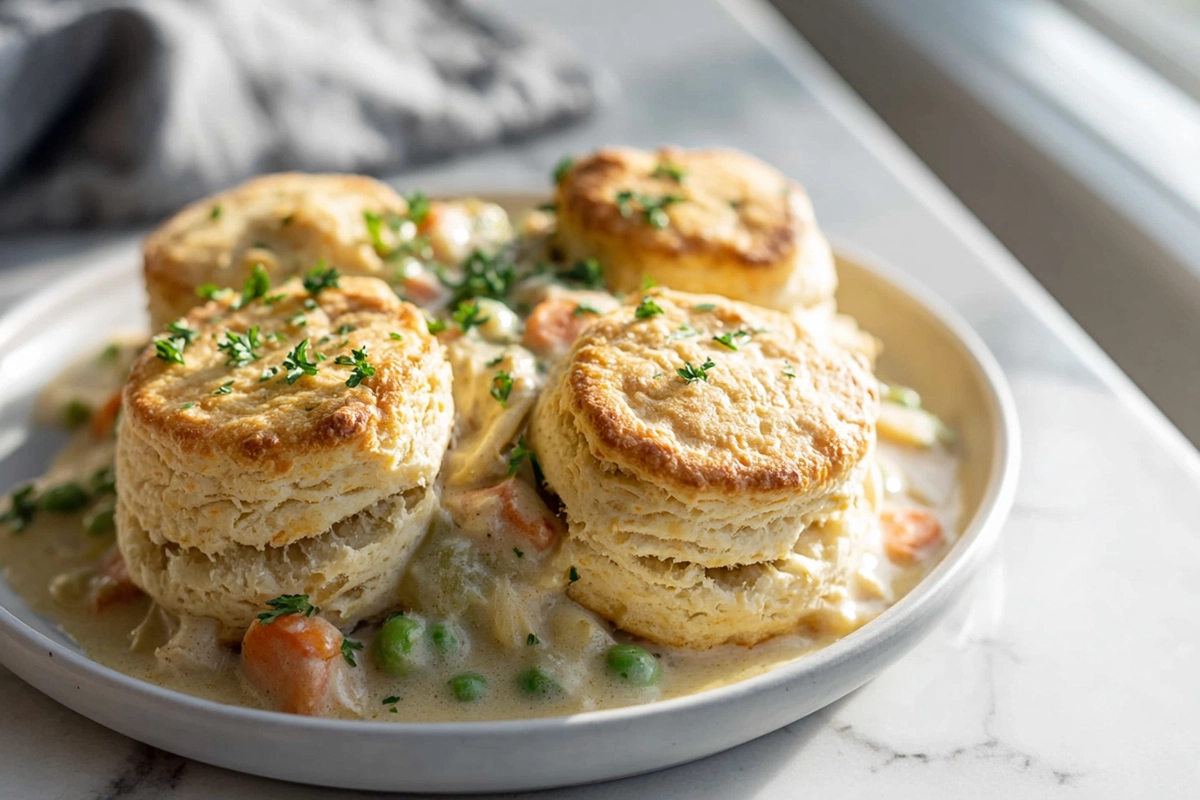
The moment you pull this out of the oven, you know whether it worked. The biscuits should be deeply golden on top, soft in the center, and lightly soaked where they meet the filling — not pale, not doughy, not floating on soup. Underneath, the chicken mixture should be thick enough to hold its shape but still creamy, bubbling gently around the edges. That balance is what makes this dish satisfying instead of frustrating.
Biscuit Chicken Pot Pie is one of those comfort dinners people make over and over, but the results are often inconsistent. Sometimes the biscuits finish too fast. Other times, the filling looks right on the stove but thins out in the oven. This version is built around timing and structure — when ingredients go in, how thick the filling should be before baking, and why biscuits behave differently than a traditional crust.
I like this recipe because it feels generous without being fussy. There’s no rolling dough, no blind baking, and no guessing whether the center is done. The biscuits bake directly on the filling, which means they absorb flavor while still browning properly on top. When everything is balanced correctly, you get a single-pan dinner that’s warm, filling, and repeatable — exactly what a comfort meal should be.
Table of Contents
Ingredients That Make or Break This Dish
Chicken (Boneless, Skinless)
Chicken breasts keep the filling clean and mild, which matters when the sauce is already rich. Cooking them gently first prevents dryness later, especially since they finish heating in the oven. You can use thighs, but the extra fat changes how thick the sauce feels, so adjustments are needed.
Butter
Butter is the base of the filling and the reason it tastes round instead of flat. This isn’t the place to cut back — it coats the flour evenly and prevents a grainy texture. Store-brand butter is fine here; consistency matters more than brand.
Onion and Celery
These add background flavor without making the filling taste vegetal. Dice them small, so they soften fully before the sauce thickens. Large pieces won’t break down enough and can throw off the texture.
All-Purpose Flour
Flour controls the final thickness more than any other ingredient. Measuring accurately matters — too little and the filling loosens in the oven, too much and it turns pasty. This is one ingredient I don’t substitute with starches in this recipe.
Chicken Bouillon Paste
This is not optional if you want depth without long simmering. Bouillon paste adds salt, umami, and body in one step. Powder works in a pinch, but paste dissolves more evenly and tastes cleaner.
Milk
Milk keeps the sauce creamy without heaviness. Whole or 2% both work; skim tends to thin out too much during baking. I avoid cream here because it makes the filling feel greasy once the biscuits absorb some liquid.
Frozen Mixed Vegetables
Frozen vegetables are reliable and consistent, which is exactly what this recipe needs. They release moisture slowly and don’t overcook during baking. There’s no advantage to using fresh here unless you’re willing to pre-cook everything.
Biscuit Dough (Homemade or Store-Bought)
Homemade biscuits give better rise and texture, especially when baked on a moist surface. Store-bought works, but only if you watch bake time closely — smaller biscuits cook faster and can brown before the filling is ready underneath.
How This Biscuit Chicken Pot Pie Comes Together in the Oven
Building the Filling So It Sets, Not Spreads
The filling starts gently and stays controlled the whole way through. When the butter melts with the onion and celery, listen for a soft, steady sizzle — not a sharp fry. You’re looking for vegetables that turn translucent and glossy, not browned. The smell should be mild and sweet, not nutty or toasted. That’s your cue that the pan is ready for flour.
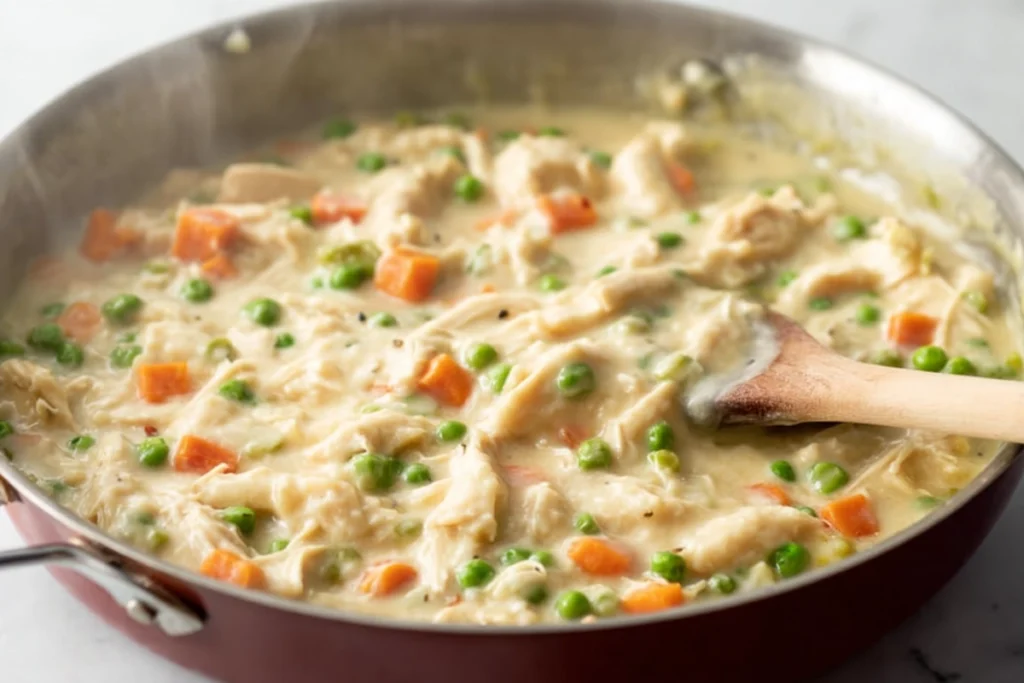
Once the flour and seasonings go in, the texture should look sandy at first, then smooth as the fat coats everything evenly. When you add the liquid, do it slowly and watch closely. The sauce should thicken to a consistency that slowly mounds when stirred, then relaxes back into the pan. If you drag a spoon through it, you should briefly see the bottom of the skillet before the sauce closes in. That’s the thickness that survives the oven without turning loose.
Getting the Chicken Back In Without Drying It Out
The chicken should be just cooked through before it ever hits the skillet again. When you chop it, the pieces should feel firm but still moist to the touch, not stringy or chalky. As soon as it’s folded into the sauce, you’ll smell the filling deepen — richer, more savory, but still clean. This is not a simmer stage. Once everything is combined and heated through, stop. Overcooking here shows up later as dry chicken hiding under biscuits.
Biscuits on Top, Not Buried
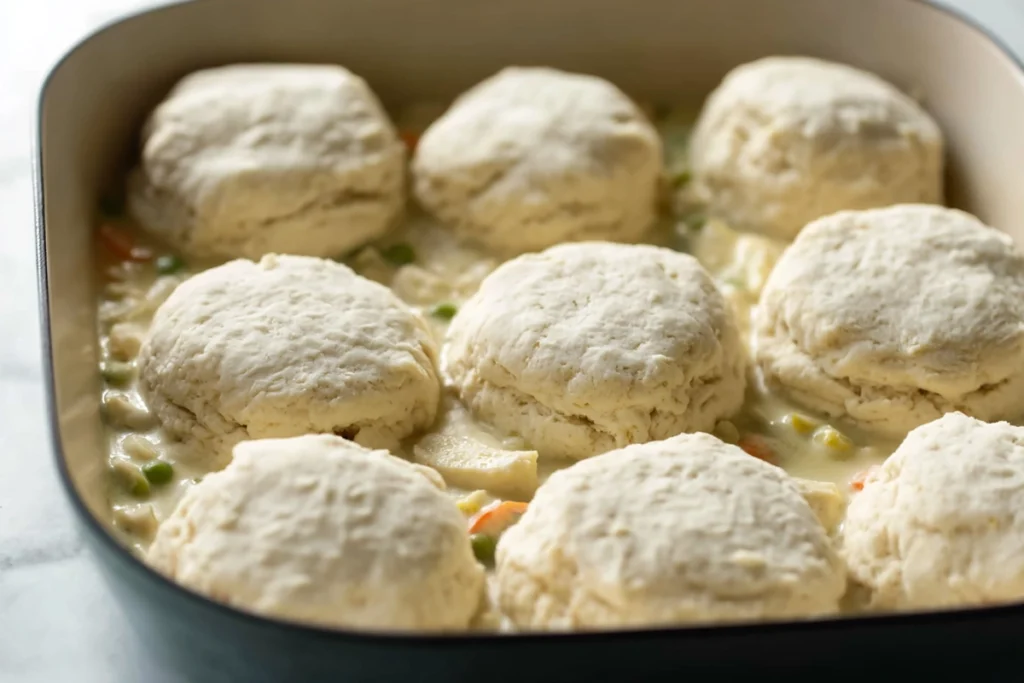
The biscuit dough should feel cool and slightly tacky, like a sticky note that peels off cleanly — not wet, not crumbly. When you place the biscuits on the hot filling, you should hear a faint hiss as steam starts rising immediately. That’s what helps cook the bottoms while the tops brown. Space matters. Biscuits touching lightly are fine; packed tightly guarantees doughy centers. In the oven, look for biscuits that rise tall and crack slightly on top, turning golden with darker edges where butter melts out.
Where Biscuit Chicken Pot Pie Usually Goes Wrong
The Filling Looked Thick… Until It Hit the Oven
This is the most common issue. If the sauce only looks thick when it’s boiling hard on the stove, it will loosen once baking starts. The fix is judging thickness at a gentle simmer. Visually, the surface should bubble lazily, not churn. When you tilt the pan, the filling should move as one mass, not slosh. If it smells rich but still milky, you’re there. If it smells starchy, it’s already too far.
Biscuits Browning Before They’re Cooked Through
If the tops are golden but the centers feel doughy when pressed, the oven heat is doing more work than the steam underneath. This usually happens when biscuits are too thick or the pan is too shallow. You should be able to press lightly on the top and feel resistance with a little spring back, not a soft collapse. If you smell strong butter browning early, tent loosely with foil and let the centers finish.
Chicken That Feels Dry the Next Day
Dry chicken isn’t fixed with more sauce later. It starts with how the chicken is cooked the first time. If it shreds instead of cutting cleanly, it’s overdone. The chicken should cut smoothly and feel tender between your fingers. Remember, it reheats every time you warm leftovers. Starting slightly underdone is what keeps it moist through baking and storage.
Make It Your Own
Chicken Thigh Version (Richer, More Forgiving)
If you prefer a deeper, more savory filling, swap the chicken breasts for boneless, skinless thighs. Thigh meat stays juicier and gives the sauce a slightly silkier feel because of the extra fat. The smell will be noticeably richer as it heats — almost buttery — which is a good cue that you don’t need extra bouillon. Keep the pieces a little larger than breast meat so they don’t shred during baking.
Cheddar Biscuit Top (Savory, Not Cheesy Soup)
If you want cheese, add it to the biscuits, not the filling. Use block sharp cheddar and grate it yourself; pre-shredded cheese has starch that prevents proper melting. The dough should feel slightly heavier in your hands and smell faintly cheesy even before baking. Expect slightly slower rise and deeper browning — that’s normal.
Herb-Forward Filling (Warmer, Less Creamy)
For a more aromatic version, double the rosemary and thyme but cut the bouillon paste slightly. The goal is balance, not intensity. You’ll smell the herbs bloom as soon as the sauce thickens — when that happens, stop stirring and let it rest. Overcooking herbs here makes the filling taste dusty instead of comforting.
Gluten-Free Adjustment (Works, But Different)
A 1:1 gluten-free flour blend works for the filling but produces a slightly looser texture. Let the sauce simmer a minute longer until it looks glossy and thick enough to coat the spoon fully. Gluten-free biscuits will be denser and don’t rise as tall; make them thinner and bake until you hear a hollow sound when tapped.
Serving & Storing This the Practical Way
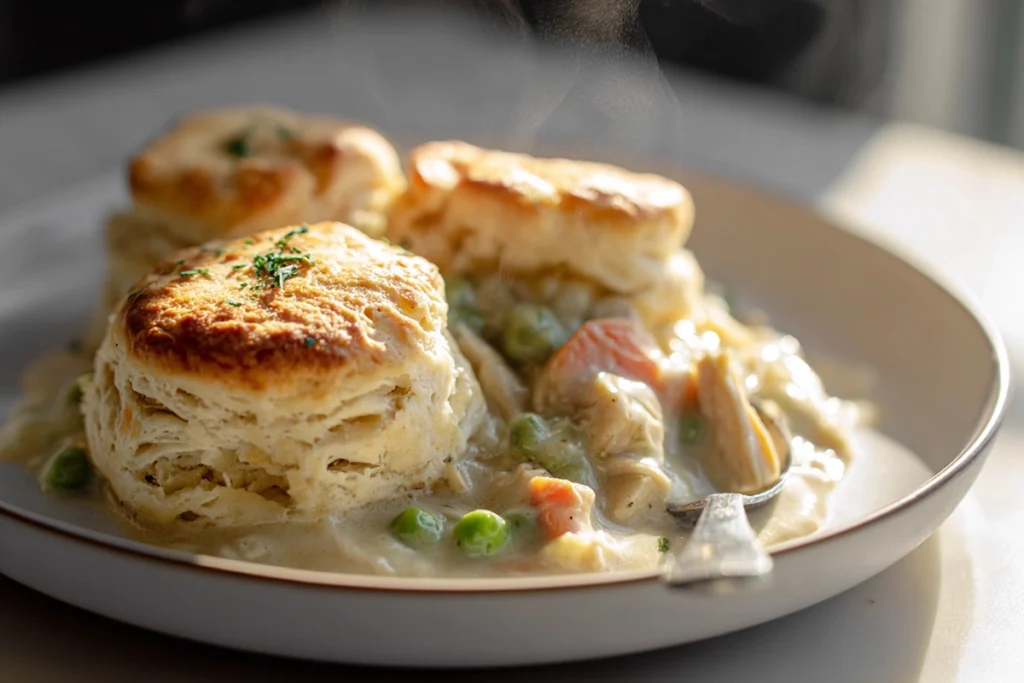
I serve this straight from the pan after a short rest — about ten minutes. You should see the bubbling calm and the sauce tighten slightly. The biscuits should feel firm on top but soft underneath when pressed. I don’t add sides most nights; the dish is filling enough on its own.
For leftovers, separate the biscuits from the filling if you can. Biscuits stored on top of sauce absorb moisture and lose structure. Keep them in an airtight container at room temperature for one day, or freeze them. The filling keeps well in the fridge for up to three days and freezes cleanly. Freeze the filling flat so it thaws evenly, and freeze biscuits already cut or halved — you’ll thank yourself later.
Reheat the filling gently on the stove until it loosens and smells warm again, not scorched. Biscuits are best reheated in an oven or air fryer for a couple of minutes to bring back the crisp edges. Microwaving works, but the texture won’t recover.
When the biscuits crack, the filling holds, and the smell fills the kitchen, that’s when this recipe earns its place in the rotation. A good Biscuit Chicken Pot Pie should feel dependable, comforting, and easy to repeat — and that’s exactly how this one is built.
Get inspired with more mouthwatering recipes! Follow me on Pinterest for new cooking ideas every week.
Frequently Asked Questions
Can I make Biscuit Chicken Pot Pie ahead of time?
Yes. Make the chicken filling up to two days ahead and store it in the fridge. When you’re ready to bake, reheat the filling until hot and steamy, then add fresh (or chilled) biscuits on top and bake. Don’t assemble and refrigerate everything together — the biscuits will absorb moisture and bake up dense.
Why are my biscuits cooked on top but doughy underneath?
This happens when the filling is too loose or the biscuits are too thick. The bottoms rely on steam from the hot filling to cook through. Make sure the sauce is thick before baking, and keep the biscuit dough around ¾ inch thick. You should hear a faint sizzle when the biscuits hit the filling.
Can I use store-bought biscuit dough?
Yes, but watch it closely. Store-bought biscuits are usually smaller and cook faster. They’ll brown before homemade ones, so check for doneness early. If they’re getting dark but feel soft in the center, loosely tent the pan with foil and finish baking.
Can I freeze Biscuit Chicken Pot Pie?
Yes, but freeze the components separately. Freeze the chicken filling in a flat container, and freeze the biscuits after cutting them. If you freeze the whole assembled dish, the biscuits turn gummy and the filling thaws unevenly.
What’s the best pan to use for this recipe?
A deep, oven-safe skillet (like cast iron) works best because it holds heat and promotes even bubbling. If your pan is shallow, the filling can boil over, and the biscuits won’t cook evenly underneath. A deep casserole dish is a good backup.
How do I reheat leftovers without ruining the biscuits?
Reheat the filling gently on the stove or in the microwave until hot. Reheat biscuits separately in the oven or air fryer for 2–3 minutes to restore the crisp edges. Microwaving biscuits works, but they’ll be soft, not flaky.
PrintBiscuit Chicken Pot Pie

A classic comfort dinner made with tender chicken, a thick creamy filling, and golden flaky biscuits baked directly on top. This Biscuit Chicken Pot Pie is designed to bake evenly, avoid soggy bottoms, and deliver dependable results in a home kitchen.
- Prep Time: 15 minutes
- Cook Time: 45 minutes
- Total Time: 1 hour
- Yield: 6 servings 1x
- Category: Dinner
- Method: Baking
- Cuisine: American
- Diet: Halal
Ingredients
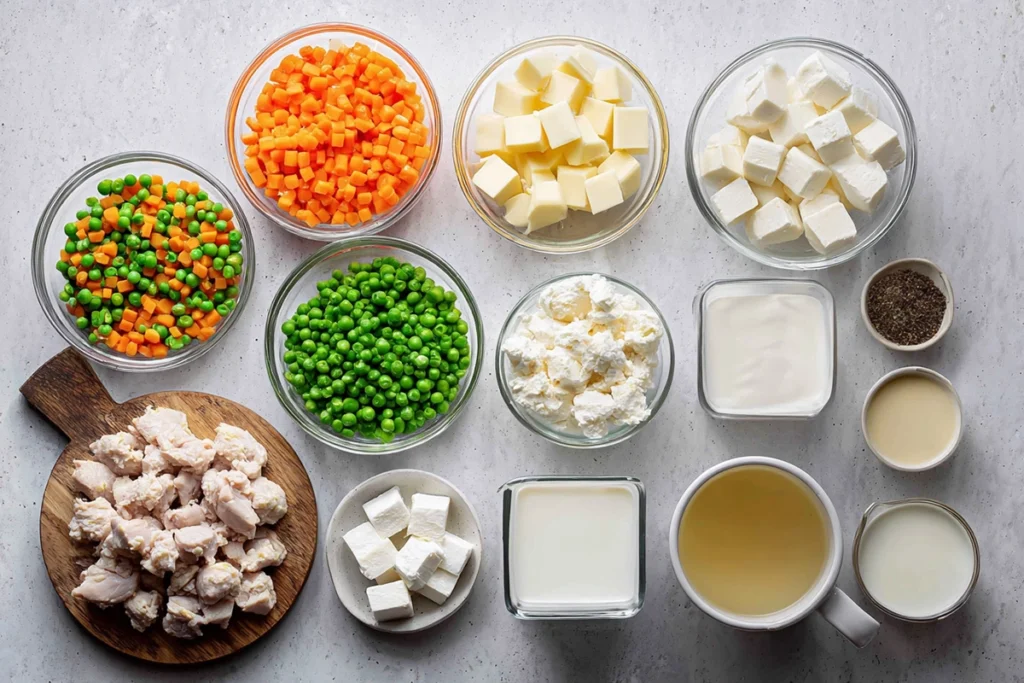
1 ½ pounds boneless, skinless chicken breasts
½ cup unsalted butter
¾ cup chopped celery
½ cup chopped onion
½ cup all-purpose flour
¾ teaspoon salt (plus more to taste)
¾ teaspoon freshly ground black pepper
¾ teaspoon garlic powder
¾ teaspoon dried rosemary
½ teaspoon dried thyme
½ teaspoon celery seed
1 ½ teaspoons chicken bouillon paste
1 ½ cups milk
10 oz frozen mixed vegetables (carrots, peas, green beans, corn)
Biscuits (or store-bought equivalent):
2 ½ cups all-purpose flour
1 tablespoon + 1 teaspoon baking powder
¾ teaspoon kosher salt
¼ cup unsalted butter or shortening
1 cup milk
Instructions
Season chicken lightly and gently simmer in water until just cooked through; remove, rest, chop, and reserve cooking liquid.
In a deep oven-safe skillet, melt butter and cook onion and celery until soft and translucent.
Stir in flour, salt, pepper, garlic powder, rosemary, thyme, celery seed, and bouillon paste until evenly combined.
Gradually whisk in reserved chicken liquid and milk, simmering until the sauce thickens.
Fold in chopped chicken and frozen vegetables; adjust seasoning.
Prepare biscuit dough by cutting butter into dry ingredients, then mixing in milk until just combined.
Place biscuits evenly on top of the hot filling.
Bake until biscuits are golden and cooked through and the filling is bubbling.
Notes
Do not assemble biscuits and filling ahead of time; moisture will make biscuits dense.
The filling should be thick before baking — it will loosen slightly in the oven.
Freeze filling and biscuits separately for best texture when reheating.
Nutrition
- Serving Size: 1 biscuit + approximately 1 cup filling
- Calories: 520
- Sugar: 6 g
- Sodium: 820 mg
- Fat: 28 g
- Saturated Fat: 14 g
- Unsaturated Fat: 12 g
- Trans Fat: 0.5 g
- Carbohydrates: 42 g
- Fiber: 4 g
- Protein: 26 g
- Cholesterol: 115 mg