
The Scalloped Potatoes That Finally Worked

There’s a very specific moment when scalloped potatoes announce themselves. It’s not when they come out of the oven. It’s earlier—when butter melts low and slow, onions soften without browning, and the kitchen starts smelling like something important is happening. This is Sunday food. Not rushed, not flashy, and definitely not something you throw together while multitasking. It’s the kind of dish that quietly takes over the house and makes everyone wander in asking, “What’s that smell?”
Most scalloped potato recipes promise creamy layers and tender slices, but too many of them fall apart at the finish line. The sauce breaks. The potatoes cook unevenly. Or worse—you get a bubbling casserole that tastes fine but scoops like soup. I’ve made all of those mistakes, usually by trusting shortcuts that sounded reasonable at the time.
Here’s the deal. Scalloped potatoes aren’t hard, but they are precise. They reward restraint, not improvisation. The sauce needs structure before it ever touches a potato. The potatoes need to behave, not dissolve. And seasoning has to be layered with intention, not dumped in at the end and hoped for the best.
My promise is simple: this version works because every ingredient has a job, and none of them are doing too much. This is a method you can trust on a quiet Sunday, when you want comfort without anxiety and leftovers that actually hold together the next day.
Table of Contents
The No-Regret Ingredients
Potatoes
Yukon Golds are the backbone here, and I won’t pretend otherwise. They hold their shape while still turning creamy, which is exactly what scalloped potatoes need. Russets sound tempting, but they shed too much starch and collapse into mush—fine for mashed potatoes, not for clean layers.
Butter
Salted butter is what I use because this dish needs roundness, not sharpness. Fancy butter won’t save bad technique, so regular grocery-store brands are perfectly fine. Just don’t skimp—this is where the flavor starts.
Onion
A plain yellow onion does the job without stealing attention. Sweet onions push the dish too far in one direction and can throw off the balance once baked. Dice it small so it melts into the sauce instead of announcing itself.
Garlic
Fresh garlic only, and used gently. This isn’t a garlic-forward dish—it’s background warmth. Jarred garlic brings a harsh edge that never quite softens, no matter how long it cooks.
Flour
All-purpose flour gives the sauce structure before it ever hits the oven. This step is non-negotiable. Skipping it for “just cream” is how you end up with potato chowder instead of slices.
Milk
Whole milk is ideal, but 2% works if that’s what you keep around. Ultra-low-fat milk makes a thin sauce that never quite sets. This is comfort food—leaning in matters.
Chicken Broth
Broth adds depth without making the dish heavy. I use a standard boxed broth and don’t overthink it. Just make sure it’s not aggressively salty.
Salt & Black Pepper
Seasoning happens in layers here, not all at once. Pre-ground pepper is fine. This dish succeeds on balance, not bravado.

The Process That Makes This Work (Not Fancy—Just Precise)
Building the Sauce Before the Potatoes Ever Get Involved
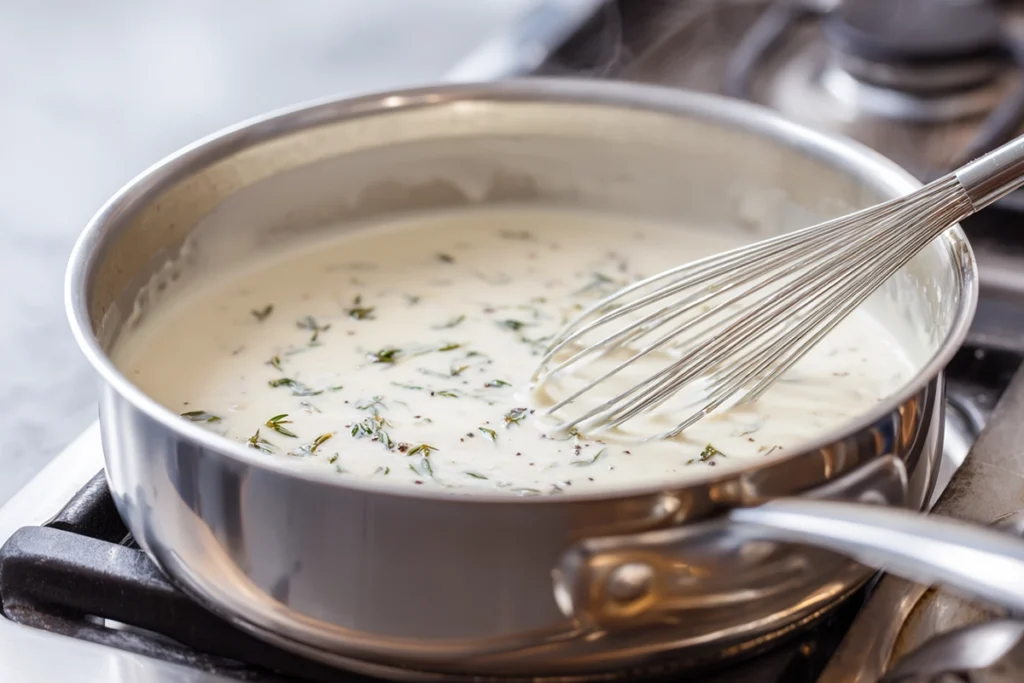
This dish succeeds or fails right here, at the stove, before a single potato hits the pan. You want to melt the butter gently until it smells rich and nutty, then let the onion soften until it turns translucent and sweet, not browned. Visually, you’re looking for a glossy sheen, not color. When you rub a bit between your fingers, it should feel silky, not greasy. Once the flour goes in, the mixture will look tight and pasty—that’s correct. When you whisk in the milk and broth slowly, the sauce should go from alarmingly thick to smooth and pourable, with quiet bubbles breaking the surface and a warm, savory smell that tells you it’s ready to support the potatoes, not drown them.
Layering for Even Cooking, Not for Looks
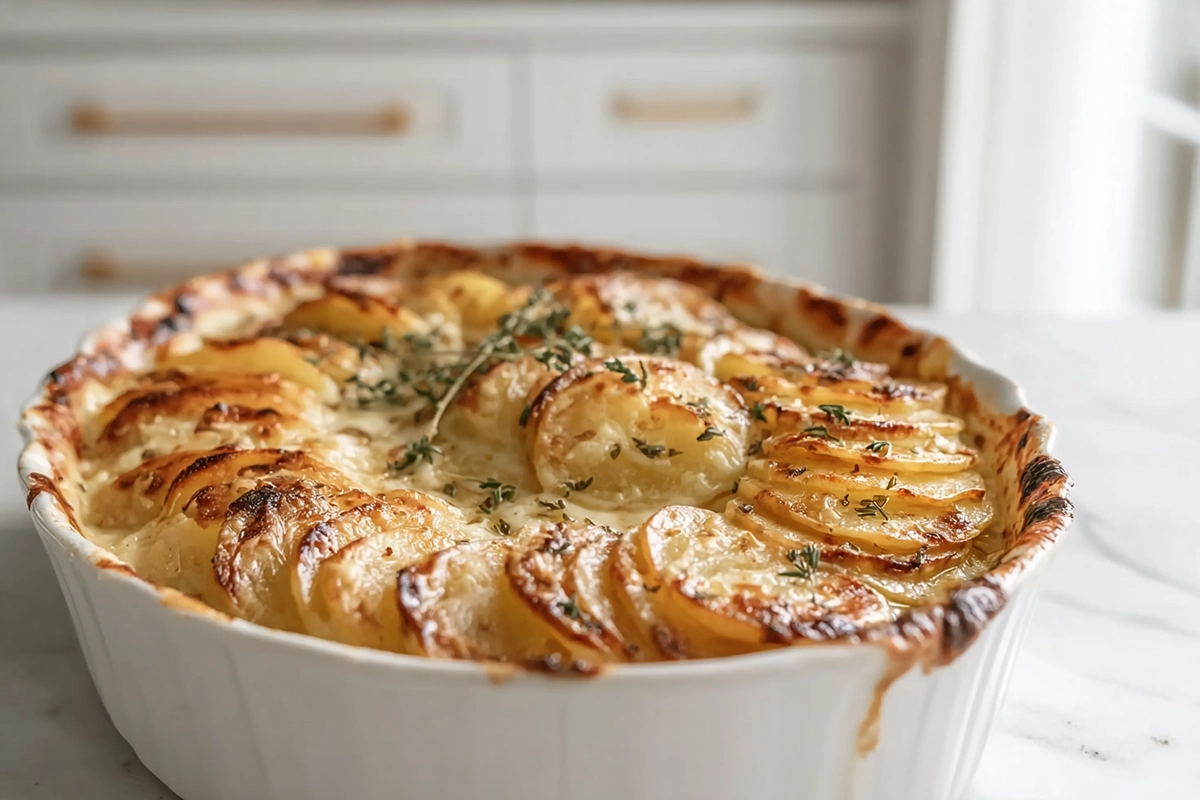
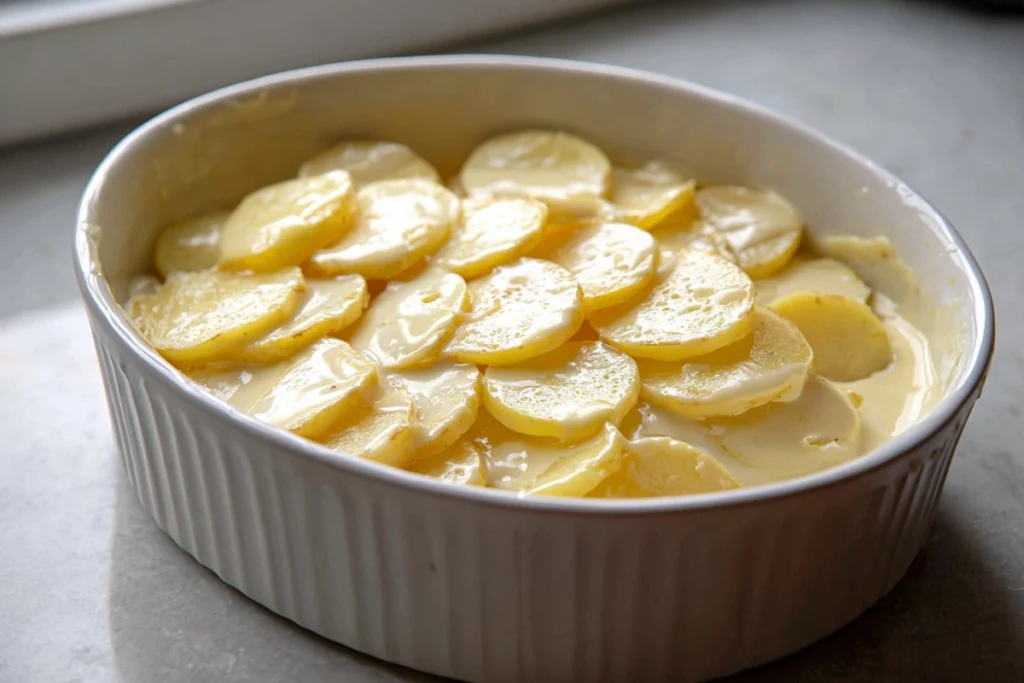
Layering isn’t about perfection—it’s about consistency. The potatoes should lie flat and slightly overlap, like shingles, with the sauce settling into every gap. As you press gently with your fingers, you should feel resistance but not crunch. Seasoning between layers matters because potatoes mute salt as they cook. By the time it’s assembled, the dish should look full but not flooded, and when you tilt the pan slightly, the sauce should move slowly, not slosh. Covering the dish traps steam—you’ll hear a faint hiss in the oven—which is what actually cooks the potatoes through before browning ever starts.
Covered First, Uncovered Last—No Cheating
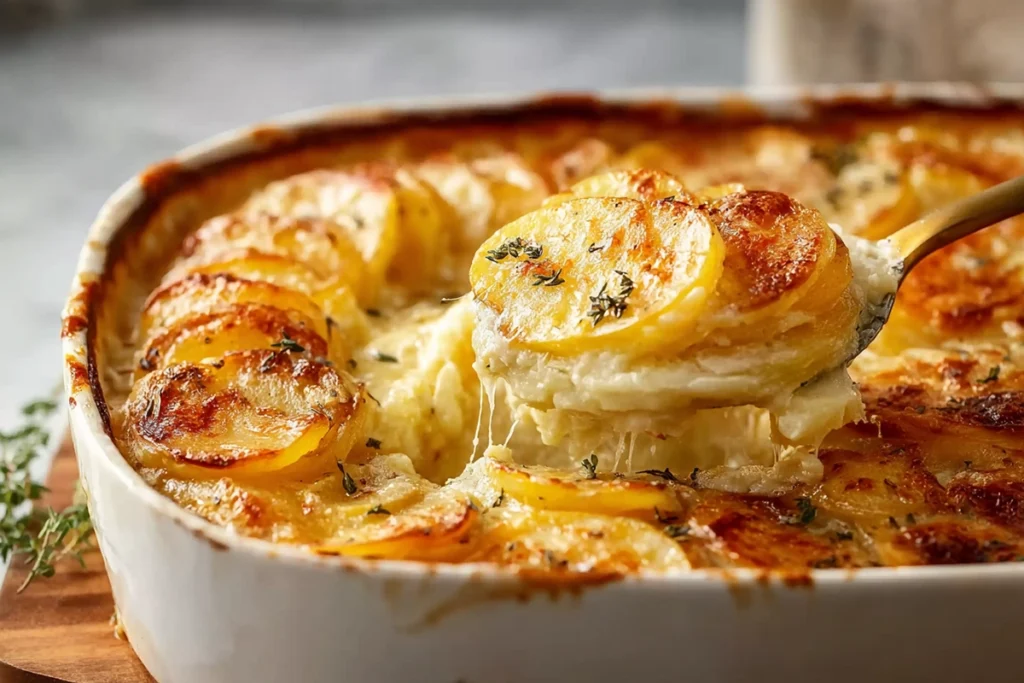
The covered bake is all about patience. Inside the oven, you’re creating a moist, steady environment where the potatoes soften evenly. When you finally remove the foil, the smell shifts—creamier, toastier—and the surface starts to tighten. You’re looking for golden patches and gentle bubbling around the edges, not aggressive boiling. When pressed lightly with a spoon, the top should feel set but spring back slightly. That’s your signal that structure has formed, and browning can finish the job without drying everything out.
The Uh-Oh Moments (Where People Usually Mess This Up)
“Why Is My Sauce Too Thin?”
I’ve been there. It usually happens when the liquid goes in too fast or the sauce never actually boils. If the sauce doesn’t thicken on the stove, it won’t magically fix itself in the oven. You should see slow bubbles and feel resistance on the whisk—almost like dragging it through warm pudding. If it pours like milk, it’s not ready.
“The Potatoes Are Brown but Still Crunchy”
This is almost always a slicing issue. Uneven thickness means some slices steam while others barely cook. I ignored my mandoline once, and the center stayed raw while the top browned beautifully. When sliced correctly, the potatoes should feel flexible between your fingers, not stiff. If your knife work varies, the oven can’t save you.
“It Looked Perfect Until I Cut It.”
Cutting too soon turns layers into soup. I know it smells incredible and everyone’s waiting, but resting is part of cooking here. When it comes out, it will still be bubbling and loose. After resting, the sauce tightens, and the layers hold. Touch the surface—if it jiggles like custard, wait.
“The Top Is Too Dark”
This usually means the dish was uncovered too early or the oven runs hot. My oven does, and I learned the hard way. The surface should smell toasted, not sharp or burnt. If the top browns before the center feels tender when pressed, tent i
t loosely and give it time. Color is optional; tenderness is not.
Make It Your Own (But Don’t Ruin It)
Thyme & Bay (Quietly Better, Not Loud)
If you want to nudge this dish without changing its soul, add a sprig of fresh thyme or a single bay leaf to the sauce while it simmers, then remove it before assembling. You’ll smell it before you taste it—that soft, savory note that makes people think you did something complicated. Don’t overdo it. This is background warmth, not herb soup.
Gruyère on Top (Not Inside)
If you’re adding cheese, grated Gruyère works—but only sprinkled lightly over the top during the final uncovered bake. It melts smoothly and browns without turning greasy. I don’t mix cheese into the layers because it tightens the sauce and interferes with how the potatoes cook. Also, always grate it yourself. Pre-shredded cheese doesn’t melt right, and it smells faintly plasticky once heated.
Gluten-Free (Yes, But Adjust Expectations)
Gluten-free all-purpose flour will work for the sauce, but it sets firmer and slightly denser. I’ve tested it. The texture is more custard-like and less silky, especially after cooling. If you go this route, give the dish a longer rest so the structure settles before cutting. It’s good—just different.
Serving & Storing (How This Fits Into Real Life)
I serve this warm, not piping hot, usually next to something roasted and uncomplicated—chicken, pork, or just a sharp green salad when Sunday feels heavy. The smell carries the meal; you don’t need anything flashy alongside it. A clean slice with soft layers and a lightly golden top is the goal, not dramatic cheese pulls.
Leftovers are actually better the next day. The flavors deepen, and the structure tightens. Store them tightly covered in the fridge, and don’t reheat uncovered unless you like dry edges. For freezing, slice the potatoes first, wrap portions well, and freeze flat. Reheat covered in the oven until warm through, then uncover briefly to wake the top back up. Microwaving works in a pinch, but the oven respects the work you put in.
A Quiet Ending
This is the kind of dish that fills the house before it fills the table, the kind that makes a slow afternoon feel like a good decision. When scalloped potatoes are done right, they don’t rush you—and honestly, that’s the whole point.
Get inspired with more mouthwatering recipes! Follow me on Pinterest for new cooking ideas every week.
Frequently Asked Questions
Can I use russet potatoes instead of Yukon Gold?
You can, but I don’t recommend it. Russets release more starch and tend to collapse into the sauce, which turns clean layers into a soft mash. Yukon Golds hold their shape and still go creamy, which is the whole point of scalloped potatoes.
Why is my sauce watery after baking?
Because it never thickened properly on the stove. The sauce needs to boil briefly before it hits the oven. If it goes in thin, it will stay thin—no amount of baking fixes that.
Do I have to peel the potatoes?
No, but there’s a tradeoff. Unpeeled Yukon Gold skins are thin and edible, but they do interrupt the silky texture slightly. If you want classic, clean layers, peel them.
Can I assemble this ahead of time?
Yes. Assemble the full dish, cover it tightly, and refrigerate up to 24 hours. When baking from cold, add 10–15 extra minutes and keep it covered longer so the center heats evenly.
How do I know when the center is done?
Press gently in the middle with a spoon or knife. It should slide in with no resistance, and the dish should feel set, not loose or sloshy. If the top is brown but the center feels firm, it’s not ready.
Do I really need a mandoline?
I strongly recommend one. Even slices cook evenly; uneven slices don’t. If you slice by hand, aim for about ⅛-inch thickness and accept that the margins for error get much smaller.
Why do my scalloped potatoes fall apart when I cut them?
You didn’t let them rest long enough. Right out of the oven, the sauce is still loose. Give it at least 20 minutes so it can tighten and hold the layers together.
Print
Golden Creamy Scalloped Potatoes
- Prep Time: 15 minutes
- Cook Time: 1 hour
- Total Time: 1 hour 15 minutes
- Yield: 8 servings 1x
- Category: Side Dish
- Method: Baking
- Cuisine: American
- Diet: Vegetarian
Description
These Golden Creamy Scalloped Potatoes are rich, cheesy, and perfectly baked with tender Yukon Gold potatoes in a garlic-thyme cream sauce. Finished until bubbly and golden, this comforting side dish is ideal for holidays or everyday dinners.
Ingredients
- 5 pounds Yukon Gold potatoes, thinly sliced
- 2 tablespoons unsalted butter
- 2 cloves garlic, minced
- 1 tablespoon all-purpose flour
- 1 cup heavy cream or half-and-half
- ½ cup grated Parmesan cheese, plus more for topping
- 1 teaspoon fresh thyme
- ½ teaspoon kosher salt
- ½ teaspoon black pepper
Instructions
- Preheat the oven to 400°F and grease a ceramic baking dish.
- Peel and thinly slice the potatoes using a mandoline or sharp knife.
- Melt the butter in a large pot over medium heat, then add the garlic and cook until fragrant.
- Stir in the flour and cook briefly to form a roux.
- Gradually whisk in the cream and cook until slightly thickened.
- Stir in the Parmesan cheese, thyme, salt, and pepper until smooth.
- Add the sliced potatoes and gently toss to coat evenly in the sauce.
- Arrange the potatoes upright in the baking dish and pour any remaining sauce over the top.
- Sprinkle additional Parmesan cheese on top.
- Cover with foil and bake for 30 minutes, then uncover and bake another 30 minutes until golden and bubbling.
- Let rest for 10 minutes before serving.
Notes
- Use Yukon Gold potatoes for the creamiest texture.
- Russet potatoes can be used for a softer, fluffier result.
- Substitute half-and-half to lighten the dish slightly.
- Add Gruyère or cheddar cheese for a richer flavor.
- Assemble up to 24 hours ahead and refrigerate before baking.
Nutrition
- Serving Size: 1 serving
- Calories: 290
- Sugar: 3g
- Sodium: 320mg
- Fat: 14g
- Saturated Fat: 8g
- Unsaturated Fat: 5g
- Trans Fat: 0g
- Carbohydrates: 32g
- Fiber: 3g
- Protein: 8g
- Cholesterol: 38mg