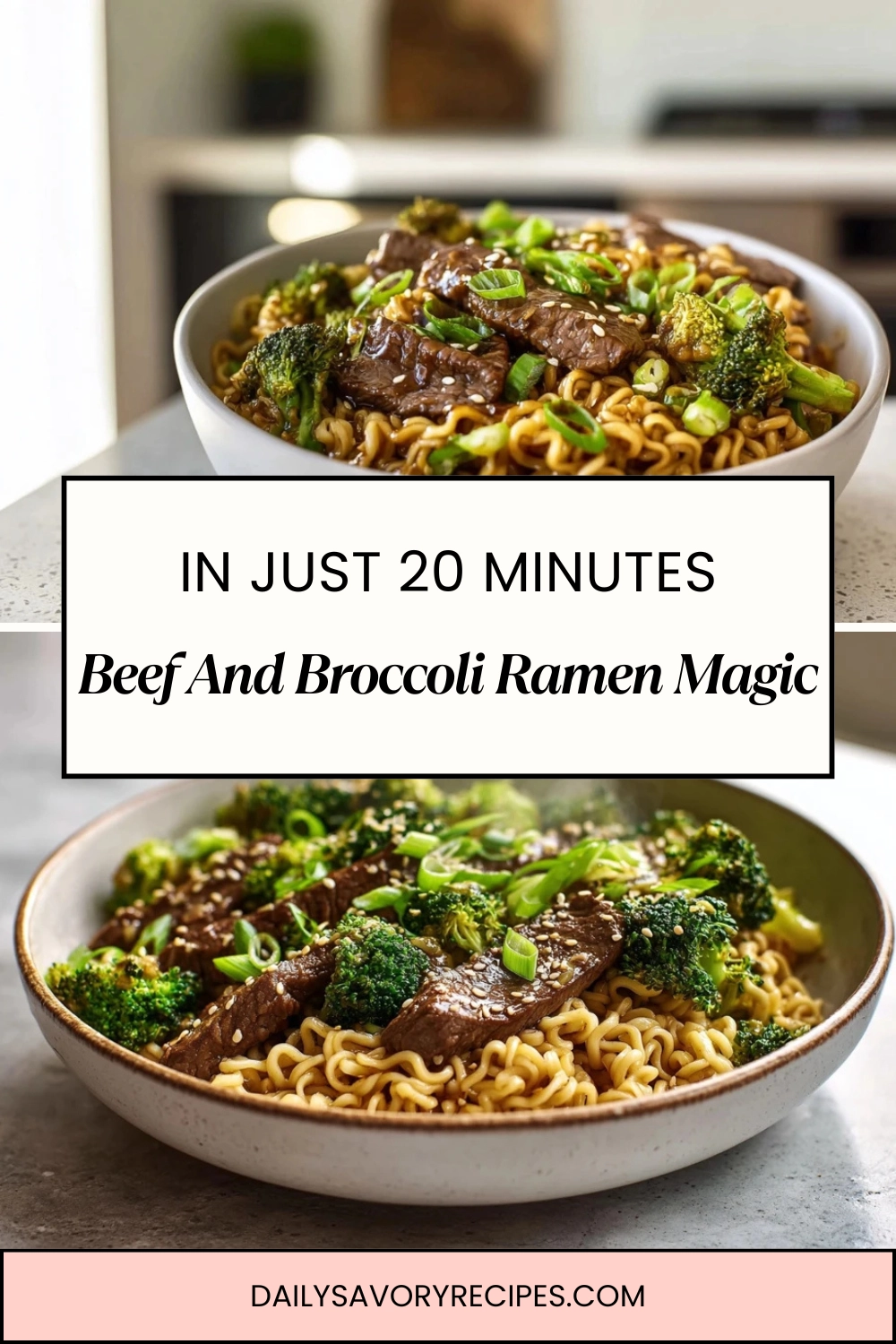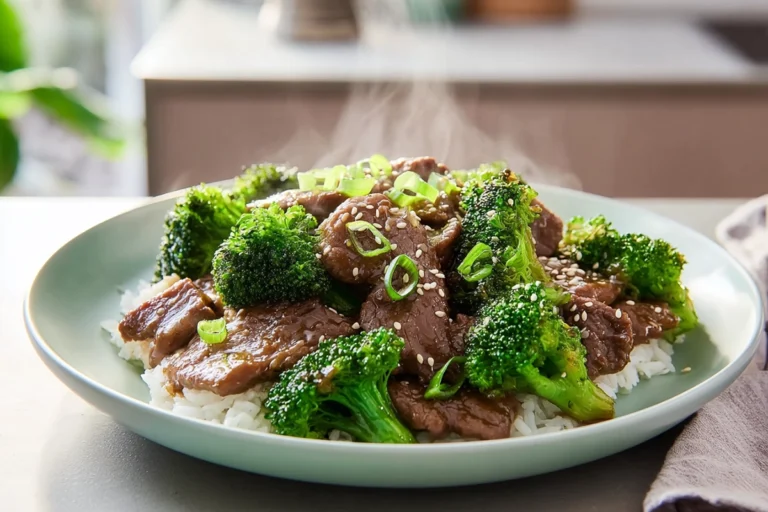

Beef and Broccoli Ramen Stir Fry (Fast Weeknight Favorite)

The moment this dish starts working is easy to recognize. The pan is hot, the beef hits the oil, and you get that quick sizzle that smells like garlic, ginger, and toasted sesame. A minute later, the sauce goes in and tightens just enough to coat everything — not soupy, not sticky — just glossy and savory. That’s the texture you’re aiming for here, and once you hit it, you know dinner is basically done.
This Beef and Broccoli Ramen Stir Fry exists for nights when you want something bold and satisfying without committing to a long prep or a sink full of dishes. It borrows the familiar flavors of classic beef and broccoli, then leans on ramen noodles for speed and texture. The noodles soak up sauce quickly, the beef cooks fast, and the broccoli stays bright instead of soft. Everything is designed to finish at the same time, which is where most stir-fries fall apart at home.
What makes this one dependable is restraint. No deep frying. No hard-to-find ingredients. No guessing when to turn the heat up or down. The steps are simple, but the order matters. When you follow it as written, you get tender beef, springy noodles, and a sauce that clings instead of pooling. That’s the difference between a decent weeknight meal and one you actually want to repeat.
Table of Contents
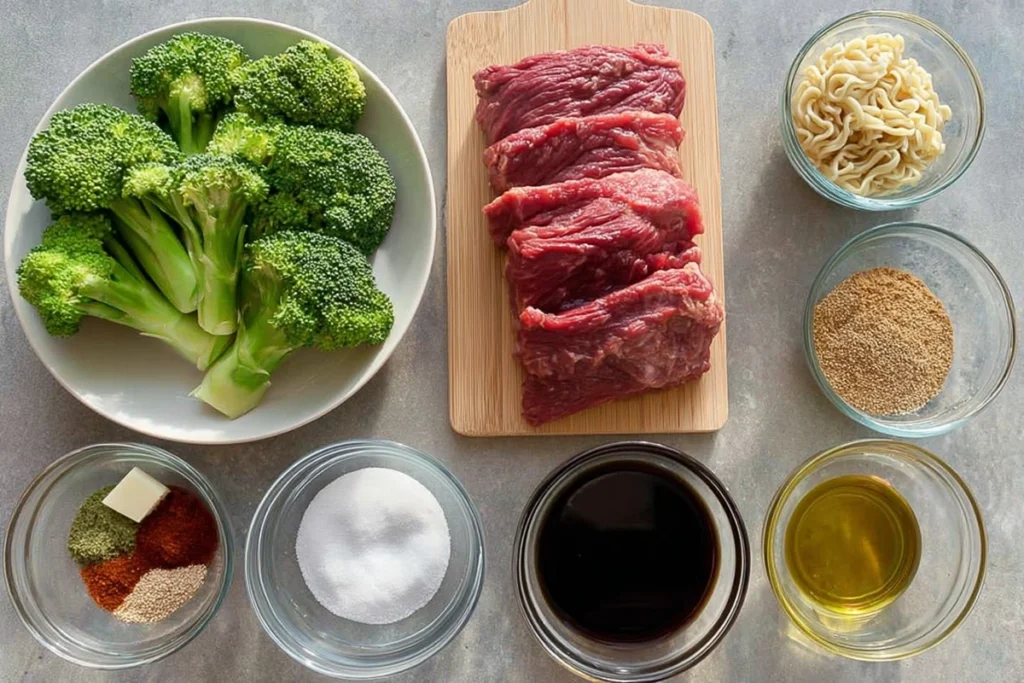
Ingredients That Make This Work
Sirloin Steak
Sirloin is lean, affordable, and cooks quickly when sliced thin across the grain. It browns well without needing a marinade and stays tender as long as it’s not overcooked. This is not the place for stew beef or thick-cut steak — those cuts won’t finish in the same window as the noodles.
Ramen Noodles (Seasoning Discarded)
Plain ramen noodles are essential here. They cook fast, hold their structure, and absorb sauce better than spaghetti or rice noodles. Discarding the seasoning packets keeps you in control of salt and flavor, which matters once the sauce reduces.
Broccoli Florets
Fresh broccoli gives you bite and contrast. Frozen broccoli releases too much water and dulls the sauce, so it’s worth using fresh here. Cut the florets small enough to cook quickly but not so small that they go soft.
Soy Sauce (Low Sodium)
Low-sodium soy sauce is non-negotiable. The sauce reduces in the pan, and regular soy sauce can push this into overly salty territory fast. This swap alone keeps the balance right.
Hoisin Sauce & Honey
Hoisin brings depth and body, while honey rounds out the salt and vinegar. Generic grocery-store brands work fine here — no need to overthink it.
Garlic, Ginger, and Sesame Oil
Fresh garlic and ginger are worth it for aroma alone. Sesame oil should be toasted and used sparingly; it’s a finishing flavor, not a cooking fat.
Olive Oil & Sesame Oil
Olive oil handles the high heat for browning the beef. Sesame oil is there for flavor, not frying — mixing the two keeps things controlled.
Cornstarch & Beef Broth
Cornstarch gives the sauce structure, and beef broth adds savory depth without overpowering the dish. Water works in a pinch, but broth makes the sauce taste finished instead of thin.
How This Comes Together in One Pan
Getting the Sauce Ready Before the Heat Starts
Before anything hits the stove, the sauce needs to be mixed and smooth. When the cornstarch dissolves properly, the liquid should look glossy and uniform, not streaky or cloudy. Run your finger along the inside of the bowl — it should feel slick, not gritty. Once the garlic and ginger are added, you’ll smell that sharp, fresh aroma right away. That’s your signal the sauce is balanced and ready to thicken later, not something you want to rush while the pan is already hot.
Cooking the Ramen So It Stays Springy
Ramen cooks fast, and that’s both the advantage and the risk. As soon as the noodles loosen and bend easily when lifted with tongs, they’re done. They should feel flexible but still slightly firm, not limp. When you rinse them under cold water, listen for the water to stop steaming — that’s how you know the cooking has halted. A light coating of sesame oil afterward should make them feel silky to the touch, not greasy.
Browning the Beef Without Steaming It
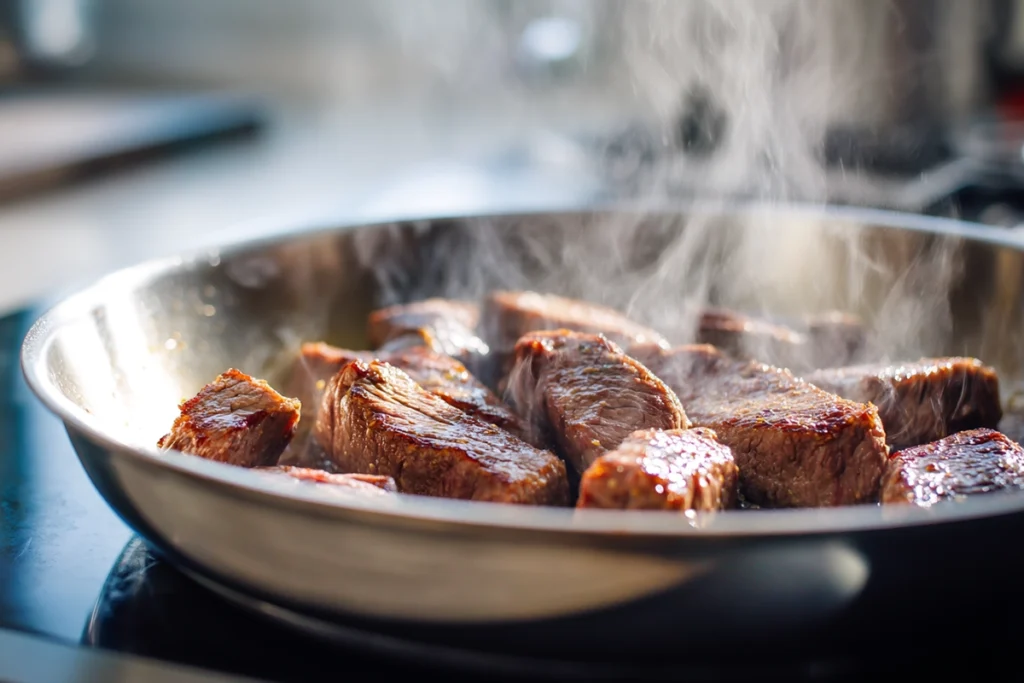
The pan needs to be hot enough that the beef sizzles immediately on contact. You should hear a sharp, steady sound, not a quiet hiss. Visually, look for the edges to darken and develop a golden-brown crust before you move anything. If the meat sticks slightly when you try to turn it, that’s normal — it will release on its own once the surface is properly browned. The smell here should be savory and clean, never burnt.
Steaming the Broccoli Just Enough
Once the broccoli hits the pan with a splash of water, cover it and listen closely. You should hear rapid bubbling, not aggressive boiling. When you uncover the pan, the florets should be bright green and fork-tender, with a slight resistance when pressed. If they look dull or olive-toned, they’ve gone too far. At this stage, the smell should be fresh and vegetal, not sulfurous.
Bringing Everything Together
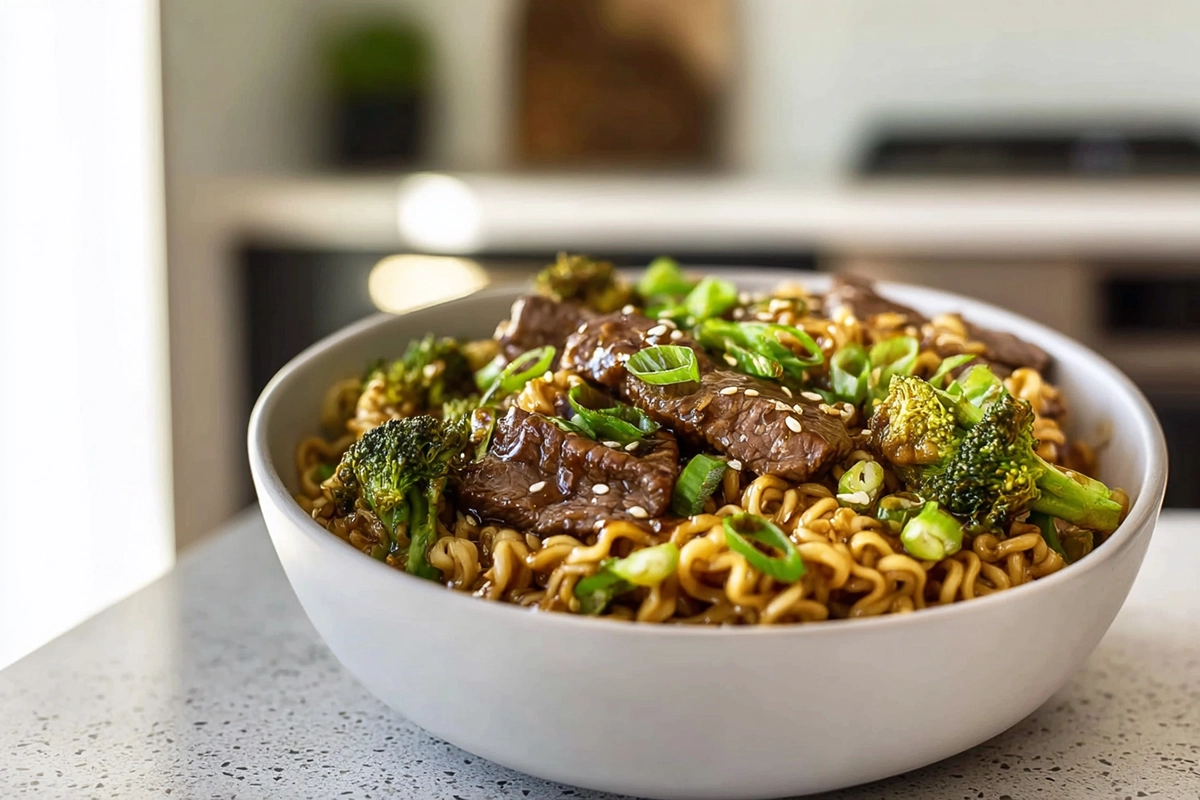
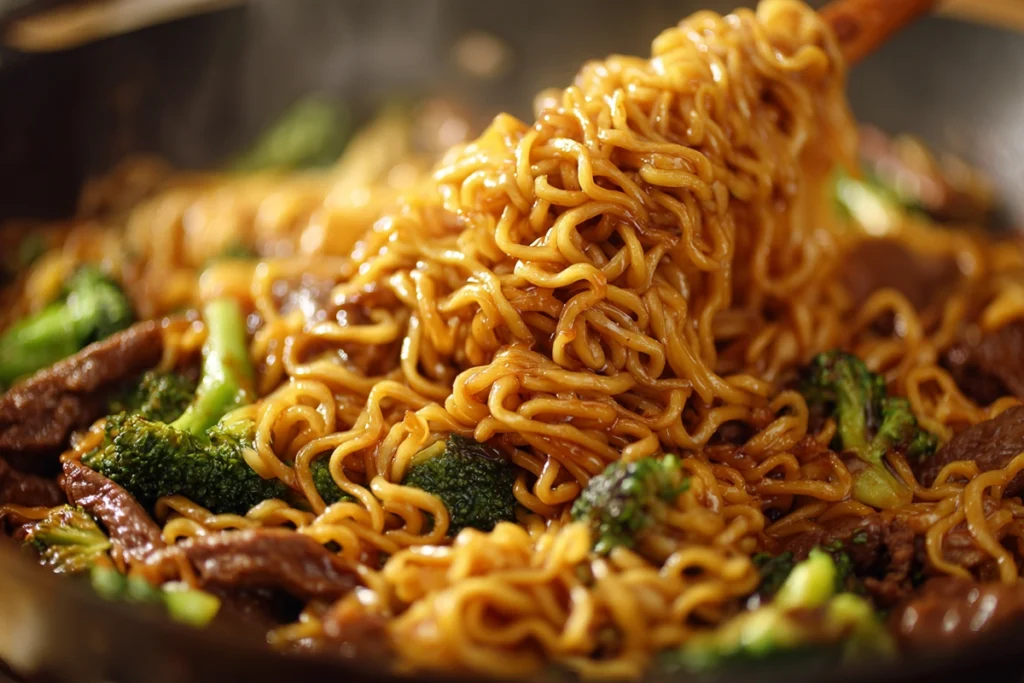
When the noodles, beef, and broccoli reunite in the pan, everything should look dry enough to accept the sauce. As the sauce goes in, you’ll hear a quick sizzle, then a quieter simmer. Watch as it thickens — it should coat the noodles and beef in a glossy layer within a minute or two. If you drag a spatula across the pan, the sauce should briefly hold the line before flowing back together. That’s the finish you’re after.
Where Beef and Broccoli Ramen Stir Fry Can Go Wrong
When the Pan Isn’t Hot Enough
If the beef goes into a lukewarm pan, it releases moisture instead of browning. You’ll notice a quiet, wet sound instead of a sizzle, and the meat will turn gray before it ever colors. This changes the texture and dulls the flavor. Always wait until the oil looks shimmery and just starts to ripple before adding the steak.
Overcooking the Noodles Early
Ramen that’s cooked even a minute too long will feel mushy when pinched between your fingers. Once it hits the sauce later, it absorbs too much liquid and collapses. Rinsing with cold water may feel unnecessary, but it’s what preserves that springy bite that makes this dish work.
Letting the Sauce Sit Too Long
If the sauce boils aggressively or sits on heat without movement, it tightens too much. You’ll see it turn sticky and clump instead of flowing. When that happens, the noodles look glued together rather than coated. The fix is simple: keep things moving and pull the pan off the heat as soon as everything looks evenly glazed.
These small moments are what separate a rushed stir fry from one that tastes intentional. When you pay attention to them, this recipe becomes repeatable — not just good once, but good every time.
Make It Your Own Without Losing the Point
Swap the Protein, Keep the Timing
If sirloin isn’t what you have, flank steak or skirt steak both work well — but only if they’re sliced thin and cooked hot and fast. These cuts have more grain, so slicing across it matters even more for tenderness. Thin-sliced chicken breast also works, but expect a slightly lighter flavor; I usually add an extra splash of beef broth to the sauce to keep the savory depth balanced.
Turning Up the Heat (Without Breaking the Sauce)
For a spicier version, skip adding heat early. Chili garlic sauce or chili crisp works best stirred in right at the end, when the sauce has already thickened. This keeps the garlic from scorching and lets you control the heat level without masking the beef and broccoli flavor.
Making It Gluten-Free (Realistically)
Gluten-free ramen or rice noodles can be used, but they behave differently. Rice noodles soften faster and absorb sauce aggressively, so cook them just shy of tender and loosen the finished dish with a tablespoon or two of broth. Gluten-free soy sauce is an easy swap and doesn’t affect texture.
Adding Vegetables Without Overcrowding
Snow peas, thin-sliced bell peppers, or mushrooms can be added, but only one extra vegetable at a time. Add them during the broccoli steaming phase so they soften slightly without flooding the pan with moisture. Too many add-ins turn this from a stir fry into a stir-steam.
How I Serve and Save This One
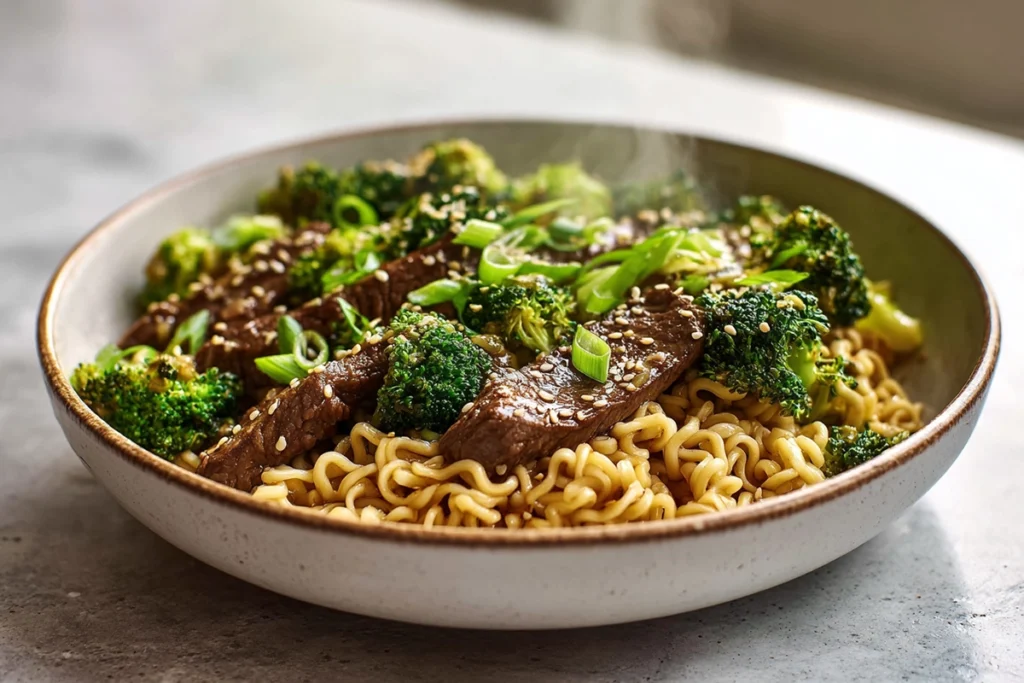
This is best eaten right off the stove while the noodles are glossy and the sauce is loose. I usually serve it in wide bowls so everything stays hot, with sesame seeds for texture and nothing else competing on the plate. It’s a full meal on its own.
For leftovers, store it in an airtight container in the fridge for up to three days. The noodles will tighten as they sit — that’s normal. To reheat, add a splash of water or broth and warm it gently in a skillet over medium heat, stirring until the sauce relaxes and coats again. The microwave works, but only in short bursts with stirring in between.
Freezing isn’t ideal here. The noodles lose their structure, and the sauce separates when thawed. If you want to prep ahead, cook the beef and broccoli and freeze those separately, then make fresh noodles when you’re ready to eat.
A Weeknight Stir Fry That Actually Repeats Well
What makes this Beef and Broccoli Ramen Stir Fry worth keeping isn’t just the flavor — it’s how reliably it comes together when you respect the timing. When the sauce clings, the noodles stay springy, and everything finishes at once, you get a fast weeknight meal that feels intentional, not rushed.
Get inspired with more mouthwatering recipes! Follow me on Pinterest for new cooking ideas every week.
Frequently Asked Questions
Can I use a different cut of beef without it getting tough?
Yes. Flank steak or skirt steak both work, but they must be sliced thin across the grain and cooked hot and fast. If you slice with the grain or cook them slowly, they’ll turn chewy no matter what sauce you use.
Why do I discard the ramen seasoning packets?
The seasoning packets are very salty and don’t work with a reduced stir-fry sauce. Discarding them lets you control the salt level so the sauce thickens and clings instead of tasting harsh.
Can I make Beef and Broccoli Ramen Stir Fry ahead of time?
You can prep components ahead, but it’s best cooked fresh. The noodles tighten as they sit and lose their spring. If needed, cook the beef and broccoli in advance, then add freshly cooked noodles and sauce when reheating.
How do I keep the broccoli bright green and not mushy?
Steam it briefly until it’s fork-tender with slight resistance. Visually, it should be bright green. If it turns dull or olive-colored, it’s already overcooked.
Is there a way to lower the sodium without losing flavor?
Yes. Use low-sodium soy sauce and don’t skip the honey, ginger, and garlic. These balance the salt so the dish still tastes full and savory even with reduced sodium.
Can I make this gluten-free without ruining the texture?
Yes, but expect some change. Use gluten-free soy sauce and gluten-free ramen or rice noodles. Cook the noodles slightly under and loosen the finished dish with a splash of broth so the sauce doesn’t seize.
PrintBeef and Broccoli Ramen Stir Fry
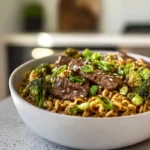
Beef and Broccoli Ramen Stir Fry made in one pan with tender beef, springy noodles, and a glossy sauce. A fast, dependable 30-minute weeknight meal.
- Prep Time: 15 minutes
- Cook Time: 15 minutes
- Total Time: 30 minutes
- Yield: 5 servings 1x
- Category: Dinner
- Method: Pressure Cooking
- Cuisine: Asian-inspired
- Diet: Halal
Ingredients
- 2 packages ramen noodles
- 1 lb sirloin steak
- 3 cups broccoli florets
- 1/4 cup low-sodium soy sauce
- 1/3 cup beef broth
- 2 tablespoons hoisin sauce
- 2 tablespoons honey
- 1 tablespoon rice vinegar
- 1 tablespoon sesame oil
- 2 cloves garlic
- 1/2 tablespoon grated ginger
- 1 tablespoon cornstarch
- 2 tablespoons olive oil
- 1/2 teaspoon salt
- 1/2 teaspoon black pepper
- 1/2 cup water
- Sesame seeds
Instructions
- Whisk soy sauce, broth, cornstarch, hoisin, honey, vinegar, sesame oil, garlic, and ginger.
- Cook ramen until just tender, drain, rinse, and toss with sesame oil.
- Heat oil in skillet and brown sliced steak, then remove.
- Steam broccoli briefly in the same skillet.
- Return beef and noodles to pan and add sauce.
- Toss and cook until sauce thickens and coats everything.
Notes
- Use low-sodium soy sauce to prevent oversalting.
- Slice beef thin and across the grain for tenderness.
- Serve immediately for best noodle texture.
Nutrition
- Serving Size: 1 bowl
- Calories: 430
- Sugar: 10
- Sodium: 1550
- Fat: 19
- Saturated Fat: 5
- Unsaturated Fat: 13
- Trans Fat: 0
- Carbohydrates: 38
- Fiber: 3
- Protein: 26
- Cholesterol: 55