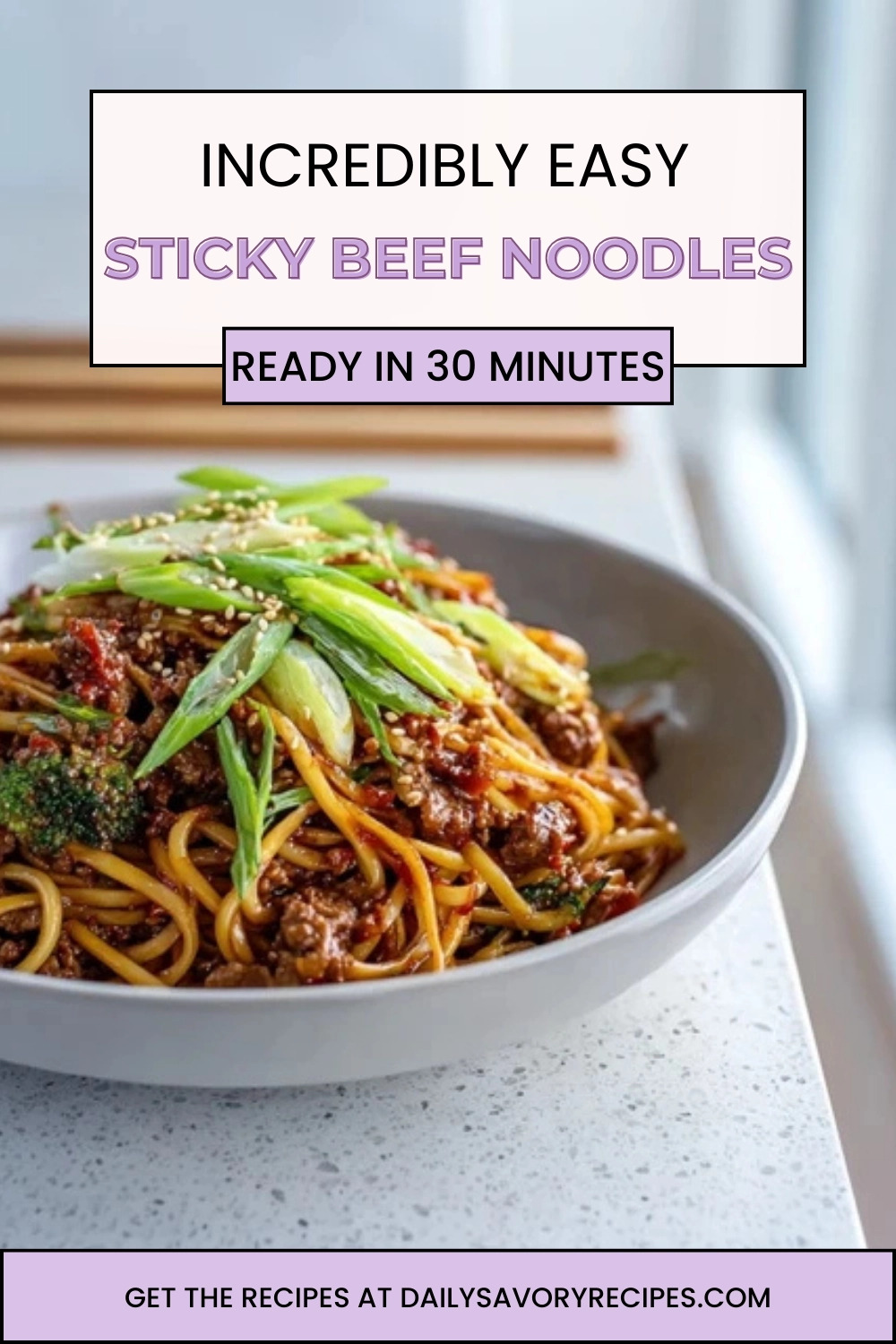

Sticky Beef Noodles (15-Minute Weeknight Dinner)

Sticky, Glossy, and Done Before You’re Tired
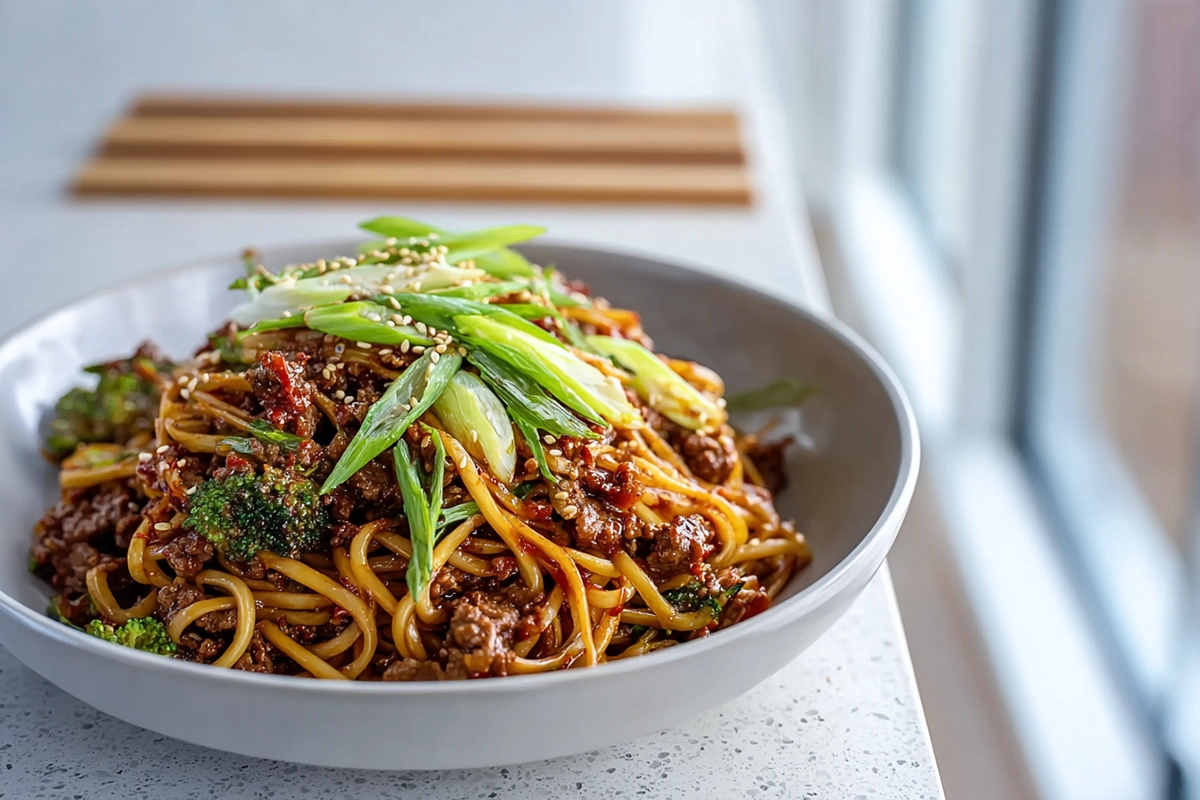
The first thing you notice is the smell — sweet chilli and soy hitting a hot pan, turning glossy as it thickens. Then it’s the texture: noodles that don’t slide off the fork, but cling to the beef with a sticky, caramelised coating. That combination is what makes Sticky Beef Noodles feel like more than a rushed weeknight meal, even though it comes together fast.
This is the kind of dinner I rely on when time is tight and patience is lower than usual. There’s no complicated prep, no long simmer, and no pile of dishes at the end. Everything happens in one pan, and every ingredient has a clear role. The sauce isn’t just salty or sweet — it balances sweetness, umami, and acidity so the noodles stay glossy instead of greasy or dry.
What I like most about this recipe is how predictable it is. The timing works. The sauce thickens when it should. The noodles stay tender without turning mushy. That consistency is intentional. This dish was built for a normal kitchen, using ingredients that are easy to find and affordable, but still deliver the sticky texture people expect from takeout-style noodles.
If you’ve ever made noodle stir-fries that turned watery, bland, or clumpy, this recipe fixes those problems by controlling when each ingredient goes into the pan — without adding extra steps or stress.
Table of Contents
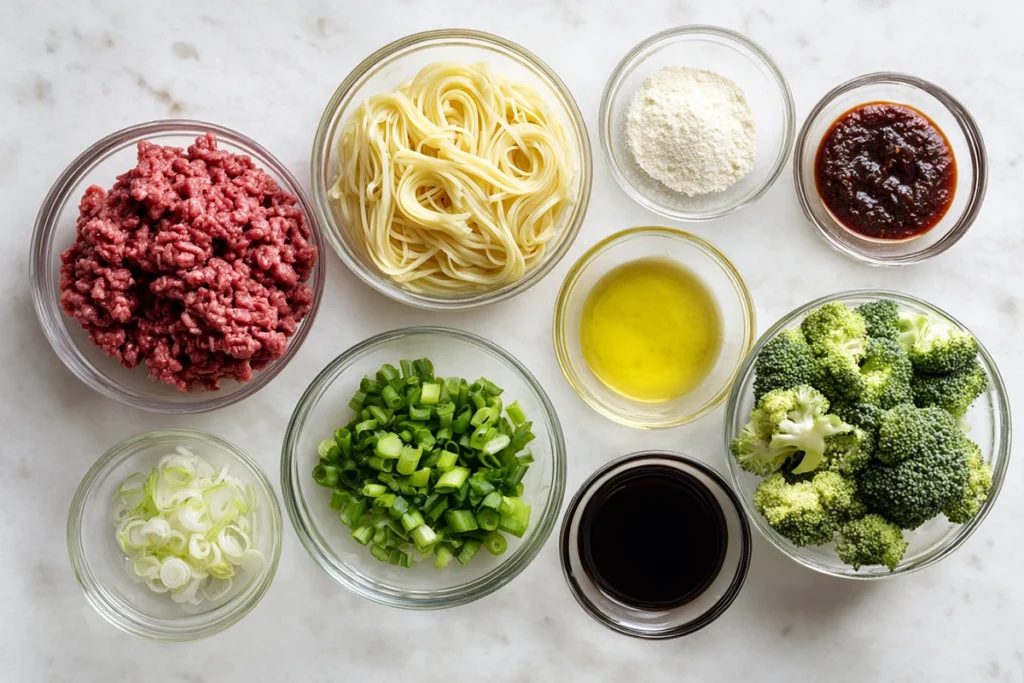
Ingredients That Actually Matter
Thin Egg Noodles
Thin egg noodles are ideal here because they soften quickly and absorb sauce without falling apart. Thicker noodles won’t cling as well, and very thin rice noodles can turn mushy if you’re not careful. I undercook them slightly on purpose so they finish perfectly in the pan.
Minced (Ground) Beef
Regular minced beef works well and keeps the recipe affordable. You don’t need premium cuts — the sauce carries the flavour — but avoid extra-lean beef, which can turn dry before the sauce has a chance to coat it.
Sweet Chilli Sauce
This is where the base sweetness and stickiness come from. Most supermarket brands are fine here, and the cheaper ones often work just as well. It’s doing more than adding heat — it helps the sauce caramelise.
Dark Soy Sauce
This is the one ingredient I don’t recommend skipping. Dark soy sauce adds colour and depth that regular soy can’t replace. If you leave it out, the noodles will still taste okay, but they won’t look or feel the same.
Frozen Vegetables
Frozen vegetables are practical and consistent, especially for weeknights. They steam quickly under a lid and release just enough moisture to keep the sauce moving without watering it down.
Cornflour (Cornstarch)
This small amount makes the sauce glossy instead of thin. It’s what turns the liquid into that sticky coating that grabs onto every noodle.
How These Sticky Beef Noodles Come Together (Fast, Not Rushed)
Getting the Noodles Ready Without Ruining Them
This recipe starts quietly, but this step matters more than it looks. When the noodles hit the water, you’re not trying to fully cook them. Watch them closely — they should bend easily but still feel slightly firm when pinched between your fingers, not soft or floppy. Drain them and rinse briefly with cold water; they should feel slick, not sticky. That cool rinse stops the cooking so they don’t turn mushy later when they meet the sauce.
Building Flavour in One Pan
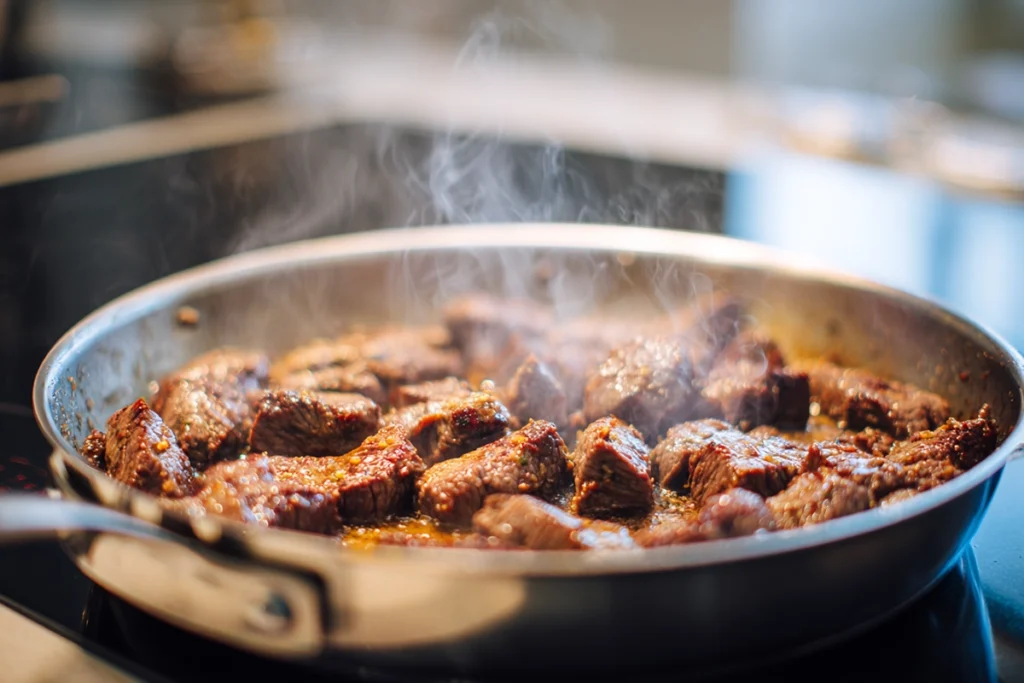
Once the pan heats up, you should hear an immediate sizzle when the oil goes in. Add the garlic and ginger and pay attention to the smell — the moment you catch that sharp, toasted aroma, you’re ready for the beef. If you wait too long, it turns bitter. The beef should spread out and hiss as it hits the pan, not steam. Look for browned patches forming underneath before you stir; that color is where the flavor starts.
Letting the Sauce Turn Sticky
When the sauces go in, everything changes fast. You’ll see small bubbles forming and tightening, turning from loose and glossy to thicker and darker. The smell shifts here too — sweeter, deeper, almost caramel-like. This is where patience pays off. Let it simmer just long enough to cling to the beef before moving on.
Bringing It All Together
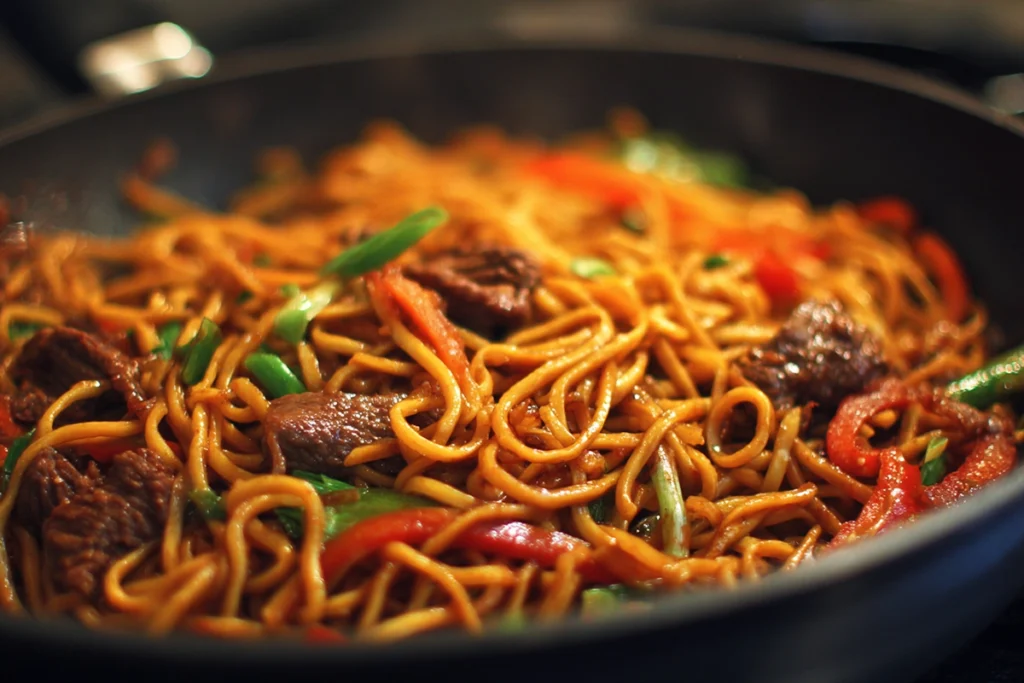
Once the vegetables are added and covered, listen for a gentler sizzle instead of a hard fry. When the lid comes off, the sauce should look slightly loose again — that’s normal. As soon as the slurry goes in, stir steadily and watch the transformation. The sauce should tighten and shine, coating the pan in slow-moving waves. When the noodles are added, they should feel springy, not soft, and pick up the sauce immediately. If it looks glossy and sticky, you’re right where you should be.
Where Sticky Beef Noodles Usually Go Wrong
Noodles That Turn Clumpy or Dry
This almost always comes from overcooked noodles at the start. If they feel soft and floppy before they ever hit the pan, they’ll soak up sauce like a sponge and leave everything dry. You want them slightly underdone so they finish cooking in the sauce, not before it.
Sauce That Never Gets Sticky
If the sauce looks thin and watery, the pan usually wasn’t hot enough earlier. You should see bubbling and thickening before the vegetables go in. Also, add the cornflour slurry only after the vegetables have softened — too early and it loses its thickening power.
Beef That Steams Instead of Browns
Crowding the pan or starting with low heat causes the beef to release moisture instead of browning. When that happens, you’ll hear a dull hiss instead of a sharp sizzle, and the meat turns grey. Give it space and heat so it browns quickly and stays juicy.
These small adjustments are what make Sticky Beef Noodles reliable instead of hit-or-miss — and once you lock them in, the recipe becomes hard to mess up.
Make It Your Own
Swap the Protein (Without Losing the Texture)
If you want to change the beef, ground pork works best because it has enough fat to stay juicy and still caramelise properly. Ground chicken can work, but it cooks faster and dries out easily — keep the heat slightly lower and shorten the browning time so it stays tender. I don’t recommend extra-lean meats here; the sauce needs something to cling to.
Turn Up the Heat the Right Way
If you like spice, add chilli oil at the very end, not during cooking. Cooking it dulls the heat and overwhelms the sweetness. Sambal oelek also works, but start small — it’s sharper than sweet chilli sauce and can throw off the balance if you’re heavy-handed.
Make It Gluten-Free (With One Adjustment)
Rice noodles are the best gluten-free substitute, but they behave differently. They soften fast and don’t forgive overcooking. Cook them just until flexible, then let them finish in the sauce. Use tamari instead of soy sauce and expect a slightly lighter coating — still sticky, just not as glossy.
Fresh Vegetables Instead of Frozen
Fresh broccoli, snap peas, or bell peppers work well if you slice them thinly. They need less steam time, so don’t cover the pan as long. You’re looking for bright colour and a slight bite, not softness — if they go dull, they’re already past their best.
Serving & Storing (Real Life)
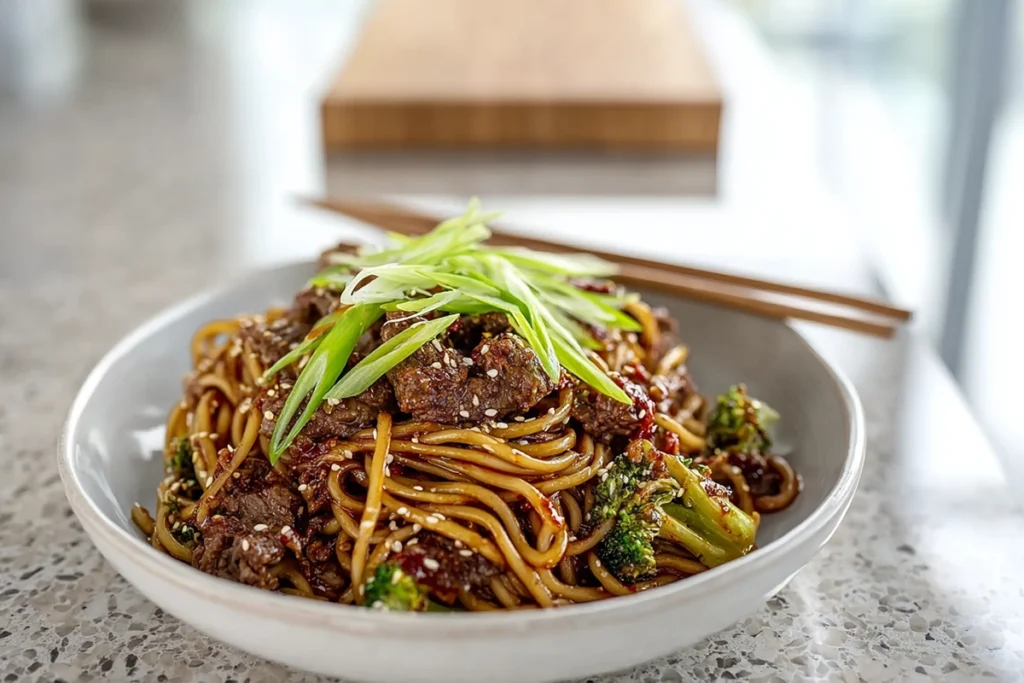
I serve this straight from the pan while the sauce is still glossy and the noodles are springy. A drizzle of chilli oil and a handful of sliced spring onions is enough — it doesn’t need anything else on the side. This is a complete bowl as-is.
For leftovers, let it cool completely before storing. It keeps well in the fridge for up to two days, but the noodles will absorb some sauce. When reheating, add a tablespoon or two of water and warm it gently in a pan or microwave, stirring once. That small splash brings the sauce back to life instead of turning it sticky-dry.
Freezing works, but it’s not ideal. The noodles soften and lose some chew once thawed. If you plan to freeze, do it in single portions and reheat slowly. I treat this as a cook-once, eat-now kind of meal — it shines when it’s fresh.
Final Thought
This is the kind of dinner that wins you over with smell first, then texture. Once you get the timing right, Sticky Beef Noodles become one of those reliable, no-stress meals you’ll come back to when you want something fast that still feels satisfying.
Get inspired with more mouthwatering recipes! Follow me on Pinterest for new cooking ideas every week.
Frequently Asked Questions
Can I make Sticky Beef Noodles ahead of time?
You can prep parts of it, but I don’t recommend fully cooking it ahead. The noodles absorb sauce as they sit, which changes the texture. If you want to save time, cook the beef and sauce, then store it separately and add freshly cooked noodles when reheating.
What’s the best noodle substitute if I don’t have egg noodles?
Rice noodles are the closest substitute, especially medium-width ones. Cook them just until flexible, not soft, and finish them in the sauce. Thicker wheat noodles don’t absorb the sauce the same way and tend to slide instead of cling.
Why did my sauce thicken but not turn glossy?
This usually means the heat was too low when the sauce reduced, or the cornflour slurry was added too early. The sauce needs a brief simmer to activate the starch and tighten. If it looks dull, increase the heat slightly and stir for another 30–60 seconds.
Can I use fresh vegetables instead of frozen?
Yes, but slice them thin and reduce the covered cooking time. Fresh vegetables release less water, so you don’t need as much steam. You’re looking for bright colour and a slight bite, not softness.
Is dark soy sauce the same as regular soy sauce?
No. Dark soy sauce is thicker, less salty, and adds colour and depth. Regular soy sauce can’t replace it one-to-one. If you skip it, the dish will taste fine but look lighter and less “sticky.”
How do I stop the noodles from soaking up all the sauce overnight?
You can’t completely stop it, but you can manage it. Store leftovers with a tablespoon or two of extra liquid mixed in. When reheating, add a splash of water and stir — the sauce loosens back up instead of staying dry.
PrintSticky Beef Noodles
Sticky Beef Noodles made in one pan with egg noodles, ground beef, and a glossy sauce. A fast, reliable 15-minute weeknight dinner that actually works.
- Prep Time: 10 minutes
- Cook Time: 5 minutes
- Total Time: 15 minutes
- Yield: 4 servings 1x
- Category: Dinner
- Method: Skillet / One-Pan
- Cuisine: American
Ingredients
- 250 g thin egg noodles
- 2 tbsp olive oil
- 1 tsp minced garlic
- 1 tsp minced ginger
- 500 g ground beef
- 1/3 cup sweet chilli sauce
- 1 tsp brown sugar
- 3 tbsp soy sauce or tamari
- 1 tbsp dark soy sauce
- 1 tbsp rice wine vinegar
- 2 cups frozen vegetables
- 1/2 cup water
- 1 tbsp cornflour
- 2 spring onions
- Chilli oil
Instructions
- Cook noodles until just pliable, drain, and rinse with cold water.
- Heat oil in a hot pan and briefly cook garlic and ginger.
- Add ground beef and cook until browned.
- Stir in sauces and sugar and let the sauce caramelise.
- Add vegetables, cover briefly, and soften.
- Stir in cornflour slurry to thicken sauce.
- Add noodles and spring onions and toss to coat.
Notes
- Best eaten fresh while the sauce is glossy.
- Add a splash of water when reheating leftovers.
Nutrition
- Serving Size: 1 bowl
- Calories: 520
- Sugar: 14
- Sodium: 980
- Fat: 22
- Saturated Fat: 8
- Unsaturated Fat: 12
- Trans Fat: 0
- Carbohydrates: 55
- Fiber: 4
- Protein: 28
- Cholesterol: 85