
The Green Goddess Salad I Actually Trust for Meal Prep

Green Goddess Salad was never supposed to be a meal for me. The first time I made it, I was just chasing that cold, crunchy, herby thing you crave when it’s too hot to cook and you’re tired of limp lettuce. But then I kept going back to the bowl. The texture is what gets you first—tiny crunchy cabbage bits coated in a creamy, garlicky, herb-packed dressing—followed by that clean, green smell that makes the whole thing feel alive. It’s refreshing without being boring, and rich without tipping into heavy.
Here’s the problem with a lot of Green Goddess recipes online: they look good but fall apart in real life. Too much lettuce that wilts overnight. Dressing that’s either watery or aggressively mayo-heavy. Or worse, a salad that tastes great for ten minutes and then turns soggy and gray by the time you actually want to eat it. For something that’s supposed to be healthy meal prep, that’s a deal-breaker.
This version fixes that by being honest about what matters. I’m not chasing restaurant drama or viral tricks here—I’m chasing reliability. This salad works because the ingredients are chosen for texture, staying power, and balance. The cabbage holds up. The dressing clings instead of pooling. And every bite tastes the same as the first. That’s my promise: if you make this the right way, it won’t punish you tomorrow.
Table of Contents
The No-Regret Ingredients
Green Cabbage
This is the backbone of the whole salad, and it’s not optional. Green cabbage stays crunchy for days, which is exactly why it works for meal prep when lettuce absolutely does not. Don’t swap this for napa or romaine unless you’re eating it immediately—you’ll lose the structure that makes this salad reliable.
English Cucumber
English cucumbers are ideal because they’re crisp, mild, and mostly seedless, which means less water leaking into the salad. Regular garden cucumbers are fine too, but if they’re watery, scoop out the seeds first. This is one of those quiet steps that keeps the salad from turning soupy.
Avocado
Avocado brings the soft, creamy contrast that keeps this from tasting like dressed slaw. Use one that’s ripe but still firm—you want clean cubes, not mashed avocado. If you’re prepping ahead, this is the ingredient you hold back until serving, no exceptions.
Green Onions
Green onions give you that sharp, fresh bite without overpowering the herbs in the dressing. I like using both the white and green parts for balance. Skip red onion here—it’s too aggressive and hijacks the whole flavor profile.
Green Goddess Dressing
This is the soul of the salad. A real Green Goddess dressing—herb-heavy, garlicky, and bright—is non-negotiable. Store-bought shortcuts rarely have enough fresh herbs, and that flat flavor shows immediately. If one ingredient deserves care, it’s this one.
Tortilla Chips (Optional, But Smart)
Scooping this salad with tortilla chips turns it into something dangerously snackable. Any sturdy, salty chip works—nothing fancy needed. Just don’t mix them in ahead of time unless you enjoy regret.
How This Salad Actually Comes Together (And Why the Chop Matters)
The Chop Is the Whole Game
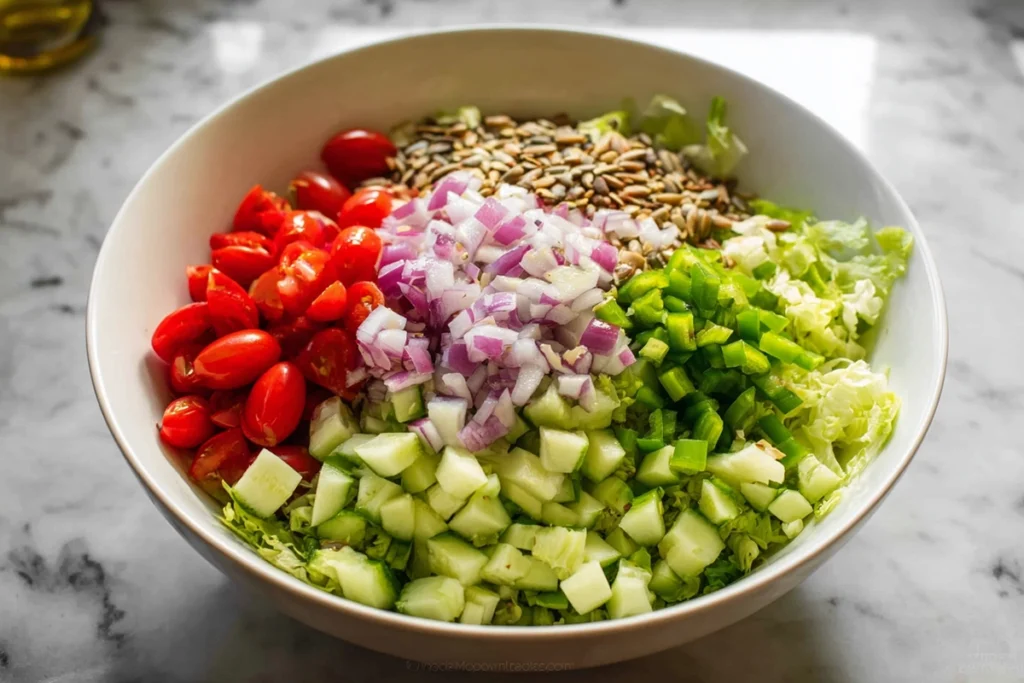
This salad lives or dies at the cutting board. When the cabbage is right, it looks like green confetti—tiny, even pieces that almost feel fluffy when you pile them up. Run your knife through it and listen for that dry, crisp sound; if it squeaks or feels wet under your fingers, your pieces are too big or uneven. The cucumbers and green onions should match that size so nothing sticks out or falls to the bottom of the bowl like an afterthought. When everything looks uniform, you’re already halfway to success.
Building the Bowl Before the Dressing
Before any dressing shows up, the vegetables should look bright and dry, not glossy. Toss them gently with your hands and feel for resistance—the cabbage should spring back instead of collapsing. This is important because once the dressing hits, there’s no going back. If the vegetables already feel soft or damp at this stage, the finished salad will taste tired no matter how good your dressing is.
The Dressing Moment
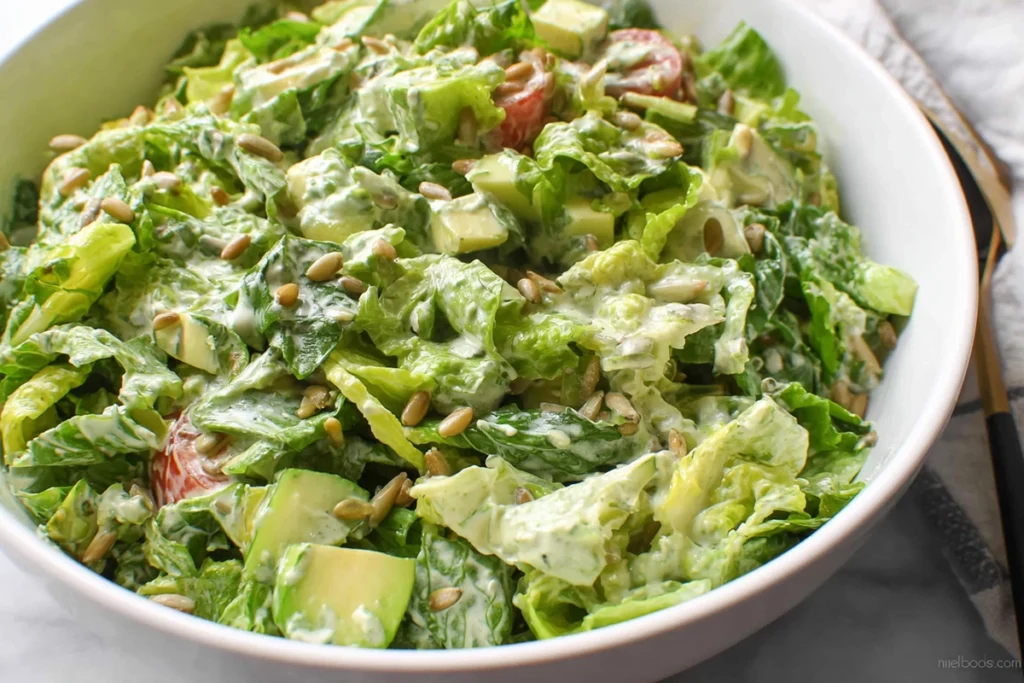
The dressing should be thick, pale green, and smell aggressively fresh—herbs first, garlic second, lemon right behind it. If it smells flat or muted, something’s off. When you pour it over the salad, don’t drown it. Toss slowly and listen: you want the quiet rustle of cabbage getting coated, not the slosh of liquid pooling at the bottom. The salad should look glossy, not wet, and feel creamy without losing its crunch.
When (and How) the Avocado Joins
Avocado goes in last, always. You should be able to see clean edges on the cubes and feel them stay intact as you fold them in. If they smear or disappear, the avocado was too ripe or you rushed it. The final bowl should look speckled with green, smell clean and herbal, and still crunch when you steal a bite straight from the spoon.
The Uh-Oh Moments (Where People Mess This Up)
Why Does My Salad Feel Watery?
I made this mistake early on, and it was entirely my fault. The culprit is usually cucumbers or over-dressed greens. If the salad looks shiny and sounds wet when you stir it, you’ve gone too far. Scoop out cucumber seeds next time, and always add dressing gradually. This salad should whisper when you mix it, not splash.
Why Did My Salad Lose Its Crunch Overnight?
This one stings because it feels like betrayal. The issue is almost always cutting the cabbage too thick or mixing everything too early. Thick cabbage softens unevenly and turns rubbery by the next day. And if avocado goes in during meal prep, it releases moisture and drags everything down with it. Separate components until serving if you care about texture—future you will thank you.
Why Does My Dressing Taste Dull?
If the dressing smells green but tastes flat, it’s usually a salt or acid problem. I’ve under-salted this more than once, and it makes the herbs taste muddy instead of bright. Taste the dressing on its own and look for that little zing at the back of your tongue. If it’s missing, it needs salt or a squeeze of lemon—don’t guess, taste.
Why Does It Taste Like Slaw Instead of Green Goddess?
This happens when the dressing-to-veg ratio is off or the herbs weren’t bold enough. If it just tastes like dressed cabbage, you either held back too much on the dressing or used a weak, store-bought version. This salad is supposed to smell herbal before you even take a bite. If it doesn’t, that’s your warning sign.
Make It Your Own (Without Ruining It)
Add Chicken, But Do It Right
If you’re turning this into a real meal, grilled or roasted chicken is the move—but it has to be simply seasoned. Salt, pepper, maybe a little garlic powder, nothing more. When you add it cold from the fridge, the contrast works: crisp salad, firm chicken, creamy dressing. Warm chicken wilts the cabbage and dulls the herbs, and I learned that the disappointing way.
Chickpeas That Actually Belong Here
Canned chickpeas can work, but only if you dry them thoroughly and roast them first. Straight-from-the-can chickpeas are soft and starchy, which drags the salad down. Roasted chickpeas add crunch and a nutty smell that plays surprisingly well with the herbs. If they’re still warm when you add them, wait—warm add-ins are the enemy of crisp salads.
Dairy Boost Without Making It Heavy
A small crumble of feta works, but only the block kind. It should look irregular and feel slightly creamy when you pinch it, not dry and dusty. This adds salt and richness without overpowering the dressing. Skip parmesan or shredded cheeses here—they fight the freshness instead of supporting it.
Make It Spicy (The Controlled Way)
If you want heat, add a finely minced jalapeño or serrano to the salad itself, not the dressing. You should see tiny green flecks and smell a faint heat when you stir, not get punched in the nose. Red pepper flakes work in a pinch, but they’re louder and less clean-tasting.
Serving & Storing (What Actually Works)
I eat this cold, straight from the fridge, usually standing at the counter with tortilla chips like I’m not about to call it lunch. Scooping it instead of forking it somehow makes it taste better—more texture, more crunch, more fun. If I’m packing it for work, I keep the avocado and chips separate and mix them in right before eating.
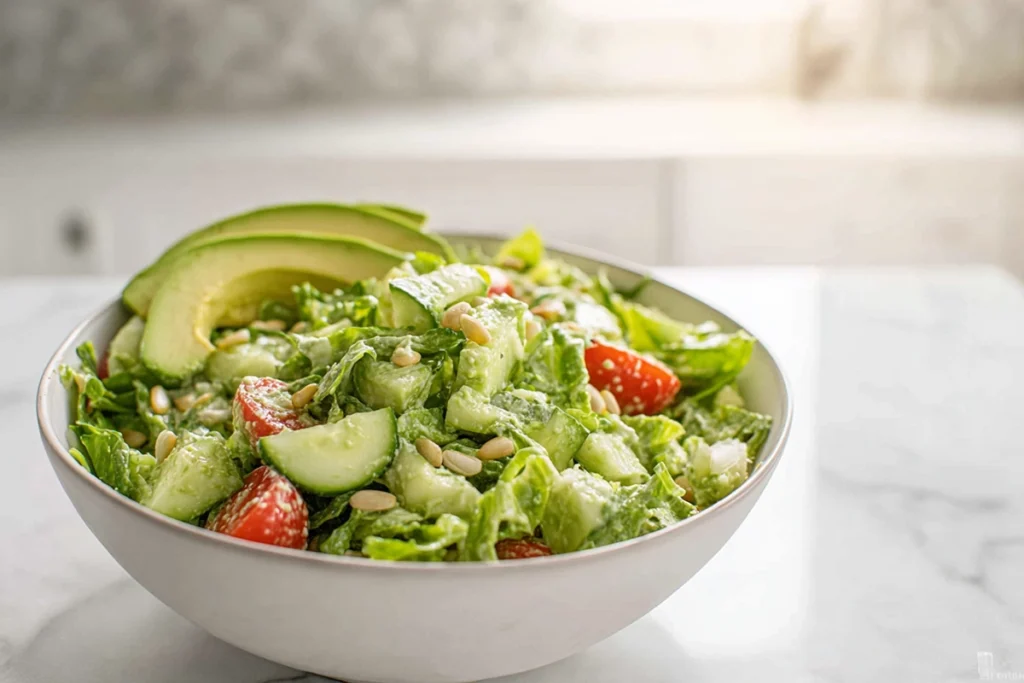
For storage, this salad lives or dies by separation. Undressed veggies in an airtight container will stay crisp for up to three days. The dressing keeps just fine on its own for the same amount of time. Once everything is mixed, you’ve got about 24 hours before the crunch fades and the color dulls. It’s still edible after that—but it’s not the salad you fell in love with.
Do not freeze this. Ever. Freezing destroys the texture of cabbage and turns the dressing grainy. There’s no clever workaround here—this is a fridge-only situation.
In the end, this Green Goddess Salad works because it respects texture and timing. Get those right, and you’ll have a cold, crunchy bowl that somehow keeps pulling you back for one more bite.
Get inspired with more mouthwatering recipes! Follow me on Pinterest for new cooking ideas every week.
Frequently Asked Questions
Can I make Green Goddess Salad ahead of time for meal prep?
Yes—but only if you keep things separate. Prep and store the chopped cabbage, cucumbers, and green onions in one container, and keep the dressing in another. Add the avocado and dressing right before eating, or you’ll lose the crunch that makes this salad worth making.
Why is my Green Goddess dressing bitter?
Bitterness usually comes from over-blending fresh herbs or using old, tired greens. When herbs get overworked in a blender, they release bitter compounds. Blend just until smooth and bright green, and always taste before pouring it on the salad.
Can I skip the avocado?
Yes, and the salad will still work structurally. You’ll lose some creaminess, but the dressing carries most of the richness anyway. If you skip avocado, add the dressing a little more generously so the salad doesn’t feel dry.
How long does Green Goddess Salad last in the fridge?
Once fully mixed, it’s best within 24 hours. The flavor will still be okay after that, but the texture starts to soften and the color dulls. Undressed veggies and dressing stored separately will last up to three days.
Can I use lettuce instead of cabbage?
You can, but it turns this into a same-day salad only. Lettuce wilts quickly once dressed and doesn’t hold up for meal prep. If reliability matters to you, stick with green cabbage.
Is this salad supposed to be chunky or smooth?
Chunky—but evenly chunky. Everything should be finely chopped so each bite has crunch, creaminess, and herbs together. If pieces are too big, it eats like slaw instead of a scoopable salad.
PrintGreen Goddess Salad
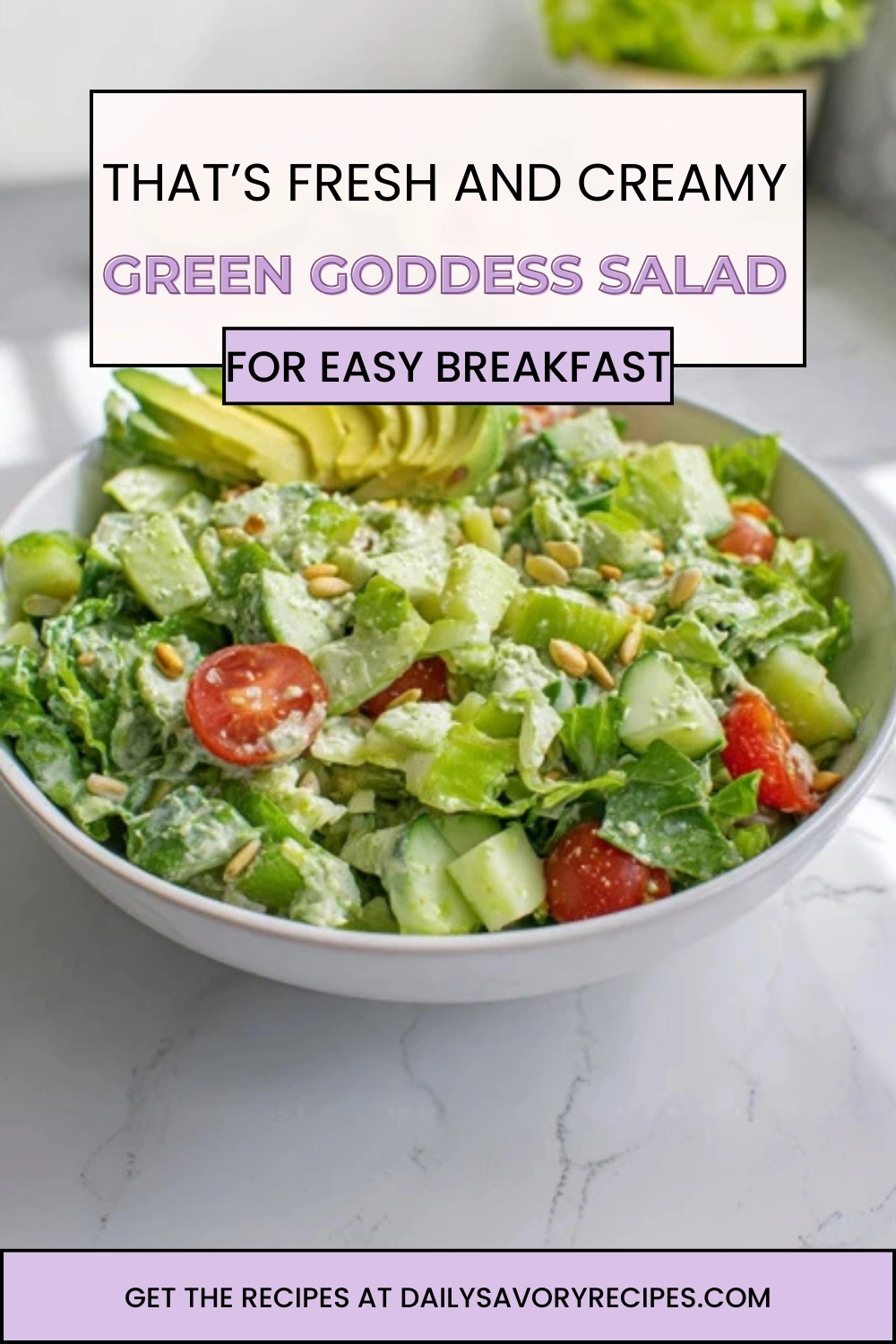
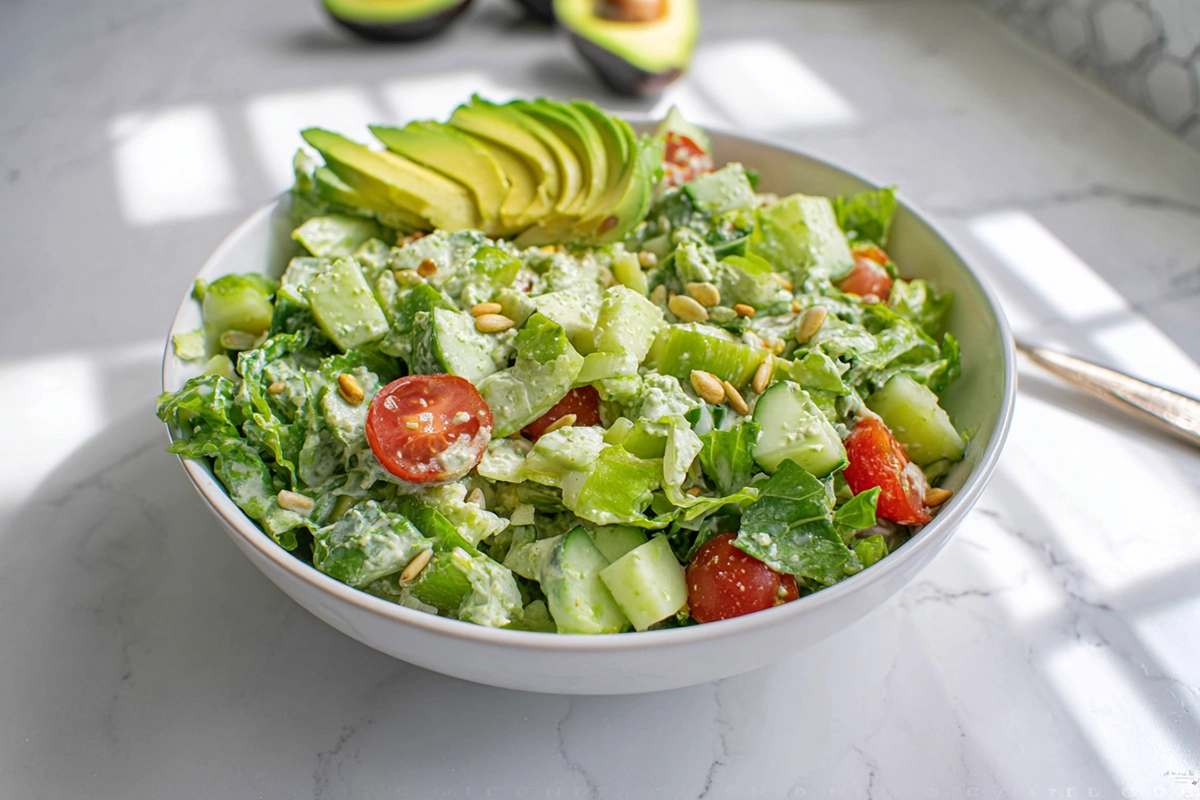
Fresh, crisp, and creamy Green Goddess Salad made with chopped lettuce, cucumber, green pepper, cherry tomatoes, sunflower seeds, and avocado, all tossed in a bold herb-forward green goddess dressing. This no-cook salad comes together in just 15 minutes and works perfectly as a light lunch, healthy side dish, or easy meal prep option.
- Prep Time: 15 minutes
- Total Time: 15 minutes
- Yield: 6 servings 1x
- Category: Salad
- Method: No-cook
- Cuisine: American
- Diet: Gluten Free
Ingredients
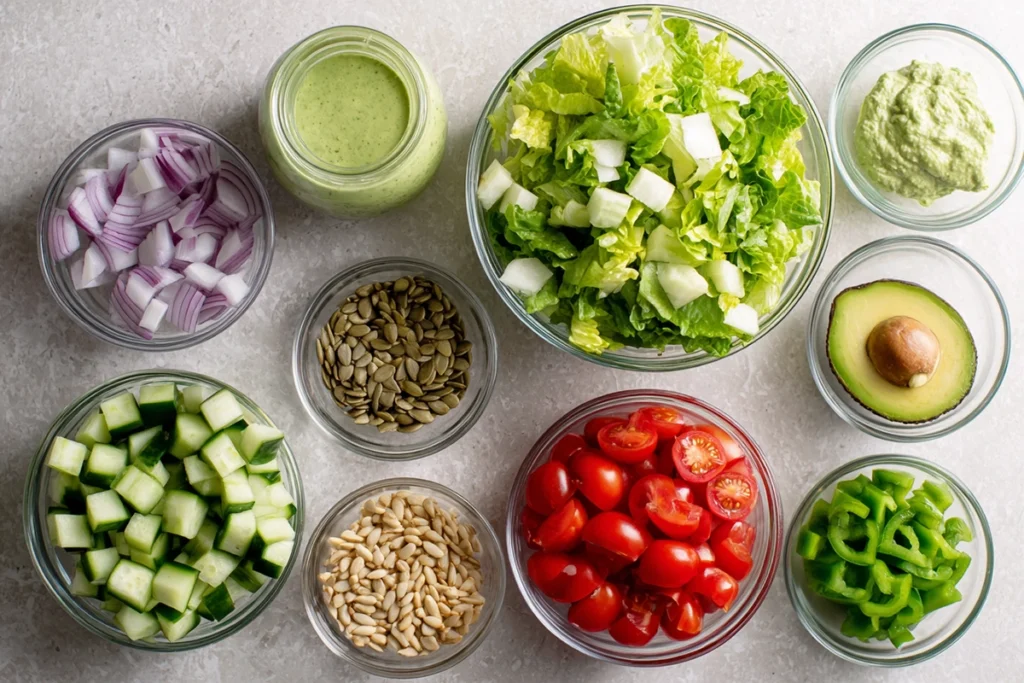
- 4–5 cups chopped green leaf lettuce
- 1/2 cup diced green bell pepper
- 1 cup diced English cucumber
- 1/2 cup halved cherry tomatoes
- 1/3 cup finely diced red onion
- 1/4 cup unsalted sunflower seeds
- 1 ripe avocado, sliced
- 1/2 cup green goddess dressing
Instructions
- Add the chopped green leaf lettuce to a large mixing bowl, making sure there is enough space to toss the salad easily.
- Add the diced green pepper, cucumber, cherry tomatoes, red onion, and sunflower seeds to the bowl with the lettuce.
- Drizzle the green goddess dressing over the vegetables, starting with a smaller amount and adding more as needed.
- Gently toss the salad using two spoons, lifting from the bottom to evenly coat everything without crushing the greens.
- Top the salad with sliced avocado just before serving and enjoy immediately.
Notes
- For best texture, add the dressing just before serving to prevent the lettuce from wilting.
- You can prep the vegetables up to 24 hours in advance and store them separately in airtight containers.
- Store leftover dressing in the refrigerator for up to 5 days.
- This salad is not suitable for freezing.
Nutrition
- Serving Size: 1 bowl
- Calories: 220
- Sugar: 4g
- Sodium: 320mg
- Fat: 16g
- Saturated Fat: 3g
- Unsaturated Fat: 12g
- Trans Fat: 0g
- Carbohydrates: 14g
- Fiber: 6g
- Protein: 5g
- Cholesterol: 0mg