
Chocolate Chip S’mores Cookies That Actually Stay Gooey

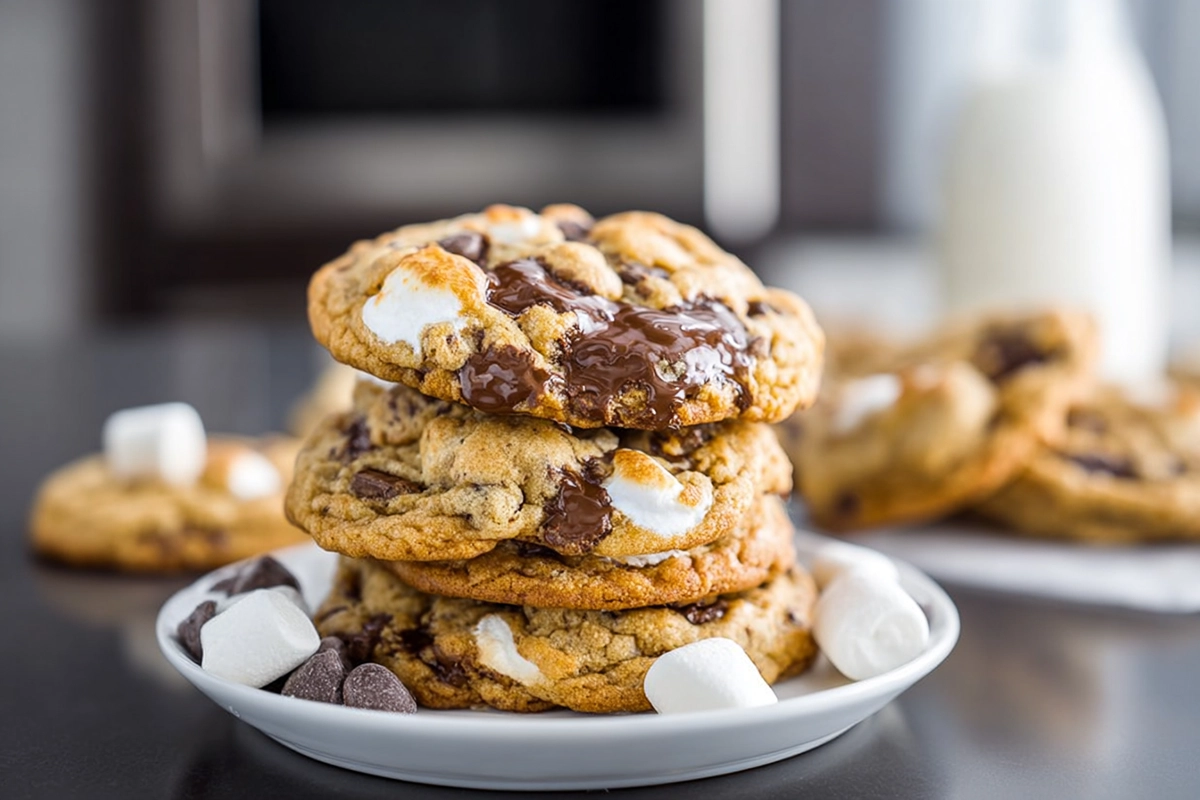
The first thing you notice with these cookies isn’t the look — it’s the smell. Warm butter, melting chocolate, and that toasted-sugar scent you usually only get standing next to a campfire. The marshmallows soften and puff just enough, the chocolate turns glossy, and the graham crackers release that slightly nutty, baked aroma. It’s familiar, but sharper and richer than a regular chocolate chip cookie.
What makes chocolate chip s’mores cookies different is that they’re fighting two battles at once. You want the nostalgia of a s’more — gooey, sticky, slightly messy — but you also want a cookie that holds its shape, bakes evenly, and doesn’t collapse into a sugar puddle. That balance doesn’t happen by accident. It comes from the right ingredient ratios and understanding what each part is doing once it hits heat.
This recipe is built to feel indulgent without being unpredictable. No chilling, no special equipment, and no guesswork mid-bake. The dough is designed to bake thick, the centers stay soft, and the marshmallows melt without disappearing. It’s campfire flavor, controlled by an oven timer — which is exactly the kind of consistency I care about.
Table of Contents
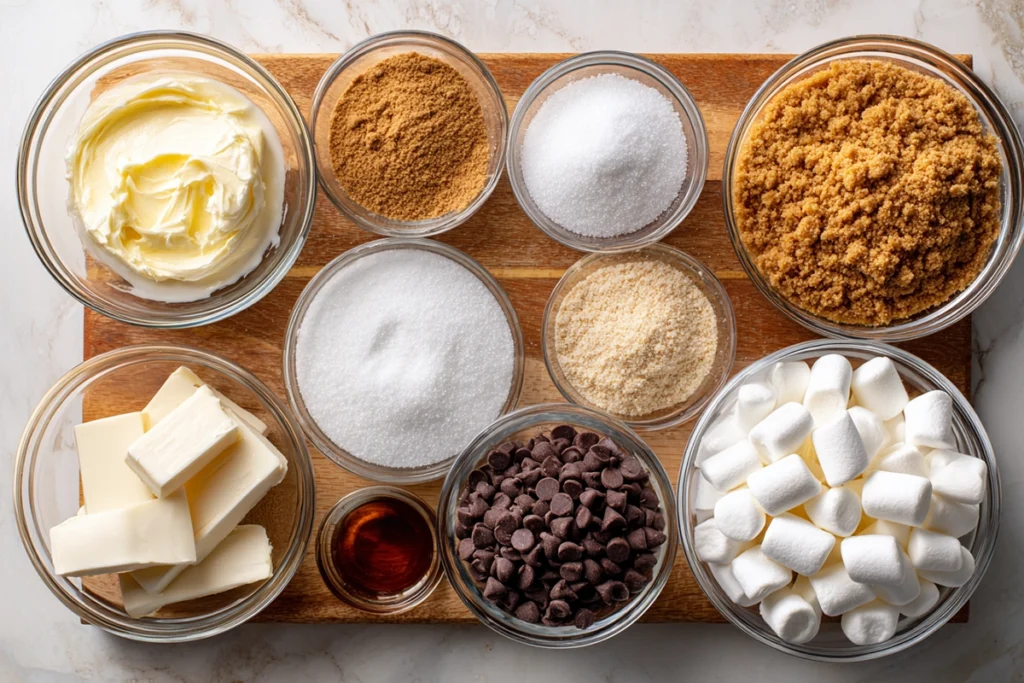
Ingredients — Why Each One Earns Its Place
All-Purpose Flour
This recipe relies on standard all-purpose flour for structure. Nothing fancy here — consistency matters more than protein tweaks. Measuring accurately is key; too much flour and the cookies turn dry before the marshmallows fully melt.
Graham Cracker Crumbs
Finely crushed crumbs are non-negotiable. They dissolve into the dough and act almost like a flavored flour, giving structure and that unmistakable s’mores flavor without making the cookie gritty. Pre-crushed crumbs work, but blitzing whole crackers yourself gives better texture control.
Unsalted Butter
Room-temperature butter is what keeps these cookies thick without chilling. Unsalted gives you control over flavor — especially important with sweet add-ins like chocolate and marshmallows. Store brands are perfectly fine here as long as the butter is real butter, not a blend.
Brown Sugar & Granulated Sugar
Brown sugar brings moisture and chew, while white sugar helps with spread and edge browning. This balance keeps the centers soft without losing shape. Swapping all brown sugar sounds tempting, but it pushes the cookies too dense.
Eggs
Room-temperature eggs blend more smoothly into the dough and help create structure without toughness. Cold eggs can cause uneven mixing, which matters when you’re folding in fragile add-ins later.
Semi-Sweet Chocolate Chips
This is one place where standard grocery-store chips shine. Semi-sweet keeps the cookies from tipping overly sweet once the marshmallows melt. No need for premium bars — consistency beats luxury here.
Mini Marshmallows
Do not substitute full-size marshmallows. Minis melt gradually and stay suspended in the dough instead of pooling out. This is the difference between gooey pockets and empty craters.
Chopped Graham Crackers
These add texture contrast. Unlike the crumbs, these stay visible and give you that occasional crisp bite. Cheap boxed graham crackers are completely fine — they’re going into a cookie, not a tasting board.
Each ingredient here has a job. Change one without understanding its role, and the whole balance shifts. That’s why these cookies work — they’re designed, not improvised.
How These Chocolate Chip S’mores Cookies Come Together
Building a Dough That Holds the Goo
The process starts quietly, but there’s a lot happening if you pay attention. When the butter and sugars come together properly, the mixture should look pale and slightly aerated, not greasy or shiny. If you press a fingertip into it, it should feel soft and fluffy, not slick. The smell at this stage is subtle — mostly warm butter and caramel notes — and that’s your cue that you’ve built the right base before anything dry goes in.
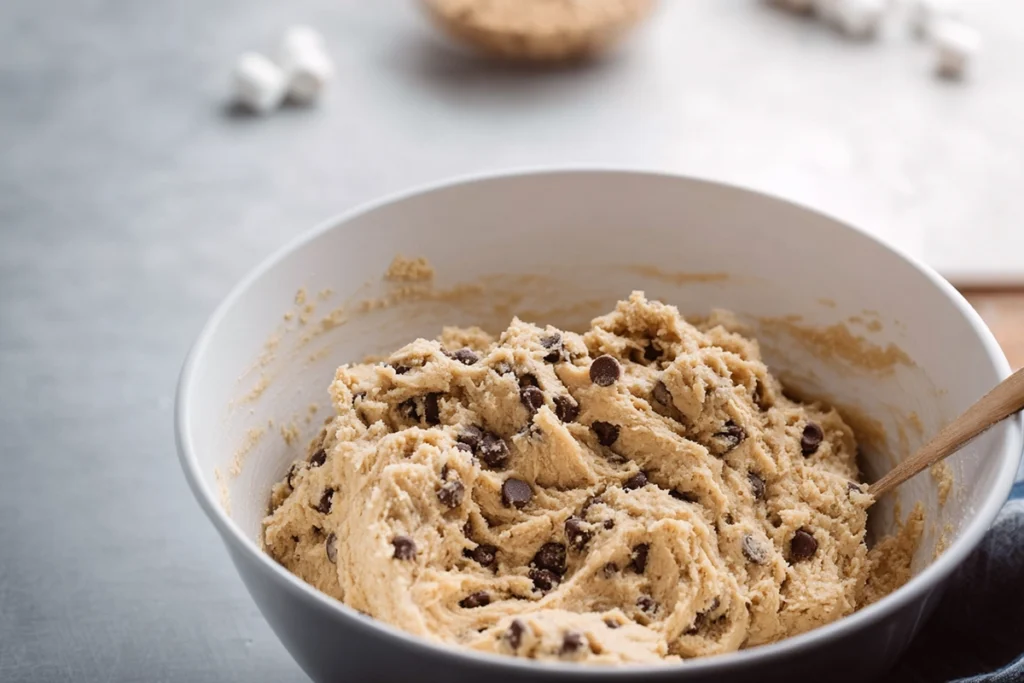
As the dry ingredients are incorporated, the dough will tighten and turn matte. This is where restraint matters. You’re watching for a dough that feels tacky like a Post-it note when you touch it, not wet like glue. Overmixing shows up immediately: the dough becomes stiff, the surface loses its softness, and the finished cookies bake dense instead of chewy.
Folding in the Campfire Elements
Once the mixer stops, the texture changes fast. Folding in the chocolate, marshmallows, and graham pieces should feel deliberate and gentle. You’ll hear a soft rustle as the add-ins move through the dough, not a slapping sound. Visually, the dough should look evenly studded — no pockets overloaded with marshmallows, no bare sections.
The smell becomes more pronounced here. Even before baking, the graham crackers release a lightly toasted aroma, and the chocolate warms just enough to soften at the edges. If the dough starts feeling loose or greasy at this point, that’s a sign the butter was too warm — pause, don’t push it further.
Shaping for Thickness and Control
These cookies are intentionally large, and you’ll feel that immediately in your hands. The dough should roll easily without sticking to your palms, holding its shape instead of sagging. When placed on the pan, the surface should look smooth but slightly cracked, not shiny or wet.
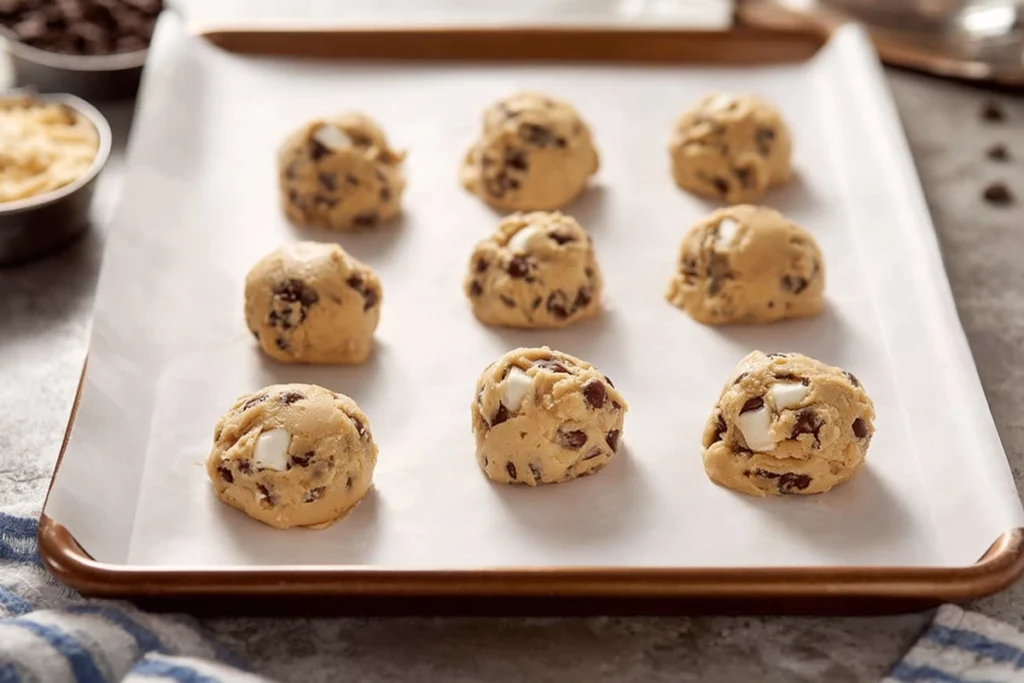
Spacing matters more than people think. As they bake, you’ll hear a faint sizzle during the first few minutes, and the edges will begin to set while the centers stay visibly soft. That contrast is what locks in the gooey middle while keeping the structure intact.
Where Chocolate Chip S’mores Cookies Go Wrong
When the Marshmallows Melt Away
If you open the oven and see flat puddles where marshmallows should be, the dough was either overmixed or too warm going in. Marshmallows need structure around them. You want them to soften and stretch, not liquefy. Visually, the right bake shows marshmallows puffing and lightly browning, not disappearing into the pan.
When the Bottoms Brown Too Fast
This usually announces itself by smell before sight — a sharp toasted-sugar scent instead of warm chocolate. Dark pans and low rack positions trap too much heat underneath. The bottoms set before the centers have time to rise, leading to crisp bases and underdeveloped middles. When baked correctly, the bottoms should be lightly golden and quite soft when lifted, not hard and crackly.
When the Centers Look Underbaked
This one makes people nervous, but it’s intentional. When the cookies come out, the centers should look pale and soft, almost fragile, with marshmallows still glossy. If you touch the edge, it should feel set; if you press the center lightly, it should give. As they cool, you’ll smell the chocolate deepen and the structure will finish forming on the pan. Pull them late, and you lose the goo that makes these cookies worth making.
Make Them Your Own Without Losing the S’mores Effect
Milk Chocolate vs. Semi-Sweet
If you prefer a sweeter, more classic campfire flavor, swapping the semi-sweet chips for milk chocolate works — but only in part. I recommend replacing half the chocolate, not all of it. Full milk chocolate tips the cookies too sweet once the marshmallows melt, and the flavor flattens. A split keeps the richness while still tasting like a traditional s’more.
Dark Chocolate for Balance
For a less sugary finish, use chopped dark chocolate (60–65%) instead of chips. Chopped chocolate melts into irregular pockets, which gives you contrast: some bites are deeply chocolatey, others more marshmallow-forward. This version works especially well if you like thick, bakery-style cookies that aren’t overly sweet.
Extra Graham Crunch on Top
If you want more texture without drying the dough, press a few graham cracker chunks into the tops after shaping. Mixing extra crackers into the dough sounds logical, but it steals moisture. Adding them on top keeps the centers soft while boosting that toasted graham flavor where you actually notice it.
Gluten-Free Adjustment (Realistic Expectation)
A 1:1 gluten-free flour blend will work, but the cookies bake denser and spread less. Expect a slightly firmer bite and less chew. I’ve found letting the dough rest for 15 minutes before baking helps hydrate the flour and improve texture — don’t skip that if you go this route.
Serving & Storing Them the Right Way
I eat these warm, about 15 minutes after they come out of the oven, when the centers are set enough to hold but the marshmallows are still stretchy. At that point, the chocolate chip s’mores cookies smell like toasted sugar and cocoa, and the texture is exactly what you want — soft in the middle, lightly crisp at the edges.
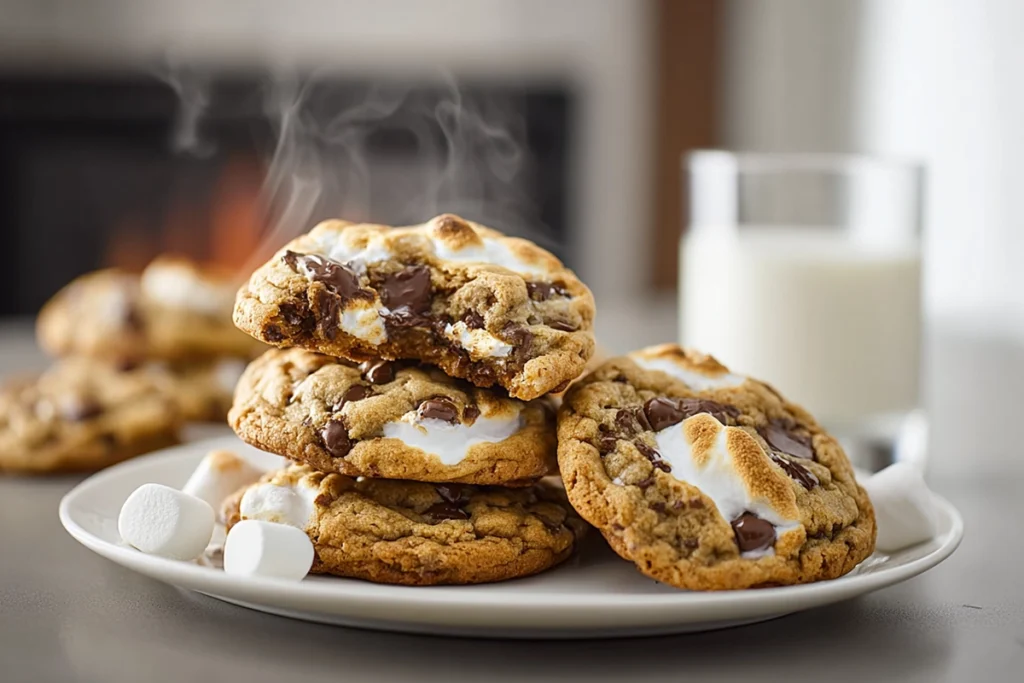
For storing, keep them in a loosely covered container at room temperature for up to two days. Don’t refrigerate them. The fridge dries the crumbs and turns the marshmallows rubbery. If you need longer storage, freeze the baked cookies in a single layer first, then transfer to a bag. They reheat best straight from frozen in a 300°F oven for about 6 minutes, or a quick 2 minutes in an air fryer to bring back the soft center without scorching the bottoms.
If freezing dough, shape it first. Baking from frozen works, but you’ll need an extra minute or two — watch the edges, not the clock.
Campfire Flavor, No Smoke Required
These cookies deliver the smell, texture, and indulgence you expect from a campfire treat, without the unpredictability. When chocolate chip s’mores cookies are built with intention, they stop being a novelty and start being a repeatable favorite — and that’s what makes them worth baking again.
Get inspired with more mouthwatering recipes! Follow me on Pinterest for new cooking ideas every week.
Frequently Asked Questions
Can I freeze chocolate chip s’mores cookies?
Yes, and they freeze well — but do it the right way. Freeze them after baking, in a single layer first, then transfer to a bag. Don’t freeze them stacked or warm, or the marshmallows fuse together and tear when thawed.
Can I freeze the dough instead of the baked cookies?
Yes. Shape the dough balls first, then freeze them solid. Bake straight from frozen and add 1–2 minutes to the bake time. Watch the edges — they should be set while the centers still look soft.
Why did my marshmallows disappear during baking?
This usually means the dough was too warm or overmixed. Warm dough can’t support the marshmallows, so they melt and leak out. The dough should feel cool and tacky, not soft or greasy, before baking.
Are these cookies supposed to look underbaked in the center?
Yes. When they come out of the oven, the centers should look pale and soft. If you wait until they look fully baked, they’ll cool dry. They finish setting on the pan as the marshmallows and chocolate firm up.
Can I make smaller cookies?
You can, but the texture changes. Smaller cookies bake through faster, which reduces the gooey center. If you do size them down, shorten the bake time and expect less marshmallow pull.
Can I bake two trays at the same time?
You can, but rotate the pans halfway through. Ovens rarely heat evenly, and uneven heat causes one tray to spread more than the other. For the most consistent results, bake one tray at a time.
PrintChocolate Chip S’mores Cookies
Thick chocolate chip s’mores cookies with gooey marshmallows and melted chocolate. No chilling required and ready in about 30 minutes.
- Prep Time: 18 minutes
- Cook Time: 12 minutes
- Total Time: 30 minutes
- Yield: 24 cookies 1x
- Category: Dessert
- Method: Baking
- Cuisine: American
- Diet: Vegetarian
Ingredients
- 2 1/3 cups all-purpose flour
- 1/2 cup graham cracker crumbs
- 1 teaspoon baking soda
- 1/2 teaspoon salt
- 1 cup unsalted butter
- 1 cup light brown sugar
- 1/2 cup granulated sugar
- 2 teaspoons vanilla extract
- 2 large eggs
- 2 cups semi-sweet chocolate chips
- 1 cup mini marshmallows
- 1/2 cup chopped graham crackers
Instructions
- Preheat oven and prepare baking sheets.
- Mix dry ingredients in a bowl.
- Cream butter and sugars until light and fluffy.
- Add vanilla and eggs, mixing until combined.
- Mix in dry ingredients gently.
- Fold in chocolate chips, marshmallows, and graham crackers.
- Portion dough into large balls and place on baking sheets.
- Bake until edges are golden and centers are soft.
- Cool briefly before transferring to a rack.
Notes
- Use mini marshmallows to prevent melting away.
- Bake until centers look slightly underdone for best texture.
Nutrition
- Serving Size: 1 cookie
- Calories: 280
- Sugar: 22
- Sodium: 180
- Fat: 14
- Saturated Fat: 8
- Unsaturated Fat: 5
- Trans Fat: 0
- Carbohydrates: 36
- Fiber: 2
- Protein: 3
- Cholesterol: 45