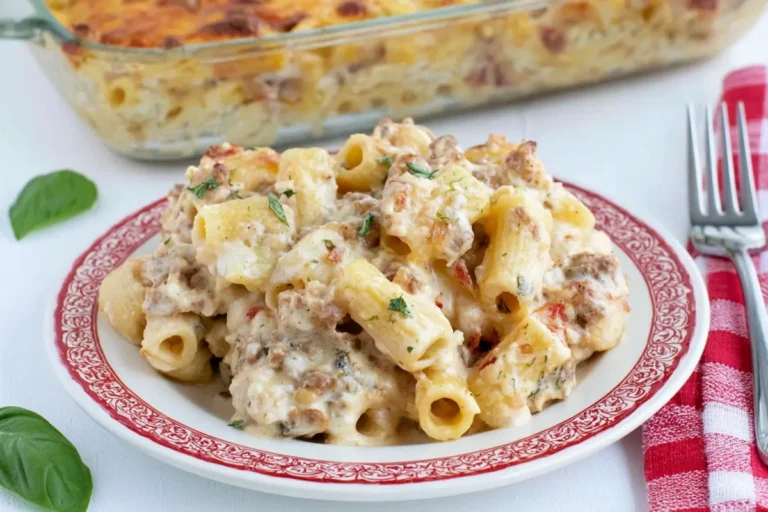

Veggie Mac & Cheese with a Creamy Roasted Vegetable Sauce

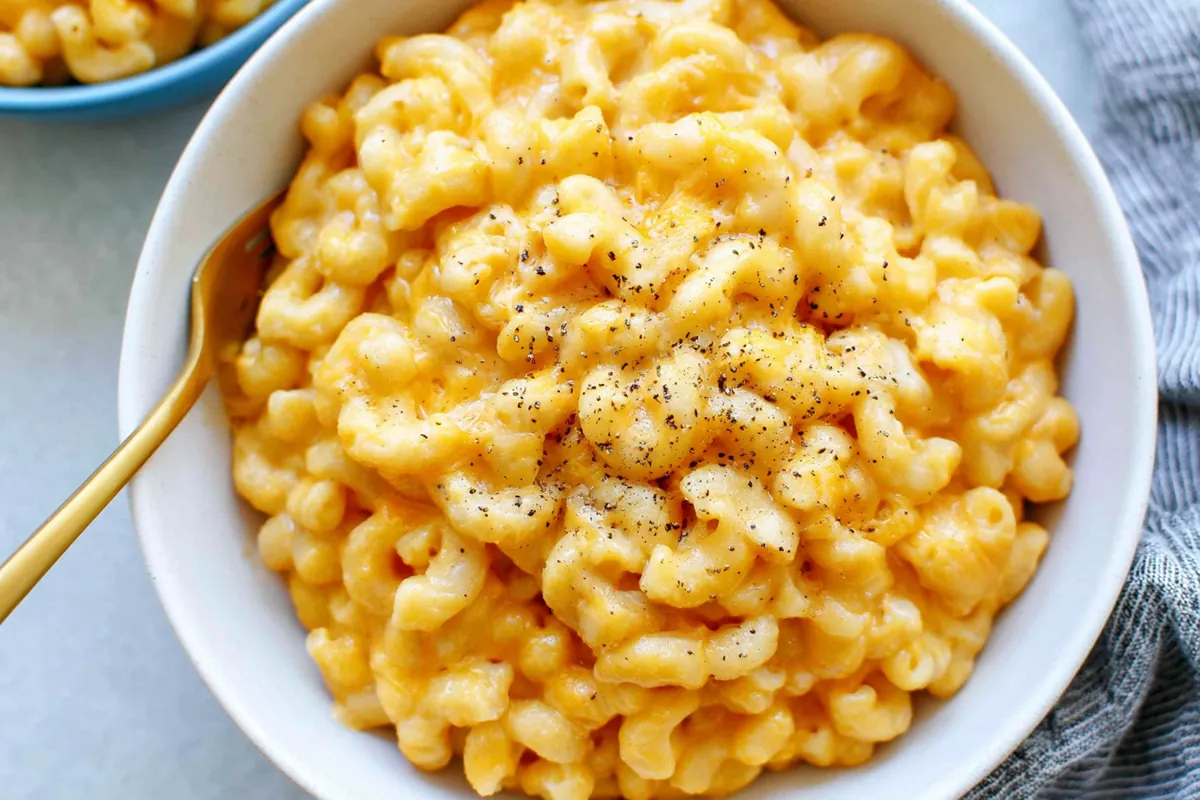
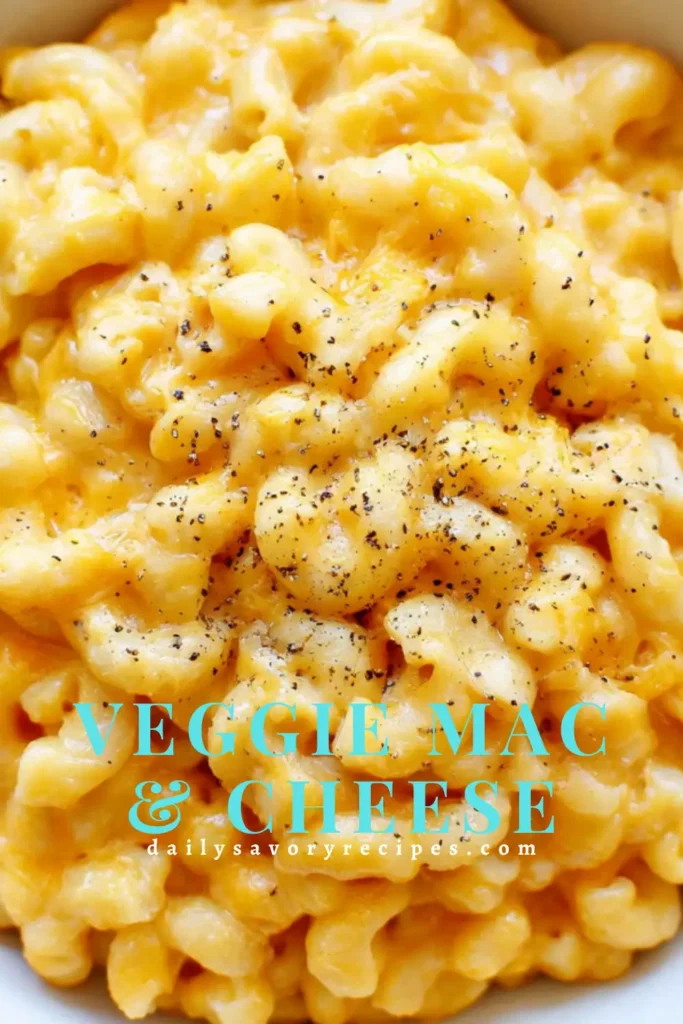
Veggie Mac & Cheese takes the comfort of classic macaroni and cheese and gives it more depth with roasted sweet potato, cauliflower, red bell pepper, and onion. Once blended with milk, Dijon mustard, garlic powder, cornstarch, and cheddar, those vegetables form a smooth sauce that coats every piece of pasta.
Roasting matters here. It softens the vegetables, concentrates their flavor, and keeps the sauce from tasting flat or watery. You’ll also learn how to control the texture with reserved pasta water so the finished dish stays creamy instead of heavy.
Why This Veggie Mac & Cheese Works for Family Dinners
The vegetables don’t sit on top of the pasta or compete with it. They become part of the sauce. Sweet potato brings body and mild sweetness, cauliflower keeps the texture light, red bell pepper adds color, and onion gives the sauce a savory base.
That combination works especially well for family meals because the finished dish still tastes familiar. It’s creamy, cheesy, and easy to serve from one pot. The vegetables are there, but they don’t make the sauce chunky or overly vegetal.
I also like that this recipe doesn’t rely on a separate flour-and-butter roux. The cornstarch helps stabilize the sauce, while the blended vegetables provide most of the thickness. It’s a practical approach when dinner needs to feel comforting without adding extra stovetop steps.
Ingredients That Build the Creamy Vegetable Sauce
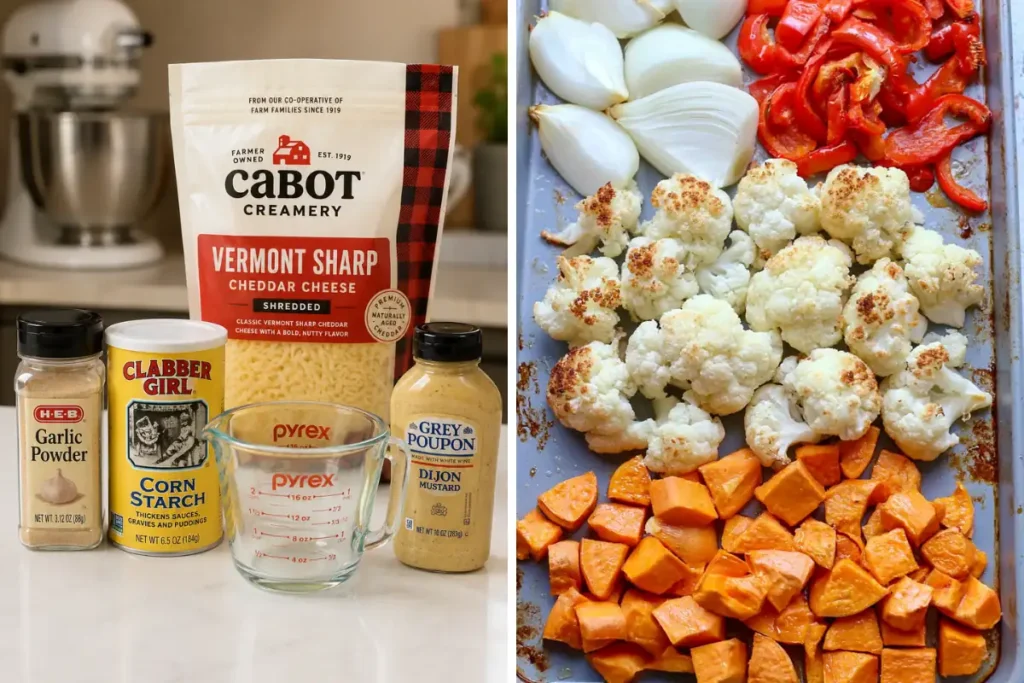
The sauce starts with sweet potato, cauliflower, yellow onion, and red bell pepper. Cut them into similar-size pieces so they soften at roughly the same rate. If the sweet potato pieces are much larger than the cauliflower, the cauliflower may be ready while the potato is still firm.
A little oil and salt are enough before roasting. At 400°F, the vegetables need about 30-35 minutes to become fully tender. Look for soft edges and light browning, especially on the onion and pepper. That browning adds flavor without making the sauce taste roasted in an overpowering way.
The remaining ingredients shape the final texture. Milk loosens the puree, Dijon mustard sharpens the cheese flavor, and garlic powder blends evenly without leaving raw garlic pieces. Cornstarch adds gentle thickening, while shredded cheddar gives the sauce its familiar mac-and-cheese character.
Choosing Pasta and Cheese
Elbow macaroni is a natural choice because the curved shape holds sauce inside and around each piece. Shells, cavatappi, or short penne also work, as long as the pasta has enough surface area to catch the sauce.
For the cheese, I prefer cheddar shredded from a block. Pre-shredded cheese often contains anti-caking agents, which can make the sauce slightly grainy. It will still work, but freshly shredded cheese usually melts more evenly.
Why the Roasted Vegetables Matter
Boiled vegetables can carry extra water into the blender. Roasted vegetables are different. Their flavor becomes more concentrated, and their texture turns soft enough to puree without thinning the sauce too much.
That’s important because the sauce should cling to the pasta, not run to the bottom of the bowl. Roast until the sweet potato crushes easily with a fork. If it resists, give the tray another 5 minutes. Slightly over-tender is better than undercooked for this recipe.
Practical Substitutions for Veggie Mac & Cheese
Gluten-free pasta can replace regular elbow macaroni without changing the sauce. Cook it just until tender and reserve the pasta water before draining. Some gluten-free pastas release more starch than wheat pasta, so add that water gradually when thinning the sauce.
For a dairy-free version, use an unsweetened, neutral-tasting milk and a dairy-free cheese that melts well. Avoid strongly flavored plant milks. Vanilla or sweetened varieties can make the sauce taste out of place. A mild oat or soy milk usually gives a smoother result than thin almond milk.
Arrowroot can replace cornstarch in the same amount, though the texture may be slightly glossier. Vegetable swaps are possible too, but choose vegetables that roast soft and blend smoothly. Butternut squash can replace sweet potato, and an orange bell pepper can replace the red one.
Keep the vegetable balance sensible. Too much cauliflower can make the sauce pale and mild, while too much sweet potato can make it noticeably sweet. The original mix gives a more balanced result.
How to Make Veggie Mac & Cheese
Start by heating the oven to 400°F. Toss the diced sweet potato, chopped cauliflower, onion, and red bell pepper with oil and salt, then spread them in a single layer on a baking sheet. Crowding the tray traps steam, so use a large enough pan that the vegetables have some space around them.
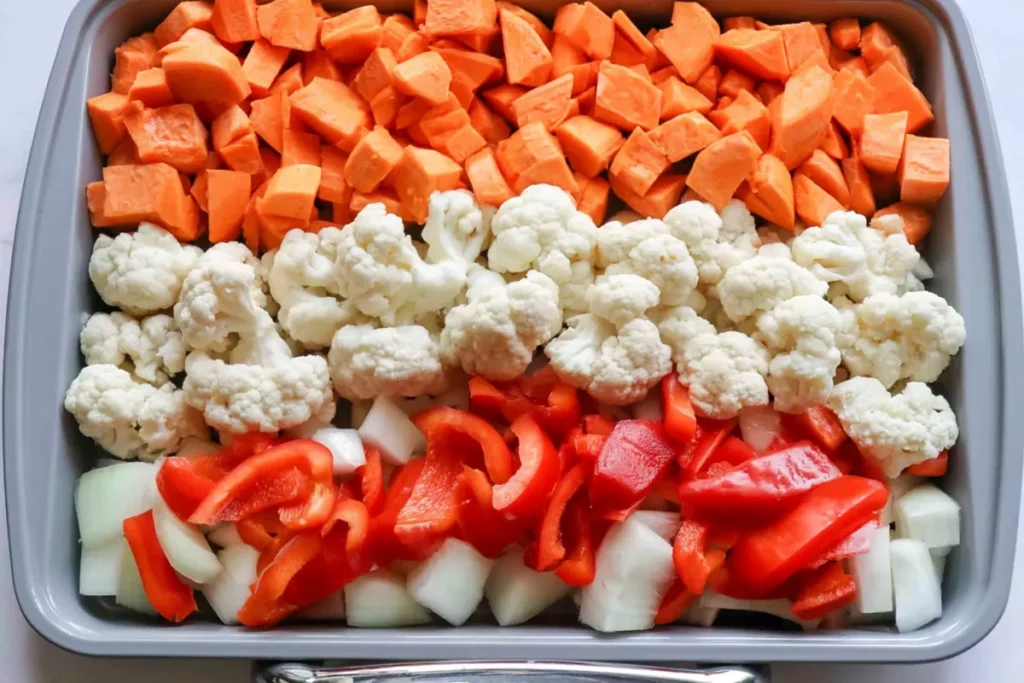
Roast for 30-35 minutes, stirring once if the edges are browning unevenly. The sweet potato should be soft through the center, and the cauliflower stems should yield easily when pressed with a fork. Don’t rush this stage. Firm vegetables create a grainy sauce, even in a strong blender.
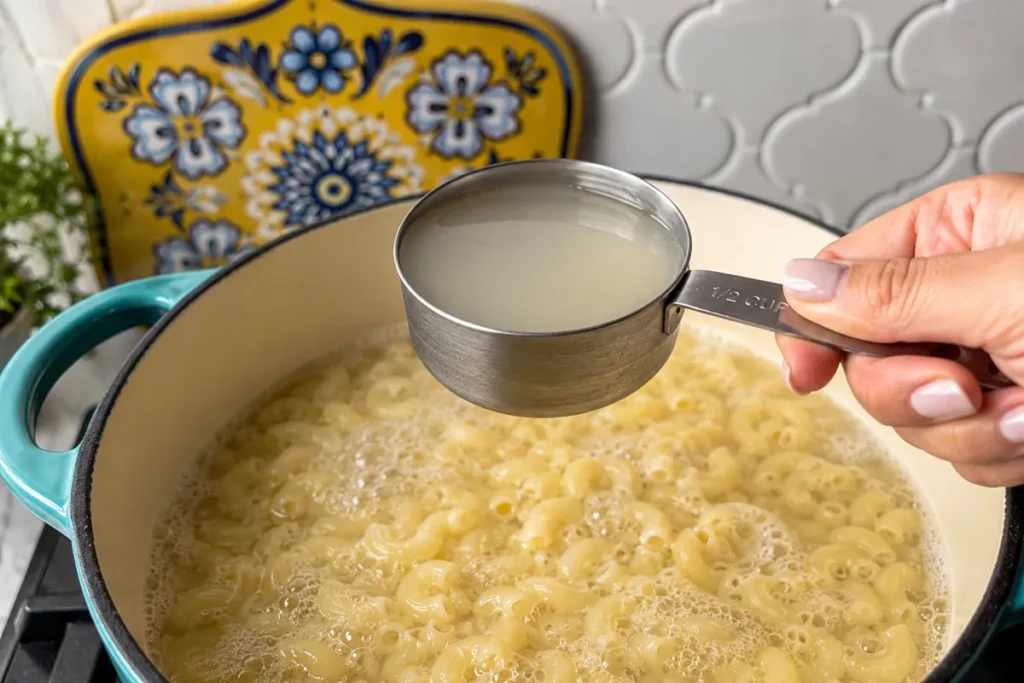
While the tray is in the oven, cook the pasta according to the package directions. Before draining, scoop out 1 cup of pasta cooking water. That water is useful later because its starch helps loosen the sauce while keeping it cohesive.
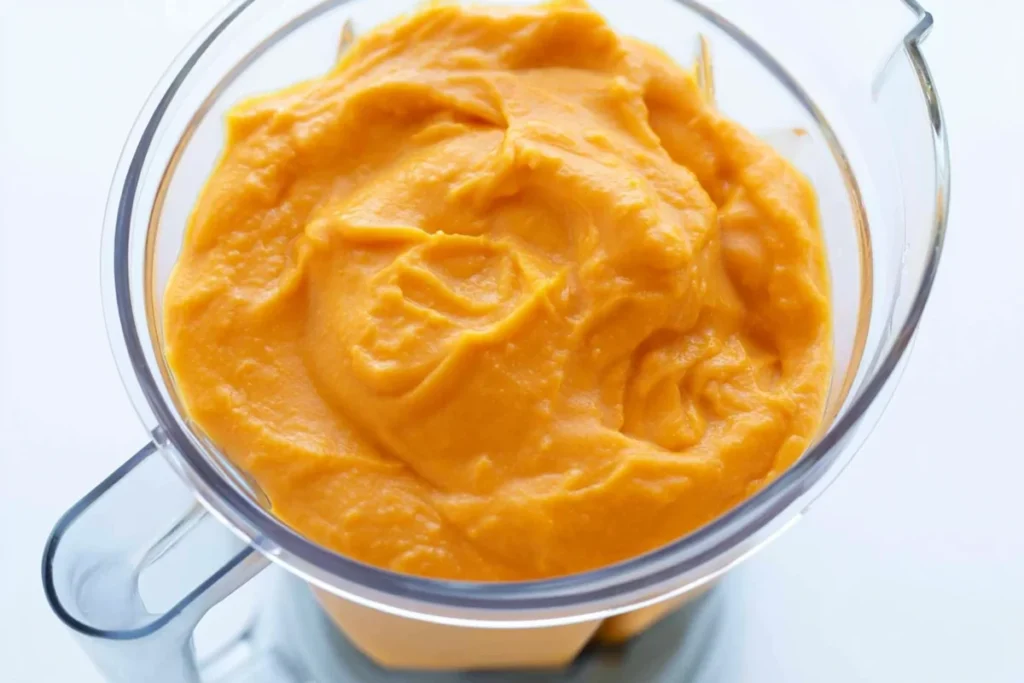
Transfer the roasted vegetables to a blender. Add the Dijon mustard, garlic powder, cornstarch, milk, and shredded cheese. Blend until completely smooth, stopping to scrape down the sides if needed. Warm mixtures can expand in a blender, so leave room in the jar and vent the lid according to the manufacturer’s directions.
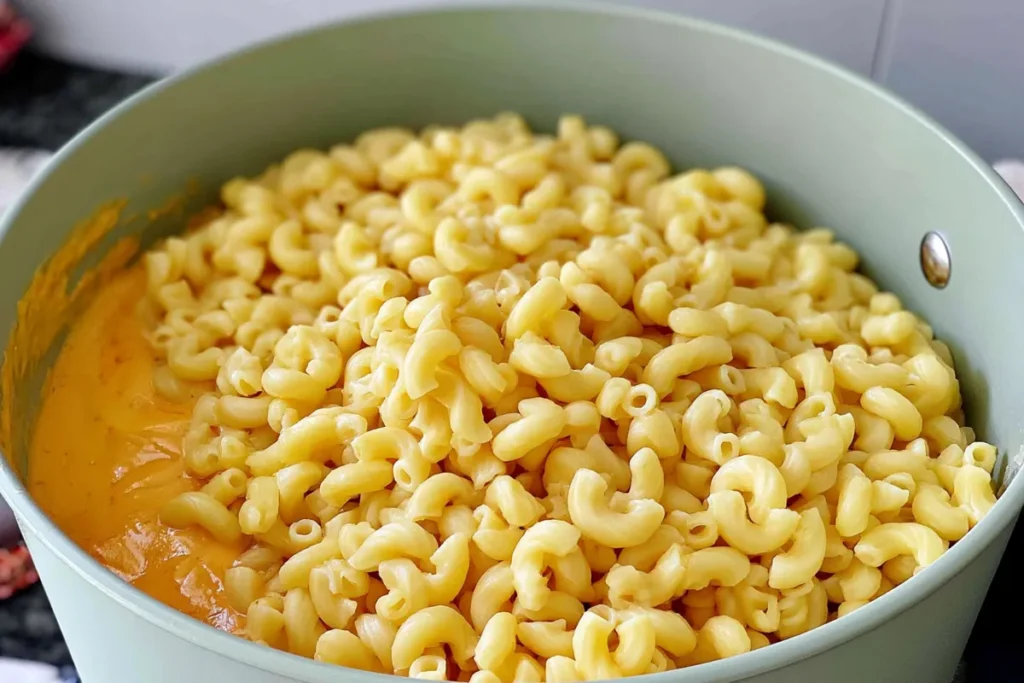
Pour the sauce into the pot used for the pasta and heat it over medium-low. Stir often and avoid a hard boil, which can cause the cheese to separate. Once the sauce is hot and slightly thickened, add the drained pasta and toss until evenly coated.
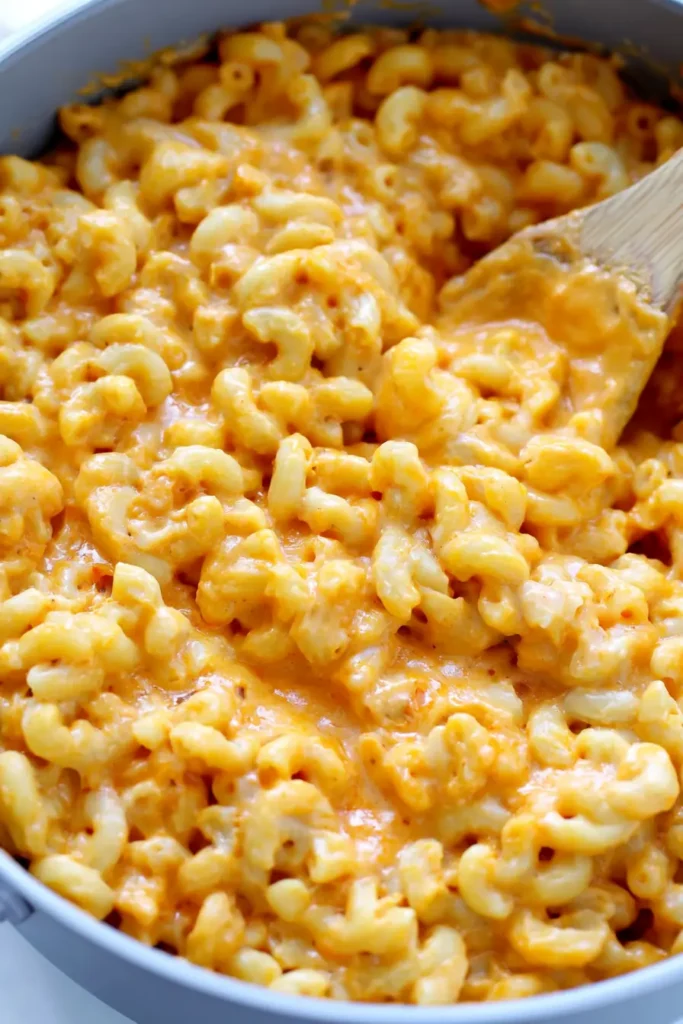
The sauce will continue to tighten as it sits. Add the reserved pasta water a few tablespoons at a time until it looks slightly looser than you think it should. Finish with salt and black pepper, then serve while the sauce is still creamy.
Essential Equipment for a Smooth Sauce
A large baking sheet gives the vegetables enough room to roast instead of steam. You’ll also need a sturdy pasta pot, a colander, measuring cups and spoons, and a wooden spoon or silicone spatula for stirring the sauce.
The blender does the most important work. A high-powered blender creates the smoothest texture, though a food processor can work with a little more scraping and blending time. Since the vegetables are warm, avoid filling the blender to the top. Vent the lid safely and begin at a low speed before increasing it. Worth the extra care.
Chef Tips for Silky Veggie Mac & Cheese
Let the roasted vegetables cool for a few minutes before blending. They should still be warm, just not aggressively steaming. This reduces pressure in the blender and gives you better control over the puree.
Shred the cheddar finely so it disappears into the sauce quickly. Large shreds take longer to melt and may leave streaks if the mixture isn’t blended long enough. I usually blend for a full minute, stop to scrape the sides, then blend again until the sauce looks glossy and uniform.
Keep the heat gentle once the sauce returns to the pot. Medium-low is enough. A strong boil can make the cheese release oil, leaving the sauce grainy around the edges.
Add the reserved pasta water slowly. Start with 2 tablespoons, stir, and check the coating before adding more. The sauce should flow easily around the pasta while still clinging to it. Make it slightly looser than your ideal texture because it thickens as it cools.
Serving Ideas for Veggie Mac & Cheese
Serve the pasta straight from the pot while the sauce is warm and fluid. A crisp green salad works well alongside it because the acidity and fresh texture balance the rich cheddar sauce. Roasted broccoli or green beans are another simple option when you want a fuller dinner.
For a baked finish, transfer the prepared mac and cheese to a casserole dish, scatter breadcrumbs over the top, and bake at 400°F for 8-10 minutes. The pasta is already cooked, so the goal is only to toast the topping. Watch the edges closely; the vegetable-based sauce can dry out if it stays in the oven too long.
A little black pepper at the table is usually all it needs.
Storing and Reheating Leftovers
Store leftover Veggie Mac & Cheese in a covered container in the refrigerator. For the best texture, use it within 3-4 days. The pasta continues absorbing sauce as it sits, so chilled leftovers will look considerably thicker than the freshly made dish.
Reheat a portion over low heat with a small splash of milk or water. Stir every minute or so until the sauce loosens and the pasta is hot through. In the microwave, heat it in short intervals and stir between each one. That works better than one long heating cycle, which can leave the edges dry and the center cool.
For make-ahead cooking, freeze the vegetable cheese sauce separately from the pasta. Let it cool, portion it into a freezer-safe container, and freeze for up to 2 months. Thaw it overnight in the refrigerator, then warm it slowly and whisk in a little milk if the texture looks tight.
Frequently Asked Questions About Veggie Mac & Cheese
Can I make this recipe gluten-free?
Yes. Use a gluten-free short pasta and cook it according to the package directions. Reserve the pasta water before draining, then add it gradually because gluten-free pasta can release a different amount of starch than wheat pasta.
Can I use dairy-free milk and cheese?
Yes. Choose an unsweetened, neutral-tasting plant milk and a dairy-free cheese designed to melt. Oat or soy milk usually gives a fuller texture than thin almond milk.
Which vegetables work best in the sauce?
Sweet potato, cauliflower, red bell pepper, and onion create a balanced sauce with body, mild sweetness, and savory flavor. Butternut squash can replace the sweet potato, and orange bell pepper can replace the red pepper.
Can I freeze the vegetable cheese sauce?
Yes. Cool the sauce completely, store it in a freezer-safe container, and freeze it for up to 2 months. Thaw it overnight in the refrigerator and reheat gently with a splash of milk.
Why did my sauce turn out too thick?
The vegetables may have been especially starchy, or the sauce may have sat too long before serving. Stir in reserved pasta water or milk a few tablespoons at a time until the sauce loosens.
Can I use another pasta shape?
Yes. Shells, cavatappi, rotini, and short penne all hold the sauce well. Choose a shape with ridges, curves, or hollow centers so the sauce has somewhere to cling.
More Ways to Cook Vegetable-Forward Comfort Food
The same approach works beyond macaroni and cheese: roast vegetables until their moisture reduces, then blend them into a sauce, soup, or casserole base. That technique gives you more flavor than boiling and usually requires less added thickener.
Use it where the vegetable naturally suits the dish. Roasted carrots and squash work well in blended soups, while cauliflower can add body to creamy pasta sauces without taking over the flavor. I wouldn’t force vegetables into every comfort-food recipe, though. The goal is a dish that still tastes like itself.
A Family Dinner Worth Adding to the Rotation
The strongest part of this Veggie Mac & Cheese is its balance. The roasted vegetables make the sauce smooth and substantial, while cheddar keeps the flavor familiar.
Roast the vegetables until truly tender, blend longer than you think you need to, and keep the heat low once the sauce reaches the pot. Those three details make the difference. Every recipe I share is an invitation from my kitchen to yours.
Veggie Mac & Cheese
Ingredients
Equipment
Method
- Preheat the oven to 400°F and spread the sweet potato, cauliflower, red bell pepper, and onion on a large rimmed baking sheet.
- Toss the vegetables with the oil and salt, then arrange them in a single layer with space between the pieces.
- Roast the vegetables for 30 to 35 minutes, stirring once if needed, until the sweet potato and cauliflower are very tender.
- While the vegetables roast, cook the elbow macaroni according to the package directions.
- Reserve 1 cup of pasta cooking water, then drain the pasta and set it aside.
- Transfer the roasted vegetables to a blender and add the milk, garlic powder, Dijon mustard, cornstarch, and shredded cheddar cheese.
- Blend until the sauce is completely smooth, stopping to scrape down the sides as needed.
- Pour the sauce into the pot used for the pasta and heat it over medium-low, stirring often until warmed through and slightly thickened.
- Add the cooked pasta and toss until every piece is evenly coated.
- Stir in the reserved pasta water a few tablespoons at a time until the sauce reaches the desired consistency.
- Season with additional salt and black pepper to taste, then serve warm.
Notes
- Shred the cheddar from a block for the smoothest sauce.
- Roast the vegetables until they are fully tender to prevent a grainy texture.
- Keep the sauce over medium-low heat and avoid boiling, which can cause the cheese to separate.
- The sauce thickens as it sits, so make it slightly looser than your preferred serving consistency.
- Store leftovers in the refrigerator for 3 to 4 days and reheat with a splash of milk or water.
- The sauce can be frozen separately from the pasta for up to 2 months.