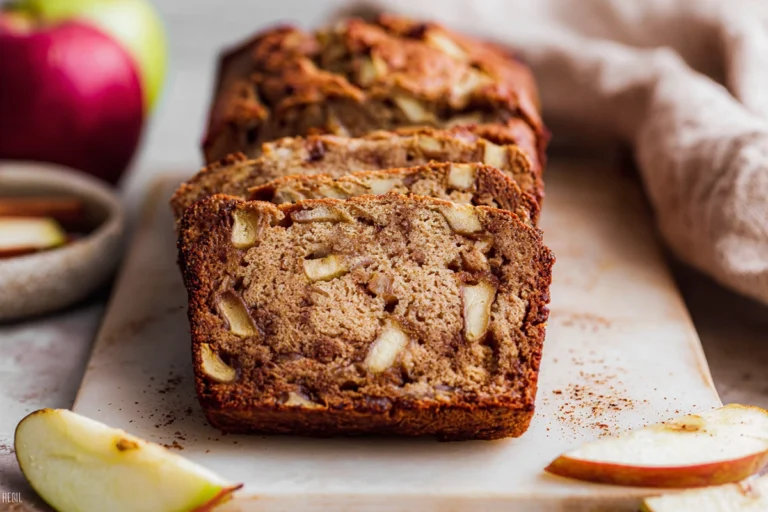

Homemade Chai Scones with a Thick Maple Chai Glaze


Homemade chai scones bring warm cinnamon, cardamom, ginger, and cloves into a tender pastry with crisp golden edges. The dough stays rich without feeling heavy because cold butter creates small pockets between the layers as the scones bake.
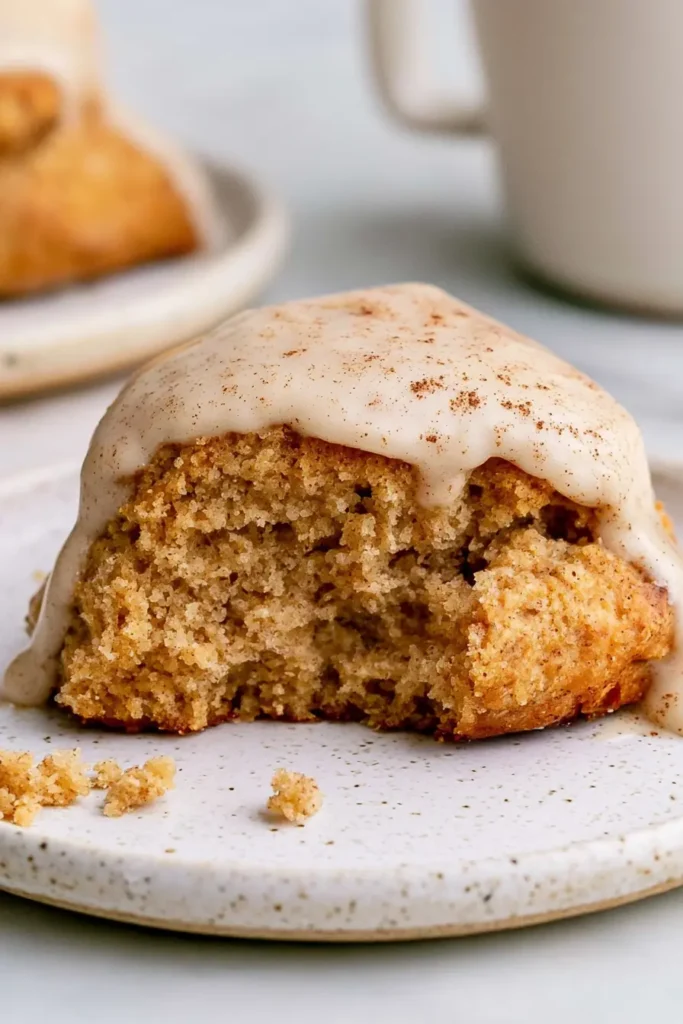
I finish this version with a thick maple chai glaze applied twice. That second coating gives each scone a generous finish that holds its shape once cooled.
Essential Ingredients for Homemade Chai Scones
A good scone starts with ordinary baking ingredients handled with care. All-purpose flour gives the dough enough structure to hold its shape, while baking powder supplies the lift. Check the date on the baking powder before using it. Older leavening can leave the scones squat and dense.
The chai flavor comes from a warm spice blend. Cinnamon usually leads, with cardamom, ginger, cloves, and nutmeg rounding it out. I prefer a blend where no single spice overwhelms the others. Too much clove, in particular, can make the glaze taste sharp.
Heavy cream, one whole egg, and one egg yolk provide moisture and richness. The remaining egg white is useful for brushing the tops before baking. Granulated sugar adds mild sweetness, while kosher salt keeps both the dough and glaze balanced.
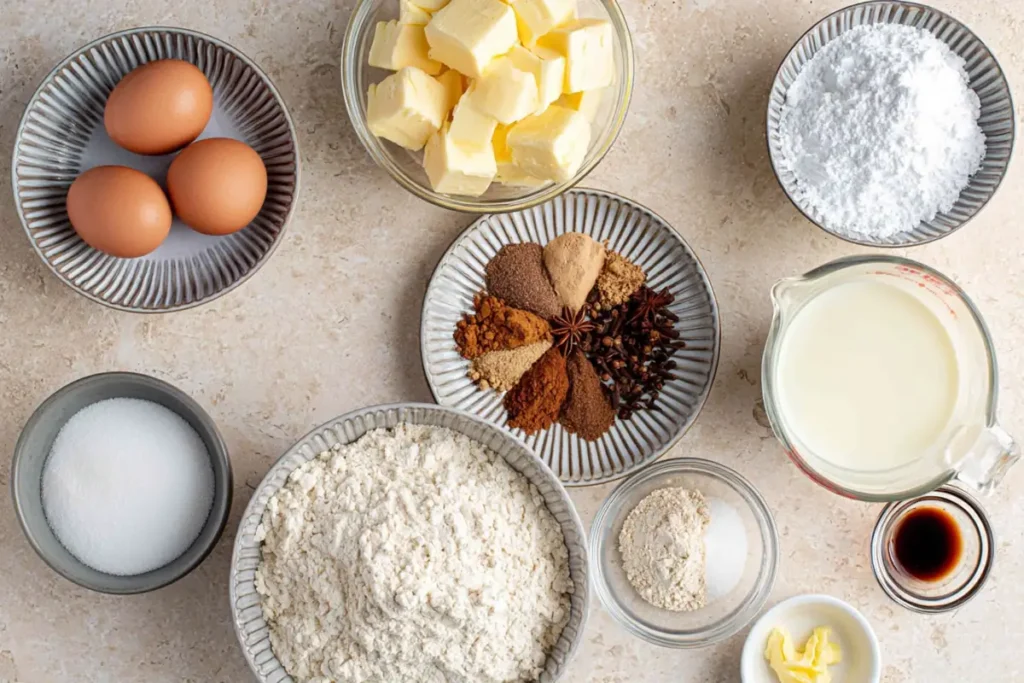
The butter matters most. Use cold unsalted butter, cut it into small squares, and freeze it before mixing. Warm butter disappears into the flour. Cold butter stays visible, which is exactly what you need for flaky layers.
Cold-Butter Techniques for Flaky Chai Scone Dough
Cut the butter before measuring the dry ingredients. I divide each tablespoon into small pieces, place them on a plate, and move the plate directly to the freezer. The pieces don’t need to look machine-perfect, though keeping them fairly even helps them mix into the flour at the same rate.
Measure the heavy cream into a liquid measuring cup, then whisk in 1 large egg and 1 egg yolk. Save the remaining white for later. Set the cream mixture in the freezer while you prepare everything else. It should become very cold without freezing solid.
Add the flour, sugar, baking powder, chai spice, and kosher salt to a food processor. Pulse several times to distribute the leavening and spices. Pull the butter from the freezer and scatter it evenly over the flour.
Pulse about 25 to 30 times. Stop when part of the mixture resembles finely grated Parmesan, with several larger butter pieces still visible. Those uneven pieces are useful. The smaller ones tenderize the dough, while the larger ones create steam pockets in the oven.
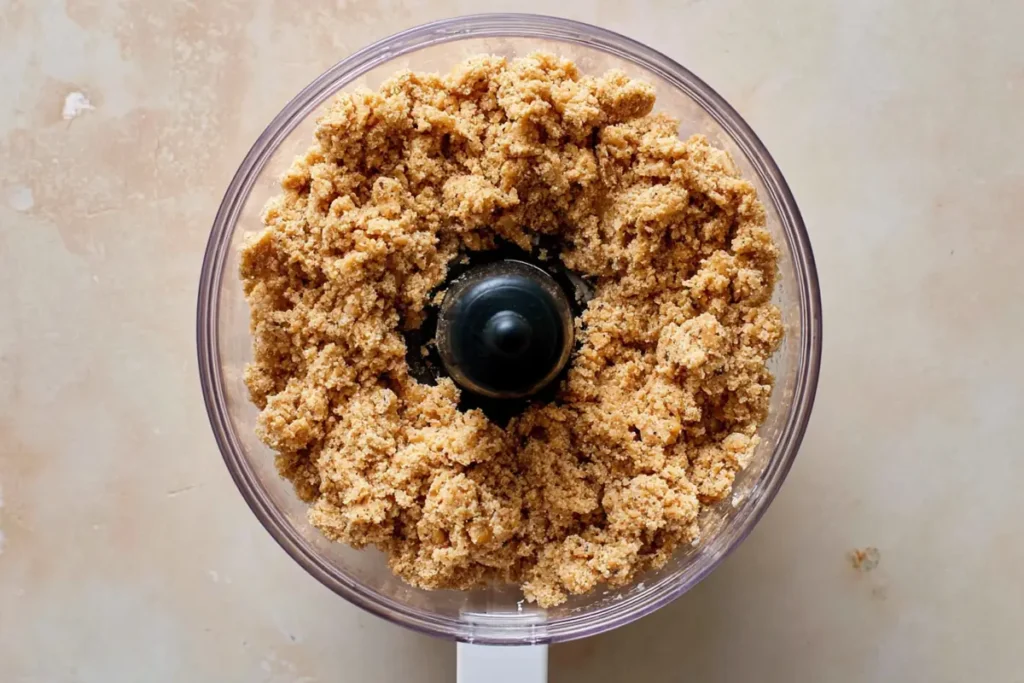
Pour in the chilled cream mixture gradually, pulsing between additions. You may not need all of it. Stop once the dough begins gathering into a rough ball and pulling away from the bowl. It should feel slightly damp, not sticky or loose.
Overmixing is the common problem here. Once the dough holds together, the food processor has done its job. More mixing develops gluten and warms the butter, which can give the scones a firm, bread-like crumb instead of a tender one.
Transfer the dough to a lightly floured surface. Gather it gently into a ball, then press it into a thick disc. A few cracks around the edges are fine. Wrap the disc and freeze it for 30 minutes. Worth the extra step. The rest firms the butter again and makes the dough easier to shape cleanly.
Shaping and Baking Standard or Mini Scones
Set the chilled dough on a lightly floured work surface. For full-sized scones, roll or press it into a circle approximately 1 inch thick. Cut straight down with a sharp knife or bench scraper to make eight wedges. Avoid dragging the blade back and forth because that can press the edges together and restrict the rise.
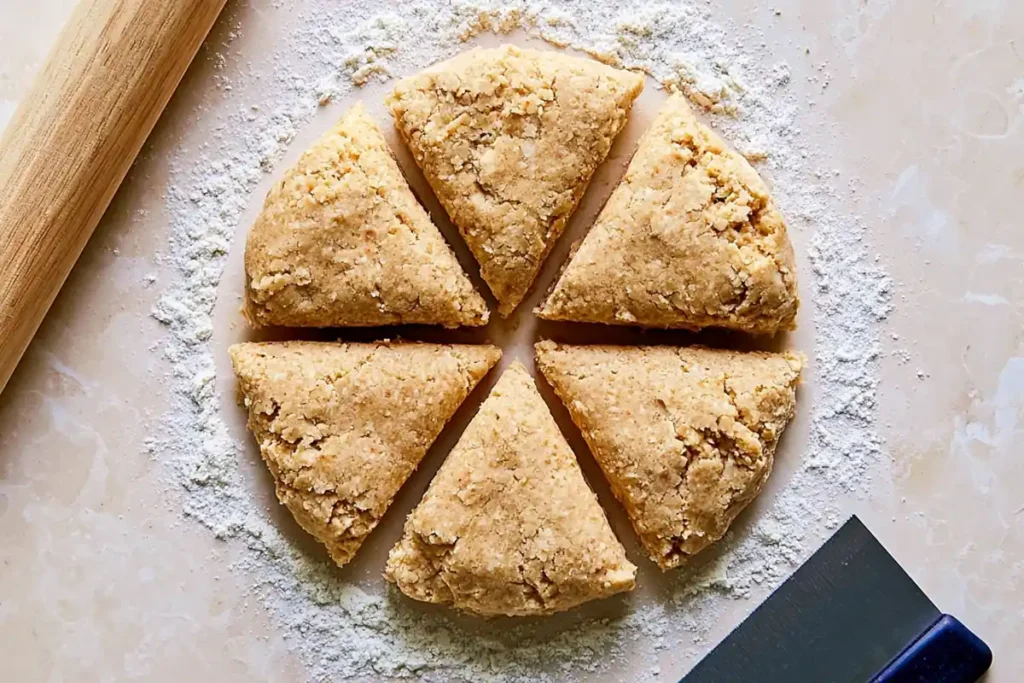
Mini scones need a slightly different shape. Roll the dough into a rectangle about ½ inch thick, then cut it into strips roughly 2 inches wide. Divide those strips into triangles approximately 2 inches wide and 3 inches long. Keep the cuts decisive and handle the pieces as little as possible.
Preheat the oven to 375°F and line a large baking sheet with parchment paper or a silicone baking mat. Arrange the scones with a little space between them. Brush the tops generously with the reserved egg white, taking care not to flood the cut sides.
Bake for 20 to 22 minutes. Look for puffed centers, golden tops, and edges that have begun to crisp. The bottom should feel set when lifted with a thin spatula. Mini scones can bake within the same general window, though I start checking them several minutes early because smaller pieces can brown faster.
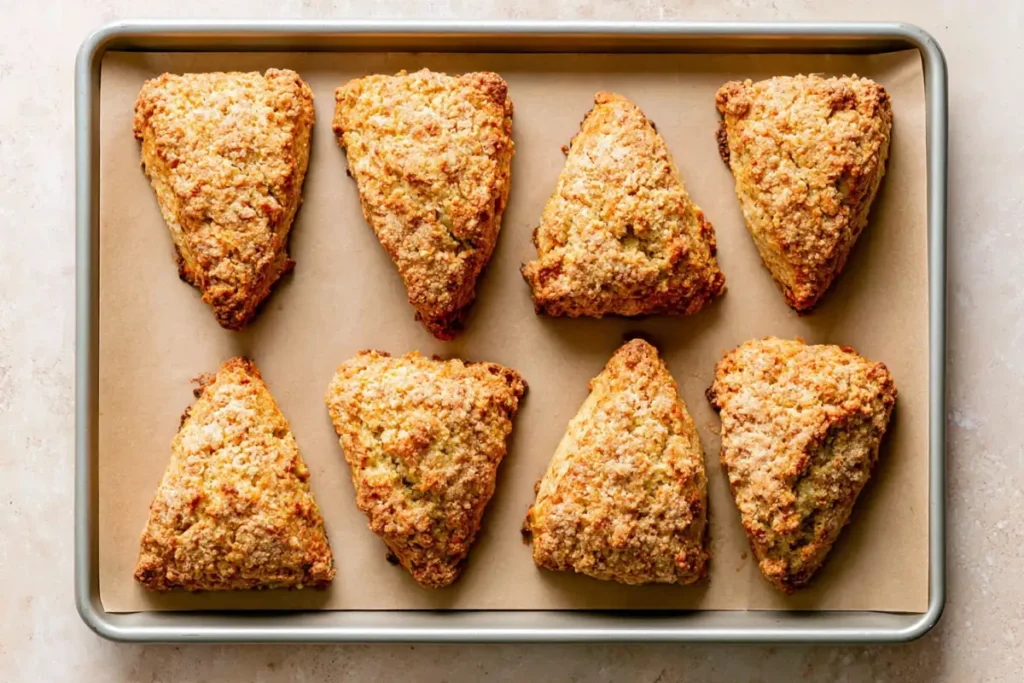
Let the baked scones cool before adding the glaze. Glazing them while hot makes the coating slide off and soak into the crumb. A slightly warm scone is fine, but the surface shouldn’t feel hot to the touch.
Maple Chai Glaze and the Double-Coating Method
While the scones bake, whisk together powdered sugar, chai spice, vanilla extract, heavy cream, maple syrup, and a small pinch of salt. Start with less cream than you think you need. A thick glaze is easier to loosen than a thin one is to repair.
The finished glaze should fall from the whisk in a slow ribbon and sit briefly on the surface before settling. If it runs like milk, add more powdered sugar. If it holds in stiff clumps, add heavy cream a teaspoon at a time.
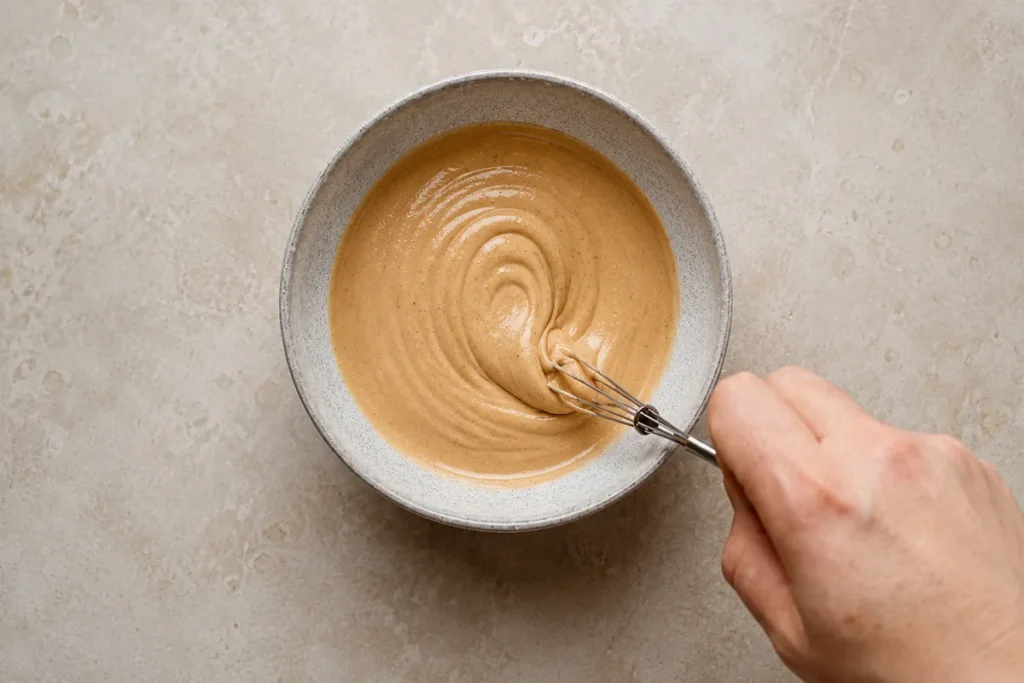
Once the scones have cooled, dip the top of each one directly into the bowl. Lift it slowly and allow the excess glaze to fall back into the bowl. Set the scones upright and let the first layer settle for several minutes.
Dip them a second time for a thicker coating. This is how I prefer to finish them at home. The first layer fills the rough surface, while the second creates a smoother, more generous glaze.
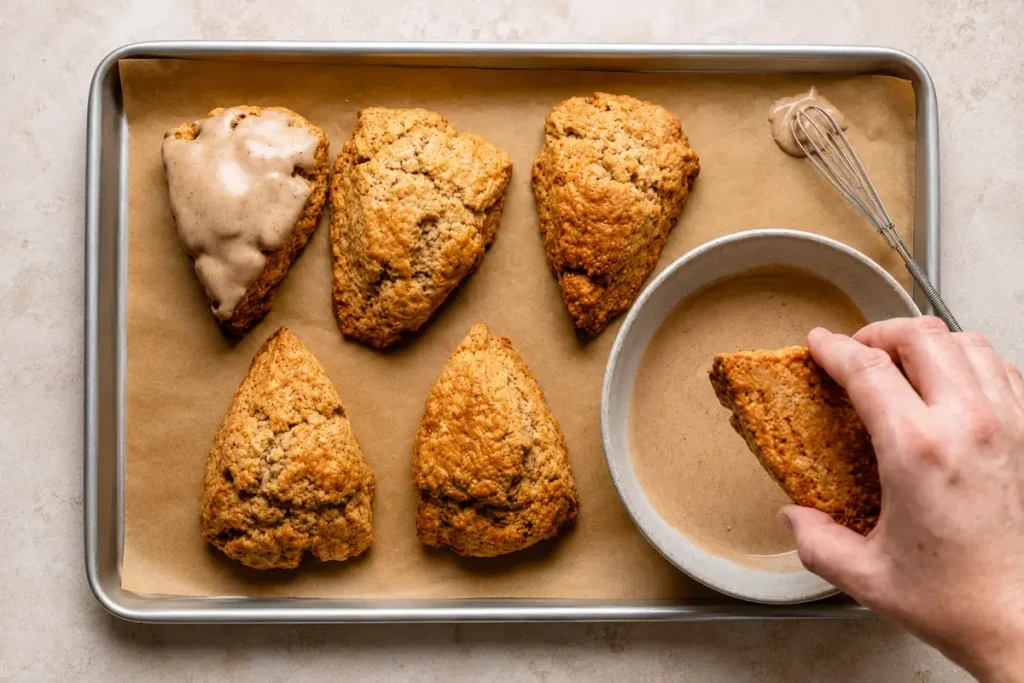
Leave the coated scones undisturbed for about 10 minutes. The glaze should become lightly set on top while remaining soft underneath.
Serving Homemade Chai Scones with Coffee or Tea
These scones are at their best once the glaze has set and the centers are still tender. Serve the full-sized wedges with hot coffee, black tea, or a milky chai. The spices feel warmer beside a hot drink, and the maple glaze softens the stronger notes of cardamom and ginger.

Mini scones work well for brunch trays and holiday breakfasts because guests can take one without committing to a large portion. Arrange them in a single layer so the glaze stays neat. I prefer serving them at room temperature rather than chilled, since cold butter-based pastries can taste firmer and less aromatic.

A Warm-Spiced Bake for Your Next Brunch
Keep the ingredients cold, stop mixing as soon as the dough comes together, and give the shaped dough time to rest. Those three details do more for the texture than complicated pastry techniques.

Once the maple chai glaze has set, bring the scones to the table with a fresh pot of coffee or tea. Every recipe I share is an invitation from my kitchen to yours, and this one is especially welcome on a cool morning.
Homemade Chai Scones with Maple Chai Glaze
Ingredients
Equipment
Method
- Working quickly, dice the cold butter into small, even cubes, place it on a plate, and freeze it while preparing the remaining ingredients.
- Measure the heavy cream into a 2-cup liquid measuring cup, whisk in 1 whole egg and 1 egg yolk, reserve the remaining egg white for brushing, and place the cream mixture in the freezer to chill.
- Add the flour, granulated sugar, baking powder, chai spice blend, and kosher salt to a food processor and pulse several times to combine.
- Add the frozen butter and pulse 25 to 30 times, stopping when some butter pieces are finely coated with flour and several larger pieces remain visible.
- Gradually pulse in the chilled cream and egg mixture until the dough begins forming a rough ball and pulling away from the sides of the food processor; do not add more liquid than needed.
- Transfer the dough to a lightly floured surface, gather it gently into a ball, press it into a thick disc, wrap it in plastic, and freeze it for 30 minutes.
- Preheat the oven to 375°F and line a large baking sheet with parchment paper or a silicone baking mat.
- For full-sized scones, roll or press the chilled dough into a 1-inch-thick circle and cut it into 8 wedges with a sharp knife or bench scraper.
- For mini scones, roll the dough into a 1/2-inch-thick rectangle, cut it into 2-inch-wide strips, and divide each strip into triangles about 2 inches wide and 3 inches long.
- Arrange the scones on the prepared baking sheet with space between them and brush the tops generously with the reserved egg white.
- Bake for 20 to 22 minutes, checking mini scones a few minutes early, until the tops are golden, the centers are puffed, and the edges are lightly crisp.
- Transfer the baked scones to a wire rack and allow them to cool before glazing.
- While the scones bake, whisk together the powdered sugar, chai spice blend, vanilla extract, heavy cream, maple syrup, and kosher salt until a thick glaze forms.
- Adjust the glaze with additional powdered sugar if it is too thin or add heavy cream 1 teaspoon at a time if it is too thick.
- Dip the top of each cooled scone into the glaze, allow the first coating to settle for several minutes, and dip the scones a second time for a thicker finish.
- Let the glaze set for about 10 minutes before serving the scones with coffee or tea.
Notes
- Keep the butter, cream, and egg mixture very cold so the butter remains visible in the dough and creates flaky layers as the scones bake.
- Stop processing the dough as soon as it begins to gather into a rough ball; overmixing can make the crumb firm and bread-like.
- You may not need all of the cream mixture, so add it gradually and stop when the dough is slightly damp but not sticky.
- Allow the scones to cool before glazing so the coating stays thick instead of melting into the pastry.
- For the thickest glaze, dip each scone twice and let the first coating settle briefly before adding the second.