
Cabbage Roll Soup: Hearty One-Pot Comfort Food

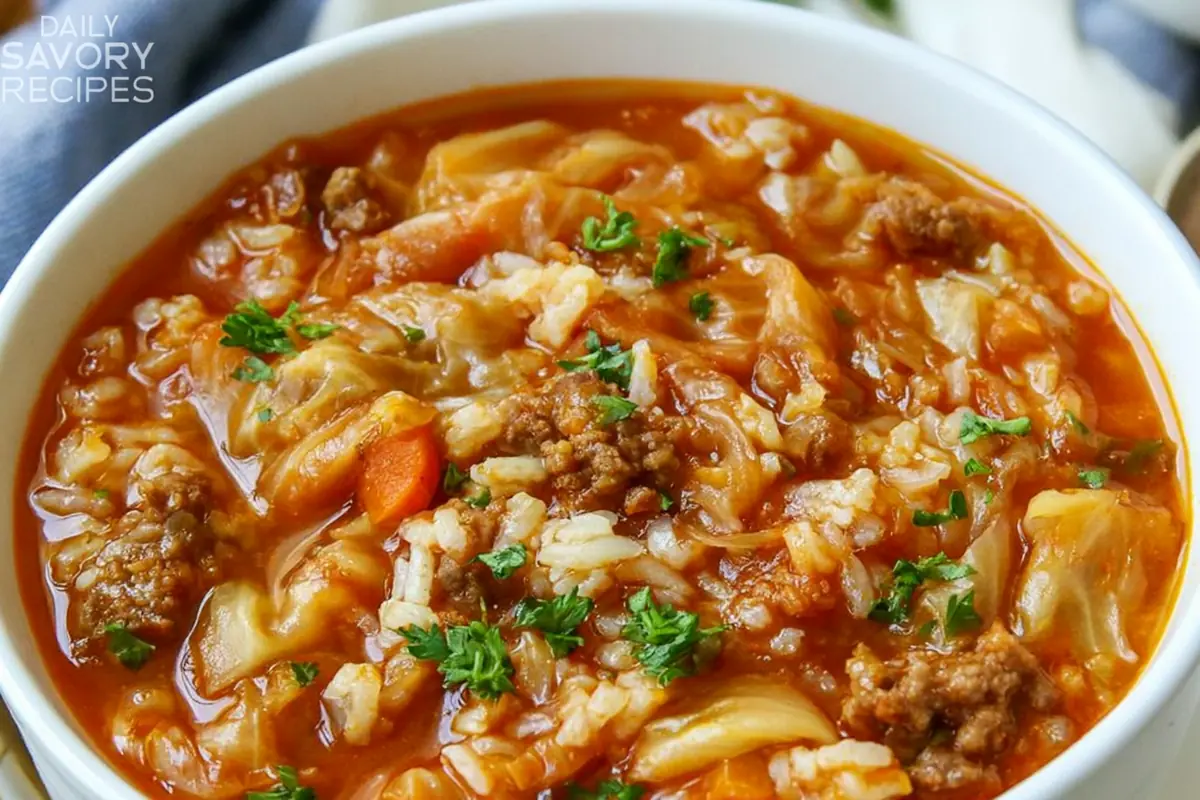
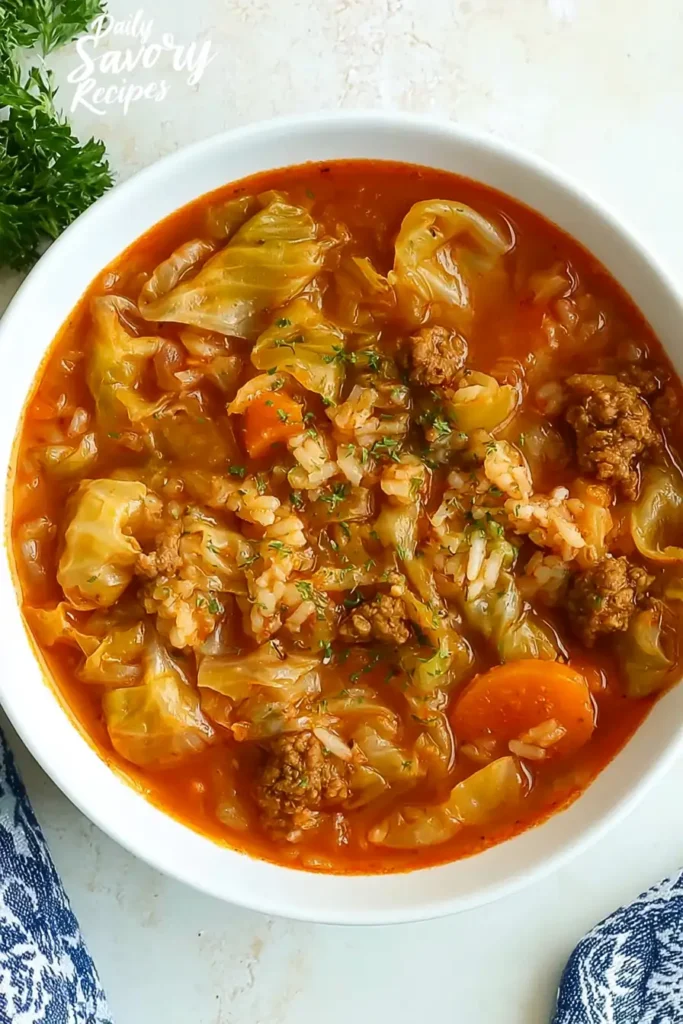
Cabbage Roll Soup gives you the familiar flavor of stuffed cabbage in a much simpler form. Ground beef, tender cabbage, carrots, rice, and tomato broth simmer together in one pot until the soup is rich, filling, and ready for the table.
I add a small amount of brown sugar to soften the sharp edge of the tomato sauce. It doesn’t make the broth sweet. It just brings the beef, cabbage, and tomatoes into better balance.
The Ingredients That Give Cabbage Roll Soup Its Classic Flavor
Start with 1 pound of lean ground beef. It gives the broth enough richness without leaving a heavy layer of fat on top. A little oil helps it brown evenly, especially when using very lean beef.
The vegetables do most of the supporting work. Yellow onion and garlic build the savory base, while 4 cups of chopped green cabbage soften into the broth without disappearing. Carrots add mild sweetness and a firmer bite.
Use white rice, not cooked rice, so it absorbs the tomato and beef flavors as the soup simmers. A bay leaf adds a quiet herbal note, and 3 tablespoons of brown sugar round out the tomato sauce. That amount may sound noticeable, but spread across six servings, it tastes balanced rather than sugary.
Fresh parsley goes in at the end. Add it after removing the bay leaf so its color and clean flavor stay fresh.
Choosing the Right Pot for Even Cooking
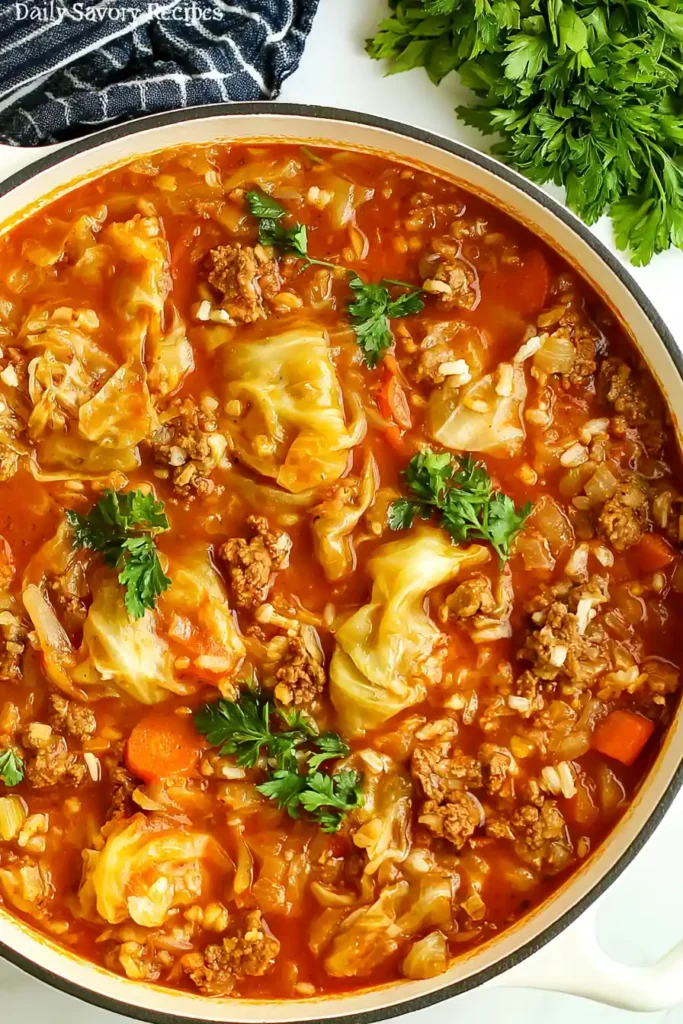
A Dutch oven works especially well because its heavy base holds steady heat while the beef browns and the soup simmers. A large, heavy-bottomed soup pot is also fine.
Choose a pot that holds at least 5 to 6 quarts. The cabbage takes up a surprising amount of room before it softens, and an undersized pot makes stirring awkward.
Avoid thin cookware if possible. It can create hot spots that cause the rice to stick near the bottom. Once the soup reaches a simmer, lower the heat enough to maintain small, steady bubbles rather than a hard boil.
How to Make Cabbage Roll Soup on the Stovetop
Heat 2 teaspoons of oil over medium-high heat, then add the ground beef in an even layer. Season it with salt and pepper as it cooks. Let the beef sit for a minute before breaking it apart; that brief contact with the hot pot helps it develop better color instead of steaming.
Cook until no pink remains and a few browned bits form on the bottom. Those bits are useful. They dissolve into the broth later and give the soup a deeper beef flavor.
Add the diced onion and minced garlic. Cook for 2 to 3 minutes, stirring often, until the onion softens around the edges. Garlic can turn bitter when it gets too dark, so don’t leave the pot unattended at this stage.
Stir in the chopped cabbage, carrots, tomato sauce, beef broth, white rice, bay leaf, and brown sugar. The pot may look crowded at first. That’s normal. The cabbage quickly loses volume as it heats.
Scrape the bottom of the pot while stirring so the browned beef residue mixes into the liquid. Bring the soup to a gentle simmer, then reduce the heat to medium-low. Cook for about 25 minutes, stirring once or twice so the rice doesn’t settle in one spot.
Check the rice before removing the soup from the heat. It should be tender through the center, and the cabbage should feel soft while still holding some shape. If the rice needs more time, simmer for another 3 to 5 minutes and add a splash of broth if the soup has thickened too much.
Remove the bay leaf before serving. Finish with chopped parsley and taste the broth again for salt and pepper. This final check matters because rice absorbs seasoning as it cooks.
Practical Ingredient Substitutions and Dietary Variations
Ground beef with a lean-to-fat ratio around 85/15 or 90/10 works well. Extra-lean beef can also be used, though the broth may taste a little lighter. Ground turkey is a reasonable substitute, but it changes the character of the soup and usually needs a touch more salt.
Long-grain white rice is the most predictable choice here. Brown rice takes considerably longer and may require extra broth, so it shouldn’t be swapped in without adjusting the cooking time. Instant rice also cooks too quickly for this method and can become soft before the cabbage is ready.
Vegetable oil can be replaced with another neutral oil. For a lower-sodium version, use unsalted or low-sodium beef broth and season the finished soup gradually.
The brown sugar can be reduced to 1 or 2 tablespoons when using a sweeter tomato sauce. Taste the sauce first. That small decision usually works better than removing the sugar automatically.
Simple Sides to Serve with Cabbage Roll Soup
This soup is filling enough to stand on its own, so the best sides are simple. I usually serve it with crusty bread or warm dinner rolls to soak up the tomato-rich broth.
A lightly dressed green salad also works well when you want contrast. Keep the dressing sharp and clean—lemon, vinegar, or mustard-based—rather than creamy. The soup already has plenty of body from the beef and rice.
For a little extra freshness, add more chopped parsley at the table. A spoonful of sour cream is also a good option if you enjoy a softer, slightly tangy finish.
Storing, Freezing, and Reheating Leftovers
Let the soup cool before transferring it to airtight containers. Refrigerated Cabbage Roll Soup keeps well for about 3 to 4 days.
The rice will continue absorbing broth as it sits, so the soup usually thickens overnight. When reheating, add a small splash of beef broth or water until the consistency loosens. Warm it gently over medium-low heat, stirring from the bottom so the rice heats evenly.
For freezing, portion the cooled soup into freezer-safe containers and leave a little space at the top for expansion. It can be frozen for up to 3 months. Thaw it overnight in the refrigerator, then reheat on the stovetop.
The texture of the rice may soften slightly after freezing. It still tastes good, but freshly made soup has the best balance between tender cabbage and distinct grains of rice.
A Cozy One-Pot Dinner Worth Repeating
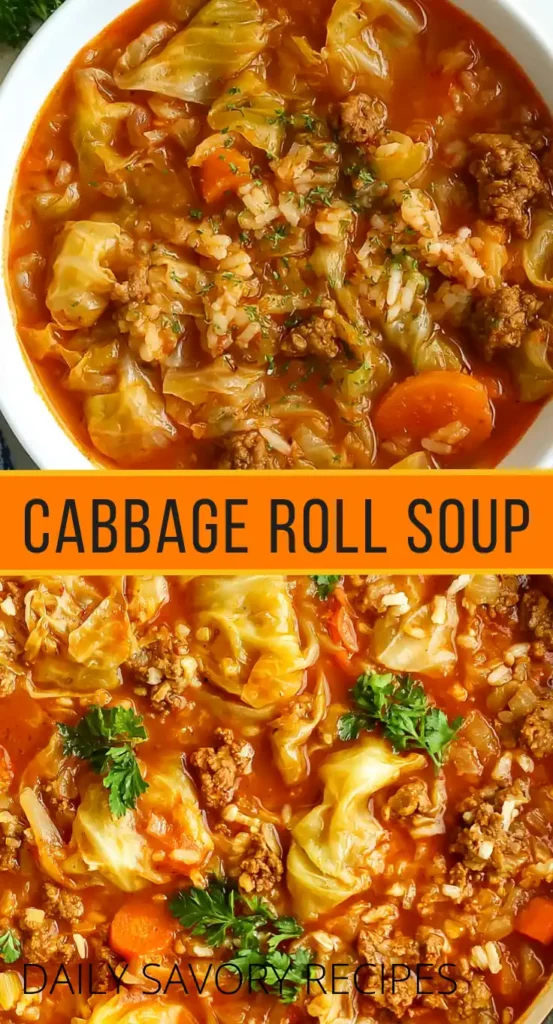
Cabbage Roll Soup is the kind of meal that earns a place in the regular dinner rotation. It delivers the beefy, tomato-rich flavor of traditional cabbage rolls without the extra work of filling and rolling leaves.
Keep the simmer gentle, check the rice near the end, and adjust the broth as needed. That’s really the key. Every recipe I share is an invitation from my kitchen to yours, and this one is built for an easy, comforting meal at home.
Cabbage Roll Soup
Ingredients
Equipment
Method
- Heat the vegetable oil in a Dutch oven or large soup pot over medium-high heat.
- Add the ground beef, season it with salt and black pepper, and let it sit briefly against the hot pot before breaking it into crumbles.
- Cook the beef until no pink remains and a few browned bits form on the bottom of the pot.
- Add the diced onion and minced garlic, then cook for 2 to 3 minutes, stirring often, until the onion begins to soften.
- Stir in the chopped cabbage, carrots, tomato sauce, beef broth, uncooked white rice, bay leaf, and brown sugar.
- Scrape the bottom of the pot while stirring so the browned beef residue dissolves into the broth.
- Bring the soup to a gentle simmer, then reduce the heat to medium-low and cook for about 25 minutes, stirring once or twice, until the rice and cabbage are tender.
- If the rice needs more time, simmer for another 3 to 5 minutes and add a splash of broth if the soup becomes too thick.
- Remove the bay leaf, stir in the chopped parsley, and adjust the salt and black pepper before serving.
Notes
- Use a 5- to 6-quart pot so the cabbage has enough room before it softens.
- Keep the soup at a gentle simmer rather than a hard boil to help the rice cook evenly without sticking.
- The rice continues to absorb broth during storage, so add a small splash of beef broth or water when reheating.
- Store cooled leftovers in an airtight container in the refrigerator for 3 to 4 days or freeze them for up to 3 months.
- Reduce the brown sugar to 1 or 2 tablespoons when using a naturally sweet tomato sauce.