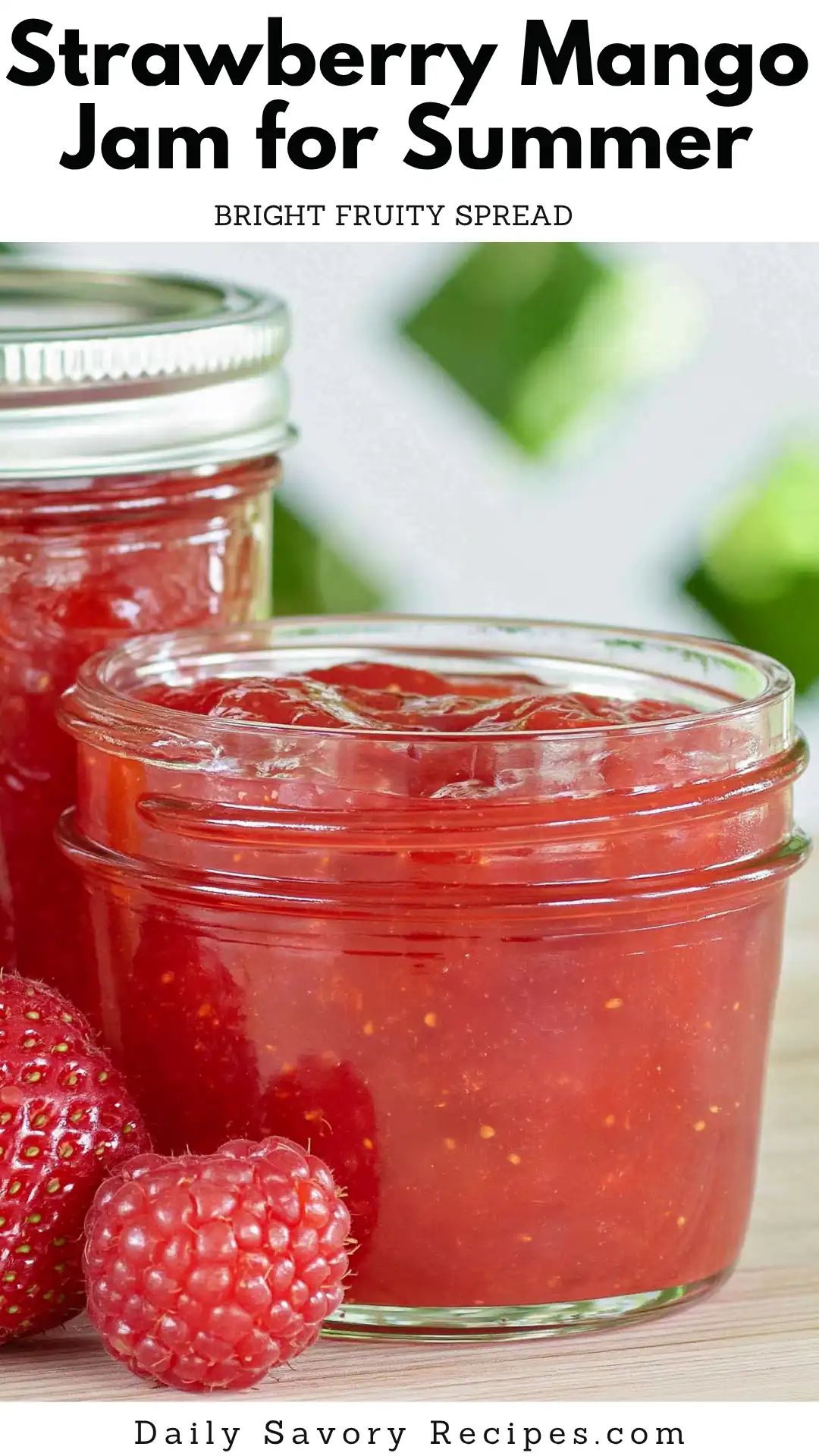

Strawberry Mango Jam That Captures Peak Summer Flavor

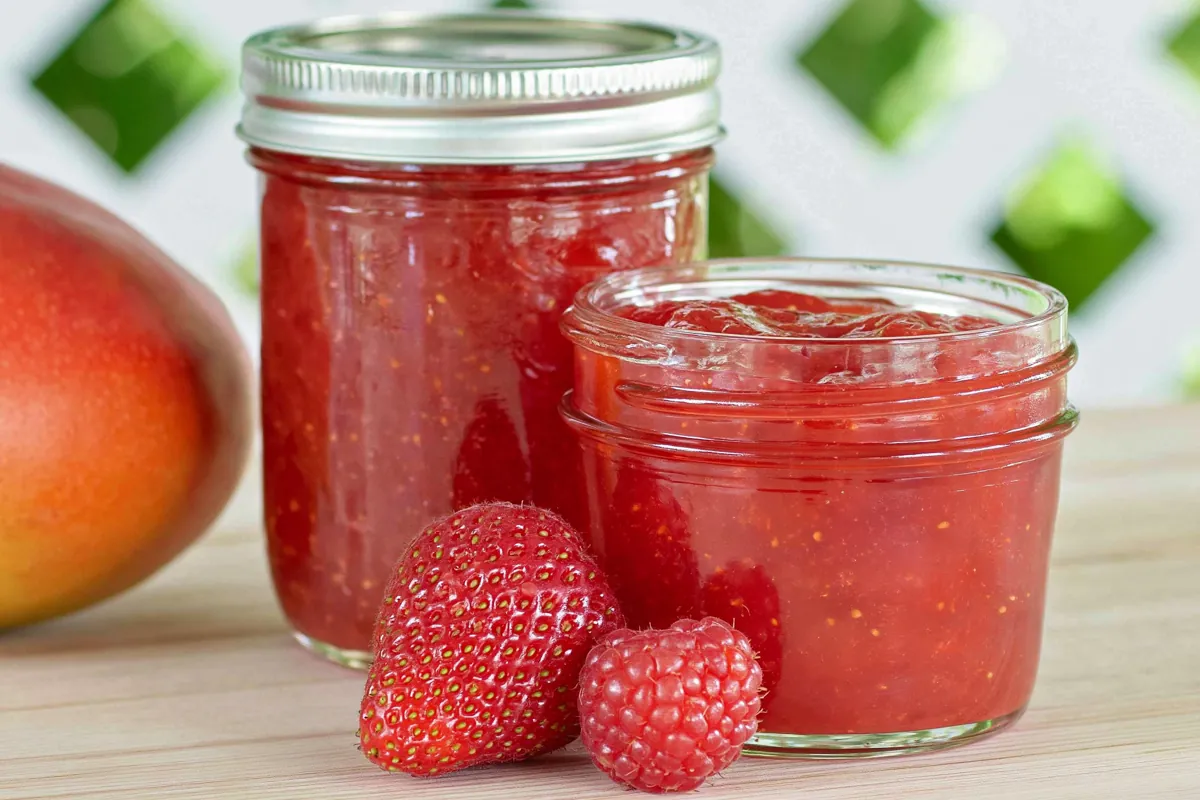
Strawberry Mango Jam is one of those summer preserves that tastes bright before it even reaches the jar. The strawberries bring soft sweetness and color, while the mango adds a round tropical flavor that makes the jam feel a little different from the usual berry batch.
I like this version because it stays practical. You use powdered pectin, fresh lemon juice, and enough sugar to help the jam set properly without guessing. The goal is a spreadable jam with small pieces of fruit, not a stiff candy-like preserve.
Choosing Strawberries and Mangos for Better Strawberry Mango Jam
Fruit matters here more than almost anything else. A jam can only taste as good as the fruit you put into the pot, especially when the ingredient list is short.
For the strawberries, look for berries that smell sweet and have a deep red color. They should feel tender, not mushy. If the white center is large or the berries smell flat, the jam will need more help from the sugar and still may not taste as fresh.
For the mangos, I prefer fruit that gives slightly when pressed near the stem. It should smell fragrant, almost floral. Rock-hard mango will not break down well, and overripe mango can make the texture heavy. You want ripe fruit that still has enough body to hold a little character after boiling.
This balance is what gives Strawberry Mango Jam its layered flavor. Sweet first, then tangy, then that soft mango finish.
Essential Ingredients and the Role of Pectin
This recipe keeps the ingredient list focused: 3 cups strawberries, 3 cups mango, 7 cups sugar, 4 tablespoons lemon juice, 1 package powdered pectin, and a small pat of butter if you want to reduce foaming.
The sugar amount may look high, but in traditional jam-making, sugar does more than sweeten. It helps the fruit set, supports preservation, and gives the jam that glossy spoonable texture. Cutting it heavily can affect how the pectin works, so I would not adjust it unless you are using a pectin made specifically for low-sugar jam.
The lemon juice brings acidity, which helps brighten the flavor and supports the set. Powdered pectin gives this jam structure without needing a long cooking time. That matters with strawberries and mango because both can lose their fresh taste if they sit on high heat too long.
The butter is optional. I use just a small amount when I want less foam at the top of the pot. Not much. Just enough to help.
Preparing the Fruit for a Spreadable Texture
The fruit should be mashed before it goes into the pot. Use a food processor for speed or a potato masher if you want more control. Either way, aim for small pieces rather than a smooth purée.
That little bit of texture makes the jam feel homemade in the best way. Too many large pieces can make it hard to spread, especially once the jam sets in the jar. On the other hand, a completely smooth mixture can feel more like fruit sauce than jam.
I usually pulse the mango first because it can be fibrous, then add the strawberries and mash until everything looks even. You should still see tiny bits of fruit. That’s the sweet spot.
Measure the fruit after mashing. For this recipe, you need 3 cups of mango and 3 cups of strawberries. Accurate fruit measurement helps the pectin and sugar work the way they should.
Cooking Strawberry Mango Jam Without Losing Fresh Flavor
Start with a large pot. Jam rises quickly when it boils, and a crowded pot makes stirring harder than it needs to be. Add the mashed mango, mashed strawberries, powdered pectin, and lemon juice, then place the pot over high heat.
Bring the mixture to a rolling boil. That means the bubbling continues even when you stir. A few bubbles around the edge are not enough yet. You want the whole surface moving.
Once the fruit mixture reaches that rolling boil, add the butter if you are using it. Stir until it melts fully into the jam. It should disappear into the fruit, not sit on top.
Add the 7 cups of sugar and keep the heat high. Stir often, scraping the bottom of the pot so the fruit does not scorch. The mixture needs to return to a hard boil after the sugar goes in. When it does, boil it hard for 1–2 minutes. This short, strong boil activates the pectin while keeping the fruit flavor from tasting cooked down.
Turn off the heat and skim away extra foam with a spoon. Foam is not dangerous, but it can make the finished jars look cloudy on top. Worth the extra minute.
Water-Bath Canning and Refrigerator Storage Options
If you plan to water-bath can this Strawberry Mango Jam, prepare the jars before the fruit starts cooking. I like to get the mason jars into hot water first so they are clean, hot, and ready when the jam finishes. Hot jam going into hot jars is a safer, smoother workflow than rushing around with sticky fruit bubbling on the stove.
Fill the prepared jars once the jam has cooled slightly but is still hot and loose enough to pour. Leave appropriate headspace according to your jar and lid guidance, wipe the rims clean, and secure the lids without overtightening. Sticky rims can interfere with sealing, so don’t skip that wipe.
For canning, process the filled jars in a water bath for 15 minutes, adjusting the time for your altitude. Higher elevation affects boiling temperature, so processing time may need to increase depending on where you live. Follow tested local canning guidance for that adjustment.
If you are not canning, let the jam cool to room temperature, then refrigerate it. In the fridge, this batch is best used within 2 weeks. That version is simple and useful when you want a quick summer preserve without setting up a full canning session.
Serving and Storing Strawberry Mango Jam
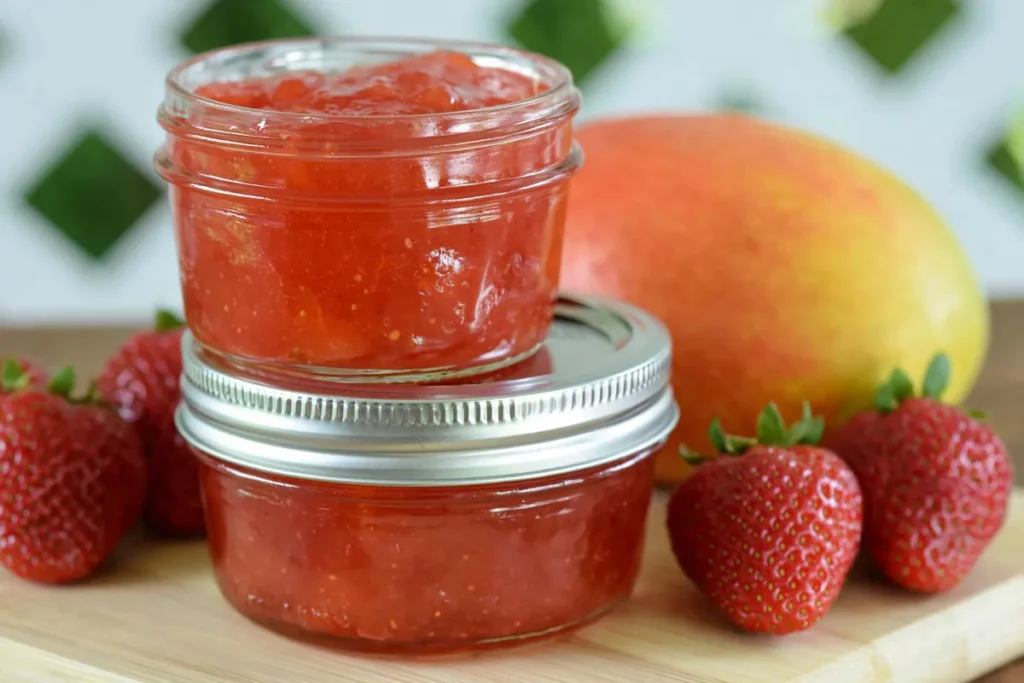
Once the jam sets, the flavor becomes a little more rounded. The strawberry hits first, bright and familiar, then the mango gives it a softer tropical finish. It works especially well on toast, warm biscuits, fresh bread, or spooned over plain yogurt.
Keep refrigerated jam covered and cold, and use a clean spoon each time. That small habit helps the jam stay fresh during its 2-week window. For water-bath canned jars, store sealed jars in a cool, dry place and check that the seal is firm before using.
Common Jam Texture Problems and How to Avoid Them
Thin jam usually comes from measurement problems, under-boiling, or changing the sugar too much. Measure the mashed fruit carefully: 3 cups mango and 3 cups strawberries. Then make sure the fruit reaches a true rolling boil before the sugar goes in.
Scorching is another issue to watch. Once the sugar is added, the jam can catch on the bottom of the pot if it sits too long. Stir often and keep the heat strong, especially during the final 1–2 minute hard boil.
Foam is mostly a visual problem. The optional butter helps reduce it, and skimming after boiling cleans up the finish.
One Batch Worth Saving for Summer
A good jar of Strawberry Mango Jam should taste like ripe fruit, not just sugar. Keep the fruit pieces small, boil with purpose, and don’t rush the jar stage.
This is the kind of preserve I enjoy making when summer fruit is at its best. Every recipe I share is an invitation from my kitchen to yours, and this one belongs on the breakfast table.
Strawberry Mango Jam
Ingredients
Method
- If water-bath canning, prepare mason jars before cooking by submerging them in hot water to sterilize while you make the jam.
- Mash the strawberries and mangos with a food processor or potato masher until the fruit is in small chunks. Measure 3 cups mashed mango and 3 cups mashed strawberries.
- Add the mashed mango, mashed strawberries, powdered pectin, and lemon juice to a large pot. Place over high heat and bring the fruit mixture to a rolling boil.
- Add the optional pat of butter and stir until melted and fully incorporated into the fruit mixture.
- Add the sugar and continue cooking over high heat. Stir often to prevent scorching until the jam reaches a hard boil.
- Boil the jam hard for 1 to 2 minutes, then turn off the heat.
- Skim off excess foam from the top of the jam with a spoon.
- Let the jam cool slightly, then ladle it into prepared jars.
- For canning, process the filled jars in a water bath for 15 minutes, adjusting for altitude as needed.
- For refrigerator jam, let the jars cool to room temperature, then refrigerate and use within 2 weeks.
Notes
- Use ripe but not mushy fruit for the best flavor and texture.
- Measure the fruit after mashing so the pectin and sugar ratio stays accurate.
- Do not reduce the sugar unless using pectin made specifically for low-sugar jam.
- Use a large pot because jam rises quickly as it boils.
- The butter is optional but helps reduce foam on top of the jam.