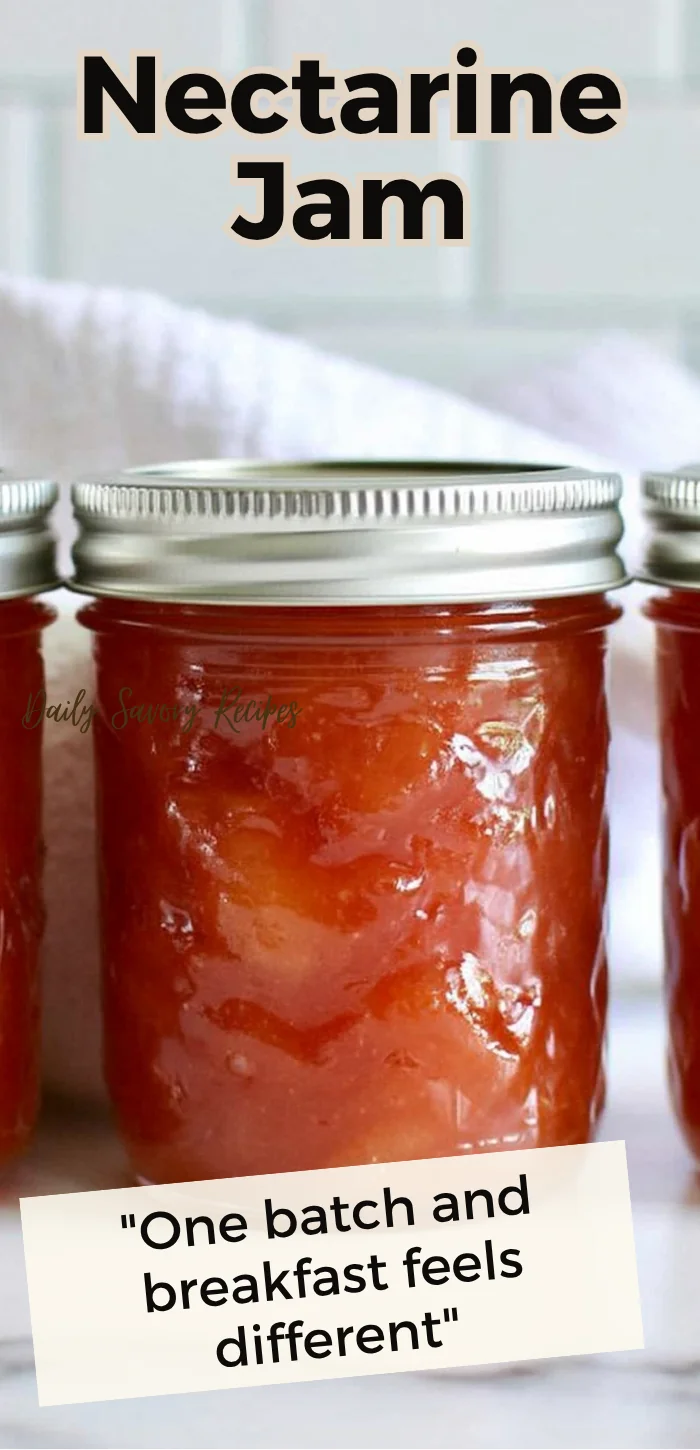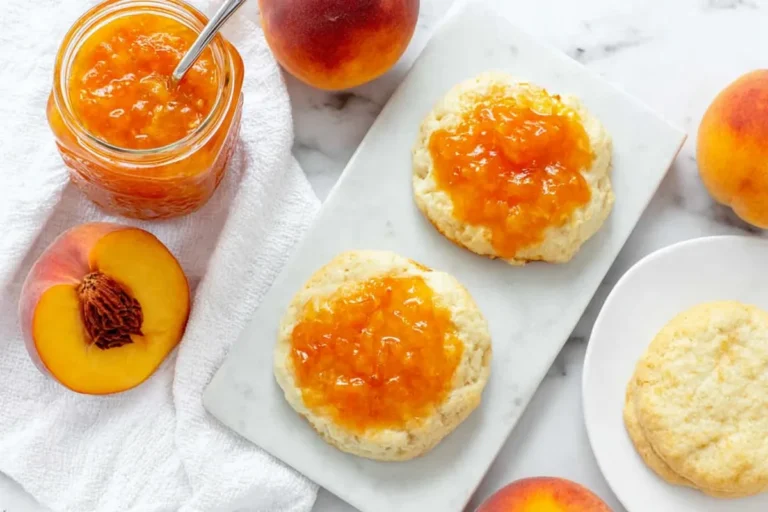

Nectarine Jam Without Pectin (With Canning and Storage Tips)

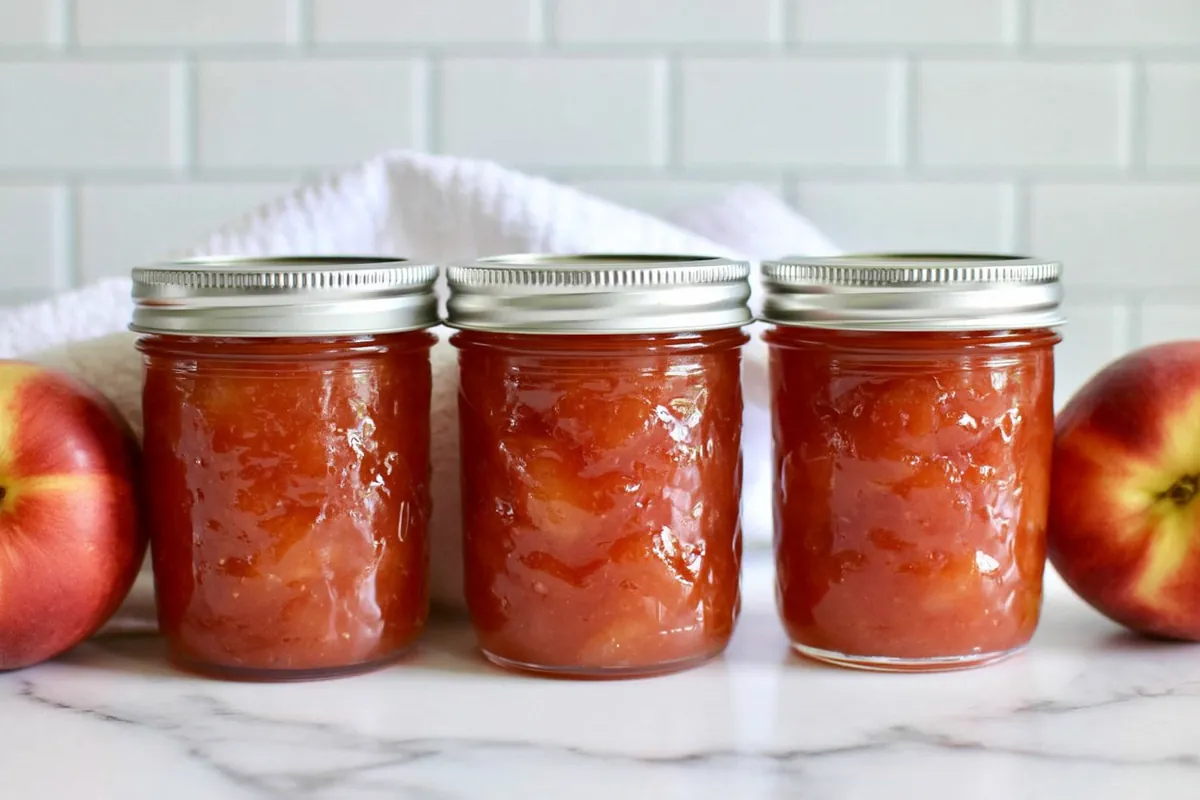
Nectarine jam is one of those recipes that reminds me how little fruit actually needs when it’s in season. This version relies on ripe nectarines, lemon juice, and time—not boxed pectin—to create a jam that sets naturally and keeps the flavor clear and bright.
I come back to this method because it skips peeling and uses maceration to do part of the work for you. The fruit softens in its own juices before it ever reaches the stove.
You’ll learn how to build flavor, recognize the set point, and preserve the finished jars with confidence.
Why Nectarine Jam Earns a Place in Summer Preserving
Nectarines often get overlooked for jam because peaches tend to get more attention, but I actually prefer nectarines for this style of preserve. Their skins soften nicely during cooking, and keeping them on adds color and a little extra body without extra prep.
Another reason this recipe works well at home: there’s no added pectin. Sugar and time do the heavy lifting. The overnight maceration isn’t just waiting around—it draws out liquid, starts dissolving the sugar, and helps the fruit cook evenly later.
Good jam shouldn’t taste like sweetened gel. It should still taste like fruit.
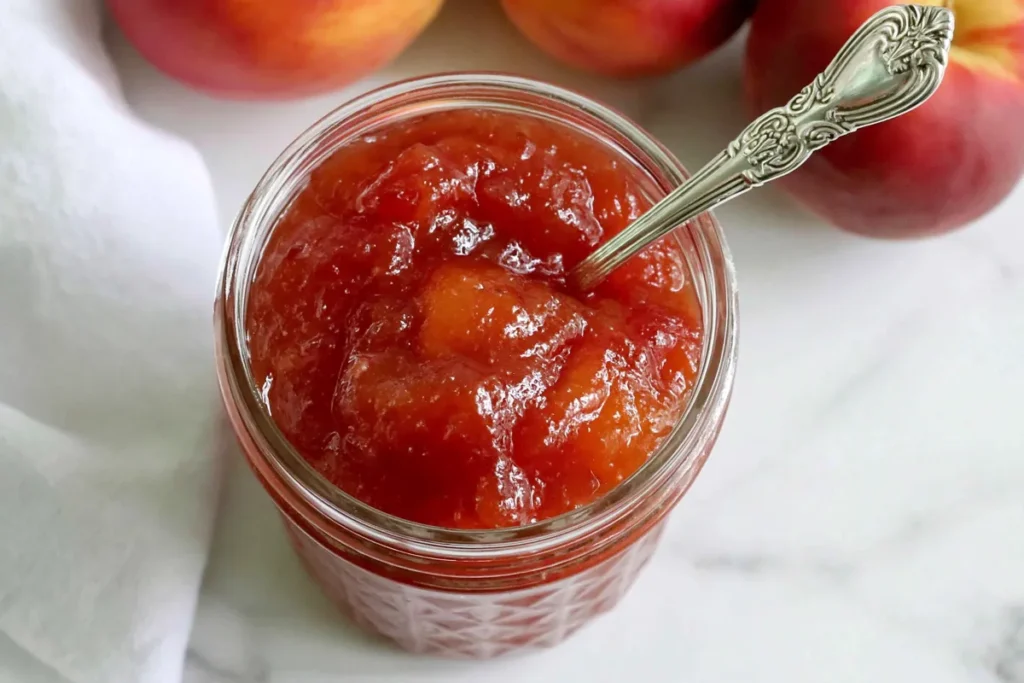
Ingredients and the Small Details That Make Nectarine Jam Set Properly
This recipe keeps the ingredient list short, which means each ingredient matters more.
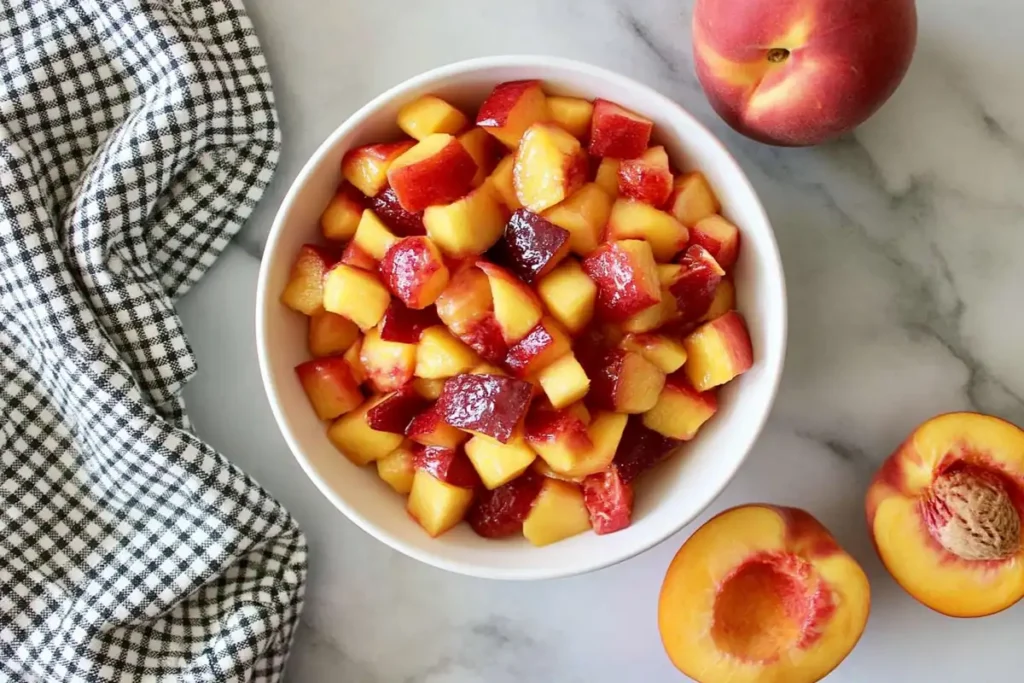
Use 2 pounds (about 8 cups) of chopped fresh nectarines and leave the skins intact. Overripe fruit can make a looser jam, while underripe fruit won’t release juices as easily during maceration. I aim for fruit that’s fragrant and gives slightly when pressed.
The lemon juice isn’t there to make the jam taste sour. Its acidity helps create a cleaner set and balances the sweetness. Use ¼ cup for consistency.
Sugar deserves more credit than it gets in jam making. The range of 2½ to 3⅔ cups granulated sugar gives some flexibility depending on fruit sweetness, but dropping too low can affect both texture and storage quality.
There’s also an optional 4 tablespoons water if your fruit seems unusually dry after resting.
Equipment for Cooking and Preserving the Batch Safely
A wide, deep stock pot or Dutch oven makes a difference here. Once the fruit boils, foam rises fast. I only fill the pot halfway to give the jam room to move without threatening to spill.
For testing doneness, I use either an instant-read thermometer or the freezer plate method. Both work. The thermometer gives speed; the plate gives confidence.
If you’re canning, have jars, lids, and a water bath canner prepared before cooking starts. Jam reaches its finish line quickly.
How to Make Nectarine Jam From Maceration to Set Point
Start by chopping the nectarines into small pieces without peeling them. Toss immediately with lemon juice, then stir in the sugar. At first, it can look wrong—grainy, dry, almost sandy. That’s normal.
Cover the bowl and refrigerate for at least 4 hours, though overnight produces better texture and more juice extraction. When ready, transfer everything into your cooking pot.
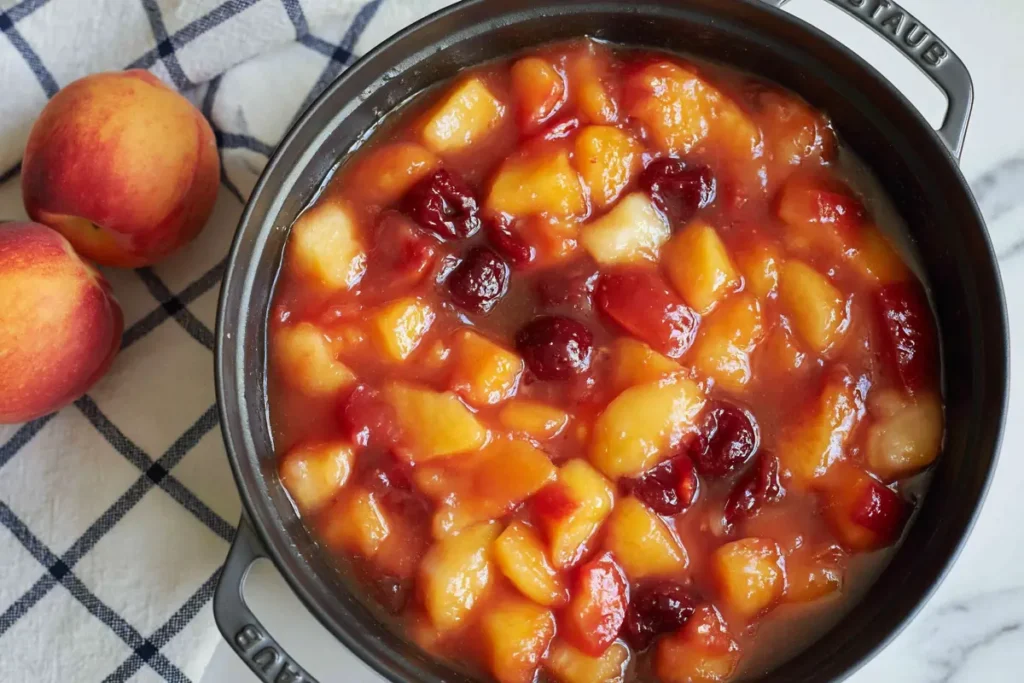
Bring the mixture to a boil over high heat and stir continuously. Once it starts boiling hard, stay nearby. Fruit foam rises quickly and jam can catch on the bottom if left alone.
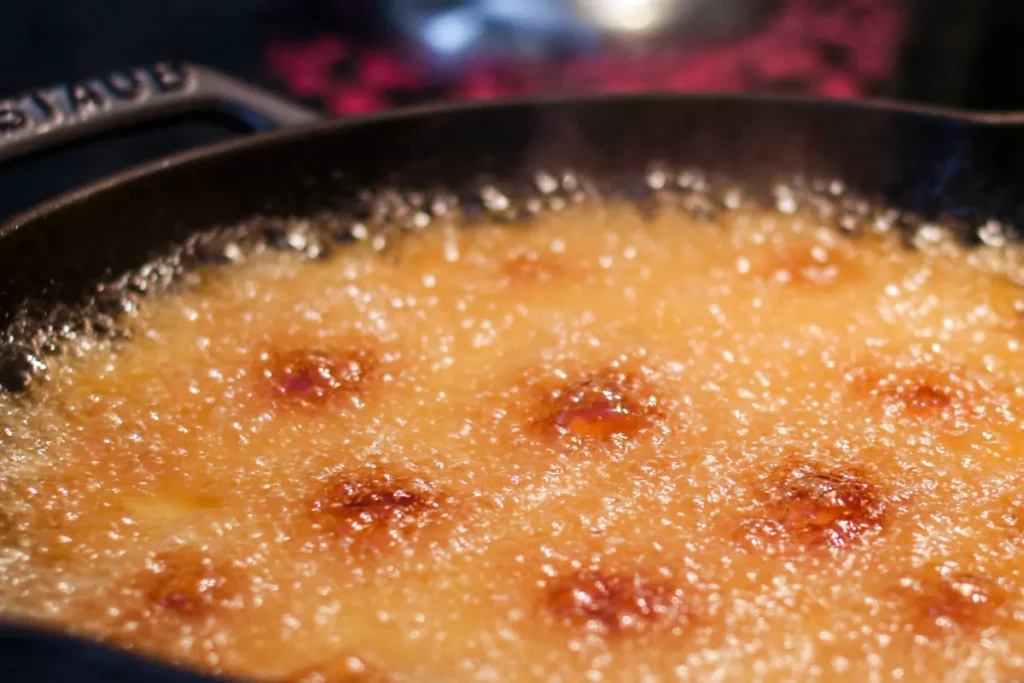
After several minutes you’ll notice the bubbles changing—they become slower, thicker, and more glossy. That’s one of the signs the jam is approaching set.
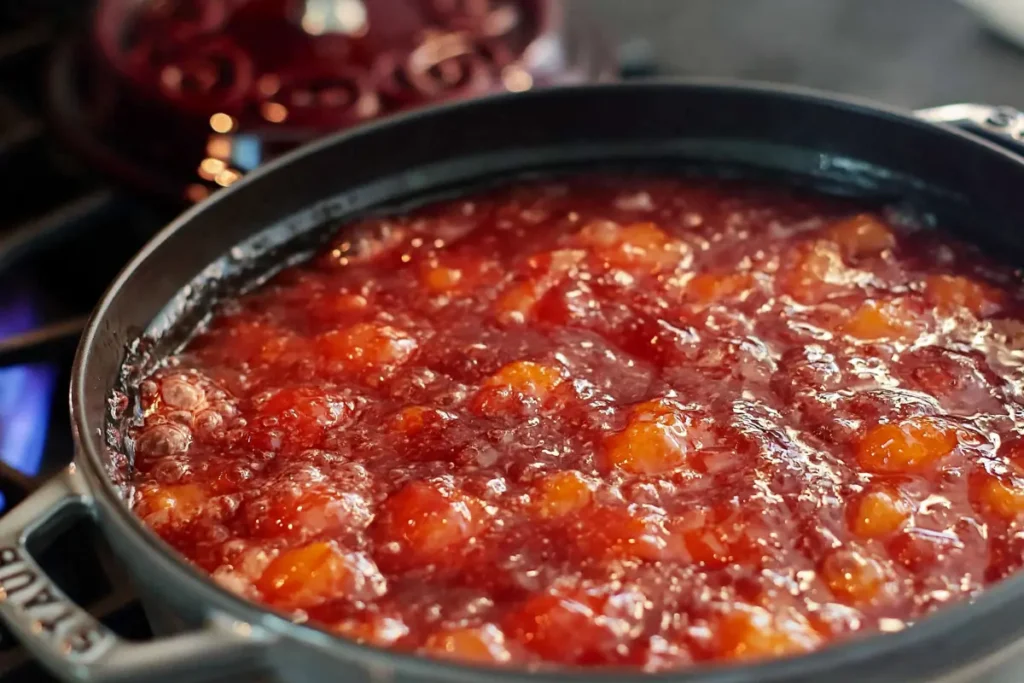
Temperature helps confirm it. At sea level, jam generally sets around 220°F. If you’re higher in elevation, subtract roughly 1°F for every 500 feet above sea level. Around 1,000 feet, I usually finish near 218°F.
No thermometer? Put a chilled plate in the freezer beforehand. Spoon on a little jam and push it gently. If the surface wrinkles instead of flowing back immediately, you’re there.
Canning and Storage Instructions for Longer Shelf Life
Once the jam reaches its set point, remove it from the heat and ladle it into prepared jars while it’s still hot. Leave ¼ inch headspace at the top. That little gap matters more than people think—it gives the contents room to seal correctly during processing.
If you’re using a water bath canner, process the jars for 10 minutes. At elevations above 6,000 feet, increase that to 15 minutes. When time is up, move the jars onto a folded towel and let them cool undisturbed.
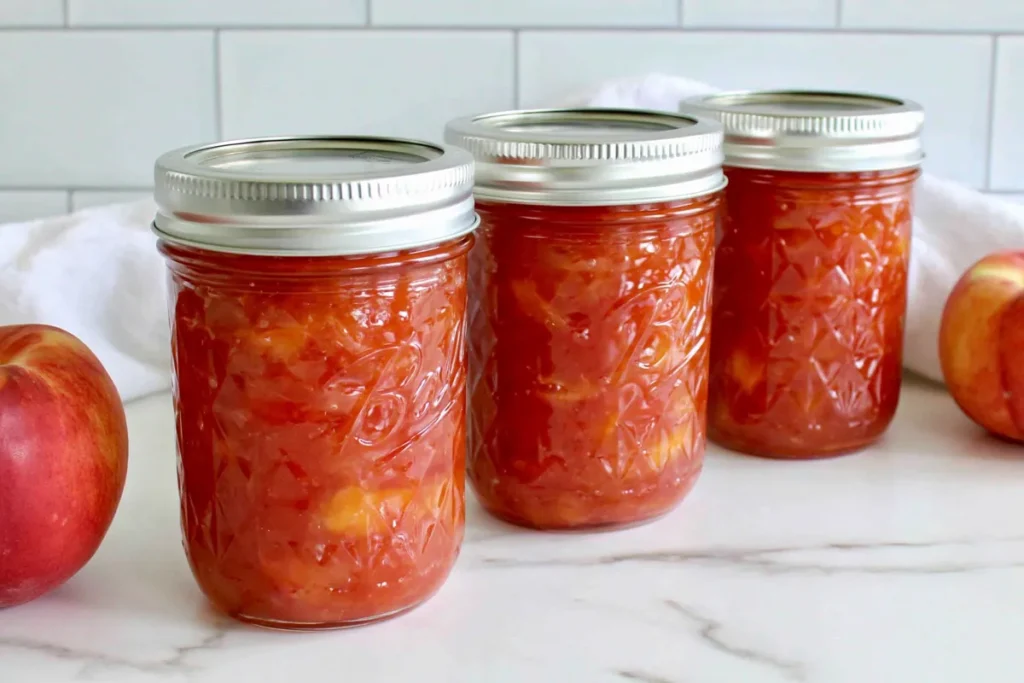
Wait 24 hours before checking seals. Press the center of each lid—it should stay firm and not flex.
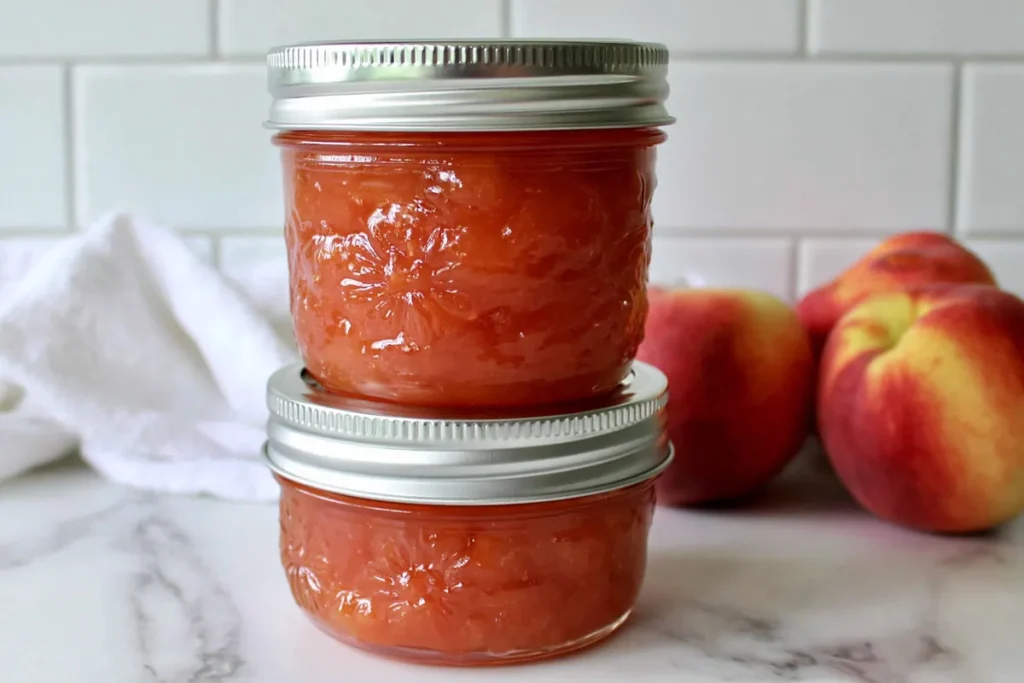
Properly sealed jars generally maintain their best quality for 12–18 months in a cool pantry. After opening, refrigerate. If you’re skipping canning entirely, refrigerator jam usually keeps 2–3 weeks. Frozen jam keeps well for about 6 months, though straight-sided freezer-safe jars are the safer choice.
Ways to Serve Nectarine Jam Beyond Toast
Fresh nectarine jam deserves more than a quick swipe across breakfast bread.
I like it spooned over plain yogurt where the fruit stays front and center. It also works well folded into whipped cream for a simple dessert filling or layered into cakes that need moisture without becoming heavy.
Try warming a few spoonfuls and brushing it over baked fruit tarts as a glaze. A small amount stirred into oatmeal works surprisingly well too.
One of my favorite combinations is jam spread inside a toasted croissant with a little ricotta. Simple. Good ingredients carry the work.
Flavor Variations That Still Respect the Original Method
This base recipe leaves room for small adjustments without changing how the jam behaves.
A pinch of cinnamon gives warmth without overpowering the fruit. Fresh ginger can add brightness, though keep it restrained—nectarines don’t need much help.
If you want to combine fruits, stay close to other stone fruits with similar moisture levels. Nectarine and peach works nicely. Nectarine and apricot can too.
I’d avoid making large sugar reductions unless you’re changing the preservation method entirely. Texture and storage life often shift faster than people expect.
Frequently Asked Questions
Do nectarines need to be peeled?
No. The skins soften during cooking and help deepen color and texture. Chop them finely and they blend naturally into the finished jam.
Can frozen nectarines work?
They can, especially if thawed first and any excess liquid is considered during cooking. Expect slightly longer reduction time.
Why didn’t the jam set?
Usually one of three things happened: the fruit needed more cooking time, the temperature stayed below set point, or the sugar ratio changed too much. Give the bubbles time to change texture before deciding.
Is water bath canning required?
Only if you’re storing jars at room temperature. Refrigerator and freezer storage are both good alternatives for smaller batches.
How long does opened jam keep?
Opened jars should stay refrigerated and are usually best within a few weeks. Use a clean spoon each time to help maintain quality.
A Jar Worth Keeping Around
Nectarine jam isn’t complicated, but it rewards attention. Let the fruit sit, cook it confidently, and stop when the texture tells you it’s ready.
Every recipe I share is an invitation from my kitchen to yours. I hope this one earns a place on your shelf while nectarines are still in season.
Nectarine Jam
Ingredients
Method
- Chop the nectarines into small pieces without peeling them.
- Toss the chopped nectarines with lemon juice, then stir in the sugar. The mixture will look thick and grainy at first.
- Cover and refrigerate for at least 4 hours, preferably overnight, so the nectarines release their juices.
- Transfer the macerated fruit mixture to a deep stock pot or Dutch oven, keeping the pot no more than half full to allow space for foaming.
- If canning, prepare a water bath canner, jars, and lids before cooking the jam.
- Place the pot over high heat and bring the mixture to a boil, stirring continuously.
- Cook on high heat, stirring constantly, until the jam reaches its set point. Use a chilled plate test or an instant-read thermometer.
- At sea level, jam generally sets at 220°F. Reduce that temperature by about 1°F for every 500 feet above sea level.
- Once the jam reaches set, remove it from the heat and ladle it into prepared jars, leaving 1/4 inch headspace.
- For shelf-stable storage, process the jars in a water bath canner for 10 minutes, or 15 minutes above 6,000 feet elevation.
- Remove jars to a towel-lined counter and let them cool undisturbed. Check seals after 24 hours.
- Store properly sealed jars in the pantry for 12 to 18 months. Refrigerate after opening.
- For refrigerator jam, store for 2 to 3 weeks. For freezer storage, use freezer-safe straight-sided jars and freeze for up to 6 months.
Notes
- Do not peel the nectarines; the skins soften during cooking and add color and body.
- The jam mixture may look dry before maceration, but the fruit will release juice as it rests.
- Use a deep pot because jam foams quickly once it reaches a hard boil.
- If using the freezer plate test, chill the plate before cooking starts.
- Sugar reductions can affect the set, texture, and storage quality of the jam.
- Use clean utensils when serving opened jam to help maintain quality.