
Meat and Cheese Board for Easy Fall Entertaining

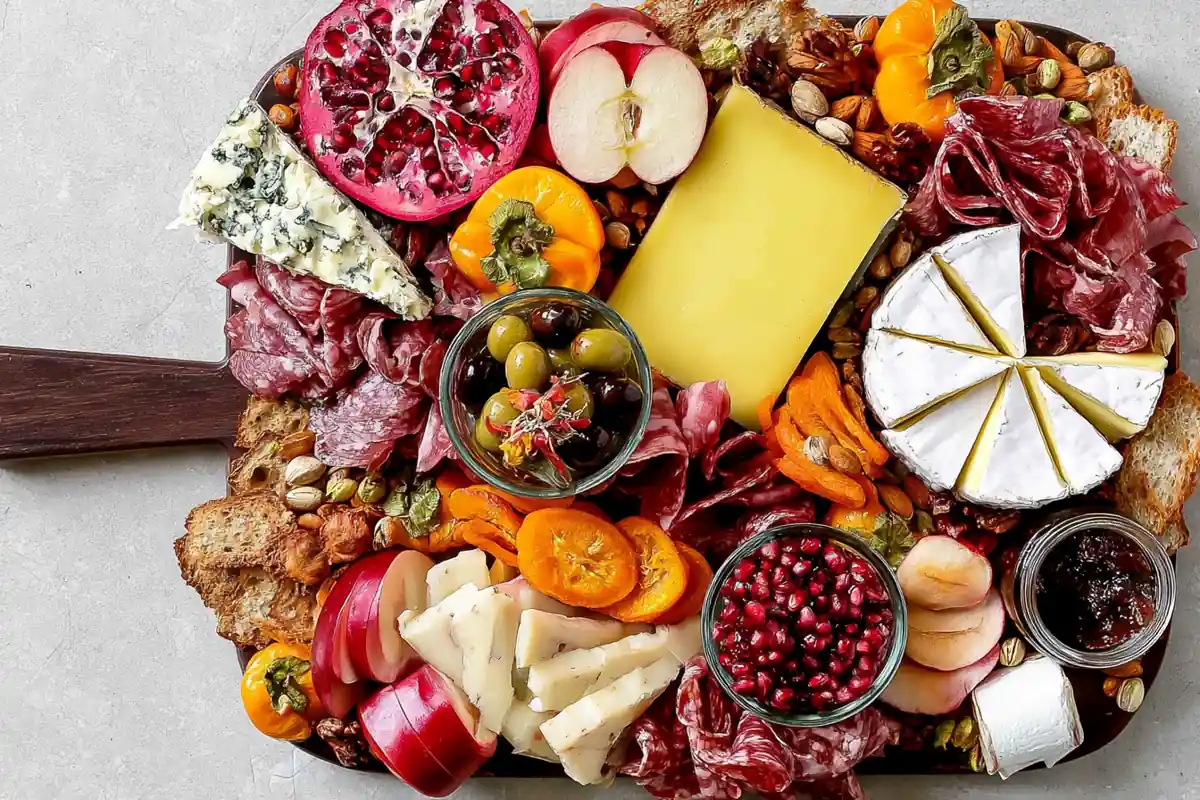
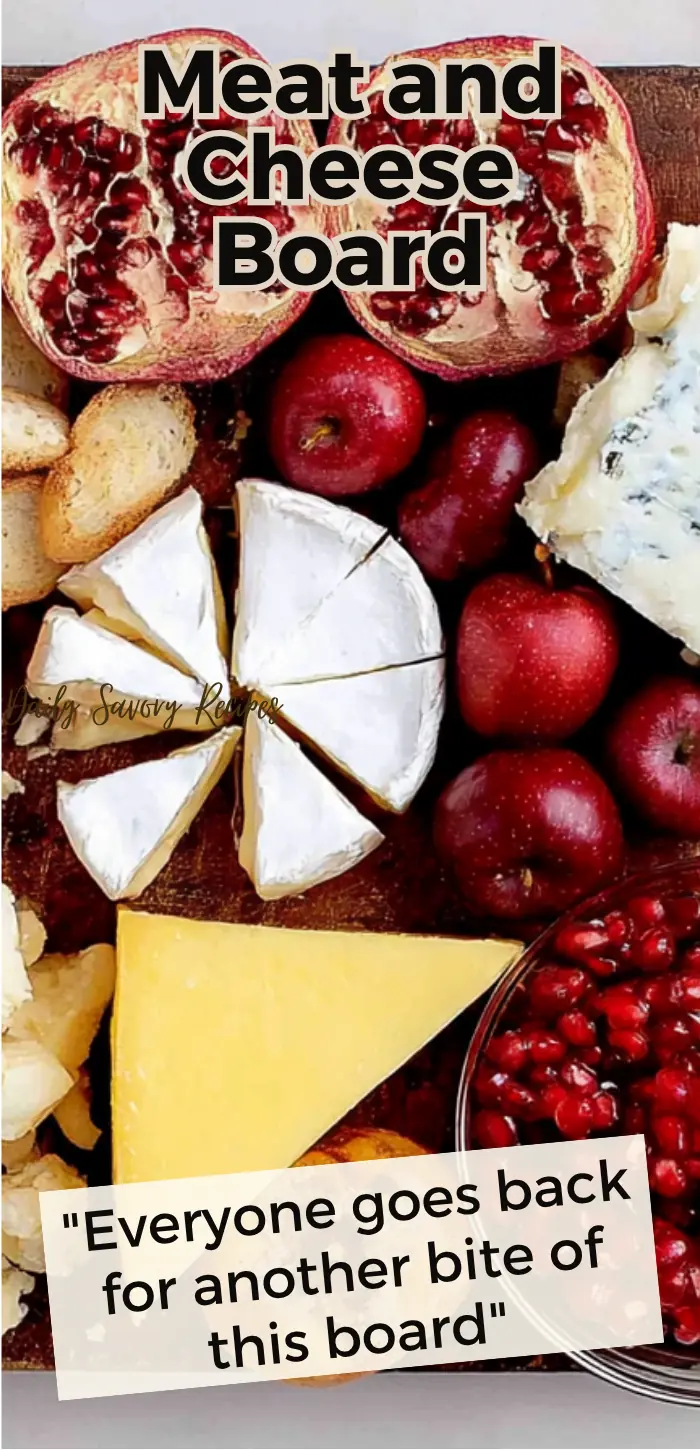
A good meat and cheese board doesn’t need complicated styling or expensive ingredients. This version leans into fall flavors with creamy camembert, sharp stilton, salty cured meats, and crisp seasonal fruit. Everything goes onto the board in about 30 minutes, and none of it requires cooking.
I like this combination because it feels generous without becoming overcrowded. The sweet honey and pomegranate balance the richer cheeses, while the nuts and pumpkin seeds add enough crunch to keep every bite different. You’ll also learn how to arrange the board so it looks full and natural instead of carefully staged.
Building Balance on a Meat and Cheese Board
The strongest meat and cheese boards usually balance texture first, not flavor. Soft cheeses beside crunchy elements, salty meats beside sweet fruit. That’s what keeps guests reaching for another bite instead of feeling like every combination tastes the same.
Camembert works differently than aged gouda, so they shouldn’t sit beside identical pairings. I prefer placing creamy cheeses near something bright or crisp like apple slices or pomegranate seeds. Stilton already carries plenty of intensity on its own, so it helps to keep milder items nearby. Goat cheese tends to soften richer bites, especially after salty soppressata.
Acidity matters too. Persimmons and apples cut through the heavier cheeses better than crackers alone. Even olives play a role here. Their briny flavor resets your palate between bites. It’s subtle, but you notice it after a few rounds around the board.
The Cheese Selection That Holds the Board Together
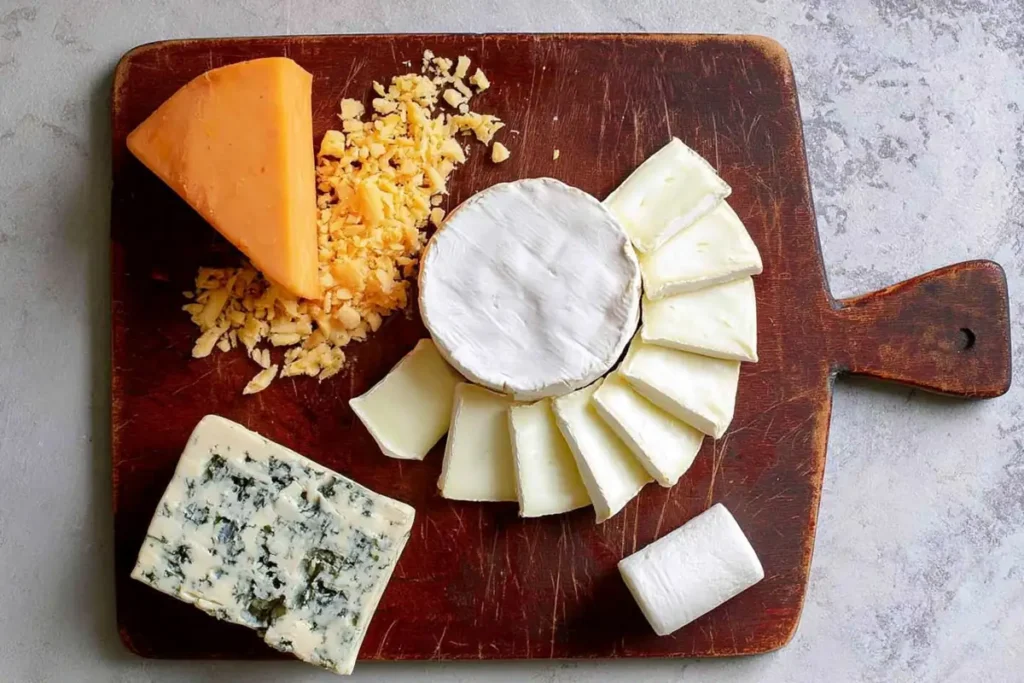
Aged gouda brings firmness and those nutty caramel notes that work especially well in cooler weather. I cut it into rough chunks instead of neat cubes because guests naturally grab irregular pieces more easily. Camembert should stay in wedges. Once it reaches room temperature, the center softens enough to spread onto crackers without falling apart.
Stilton can overpower a smaller board if you use too much. Eight ounces sounds like a lot, but spread across a large serving board with fruit and meats, it settles in nicely. I usually avoid placing blue cheese directly beside honey because guests tend to overdo the sweetness. Better to let people combine those flavors themselves.
Goat cheese adds freshness the board would otherwise miss. Even a small amount changes the overall balance. Worth adding.
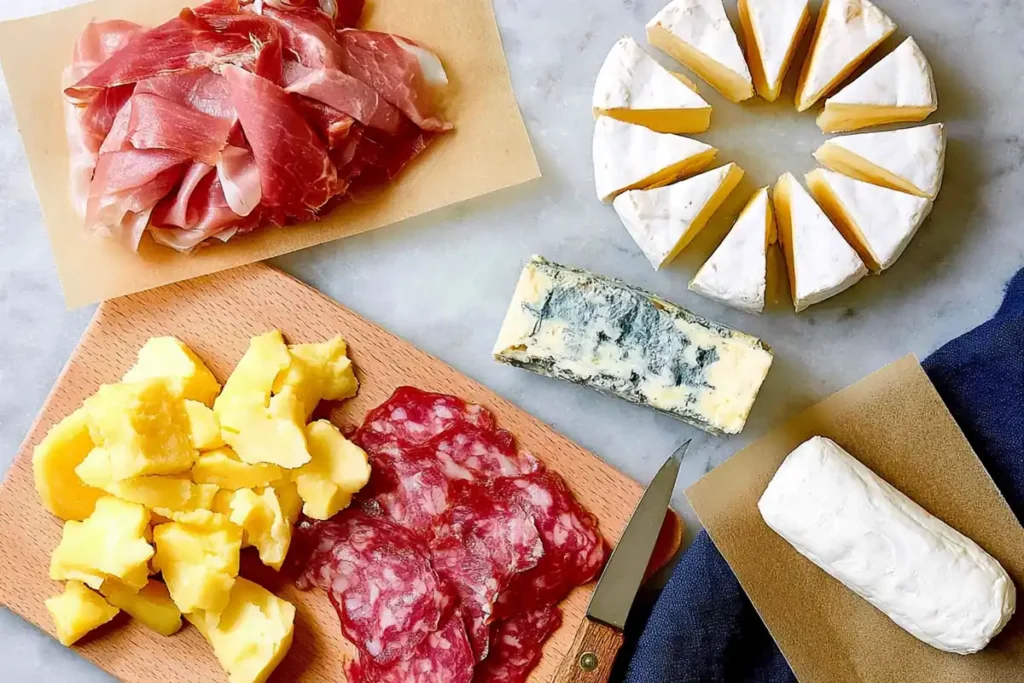
The biggest mistake? Serving cheese cold from the refrigerator. Give it at least 30 to 45 minutes at room temperature before guests arrive. Camembert especially needs that time to loosen up properly.
Seasonal Fruit, Nuts, and Small Additions That Fill the Gaps
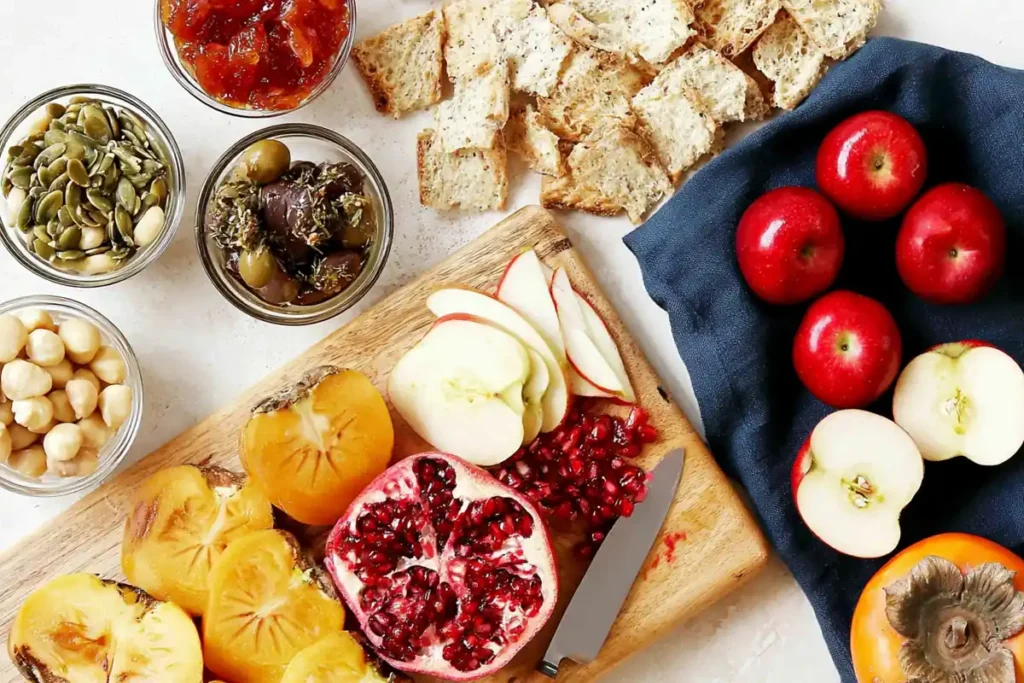
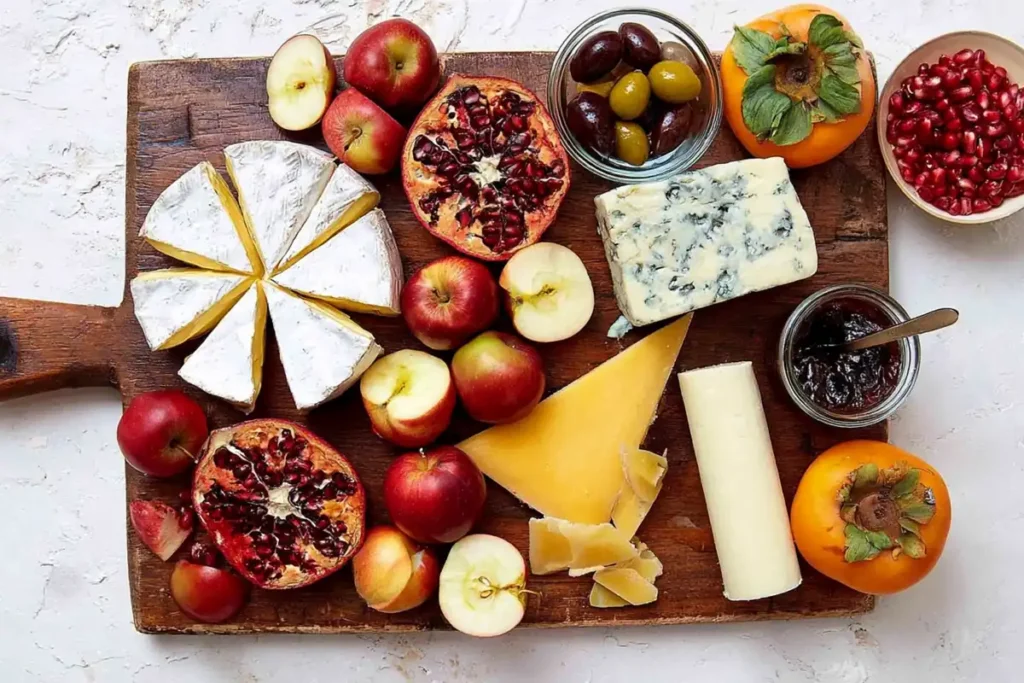
Whole crab apples make the board feel abundant immediately. They also create height, which helps the arrangement look more relaxed and less flat. I leave them whole instead of slicing everything ahead of time. Then I fill smaller empty spaces with sliced apples and persimmons after the larger items are already placed.
Pomegranate seeds do more than add color. Their sharp little bursts cut through richer meats and cheeses better than most spreads do. That’s why I like keeping them in small jars near the center of the board rather than scattering them loose.
The crunchy elements matter more than people think. Rosemary Marcona almonds bring richness, while roasted pumpkin seeds add texture without taking over the flavor profile. A board with only soft items starts to feel heavy pretty quickly.
Honey helps tie everything together, especially with goat cheese or stilton. Just don’t pour it directly over the cheese beforehand. It tends to look messy after sitting for a while. Small jars work better and keep guests in control of how much sweetness they want.
Choosing Meats for a Balanced Charcuterie Spread
Soppressata gives this board structure because it has enough spice and fat to stand beside bold cheeses. I prefer slicing it into half-moons rather than leaving full rounds. It layers more naturally that way and takes up less visual space on the board.
Prosciutto works differently. Instead of stacking it flat, loosely fold or drape the slices so they keep some height and softness. Tight folds make cured meats look dense and heavy.
Try not to cluster all the meat together in one corner. Spread it across the board so guests can build combinations without reaching across everything else. Small detail. Big difference once people start serving themselves.
Equipment That Makes Assembly Easier
You don’t need specialized serving equipment for a good meat and cheese board, but a few basics help. A large wooden board gives enough room for spacing, especially once the fruit and jars are added. Crowding everything onto a small tray usually makes the board look chaotic instead of generous.
Small jars or ramekins are useful for olives, honey, and pomegranate seeds because loose ingredients roll around constantly otherwise. I also like keeping a separate cheese knife for the softer cheeses. Camembert and goat cheese smear quickly if guests use the same knife for everything.
One practical tip: build the board where you plan to serve it. Moving a full board across the kitchen rarely goes smoothly.
Step-by-Step Assembly for a Full Meat and Cheese Board
Start with the cheeses first. They’re the anchor points that determine where everything else fits. Place the gouda chunks and camembert wedges near the outer edges of the board with enough space between them so the arrangement doesn’t feel symmetrical. Perfect symmetry usually makes charcuterie boards look stiff.
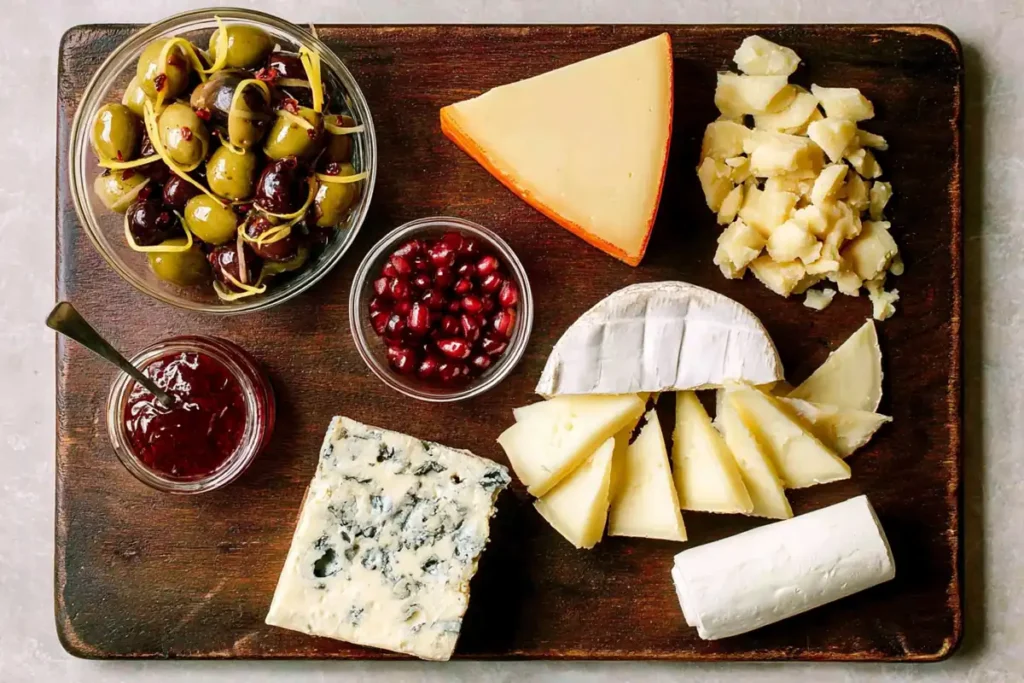
Next come the small jars. Set the honey, olives, and pomegranate seeds onto the board before adding loose ingredients. Once those bowls are in place, the rest becomes much easier to arrange naturally around them. I like keeping the jars slightly off-center because it creates movement across the board instead of everything sitting in neat rows.
Add the whole fruit after that. Crab apples and persimmons create height quickly, which helps the board feel full even before the smaller ingredients are added.
Then layer in the meats. Fold the prosciutto loosely so it keeps some softness and air, while the soppressata half-moons can overlap casually beside sharper cheeses.
This part matters more than people expect: leave small open spaces until the very end. Those gaps are where sliced apples, almonds, pumpkin seeds, and crackers go. Filling every corner too early makes the board harder to balance visually.
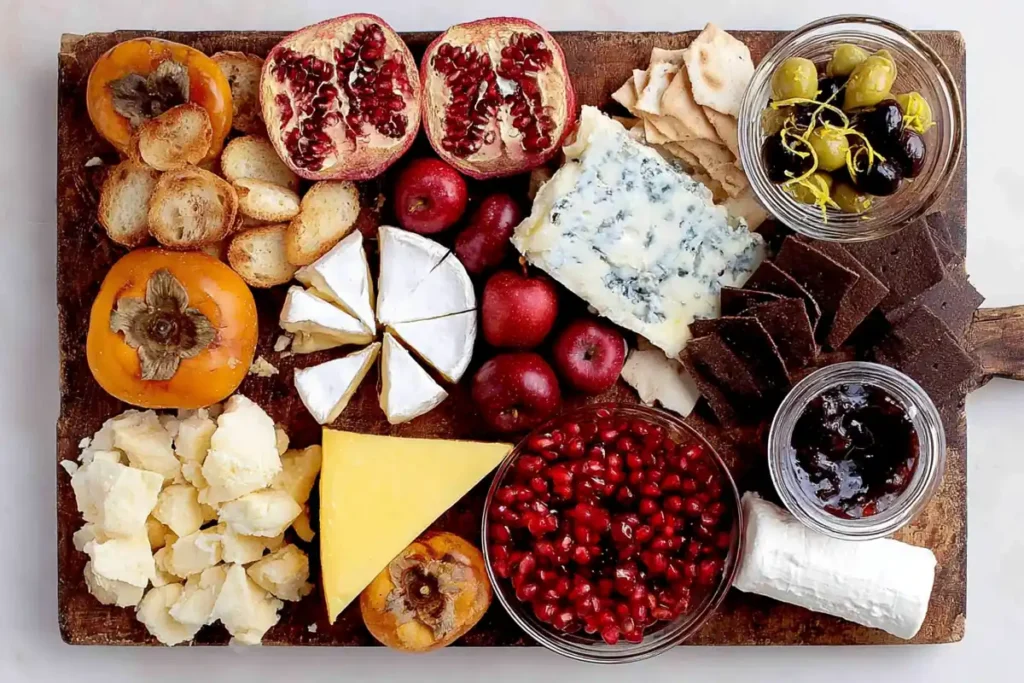
I usually step back once or twice during assembly. Sounds unnecessary, but it helps spot areas where colors or textures feel too concentrated. If all the darker items land on one side, the whole board starts looking heavy.
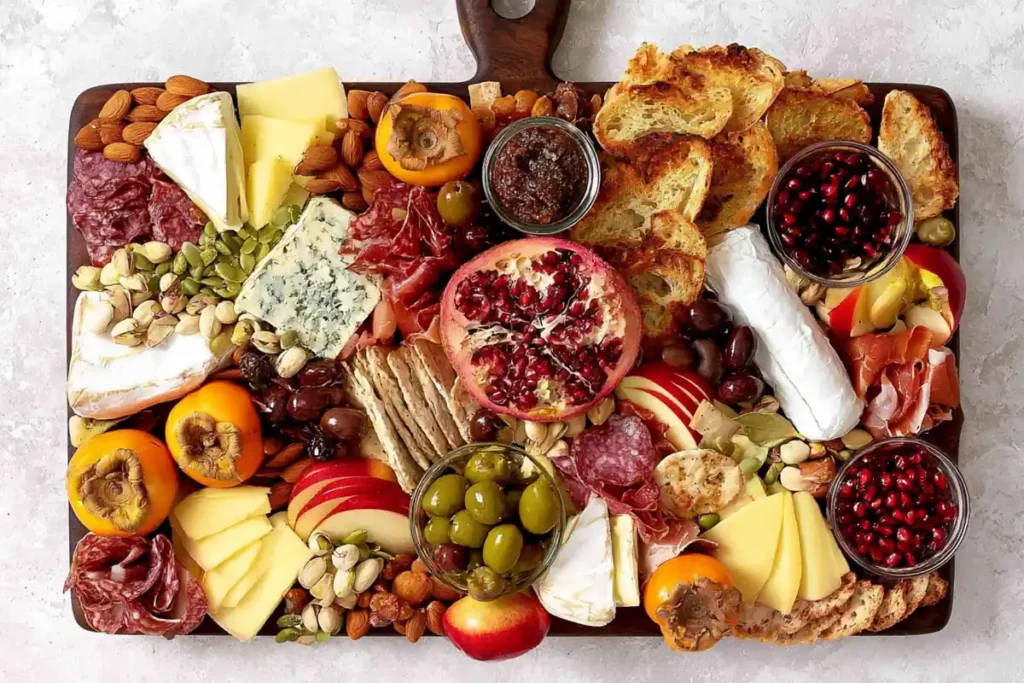
Crackers should go on last. They soften quickly if they sit too close to moist ingredients for too long. Keep them grouped in a few sections rather than circling the entire board.
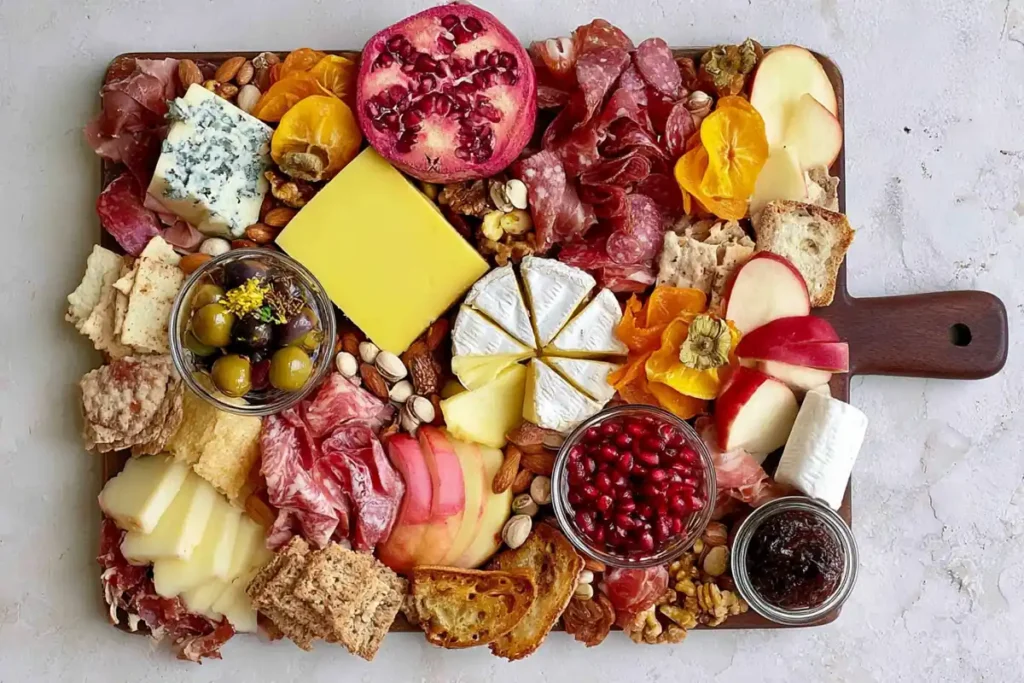
Serving Tips That Make the Board Feel Finished
Cheese flavor changes noticeably once it warms slightly. Pull everything from the refrigerator about 30 minutes before serving, especially the camembert and goat cheese. Cold cheese tastes muted and firmer than it should.
Try not to overload the board right away either. A little visible space actually makes the arrangement look more inviting. Guests tend to pull ingredients around as they serve themselves, so the board naturally fills out over the evening anyway.
Fresh herbs can work as garnish, though I keep them minimal. A few rosemary sprigs fit the fall feel without making the board look decorative for the sake of decoration.
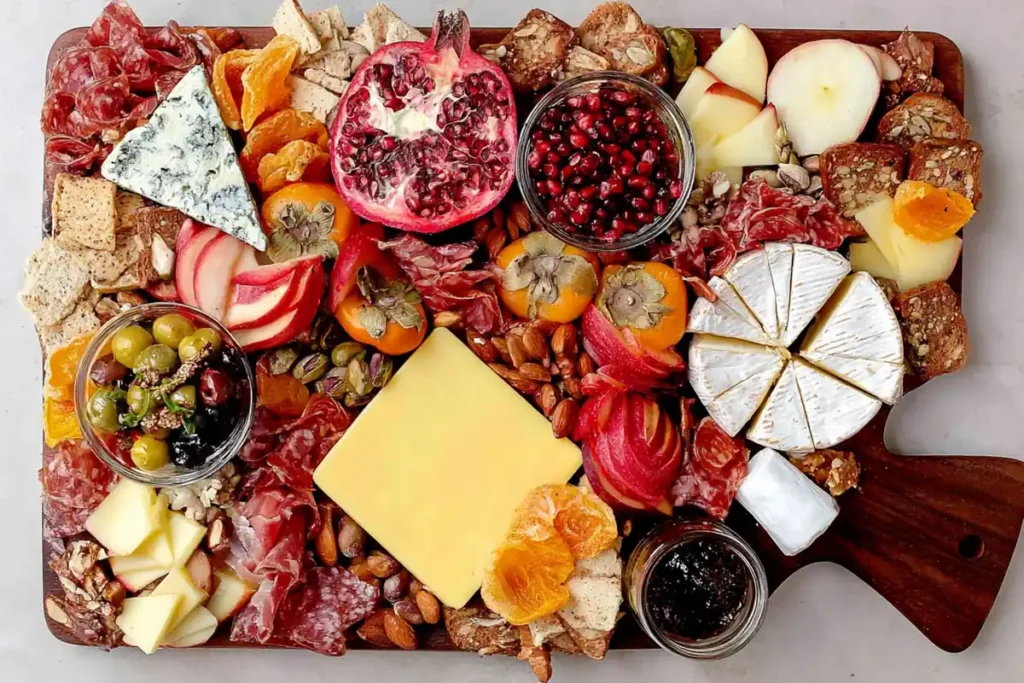
A Board Worth Bringing to the Table Again
This meat and cheese board works because it feels relaxed enough for casual gatherings while still offering plenty of contrast in flavor and texture. Nothing complicated. Just thoughtful combinations arranged well.
Once you get comfortable with the structure, the board becomes easy to adapt through the seasons. Different fruit, another cured meat, a softer blue cheese. Same approach every time. And honestly, that’s what makes entertaining at home easier.
Meat and Cheese Board
Ingredients
Method
- Cut the gouda into chunks and the camembert into wedges. Place the cheese on the serving board near the edges of the board.
- Place the pomegranate seeds, olives, and honey into small jars. Place them on the serving board.
- Add the whole fruit to the serving board followed by the soppressata, cut into half-moons, and prosciutto.
- Fill in any gaps with sliced fruit, Marcona almonds, pumpkin seeds, and crackers.
- Allow the cheese to come to room temperature before serving.
Notes
- Serve the cheeses at room temperature for the best flavor and texture.
- Build the board directly where you plan to serve it to avoid shifting ingredients.
- Feel free to swap in seasonal fruit or different cured meats depending on availability.