
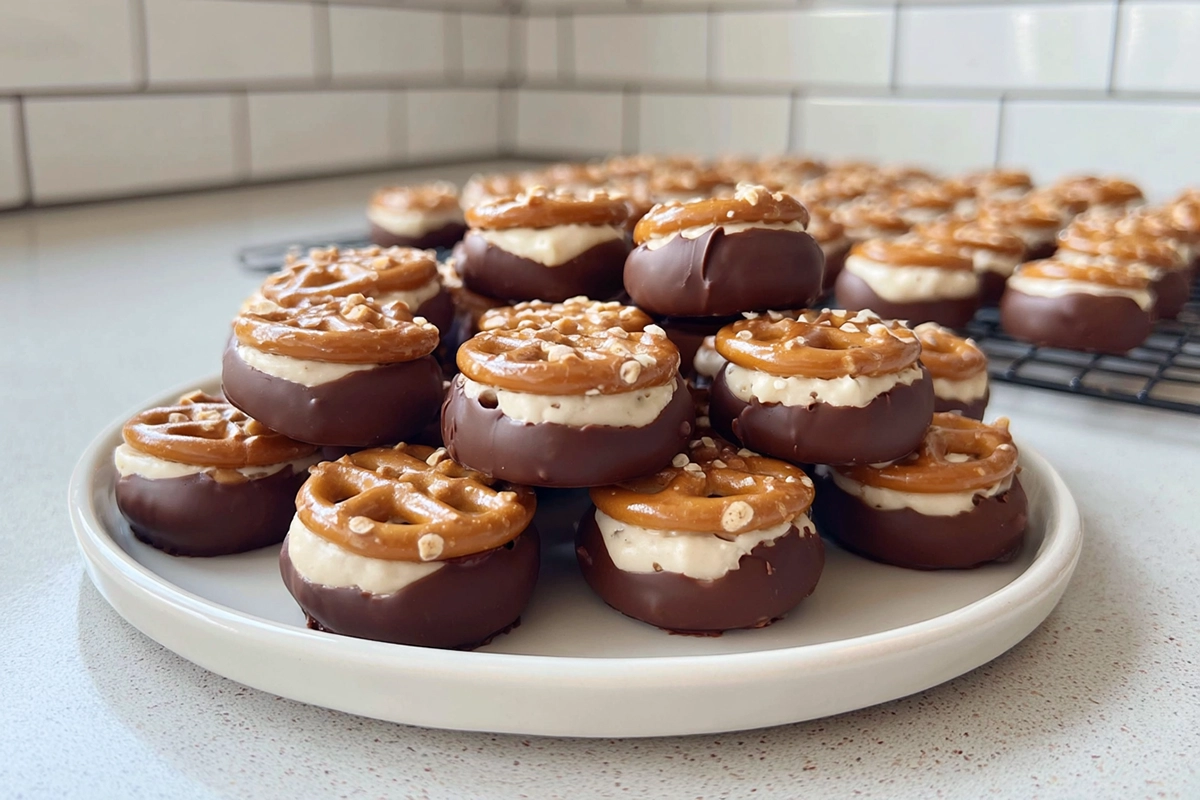
Cookie Dough Pretzel Bites That Actually Work

Cookie Dough Pretzel Bites are one of those snacks that sound cute on paper but usually fall apart in real life—too soft, too sweet, or just plain messy. When they’re right, though, they hit every nerve: cold, creamy cookie dough pressed between salty pretzels, finished with a thin snap of chocolate that cracks when you bite in. That contrast is the whole point, and it’s what makes these dangerous on a snack table.
Most versions fail because they treat this like a novelty instead of a balance problem. The dough is too loose and squishes out. The pretzels get soggy. The chocolate coating is either clumpy or so thick it overwhelms everything else. I’ve tried the shortcuts. I’ve tried skipping chill time. I’ve tried “eyeballing it.” None of that works consistently, and if there’s one thing I care about, it’s a recipe doing the same thing every single time.
Here’s my promise: this version is built around structure first, indulgence second. The dough is safe to eat, firm enough to behave, and sweet without being flat. The pretzels stay crunchy. The chocolate sets clean instead of streaky. Every choice here has a reason, and I’ll tell you exactly why—because once you understand what matters, these stop being fussy and start being reliable.
Table of Contents
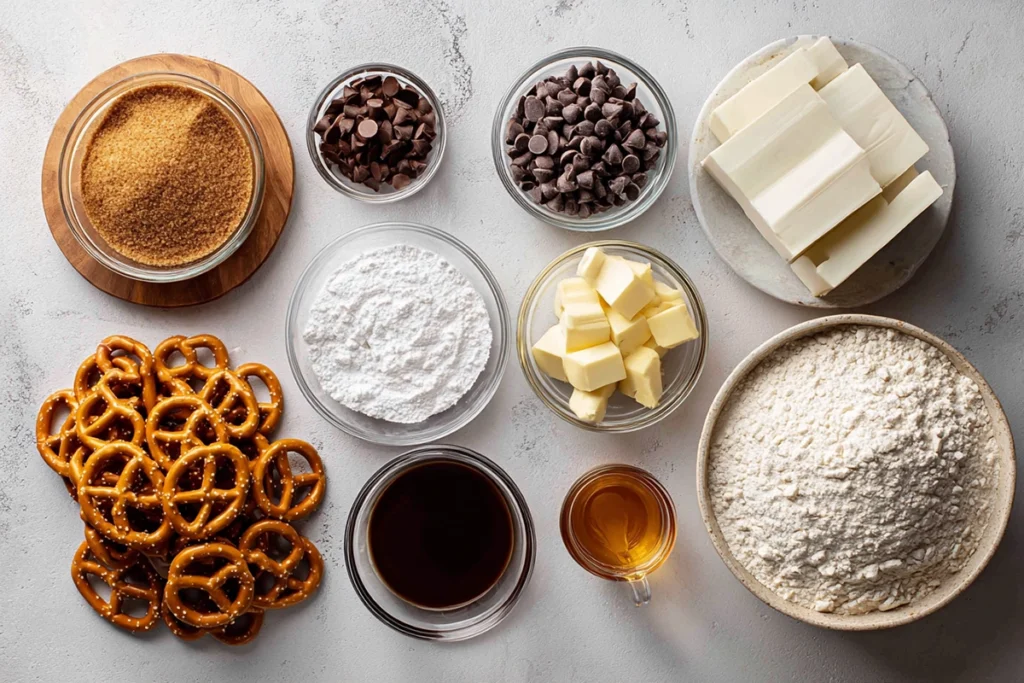
The No-Regret Ingredients (Read This Before You Start)
Unsalted Butter
This is where the dough’s texture starts. Softened butter—not melted—gives you structure without greasiness. I stick to standard grocery-store butter; no need for European-style here, since too much fat actually makes the dough slump.
Brown Sugar
Light brown sugar brings moisture and that slightly caramel edge cookie dough should have. Dark brown works, but it pushes things molasses-heavy and softer than I want for a sandwich-style bite.
Granulated Sugar
This balances the brown sugar and keeps the dough from tasting muddy. Don’t cut it—it helps the dough firm up once chilled.
Milk or Cream
Just a little liquid helps everything come together smoothly. Cream makes a richer dough, milk keeps it lighter. Either works, but don’t eyeball it too much, and you’ll fight the dough later.
Heat-Treated All-Purpose Flour
This is non-negotiable. Raw flour is the real safety issue with cookie dough, not eggs. Heat-treating takes five minutes and gives you the same flavor and structure without the risk.
Salt
A small amount, but it matters. It keeps the dough from tasting flat and ties the sweet filling to the salty pretzels.
Mini Chocolate Chips
Mini chips distribute evenly and don’t tear through the dough. Regular chips sound fine until you’re trying to sandwich pretzels and everything cracks apart.
Pretzels
Cheap, basic pretzels are perfect. You want salt and crunch, not butter flavor or fancy seasoning competing with the dough.
Semi-Sweet Chocolate
Semi-sweet melts clean and sets firm without being bitter. Milk chocolate stays too soft; dark chocolate can overpower the filling.
Shortening (Optional)
This is purely for texture. A small amount thins the chocolate and gives a smoother finish. Skip it if your chocolate already melts well—but know why you’re skipping it.
The Process (Why This Order Matters)
Building a Dough That Behaves
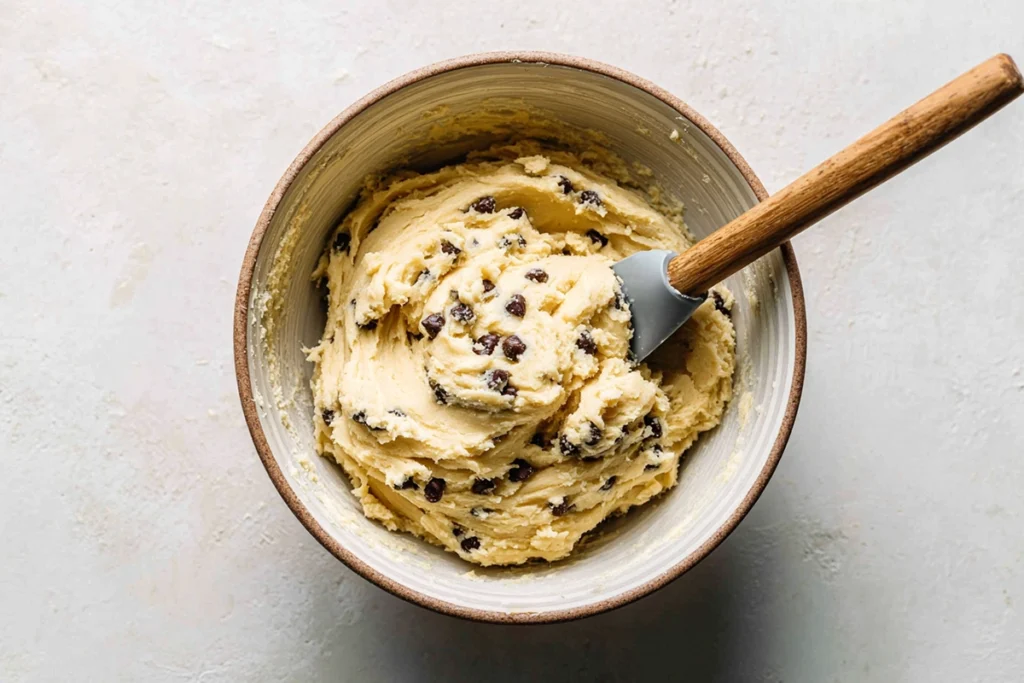
This dough starts out looking wrong before it looks right. When you cream the butter and sugars, you’re aiming for pale and fluffy—visually lighter, almost whipped, and softer to the touch than straight butter. Once the flour goes in, everything changes. The dough will look crumbly and dry at first, and this is where people panic. Don’t. Keep mixing until it pulls together into a thick mass that feels tacky like a Post-it note, not wet like glue. If you pinch it, it should hold its shape without sticking aggressively to your fingers. The smell should be clean and sweet—like classic cookie dough, not raw flour.
Sandwiching Without a Mess
Portioning is where structure is decided. You’re not making truffles here; you’re making thin patties that fit between pretzels. When you press the dough between two pretzels, you should feel resistance—not squish. Visually, the dough should stay just inside the edges of the pretzels, not bulging out. If it’s already oozing at this stage, it’s too warm or too big. Set them down and chill. The freezer step isn’t about freezing solid; it’s about firming the fat so the whole thing moves as one piece later.
Chocolate as a Finish, Not a Blanket
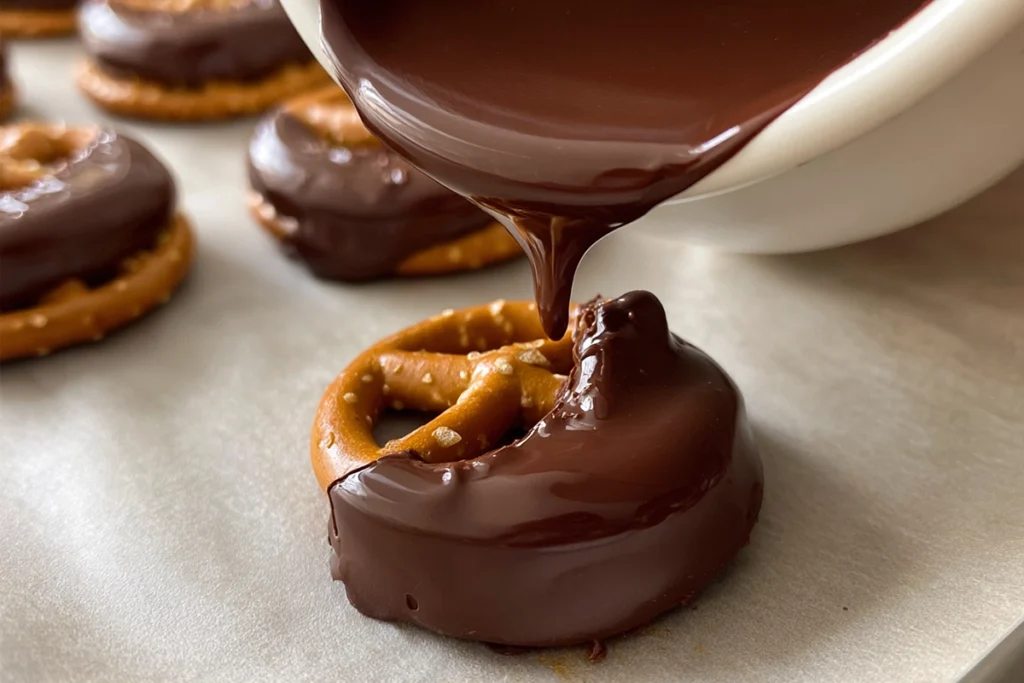
Melted chocolate should look glossy and fluid, not thick and dull. When you stir it, it should fall back into the bowl in ribbons that disappear after a second. As you dip, you’re listening for silence—no plopping, no dragging sounds. That tells you the chocolate is thin enough. Once dipped, the bites should look shiny but not dripping. As they chill, the smell shifts from warm cocoa to neutral chocolate, and the surface goes from reflective to softly matte. That’s your cue they’re set.
The Uh-Oh Moments (Learn From My Mistakes)
Why Is My Dough Sticky and Unmanageable?
This usually comes down to temperature, not measurements. If your kitchen is warm, the butter softens fast and turns the dough slack. I’ve had batches feel perfect, then turn sticky after five minutes on the counter. Chill it. When the dough is right, it should feel cool and firm, not greasy, and your fingers should come away mostly clean.
My Pretzels Keep Sliding Apart
This is almost always a skipping-the-chill problem. I rushed a batch once thinking, “They’ll be fine.” They weren’t. As soon as they hit the chocolate, the pretzels twisted and slid like loose teeth. The bites need to feel solid when you pick them up—cold to the touch, with no give when you gently squeeze.
The Chocolate Looks Thick or Streaky
Chocolate tells on you immediately. Thick chocolate looks dull and moves slowly; streaky chocolate smells faintly burnt. That’s overheating. Melt gently, stir often, and stop while there are still small pieces left—they’ll finish melting from residual heat. If it still feels too thick, a small amount of shortening smooths it out without changing the flavor.
They Taste Good but Something Feels “Off”
This is usually a balance issue. Too much dough and the bites taste flat. Too much chocolate and everything gets sweet and heavy. When these are right, you taste salt first, then sweet dough, then chocolate at the end. If you don’t get that sequence, adjust portions next time. I had to eat more test batches than I care to admit to get that balance locked in.
Make It Your Own (The Variations That Hold Up)
Peanut Butter Cookie Dough
This one works, but only if you respect the fat. Replace part of the butter with smooth peanut butter—don’t add it on top of the full amount, or the dough turns greasy and soft. The dough should still feel cool and structured when chilled, not oily. The payoff is big: salty pretzels, nutty filling, and chocolate that suddenly tastes deeper instead of just sweet.
Dark Chocolate + Flaky Salt Finish
If you think you “don’t like sweets,” this is the version that proves you wrong. Use dark chocolate in the 60–70% range and finish the dipped bites with a few flakes of sea salt while the coating is still wet. You’ll smell the cocoa more sharply, almost bitter at first, and that’s what keeps the bites from feeling cloying after the third one.
Holiday Peppermint Crunch
This is the only seasonal tweak I stand behind. Swap the mini chips in the dough for fewer chocolate chips and add finely crushed peppermint candies to the chocolate coating. Keep the pieces tiny—you want a gentle crunch and cool aroma, not tooth-breaking shards. White chocolate sounds festive, but it stays soft and smears when you bite in. I’ve tested it so you don’t have to.
Gluten-Free, With Realistic Expectations
Use a cup-for-cup gluten-free flour blend and expect a slightly denser dough. It won’t spread or soften the same way, so give the bites extra chill time. The texture is firmer, but the flavor still delivers, especially once the chocolate sets fully.
Serving & Storing (How These Fit Into Real Life)
I serve these straight from the fridge after about ten minutes on the counter. Cold enough to stay clean, but not so cold that the chocolate snaps too hard. At parties, I keep them on a chilled plate and watch them disappear one by one—the pretzel crunch is still there, the dough stays creamy, and the chocolate doesn’t smear.
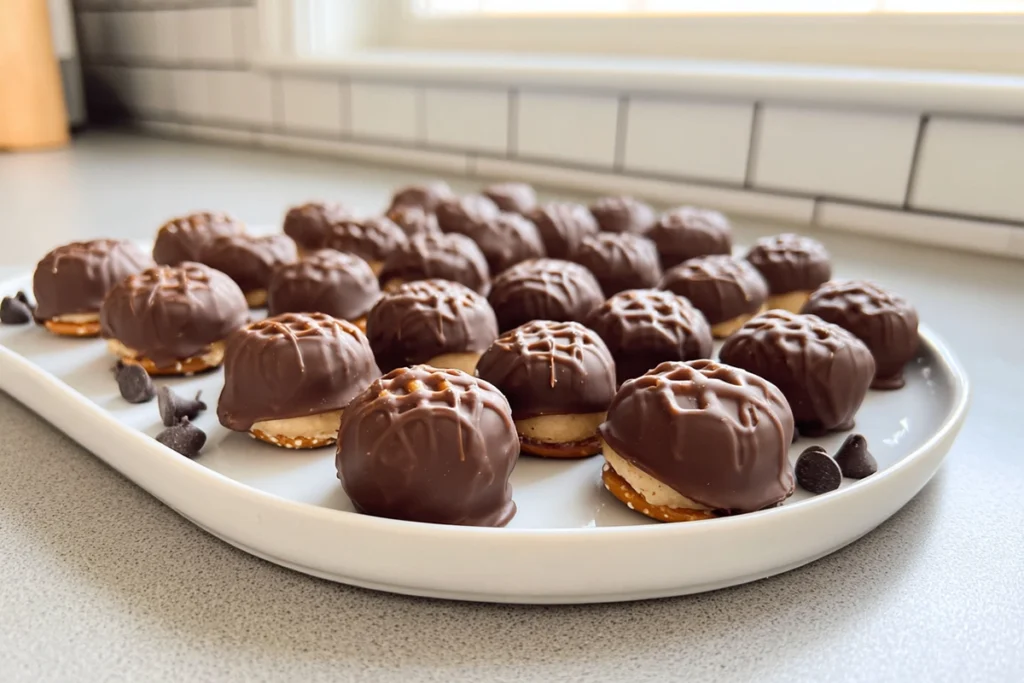
For storage, the fridge is your friend, but only short-term. Store them covered for up to five days; after that, the pretzels start to lose their snap. If you want to freeze them, do it after the chocolate has fully set. Freeze in a single layer first so they don’t glue together, then transfer to a container. Let them thaw in the fridge, not on the counter—sudden warmth makes condensation, and condensation kills crunch.
One Last Thing
These Cookie Dough Pretzel Bites work because they respect balance—sweet, salty, cold, and crisp all pulling their weight. Get that right, and you don’t just make a snack—you make the one people quietly keep going back for.
Get inspired with more mouthwatering recipes! Follow me on Pinterest for new cooking ideas every week.
Frequently Asked Questions
Can I make Cookie Dough Pretzel Bites ahead of time?
Yes—and you should. These are actually better after a few hours in the fridge once the dough firms up and the chocolate fully sets. I regularly make them the day before a party so I’m not rushing and ruining the texture.
How long do Cookie Dough Pretzel Bites last in the fridge?
They keep well for up to 5 days when stored covered in the refrigerator. After that, the pretzels start to lose their crunch and the whole thing feels tired, even if it’s still safe to eat.
Can I freeze them after dipping in chocolate?
Yes, but freeze them in a single layer first. Once the chocolate is fully set, freeze them uncovered until solid, then transfer to a container. Thaw them in the fridge, not on the counter, or condensation will soften the pretzels.
Is heat-treated flour really necessary?
Yes. Raw flour is the actual food safety issue in cookie dough. Heat-treating takes a few minutes and keeps the flavor and structure exactly the same, so there’s no good reason to skip it.
Why is my chocolate coating dull or streaky?
That’s a sign the chocolate got too hot or wasn’t stirred properly. Chocolate should melt slowly and stay glossy. If it smells slightly burnt or looks thick and grainy, it’s overheated and won’t set clean.
Can I make these without a mixer?
You can, but expect a workout. The butter and sugar need to be very well combined for the dough to hold together properly. If mixing by hand, the dough should look smooth and cohesive, not crumbly or greasy.
PrintCookie Dough Pretzel Bites
Creamy Cookie Dough Pretzel Bites with salty pretzels and smooth chocolate. Easy to prep, reliable texture, and perfect for make-ahead treats.
- Prep Time: 30 minutes
- Cook Time: 5 minutes
- Total Time: 1 hour
- Yield: 20–25 pretzel bites 1x
- Category: Dessert
- Method: No Bake
- Cuisine: American
- Diet: Vegetarian
Ingredients
- 1/2 cup unsalted butter
- 1/2 cup light brown sugar
- 1/4 cup granulated sugar
- 2 tablespoons milk or cream
- 1 teaspoon vanilla extract
- 1 1/4 cups heat-treated all-purpose flour
- 1/8 teaspoon salt
- 1/2 cup mini chocolate chips
- 40–50 pretzels
- 8 oz semi-sweet chocolate
- 1 teaspoon shortening
Instructions
- Cream butter and sugars until light and fluffy.
- Mix in milk and vanilla until combined.
- Add flour and salt and mix until a thick dough forms.
- Stir in mini chocolate chips.
- Portion dough and sandwich between pretzels.
- Freeze pretzel bites until firm.
- Melt chocolate until smooth.
- Dip pretzel bites halfway into chocolate.
- Chill until chocolate is set.
Notes
- Use heat-treated flour for safety.
- Chill the dough sandwiches before dipping.
- Store finished bites covered in the refrigerator.
Nutrition
- Serving Size: 1 pretzel bite
- Calories: 180
- Sugar: 14g
- Sodium: 180mg
- Fat: 9g
- Saturated Fat: 5g
- Unsaturated Fat: 3g
- Trans Fat: 0g
- Carbohydrates: 24g
- Fiber: 1g
- Protein: 2g
- Cholesterol: 20mg