
Best Peach Cobbler With a Buttery Cookie-Style Topping

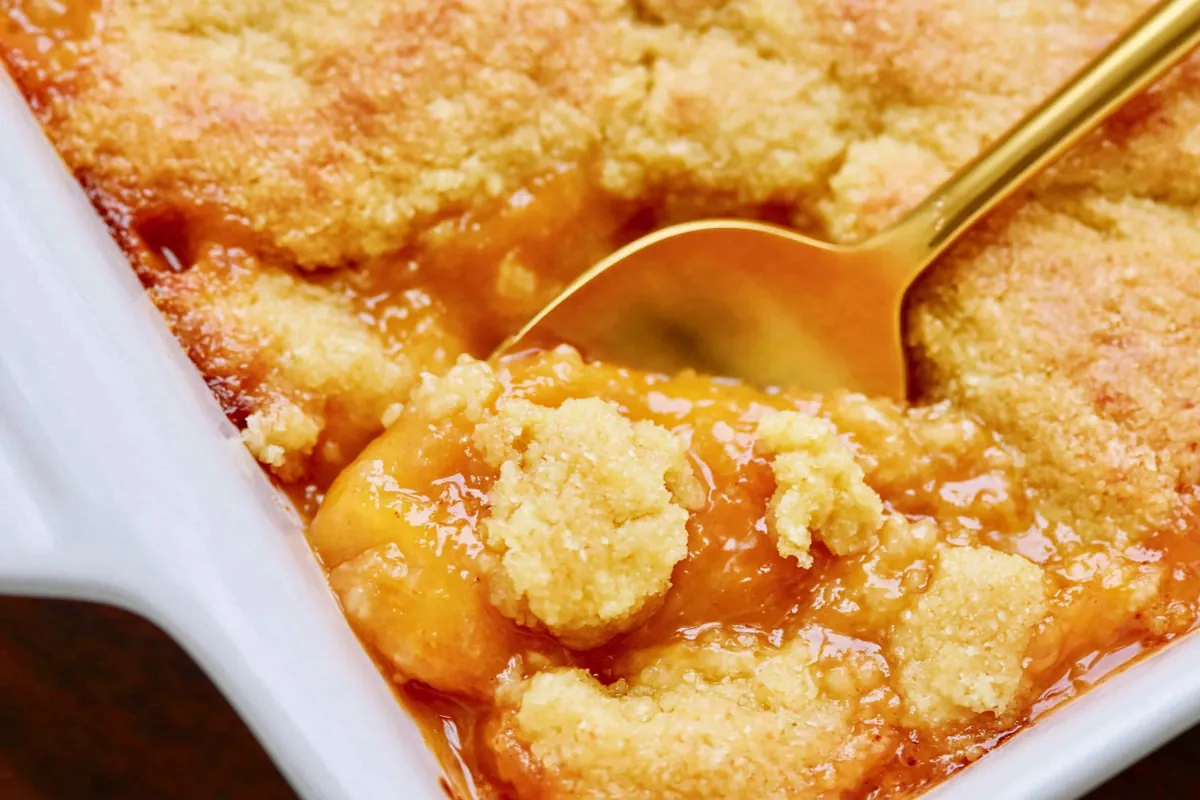
Best Peach Cobbler is one of those desserts that fills the kitchen with the smell of baked fruit and butter before it even comes out of the oven. The peaches soften into their own syrup while the topping turns golden at the edges and stays tender underneath.
This version keeps things simple. No complicated crust. No cooked filling. The topping bakes more like a soft sugar-cookie dough, which gives the cobbler a richer texture than the biscuit-style versions I grew up eating in restaurants.
You’ll also learn how to avoid a watery filling, how ripe the peaches should be, and why letting the cobbler rest for a few minutes matters more than people think.
Choosing Peaches That Hold Their Shape While Baking
Peaches can make or break a cobbler. If they’re too firm, the filling tastes flat. Too soft, and the fruit collapses into mush before the topping finishes baking. I usually look for peaches that give slightly when pressed near the stem but still feel firm around the sides. That middle stage works best here.
Fresh peaches bring the cleanest flavor, especially during summer. Slice them evenly so they cook at the same rate. Thick wedges tend to stay undercooked in the center while thin slices disappear into the filling. About 1/2-inch slices work well in a standard 2-quart baking dish.
Frozen peaches are fine too. Just thaw and drain them first. Otherwise, extra moisture collects at the bottom of the dish and the filling turns loose. Canned peaches can work in a pinch, though I’d rinse off some of the syrup first. They’re usually packed pretty heavily with sugar already.
Building a Simple Peach Filling That Doesn’t Turn Watery
This recipe skips thickening agents entirely. No cornstarch. No flour mixed into the fruit. Instead, the peaches bake in their own juices while the sugar pulls out just enough liquid to create a light syrup underneath the crust.
That only works if the peaches aren’t overripe. Very soft peaches release too much moisture once heated. If that’s what you have, reduce the sugar slightly and let the fruit sit in a colander for 10 minutes before baking. Small adjustment. Big difference.
The extra 2 tablespoons of sugar sprinkled directly over the peaches help the top layer caramelize lightly during baking. I also like a small pinch of nutmeg in the batter sometimes. Not enough to dominate the dessert — just enough warmth to support the peaches. Vanilla does the rest quietly in the background.
Why This Cobbler Uses a Cookie-Style Topping Instead of Biscuits
A lot of cobblers use biscuit dough dropped over the fruit. Good when done right, but they can dry out fast at home ovens. This topping stays softer because the butter and sugar are creamed together first, almost like the beginning of a cookie batter.
Room-temperature butter matters here. Cold butter won’t blend evenly, and melted butter changes the structure completely. You want the mixture creamy but still thick. Once the flour, baking powder, egg, and vanilla go in, the batter should look closer to soft cookie dough than cake batter.
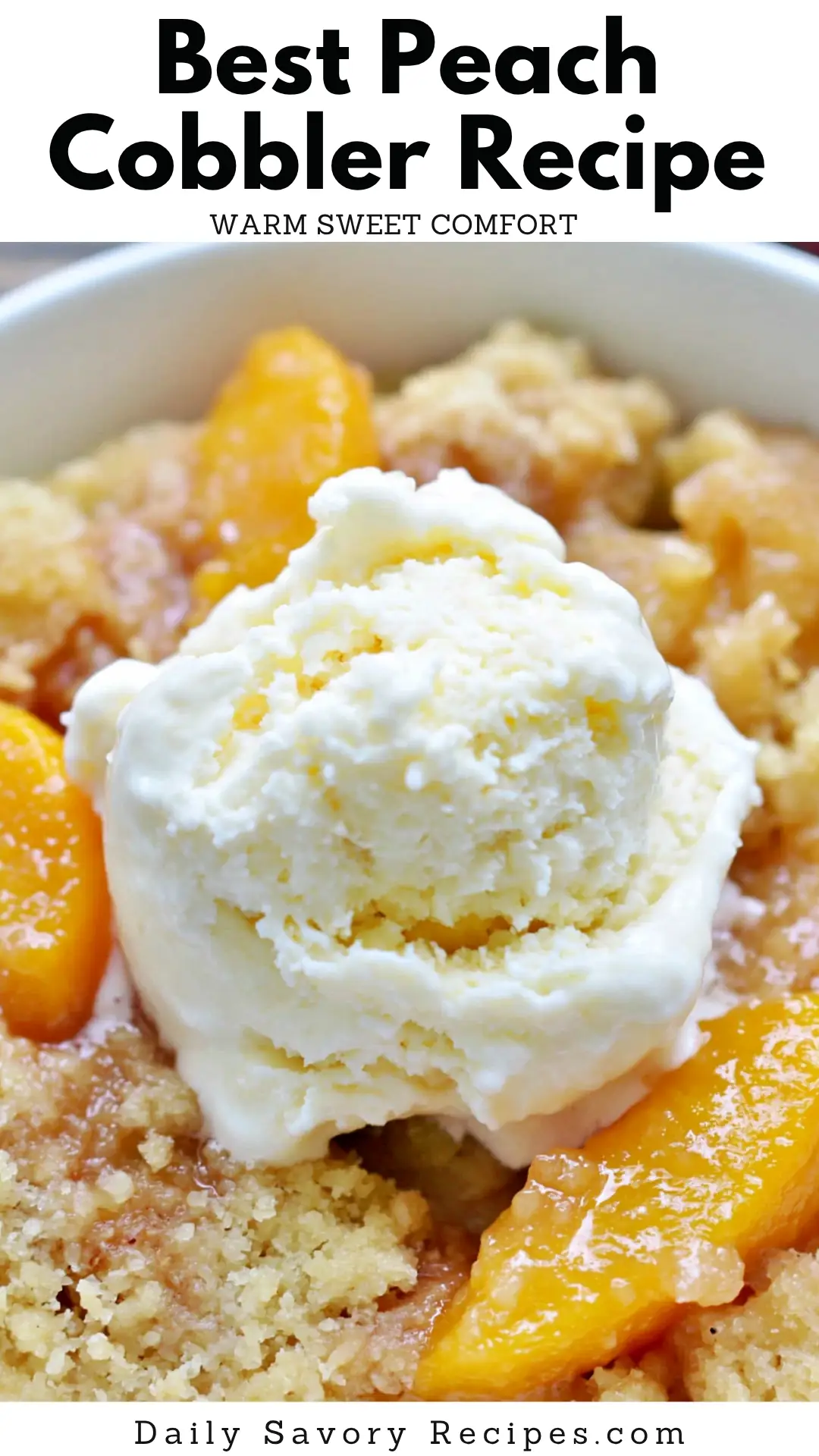
Don’t try to spread it perfectly across the peaches. I actually prefer uneven patches because the fruit bubbles through the gaps while baking. That contrast between crisp golden topping and exposed peaches gives the cobbler more texture.
Watch the center closely near the end of baking. If the middle still looks pale and glossy after 35 minutes, give it another few minutes. The edges usually finish first.
Baking the Best Peach Cobbler Evenly
A 350°F oven gives the peaches enough time to soften before the topping darkens too much. Higher temperatures brown the crust faster than the fruit can cook underneath. I’ve tested it both ways. Slower works better here.
Grease the baking dish well, especially around the corners. Fruit sugars tend to stick there first. Spread the peaches into a mostly even layer before adding the topping. If the fruit piles too deeply in one area, the cobbler bakes unevenly and the center can stay wet.
Flatten pieces of dough gently with your hands before laying them over the peaches. It doesn’t need to look neat. Rustic desserts usually taste better anyway. Some of the peaches should still peek through before baking.
Around the 36-minute mark, start checking color and texture together. Golden brown edges alone aren’t enough. The center topping should feel lightly set when pressed and shouldn’t jiggle over liquid fruit underneath.
Then comes the hardest part: waiting. Let the cobbler sit for at least 5 minutes after baking. Ten is even better. The juices thicken slightly as the dish cools, and the topping settles into the fruit instead of sliding apart when served.
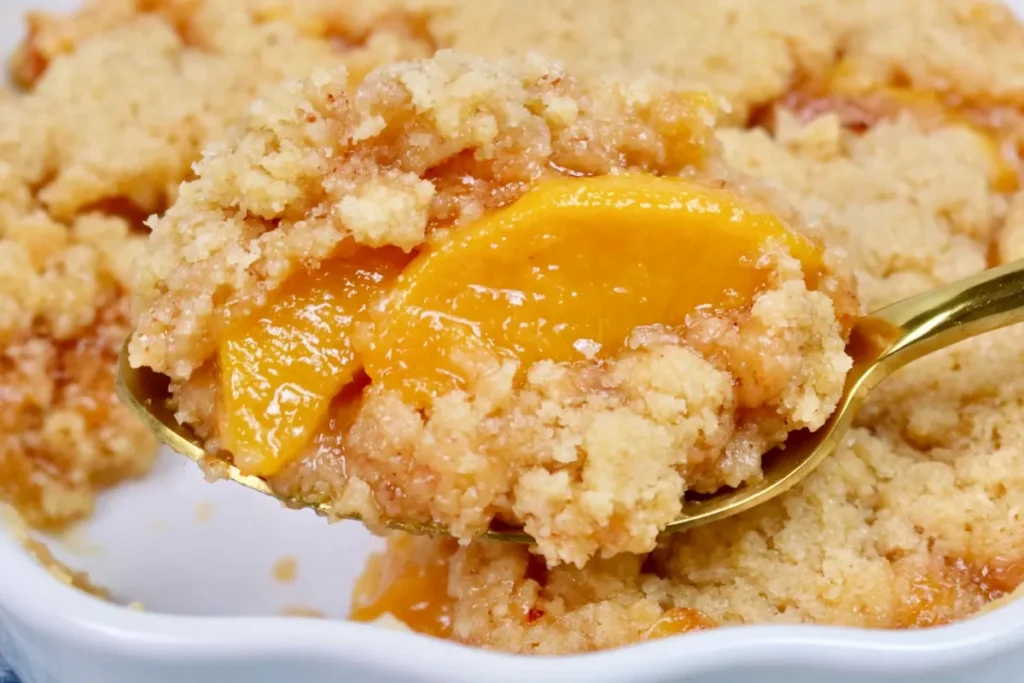
Serving Best Peach Cobbler While It’s Still Warm
Warm cobbler and cold vanilla ice cream belong together. The ice cream melts into the peach juices almost immediately, which turns the bottom of the bowl into its own sauce. Hard to beat that.
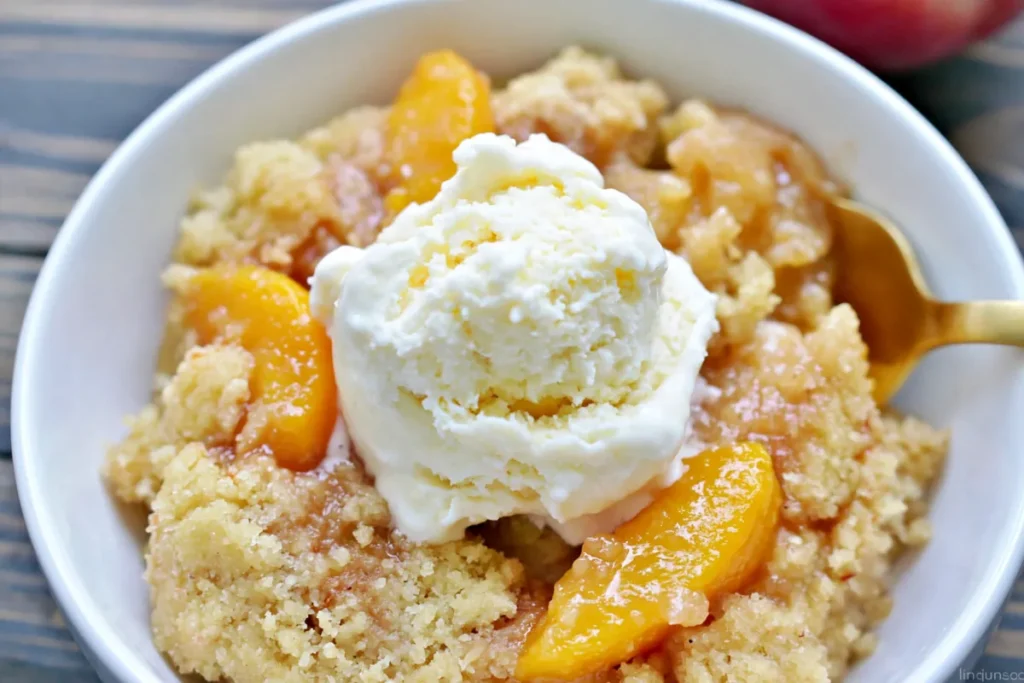
Whipped cream works too if you want something lighter. I’ve even served this with plain Greek yogurt at brunch before. Surprisingly good. The slight tang balances the sweetness better than you’d expect.
Storing Leftovers Without Losing the Texture
Cover leftovers once the cobbler cools completely and refrigerate for up to 4 days. The topping softens a little overnight, but the flavor actually improves by the second day.
For reheating, the oven works better than the microwave. About 15 minutes at 325°F helps the topping regain some texture. Microwaves heat the filling quickly but leave the crust softer and slightly gummy.
You can freeze it too. Wrap the dish tightly and freeze for up to 2 months. Thaw overnight in the refrigerator before reheating.
Easy Ingredient Swaps for Different Diets
A good gluten-free flour blend can replace the all-purpose flour here without major changes. I’ve had the best results with blends that already contain xanthan gum. The topping stays more stable during baking.
For dairy-free versions, use a plant-based butter substitute with a higher fat content. Some softer spreads contain too much water and can make the topping overly dense. It still works, just differently.
Worth testing with what you have. Cobbler is forgiving that way.
Frequently Asked Questions
Do I need to peel the peaches?
Not necessarily. Peach skins soften quite a bit during baking. I usually leave them on for texture and color, especially with fresh summer peaches.
Can I use frozen peaches?
Yes, but thaw and drain them first. Excess water is usually the reason frozen-fruit cobblers turn runny.
Why is my cobbler filling watery?
Most often, the peaches were overly ripe or carried too much moisture into the baking dish. Letting the cobbler rest after baking also helps the juices settle.
Can I make peach cobbler ahead of time?
You can assemble it a few hours early and refrigerate before baking. I wouldn’t leave the topping sitting overnight on the peaches though. The fruit starts releasing liquid too early.
What’s the best way to reheat leftovers?
The oven gives the best texture. Reheat at 325°F until warmed through so the topping stays slightly crisp around the edges.
A Dessert Worth Making All Summer
Best Peach Cobbler doesn’t need complicated steps or fancy ingredients to work well. Good peaches, a buttery topping, and enough baking time usually get you where you want to go.
Serve it warm and don’t worry too much about perfect slices. Cobbler is supposed to look a little messy. That’s part of the charm.
Best Peach Cobbler
Ingredients
Method
- Preheat oven to 350 degrees F and grease a 2-quart baking dish with non-stick spray.
- Spread sliced peaches evenly into the prepared baking dish and sprinkle with 2 tablespoons sugar.
- In a medium bowl, beat softened butter and 1 cup sugar together until creamy.
- Add flour, baking powder, salt, and optional nutmeg, then mix until combined.
- Add egg and vanilla extract and continue mixing until a soft cookie-style batter forms.
- Flatten small pieces of dough with your hands and place them over the peaches without fully covering the fruit.
- Bake for 36 to 40 minutes until the topping is golden brown and cooked through.
- Let the cobbler rest for 5 to 10 minutes before serving warm with vanilla ice cream or whipped cream.
Notes
- Use peaches that are slightly firm for the best texture.
- Frozen peaches should be thawed and drained before baking.
- Allow the cobbler to rest after baking so the filling thickens slightly.
- Reheat leftovers in the oven for the best texture.