
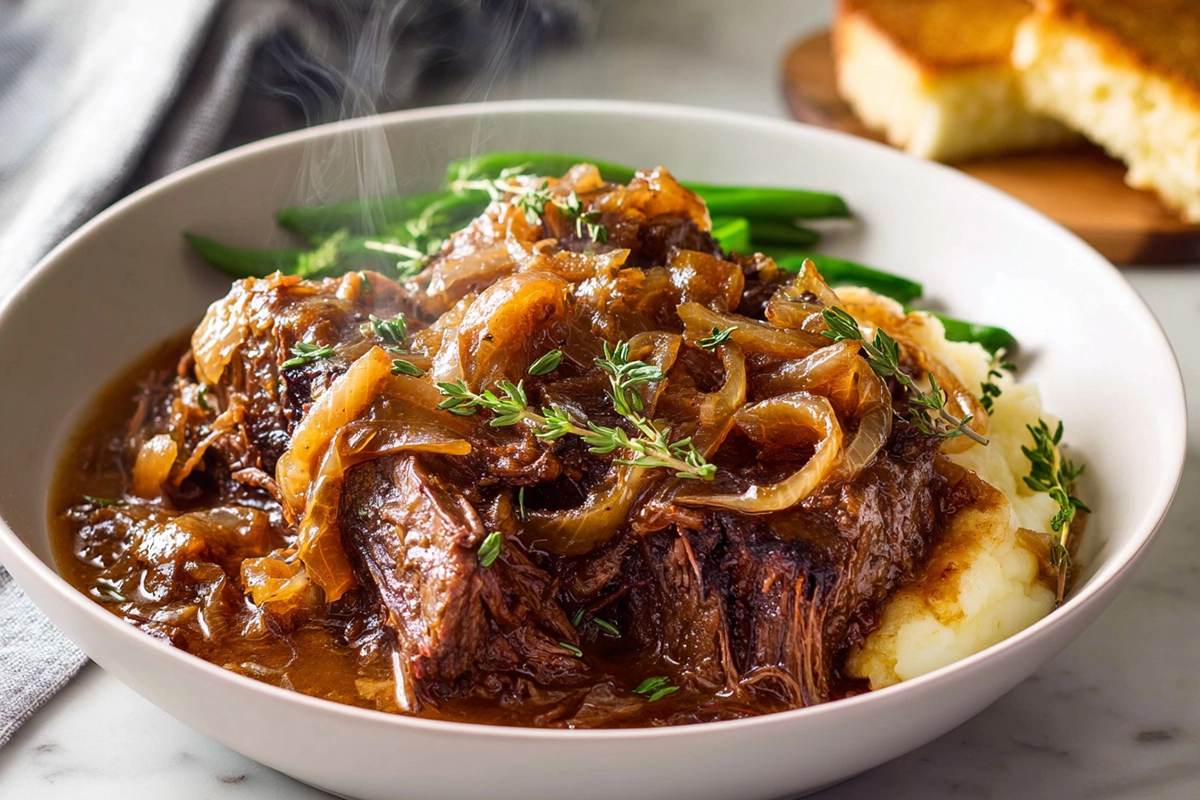
French Onion Pot Roast That Cooks Down Perfectly

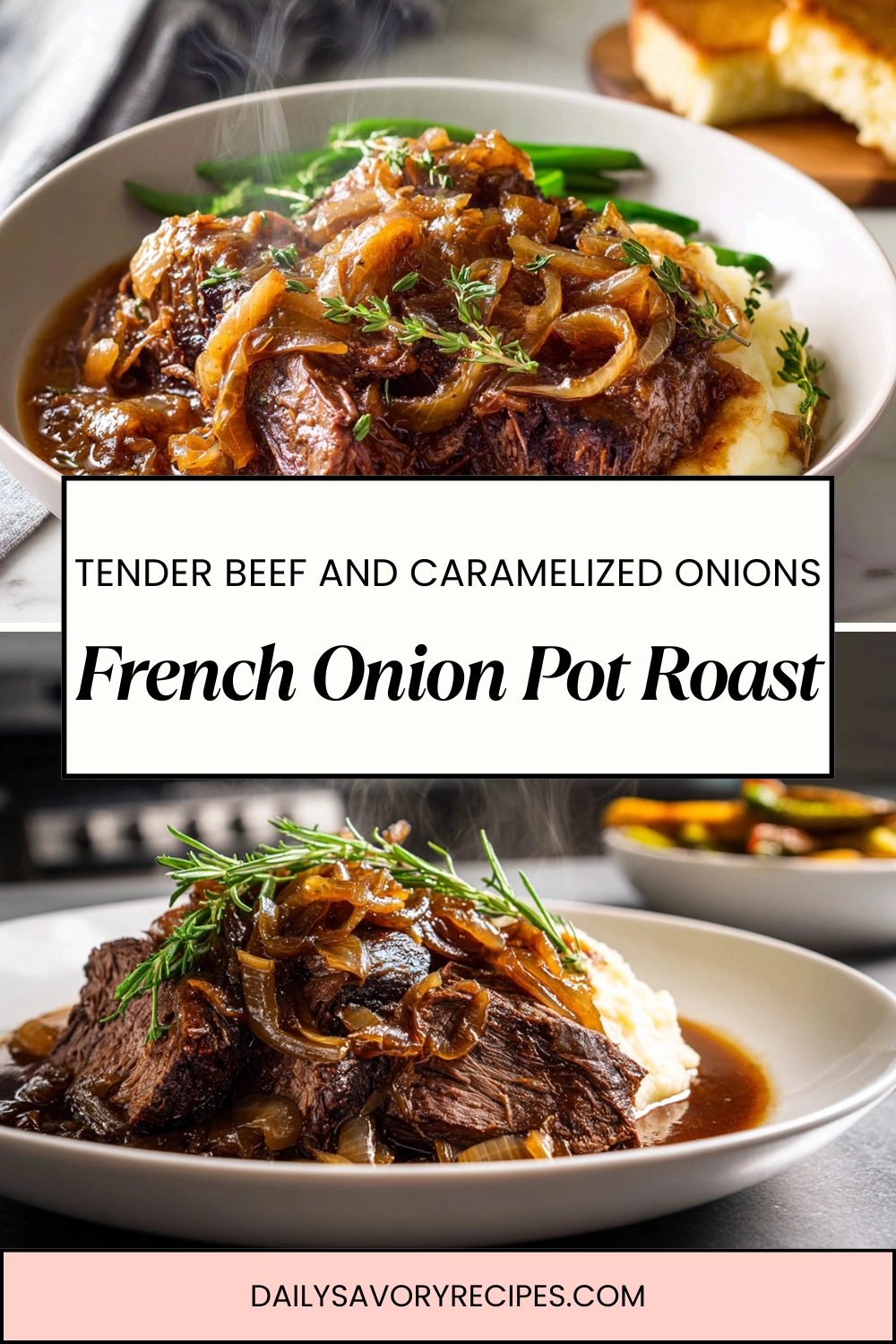
When this roast is working the way it should, you notice it before you see it. The smell shifts first — onions that started sharp and sulfurous turn deeply savory and slightly sweet, and the beef smell softens into something rich and rounded instead of raw and heavy. That’s the moment you know you’re on the right track. Not flashy, not loud — just steady, comforting food doing what it’s supposed to do.
This French Onion Pot Roast is built around that kind of payoff. It’s not a quick dinner, but it’s also not complicated. The effort is front-loaded: seasoning the meat properly, taking the time to brown it, and letting the onions fully caramelize instead of rushing them. Once those pieces are right, the rest of the cook is calm and predictable. That’s the kind of recipe I rely on during busy weeks — one that doesn’t require constant checking or mid-course corrections.
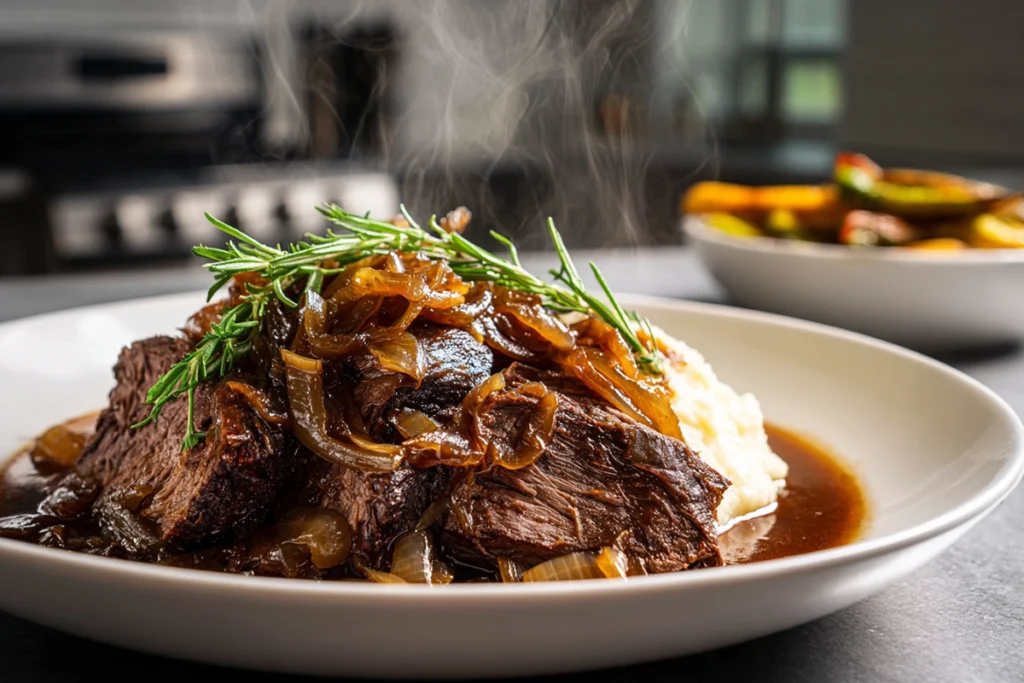
What makes this roast dependable is that everything finishes together. The beef breaks apart easily without drying out, the onions dissolve into the sauce instead of sitting in strands, and the gravy thickens naturally instead of needing last-minute fixes. There’s no guesswork once it’s in the pot. If you’ve ever had a pot roast that smelled good but tasted flat, this version fixes that by respecting the small details that actually matter.
Table of Contents
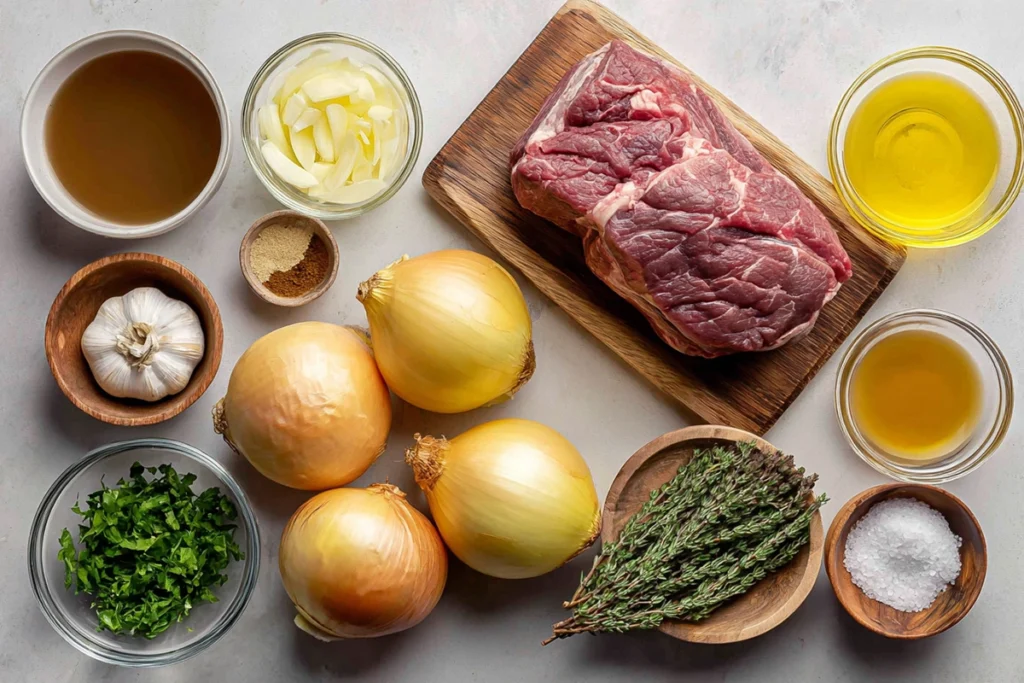
Ingredients (Why Each One Matters)
Boneless Beef Chuck Roast (3 pounds)
This is the cut that makes the recipe work. Chuck has enough connective tissue to break down slowly, which is what gives you meat that shreds instead of slices. Leaner cuts dry out during long cooking, and fattier cuts turn greasy. I don’t substitute this one.
Kosher Salt & Black Pepper
Seasoning the roast early matters more than adding salt later. Kosher salt distributes evenly and doesn’t overwhelm, and freshly ground black pepper holds up through the long cook without turning bitter.
Olive Oil
This is here for browning, not flavor. A standard, mid-priced olive oil is fine — no need for anything fancy since it’s exposed to high heat early on.
Yellow Onions (6 large)
Yellow onions are essential. Sweet onions brown too fast and can turn cloying, while white onions don’t develop the same depth. Thin slicing helps them collapse evenly into the sauce instead of staying stringy.
Garlic
Garlic supports the onions, but it’s not the lead. It goes in late, so it stays aromatic instead of harsh. Pre-minced works in a pinch, but fresh gives a cleaner flavor.
All-Purpose Flour
This is insurance for the sauce. It thickens gently during the long cook, so the gravy coats the meat instead of pooling at the bottom. Skipping it usually leads to a thin, separated sauce.
Low-Sodium Beef Broth
Low-sodium matters here. The onions reduce and concentrate, and full-salt broth can push the dish too far. Store-brand broth is completely fine.
Fresh Thyme & Bay Leaves
Thyme adds warmth without overpowering, and bay leaves round out the background flavor. Dried thyme works if needed, but fresh gives a cleaner finish.
How This French Onion Pot Roast Comes Together
Building Flavor Before Time Does the Work
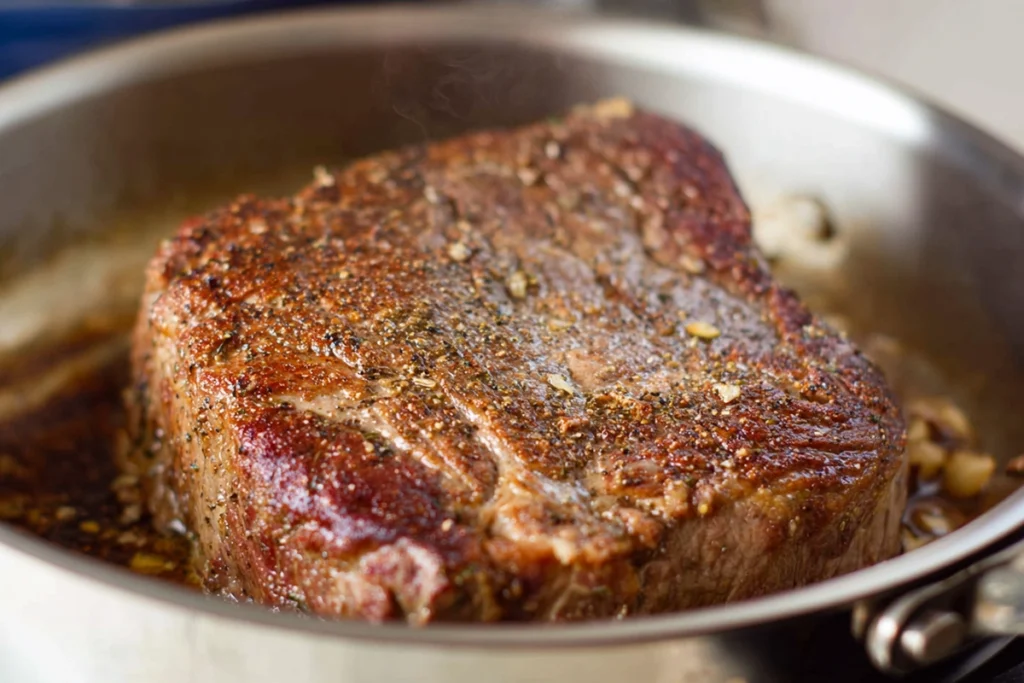
This recipe starts loud and hot on purpose. When the roast hits the pan, you should hear an immediate, aggressive sizzle — that sound tells you the surface moisture is gone and browning has started. Visually, you’re looking for a deep golden crust, not pale gray meat. When you lift it, the surface should feel firm and dry, not spongy. That initial sear isn’t about sealing anything in; it’s about creating flavor you can’t add later.
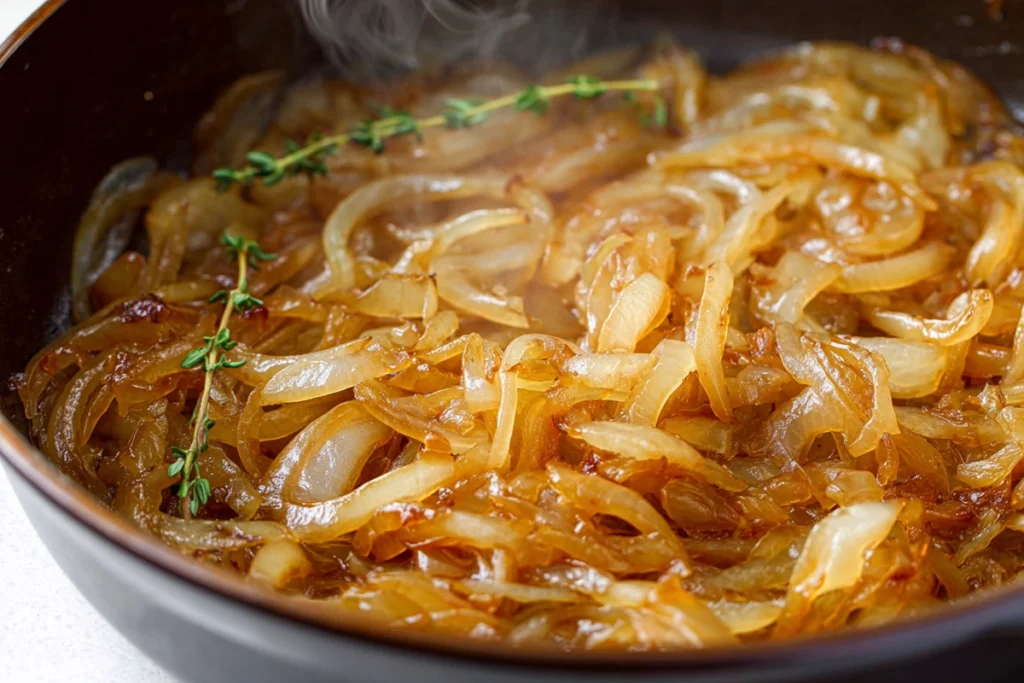
Once the meat is out, everything slows down. The onions go in, and the sound drops from a sizzle to a soft, steady hiss. At first, they’ll look bulky and stiff, and when you stir them, they’ll squeak slightly against the pan. As they cook, you’ll smell their sharp edge mellow out. This is where patience matters — when the onions finally turn deep brown and jammy, the smell shifts to something sweet and savory at the same time. That’s your cue; they’re ready for the next step.
Turning Caramelized Onions Into Sauce
When garlic hits the pan, the smell changes immediately — warm and toasted within seconds. That’s your signal to keep moving. The flour disappears into the onions and feels slightly pasty as you stir, which is exactly what you want.
As the broth and herbs are added, the sauce should look glossy and cohesive, not separated. When the roast returns to the pot, it should sit partially submerged, not drowned. Once covered and cooking low and slow, the kitchen smell becomes steady and comforting rather than sharp. Near the end, the meat should give easily when pressed with tongs, pulling apart with almost no resistance — that’s when it’s done, not by the clock alone.
Where French Onion Pot Roast Can Go Wrong
Rushing the Onions
If the onions are only golden instead of deeply brown, the whole dish tastes thin. Visually, pale onions stay stringy instead of melting into the sauce. You’ll smell sweetness, but not depth. This happens when the heat is too high or the pot is stirred too often early on. Let them sit long enough to actually brown.
Weak Browning on the Beef
If the roast doesn’t sizzle loudly when it hits the pan, the surface is too wet, or the pan isn’t hot enough. The meat will turn gray and release liquid instead of browning. You’ll smell steam instead of roasted beef, and that missing flavor never really comes back later.
Thin or Greasy Sauce at the End
A sauce that looks oily on top or feels watery usually means the flour step was skipped or undercooked. The fix isn’t more flour at the end — it’s proper thickening early. If the surface looks greasy, skim gently rather than stirring it back in. The sauce should feel velvety when dragged with a spoon, not slick.
Cooking Until Time, Not Texture
Chuck roast doesn’t care what the timer says. If it still feels tight and resists shredding, it needs more time. When it’s ready, you’ll feel it — the meat pulls apart easily, and the sound of the tongs shifts from tearing to sliding. That’s the moment to stop cooking, not five minutes earlier or later.
Make It Your Own
Mushroom-Forward Version
For a deeper, earthier roast, add sliced cremini or baby bella mushrooms after the onions are fully caramelized. When they go in, you should hear a gentle sizzle, not a wet hiss. They’ll release moisture at first and then tighten back up, adding body to the sauce without diluting it. If you add them too early, they block onion browning and flatten the flavor.
Gluten-Free Adjustment That Actually Works
Gluten-free flour can be used, but expect a slightly looser sauce. I’ve had the best results with a 1:1 blend rather than cornstarch. Let it cook an extra 10–15 minutes uncovered at the end until the sauce looks glossy and lightly coats the back of a spoon. It won’t be quite as velvety, but it holds together.
Extra-Herb Finish
If you like a brighter finish, stir in finely chopped fresh thyme or parsley right before serving. You’ll smell the herbs immediately — fresh and green instead of cooked. This works best if the roast has rested for a few minutes and the bubbling has settled down.
Serving & Storing (Real Life)
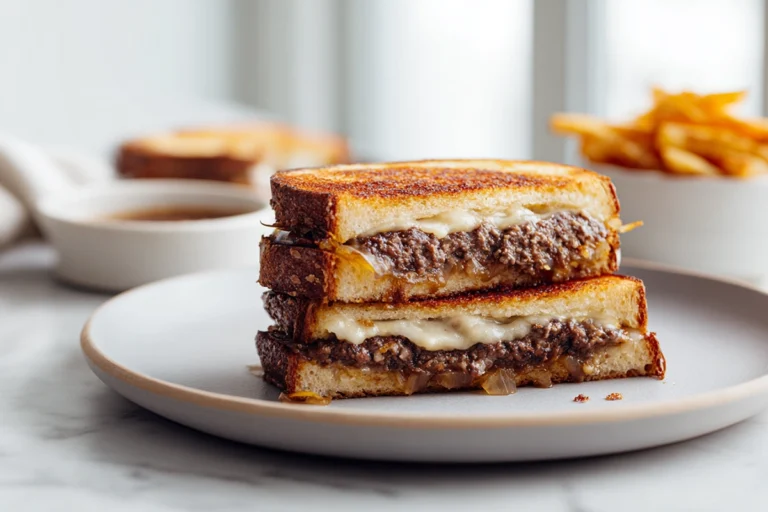
I usually serve this roast over mashed potatoes or buttered egg noodles, with nothing fancy on the side. The sauce is rich enough that it doesn’t need help — just something soft to catch it. When I want leftovers to feel new, I pile the shredded beef onto toasted bread and spoon the onions over the top like a loose French dip.
This pot roast stores well, but it behaves better if you let it cool first. Refrigerate it in its sauce, tightly covered, for up to four days. The fat will rise and solidify on top — that’s normal and actually helps protect the meat. When reheating, warm it slowly on the stove or in the microwave at medium power. You should hear gentle bubbling, not aggressive boiling.
For freezing, portion the beef with enough sauce to keep it submerged. Freeze flat if possible. It reheats best straight from frozen on low heat, covered, until the sauce loosens and the meat relaxes. Stir gently — shredding it more will dry it out.
This French Onion Pot Roast is the kind of meal that fills the house with a smell you recognize before dinner’s ready. It’s steady, repeatable cooking — the kind that rewards patience and gives you the same comforting result every time.
Get inspired with more mouthwatering recipes! Follow me on Pinterest for new cooking ideas every week.
Frequently Asked Questions
Can I skip searing the beef?
You can, but the flavor will be noticeably flatter. When the beef hits a hot pan, you should hear a loud sizzle and see a dark crust form. That browning creates depth you can’t add later with seasoning or broth.
Why did my onions turn bitter instead of sweet?
This usually happens when the heat is too high or the onions are stirred too often early on. Bitter onions look dark but smell sharp instead of sweet. Slow, steady heat and patience are what allow their natural sugars to develop properly.
Can this French Onion Pot Roast be cooked entirely in a slow cooker?
Yes, but you’ll still want to sear the beef and caramelize the onions separately first. If everything goes in raw, the onions steam instead of browning, and the sauce stays thin. The slow cooker is for finishing, not building flavor.
What size roast works best for this recipe?
A 3-pound chuck roast is ideal. Smaller roasts cook faster and can dry out, while larger ones take much longer to break down evenly. If you scale up, expect extra cooking time rather than higher heat.
How do I thicken the sauce if it’s too thin?
Let it simmer uncovered for 10–15 minutes after the roast is tender. You should see slow bubbles, and the sauce should coat the back of a spoon. Avoid adding flour at the end — that can make the sauce taste raw.
Can I freeze French Onion Pot Roast?
Yes, and it freezes well if stored with enough sauce to keep the meat covered. Portion it before freezing so it reheats evenly. Rewarm gently on low heat until the sauce loosens and the meat relaxes.
PrintFrench Onion Pot Roast
French Onion Pot Roast cooked low and slow with caramelized onions for tender beef and rich gravy. Simple steps, dependable results, and great leftovers.
- Prep Time: 15 minutes
- Cook Time: 4 hours 30 minutes
- Total Time: 4 hours 45 minutes
- Yield: 6 to 8 servings 1x
- Category: Dinner
- Method: Boiling
- Cuisine: American
- Diet: Gluten-Free
Ingredients
- 3 lb boneless beef chuck roast
- 3 tsp kosher salt
- 1 tsp black pepper
- 3 tbsp olive oil
- 6 large yellow onions
- 4 cloves of garlic
- 3 tbsp all-purpose flour
- 2 1/2 cups low-sodium beef broth
- 5 sprigs fresh thyme
- 2 bay leaves
Instructions
- Season the beef and pat dry.
- Sear beef until deeply browned.
- Caramelize onions slowly until dark brown.
- Add garlic and flour and cook briefly.
- Return the beef and cook low and slow until tender.
- Shred beef and skim fat before serving.
Notes
- Skim excess fat before serving if needed.
- Let rest briefly before shredding for best texture.
Nutrition
- Serving Size: 1 serving
- Calories: 520
- Sugar: 6
- Sodium: 780
- Fat: 32
- Saturated Fat: 12
- Unsaturated Fat: 18
- Trans Fat: 0
- Carbohydrates: 14
- Fiber: 3
- Protein: 42
- Cholesterol: 145